1448 Easy Pet Safe | 2026 Guide - Page 16
Find 1448 easy pet safe. Complete guide for your garden.
1448 Pet Safe with easy level
Showing 541-576 of 1448
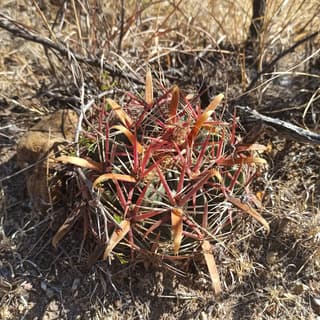
Devils Tongue Cactus
Ferocactus latispinus
Ferocactus latispinus is a solitary, globular to short-cylindrical cactus native to central Mexico, prized for its broad, flattened, hooked central spines that range from red to yellow. It grows slowly to about 30-100 cm tall and 40-45 cm wide, producing funnel-shaped pink to purple (occasionally yellowish) flowers in late autumn and early winter.
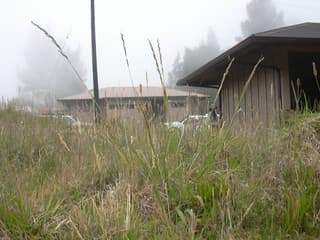
Tall Fescue
Festuca arundinacea
Tall fescue (Festuca arundinacea) is a coarse-textured, cool-season perennial bunchgrass in the Poaceae family, native to Europe and North Africa and now widely grown across temperate regions as a low-maintenance turf and forage grass. It forms dense clumps of dark green, ribbed leaves and can reach up to 1.5 m when left unmowed. It is prized for its deep root system, which provides excellent drought, heat, and wear tolerance compared to other cool-season grasses. Taxonomic note: molecular studies have reclassified the species under the synonyms Schedonorus arundinaceus and, more recently, Lolium arundinaceum, but Festuca arundinacea remains the name most widely used in horticultural and agronomic literature.
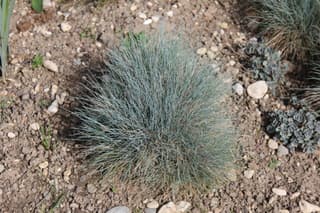
Blue Fescue
Festuca glauca
Blue fescue is a compact, clump-forming ornamental perennial grass known for its striking silvery-blue, needle-thin foliage. Native to Europe, it is prized in low-maintenance gardens, borders, and rock gardens for its year-round color and textural contrast.
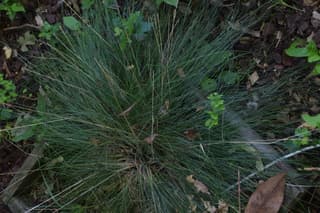
Sheep's Fescue
Festuca ovina
Festuca ovina, commonly known as sheep's fescue, is a densely tufted, cool-season perennial grass in the Poaceae family. Native to Europe and Asia and naturalized across North America, it forms neat, low-growing clumps of narrow, wiry, blue-green to gray-green blades. Non-rhizomatous and slow to spread, it stays put as a tidy mound rather than running through the garden. In late spring to early summer it sends up slender, slightly one-sided flowering panicles on wiry stems. Prized for its fine texture, drought tolerance, and ability to thrive in poor, sandy or rocky soils, sheep's fescue is a low-maintenance choice for rock gardens, borders, slopes, and mass ground-cover plantings.
Red Fescue
Festuca rubra
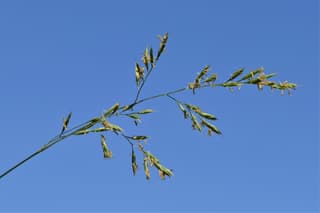
Red Fescue (Festuca rubra) is a cool-season perennial grass in the Poaceae family, widely used for lawns, meadows, and shaded garden areas. Its fine, thread-like, deep green blades form dense tufts that spread slowly via rhizomes, creating a soft, resilient turf. It is valued for its shade tolerance, drought resistance once established, and lower maintenance needs compared to many other turfgrasses.
Sedge
Ficinia
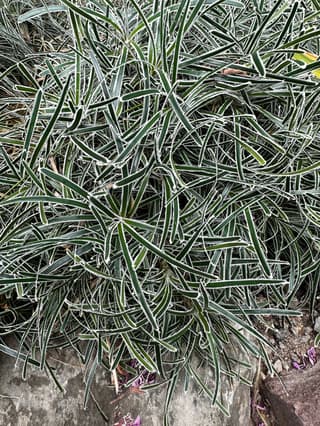
Ficinia is a genus of some 70-90 tufted, evergreen sedges (family Cyperaceae), the great majority endemic to South Africa's Cape Floristic Region, with a few species reaching New Zealand and Australia. Ornamental cultivars, most famously Ficinia truncata 'Ice Crystal', form neat clumps of narrow, grass-like foliage and are prized as low-maintenance border, container or rockery plants. This is a genus-level care profile; individual species vary in size, colour and exact habitat.
Fern Tree
Filicium decipiens
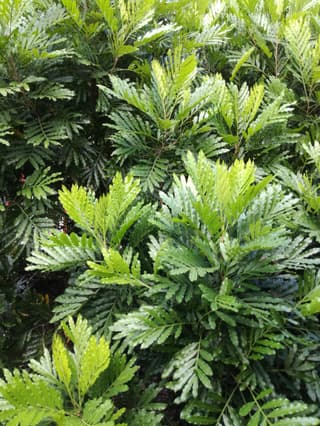
Filicium decipiens, commonly known as the Fern Tree, is a small to medium-sized tree native to East Africa and South Asia. It is widely appreciated in landscaping for its dense and elegant foliage, with pinnate leaves that resemble fern fronds. It features a rounded, symmetrical canopy with glossy green leaves and a distinctive winged rachis. It is an excellent choice for tropical gardens or as a statement plant in large pots for well-lit interiors.
White-Berry Bush
Flueggea virosa
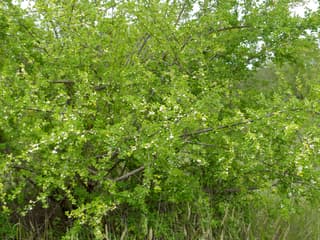
Flueggea virosa, commonly known as the white-berry bush or simpleleaf bushweed, is a woody, multistemmed shrub of the Phyllanthaceae family, native to the tropical and subtropical regions of Africa and Asia. It grows rapidly into dense thickets 2 to 4 meters tall, with slender branches that can appear thorn-like. Its flowers are small and creamy-green, understated but attractive to pollinators, followed by round, fleshy white berries that turn sweet upon ripening and are relished by birds and local wildlife. This extremely hardy plant tolerates drought and heat well, thriving even in poor, rocky soils, which makes it a valuable choice for low-maintenance landscaping, hedging, and land restoration projects. In traditional African medicine, its roots, bark, and fruits are widely used to treat snakebites, malaria, diarrhea, and inflammation.
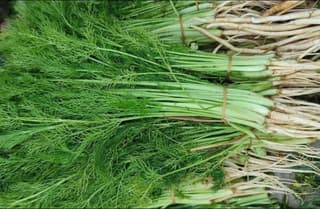
Fennel
Foeniculum vulgare
Fennel (Foeniculum vulgare) is a hardy aromatic perennial herb in the Apiaceae family, native to the Mediterranean region. With feathery, anise-scented foliage and bright yellow umbel flowers in summer, it can reach up to 6 feet (180 cm) tall. Fennel is one of the most versatile herbs, prized for its culinary, medicinal, and ornamental value.

Willow moss
Fontinalis antipyretica
Willow moss (Fontinalis antipyretica) is an evergreen aquatic moss from the Fontinalaceae family that grows exclusively submerged in water—in streams, rivers, and lakes across Europe, Asia, Africa, and North America. It forms long, branched clumps with stiff, three-ranked leaves that can reach lengths of up to 60 cm. Instead of roots, it attaches itself to submerged stones, branches, and other hardscape using rhizoids. Due to its low maintenance and decorative appearance, it is a popular plant in cold-water and moderately tempered aquariums, where it also serves as a hiding place for shrimp and fry. The specific epithet "antipyretica" refers to the medieval use of this moss for extinguishing chimney fires.
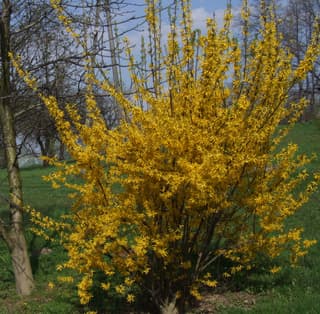
Border Forsythia
Forsythia x intermedia
Forsythia x intermedia (Border Forsythia) is a fast-growing, deciduous ornamental shrub in the olive family (Oleaceae), a hybrid cross between Forsythia viridissima and Forsythia suspensa. In early spring, before the leaves emerge, its slender, arching branches are covered in dense, golden-yellow, bell-shaped flowers, making it one of the earliest and most striking indicators of spring in gardens. At maturity, it can reach 8 to 10 feet (2.5-3 meters) in height and 10 to 12 feet (3-3.5 meters) in width, and is frequently planted as a standalone specimen or as a hedge.
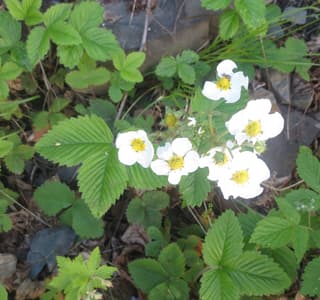
Musk Strawberry
Fragaria moschata
Fragaria moschata, commonly known as the musk strawberry or hautbois strawberry, is a herbaceous perennial in the rose family (Rosaceae), native to Central Europe and temperate Asia. It forms a clump- and mat-forming ground cover that spreads slowly by runners, producing small, deep red berries prized for an intensely aromatic flavor often described as a blend of strawberry, raspberry, and pineapple. Unlike modern garden strawberries, most musk strawberry plants are functionally dioecious, so both male (pollinator) and female/hermaphrodite plants are needed for good fruit set.
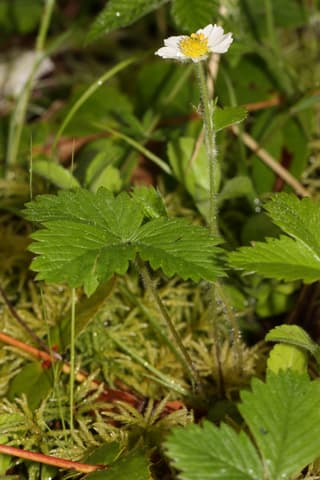
Wild Strawberry
Fragaria vesca
Fragaria vesca, commonly known as Wild Strawberry or Woodland Strawberry, is a delicate perennial native to Eurasia and North America. It produces small, intensely aromatic red fruits that are prized for their exceptional flavour — far superior in taste to cultivated varieties. Its white five-petalled flowers and tri-foliate leaves make it an attractive ground cover in gardens, meadows, and woodland edges.
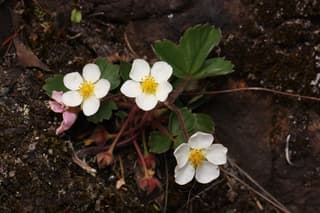
Virginia Strawberry
Fragaria virginiana
Fragaria virginiana, commonly known as the Virginia Strawberry or Wild Strawberry, is a native North American perennial groundcover belonging to the Rosaceae family. Found from Newfoundland to Georgia and westward to Oklahoma, it is one of the two parent species of the modern cultivated strawberry (Fragaria × ananassa). It forms low-growing colonies via stolons, producing small but intensely flavored red berries and delicate five-petaled white flowers in spring. It thrives in full sun to partial shade and is highly valued for erosion control, pollinator support, and edible landscaping.
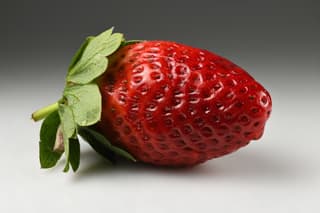
Strawberry
Fragaria x ananassa
The strawberry plant (Fragaria x ananassa) is a perennial herbaceous plant known worldwide for its delicious red fruits. It features vibrant green trifoliate leaves and delicate white flowers that give rise to the berries.
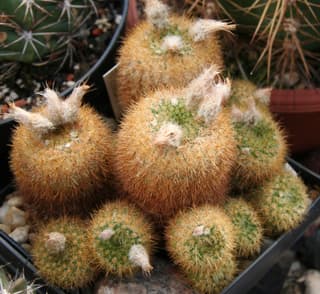
Dwarf Frailea
Frailea pumila
Frailea pumila is a tiny cactus native to the grasslands of southern Brazil, Uruguay, and Argentina. Belonging to the family Cactaceae, it rarely exceeds 5 cm in diameter. Its most remarkable trait is cleistogamous flowering: its yellow flowers develop, self-pollinate, and set seed without ever opening — a silent reproductive miracle adapted to unpredictable environments.
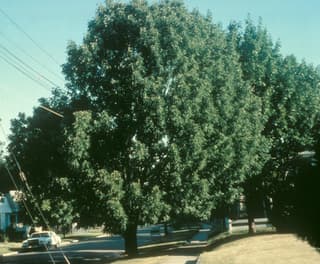
Ash (genus)
Fraxinus
Fraxinus is a genus of flowering plants in the olive family Oleaceae. It contains 45–65 species of usually medium to large trees, mostly deciduous, though a few subtropical species are evergreen. Common species include European ash (F. excelsior), white ash (F. americana), and green ash (F. pennsylvanica). Ash trees are important landscape trees valued for their large canopy, autumn color, and timber.
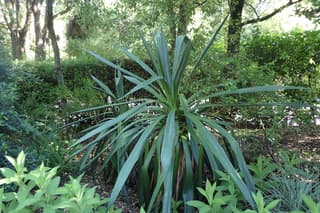
Mauritius Hemp
Furcraea foetida
Mauritius Hemp (Furcraea foetida) is a perennial succulent plant native to the Caribbean and northern Central America, belonging to the Asparagaceae family. Recognized by its dramatic rosette of long sword-shaped leaves, it is a remarkably hardy plant widely grown as an ornamental in tropical and subtropical gardens. Its strong leaf fibers have historically been used to produce rope, textiles, and craft materials.
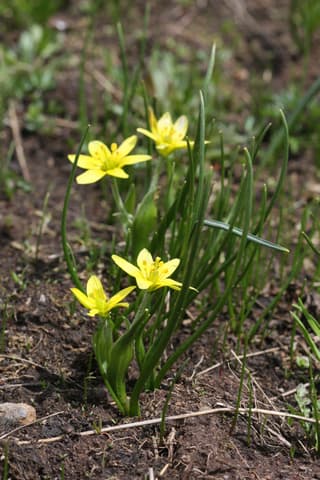
Liotard's Gagea
Gagea fragifera
Gagea fragifera is a small perennial bulbous plant, native to the alpine and subalpine regions of Europe and Asia. It is distinguished by its bright yellow star-shaped flowers that emerge shortly after the snow melts. Its leaves are linear and basal, adapted to the short growing seasons of high mountain environments.

Common Blanketflower
Gaillardia aristata
Common blanketflower is a hardy perennial wildflower native to the prairies and foothills of central North America. It forms low mounds of grayish-green, lance-shaped leaves topped from late spring through fall by daisy-like blooms in fiery combinations of yellow, red, orange and copper. Extremely drought tolerant once established, it thrives in poor, well-drained soil and full sun, making it a favorite for xeriscapes, pollinator gardens and cottage borders.

Indian Blanket
Gaillardia pulchella
Gaillardia pulchella, commonly called Indian Blanket or Firewheel, is a fast-growing annual (sometimes short-lived perennial) wildflower native to the central and southern United States and Mexico. Its daisy-like flower heads display concentric rings of red, orange, and yellow, resembling the patterned blankets woven by Native American peoples. Reaching 30-60 cm tall, it thrives in poor, sandy soils and blooms from summer through the first frost, attracting butterflies and pollinators.
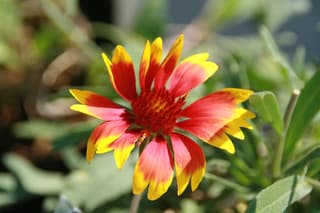
Blanket Flower
Gaillardia x grandiflora
Gaillardia x grandiflora, commonly known as blanket flower, is a vigorous hybrid perennial native to North America. Its bold, daisy-like flowers in shades of red, orange, and yellow bloom from late spring through fall, making it one of the most colorful and low-maintenance ornamentals for sunny gardens. It is highly tolerant of heat, drought, and poor soils, thriving where many other plants struggle.
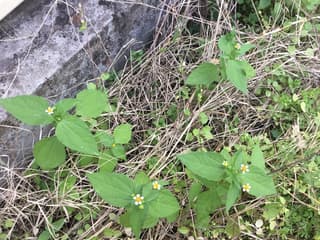
Gallant soldier
Galinsoga parviflora
Galinsoga parviflora is an annual herb in the Asteraceae family, native to South and Central America and now naturalized worldwide as a weed in gardens, crops, and disturbed soils. It reaches between 30 and 75 cm in height, featuring opposite leaves with serrated edges and small flowers with 3 to 8 white petals surrounding a yellow central disk. It is a very fast grower, completing its life cycle in just 50 days and producing thousands of seeds per plant. Despite being considered a weed, it is entirely edible and used as a culinary and medicinal herb in various cultures, most notably in Colombia (guascas for ajiaco).
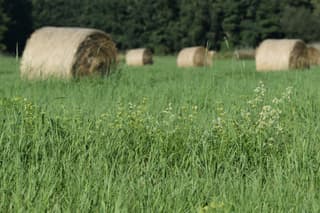
White Bedstraw
Galium album
White bedstraw is a scrambling, perennial wildflower native to Europe and western Asia, from the same family as coffee (Rubiaceae). It forms sprawling mats of square, four-angled stems clothed in narrow, glossy leaves arranged in whorls, topped in early summer with airy clusters of tiny, honey-scented white flowers. Common in meadows, hedgerows, and calcareous grassland, it is valued in wildflower plantings for its long bloom period and value to pollinating insects.
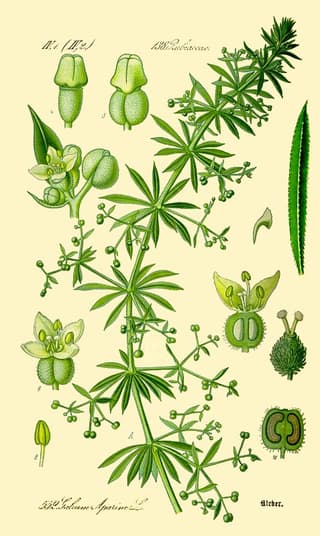
Cleavers
Galium aparine
Galium aparine, commonly known as Cleavers, is a scrambling annual herbaceous plant. It is easily recognized by its whorled leaves and stems which are covered in tiny hooked bristles (trichomes), allowing it to 'stick' to surfaces, animals, and clothing. It produces tiny, star-shaped white or greenish flowers followed by small, burr-like fruits that also cling to fur and fabric for seed dispersal.
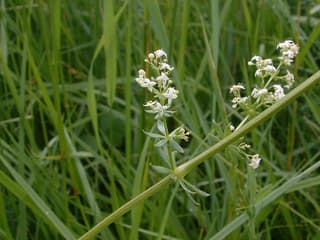
Hedge Bedstraw
Galium mollugo
Hedge bedstraw is a sprawling European perennial found along hedgebanks, woodland edges and grassy, calcareous slopes. Its square stems scramble through neighboring vegetation, bearing whorls of narrow leaves and airy clusters of tiny star-shaped white flowers from late spring through summer.
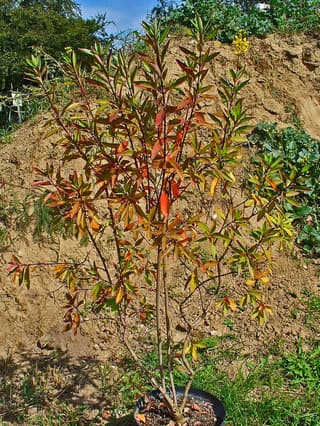
Mexican Goldshower
Galphimia glauca
Galphimia glauca, commonly known as Mexican Goldshower or Thryallis, is a compact evergreen shrub native to Mexico and Central America. It produces masses of small, bright yellow star-shaped flowers from spring through fall, creating a stunning display that attracts hummingbirds and butterflies. Unlike Galphimia gracilis, this species features more rounded leaves with a distinctive blue-green underside. It is valued both as an ornamental garden shrub and for its use in traditional Mexican medicine.
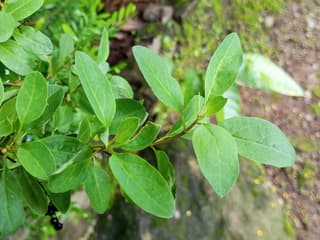
Thryallis
Galphimia gracilis
Thryallis is a perennial and highly floriferous shrub, native to Mexico and Central America. Its vibrant yellow flowers emerge in terminal racemes and attract pollinators such as bees and butterflies. It is an extremely hardy and fast-growing plant, ideal for hedges or as a specimen plant in sunny gardens.
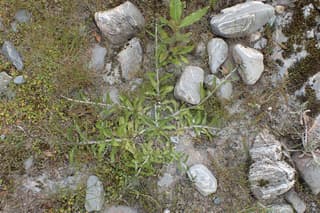
Gray Everlasting
Gamochaeta coarctata
Gamochaeta coarctata is an annual or biennial winter herbaceous herb, native to South America (from Colombia to Uruguay), and naturalized in parts of Eurasia, Australia, and North America. It is a low-growing plant (15-50 cm) with decumbent-ascending stems covered in dense white pubescence. The basal leaves form a rosette and are spatulate to oblanceolate. The flowers are arranged in a dense spike, with cylindrical heads containing a few yellow disc florets and no ray florets.
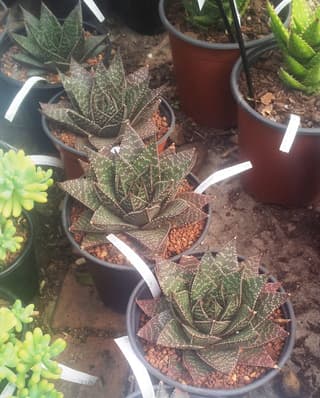
Gasteraloe
Gasteraloe
xGasteraloe is an intergeneric hybrid nothogenus produced by crossing Gasteria with Aloe (most often Gonialoe variegata or Aristaloe aristata). The result is a stemless to almost-stemless succulent that forms compact rosettes of thick, tongue-shaped leaves, usually spotted or marked and edged with small teeth. It combines Gasteria's slow, clustering growth habit with Aloe's vigor, and in spring and summer sends up tall spikes of tubular orange, red, or pink flowers that attract pollinators.
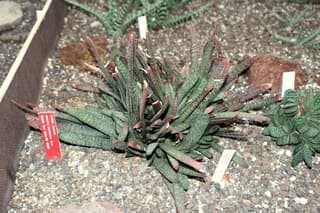
Gasteria (genus)
Gasteria
Gasteria is a genus of compact South African succulents, highly tolerant of drought and partial shade. Their thick, fleshy leaves form symmetrical rosettes or fan-like arrangements, often with spotted or mottled patterns.
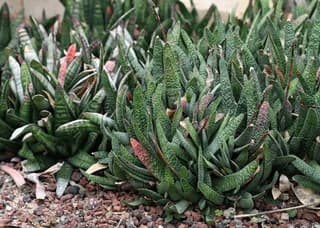
Knoppies Oxtongue
Gasteria batesiana
Gasteria batesiana, known as the Knoppies Oxtongue, is a small, slow-growing succulent native to the hot, rocky river valleys of northern KwaZulu-Natal, Eswatini, and Mpumalanga in South Africa. Its thick, dark green leaves are covered in raised white tubercles arranged in transverse bands, giving the plant a distinctively bumpy, "knoppies" (knobby) texture. The stemless rosettes slowly form small clumps as they produce offsets from the base, and in spring arching stems bear tubular, soft pink flowers with pale green tips that attract sunbirds.
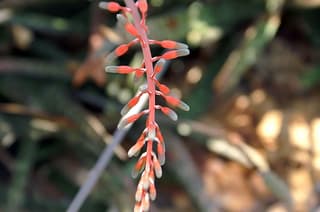
Ox tongue
Gasteria bicolor
Gasteria bicolor is a low-growing rosette succulent native to South Africa, prized for its thick, tongue-shaped, white-spotted leaves. It is an easy, slow-growing houseplant that tolerates low light better than most succulents and is safe for pets.

Great Karoo Ox-tongue
Gasteria disticha
Gasteria disticha is a small, clump-forming succulent native to the Robertson Karoo of South Africa's Western Cape. Its thick, strap-shaped leaves grow in two opposite rows (a distichous arrangement) when young, giving the rosette a striking fan-like symmetry. In the wild it nestles under rocks and spiny karoo shrubs, which shelter it from harsh midday sun. Slow-growing and long-lived, it produces pendent, tubular pink to reddish-pink flowers on tall spikes mostly in spring and early summer.
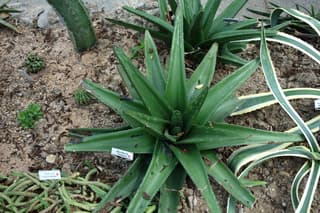
Thicket Ox-tongue
Gasteria excelsa
Gasteria excelsa is a striking, large-growing succulent native to the Eastern Cape province of South Africa, where it clings to shaded, south-facing cliffs and rocky thickets from sea level up to 1,500 m. One of the biggest species in the genus, it forms a single, robust rosette of stiff, triangular leaves up to 40 cm long, dark green and mottled with pale spots, edged with sharp, heavily serrated white margins. In summer it sends up a tall flower spike, sometimes over a meter high, carrying clusters of stomach-shaped, light pink blooms that attract sunbirds.
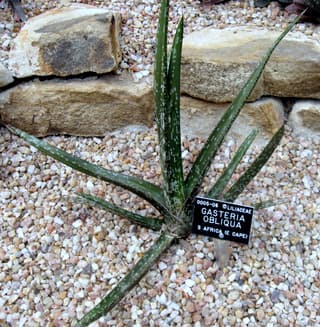
Ox Tongue
Gasteria obliqua
Gasteria obliqua, commonly known as Ox Tongue, is a slow-growing succulent native to South Africa. It features thick, tongue-shaped leaves with white spots that grow in a characteristic two-ranked (distichous) arrangement. Named for its resemblance to an ox's tongue, this compact plant is exceptionally forgiving and well-suited to low-light indoor environments.
Easy Care Pet Safe
Our selection of 1448 easy pet safe combines the characteristics of this category with reduced care needs. Perfect for beginners who love this category.
Why Choose Easy Pet Safe?
Combining the beauty of pet safe with easy difficulty level lets you enjoy this category without excessive maintenance worries. Each plant was selected to offer the best characteristics of the category at the care level you are looking for.