1446 Easy Pet Safe | 2026 Guide - Page 6
Find 1446 easy pet safe. Complete guide for your garden.
1446 Pet Safe with easy level
Showing 181-216 of 1446
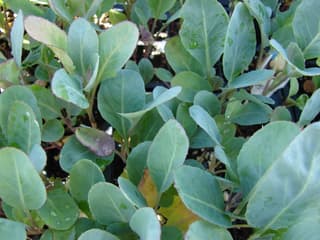
Cabbage
Brassica oleracea var. capitata
Cabbage (Brassica oleracea var. capitata) is a biennial leafy vegetable of the Brassicaceae family, grown as an annual for its tightly packed head of leaves. Native to the Mediterranean coast and western Europe, it is one of the most widely eaten vegetables worldwide, used raw in salads, fermented into sauerkraut, or cooked.
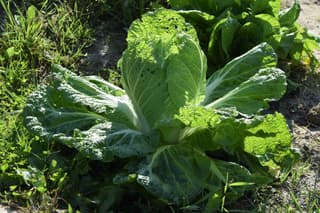
Chinese Cabbage
Brassica rapa pekinensis
Chinese Cabbage (Brassica rapa pekinensis) is a cool-season leafy vegetable originating from China, belonging to the Brassicaceae family. It forms a tight cylindrical head of pale green, crinkled leaves and is one of the most widely cultivated vegetables in East Asia. It is prized for its mild, slightly sweet flavor and versatility in cooking.

Caraguata
Bromelia antiacantha
Bromelia antiacantha, commonly known as caraguata or gravata, is a terrestrial bromeliad native to the Atlantic Forest and coastal restinga scrub of southern and southeastern Brazil, also found in Uruguay. It forms dense clumps up to 2 meters tall, with long, rigid leaves (80-185 cm) edged with dark spines arranged in a rosette. It flowers in summer (December to February), producing creamy-white bracts and pink flowers with pale margins. The fruits, ripening from February to June, are triangular, juicy berries with a tangy-sweet flavor, traditionally used in cooking and folk medicine for respiratory ailments.
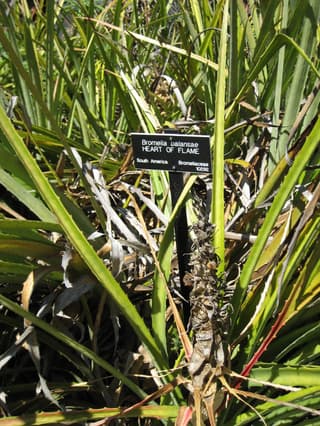
Heart of Flame
Bromelia balansae
Bromelia balansae, commonly known as Heart of Flame, is a large terrestrial bromeliad native to Brazil, Argentina, Bolivia, Colombia, and Paraguay. This striking plant features long, spiny leaves arranged in a large rosette, and is renowned for its spectacular flowering display: before blooming, the center of the rosette transforms into a vivid red-orange color, then reveals magenta and white flowers — creating the iconic "heart of flame" appearance. It is a tough, drought-tolerant plant that works beautifully as a landscape accent, living fence, or bold container specimen.
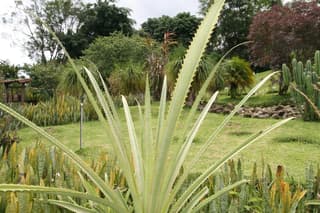
Wild Pineapple
Bromelia pinguin
Bromelia pinguin, commonly known as Wild Pineapple or Pinguin, is a spiny terrestrial bromeliad native to Central America, the Caribbean, and northern South America. It forms dense rosettes with long, robust leaves armed with sharp spines. The intensely sour yellow fruits are edible with a distinctive, citrus-like flavor. The plant naturally reproduces via thick runners (stolons) both above and below ground, forming dense colonies in its native habitat. Extremely hardy and adapted to challenging conditions, it is widely planted as a living fence and for erosion control throughout the tropics.
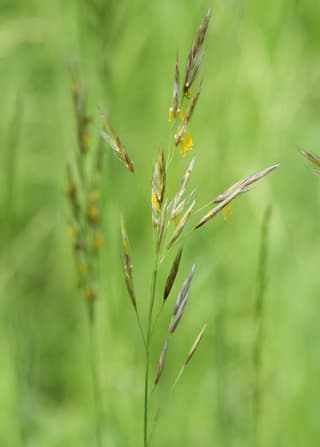
Brome grass
Bromus
The genus Bromus comprises a diverse group of grasses, commonly known as bromes or brome grasses. They are widely distributed in temperate regions and are recognized by their branched and drooping panicle inflorescences. While some species are considered weeds in crops, many are valued as livestock forage or as ornamental plants due to their delicate texture and graceful movement in the wind.
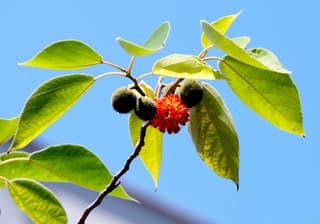
Paper Mulberry
Broussonetia papyrifera
Paper mulberry (Broussonetia papyrifera) is a fast-growing deciduous tree native to East Asia. Historically prized for producing washi paper in Japan and tapa cloth across Pacific cultures, it is a highly adaptable tree tolerant of poor soils, drought, and urban pollution.
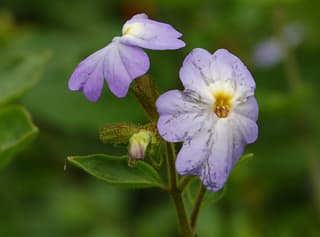
Jamaican Forget-Me-Not
Browallia americana
Browallia americana, commonly known as Jamaican Forget-Me-Not or Bush Violet, is an annual or short-lived perennial ornamental plant from the Solanaceae family, native to tropical South America. It produces star-shaped flowers in shades of blue, violet, and white, blooming abundantly in spring and summer. It is an excellent choice for containers, borders, and shaded gardens.
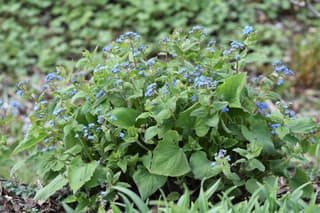
Siberian Bugloss
Brunnera macrophylla
Brunnera macrophylla, commonly called Siberian Bugloss or False Forget-Me-Not, is a shade-loving herbaceous perennial native to the forests of the Caucasus region and Turkey. It produces sprays of tiny, brilliant blue flowers above large heart-shaped leaves every spring, making it a beloved choice for woodland gardens and shaded borders.
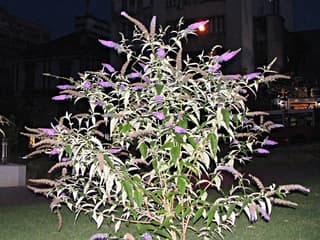
Butterfly Bush
Buddleja davidii
Buddleja davidii, commonly known as Butterfly Bush or Summer Lilac, is a fast-growing deciduous shrub native to central China. It produces long, arching panicles of fragrant flowers in shades of purple, white, pink, and lavender from summer through fall, making it a magnet for butterflies, bees, and other pollinators. Its vigorous growth and spectacular blooms have made it one of the most popular ornamental garden shrubs worldwide.
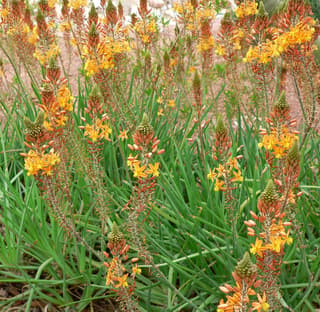
Burn Jelly Plant
Bulbine frutescens
Bulbine frutescens, commonly called the burn jelly plant, is a fast-growing, clump-forming succulent perennial from South Africa. Its narrow, fleshy, onion-like leaves radiate from a low rosette, while airy spikes of star-shaped yellow-to-orange flowers rise well above the foliage from spring through fall. Tough, drought-tolerant, and virtually pest-free, it thrives as a groundcover, border edging, or rockery accent in warm, sunny gardens.

Hare's Ear
Bupleurum
Bupleurum is a genus of about 180 species in the carrot family (Apiaceae), ranging from delicate annual wildflowers to woody Mediterranean shrubs. The most widely cultivated members are the ornamental hare's ear (Bupleurum rotundifolium), prized by florists for its chartreuse, cup-shaped bracts, and the East Asian medicinal species B. falcatum and B. chinense, whose dried roots are known in Traditional Chinese Medicine as 'chai hu.' Plants form airy clumps of blue-green, rounded leaves topped by flat umbels of tiny yellow-green flowers from summer into fall.
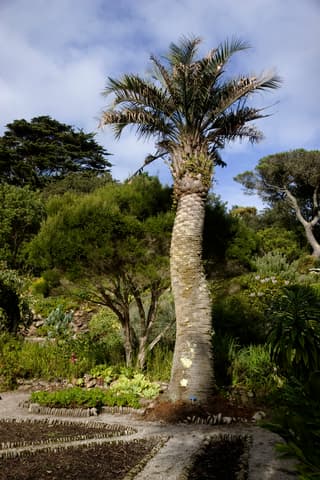
Pindo Palm
Butia capitata
Butia capitata, commonly known as the Pindo Palm or Jelly Palm, is a slow-growing feather palm native to southern Brazil, Uruguay, and Argentina. It is prized for its graceful blue-gray arching fronds and clusters of edible orange-yellow fruits used to make jellies and wines.
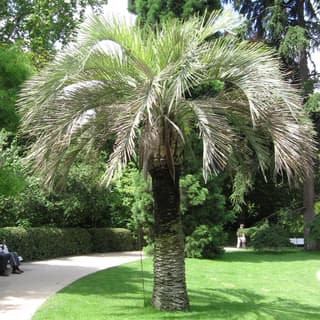
Jelly Palm
Butia odorata
Butia odorata, commonly known as the Jelly Palm or Pindo Palm, is a hardy feather palm native to the grasslands of southern Brazil, Uruguay, and Argentina. It is one of the most cold-tolerant palms in the world, withstanding temperatures as low as -12°C (10°F). Its arching blue-green fronds and clusters of edible orange-yellow fruits make it a prized ornamental and edible landscape tree.
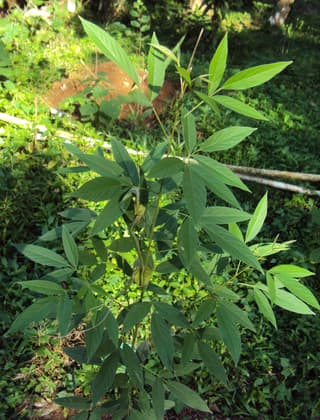
Pigeon pea
Cajanus cajan
The pigeon pea (Cajanus cajan) is a fast-growing, semi-perennial leguminous shrub, native to India or Africa and cultivated for over 3,000 years. It reaches between 1 and 3 meters in height, featuring trifoliate leaves and yellow flowers—sometimes with reddish streaks—that give way to pods containing 2 to 9 edible seeds. Thanks to its deep taproot and nitrogen-fixing capacity, it tolerates poor soils and drought periods, making it a key crop in tropical and subtropical agriculture.
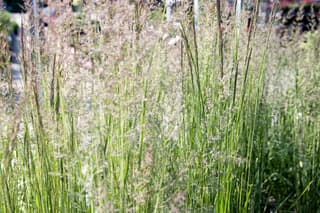
Feather Reed Grass
Calamagrostis x acutiflora
Feather Reed Grass 'Karl Foerster' is a perennial grass that forms a dense, upright clump of fresh green leaves. From June to August, slender, golden-brown spikes rise above the foliage and remain upright well into winter, providing structure and movement to winter garden beds. The variety is a sterile hybrid between Calamagrostis arundinacea and Calamagrostis epigejos and therefore does not set seed - it does not spread unwantedly in the garden. With its striking, columnar growth, it is one of the most popular ornamental grasses for contemporary perennial beds.

Furry Feather Calathea
Calathea rufibarba
Calathea rufibarba, now botanically reclassified as Goeppertia rufibarba, is a Brazilian rainforest native prized for its long, slender, wavy leaves. The upper leaf surface is a glossy dark green while the underside is a deep maroon-purple, and both the stalks and leaf undersides are covered in a fine, hair-like fuzz that gives the plant its 'furry feather' and 'velvet' nicknames.
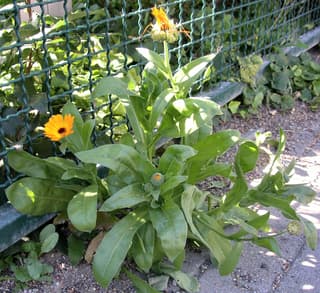
Pot Marigold
Calendula officinalis
Pot marigold (Calendula officinalis) is an annual plant native to the Mediterranean region, widely cultivated for its vibrant flowers in shades of orange, yellow, and cream. Belonging to the Asteraceae family, it is one of the oldest and most versatile medicinal herbs in the world, used since the Middle Ages for healing, culinary, and ornamental purposes. Its edible flowers bloom from spring to fall and attract beneficial pollinators to the garden.
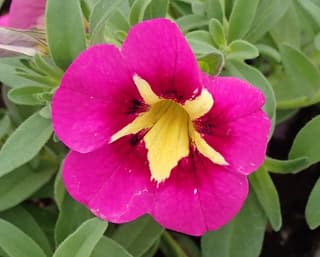
Million bells
Calibrachoa
Calibrachoa, commonly known as Million Bells, is a prolific bloomer featuring hundreds of small, petunia-like flowers. These compact, trailing plants are popular for hanging baskets and containers due to their vibrant colors and self-cleaning nature, meaning they do not require deadheading to continue blooming throughout the season.
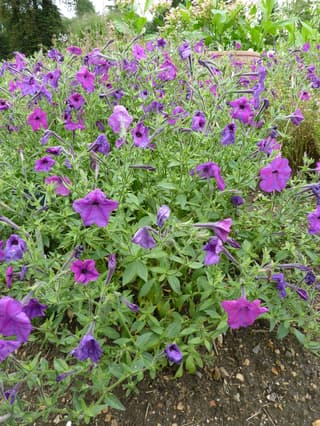
Seaside Petunia
Calibrachoa parviflora
Calibrachoa parviflora, commonly known as Seaside Petunia, is a small, trailing wildflower native to coastal and riparian habitats across Mexico, Central America, and South America. It produces tiny bell-shaped flowers under 1 cm wide, usually purple with a pale throat. It is the wild ancestor of modern garden Calibrachoa hybrids (million bells). The plant creeps along the ground, rooting at nodes, and thrives in moist, well-drained soils near streams and open slopes.
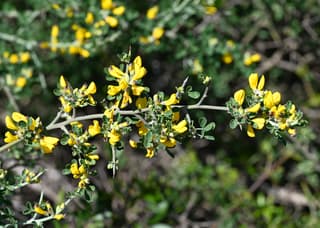
Hairy Thorny Broom
Calicotome villosa
The hairy thorny broom (Calicotome villosa) is a thorny evergreen shrub in the Fabaceae family, typical of the Mediterranean maquis and coastal garrigue. It grows between 1 and 3 meters in height with intricate, rigid branches ending in sharp spines; the leaves are trifoliate with oval, densely pubescent leaflets. In spring (from January to April), it is covered with vibrant, intense yellow flowers that are highly fragrant and gathered in small clusters of 6–15. The fruits are hairy legumes 2–4 cm long. The plant is nitrogen-fixing thanks to symbiotic bacteria in its roots, helping to renew poor and degraded soils. It resists salt winds, prolonged drought, and short frosts down to -10 °C (14 °F).

Powder Puff
Calliandra
Calliandra is a genus of roughly 140 shrub and small-tree species in the pea family (Fabaceae), native to the tropical and subtropical Americas. Grown for its striking pom-pom flowers made of hundreds of long, silky stamens, Calliandra is a fast-growing, evergreen ornamental prized in warm gardens and as a hummingbird magnet.
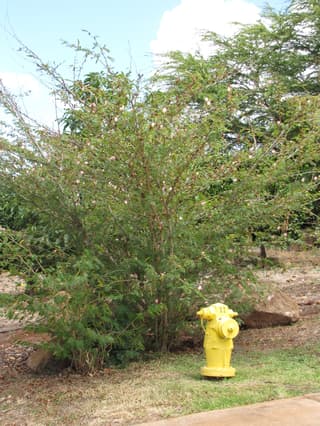
Surinam powderpuff
Calliandra surinamensis
The Surinam powderpuff (Calliandra surinamensis) is an evergreen tropical shrub or small tree from the legume family (Fabaceae), native to northern South America—Suriname, Brazil, Guyana, Venezuela, Colombia, Ecuador, Bolivia, French Guiana, and Peru. It features delicate, bipinnate leaves composed of tiny leaflets that close and droop at night. It is characterized by striking flowers resembling pink-and-white powderpuffs, consisting of up to a hundred silky stamens—white at the base and pink at the tips. It grows rapidly, reaching a height of approximately 11 to 15 feet with a similar spread, and enriches the soil through its ability to fix atmospheric nitrogen, a trait typical of leguminous plants.
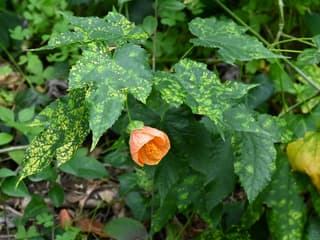
Painted Abutilon
Callianthe picta
Callianthe picta, commonly known as Painted Abutilon or Brazilian Bell Flower, is a fast-growing evergreen shrub native to Brazil and South America. A member of the Malvaceae family, it is prized for its stunning pendulous bell-shaped flowers in vibrant orange with distinctive red veining. It blooms prolifically from spring through fall, making it a favorite for gardens and patios.
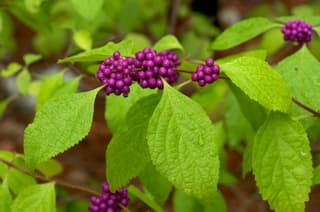
American beautyberry
Callicarpa americana
The American beautyberry (Callicarpa americana) is a deciduous shrub with an arching habit, native to the southeastern United States. It is highly prized for the striking contrast between its green foliage and the dense clusters of vibrant violet berries that cover its stems from late summer through winter. In spring and early summer, it produces small, inconspicuous lilac or white flowers that attract bees and butterflies before giving way to the famous berries, which are a vital food source for birds and other wildlife. It is a low-maintenance, heat-resistant plant that tolerates various soil types, making it ideal for pollinator gardens and naturalized landscapes.
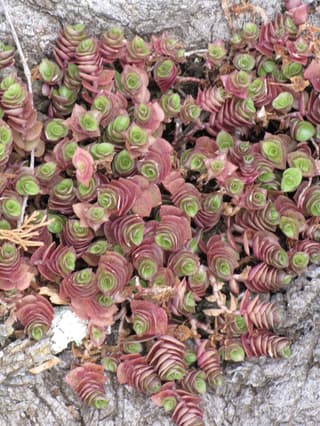
Turtle Vine
Callisia repens
Callisia repens, commonly known as Turtle Vine or Creeping Inch Plant, is a fast-growing trailing succulent from the Commelinaceae family, native to Central and South America. Its small, oval, fleshy leaves in deep green with purple undersides form dense, attractive mats. It is one of the easiest houseplants to grow, perfect for hanging baskets and as ground cover.
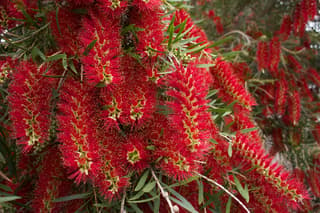
Weeping Bottlebrush
Callistemon viminalis
Callistemon viminalis, commonly known as the Weeping Bottlebrush, is a small tree or large shrub native to Australia. It is characterized by its pendulous branches and vibrant red cylindrical flower spikes that resemble bottle cleaning brushes. It is an extremely hardy plant, highly valued in landscaping for attracting pollinators, especially hummingbirds.
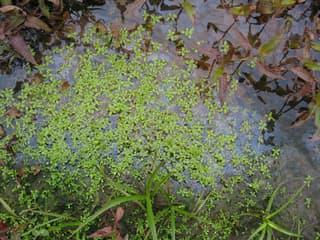
Pond Water-starwort
Callitriche stagnalis
Callitriche stagnalis, commonly known as Pond Water-starwort, is a delicate aquatic plant native to Europe and naturalized worldwide. It thrives in ponds, slow-moving streams, and waterlogged areas, forming attractive floating mats of bright green star-shaped leaf rosettes on the water surface. It is an excellent oxygenator for garden ponds and aquariums.
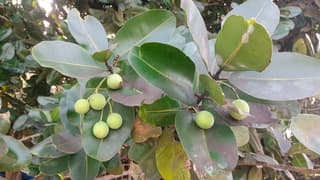
Beautyleaf / Alexandrian Laurel (genus)
Calophyllum
Calophyllum is a large genus of tropical trees in the family Calophyllaceae, known for their dense foliage, fragrant flowers, and timber value. Many species are used in coastal restoration and agroforestry systems.
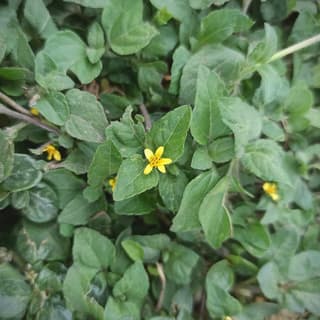
straggler daisy
Calyptocarpus vialis
Calyptocarpus vialis, commonly known as straggler daisy or horseherb, is a prostrate, mat-forming perennial native to the Southern United States and Mexico. It features small, opposite, serrated leaves and tiny yellow daisy-like flowers. It is highly valued as a native lawn alternative due to its ability to thrive in deep shade where most grasses fail, and its resilience to light foot traffic.
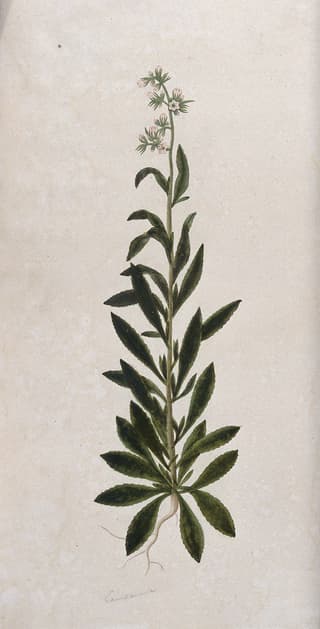
Bellflower
Campanula
Bellflower (Campanula) is a genus of approximately 500 flowering plant species in the family Campanulaceae, named for their distinctive bell-shaped blooms. Species range from low-growing ground covers to tall perennials, bearing flowers in shades of blue, purple, violet, white, and pink. Widely cultivated as ornamental plants in gardens and containers worldwide.
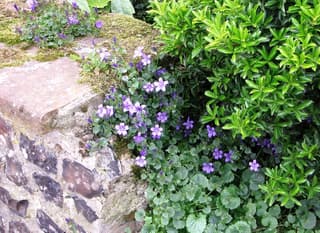
Dalmatian Bellflower
Campanula muralis
The Dalmatian Bellflower (Campanula portenschlagiana, still widely sold as Campanula muralis) is a vigorous, mat-forming evergreen perennial native to the rocky mountains of Dalmatia, Croatia. It produces a dense carpet of small, heart-shaped leaves smothered in purple-blue, star-shaped bells from late spring through summer. Prized for rock gardens, walls, and container edges, it is remarkably easy-going once established.
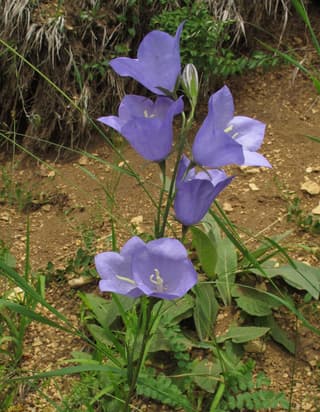
Peach-leaved Bellflower
Campanula persicifolia
Campanula persicifolia, the peach-leaved bellflower, is a hardy herbaceous perennial native to the alpine and woodland regions of Europe. It forms low rosettes of narrow, peach-tree-like leaves and sends up slender, upright stems bearing open, bell-shaped flowers in shades of blue-violet or white from early to midsummer. Easy to grow and largely untroubled by pests or disease, it is a cottage-garden classic prized for borders, rock gardens, and cut-flower arrangements.
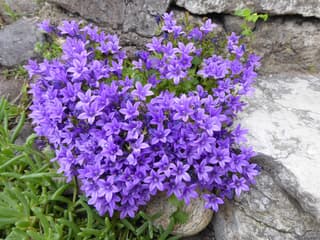
Dalmatian Bellflower
Campanula portenschlagiana
Campanula portenschlagiana, commonly known as the Dalmatian bellflower or wall bellflower, is a low-growing evergreen perennial native to the Dalmatian mountains of Croatia. It forms dense mats of heart-shaped leaves smothered in starry, funnel-shaped purple-blue bell flowers throughout summer. Extremely vigorous and hardy, it thrives in rock gardens, walls, and as ground cover, earning the Royal Horticultural Society Award of Garden Merit.
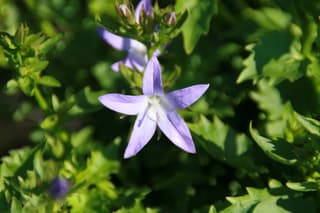
Serbian Bellflower
Campanula poscharskyana
Campanula poscharskyana, commonly known as the Serbian Bellflower, is a low-growing, spreading perennial native to the Dinaric Alps of Serbia and the western Balkans. It produces masses of star-shaped, lavender-blue to violet flowers from late spring through fall, making it one of the most prolific and reliable flowering ground covers for gardens. It thrives in rocky crevices, walls, and slopes, spreading readily via adventitious roots. Its deer resistance, drought tolerance once established, and adaptability to various light conditions make it a favourite in rock gardens, borders, and hanging baskets.
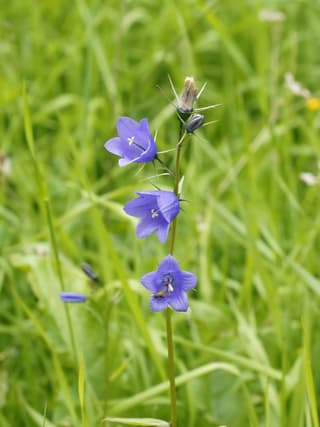
Harebell
Campanula rotundifolia
Campanula rotundifolia, commonly known as Harebell or Scottish Bluebell, is a delicate perennial wildflower native to Europe and North America. It produces charming nodding bell-shaped flowers in shades of violet-blue, blooming from summer through fall. This hardy plant thrives in rocky gardens, meadows, and grassy slopes with minimal care.
Easy Care Pet Safe
Our selection of 1446 easy pet safe combines the characteristics of this category with reduced care needs. Perfect for beginners who love this category.
Why Choose Easy Pet Safe?
Combining the beauty of pet safe with easy difficulty level lets you enjoy this category without excessive maintenance worries. Each plant was selected to offer the best characteristics of the category at the care level you are looking for.