1446 Easy Pet Safe | 2026 Guide - Page 7
Find 1446 easy pet safe. Complete guide for your garden.
1446 Pet Safe with easy level
Showing 217-252 of 1446
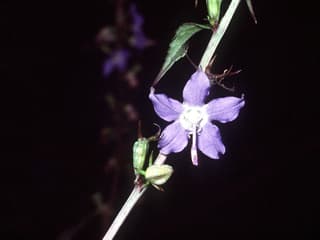
Tall Bellflower
Campanulastrum americanum
Campanulastrum americanum, commonly called tall bellflower or American bellflower, is an erect annual or biennial wildflower native to moist, partly shaded woodlands, meadows, streambanks, and ditches across eastern and central North America. It grows on a single unbranched, light-green stem that can reach 3-6 ft (90-180 cm), lined with rough-textured, toothed, lance-to-egg-shaped leaves. From June through August it produces open, star-shaped, five-lobed flowers about 1 in. across in light-to-dark violet-blue with a white throat ring, borne solitary or clustered in the leaf axils. The flowers have a distinctive curved style that helps ensure cross-pollination by long-tongued bees, bumblebees, and hummingbirds. It self-seeds readily, and depending on when seedlings germinate it behaves as an annual or as a biennial that overwinters as a basal rosette.
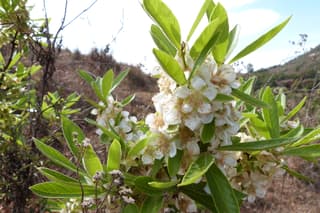
Guabiroba
Campomanesia pubescens
Guabiroba (Campomanesia pubescens) is a native shrub of the Brazilian Cerrado savanna, belonging to the Myrtaceae family. It features twisted branches, simple leathery leaves, and fragrant white flowers that bloom in spring. Its small yellow fruits, resembling miniature guavas, are treasured by local wildlife and harvested for fresh eating and artisanal preparations.
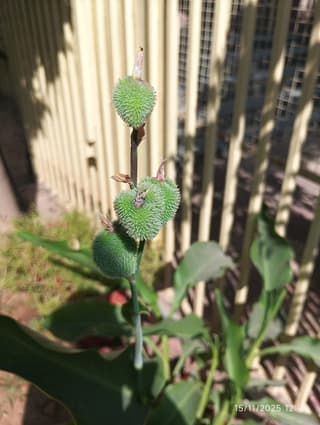
Canna Lily
Canna
Canna is a genus of fast-growing tropical perennials celebrated for their bold, exotic flowers in shades of red, orange, yellow, pink, and white. Native to tropical and subtropical Americas, cannas are widely grown as ornamental plants in gardens and parks, delivering spectacular blooms throughout summer and fall. Their broad, lush foliage adds a dramatic tropical accent to any outdoor space.
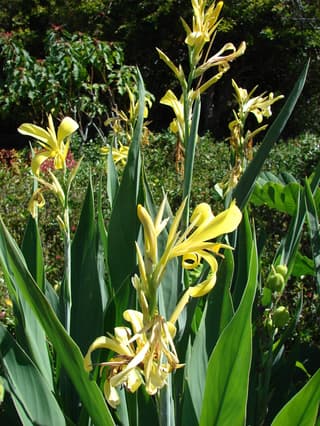
Water canna
Canna glauca
Water canna is a perennial herb in the family Cannaceae, native to wetlands of tropical and subtropical America, from the southeastern United States through Mexico, Central America, South America and the West Indies. It is easily recognized by its narrow, blue-green (glaucous) leaves and its large, pale-to-bright yellow flowers, produced from spring through fall. Unlike most cannas, it grows naturally as a marginal aquatic or bog plant, rooting in wet soil or in up to about 15 cm (6 in) of still or slow-moving water around lakes, marshes and pond edges.
Indian Shot
Canna indica
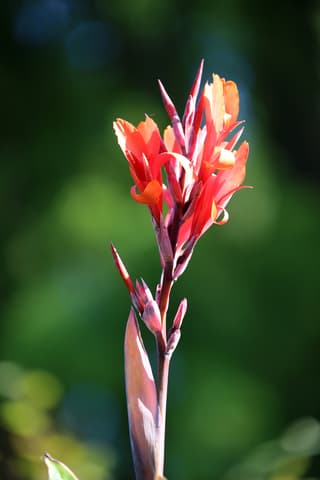
Canna indica, commonly known as Indian Shot, is a tropical rhizomatous plant native to the Americas. It produces spectacular blooms in shades of red, orange, yellow and pink atop upright stems reaching up to 2.4 meters tall. Its large paddle-shaped leaves range from deep green to green-purple, creating a bold tropical statement in gardens.
Wild Canna
Canna limbata
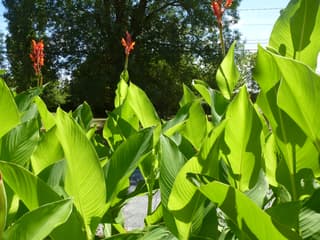
Wild Canna (Canna limbata) is a perennial rhizomatous herbaceous plant native to Brazil, belonging to the family Cannaceae. With broad ornamental leaves and vibrant flowers in shades of red, yellow, and orange, it is widely used in tropical gardens, borders, and landscaping. It grows upright and clumping, reaching up to 2 meters in height under ideal conditions.
Canna Lily
Canna x generalis
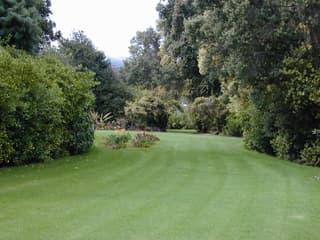
Canna Lily (Canna x generalis) is a hybrid herbaceous perennial widely cultivated in tropical and subtropical gardens worldwide. Resulting from crosses of various Canna species, it is renowned for its spectacular flowers in shades of red, orange, yellow, pink, and white, as well as its broad, ornamental leaves. It is one of the most popular ornamental plants in landscaping, especially in borders, poolside plantings, and tropical garden designs.
Shepherd's Purse
Capsella bursa-pastoris
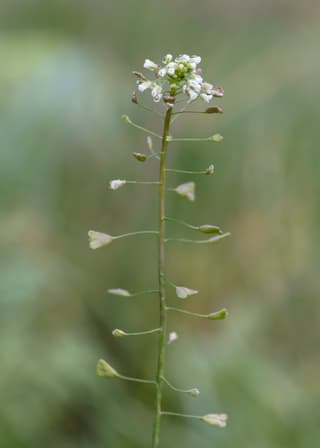
Capsella bursa-pastoris, commonly known as Shepherd's Purse, is a fast-growing annual weed in the mustard family (Brassicaceae), native to eastern Europe and Asia Minor but now naturalized worldwide. It is easily recognized by its distinctive heart-shaped (triangular) seed pods that resemble the pouches historically carried by shepherds. The plant produces a basal rosette of lobed leaves and erect stems bearing clusters of tiny white flowers. It thrives in disturbed ground, roadsides, gardens, and agricultural fields.
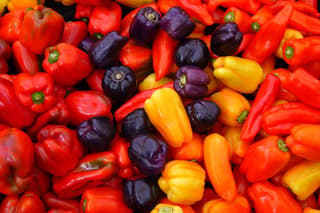
Chili pepper
Capsicum annuum
Capsicum annuum is an extremely versatile species that includes everything from sweet bell peppers to spicy peppers like Jalapeño and Cayenne. It is a perennial shrubby plant in tropical climates but is often grown as an annual in cooler regions. Its flowers are small and white, giving rise to fruits that vary drastically in color, size, and capsaicin level.
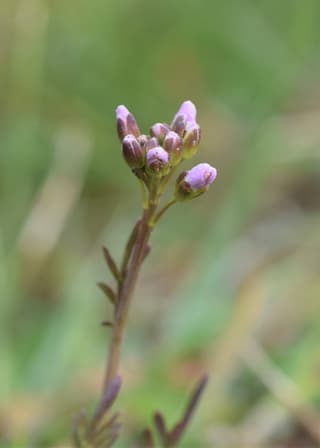
Bittercress
Cardamine
Cardamine is a large genus of herbs in the mustard family Brassicaceae, comprising over 200 annual and perennial species distributed across temperate and cool regions worldwide. Notable species include C. pratensis (cuckoo flower / lady's smock) and C. hirsuta (hairy bittercress). These low-maintenance plants are valued in wildflower gardens, moist borders, and as ground cover.
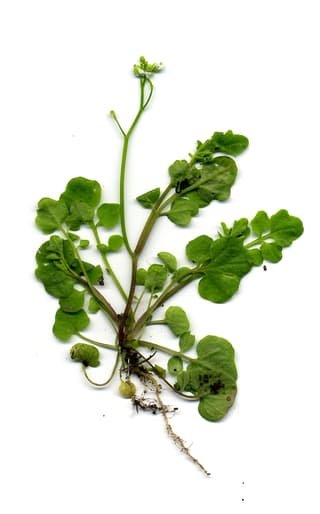
Hairy Bittercress
Cardamine hirsuta
Cardamine hirsuta, commonly known as hairy bittercress, is a small, fast-growing annual (occasionally biennial) herb in the mustard family (Brassicaceae). Native to Europe, Asia and parts of Africa, it now grows almost worldwide as a common garden weed, favoring moist, disturbed soil in beds, containers and pavement cracks. It forms a low rosette of pinnately compound leaves and sends up slender flowering stems topped with tiny four-petaled white flowers. Its slender seed pods (siliques) ripen explosively, catapulting seeds several feet to spread the plant quickly. Despite its weedy reputation, the young leaves are edible and prized for a peppery, cress-like flavor similar to watercress or arugula.
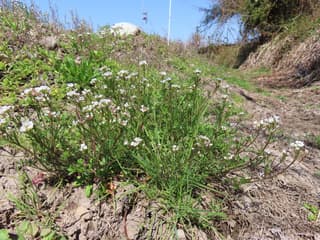
Nursery bittercress
Cardamine occulta
Cardamine occulta, commonly called nursery or hidden bittercress, is a small annual weed in the mustard family (Brassicaceae) native to East and South Asia. It is best known as a persistent hitchhiker weed in nursery container stock, thriving in the moist, shaded, nutrient-rich conditions of greenhouses and irrigated pots. The plant forms a low rosette of pinnately divided leaves and sends up slender branching stems topped with tiny four-petaled white flowers, followed by narrow seed pods (siliques) that explode open at the slightest touch, flinging seeds well away from the parent plant.
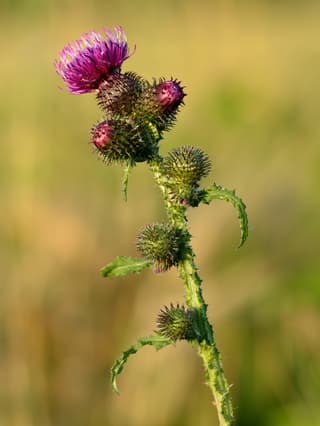
Thistle
Carduus
Carduus is a genus in the family Asteraceae comprising around 90 species of spiny thistles, commonly known as "plumeless thistles" because they lack the feathery pappus found in the related genus Cirsium. Native to Europe, North Africa and Asia, many species have naturalized as ruderal or invasive weeds elsewhere, including North America and Australia. This profile describes the genus generally; traits such as height, bloom time and cold hardiness vary among species (e.g., C. nutans, C. acanthoides, C. crispus).
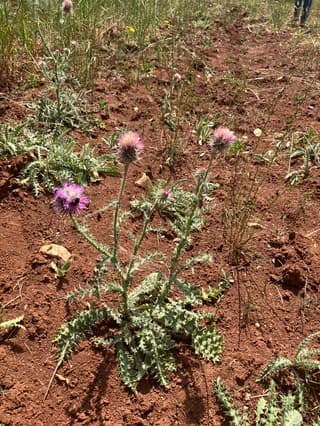
Musk Thistle
Carduus nutans
Musk thistle (Carduus nutans) is a biennial weed native to Europe, western Asia, and North Africa, now widely naturalized and declared a noxious invasive species across North America, Australia, New Zealand, and South Africa. In its first year it forms a low, spiny rosette of deeply lobed, grey-green leaves with wavy white margins. In its second year it bolts to 30–170 cm (occasionally up to 270 cm), producing branched, spine-winged stems topped with large, solitary, nodding flowerheads 3–6 cm across in shades of reddish-purple to violet — giving the plant its "nodding" character. Flowers emit a sweet musk-like fragrance that attracts bees, butterflies, and hoverflies in abundance. A single plant can produce up to 20,000 seeds that remain viable in soil for up to 20 years, making it an aggressive colonizer of pastures, roadsides, disturbed ground, and waste areas. Despite its invasive reputation, it has a long history of limited edible and medicinal use in its native range.
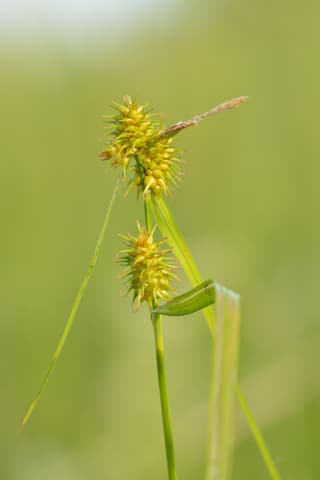
Sedge
Carex
Carex is a vast genus of sedges in the family Cyperaceae, comprising over 2,000 species worldwide. Widely grown as ornamental grasses for their graceful, arching foliage in borders, containers, and water gardens.
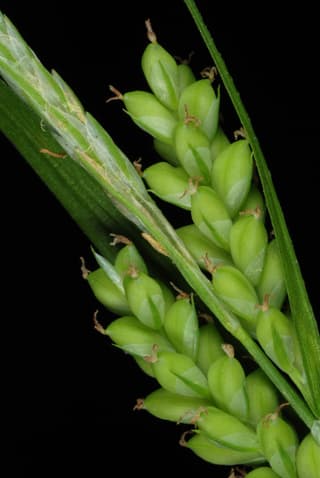
Eastern Woodland Sedge
Carex blanda
Carex blanda is a delicate native sedge from eastern North America, prized as a graceful shade groundcover. It forms soft, arching mounds of light green semi-evergreen foliage up to 50 cm tall and 60 cm wide. Exceptionally adaptable, it thrives in clay, loam, or rocky soils across a wide pH range, making it a top choice for woodland gardens, rain gardens, and low-maintenance landscapes.
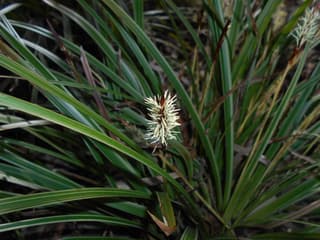
Japanese Sedge
Carex morrowii
Carex morrowii, commonly known as Japanese Sedge or Morrow's Sedge, is an evergreen ornamental grass-like perennial native to Japan. It forms graceful, arching clumps of narrow, often variegated leaves that add texture and movement to shaded gardens. Exceptionally shade-tolerant and low-maintenance, it thrives under trees, in borders, and in containers.
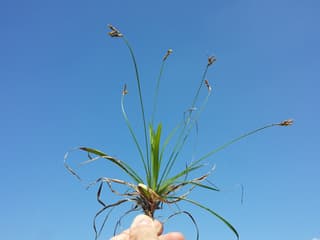
Bird's-foot Sedge
Carex ornithopoda
Carex ornithopoda, commonly called bird's-foot sedge, is a small, slow-growing, evergreen perennial sedge native to Europe and Anatolia. It forms neat, compact tufts of narrow leaves and produces brownish flower spikes resembling a bird's claw in mid-to-late spring. Popular as a low-maintenance edging, ground cover, or rock garden plant.
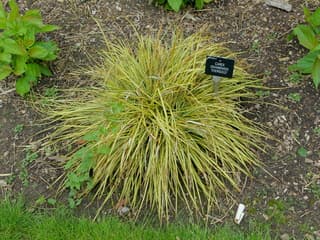
Japanese Sedge
Carex oshimensis
Carex oshimensis, commonly known as Japanese sedge, is an evergreen, clump-forming ornamental grass-like perennial in the sedge family (Cyperaceae), native to the woodlands and rocky slopes of Honshu Island, Japan, particularly the Izu Oshima region from which its species name derives. In cultivation, it is best known through its popular variegated cultivar 'Evergold', prized for narrow, arching leaves striped with a bright creamy-yellow center band bordered by fine dark-green margins. Forming low, fountain-like mounds roughly 30 cm tall and 45 cm wide, it spreads slowly via short rhizomes and produces inconspicuous brown flower spikes in spring. Thriving in part shade to filtered sun, where its variegation stays richest, and in consistently moist, well-drained, slightly acidic soil, Carex oshimensis is prized by gardeners for its low-maintenance, four-season structure. It works beautifully as edging, in mixed containers, along woodland borders, or as a bright groundcover beneath larger shrubs and trees, tolerating occasional drought once established but never thriving in full shade or standing water.
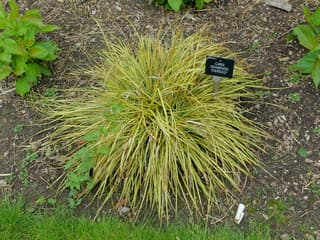
Evergold Sedge
Carex oshimensis 'Evergold'
Carex oshimensis 'Evergold' is a perennial ornamental grass native to Japan, appreciated worldwide for its narrow, variegated foliage featuring golden-yellow centers and dark green margins. Forming compact, arching clumps up to 12 inches (30 cm) tall, this grass-like plant is evergreen, maintaining its visual appeal throughout the year. It is extremely versatile—ideal for borders, groundcover, containers, and Asian-style or contemporary gardens. Deer-resistant, salt-tolerant, and very low-maintenance, it is one of the most reliable ornamental plants for temperate gardens and indoor environments with indirect light.
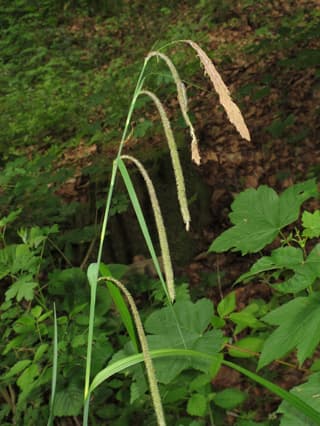
Pendulous Sedge
Carex pendula
Pendulous sedge is a vigorous, evergreen perennial in the Cyperaceae family, native across western, central and southern Europe. It forms large arching clumps of dark green, pleated, grass-like foliage, above which tall stems carry several slender, drooping flower spikes from spring into summer. A tough, adaptable plant, it is a favourite for bog gardens, pond margins and damp shaded borders where few other plants thrive.
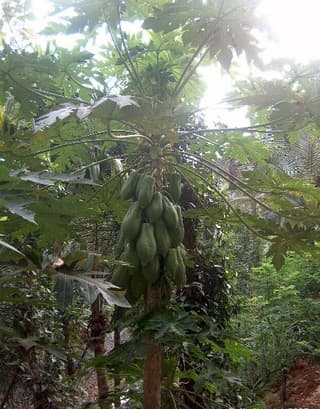
Papaya
Carica papaya
Papaya (Carica papaya) is a fast-growing tropical fruit tree native to Central America and Mexico. One of the most widely cultivated tropical fruits in the world, it can begin bearing fruit within 4–8 months of planting. Its large, deeply lobed leaves, creamy-white flowers, and sweet orange fruits make it a striking presence in tropical and subtropical gardens.
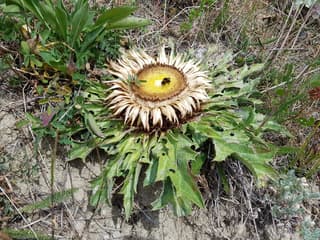
Acanthus-leaved carline thistle
Carlina acanthifolia
The Acanthus-leaved carline thistle (Carlina acanthifolia) is a stemless perennial native to European mountains, forming a rosette of large, spiny, pinnatifid leaves pressed against the ground. Its large solitary flower head, which can reach 15 cm in diameter, features pale golden-yellow inner bracts that act as a natural hygrometer: they close when bad weather approaches and open in dry weather, earning it the nickname 'barometer thistle.' A protected species in France, it is typical of dry limestone grasslands, rocky areas, and mountain meadows up to 1,800 meters in altitude.
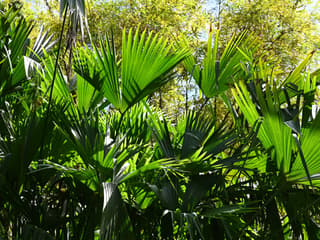
Panama hat plant
Carludovica palmata
Carludovica palmata, popularly known as the Panama hat plant or toquilla palm, is a perennial herbaceous plant in the Cyclanthaceae family, native to the tropical rainforests stretching from southern Mexico to Bolivia. Despite its palm-like appearance, it does not belong to that family: it lacks a woody trunk and grows in clumps from a short or underground stem, with large fan-shaped leaves that can reach up to 1 meter in width and a total height between 1.5 and 4 meters. Its flowers, grouped in a spadix, are cream or whitish in tone, and its ripe fruits acquire orange or reddish hues. It is world-famous because the fibers extracted from its young leaves are hand-woven to create traditional jipijapa hats, erroneously called "Panama hats."
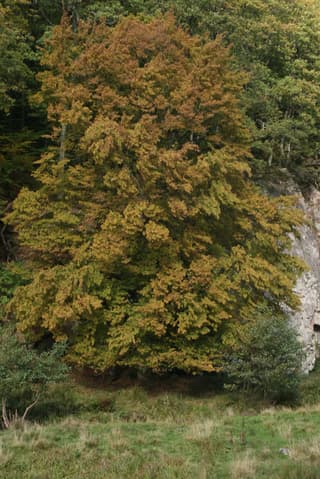
European Hornbeam
Carpinus betulus
The European hornbeam (Carpinus betulus) is a hardy deciduous tree native to Europe and parts of western Asia, prized for its dense, fine-textured foliage and smooth, fluted grey bark. It responds exceptionally well to clipping, which is why it is one of the most popular species for formal hedges and topiary, and its small leaves and compact root system also make it a favorite subject for bonsai.
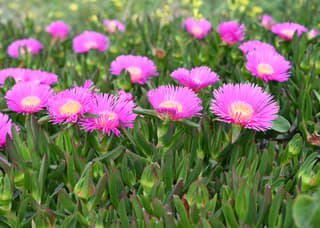
Sally-my-handsome
Carpobrotus acinaciformis
Carpobrotus acinaciformis is a fast-growing, mat-forming succulent native to the coastal dunes of South Africa. It produces spectacular magenta flowers up to 15 cm wide and features thick, sickle-shaped leaves. Widely used as ground cover in coastal and Mediterranean gardens.
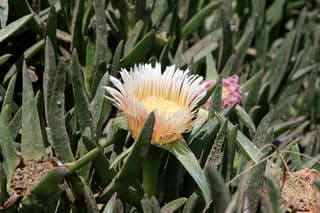
Hottentot Fig
Carpobrotus edulis
Hottentot Fig (Carpobrotus edulis) is a fast-spreading succulent groundcover native to the coastal regions of South Africa. Its fleshy, triangular leaves form dense mats that can extend several meters. It produces showy daisy-like flowers in yellow, purple, or pink during spring and summer, followed by edible fig-like fruits. Considered highly invasive in Mediterranean climates, California, and coastal Australia.
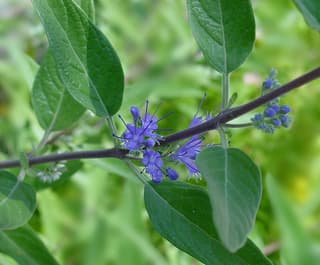
Bluebeard
Caryopteris × clandonensis
Bluebeard (Caryopteris × clandonensis) is a low-growing, deciduous ornamental shrub from the mint family (Lamiaceae), which covers itself with vibrant blue, fragrant flowers from late summer to autumn. Its grayish-green, aromatic leaves when crushed, and compact size of 60-120 cm, make it a popular choice for sunny gardens, as a bee pasture, and for low hedges.

Casuarina
Casuarina equisetifolia
Casuarina equisetifolia is a fast-growing tree native to Australia, Southeast Asia, and the Pacific Islands, now widely naturalized in tropical and subtropical coastal regions worldwide. Despite its conifer-like appearance, it is an angiosperm: its thin, jointed, horsetail-like branches replace true leaves (which are reduced to scales) and perform photosynthesis, drastically reducing water loss through evapotranspiration. It can reach 15 to 40 meters in height, with a straight trunk and rough, fissured grayish to brownish bark. Its roots form a symbiosis with Frankia bacteria, fixing atmospheric nitrogen and improving poor soils. It is extremely tolerant of salinity, strong winds, and sandy soils, making it one of the most used species globally for dune stabilization and coastal erosion control.
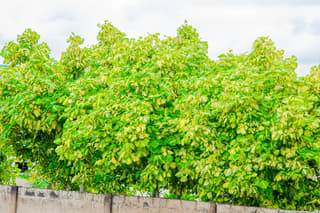
Southern Catalpa
Catalpa bignonioides
Catalpa bignonioides, commonly known as the Southern Catalpa or Indian Bean Tree, is a fast-growing deciduous tree native to the southeastern United States, particularly the lower Mississippi Valley region of Alabama, Mississippi, Georgia, and Florida. Celebrated for its dramatic ornamental qualities, it produces enormous heart-shaped leaves up to 30 cm across and spectacular clusters of trumpet-shaped white flowers with yellow and purple markings in late spring to early summer. The tree reaches a mature height of 12–18 metres with a broad, irregular crown spanning 10–12 metres, making it an impressive shade tree for large gardens and parks. Its most distinctive feature — besides the showy flowers — is the production of long, slender seed pods resembling cigars or beans, which hang from the branches well into winter and give rise to several of its common names. Catalpa bignonioides has been widely cultivated across Europe and North America since the 18th century. It thrives in full sun to partial shade and tolerates a wide range of soil conditions, including clay and periodically waterlogged soils. The species is notably drought-tolerant once established and hardy in USDA zones 5–9, making it adaptable to many temperate climates.
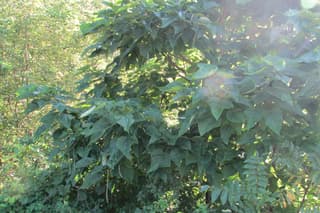
Northern Catalpa
Catalpa speciosa
Northern Catalpa (Catalpa speciosa) is a large, fast-growing deciduous tree native to the central eastern United States. It is renowned for its showy white bell-shaped flowers with purple and yellow markings in late spring, and its distinctive long cigar-shaped seedpods that persist through winter. Widely planted as a shade and ornamental tree in parks, large gardens, and urban streetscapes, it is valued for its adaptability to a wide range of soil and climate conditions.
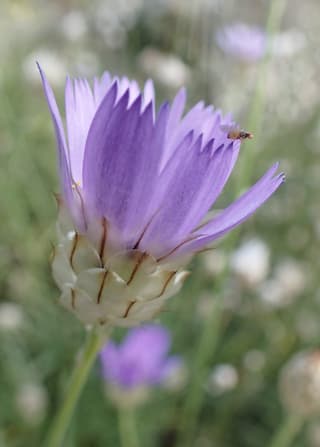
Cupid's dart
Catananche caerulea
Catananche caerulea, commonly known as Cupid's dart, is a short-lived perennial ornamental plant belonging to the Asteraceae family. It is native to the western Mediterranean, Southern Europe (Spain, Portugal, France, Italy), and North Africa (Morocco, Algeria, Tunisia). Its grayish-green, narrow leaves form a basal rosette and are covered with fine, downy hairs. Growing 30–60 cm tall, its branched stems are topped with papery, bluish-purple (rarely white) flower heads with dark centers. These bloom from early summer to late autumn, decorating the garden and attracting butterflies. They remain decorative even when dried, making them a popular choice for dried flower arrangements.
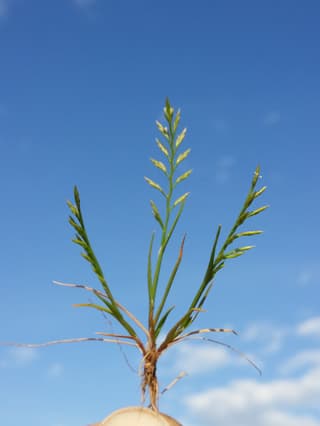
Fern-grass
Catapodium rigidum
Catapodium rigidum, known as fern-grass, is a small and elegant annual grass native to the Mediterranean region and Western Europe. Its stems are stiff and branched, creating a geometric appearance reminiscent of small fern fronds. It is a pioneer plant that thrives in poor soils, rock crevices, and coastal dunes, being extremely resistant to drought and heat.
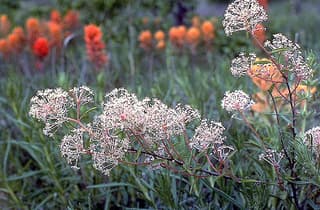
Inland Jersey Tea
Ceanothus herbaceus
Inland Jersey Tea (Ceanothus herbaceus) is a compact, deciduous shrub native to prairies, rocky glades, and sandy hills across central and eastern North America. Growing 2–3 feet tall, it produces dense clusters of small white flowers in spring and early summer, attracting butterflies and native pollinators. Exceptionally drought-tolerant once established, it thrives in poor, well-drained soils and requires minimal care, making it ideal for native plant gardens and low-maintenance landscapes.
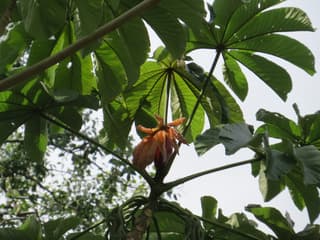
Glaziou's Cecropia
Cecropia glaziovii
Cecropia glaziovii, commonly known as Glaziou's Cecropia or Red Embauba, is a fast-growing pioneer tree native to the Brazilian Atlantic Forest. It is characterized by large lobed leaves that are green on top and silvery-white below, and reddish new growth that gives it its Portuguese common name. It can reach up to 16 meters in height within a decade, making it one of the fastest-growing trees in the Atlantic Forest.

Trumpet Tree
Cecropia pachystachya
The trumpet tree (Cecropia pachystachya) is a fast-growing pioneer tree native to South America, belonging to the Urticaceae family. Known for its umbrella-shaped canopy, it reaches 6 to 15 meters in height. Its large, deeply lobed leaves are dark green above and silvery below, giving the tree a distinctive two-toned look. The hollow, jointed stem is inhabited by Azteca ants in a classic mutualistic relationship: the tree provides shelter and Mullerian food bodies, while the ants defend it against herbivores and smothering vines. It rapidly colonizes forest gaps, edges, and disturbed land, making it a key species in ecological restoration, and its leaves have a long history of use in traditional herbal medicine.
Easy Care Pet Safe
Our selection of 1446 easy pet safe combines the characteristics of this category with reduced care needs. Perfect for beginners who love this category.
Why Choose Easy Pet Safe?
Combining the beauty of pet safe with easy difficulty level lets you enjoy this category without excessive maintenance worries. Each plant was selected to offer the best characteristics of the category at the care level you are looking for.