2294 Easy Plants | 2026 Guide - Page 57
Discover 2294 easy plants for your garden. Complete care guide.
2294 Easy Plants
Showing 2017-2052 of 2294

Sarsaparilla
Smilax aspera
Smilax aspera, commonly known as sarsaparilla or rough bindweed, is an evergreen, thorny climbing vine native to the Mediterranean Basin, southern Europe and North Africa. Using tendrils, it scrambles over shrubs, walls and trellises, reaching 1 to 4 metres in length. Its wiry, zigzagging stems and leathery, heart-shaped leaves are armed with small spines, and from September to November it produces clusters of tiny, strongly fragrant greenish-white flowers followed by red berries that ripen to black.
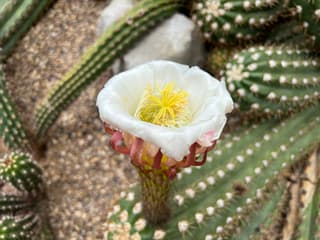
Argentine White Torch Cactus
Soehrensia candicans
The Argentine White Torch Cactus (Soehrensia candicans) is a columnar cactus native to northern Argentina, renowned for its spectacular large white fragrant flowers that bloom at night. It forms sprawling clumps up to 3 m (10 ft) wide, with individual stems reaching 60 cm (24 in) tall. Hardy, drought-tolerant, and cold-resistant to -6°C (21°F), it thrives in xeriscapes and rock gardens.
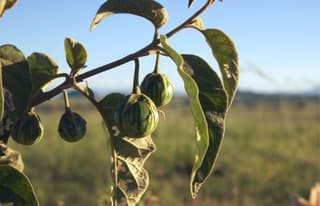
Ethiopian Eggplant
Solanum aethiopicum
Solanum aethiopicum, commonly known as Ethiopian eggplant or scarlet eggplant, is a fruiting shrub in the Solanaceae family native to tropical Africa. It grows up to 2.5 m tall with lobed leaves, produces star-shaped white to violet flowers, and bears small egg-shaped berries that ripen from green to vivid orange-red. It is one of the five most economically important vegetables in sub-Saharan Africa, valued for both its edible fruits and nutritious leaves.
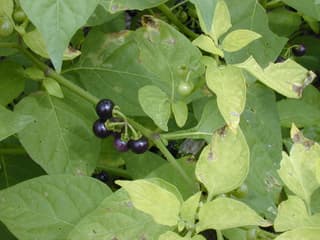
American Black Nightshade
Solanum americanum
American black nightshade (Solanum americanum) is an annual or short-lived perennial herbaceous plant in the Solanaceae family, widely distributed across tropical and subtropical regions worldwide. Native to the Americas, it has become a cosmopolitan weed found in disturbed soils, roadsides, gardens, and waste ground. It produces small white star-shaped flowers and round berries (5–10 mm) that ripen from green to glossy black. All parts are considered severely toxic — particularly the green parts and unripe berries, which contain solanine, chaconine, and solamargine — though the plant has traditional medicinal uses across Africa, Asia, and the Americas.
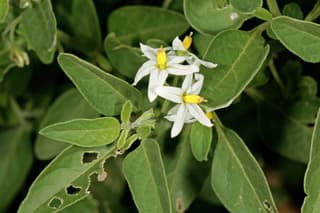
Tall nightshade
Solanum chenopodioides
Tall nightshade (Solanum chenopodioides) is a weedy, sprawling perennial subshrub in the nightshade family, native to South America and now naturalized in disturbed ground, coastal scrub, and gardens across mild-climate regions worldwide. It bears small star-shaped white flowers followed by round berries that ripen from green to dark purple-black. As with other Solanum species, its leaves and unripe berries contain solanine and related glycoalkaloids, making the whole plant toxic if eaten.
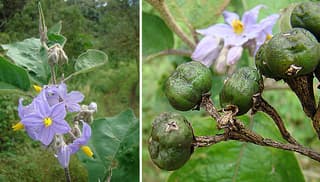
Lance-leaf Nightshade
Solanum lanceolatum
Solanum lanceolatum is a perennial shrub native to Mexico and Central America, prized for its striking star-shaped purple flowers with bright yellow anthers and glossy orange-red berries. A member of the nightshade family (Solanaceae), it thrives in warm climates and full sun, tolerating drought once established. All parts of the plant are toxic if ingested.
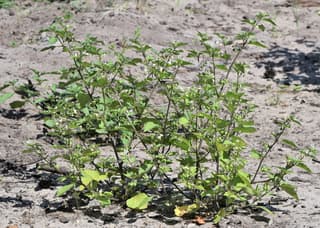
Black Nightshade
Solanum nigrum
Black nightshade (Solanum nigrum) is a fast-growing cosmopolitan herbaceous weed in the Solanaceae family. Found worldwide in disturbed soils, roadsides, and gardens, it produces small white star-shaped flowers with yellow anthers and clusters of berries that ripen from green to shiny black. All green parts and unripe berries contain solanine, a toxic glycoalkaloid; ripe berries are consumed cautiously in some traditional cultures.

Red Nightshade
Solanum villosum
Solanum villosum, commonly called red nightshade or hairy nightshade, is a fast-growing annual herb in the tomato and potato family (Solanaceae). Native to Eurasia and now naturalized worldwide, it typically reaches 40-60 cm tall, with soft, hairy, toothed leaves and small clusters of white, star-shaped flowers. The flowers give way to round berries that ripen from green to red or yellow. In many parts of Africa and Asia, the young leaves and shoots are cooked and eaten as a nutritious leafy vegetable, but every part of the plant - especially the unripe green berries and raw foliage - contains the toxic glycoalkaloid solanine and should never be eaten raw or before fully ripe. Because it thrives in disturbed soil with minimal care, red nightshade is often treated as a fast-cycling kitchen-garden crop rather than a long-term ornamental.
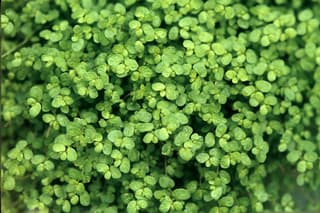
Baby's Tears
Soleirolia soleirolii
Soleirolia soleirolii, commonly known as Baby's Tears, is a low-growing, mat-forming perennial native to the western Mediterranean islands of Corsica and Sardinia. It produces a dense carpet of tiny, rounded leaves on delicate, thread-like stems, creating a lush, moss-like appearance. Its dainty white flowers appear in spring and summer. Popular as a ground cover, terrarium plant, and houseplant, it thrives in high humidity and consistent moisture.
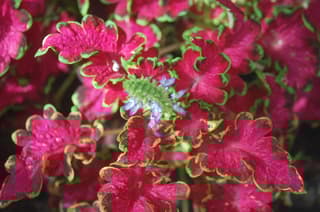
Painted Nettle
Solenostemon scutellarioides
Coleus (Solenostemon scutellarioides) is a vibrant tropical foliage plant native to Southeast Asia, belonging to the mint family Lamiaceae. Renowned for its spectacular multicolored leaves featuring combinations of red, purple, orange, yellow, green, and pink, it is one of the most popular ornamental plants for both indoor and outdoor settings. Modern cultivars have been developed for sun or shade tolerance, making coleus incredibly versatile.
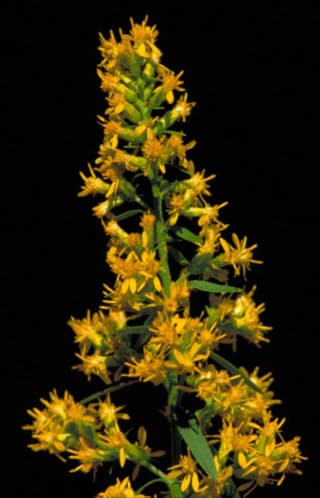
Goldenrod
Solidago
Solidago, commonly known as goldenrod, is a genus of herbaceous perennial plants in the daisy family (Asteraceae), native mainly to North America. It forms upright clumps with stiff stems and dense golden-yellow flower clusters that bloom in late summer through fall, making it a favorite of bees, butterflies, and other pollinators.
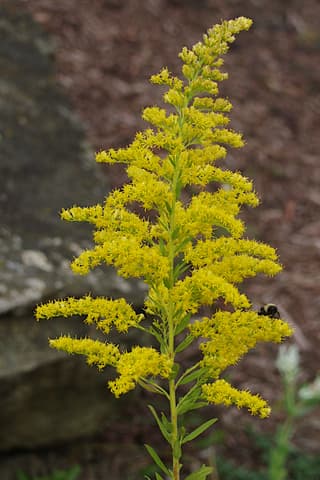
Tall Goldenrod
Solidago altissima
Tall Goldenrod (Solidago altissima) is a vigorous, rhizomatous perennial wildflower native to North America and a member of the aster family (Asteraceae). From late summer into autumn it produces dense, plume-like clusters of small golden-yellow flowers atop upright, downy stems reaching 60-180 cm tall. Highly attractive to bees, butterflies, and other pollinators, it spreads readily by creeping rhizomes and self-seeding, forming bold colonies in meadows, borders, and naturalized gardens. Despite its reputation, it is not the culprit behind hay fever - its heavy, sticky pollen is carried by insects, not wind.
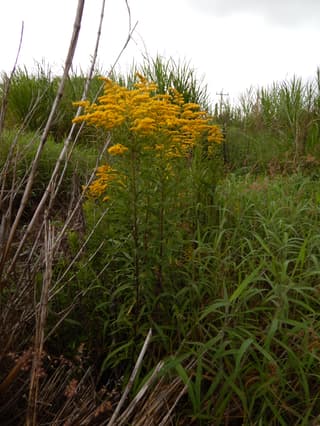
Canada Goldenrod
Solidago canadensis
Solidago canadensis, commonly known as Canada Goldenrod, is a robust native North American perennial wildflower belonging to the Asteraceae family. It produces striking arching plumes of bright yellow flowers from late summer through fall, creating a spectacular display in meadows, prairies, and naturalized gardens. Fast-spreading via rhizomes and self-seeding, it is beloved by pollinators including bees, butterflies, and birds.
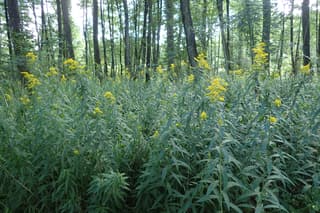
giant goldenrod
Solidago gigantea
Giant goldenrod (Solidago gigantea) is a vigorous herbaceous perennial in the Asteraceae family, native to North America. It grows up to 7 feet tall and produces large plumes of tiny golden-yellow flowers from late summer through fall. Widely cultivated as an ornamental and valued for its medicinal properties, it is also known as an aggressive spreader outside its native range.
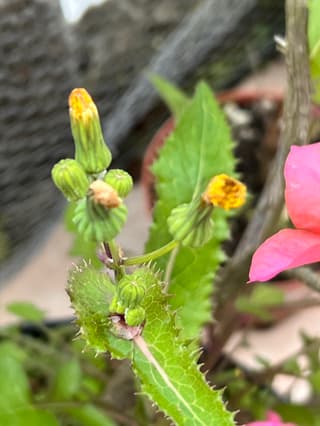
Sow Thistle
Sonchus
Sonchus is a genus of fast-growing annual, biennial and occasionally perennial herbs in the daisy family (Asteraceae), commonly called sow thistles. They form a basal rosette of soft, deeply lobed, spiny-edged leaves and send up hollow, milky-sapped stems topped with small, dandelion-like yellow flowerheads. Widespread as a garden and field weed on every continent, sow thistles are edible, fast to establish, and remarkably tolerant of poor soil and disturbance.
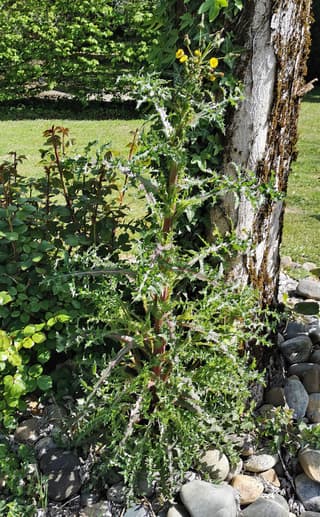
Spiny Sowthistle
Sonchus asper
Annual to biennial herbaceous plant in the Asteraceae family, native to the Mediterranean region and naturalized throughout Europe, Asia, and Africa. Sonchus asper is a common edible weed with considerable nutritional and medicinal value. It grows 30-150 cm tall with erect, hollow stems, deeply lobed leaves with prickly spiny margins, and yellow flowers resembling dandelions. Young tender leaves and shoot tips are edible raw or cooked, providing fiber, proteins, vitamins (niacin, ascorbic acid, thiamine, riboflavin), and minerals (calcium, iron, zinc, potassium, magnesium).
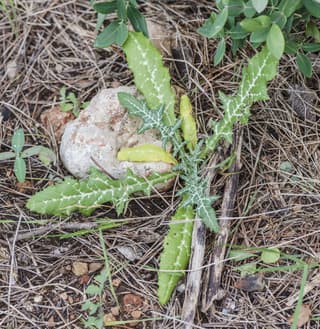
Common Sowthistle
Sonchus oleraceus
Common sowthistle (Sonchus oleraceus) is a fast-growing annual herb in the Asteraceae family, native to Europe and Western Asia and now naturalized worldwide. It thrives in disturbed soils, roadsides, and gardens, reaching up to 1.4 m tall. Its yellow daisy-like flowers attract bees and flies, and its young leaves are edible and rich in vitamin C.
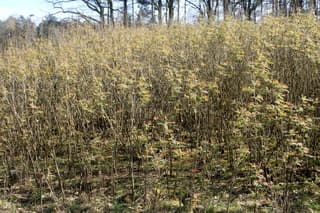
Ural False Spirea
Sorbaria sorbifolia
Sorbaria sorbifolia is a vigorous, suckering deciduous shrub in the rose family (Rosaceae), native to the temperate forests of Siberia, the Russian Far East, northern China, Korea, and Japan. It forms an upright, multi-stemmed mound of fern-like, pinnately compound leaves that resemble mountain ash foliage, topped in early-to-mid summer by dense, pyramidal panicles of small white flowers that attract bees and other pollinators. Extremely cold-hardy and adaptable, it is prized in northern gardens for erosion control, mass plantings, and informal hedges, though its spreading root suckers mean it needs room to roam or regular edging.

Sorbaronia
Sorbaronia fallax
× Sorbaronia fallax is a deciduous, cold-hardy intergeneric hybrid shrub or small tree — a cross between black chokeberry (Aronia melanocarpa) and European mountain ash / rowan (Sorbus aucuparia). It typically grows 2.5-4 m tall with a similar spread, showing broader leaves and noticeably larger fruit than wild Aronia. In spring it bears clusters of pinkish-white flowers, followed by dark reddish-purple to blue berries that ripen in late summer to autumn; foliage turns red, orange and yellow before falling. The plant is tetraploid and self-fertile, so a single specimen can set fruit without a pollinator partner. It was widely cultivated in the former Soviet Union, reputedly from early-20th-century breeding work by the Russian pomologist Ivan Michurin.
European Rowan
Sorbus aucuparia
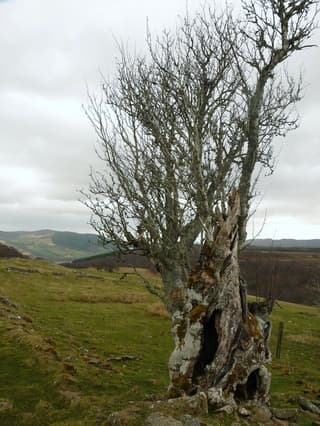
The European Rowan is a hardy deciduous tree commonly found in Europe and Finland, growing 5–15 meters tall. In May, it blooms with fragrant, yellowish-white flower clusters, and in autumn, the tree is adorned with orange-red berry clusters, which are an important food source for birds. The Rowan is a sacred tree to ancient Finns and the regional plant of North Savo, tolerating both barren and richer growing sites exceptionally well.

Sorghum
Sorghum bicolor
Sorghum (Sorghum bicolor) is a fast-growing annual or perennial cereal grass native to Africa, particularly the region spanning Ethiopia and Sudan. Cultivated for thousands of years, it is now the world's fifth most-produced cereal grain, grown for human food, livestock feed, ethanol production, and even as an ornamental garden plant in some cultivars. Its sturdy stalks can reach up to 4 meters tall, topped with a terminal panicle bearing seeds ranging from white to reddish-brown.
Johnson grass
Sorghum halepense
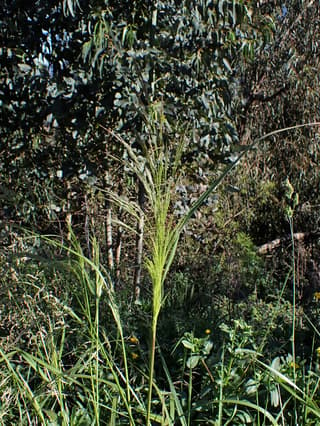
Johnson grass (Sorghum halepense) is an invasive perennial grass native to the eastern Mediterranean and the Middle East, naturalized in more than 50 countries. It grows upright and vigorously up to 2.4 meters tall, with lanceolate leaves up to 60 cm long featuring a characteristic white midrib. It produces purple or copper-brown panicles in summer and fall. It spreads aggressively through thick rhizomes and abundant seeds, displacing native vegetation and significantly reducing yields of crops such as corn and soybeans. It contains the cyanogenic glycoside dhurrin in all its vegetative tissues, making it SEVERELY TOXIC to livestock, especially under stress conditions.
Bur-reed
Sparganium
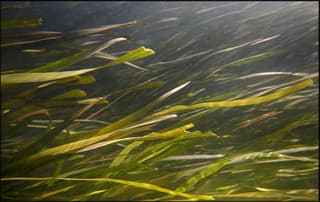
Sparganium, commonly known as bur-reed, is a genus of perennial aquatic and marginal wetland plants native to temperate regions across the Northern Hemisphere. Rising from creeping rhizomes, its narrow strap-like leaves and spiky, ball-shaped flower heads make it a striking addition to pond edges, bog gardens, and natural wetland restorations. Bur-reed thrives with its base submerged or in permanently saturated soil, playing an important ecological role by filtering water, stabilizing shorelines, and providing food and shelter for waterfowl and aquatic invertebrates.

Spanish Broom
Spartium junceum
Spartium junceum, commonly known as Spanish broom or weaver's broom, is a perennial shrub in the Fabaceae family, native to the Mediterranean basin. It is characterized by its green, slender, and flexible rush-like stems, which are almost leafless and perform a significant portion of the plant's photosynthesis. From late spring to summer, it produces abundant, intensely fragrant, butterfly-shaped yellow flowers, highly valued by pollinators. It is a hardy, drought-resistant shrub, widely used in Mediterranean gardening and for stabilizing slopes and poor soils.
Peace Lily
Spathiphyllum
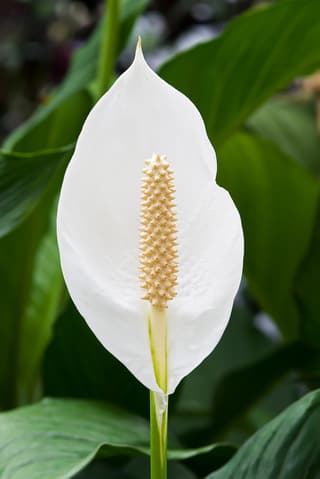
The Peace Lily (Spathiphyllum) is one of the world's most beloved houseplants, prized for its elegant white spathe flowers and remarkable air-purifying abilities. Native to the tropical rainforests of Central and South America, it thrives indoors even in low-light conditions, making it a perfect choice for homes and offices. Its deep green, glossy leaves provide a lush backdrop to the striking white blooms that appear mainly in spring and summer.
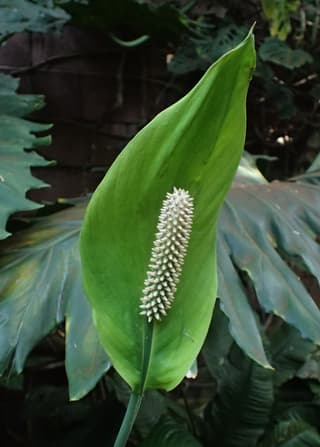
Peace Lily
Spathiphyllum blandum
Spathiphyllum blandum is a perennial evergreen herbaceous plant native to the humid tropical forests of Venezuela and Guyana. Its deep green, glossy leaves beautifully contrast with elegant white spathe flowers, making it one of the most popular and graceful indoor plants worldwide.
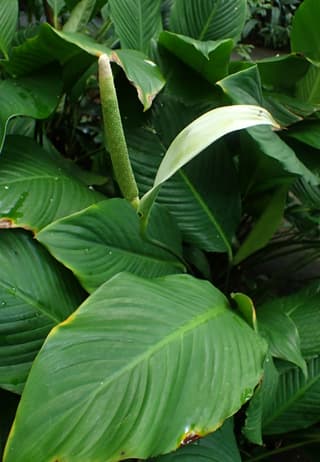
Giant Peace Lily
Spathiphyllum cannifolium
Spathiphyllum cannifolium, commonly known as the Giant Peace Lily, is a tropical plant native to South America. It belongs to the Araceae family and is distinguished by its glossy dark-green leaves and elegant white flowers consisting of a spathe and spadix. It is one of the most widely cultivated indoor plants in the world, valued both for its ornamental beauty and its air-purifying capabilities.
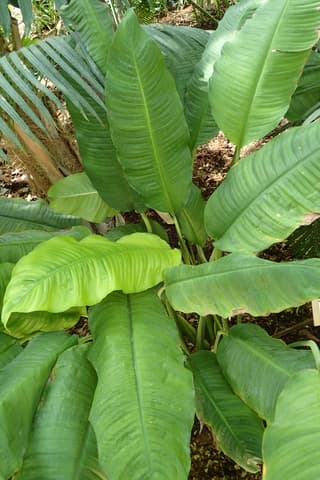
Cupped Peace Lily
Spathiphyllum cochlearispathum
Spathiphyllum cochlearispathum, commonly known as the Cupped Peace Lily, is one of the largest species in the genus, native to Mexico and Central America. It features broad, glossy dark-green leaves and elegant white spathes. CAUTION: Contains calcium oxalate and is toxic to cats, dogs, and humans.
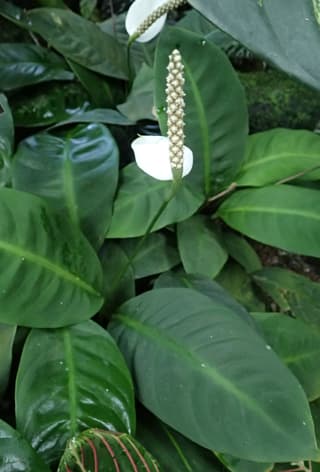
Snowflower
Spathiphyllum floribundum
Spathiphyllum floribundum, commonly known as Snowflower or Dwarf Peace Lily, is a compact tropical species native to Colombia and Ecuador. It produces elegant white-to-greenish-white spathes and is prized for its air-purifying qualities and tolerance of low light conditions. Warning: contains calcium oxalate crystals — toxic to pets and humans if ingested.

Peace Lily
Spathiphyllum kochii
Spathiphyllum kochii, commonly known as the peace lily, is a compact evergreen perennial in the Araceae family, native to Colombia. Growing 30-40 cm tall, it forms dense clumps of dark green, wavy, lance-shaped leaves with prominent veins. Its signature white spathe curls elegantly around a creamy cylindrical spadix, typically blooming in spring and summer. It is one of the world's most popular houseplants, prized for its shade tolerance and air-purifying qualities.
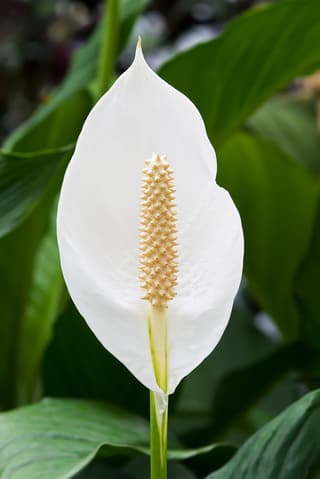
Peace Lily
Spathiphyllum wallisii
Spathiphyllum wallisii is an elegant houseplant native to the tropical rainforests of Colombia. It features elongated glossy dark green leaves and distinctive white spathe-shaped flowers. Famous for its air-purifying abilities, it removes toxins like benzene, formaldehyde, and xylene from indoor environments.
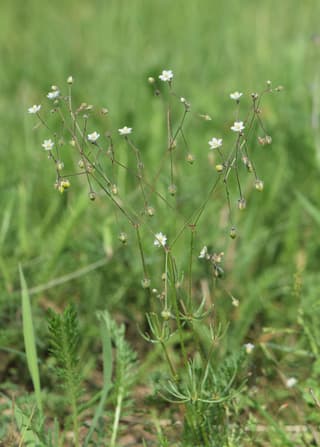
Corn spurry
Spergula arvensis
Corn spurry (Spergula arvensis) is an annual herb in the pink family (Caryophyllaceae), widespread as a weed in fields across Europe, North Africa, and parts of Asia. It grows to a height of approximately 10–50 cm, featuring narrow, linear leaves arranged in whorls, and blooms from summer to autumn with small, white, five-petaled flowers. It typically occurs on light, sandy, acidic soils low in calcium, especially in cereal crops like spring barley. Seeds can remain viable in the soil for several years.

Woodland False Buttonweed
Spermacoce remota
Spermacoce remota is a perennial (or short-lived) herb or subshrub with erect or decumbent stems, reaching about 70 cm in height, featuring slightly purplish stems and lanceolate to elliptical leaves up to 5-7 cm long. Its flowers are small, white with a slight pinkish tint, clustered in dense glomerules at the branch tips and leaf axils. It is native to tropical and subtropical Americas (southeastern USA, Caribbean, Mexico, Central and South America) and is now naturalized in tropical regions of Asia, Pacific islands, the Indian Ocean, and the Galápagos, easily colonizing gardens, lawns, roadsides, and disturbed soil areas. It is an important plant for local fauna, serving as an egg-laying site for butterflies such as the Banded Peacock (Anartia fatima).
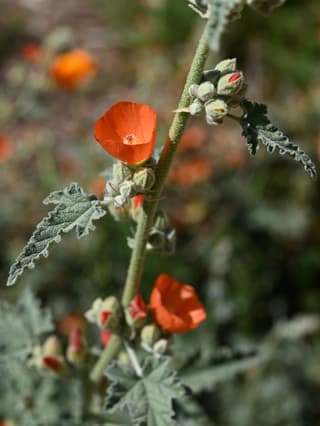
Desert Globe Mallow
Sphaeralcea ambigua
The Desert Globe Mallow (Sphaeralcea ambigua) is a perennial, woody subshrub in the mallow family (Malvaceae), native to the deserts of the southwestern United States and northwestern Mexico—ranging from California, Nevada, Utah, and Arizona to Sonora and Baja California. It thrives in the Mojave, Sonoran, and Great Basin deserts at elevations between 500 and 8,000 feet. The plant produces grayish-green, three-lobed, fuzzy leaves and bears cup-shaped, apricot to orange flowers that can bloom nearly year-round depending on the climate. As an extremely drought-tolerant species, it easily survives long dry periods and poor, rocky soil.

Singapore daisy
Sphagneticola trilobata
Sphagneticola trilobata, commonly known as Singapore daisy, creeping oxeye, or wedelia, is a perennial groundcover herb in the Asteraceae family, native to Mexico, Central America, and the Caribbean. It forms creeping stems up to 2 meters long that root at every node, featuring fleshy trilobed leaves and yellow daisy-like flowers that can bloom year-round in warm climates. Due to its immense vigor and ease of propagation, it has naturalized as an invasive weed in numerous tropical and subtropical regions worldwide—it is listed among the 100 world's worst invasive alien species by the IUCN—where it forms dense mats that displace native vegetation. It is recommended to grow it with caution, ideally in containers or controlled areas.
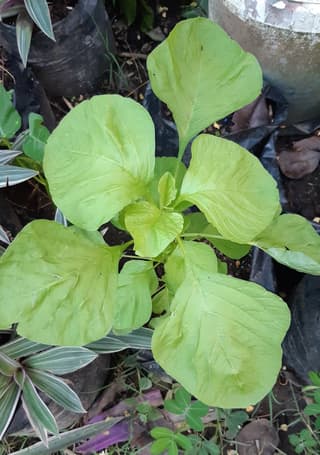
Spinach
Spinacia
Spinacia is the botanical genus of spinach, a leafy annual vegetable in the family Amaranthaceae (formerly Chenopodiaceae), native to central and southwestern Asia. The cultivated species, Spinacia oleracea, is the genus's sole widely grown member and is prized for its fast growth, tender nutrient-dense leaves, and adaptability to cool climates. It is one of the most popular leafy greens worldwide, eaten raw in salads or cooked in countless dishes.
What are Easy Plants?
Easy Plants are ideal for beginners or people with little time for care. These species are tolerant of watering mistakes, light variations, and don't require constant attention. Perfect for those just starting out with plants.
Tips for Growing Easy Plants
To succeed with easy plants, remember: less is more. Avoid overwatering, choose a spot with adequate light, and let the soil dry between waterings. Most of these plants prefer to be 'forgotten' occasionally.