159 Hard Pet Safe | 2026 Guide - Page 4
Find 159 hard pet safe. Complete guide for your garden.
159 Pet Safe with hard level
Showing 109-144 of 159
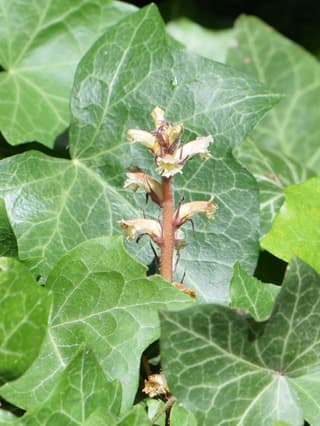
Ivy Broomrape
Orobanche hederae
Ivy broomrape (Orobanche hederae) is a holoparasitic plant that lacks chlorophyll. It grows exclusively on the roots of ivies (Hedera spp.), from which it absorbs all its necessary water, nutrients, and carbohydrates. The stem ranges from yellowish to purple in color, reaching up to 60 cm in height, and the flowers are cream-colored with reddish-brown veins. The plant blooms from spring to summer and produces a vast number of tiny seeds. It is native to Central and Northern Europe as well as parts of Asia.
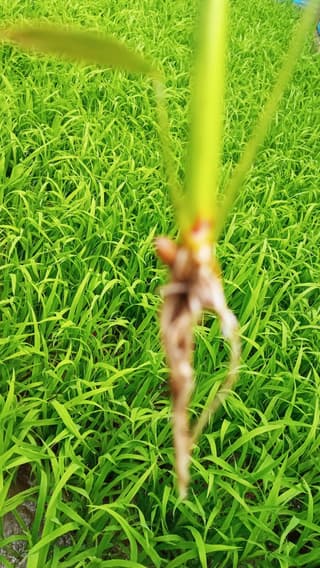
Rice
Oryza sativa
Rice (Oryza sativa) is an annual grass in the Poaceae family, native to Asia, where it has been cultivated for thousands of years as the dietary staple for more than half of the world's population. The plant forms clumps of slender stalks and long, narrow leaves, producing panicles with hundreds of small flowers that give rise to the grains. It is traditionally grown in flooded fields (paddies), where the water level controls weeds and maintains the constant moisture required by the species.

Korean Ginseng
Panax ginseng
Panax ginseng is a perennial herbaceous plant in the Araliaceae family, native to the shady forests of East Asia (Russia, China, Korea). It reaches a height of approximately 80 cm, featuring whorled palmate compound leaves and small, greenish-white flowers that transform into clusters of bright red berries in autumn. Its fleshy root, typically harvested after 6-7 years of growth, has been used for over 5,000 years in traditional Asian medicine for its adaptogenic properties.
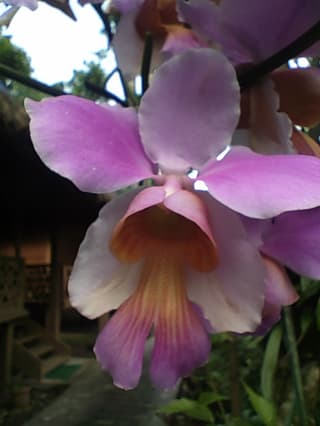
Terete Vanda
Papilionanthe teres
Terete Vanda (Papilionanthe teres) is a giant epiphytic orchid native to the eastern Himalayas, India, Myanmar, Thailand, Laos and Vietnam. It has a branching monopodial stem with long cylindrical (terete) leaves, the feature that gives the plant its common name. Large, fragrant magenta-pink flowers with a white-and-yellow lip appear mostly in late spring and early summer.
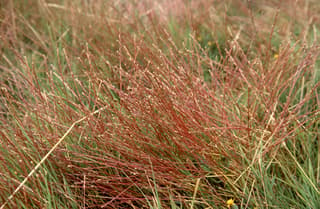
Sea Hard-grass
Parapholis strigosa
Parapholis strigosa (Sea Hard-grass) is an annual grass in the Poaceae family, native to the Atlantic and Mediterranean coasts of Europe and Libya. It is a salt-tolerant (halophytic) plant that grows in coastal salt marshes, tidal soils, and disturbed, open ground. It is a low-growing, typically 10-30 cm tall, tufted grass that blooms in summer with small, inconspicuous green inflorescences. Outside of Europe, it has appeared as an introduced species in California, British Columbia, Chile, Australia, and New Zealand.

Stink bean
Parkia speciosa
Parkia speciosa, commonly known as the stink bean, is a large tropical tree in the Fabaceae family, native to the low-altitude rainforests of Southeast Asia. It can reach up to 40 meters in height at maturity and produces long pods containing green seeds that are highly prized in Malaysian, Indonesian, and Thai cuisines, despite their characteristic sulfurous odor.
Brazilwood
Paubrasilia echinata
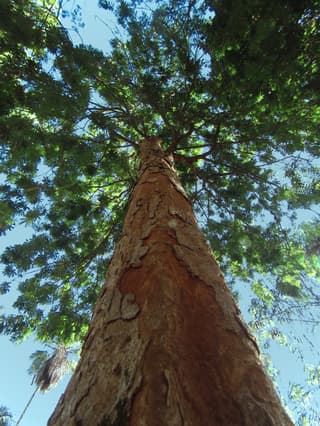
Brazilwood (Paubrasilia echinata) is a medium to large-sized tree, native to the Brazilian Atlantic Forest, belonging to the Fabaceae family and the monotypic genus Paubrasilia. It can reach between 10 and 20 meters in height, with a straight trunk covered in prickles and grayish bark that peels off in plates, revealing the reddish heartwood that gave rise to the country's name. Its leaves are bipinnate, and its broad, semi-deciduous canopy produces very fragrant yellow flowers with a central red petal, blooming between spring and summer. It is the national tree of Brazil, officially declared in 1978, and is currently critically endangered due to the historical exploitation of its wood.
Hatchet Cactus
Pelecyphora
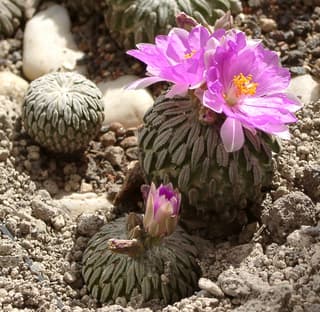
Pelecyphora is a genus of small, slow-growing Mexican cacti in the family Cactaceae, prized by collectors worldwide. Characterized by distinctive flattened tubercles resembling axe heads or woodlice, the most well-known species P. aselliformis (peyotillo) is native to San Luis Potosí, Mexico, and produces violet-red flowers in spring and summer. Both P. aselliformis and P. strobiliformis are listed on CITES Appendix I, making international trade strictly regulated.
felt lichen
Peltigera
Peltigera, commonly known as felt lichen, is a genus of approximately 100 species of foliose lichens. They are characterized by large, leaf-like thalli that often have a fuzzy or 'felt-like' lower surface. These lichens form a symbiotic relationship between a fungus and a cyanobacterium (usually Nostoc), which allows them to fix nitrogen from the atmosphere, making them vital for forest ecosystem health.
Phellinidium ferrugineofuscum
Phellinidium ferrugineofuscum
Phellinidium ferrugineofuscum is a polypore fungus specialized in wood decomposition, found primarily in boreal and temperate forests. It is characterized by its resupinate (adhering to the surface) fruiting bodies, with a velvety texture and a deep rusty-brown coloration. It is a saprophytic species that plays a vital role in nutrient recycling in conifer ecosystems, growing almost exclusively on fallen spruce and pine logs.
Tailed Slipper Orchid
Phragmipedium caudatum
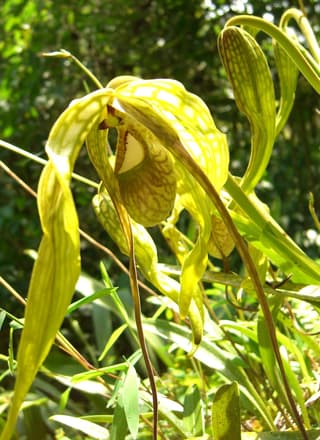
Phragmipedium caudatum is a large, fan-shaped terrestrial to lithophytic orchid native to cloud forests from Mexico to Peru and Bolivia, growing on humid, mossy slopes and cliff faces between 800 and 2500 meters elevation. It is famed for its extraordinarily long, spiraling lateral petals, which trail downward and can reach 60 to 90 centimeters (occasionally over a meter) in mature specimens, among the longest floral structures in the plant kingdom. The cream to yellow-green flowers are veined with darker green and flushed with maroon-red along the twisting petals, opening in succession over many weeks. Prized by collectors since Victorian times, it remains one of the most spectacular and challenging slipper orchids to grow well.
Black-footed polypore
Picipes badius
Picipes badius, formerly known as Polyporus badius, is a wood-decay fungus characterized by its smooth, shiny cap ranging from bay-brown to chestnut in color. Its stem is typically black at the base and off-center. It is primarily found on the deadwood of deciduous trees. Although non-toxic, its texture becomes extremely leathery with age, making it inedible.
Caatinga Blue Pilosocereus
Pilosocereus catingicola
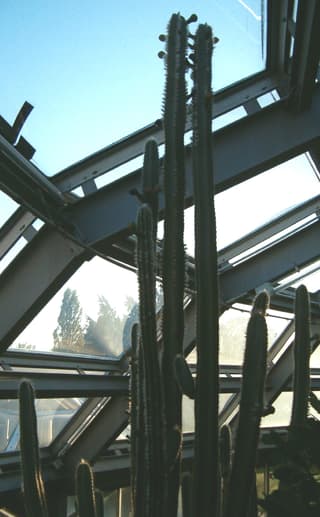
Pilosocereus catingicola is a columnar cactus endemic to the semi-arid Caatinga biome of northeastern Brazil. Known for its striking blue-green stems and nocturnal white to pink flowers, it can reach up to 10 meters tall in the wild. It is one of the most iconic cacti of the Brazilian Caatinga, highly adapted to drought and intense sun.
Black Felt Lichen
Placynthium nigrum
Placynthium nigrum is a crustose lichen that develops on calcareous substrates. It is characterized by a granular black or dark brown thallus, often forming rosettes or extensive patches on rocky outcrops.
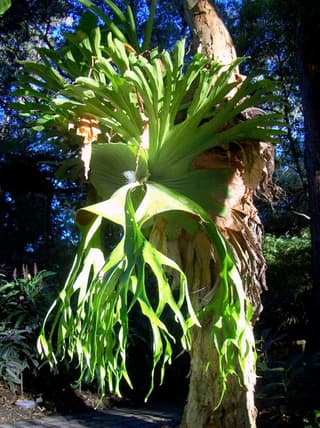
Giant Staghorn Fern
Platycerium superbum
Platycerium superbum, the Giant Staghorn Fern, is a majestic epiphytic fern native to subtropical and tropical eastern Australia. It grows anchored to tree trunks and rocks, producing spectacular antler-shaped fertile fronds up to 2 meters long and circular shield fronds reaching 1 meter across. It is one of the largest and most impressive ferns in the world.
Pleated Pluteus
Pluteus longistriatus
Pluteus longistriatus, commonly known as the Pleated Pluteus, is a small, delicate mushroom characterized by its deeply radial striations on the cap. The cap is typically brownish to grey-brown, often with a darker center. It is a saprobic fungus, meaning it derives nutrients from decaying wood, particularly hardwood logs and debris in forest ecosystems.
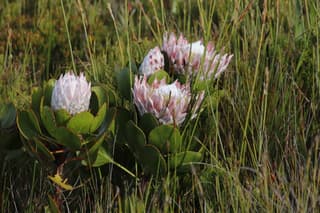
King Protea
Protea cynaroides
Protea cynaroides, the King Protea, is an evergreen shrub native to the fynbos of South Africa's Western and Southern Cape, where it thrives in nutrient-poor, well-drained sandy soils under a Mediterranean climate of hot, dry summers and cool, wet winters. It produces the largest flower head in the genus - a goblet-shaped inflorescence of tightly packed silky florets ringed by large, stiff bracts that range from creamy white to deep crimson, with soft silvery pink being the most prized form. Below the flowers, the plant carries tough, leathery, dark green leaves adapted to withstand drought and wind. Slow-growing and long-lived, it resprouts vigorously from a woody underground rootstock after wildfires, a trait central to its status as South Africa's national flower.
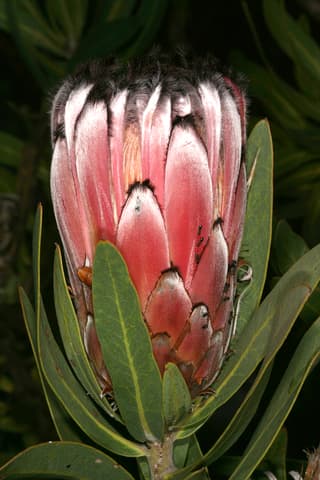
Oleander-leaf protea
Protea neriifolia
Protea neriifolia, commonly known as the Oleander-leaf protea, is a majestic evergreen shrub native to South Africa. It is famous for its cup-shaped inflorescences, composed of colorful bracts ranging from soft pink to cream, ending in distinct velvety black tips. Its leaves are narrow and leathery, resembling those of the oleander, which gives it its specific name.
Stinking Squid
Pseudocolus fusiformis
Pseudocolus fusiformis, commonly known as the 'Squid Stinkhorn', is a fascinating saprophytic fungus. It emerges from a white underground 'egg' to form a structure with 3 to 4 arms joined at the top, which separate at maturity, resembling tentacles. The inner part of the arms is covered by a foul-smelling greenish-brown gleba that attracts flies for spore dispersal.
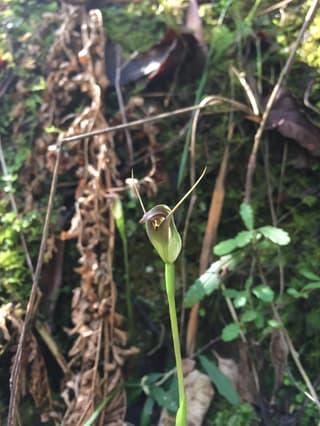
Maroonhood
Pterostylis pedunculata
Pterostylis pedunculata, the maroonhood, is a small terrestrial orchid endemic to south-eastern Australia. From an underground tuber it produces a rosette of stalked leaves and a single hooded flower that is white and green at the base and stained deep reddish-brown to maroon over the hood, or galea. It is a winter-growing, colony-forming greenhood of forests and woodlands, sometimes even growing on the fibrous trunks of tree ferns.
Cushion Cup Fungus
Pulvinula
Pulvinula is a genus of small, cup-shaped fungi in the family Pyronemataceae. These fungi are typically characterized by their bright orange to reddish apothecia (fruiting bodies) and their preference for growing on burnt soil or among mosses. They are microscopic in detail, often requiring a lens to appreciate their pulvinate (cushion-like) form.
Pyronema omphalodes
Pyronema omphalodes
Pyronema omphalodes, commonly known as the charcoal cushion or bonfire fungus, is a pyrophilous ascomycete fungus. It typically appears as bright orange to salmon-colored, cushion-like masses on recently burned soil or sterilized substrates. It is a pioneer species that thrives in the alkaline, nutrient-rich environment created by fire, often appearing within weeks of a burn.

Oak
Quercus
Quercus is a genus of approximately 500 species of oaks native to the northern hemisphere, spanning Europe, Asia, and the Americas. These majestic, slow-growing trees are among the most ecologically important in the world — a single mature oak can support over 500 species of insects, birds, and mammals. They produce iconic acorns and can live for hundreds or even thousands of years.
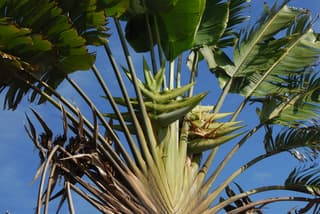
Traveller's Palm
Ravenala madagascariensis
Ravenala madagascariensis, known as the Traveller's Palm, is a striking evergreen plant native to Madagascar, prized for its enormous paddle-shaped leaves that unfurl in a dramatic fan reminiscent of a peacock's tail. Despite its common name, it is not a true palm but a close relative of the bird-of-paradise and banana, belonging to the family Strelitziaceae. Mature specimens can reach 9 to 15 meters tall and are iconic in tropical landscaping.
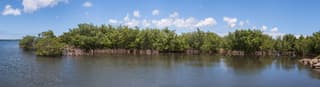
Mangrove
Rhizophora
Rhizophora is a genus of tropical "true mangrove" trees and shrubs in the family Rhizophoraceae, famous for their tangled, arching prop roots that anchor them in shifting, waterlogged coastal mud. Found across intertidal zones in the tropics and subtropics, these evergreen trees tolerate daily tidal flooding and high salinity, forming dense mangrove forests that protect shorelines from erosion and storm surge.
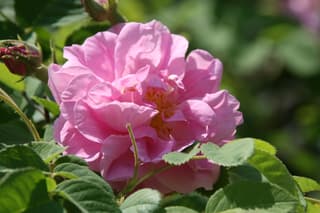
Damask Rose
Rosa × damascena
The Damask Rose (Rosa × damascena) is an ancient hybrid shrub, likely a cross between Rosa gallica and Rosa moschata. Cultivated for millennia across the Middle East, Turkey, Bulgaria, and Iran, it is the primary source of precious rose oil (attar of roses) and rose water. Its semi-double to double flowers emit an intense, sweet fragrance. It grows up to 7 feet tall with arching, thorny canes and deciduous mid-green foliage.
Pink Meadow Cap
Rugosomyces carneus
Rugosomyces carneus, commonly known as the Pink Meadow Cap, is a species of basidiomycete fungus. It is characterized by its small, pale pink to flesh-colored cap, initially convex and then flattening, with white, crowded gills. It is a saprophytic fungus that typically grows in grasslands, meadows, and grassy areas during summer and autumn.
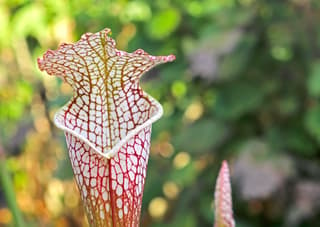
North American Pitcher Plant
Sarracenia
Sarracenias are fascinating carnivorous plants native to North America. They feature modified leaves shaped like pitchers or trumpets, which they use to attract, capture, and digest insects. Their colors range from vibrant green to deep reds, often with contrasting veins that guide prey into the trap.
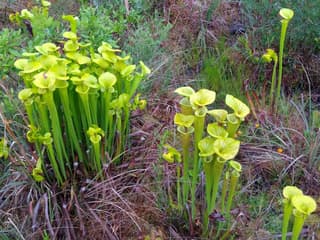
Yellow Pitcher Plant
Sarracenia flava
Sarracenia flava, known as the yellow pitcher plant or trumpet pitcher, is a carnivorous perennial native to the bogs and wet pine savannas of the southeastern United States, from Virginia to Florida and Alabama. It produces tall, slender, trumpet-shaped pitchers in yellow-green tones topped with an erect, hood-like lid, reaching up to 90cm in height. In spring, before new pitchers emerge, it produces striking nodding yellow flowers on long stalks. Like other Sarracenia species, it lures, traps, and digests insects to supplement the scarce nutrients of its boggy, nutrient-poor habitat.
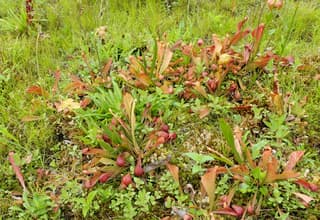
Parrot Pitcher Plant
Sarracenia psittacina
Sarracenia psittacina, the Parrot Pitcher Plant, is a fascinating carnivorous plant native to the Gulf Coast of the southeastern United States. Its unique pitchers resemble a parrot's beak and employ a lobster-trap mechanism — prey wander in following inward-pointing hairs and cannot find their way back out. It is one of the smallest Sarracenia species and demands specialized care including distilled water and acidic peat soil.
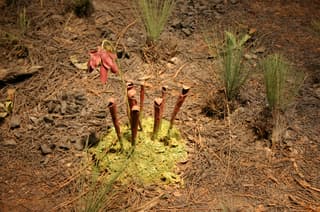
Sweet Pitcher Plant
Sarracenia rubra
Sarracenia rubra is a clump-forming carnivorous perennial native to the acidic, nutrient-poor bogs and seepage slopes of the southeastern United States, from the Florida Panhandle and Alabama through Georgia to the coastal plains of the Carolinas. Its narrow, upright pitchers -- usually under 65 cm tall -- lure insects with nectar and a sweet scent, then trap them using downward-pointing hairs and a slick, waxy inner wall. In spring the plant sends up striking maroon-red, umbrella-shaped flowers with long, dangling petals before the summer flush of taller pitchers appears. Because it evolved in soils too poor to support ordinary plants, it depends on trapped insects rather than fertilizer for nitrogen and phosphorus, and it requires a genuine winter dormancy to thrive long-term.
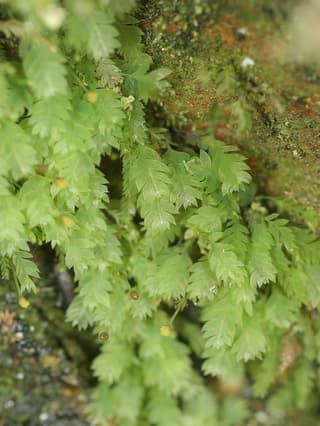
Luminous moss
Schistostega pennata
Schistostega pennata is a unique and fascinating moss from the Schistostegaceae family. This bryophyte is famous for its luminescent property: in low-light conditions, its protonema emits a soft golden-green glow. This occurs because specialized spherical cells in the protonema act as biological lenses, concentrating weak light onto the chloroplasts. The plant is small, with gametophytes of only 1.5 cm, featuring opposite leaves with a simple structure. It is native to temperate regions of the Northern Hemisphere (Europe, Asia, and North America).
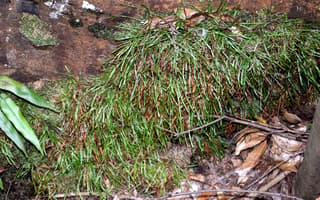
Comb Fern (genus)
Schizaea
Schizaea is a genus of primitive ferns in the family Schizaeaceae, characterized by grass-like sterile fronds and distinctive comb-shaped fertile segments. Native to tropical and subtropical humid regions worldwide, they are rarely seen outside specialist collections and greenhouses.
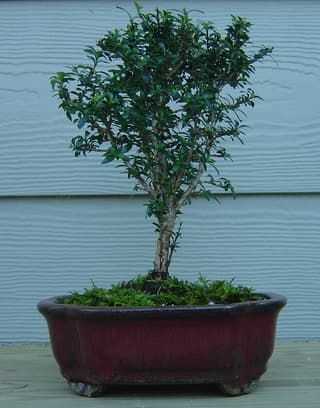
Tree of a Thousand Stars
Serissa foetida
Serissa foetida, known as the Tree of a Thousand Stars or Snow Rose, is a compact evergreen shrub native to warm, humid regions of Southeast Asia including India, China, and Japan. It is prized for its dainty star-shaped white or pink flowers that bloom nearly year-round, making it one of the most beloved subjects for bonsai cultivation. Its delicate foliage and gnarled trunk on mature specimens give it a distinguished, ancient appearance.
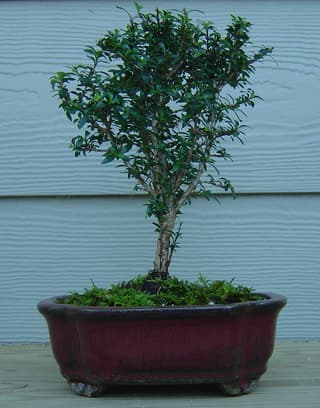
Snow Rose
Serissa japonica
Serissa japonica, commonly known as Snow Rose or Tree of a Thousand Stars, is a small evergreen to semi-evergreen shrub native to Southeast Asia. It is beloved in bonsai culture for its delicate star-shaped white or pink flowers, fine branching structure, and rough grey bark. Despite its elegant appearance, it is considered a challenging plant due to its sensitivity to environmental changes.
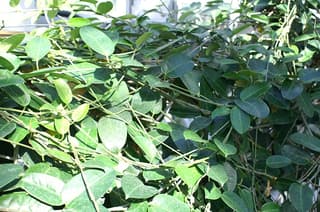
Madagascar Jasmine
Stephanotis floribunda
Stephanotis floribunda (Madagascar jasmine) is an evergreen climbing plant in the Apocynaceae family, native to the tropical rainforests of Madagascar. It is characterized by star-shaped, snow-white, waxy flowers with an intense, sweet fragrance that appear in spring and summer. The plant's strong vines can climb 4–6 meters with the help of a support structure. It gained worldwide fame as a bridal flower—Grace Kelly even decorated her wedding bouquet with it. Indoor cultivation is challenging: it is sensitive to temperature fluctuations, direct sunlight, and watering errors.
Hard Care Pet Safe
Our selection of 159 hard pet safe combines the characteristics of this category with specific care needs. For enthusiasts seeking a challenge.
Why Choose Hard Pet Safe?
Combining the beauty of pet safe with hard difficulty level lets you enjoy this category while developing your gardening skills. Each plant was selected to offer the best characteristics of the category at the care level you are looking for.