1159 Medium Plants | 2026 Guide - Page 15
Discover 1159 medium plants for your garden. Complete care guide.
1159 Medium Plants
Showing 505-540 of 1159
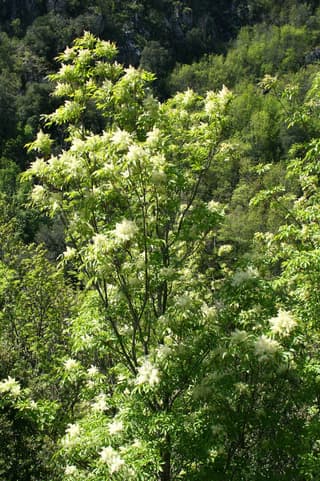
Manna Ash
Fraxinus ornus
A medium-sized deciduous tree native to southern Europe and southwest Asia, prized for its showy clusters of fragrant creamy-white flowers in spring and its historic role as the source of manna, a sweet sap harvested from cuts in the bark. It has odd-pinnate leaves with 5 to 9 leaflets and a rounded crown, reaching about 9 meters in cultivation.
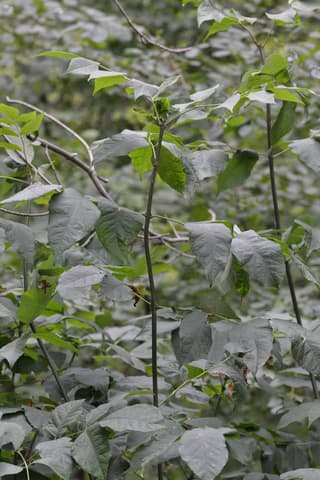
Green Ash
Fraxinus pennsylvanica
Green ash (Fraxinus pennsylvanica) is a fast-growing deciduous tree native to eastern North America. It is one of the most widely distributed ash species on the continent, thriving from the Atlantic coast to the Great Plains. Known for its adaptability to a wide range of soil conditions — including wet, dry, and compacted soils — it has long been a popular choice for urban streetscapes and residential landscapes. The tree produces small greenish-purple flowers in spring before the leaves emerge, and its foliage turns a brilliant golden yellow in autumn. Unfortunately, green ash faces an existential threat from the emerald ash borer, an invasive beetle that has decimated ash populations across North America.
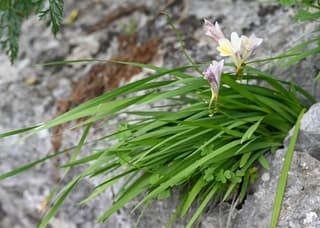
Freesia
Freesia leichtlinii
Freesia leichtlinii is a perennial cormous bulbous plant in the Iridaceae family, native to the Cape Provinces of South Africa. It produces arching flower spikes with highly fragrant tubular flowers, typically in shades of cream and yellow with throat markings, although the subspecies alba features white flowers. It is widely cultivated as an ornamental pot plant and for cut flowers due to its intense perfume.
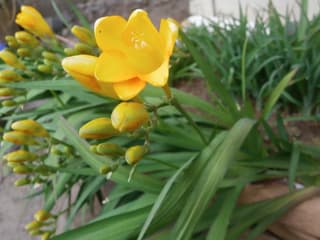
Freesia
Freesia refracta
Freesia refracta is a bulbous (cormous) perennial native to South Africa (Cape Province) belonging to the iris family (Iridaceae). Its highly fragrant, funnel-shaped flowers bloom in one-sided clusters on thin, arched stems, typically in shades of cream, white, and yellow, sometimes with purple tints on the reverse of the petals. Sword-shaped, bright green leaves emerge from near the ground. It is primarily grown as a cut flower, garden ornamental, and fragrant potted plant; it blooms in winter and spring before entering a dormant period.
Freesia
Freesia x hybrida
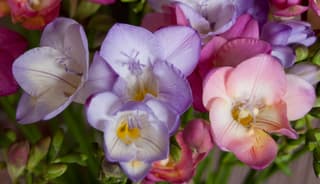
Freesia (Freesia x hybrida) is a bulbous plant native to South Africa, celebrated worldwide for its stunning spike-shaped flowers and intensely sweet, powdery fragrance. Hybrid Freesias produce blooms in a wide range of colors — white, yellow, pink, purple, red, and orange — and are beloved in gardens, wedding arrangements, and cut flower displays.
Fritillary
Fritillaria
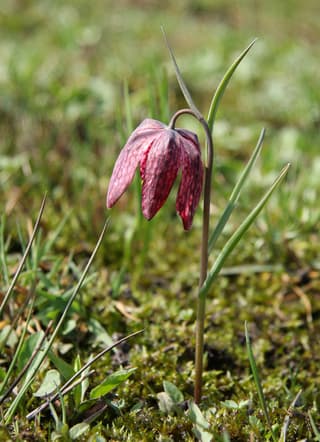
Fritillaria is a genus of spring-flowering bulbous plants in the Liliaceae family, comprising over 100 species native to temperate regions of the Northern Hemisphere. Known for their nodding, bell-shaped flowers in shades of purple, white, yellow, orange, and red—often with distinctive checkered patterns—these elegant plants bring drama to spring gardens.
Fuchsia
Fuchsia
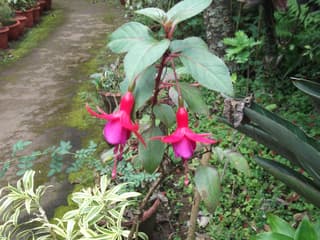
Fuchsia, also known as Lady's Eardrops, is an iconic ornamental plant recognized for its pendulous flowers that display vibrant and contrasting colors. Primarily originating from Central and South America, this plant has become a symbol of elegance in gardens and on balconies. Its flowers have a tubular shape with sepals that open to reveal inner petals, often in shades of purple, pink, red, and white.
Standish's Fuchsia
Fuchsia × standishii
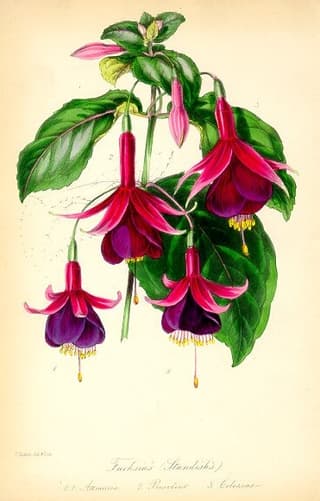
Fuchsia × standishii is a historic 19th-century hybrid resulting from the cross between F. lycioides and F. magellanica. It produces pendulous tubular flowers in shades of red, purple, and pink, blooming abundantly in spring and summer. A classic choice for hanging baskets and ornamental pots.
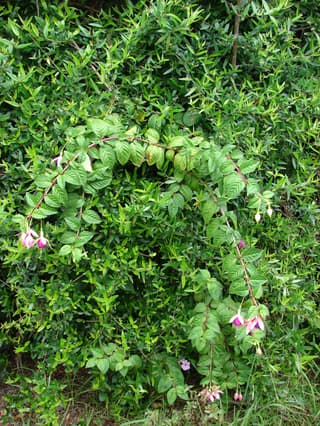
Garden Fuchsia
Fuchsia hybrida
Garden fuchsia (Fuchsia hybrida) is a deciduous ornamental shrub in the Onagraceae family, prized for its pendulous, tubular flowers in shades of pink, purple, red, and white, often bicolored. Bred from South American species, it blooms continuously from spring until the first frost and is a favorite of hummingbirds. It is widely grown in hanging baskets and part-shade borders.
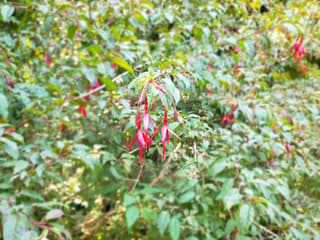
Hardy Fuchsia
Fuchsia magellanica
Fuchsia magellanica, commonly known as Hardy Fuchsia or Hummingbird Fuchsia, is a deciduous shrub native to southern South America (Chile and Argentina). It produces elegant pendulous flowers in red and purple tones that attract hummingbirds and butterflies. It is one of the most cold-hardy fuchsias, tolerating temperatures well below freezing.
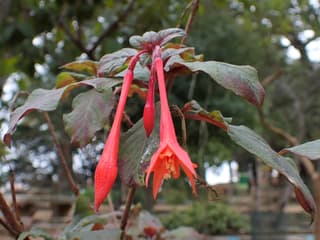
Honeysuckle Fuchsia
Fuchsia triphylla
Honeysuckle Fuchsia (Fuchsia triphylla) is a striking ornamental plant native to the Caribbean island of Hispaniola. It produces long, tubular orange-red flowers in pendant clusters that are irresistible to hummingbirds. The dark green leaves with bronze undertones provide an elegant backdrop for its vivid blooms, making it a prized choice for hanging baskets, containers, and shaded garden borders.
Polychrome Reishi
Ganoderma polychromum
Ganoderma polychromum is a basidiomycete fungus belonging to the Ganoderma lucidum species complex. It is characterized by its cap with a lacquered, glossy surface that displays a color gradation ranging from pale yellow at the margin to dark reddish-brown near the base. Unlike plants, this fungus is a decomposer that grows primarily on decaying hardwood, playing a vital role in the forest ecosystem.
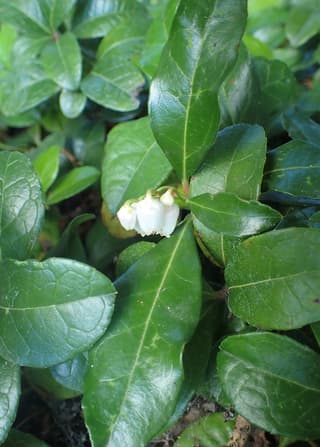
American Wintergreen
Gaultheria procumbens
American Wintergreen (Gaultheria procumbens) is an evergreen, creeping dwarf shrub from the heath family (Ericaceae), native to the open woodlands of eastern North America. It forms dense groundcover mats only about 4-8 inches high, consisting of leathery, dark green leaves that often turn a reddish-bronze color in winter. From May to September, small, bell-shaped white-to-pink flowers appear, developing into bright red berries that often remain on the shrub well into winter. The leaves and fruit have an unmistakable scent and taste of wintergreen—giving the plant its name—and it was historically a major source of essential wintergreen oil (methyl salicylate).
Genipap
Genipa americana
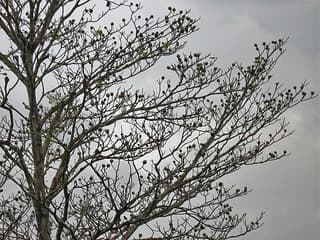
The genipap tree (Genipa americana) is a fruit-bearing tree native to tropical Americas, belonging to the Rubiaceae family. It can reach up to 15 meters in height, with a dense canopy and large, shiny leaves. It produces fragrant white flowers that turn yellow over time, and globose fruits with aromatic pulp, widely used in cuisine and traditional medicine. It is also valued for the traditional use of its sap by indigenous Amazonian peoples to produce body paint.
Gentian
Gentiana
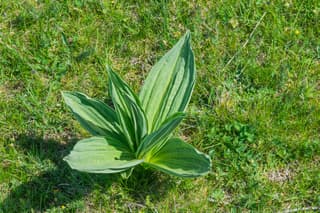
Gentiana is a large genus of roughly 400 flowering plant species in the Gentianaceae family, prized for their intensely blue, trumpet- or bell-shaped blooms. Native to alpine meadows, mountain slopes and cool temperate grasslands across Europe, Asia, the Americas and East Africa, gentians range from tiny cushion-forming alpines only a few centimeters tall to taller woodland species over a metre high. They are cool-climate perennials that thrive in humus-rich, well-drained soil and struggle in hot, humid summers. Long cultivated in rock gardens and used medicinally (gentian root is a classic bittering agent), the genus is celebrated for its vivid color and resilience in harsh mountain conditions.
Geo Plant
Geogenanthus ciliatus
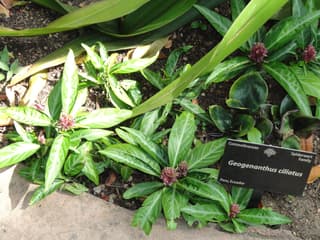
Geogenanthus ciliatus is a low-growing, rhizomatous herb from the Commelinaceae family, native to the rainforest understory of Peru, Ecuador, and Colombia. Its thick, fleshy stems carry glossy, deeply textured leaves in dark green to near-purple tones, sometimes patterned with darker mottling. Small three-petaled purple flowers occasionally appear on mature plants but are rarely seen in cultivation. As an understory dweller adapted to filtered light and constant humidity, it makes a striking but demanding terrarium or humidity-cabinet specimen. Its compact, spreading habit and dramatic foliage color make it popular among collectors of rare aroids and Commelinaceae relatives.
Hybrid Gerbera Daisy
Gerbera hybrid cultivar
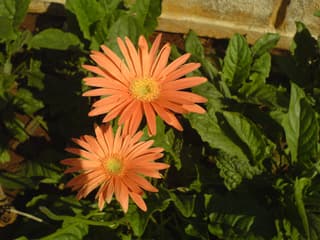
The Hybrid Gerbera Daisy (Gerbera hybrid cultivar) is one of the world's most beloved flowering plants, bred from crosses between Gerbera jamesonii and Gerbera viridifolia, both native to South Africa. Celebrated for their large, vivid blooms in white, yellow, orange, pink, red, and purple, hybrid gerberas dominate the global cut-flower trade and bring lasting color to gardens and indoor spaces alike.
Gerbera Daisy
Gerbera hybrida
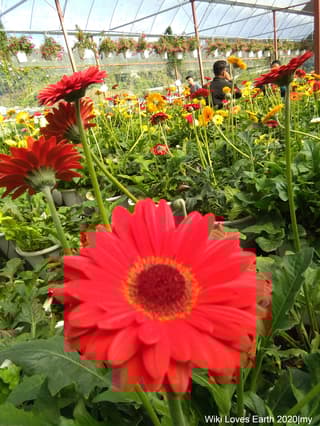
Gerbera hybrida, commonly known as the Gerbera Daisy, is a cheerful and vibrant flowering plant originating from South Africa. It produces large, showy blooms in an extraordinary range of colors including white, yellow, pink, salmon, red, orange, and lavender. A popular choice for both indoor containers and outdoor garden beds, Gerbera Daisies bloom prolifically from spring through fall and are celebrated for their air-purifying properties.
Barberton Daisy
Gerbera jamesonii
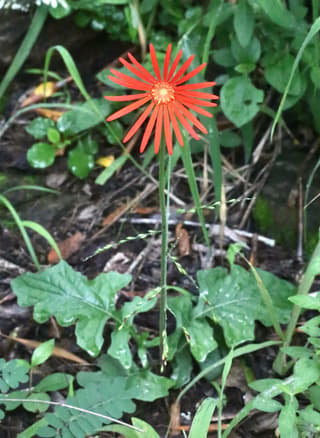
The Barberton Daisy (Gerbera jamesonii) is a vibrant flowering plant native to South Africa, belonging to the Asteraceae family. Celebrated for its long-lasting blooms in shades of white, yellow, pink, salmon, orange, and red, it is one of the world's most popular ornamental plants. Perfect for pots and gardens, it delights with its exuberant beauty throughout spring and summer.
Blushing Barberton Daisy
Gerbera viridifolia
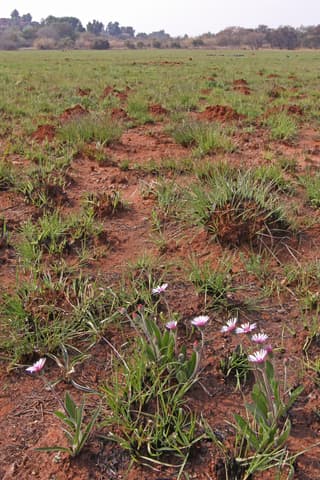
Gerbera viridifolia, commonly known as the Blushing Barberton Daisy, is a wild perennial daisy native to the grasslands and mountain slopes of Southern Africa. It produces delicate white to lilac daisy-like flowers on upright stems rising from a rosette of dark green, deeply veined leaves. Unlike its commercially bred cousins, this species thrives in natural rocky and grassy habitats, making it a charming choice for naturalistic and wildlife gardens.
Maidenhair Tree
Ginkgo biloba
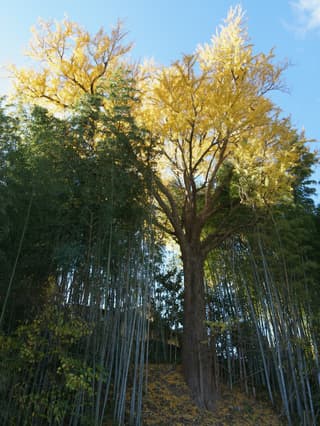
Ginkgo biloba is one of the oldest living tree species on Earth, a true living fossil unchanged for over 200 million years. Native to China, it is the sole surviving member of the division Ginkgophyta, making it unique in the plant kingdom. Its distinctive fan-shaped leaves turn a spectacular golden-yellow in autumn before dropping simultaneously — a breathtaking display. Female trees produce foul-smelling seeds that have been used in traditional East Asian cuisine and medicine for centuries. The tree famously survived the Hiroshima atomic bombing in 1945 and continues to symbolize resilience and endurance.
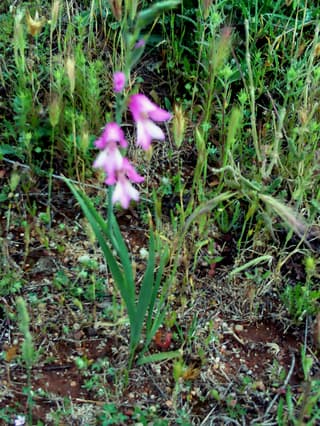
Eastern Gladiolus
Gladiolus communis
Gladiolus communis, known as the Eastern Gladiolus or Common Gladiolus, is a cormous perennial in the family Iridaceae, native to the Mediterranean basin and South Africa. It produces tall, elegant flower spikes bearing trumpet-shaped blooms in shades of pink, purple, red, orange, white, and yellow during spring and summer. Widely grown as a cut flower and garden accent plant.
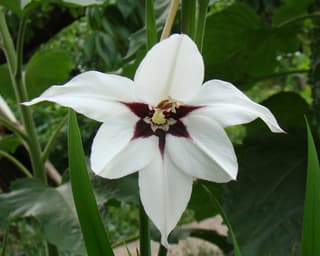
Abyssinian Gladiolus
Gladiolus murielae
Gladiolus murielae, commonly known as Abyssinian Gladiolus or Peacock Orchid, is a stunning bulbous perennial native to the highlands of East Africa, particularly Ethiopia. It produces elegant, star-shaped white flowers adorned with a distinctive deep purple blotch at the center. Blooming in late summer to fall, the fragrant blooms are especially aromatic at dusk and dawn, making it a favorite for evening gardens and cut flower arrangements.
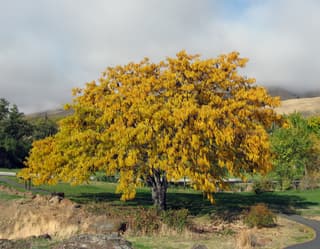
Honey Locust
Gleditsia triacanthos
Gleditsia triacanthos, commonly known as the Honey Locust, is a fast-growing deciduous tree native to North America. It is celebrated for its feathery, compound foliage, fragrant spring flowers, and remarkable adaptability to urban conditions, drought, salt, and pollution. The tree can reach 18–24 m tall and features distinctive branched thorns along its trunk and branches, though thornless cultivars are widely available.
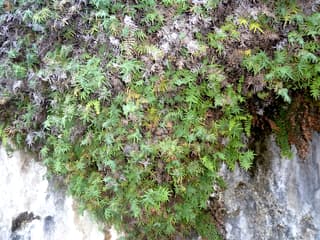
Coral Fern
Gleichenia polypodioides
Gleichenia polypodioides, commonly known as the coral fern, is an evergreen climbing fern native to southern and east tropical Africa. It is recognized by its dichotomously forked fronds, dark wiry stipes, and vigorous scrambling habit. It colonizes moist slopes, stream banks, road embankments, and eroded ravines in regions of high rainfall and frequent mist.
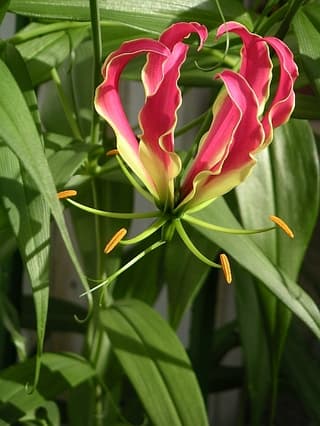
Gloriosa Lily
Gloriosa rothschildiana
Gloriosa rothschildiana, commonly known as the Gloriosa Lily or Flame Lily, is a spectacular climbing plant native to Tropical Africa. It produces stunning flame-like flowers with reflexed red and yellow petals, making it one of the most exotic and eye-catching flowering plants available. Growing from a V-shaped tuber, this vigorous climber uses leaf-tip tendrils to scale supports, reaching up to 2 meters in height. It is the national flower of Zimbabwe and Sri Lanka.
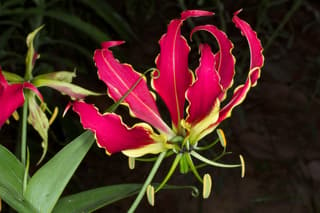
Flame lily
Gloriosa superba
The Flame lily (Gloriosa superba) is a perennial climbing tuberous plant from the Colchicaceae family, native to tropical Africa and Asia. Slender stems, usually 3 to 10 feet long, grow from an underground tuber and cling to supports using thin tendrils at the leaf tips. The striking flowers, with wavy, reflexed petals, change color from yellow through orange to deep red. The plant is extremely toxic, as all its parts—especially the tuber and seeds—contain the alkaloid colchicine. Grow it only where children and pets cannot reach it.
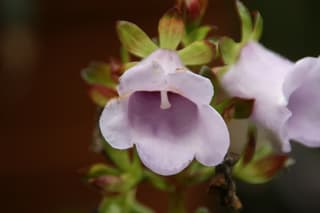
Canterbury Bell
Gloxinia perennis
Gloxinia perennis, commonly known as Canterbury Bell or Perennial Gloxinia, is a tropical rhizomatous herbaceous plant from the family Gesneriaceae, native to the Andes of South America. Unlike the Florist's Gloxinia (Sinningia speciosa), this is the true Gloxinia — a robust, long-lived perennial. It produces stunning tubular lavender-purple flowers with a distinctive mint fragrance, blooming from summer through fall.
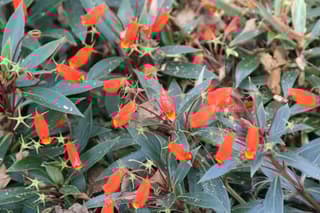
Bolivian Sunset Gloxinia
Gloxinia sylvatica
Gloxinia sylvatica, commonly known as Bolivian Sunset Gloxinia or Hardy Gloxinia, is a rhizomatous perennial native to the Andean forests of Bolivia and Peru. A member of the Gesneriaceae family, it produces striking tubular flowers in vivid orange-red hues with yellow throats, blooming primarily in fall and winter. Compact and versatile, it thrives both indoors and in subtropical outdoor gardens.
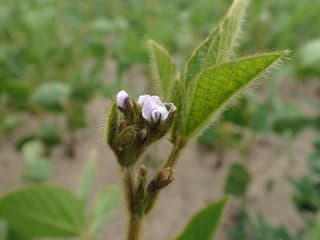
Soybean
Glycine max
An annual legume from the Fabaceae family. Glycine max is a photoperiod-sensitive short-day plant cultivated worldwide in temperate to subtropical climates. The plant forms nitrogen-fixing root nodules, enabling sustainable soil use. It produces seeds rich in protein and oil, which are of great economic importance.
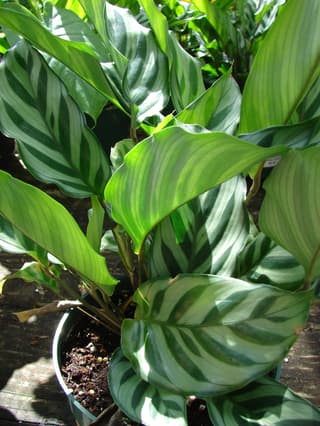
Freddie Calathea
Goeppertia concinna
Freddie Calathea (Goeppertia concinna) is a stunning tropical houseplant from Brazil, belonging to the Marantaceae family. It is celebrated for its striking striped foliage — pale green stripes over deep green leaves — that resemble a leopard's pattern. A popular choice for bringing lush, tropical vibes indoors.
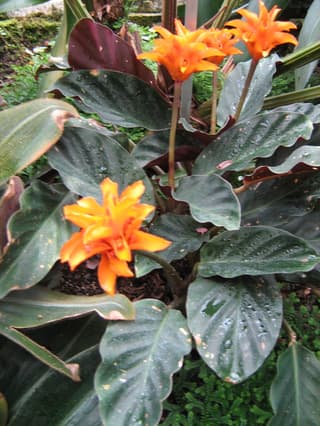
Eternal Flame
Goeppertia crocata
The Eternal Flame plant (Goeppertia crocata) is a rhizomatous herbaceous species in the Marantaceae family, native to the tropical rainforests of Brazil (Bahia and Espírito Santo states). It is prized for its glossy dark green leaves with purple undersides and its striking saffron-orange flower spikes that resemble small flames, remaining showy for weeks to months.

Vittata Prayer Plant
Goeppertia elliptica
Goeppertia elliptica, commonly sold under its older name Calathea vittata or the Vittata prayer plant, is a foliage houseplant in the Marantaceae family native to humid rainforests of Brazil, Colombia, French Guiana, Guyana, Suriname, and Venezuela. Its broad, elliptical leaves are a rich green marked with pale green to creamy pinstripes radiating from the midrib, giving the plant a hand-painted look prized by collectors. Like other prayer plants, it lifts and folds its leaves at dusk and unfurls them again at dawn, tracking the daily light cycle.
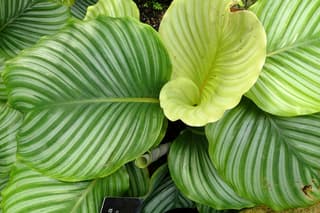
Prayer Plant
Goeppertia fasciata
Goeppertia fasciata (syn. Calathea fasciata) is a rhizomatous perennial native to the humid tropical forests of northeastern Brazil. Its rounded, leathery leaves display alternating stripes of dark and light green radiating from the midrib, with a rich purple underside. Like other members of the Marantaceae family, it shows nyctinastic movement, its leaves folding upward at night and opening during the day, resembling praying hands.
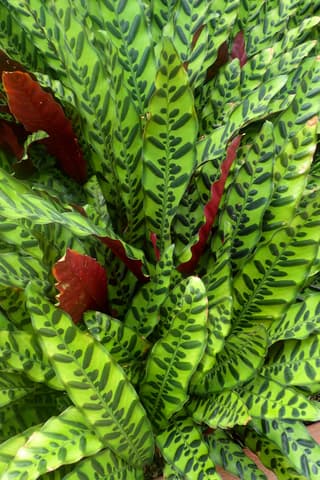
Rattlesnake Plant
Goeppertia insignis
Goeppertia insignis, commonly known as the Rattlesnake Plant (formerly Calathea lancifolia), is a tropical evergreen perennial native to the state of Rio de Janeiro, Brazil. It features long, wavy lance-shaped leaves in pale green with alternating dark green elliptical spots on top and a striking purple underside. Like other prayer plants, it folds its leaves upward at nightfall in a movement called nyctinasty.
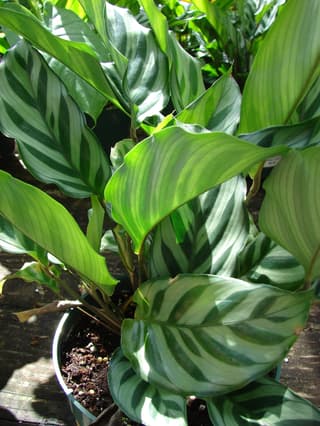
Leopard Calathea
Goeppertia leopardina
The Leopard Calathea (Goeppertia leopardina, syn. Calathea leopardina) is a compact foliage plant in the Marantaceae family, prized for its glossy oval leaves marked with dark leopard-like blotches along the veins. Like other calatheas, its leaves rise during the day and fold together at night in a movement called nyctinasty, earning the group the nickname "prayer plants." It is a popular indoor houseplant that thrives in bright, filtered light and high humidity.
What are Medium Plants?
Medium Plants require a bit more attention and basic gardening knowledge. These plants thrive with regular care and some cultivation experience. Ideal for those who already master the basics.
Tips for Growing Medium Plants
medium plants need a balance between attention and freedom. Keep a regular care routine, watch leaves to identify problems early, and adjust watering by season.