1159 Medium Plants | 2026 Guide - Page 14
Discover 1159 medium plants for your garden. Complete care guide.
1159 Medium Plants
Showing 469-504 of 1159
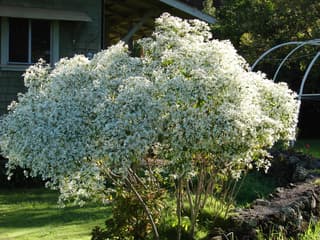
Snow bush
Euphorbia leucocephala
Euphorbia leucocephala is a deciduous, fast-growing shrub or small tree from Mexico and Mesoamerica, prized for the cloud of small white bracts that cover its branches in winter, resembling snow or lace. Like other spurges, it exudes a milky latex sap that is an irritant to skin and eyes and toxic if ingested.
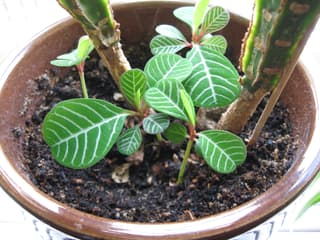
Madagascar Jewel
Euphorbia leuconeura
Euphorbia leuconeura, commonly known as Madagascar Jewel, is a striking semi-succulent houseplant native to Madagascar. It features an upright, angular stem with attractive white-veined leaves that give it an exotic appearance. As a member of the Euphorbiaceae family, it produces a toxic milky sap and can explosively disperse its seeds several metres away — a remarkable adaptation known as ballochory.
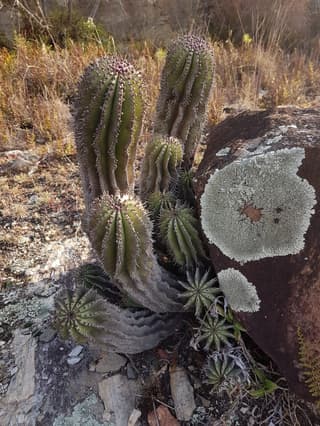
Snowflake Euphorbia
Euphorbia polygona
Euphorbia polygona is a slow-growing columnar succulent from South Africa with ribbed, blue-green to grey stems edged in tidy rows of dark spines; the popular 'Snowflake' form is dusted powdery white. Small purple flowers line the ridges in summer. It makes an architectural, sculptural feature plant for bright spots.

Poinsettia
Euphorbia pulcherrima
Euphorbia pulcherrima, commonly known as the poinsettia, is a tropical shrub native to Mexico and Central America. Celebrated for its vibrant colored bracts that appear in winter, it is the quintessential Christmas plant worldwide. It can grow up to 2 meters tall when planted outdoors in warm climates.
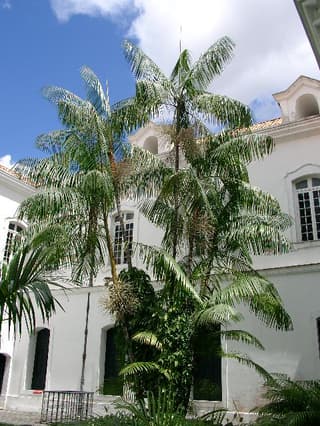
Açaí Palm
Euterpe oleracea
The açaí palm is a clustering, multi-stemmed palm native to the seasonally flooded várzea floodplains of the Amazon basin. Its slender, elegant stems can reach 15 to 25 meters tall and are topped with arching, pinnate fronds about a meter long. Clusters of hundreds of small, globose fruits ripen from green to deep purple-black, yielding the antioxidant-rich açaí pulp that has become famous worldwide.

Oriental Beech
Fagus orientalis
Fagus orientalis, commonly known as the Oriental Beech, is a magnificent large deciduous tree native to the Caucasus region, northern Turkey, and northern Iran. It is one of the most impressive broadleaf trees in its natural range, reaching heights of 25–40 metres with a broad, dense, rounded crown. Its smooth silver-grey bark, lush green foliage, and brilliant autumn colours make it a highly valued ornamental and forestry tree. It is closely related to the European Beech (Fagus sylvatica) but is better adapted to hotter, drier climates and grows faster in its early years.
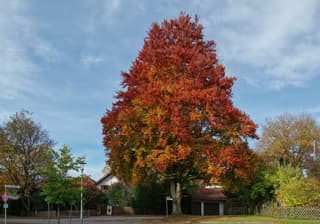
European Beech
Fagus sylvatica
The European beech is a large, long-lived deciduous tree native to Europe, prized for its smooth grey bark, dense glossy foliage and dramatic golden-copper autumn colour. It is widely planted as a specimen tree, in parkland, and as a formal hedge, since it tolerates close pruning and retains dried leaves through winter when clipped.

Leopard plant
Farfugium japonicum
Farfugium japonicum, also known as the leopard plant or green leopard plant, is a perennial in the Asteraceae family native to moist coastal areas and stream banks in Japan, Korea, China, and Taiwan. This semi-evergreen plant forms a dense clump of large, round to kidney-shaped leaves with a leathery texture, growing from an underground rhizome on long, fleshy petioles. In the 'Aureomaculatum' cultivar, the leaves are covered with striking yellow spots resembling leopard fur, which gives the plant its name. In autumn and winter, it produces tall flower stalks with clusters of yellow daisy-like flowers. In its natural habitat, it grows in the shade along watercourses, and in gardens, it is used as an ornamental plant for shady areas.

Muriel's Bamboo
Fargesia murielae
Fargesia murielae, also known as Muriel's Bamboo or Umbrella Bamboo, is a clump-forming bamboo native to the Chinese mountain forests. It does not spread via runners and therefore is not invasive. It is characterized by dense, elegantly arching culms and fine, bright green foliage that remains evergreen throughout the year. As one of the hardiest bamboo species, it can permanently withstand temperatures down to approximately -20 °C and even significantly colder for short periods. It flowers only every few decades in a rare, synchronized event (most recently in 1999) and is primarily cultivated for its foliage, not its blooms. Thanks to its dense, non-invasive growth habit, it is very popular as a privacy hedge, a container plant, or a solitary specimen by a garden pond.
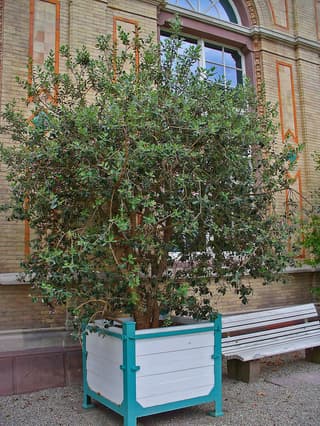
Pineapple Guava
Feijoa sellowiana
The feijoa (Feijoa sellowiana, accepted synonym Acca sellowiana) is an evergreen shrub or small tree in the Myrtaceae family, native to the subtropical highlands of southern Brazil, Uruguay, Paraguay, and Argentina. The leaves are leathery, dark green and glossy on the upper surface, and silvery and tomentose on the lower surface, giving the canopy a characteristic bicolor effect. In late spring to early summer, it produces showy flowers with purple-tinged white petals and long red stamens with yellow pollen: both the petals and the fruits are edible. The fruit, an oval green berry with aromatic pulp, resembles a cross between pineapple and strawberry in flavor. It is a hardy plant, drought-tolerant once established, resistant to salt spray and brief frosts, and widely used as an ornamental hedge and fruit tree in Mediterranean climates.
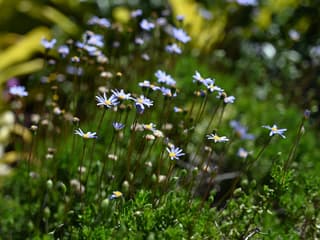
Blue Marguerite
Felicia amelloides
Felicia amelloides is an evergreen perennial (sometimes biennial) plant belonging to the Asteraceae family, native to the southern coast of South Africa, where it grows on sandy dunes and rocky slopes. It forms a small, bushy shrub 50-100 cm tall, with opposite, oval leaves that are rough to the touch due to their covering of fine hairs. From late spring until autumn, it produces numerous daisy-like flower heads, about 3 cm wide, with sky-blue ray florets and a bright yellow center.
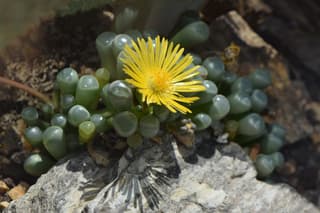
Baby toes
Fenestraria rhopalophylla
Fenestraria rhopalophylla, known as baby toes or window plant, is a succulent from the Aizoaceae family native to the deserts of Namibia and South Africa. Its cylindrical, fleshy leaves grow in tight clusters and feature translucent tips or "windows" that allow light to pass through to the interior, enabling photosynthesis while most of the leaf remains buried in the sand to protect against extreme heat and dehydration. It blooms in summer and fall with small white or yellow daisy-like flowers.
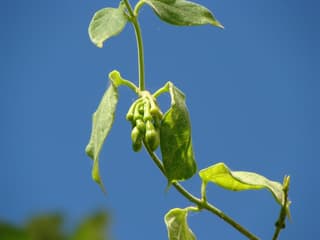
Loroco
Fernaldia pandurata
Loroco (Fernaldia pandurata) is an evergreen climbing vine in the Apocynaceae family, native to the tropical regions of Central America, particularly El Salvador, Guatemala, and Honduras. It is characterized by its twining pubescent stems that climb over fences, pergolas, and nearby trees, and by its fragrant, edible greenish-white flower buds, which are an iconic ingredient in Salvadoran cuisine, especially in pupusas.
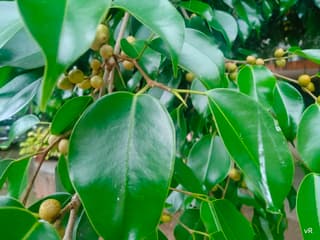
Weeping Fig
Ficus benjamina
The Weeping Fig is an elegant tropical tree native to Southeast Asia and Australia, prized for its gracefully drooping branches and glossy, dark green leaves. In the wild, it can reach up to 50 feet tall, though as a houseplant it typically grows 3-10 feet. It is the official tree of Bangkok, Thailand. Known for being sensitive to environmental changes, it may drop leaves when moved but recovers well with consistent care. An excellent air purifier, it effectively removes formaldehyde and other pollutants from indoor air.
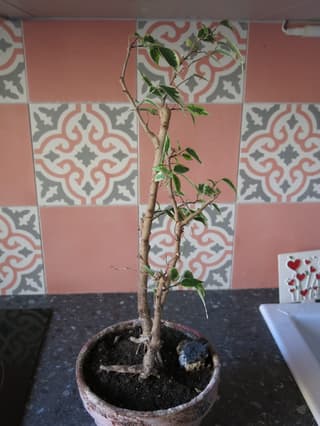
Variegated Weeping Fig
Ficus benjamina 'Variegata'
The Variegated Weeping Fig is an ornamental cultivar of Ficus benjamina, prized for its green leaves splashed and edged with creamy white. Native to South and Southeast Asia and Australia, it is a medium-sized tree widely grown as a houseplant for its graceful shape and gently drooping branches.
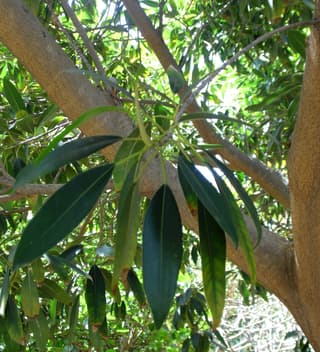
Alii Fig
Ficus binnendijkii
Ficus Alii (Ficus binnendijkii) is an elegant evergreen ornamental tree from the Moraceae family, native to Southeast Asia. It is characterized by long, narrow, leathery willow-like leaves that hang from thin, flexible branches. It grows slowly and can reach a height of up to 300 cm indoors with a spread of around 150 cm. Due to its upright, slender growth habit, it is popular as a specimen plant for room corners and is more resistant to fluctuating conditions than other Ficus species.
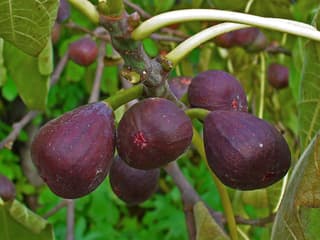
Common Fig
Ficus carica
The Common Fig (Ficus carica) is one of the oldest cultivated fruit trees in the world, native to the Mediterranean region and Western Asia. This deciduous, drought-tolerant tree produces sweet figs prized in cooking and traditional medicine. Its deeply lobed leaves and gnarled gray trunk offer ornamental beauty throughout the seasons.
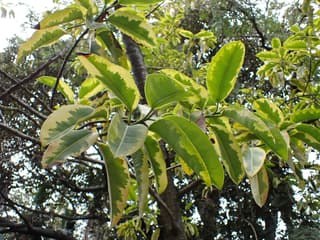
Rubber Plant 'Tineke'
Ficus elastica 'Tineke'
The Ficus elastica 'Tineke' is a striking variegated cultivar of the classic rubber plant, part of the Moraceae family. Its large, glossy, ovate leaves display a marbled pattern of dark green, light green, and creamy white to pink margins, making it one of the most sought-after variegated ficus for indoor decor. In its native tropical range across South and Southeast Asia, the parent species can grow into a towering tree, but as a houseplant Tineke typically stays between 1.5 and 3 meters tall. Like other ficus, it exudes a milky latex sap when cut or damaged, which is mildly toxic and can irritate skin, eyes, and mucous membranes in both pets and people. Because variegated tissue contains less chlorophyll, Tineke needs brighter light than plain-leaf rubber plants to maintain vivid coloring and avoid reverting to solid green growth.
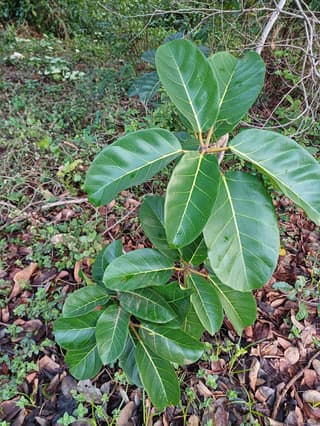
Giant-leaved Fig
Ficus lutea
Ficus lutea, commonly known as the Giant-leaved Fig or African Fig Tree, is a majestic fig tree native to tropical and southern Africa. It is distinguished by its exceptionally large, glossy leaves with prominent yellow veining, ranging from 13 to 43 cm in length. In its natural habitat it can reach 25 metres in height with a crown spanning 30–45 metres. A member of the Moraceae family, it can adopt a strangler fig habit in the wild.
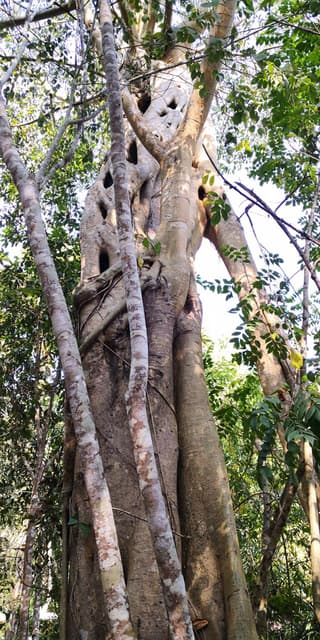
Banana Leaf Fig
Ficus maclellandii
Ficus maclellandii, widely known as the banana leaf fig or Ficus Alii, is an evergreen tree in the fig family native to Southeast Asia, India, and southern China. Its long, narrow, glossy leaves resemble banana foliage and give the popular 'Alii' cultivar an elegant, slender profile. Grown indoors as a striking floor plant, it forms a dense, upright canopy and adapts well to typical home conditions once established.
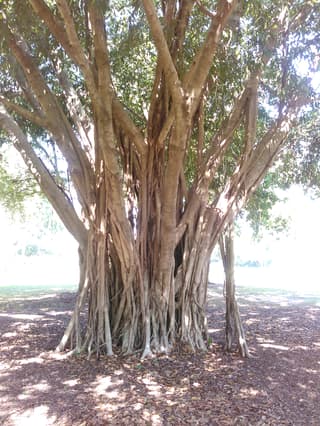
Moreton Bay Fig
Ficus macrophylla
Ficus macrophylla, known as the Moreton Bay Fig or Australian Banyan, is a majestic large evergreen tree native to eastern Australia. Belonging to the Moraceae family, it can reach over 60 meters in height in the wild, with dramatic aerial roots and a sweeping canopy that can cover areas equivalent to several football fields. It is widely planted in parks, public gardens, and boulevards of tropical and subtropical cities worldwide. As an indoor plant, it grows slowly in containers and serves as a striking architectural focal point.
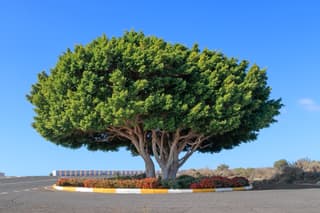
Chinese Banyan
Ficus microcarpa
Ficus microcarpa, commonly known as the Chinese Banyan or Indian Laurel, is a large evergreen fig tree native to South and Southeast Asia and Australia. Renowned for its glossy dark-green leaves, distinctive aerial roots, and ability to form impressive canopies, it is widely planted as a street tree in warm climates and is a favourite bonsai subject worldwide. It is often confused with Ficus retusa, but Ficus microcarpa is the currently accepted name.
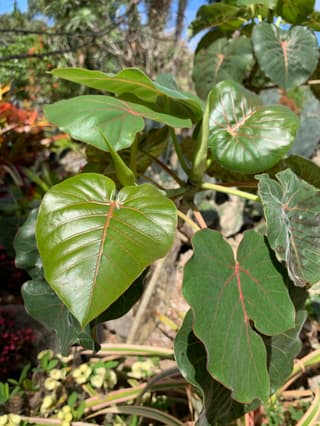
Rock Fig
Ficus petiolaris
Ficus petiolaris, the rock fig, is a dry-deciduous fig tree native to the rocky canyons and cliffs of Baja California, Sonora, and south to Oaxaca in Mexico. In the wild it grows 6-10 m tall, its roots gripping bare stone in search of soil and swelling into a striking caudex-like base. Cultivated specimens are prized for their heart-shaped leaves with rose-tinted veins and are popular as container and bonsai subjects.
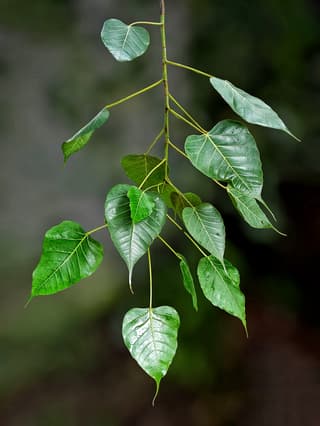
Sacred Fig
Ficus religiosa
Ficus religiosa, native to the Indian subcontinent and Indochina, is a large semi-evergreen fig tree in the Moraceae family. In the wild it develops a broad, spreading canopy with distinctive heart-shaped, long-tipped leaves that shimmer and rustle in the slightest breeze, a trait celebrated in Buddhist and Hindu literature. Grown as a bonsai or potted specimen it stays compact while retaining its iconic drip-tip foliage.
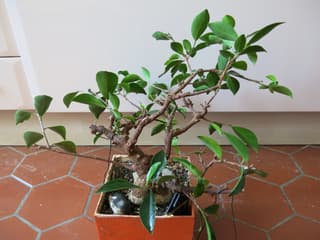
Ginseng Ficus
Ficus retusa
Ficus retusa, commonly known as the Ginseng Ficus or Banyan Fig, is a tropical tree species native to Southeast Asia (Malesia). It is widely cultivated as a bonsai due to its characteristically swollen aerial roots, sculptural trunk, and small, glossy, oval leaves. It is considered one of the most resilient and beginner-friendly indoor bonsai species in the world.

Common Wild Fig
Ficus thonningii
Ficus thonningii is an evergreen African fig that often begins life as an epiphyte, dropping aerial roots that can eventually envelop a host tree. It forms a broad, dense crown of glossy dark-green leaves over smooth pale-grey bark, and is widely grown as a shade tree, a hardy houseplant and a popular bonsai subject.
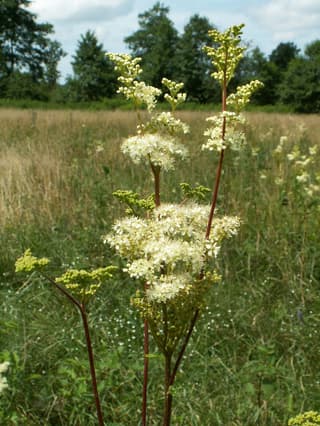
Meadowsweet
Filipendula ulmaria
Meadowsweet (Filipendula ulmaria) is a perennial herb in the rose family (Rosaceae), native to Europe and Western Asia. The plant typically grows in damp meadows, marshes, and along riverbanks, reaching heights of 3–5 feet with sturdy, furrowed stems. The leaves are dark green and serrated on the upper side, while the underside is whitish and downy. In summer and early fall, it bears dense clusters of small, creamy-white flowers with a strong, sweet fragrance reminiscent of almonds and antiseptic balsam. Meadowsweet is historically significant as the source of salicylic acid, the precursor to acetylsalicylic acid (aspirin), which was developed by Bayer in 1899.

Nerve Plant
Fittonia albivenis
Fittonia albivenis is a tropical plant native to the rainforests of Peru. It is characterized by its stunning deep green leaves with white or red veins that give it a mosaic appearance. The name "nerve plant" comes from the network of veins that resembles a nervous system. It belongs to the Acanthaceae family and was named after Elizabeth and Sarah Mary Fitton, two Irish botanist sisters from the 19th century.
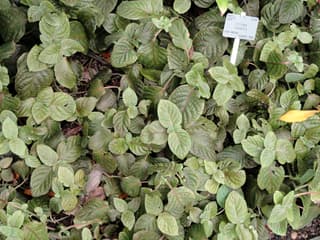
Giant Nerve Plant
Fittonia gigantea
The Giant Nerve Plant (Fittonia gigantea) is a mat-forming evergreen perennial native to the tropical rainforests of Ecuador and Peru, in the Acanthaceae family. Its oval leaves, up to 16 cm long, display deep green tones traced by striking dark red veins that resemble a network of nerves - the source of its common name. It spreads as a low, creeping groundcover, making it a favorite for terrariums, greenhouse cabinets, and high-humidity indoor spaces.
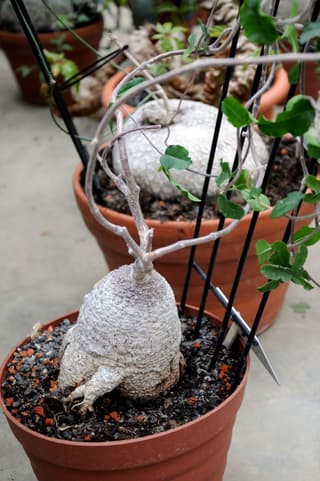
Fockea
Fockea
Fockea is a genus of caudiciform succulent vines in the family Apocynaceae, native mainly to South Africa (the Cape Provinces and KwaZulu-Natal). The most widely cultivated species, Fockea edulis, commonly known as "Hottentot bread," develops a sculptural, grey, tuberous caudex that can reach up to 60 cm in diameter, acting as a water reservoir that helps the plant survive long dry periods. Thin, twining stems emerge from the caudex and can stretch several meters under good conditions. The plant is semi-deciduous, slowing down and sometimes shedding part of its foliage during the cooler, drier winter months, though it rarely goes fully dormant. Small, star-shaped, greenish-white, lightly scented flowers appear in late spring and summer. The milky latex sap is toxic and can irritate skin and eyes; the tuberous root, while historically eaten by indigenous peoples after processing, should not be consumed without proper preparation. Fockea is slow-growing and highly prized among caudiciform succulent collectors for its unique sculptural form.
Hottentot Bread
Fockea edulis
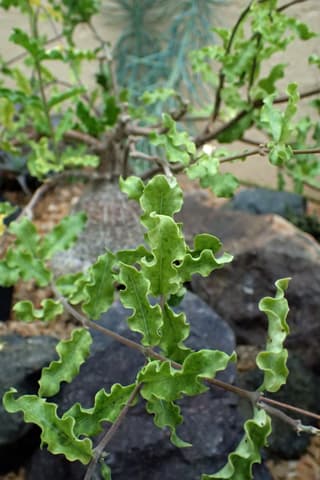
Fockea edulis is a caudiciform succulent vine native to the arid savannahs of South Africa and Namibia. Above ground it produces thin, twining stems with small, leathery leaves that scramble over rocks and shrubs; below (or partly above) the soil sits a large, gray, warty tuber (caudex) that can grow to 60 cm or more across over many decades. The tuber gives the plant its common name, "Hottentot bread," referencing the traditional use of the starchy root as an emergency food source by the Khoikhoi people of southern Africa, after careful preparation to remove bitter compounds. Slow-growing and long-lived, it is prized by collectors as a caudiciform specimen and container plant.
Beach Strawberry
Fragaria chiloensis
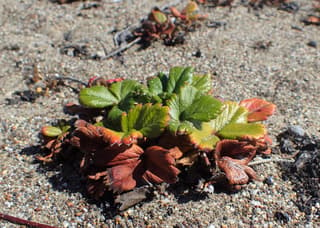
Fragaria chiloensis, commonly known as Beach Strawberry or Coastal Strawberry, is a low-growing perennial native to the Pacific coastlines of the Americas, from Alaska to Chile and Argentina. It is one of the two parent species of the modern cultivated strawberry (Fragaria × ananassa). The plant produces white to pale red, highly aromatic fruits and forms dense ground-covering mats via stolons. Its dark green, glossy trifoliate leaves may turn reddish in autumn, adding ornamental value.
Buckthorn
Frangula
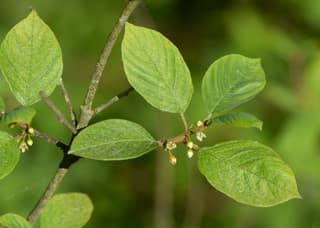
Frangula is a genus of approximately 56 species of deciduous or evergreen shrubs and small trees in the family Rhamnaceae, commonly known as buckthorns. They have a near-cosmopolitan distribution across Europe, the Americas, and large parts of Asia. Frangula species are characterized by alternate simple leaves, spineless branches, buds without scales, small five-petaled flowers, and two- to four-seeded berry-like fruits dispersed by birds. The bark and berries have a long history of medicinal use as natural laxatives. Several species, notably Frangula alnus, are considered invasive in parts of North America.
White ash
Fraxinus americana
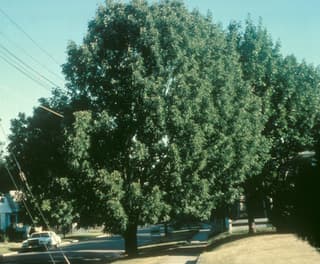
White ash (Fraxinus americana) is a large, fast-growing deciduous shade tree native to eastern and central North America. Part of the olive family (Oleaceae), it features odd-pinnate compound leaves with 5-9 leaflets that turn yellow to purple in fall, and can reach 60-80 feet tall in the landscape.
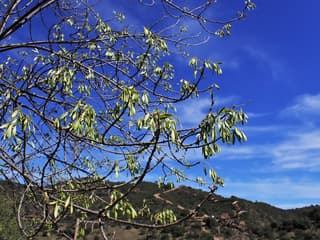
Narrow-leaved Ash
Fraxinus angustifolia
Fraxinus angustifolia, commonly known as narrow-leaved ash, is a medium to large deciduous tree native to Southern Europe, Northwest Africa, and Southwest Asia. It belongs to the family Oleaceae and can reach heights of 20 to 30 meters. Its pinnate leaves with slender, characteristic leaflets turn yellow and reddish in autumn. It flowers in spring before leaf emergence, producing small purplish-green flowers pollinated by wind.
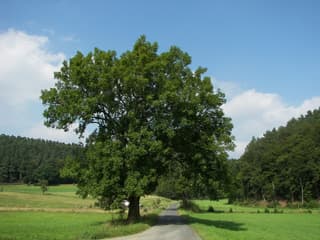
European Ash
Fraxinus excelsior
European ash (Fraxinus excelsior) is a large deciduous tree native to Europe, belonging to the Oleaceae family. It can grow 18-24 meters tall, with a rounded crown and pinnately compound leaves. Its small, petal-less flowers appear before the leaves in spring. A moderately fast-growing species, it has long been valued as an ornamental and shade tree, but is now severely threatened by ash dieback disease (caused by the fungus Hymenoscyphus fraxineus) and the emerald ash borer.
What are Medium Plants?
Medium Plants require a bit more attention and basic gardening knowledge. These plants thrive with regular care and some cultivation experience. Ideal for those who already master the basics.
Tips for Growing Medium Plants
medium plants need a balance between attention and freedom. Keep a regular care routine, watch leaves to identify problems early, and adjust watering by season.