Complete Plant Guide
Explore plants by difficulty, season and more. Find the perfect plant for you.
Difficulty
Categories
Plants by City
🗺️ Plants by City4349 plants found
Showing 4213-4248 of 4349
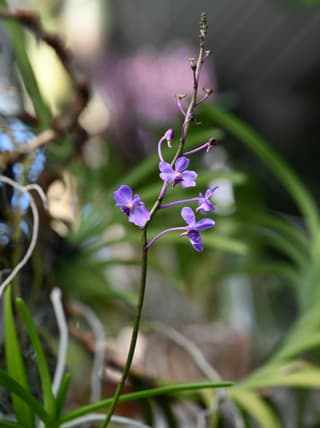
Blue Vanda
Vanda coerulescens
Vanda coerulescens is a miniature epiphytic orchid native to the highland forests of Myanmar, China, and Thailand. Celebrated for its delicate pale blue-violet fragrant flowers, it is one of the rarest naturally blue orchids in the world. Each inflorescence bears 15 or more blooms about 1 inch across, with a pleasant fragrance and long-lasting display.

Palm Vanilla Orchid
Vanilla palmarum
Vanilla palmarum is a climbing, epiphytic orchid of the family Orchidaceae, native from Cuba to southern Brazil, occurring across biomes such as the Amazon, Caatinga, Cerrado, Atlantic Forest and Pantanal. It grows twining over host palm trees (such as Syagrus and Attalea), from which it gets its common name. It has comparatively delicate stems, chlorophyllous aerial roots, large reticulated leaves, and pale yellow-green flowers borne in successive lateral racemes in spring. It is considered an endangered species across part of its range.
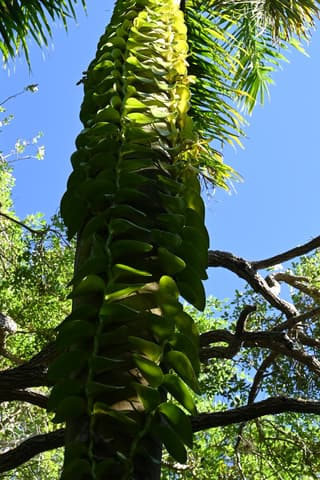
Vanilla Orchid
Vanilla planifolia
Vanilla planifolia is a species of perennial climbing orchid, native to Mexico and Central America, famous for being the primary source of natural vanilla essence. It features succulent stems and bright green, leathery leaves. Its greenish-yellow flowers are ephemeral, lasting only a single day, and in commercial cultivation outside its natural habitat, they require hand-pollination to produce the valuable pods.
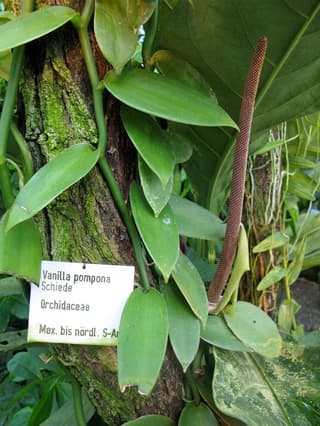
West Indian Vanilla
Vanilla pompona
Vanilla pompona, known in the French Antilles as vanillon, is a climbing vanilla orchid native to Mexico, Central America and northern South America. Like other vanillas it is a vine that clings to trees with fleshy aerial roots; its leaves and stems are thicker than those of the common vanilla, Vanilla planifolia. It bears large greenish-yellow flowers and short, plump pods with a high vanillin content that are used for flavouring and perfumery. In Peru its flowers are pollinated by the orchid bee Eulaema cingulata.
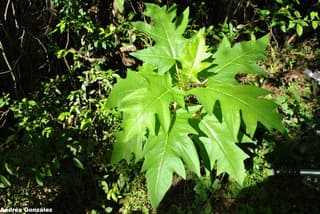
Oak-leaved papaya
Vasconcellea quercifolia
Vasconcellea quercifolia is a tall shrub or small tree in the family Caricaceae, the papaya family. It is native to South America, including Brazil, Argentina, Paraguay, Uruguay, Bolivia, Peru and Ecuador. It can reach 10 m and drops its leaves in the cold season. The lobed leaves look like oak leaves, which is where the name quercifolia comes from. The fruits are small oval papayas, 2 to 10 cm long, turning from green to yellow-orange, with sweet, juicy orange flesh and many small seeds.
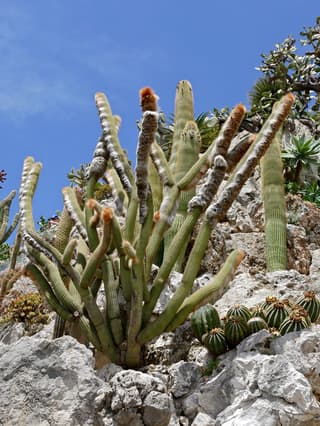
Red Fox Tail Cactus
Vatricania guentheri
Vatricania guentheri is a columnar cactus native to eastern Bolivia. Today it is officially known as Espostoa guentheri; Vatricania guentheri, Cereus guentheri, and Cephalocereus guentheri are older names for the same species. In the wild, it grows exclusively in the Río Grande valley (Chuquisaca and Santa Cruz), on slopes in seasonally dry forests between 800 and 1,300 m elevation. The light green columns reach heights of 2 to 3 m and are about 10 cm thick, featuring approximately 27 ribs and 15 to 25 straw-yellow spines per areole; it branches from the base as it matures. Its most striking feature is the lateral cephalium: a strip of reddish-brown wool with bristles and long spines, up to 50 cm long, on one side of the stem. From this cephalium, tubular yellowish to whitish flowers about 8 cm long emerge in early summer. The round, scaly fruits are edible but have a bland or unusual taste. It is a distinct species from Espostoa lanata, the well-known woolly 'Old Man Cactus' from Peru.
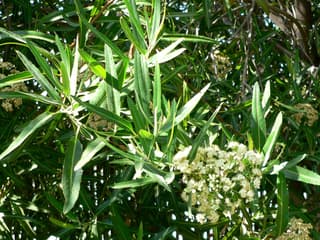
Arizona rosewood
Vauquelinia californica
Arizona Rosewood is a robust, evergreen shrub or small tree native to the Sonoran Desert. It is highly valued in xeriscaping for its resemblance to oleander but without the high toxicity. The plant features dark green, leathery, lance-shaped leaves with serrated edges. In late spring and early summer, it produces dense, flat-topped clusters of small, creamy white flowers that attract pollinators. Its bark is attractive and becomes shaggy with age, adding winter interest to the landscape.
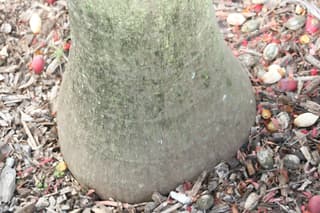
Montgomery Palm
Veitchia arecina
The Montgomery Palm (Veitchia arecina) is a fast-growing tropical palm native to the islands of Vanuatu in the Melanesian archipelago. Featuring a slender solitary trunk with a distinctive pale green crownshaft and lush pinnate fronds, it is widely prized as an ornamental specimen in tropical and subtropical gardens.
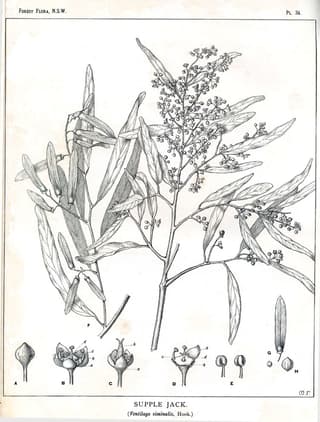
Supplejack
Ventilago
Ventilago is a genus of approximately 40 species of evergreen climbing vines and scandent shrubs in the family Rhamnaceae. Native to tropical South and Southeast Asia, Australasia, Africa, and Madagascar, they bear small greenish-yellow axillary flowers and distinctive single-seeded winged samaras. Some species develop a tree-like form when mature, reaching up to 7 meters.
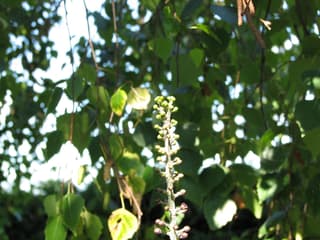
Black False Hellebore
Veratrum nigrum
Veratrum nigrum, or black false hellebore, is a striking Eurasian perennial in the false-hellebore family (Melanthiaceae), grown for its whorled, pleated foliage and tall summer spikes of star-shaped, near-black flowers. Despite the common name it is not a true hellebore (genus Helleborus) but belongs to a botanically distinct and extremely toxic group of alkaloid-rich plants.
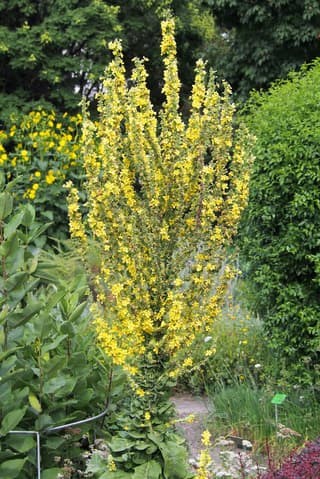
Mullein
Verbascum
Verbascum is the mullein genus, with more than 450 species in the figwort family (Scrophulariaceae), native to Europe, Africa and Asia and most diverse around the Mediterranean. Most are biennials or short-lived perennials: in the first year they form a rosette of large leaves, often covered in soft hairs, then send up a tall flower spike from 50 cm to 3 m. Flowers are usually yellow but can also be white, pink or purple, opening from late spring through summer. They are loved by bees and add vertical interest to dry borders and gravel gardens.
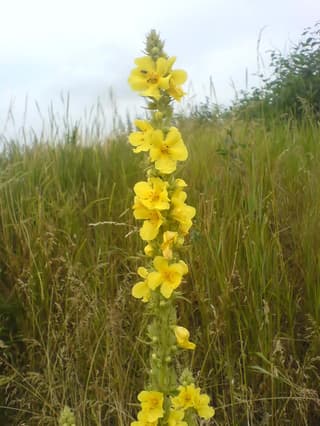
Denseflower Mullein
Verbascum densiflorum
Verbascum densiflorum, commonly called denseflower mullein, is a robust biennial native to Europe and western Asia. In its first year it forms a low rosette of large, felted grey-green leaves, then sends up a tall, unbranched flower spike densely packed with bright yellow blooms in its second summer. Prized in cottage gardens and wildflower borders, it is remarkably drought-tolerant and thrives in poor, well-drained soils where little else survives. The plant has a long history of use in European herbal medicine, particularly its flowers, which are dried for soothing teas.
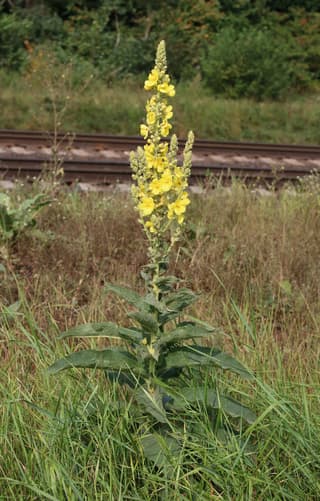
Orange Mullein
Verbascum phlomoides
Verbascum phlomoides, commonly called orange mullein or woolly mullein, is a biennial to short-lived perennial herb in the figwort family (Scrophulariaceae). It forms a low rosette of soft, grey-green, felted leaves in its first year, then sends up a tall flowering spike up to 2.5 m covered in bright yellow blooms from June to September in its second year. Native to Europe and western Asia, it thrives in poor, dry, sunny sites and is valued in gardens for its architectural form, pollinator appeal, and traditional medicinal uses.
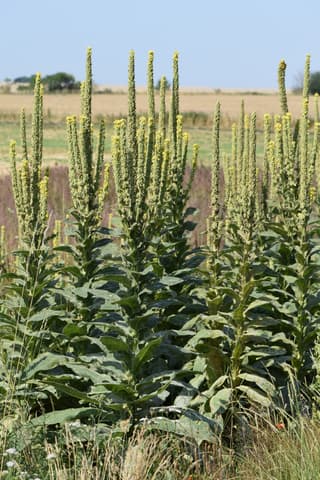
Common Mullein
Verbascum thapsus
Common mullein (Verbascum thapsus) is a biennial herbaceous plant in the Scrophulariaceae family, native to Europe, North Africa, and Asia. In its first year, the plant forms a flat rosette of large, velvety, gray-green leaves covered in dense, white hairs. In the second year, a sturdy, erect flower stalk emerges, reaching heights of 2 meters or more, crowned by a dense spike of bright yellow flowers. The plant is famous for its medicinal properties and has historically been used to treat respiratory ailments, inflammation, and wounds. It thrives in full sun on dry, well-drained soils and is very hardy, resistant to drought and frost down to -34°C (-30°F).
Verbena (genus)
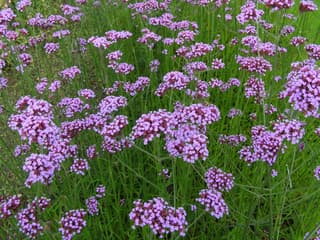
Verbena
Verbena is a genus of flowering plants in the Verbenaceae family, widely grown as annuals or perennials in gardens and containers. They produce abundant blooms in shades of purple, pink, white, and red, and are highly attractive to pollinators such as bees and butterflies.
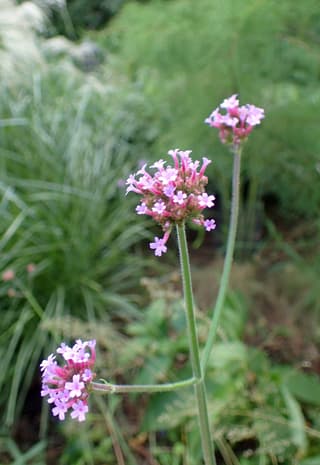
Purpletop Vervain
Verbena bonariensis
Verbena bonariensis, commonly known as purpletop vervain or tall verbena, is a perennial herbaceous plant native to South America. It is prized for its tall, slender, nearly leafless stems topped with clusters of small purple-lilac flowers. It grows in upright clumps and is widely used in naturalistic garden design, attracting butterflies and other pollinators.
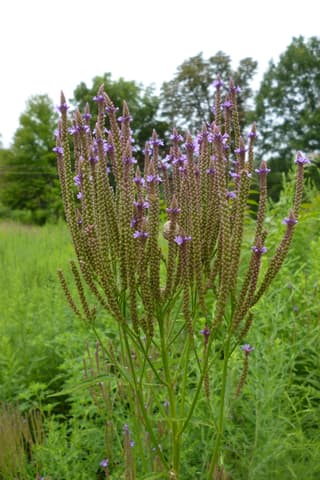
Blue Vervain
Verbena hastata
Blue vervain (Verbena hastata) is a native North American wildflower found in wet meadows, prairies, and along stream banks. This upright perennial produces slender, candelabra-like spikes of tiny violet-blue flowers from midsummer through early fall, attracting bees, butterflies, and other pollinators. Historically used by Indigenous peoples and early settlers as a medicinal herb, it remains a popular choice for rain gardens, pollinator borders, and naturalized wet areas.
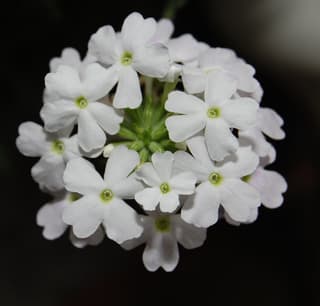
Garden Verbena
Verbena hybrida
Verbena hybrida, commonly known as Garden Verbena, is a semi-evergreen flowering plant originating from South America. It produces clusters of small, vividly colored flowers in shades of purple, red, pink, white, lavender, and coral. Widely grown as an annual in temperate climates, it thrives in full sun and is popular for hanging baskets, window boxes, and garden borders.

Common Vervain
Verbena officinalis
Common vervain (Verbena officinalis) is a herbaceous perennial in the Verbenaceae family, native to Europe and now naturalized across temperate regions worldwide. It forms upright clumps 60-90 cm tall with opposite, deeply lobed and toothed leaves, and produces slender, wiry flower spikes bearing small tubular lilac to pale purple flowers from summer into early fall. A tough, easy-to-grow plant, it has been prized as a medicinal herb since ancient Roman times.
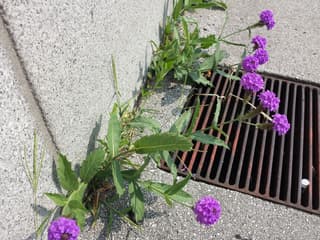
Slender Vervain
Verbena rigida
Verbena rigida is a low-growing, spreading perennial native to Argentina, Brazil, Uruguay, and Paraguay, prized for its rough, sandpaper-textured leaves and dense clusters of vivid purple-magenta flowers. It forms a mat-like groundcover via underground rhizomes and blooms continuously from late spring through fall, making it a favorite for sunny borders, rock gardens, and pollinator plantings.
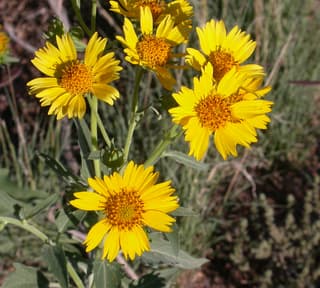
Golden Crownbeard
Verbesina encelioides
Verbesina encelioides, commonly known as Golden Crownbeard or Cowpen Daisy, is a hardy annual herb in the sunflower family. It is recognized by its grayish-green, triangular leaves and vibrant yellow daisy-like flowers with notched petals. It is highly adaptable to disturbed soils and arid environments, often forming dense colonies.
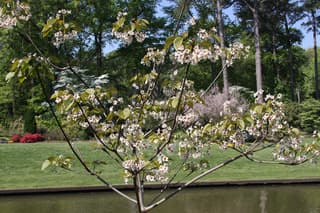
Tung Oil Tree
Vernicia fordii
Vernicia fordii, commonly known as the Tung Oil Tree, is a medium-sized deciduous tree native to China. It belongs to the spurge family Euphorbiaceae and has been cultivated for centuries for its seeds, which yield tung oil — a valuable drying oil used in paints, varnishes, and wood finishes. The tree produces beautiful clusters of white to pink flowers with dark purple veining in late winter to early spring, before the leaves emerge. While ornamentally attractive, all parts of the plant are severely toxic.
Brazilian Ironweed
Vernonanthura polyanthes
A shrub or small tree native to Brazil, reaching 2.5 to 3 meters in height, with a woody stem and simple, alternate, lanceolate leaves. Small white, off-white, or pinkish flowers in terminal heads. Native to the Cerrado and disturbed areas, distributed across Minas Gerais, São Paulo, Paraná, Rio Grande do Sul, and Santa Catarina. An aggressive colonizing species of roadsides and forest edges, it resprouts well after cutting and fire. A hardy and vigorous plant with rapid growth.
Speedwell
Veronica
Veronica, commonly known as Speedwell, is a large genus of flowering plants in the family Plantaginaceae, comprising over 500 species. Native mainly to Europe, these cheerful perennials produce tall, slender spikes of small four-petaled flowers in shades of blue, purple, pink, and white from spring through fall. Their upright, wand-like flower spikes make them stand out in cottage gardens, borders, and naturalistic plantings. Groundcover types spread low and are excellent for rock gardens and erosion control.
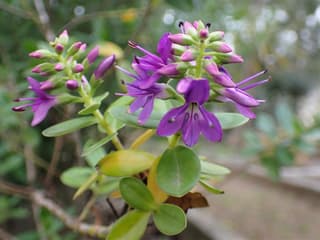
Franciscan Hebe
Veronica × franciscana
Franciscan Hebe (Veronica × franciscana) is a dense, rounded evergreen shrub prized for its glossy oval leaves and short spikes of purple summer flowers. A garden hybrid between Veronica elliptica and V. speciosa, it thrives in coastal and mild-winter gardens, tolerating salt spray, wind and drought once established.
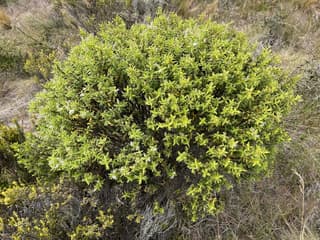
Hebe brachysiphon
Veronica brachysiphon
Veronica brachysiphon, still sold as Hebe brachysiphon, is a shrub from the mountains of New Zealand's South Island. It forms a dense, rounded bush with small, bright green, glossy leaves that stay all year. In summer it is covered in spikes of white flowers with purple-tinged centres. In gardens it stays between 50 cm and 1 metre; in the wild it reaches 1.8 m. It grows slowly and takes clipping well, so it works as a low hedge. The name brachysiphon means short tube, after the short flower tube.
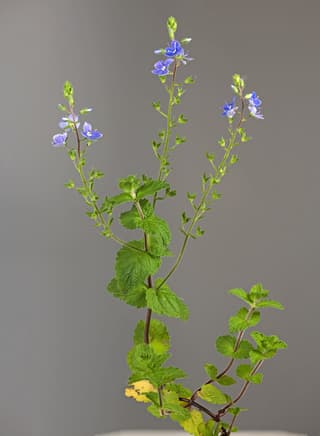
Germander Speedwell
Veronica chamaedrys
Veronica chamaedrys is a low-growing herbaceous perennial native to Europe, belonging to the family Plantaginaceae. This hardy wildflower features creeping stems that form dense mats up to 50 cm wide, producing striking deep blue flowers with white centers from spring through early summer. The leaves are opposite, triangular, and finely toothed. Highly adaptable and low-maintenance, it excels as a ground cover in wildlife gardens, wildflower meadows, and natural lawns. Extremely cold-hardy and recognized with the RHS Award of Garden Merit.
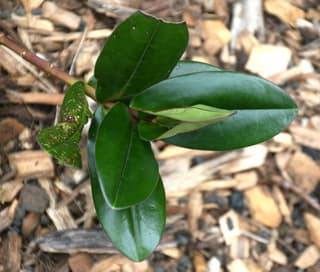
New Zealand Hebe
Veronica speciosa
Veronica speciosa, commonly known as the New Zealand Hebe or showy hebe, is a dense evergreen shrub native to the coastal cliffs of New Zealand's North Island. Prized for its glossy, leathery leaves and striking spikes of deep pink to purple flowers that bloom through summer, it forms a compact, rounded mound perfect for coastal and city gardens. Highly salt-tolerant, it thrives in exposed seaside positions while also making an excellent low-maintenance ornamental shrub inland.
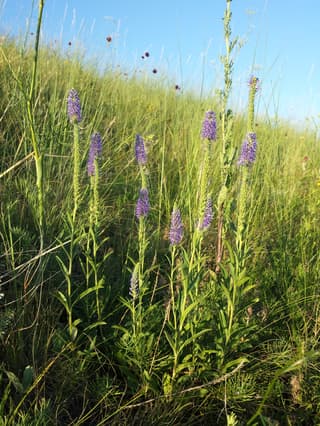
Spiked Speedwell
Veronica spicata
Veronica spicata, commonly known as Spiked Speedwell, is a hardy perennial flowering plant native to Europe and Asia. It produces striking upright spikes of tiny blue, purple, pink, or white flowers in summer, making it a favourite in cottage gardens and pollinator-friendly borders. A vigorous, low-maintenance plant that thrives in full sun with well-drained soil.
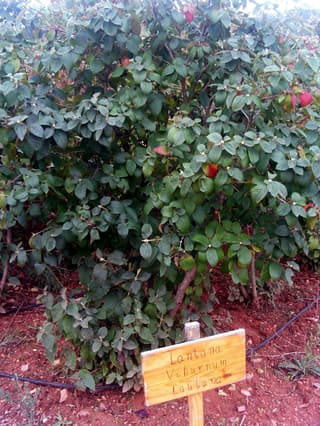
Wayfaring Tree
Viburnum lantana
Viburnum lantana, commonly known as the wayfaring tree, is a robust deciduous shrub native to Europe, North Africa and western Asia. It forms a broad, multi-stemmed mound of felty, grey-green leaves that turn deep red-purple in autumn. Flat clusters of small creamy-white flowers open in late spring, followed by berries that ripen from green to red and finally glossy black, often showing several colors on the same cluster at once. Traditionally planted along hedgerows and footpaths, it earned its common name for marking the way for travelers across the English countryside.
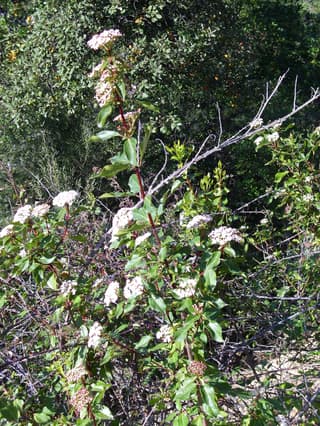
Shiny viburnum
Viburnum lucidum
Viburnum lucidum, the shiny viburnum, is an evergreen shrub of the Adoxaceae family, today usually treated as a large-leaved form of laurustinus (Viburnum tinus) and sold as V. tinus 'Lucidum'. It was described by Philip Miller in 1768, and early botanists traced it to the Atlas Mountains of North Africa. It is more open and vigorous than ordinary laurustinus, reaching about 2.5-4 m tall and wide, with glossy, dark green, leathery leaves up to 10 cm long. From late winter into spring it carries flat heads, up to 10 cm across, of small creamy-white flowers, sometimes tinged pink, followed by blue-black berries that birds eat but people should not.
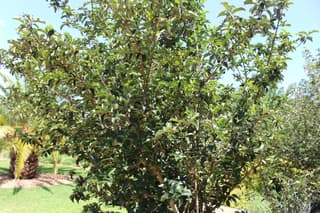
Chinese Snowball Viburnum
Viburnum macrocephalum
Viburnum macrocephalum, known as the Chinese snowball viburnum, is a rounded, vase-shaped deciduous to semi-evergreen shrub native to mainland China. It is prized for its enormous spherical flower clusters, which open lime-green and mature to pure white, resembling giant snowballs held above dark green, serrated leaves.
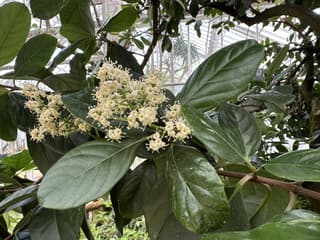
Sweet Viburnum
Viburnum odoratissimum
Sweet Viburnum (Viburnum odoratissimum) is a large, fast-growing evergreen shrub prized across warm climates for its dense, glossy foliage and its ability to form an impenetrable privacy hedge in just a few seasons. Native to East and Southeast Asia, it produces broad, leathery, deep-green leaves and, in late spring to early summer, showy conical clusters of small white flowers with a sweet, honey-like fragrance that gives the plant its name. The flowers are followed by small red fruits that ripen to black. Left unpruned, Sweet Viburnum can reach 4-6 m tall and wide, but it takes shearing extremely well and is one of the most popular screening and hedging shrubs in subtropical and warm-temperate landscapes.
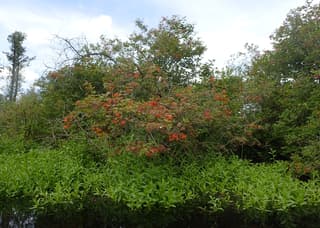
Guelder Rose
Viburnum opulus
Viburnum opulus, commonly known as Guelder Rose or European Cranberrybush, is a deciduous shrub native to Europe, North Africa, and Central Asia. It produces spectacular flat-topped clusters of white flowers in late spring, followed by brilliant red berries that persist into winter. The lobed, maple-like leaves turn red-purple in autumn, making this a four-season garden plant beloved by wildlife.
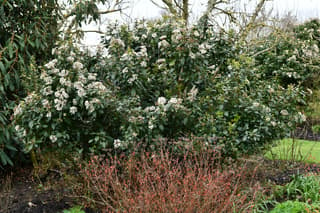
Laurustinus
Viburnum tinus
Laurustinus is a dense, evergreen Mediterranean shrub prized for its leathery dark-green leaves and clusters of pink-budded white flowers that open through the winter months. Following the blooms, it produces small, metallic blue-black berries that add extra seasonal interest and attract birds. Hardy and low-maintenance, it is widely used as a hedge, screen or specimen shrub in mild-winter gardens.
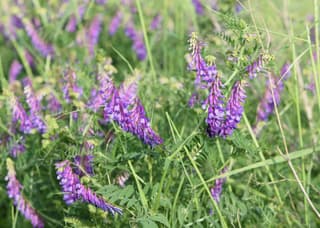
Vetch
Vicia
Vicia is a large genus of climbing and scrambling legumes commonly called vetches, native to Europe, Asia, Africa, and the Americas. With over 240 species, vetches are best known as nitrogen-fixing cover crops and livestock forage, though some species have been cultivated as food for thousands of years. Their slender, trailing stems climb via tendrils, bearing pea-like flowers in shades of purple, pink, blue, and white from spring through summer.
Find the Perfect Plant
Our plant guide helps you find ideal species for your experience level and time of year.
Browse by Difficulty, Season & More
Use the filters below to narrow this catalog by care difficulty, season, environment, or search directly by name. Each filter leads to a focused list tailored to your specific growing conditions.