Complete Plant Guide
Explore plants by difficulty, season and more. Find the perfect plant for you.
Difficulty
Categories
Plants by City
🗺️ Plants by City3454 plants found
Showing 2521-2556 of 3454
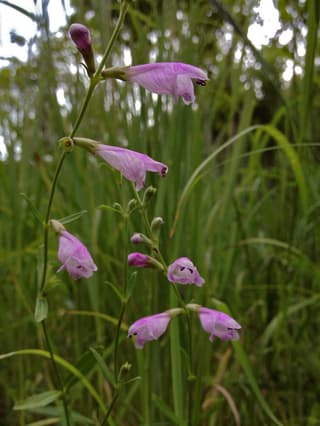
Obedient Plant
Physostegia virginiana
Obedient Plant (Physostegia virginiana) is a hardy, rhizomatous perennial from the mint family (Lamiaceae), native to moist meadows, stream banks, and prairies of North America. Its square stems bear spikes of pink, white, or purplish, dragonhead-like flowers from July to October. It gets its name from the fact that individual flowers, when manually moved, will temporarily hold their new position, as if obeying. It spreads quickly, forming dense clumps, so it's advisable to thin it out occasionally in the garden by division.
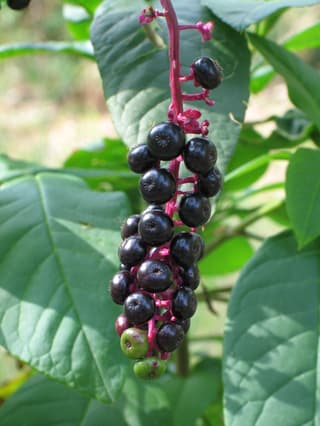
Pokeweed (genus)
Phytolacca
Phytolacca is a genus of approximately 25 species of perennial herbs, shrubs, and trees native to tropical and temperate regions worldwide. The most notable species are Phytolacca americana (American pokeweed), a vigorous weedy perennial of eastern North America, and Phytolacca dioica (ombú), the iconic giant tree-herb of the Argentine pampas. All species are extremely toxic — every part contains saponins and phytolaccatoxin, with berries being particularly dangerous.
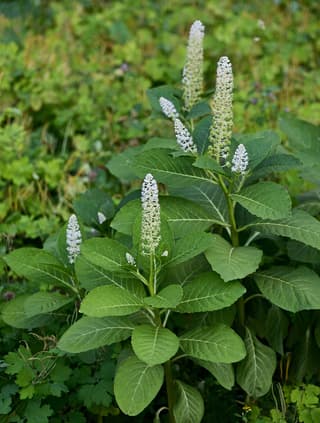
Indian Pokeweed
Phytolacca acinosa
Phytolacca acinosa is a robust, fast-growing herbaceous perennial in the pokeweed family (Phytolaccaceae), native to temperate and tropical Asia (the Himalayas, China, Japan, Korea and Vietnam). It forms clumps of large ovate leaves on reddish-green stems, topped in summer by upright racemes of small white to greenish flowers that ripen into dark purple-black berries. Widely naturalized in parts of Europe and North America, it is grown ornamentally for its bold foliage and berry spikes, though every part of the plant is toxic if eaten raw.
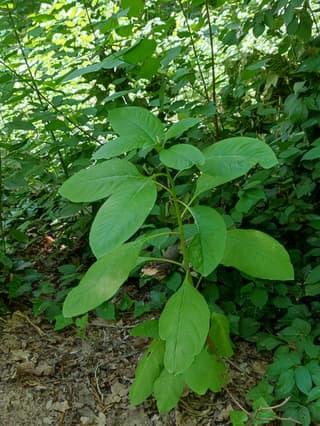
American pokeweed
Phytolacca americana
Phytolacca americana, commonly known as American pokeweed, is a large, fast-growing herbaceous perennial native to eastern North America. It can reach up to 10 feet tall with stout reddish-purple stems and large leaves that emit an unpleasant odor when crushed. In summer it produces long racemes of small white flowers followed by striking dark purple-black berries beloved by birds. WARNING: All parts of the plant are highly toxic to humans, dogs, and cats.

Ombú
Phytolacca dioica
Ombú (Phytolacca dioica) is a majestic South American tree from the family Phytolaccaceae, native to the pampas of Argentina and Uruguay. Despite resembling a true tree, its trunk is composed primarily of water and soft tissue rather than wood, making it unusually light. It is a fast-growing, dioecious species — male and female flowers appear on separate plants. The ombú can reach 15+ meters in height with a broad, dense canopy that provides generous shade, and is celebrated as a cultural icon of the gaucho identity.
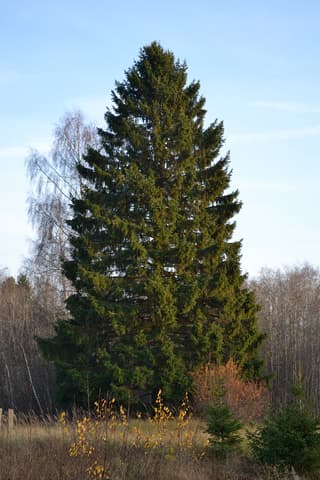
Norway Spruce
Picea abies
Norway Spruce (Picea abies) is a fast-growing evergreen conifer native to northern and central Europe, widely planted as a Christmas tree and ornamental landscape tree. It has a conical crown, dark green needles, and distinctive pendulous cones.
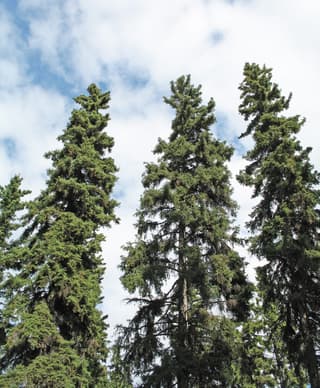
White Spruce
Picea glauca
White spruce (Picea glauca) is a cold-hardy evergreen conifer native to Canada and the northern United States, prized for its dense pyramidal habit and soft, bluish-green needles. While the wild species can reach 18-24 m in forests, its compact cultivar 'Conica' (Dwarf Alberta Spruce) grows only a few centimeters a year, making it one of the most popular conifers for containers, bonsai and indoor/patio growing.
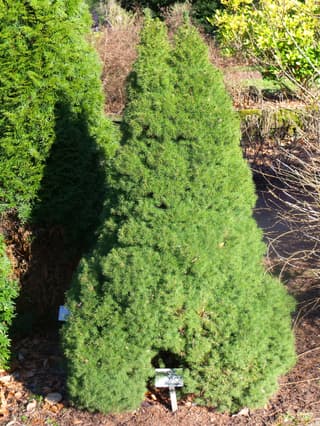
Dwarf Alberta Spruce
Picea glauca 'Conica'
Picea glauca 'Conica', or the Dwarf Alberta Spruce, is a slow-growing evergreen conifer derived from the native white spruce (Picea glauca) and discovered in Alberta, Canada, in 1904. This cultivar is renowned for its perfect, symmetrical conical shape—growing only 2 to 4 inches (5–10 cm) per year, making it ideal for small gardens, rockeries, and containers. Its short, soft, bright green needles are densely packed on the stems, giving the plant an elegant, compact appearance. This variety is very cold-hardy (down to -40 °F/-40 °C) and requires minimal maintenance, but it is highly susceptible to spider mites and does not tolerate high humidity or hot summers.
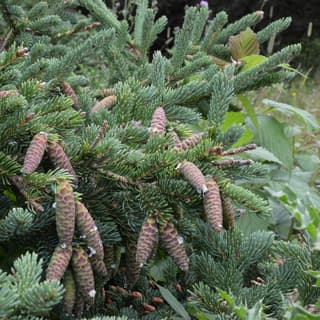
White Spruce
Picea laxa
White spruce (Picea glauca), also known as Canadian spruce, is a majestic coniferous tree native to the northern regions of North America—from Alaska to Newfoundland and south to Montana. It is characterized by a dense, conical crown, short four-sided needles of a blue-green color with a characteristic pungent odor, and small, thin cones. It is among the hardiest trees in the world, withstanding freezing temperatures down to -50 °C and surviving harsh northern winters. It grows to a height of up to 25 meters, naturally growing at a slower pace. It is a foundational species of northern forests and provides shelter for many birds and mammals. Dwarf cultivars such as 'Conica' are popular as ornamental plants for both gardens and containers.
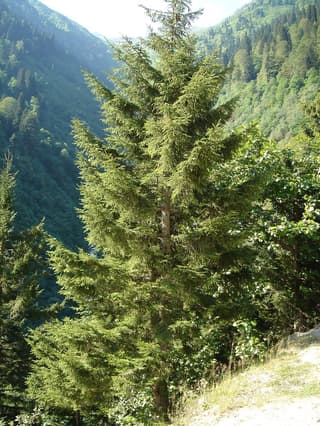
Oriental spruce
Picea orientalis
Oriental spruce (Picea orientalis) is an evergreen conifer from the Pinaceae family, native to northeastern Turkey and the Caucasus region of Georgia. The tree forms a dense, narrow, pyramidal crown with pendulous side branches and short, glossy, dark green needles that lie close to the shoots. In spring, the tree bears conspicuous reddish-purple male cones, which later mature into brown seed cones in the fall. In gardens and parks, the species typically reaches 15-18 meters in height with a width of 4-7 meters after many years of growth, while wild specimens can grow even taller. It is known for its slow but steady growth and is often used as an ornamental tree, windbreak, or specimen plant in large gardens and parks.
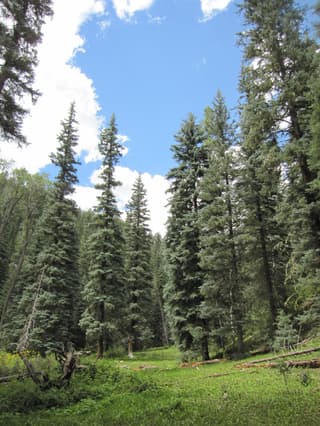
Colorado Blue Spruce
Picea pungens
The Colorado Blue Spruce (Picea pungens) is a large, pyramidal evergreen conifer native to the Rocky Mountains of the western United States. Prized for its stiff, silvery-blue needles arranged in a dense brush-like pattern, it can reach 15-23 m (50-75 ft) tall in the landscape. It is the official state tree of Colorado and a popular choice for windbreaks, privacy screens, and as a living Christmas tree.
Black-footed polypore
Picipes badius
Picipes badius, formerly known as Polyporus badius, is a wood-decay fungus characterized by its smooth, shiny cap ranging from bay-brown to chestnut in color. Its stem is typically black at the base and off-center. It is primarily found on the deadwood of deciduous trees. Although non-toxic, its texture becomes extremely leathery with age, making it inedible.
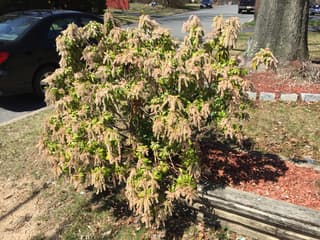
Japanese Andromeda
Pieris japonica
Pieris japonica, commonly known as Japanese andromeda or lily-of-the-valley shrub, is an evergreen shrub in the heath family (Ericaceae), native to Japan, southern China, and Taiwan. It is prized for its coppery-red new growth that matures to glossy dark green, and for its drooping clusters of small, urn-shaped white flowers that bloom in early spring. A slow grower, it thrives in partial shade with consistently moist, acidic soil.

Pilea
Pilea
Pilea is a genus of tropical plants in the family Urticaceae, native to southern China and Vietnam. It includes popular houseplants such as P. peperomioides (Chinese money plant), P. cadierei (aluminum plant), and P. mollis (Moon Valley plant). These compact, fast-growing plants are easy to care for and thrive indoors.
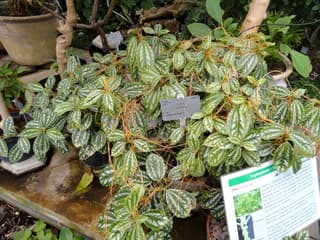
Aluminum Plant
Pilea cadierei
Pilea cadierei, commonly known as the Aluminum Plant, is a striking tropical perennial native to the forests of Vietnam. Prized for its oval, dark-green leaves adorned with four raised silvery patches that give the plant a metallic sheen, it belongs to the nettle family (Urticaceae). Compact and fast-growing, it reaches about 30-40 cm indoors and makes an excellent houseplant for beginners.
Depressa Pilea
Pilea depressa
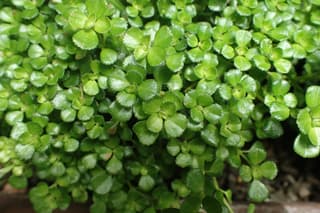
Pilea depressa is a small, fast-growing creeping and trailing plant in the Urticaceae family, native to tropical regions of Central America and the Caribbean. Its tiny, round, glossy green leaves form dense mats that cascade beautifully from hanging baskets, drape over pot edges, or carpet terrarium floors. It is completely non-toxic to humans, cats, and dogs, making it a popular choice for pet-friendly households.
Friendship Plant
Pilea involucrata
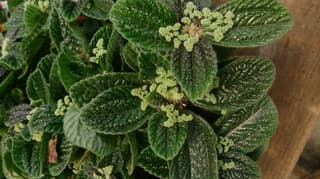
Pilea involucrata is a tropical evergreen perennial native to Central and South America, belonging to the Urticaceae family. It features stunning oval, velvety leaves with a deeply quilted or crinkled texture, displaying dark green tones with bronze and copper highlights, and reddish-purple undersides. This compact plant reaches 15-30 cm in height, making it perfect for terrariums, desks, and bright indoor spaces.
Silver Sparkle Pilea
Pilea libanensis
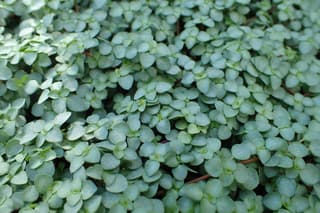
Pilea libanensis is a low-growing, mat-forming evergreen perennial in the nettle family (Urticaceae), prized for its tiny, glaucous blue-gray leaves that shimmer with a silvery frost on wiry, reddish trailing stems. Native to Central and South America, it is often sold interchangeably with Pilea glauca and Pilea glaucophylla and is a popular choice for hanging baskets, terrariums, and as a groundcover in mixed containers.
Artillery Plant
Pilea microphylla
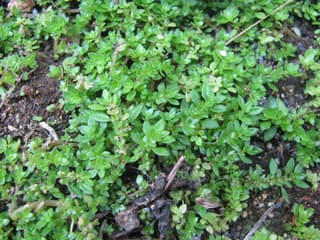
The Artillery Plant (Pilea microphylla) is a small tropical plant native to the Tropical Americas, prized for its incredibly tiny, moss-like leaves that form a lush, dense green carpet. It belongs to the family Urticaceae and is famous for its remarkable pollen-shooting mechanism — when its stamens mature, they forcefully eject pollen into the air in a visible cloud, which gives the plant its name. It is widely used as a ground cover, in terrariums, and as an indoor ornamental.
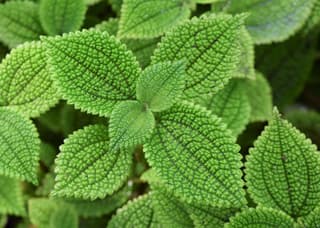
Pilea mollis
Pilea mollis
Pilea mollis, commonly known as Moon Valley, is a striking indoor plant known for its deeply textured, serrated leaves that resemble the craters of the moon. The foliage is typically a vibrant apple-green with dark bronze or burgundy veins, providing a unique tactile and visual appeal. It is a compact grower, making it perfect for terrariums or small tabletops.
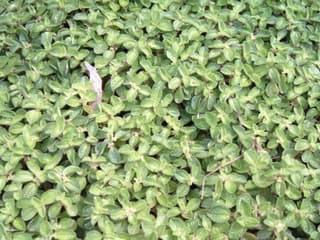
Creeping Charlie
Pilea nummulariifolia
Creeping Charlie (Pilea nummulariifolia) is a fast-growing, trailing perennial from the Urticaceae family, native to the Caribbean and tropical South America from Colombia to Peru. Its small, rounded, textured leaves grow on creeping stems that root at the nodes, making it an excellent choice for hanging baskets or as ground cover in warm climates.

Chinese Money Plant
Pilea peperomioides
Pilea peperomioides is a popular houseplant native to the Yunnan province of China. It features distinctive round, coin-shaped leaves on long petioles that give it a unique architectural appearance. This easy-care plant became extremely popular through social media and is known for producing many baby plants (pups) that can be shared with friends.
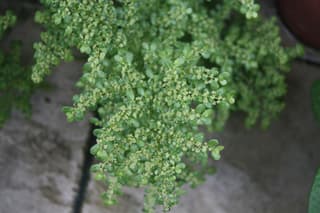
Red Brilliantine Pilea
Pilea serpyllacea
Red Brilliantine (Pilea serpyllacea) is a tiny creeping plant native to the Andes of Bolivia and Peru. It is prized for its small, glossy leaves with reddish tones, often confused with Pilea glauca. It thrives in terrariums, hanging pots, and as ground cover in humid indoor settings.
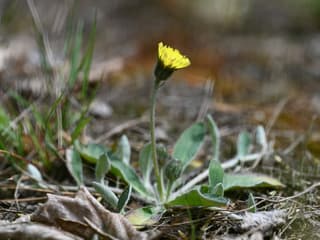
Mouse-ear hawkweed
Pilosella officinarum
Pilosella officinarum, commonly known as mouse-ear hawkweed, is a perennial herbaceous plant native to Europe and northern Asia. It forms basal rosettes of green leaves covered in distinct white hairs, which help conserve moisture. The plant spreads via creeping stolons, creating a dense mat. Its bright yellow flowers resemble small dandelions and emerge on single, upright stems.
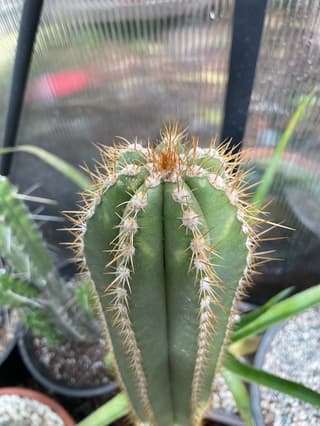
Pilosocereus (genus)
Pilosocereus
Pilosocereus is a genus of columnar cacti native to Brazil and the Caribbean, recognized by their striking blue-green waxy stems and dense white woolly hair. Many species grow several meters tall and produce nocturnal flowers.
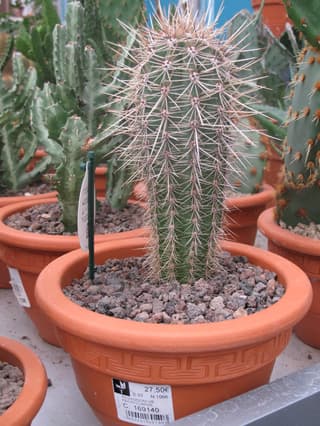
Brazilian Blue Cactus
Pilosocereus azureus
Pilosocereus azureus, commonly known as the Brazilian Blue Cactus, is a columnar cactus native to Brazil's rocky caatinga and cerrado scrublands. Its most striking feature is the blue-grey coloration of the stem, caused by a waxy epicuticular coating that shields it from intense sunlight. In habitat it can grow up to 10 meters tall, branching into clusters covered in golden-yellow spines. It produces large white, night-blooming flowers pollinated by bats and moths, typically appearing from spring into summer.
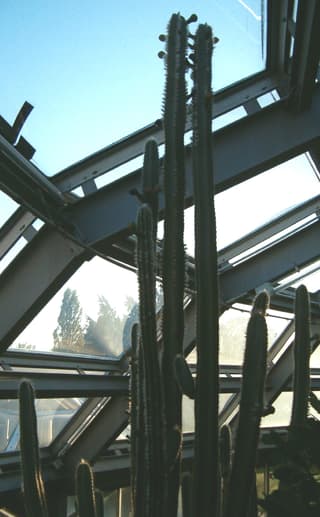
Caatinga Blue Pilosocereus
Pilosocereus catingicola
Pilosocereus catingicola is a columnar cactus endemic to the semi-arid Caatinga biome of northeastern Brazil. Known for its striking blue-green stems and nocturnal white to pink flowers, it can reach up to 10 meters tall in the wild. It is one of the most iconic cacti of the Brazilian Caatinga, highly adapted to drought and intense sun.
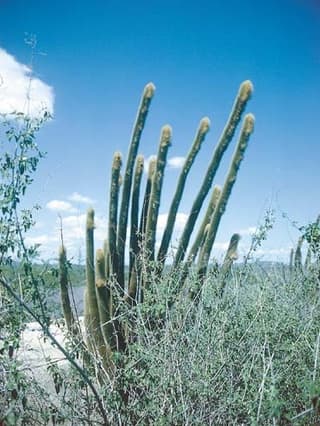
Brazilian Cactus
Pilosocereus chrysostele
Pilosocereus chrysostele is a columnar cactus native to the Caatinga, a seasonally dry tropical forest in northeastern Brazil (Ceará, Paraíba, Pernambuco and Rio Grande do Norte). It grows in clumps that branch only near the base, forming upright columns with a blue-green epidermis and pale yellow spines, reaching up to 3 m tall in the wild. Its flowers emerge at night from a woolly lateral structure called a cephalium and are pollinated mainly by bats.
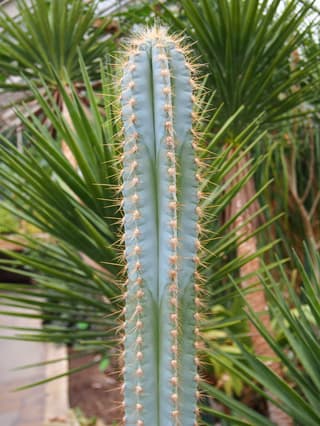
Blue Torch Cactus
Pilosocereus pachycladus
Pilosocereus pachycladus, commonly known as the Blue Torch Cactus or Blue Columnar Cactus, is a columnar cactus native to Brazil, specifically the Caatinga region. Its most striking feature is its intense, waxy blue epidermis, which serves as protection against solar radiation and water loss. It has well-defined ribs with areoles bearing yellowish spines. Its flowers are large, white, and bloom at night, being pollinated primarily by bats.
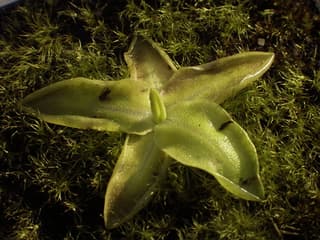
Butterwort
Pinguicula
Pinguicula, commonly known as butterwort, is a genus of over 100 species of carnivorous plants in the Lentibulariaceae family, native to temperate and tropical regions of America, Europe, and Asia. Their leaves form rosettes with a greasy, shiny surface (hence the common name) covered in mucilaginous glands that trap, digest, and absorb nutrients from small insects, supplementing the scarce nutrients of the peaty soil where they grow. Some Mexican species maintain succulent leaves year-round; others from temperate climates form a winter bud (hibernaculum) during dormancy.
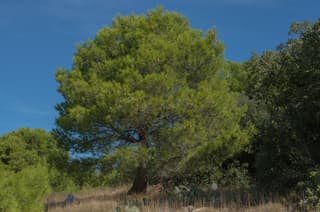
Aleppo pine
Pinus halepensis
The Aleppo pine is an evergreen Mediterranean conifer, recognizable by its often twisted and irregular habit, its fissured grayish bark, and its long, thin needles grouped in pairs of a pale, slightly bluish green. Native to the Mediterranean basin, it grows equally well on sandy coastal dunes as on the most arid rocky and limestone slopes, where it can reach 15 to 25 meters in height. Extremely resistant to heat, wind, and drought once established, it plays a major ecological role in soil stabilization and Mediterranean reforestation.
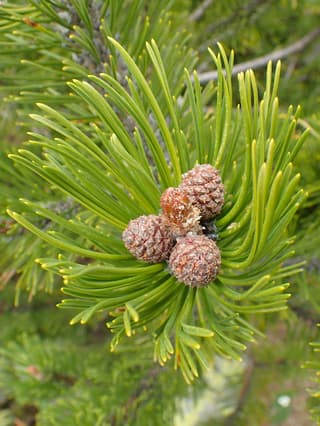
Mountain Pine
Pinus mugo
Pinus mugo, commonly known as Mountain Pine or Mugo Pine, is a hardy evergreen conifer native to the mountains of Central and Southern Europe, including the Alps, Carpathians, and Pyrenees. It typically grows as a spreading shrub or small tree up to 3 meters tall, featuring paired dark green needles and small dark brown ovoid cones. Exceptionally cold-hardy and wind-resistant, it thrives in poor, rocky, well-drained soils at high altitudes. Widely used in rock gardens, alpine landscaping, erosion control, and as a bonsai subject.
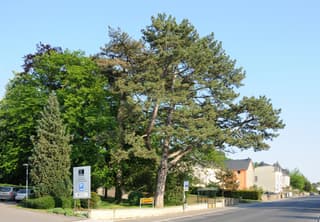
Austrian Pine
Pinus nigra
The Austrian pine (Pinus nigra) is a robust, fast-growing evergreen conifer native to the mountains of Central and Southern Europe, from Austria down through the Balkans and into parts of Turkey and North Africa. It forms a dense, broadly pyramidal crown with stiff, dark green needles borne in pairs and grey-brown, deeply fissured bark. Prized for its toughness, it tolerates poor, alkaline, and compacted soils, urban pollution, coastal salt spray, and strong winds, making it a favorite for windbreaks, reforestation, and street planting throughout temperate climates.
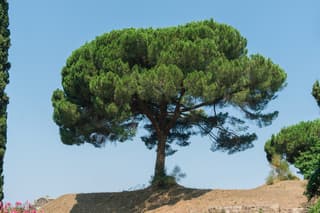
Stone Pine
Pinus pinea
Pinus pinea, the stone pine, is a large Mediterranean conifer famous for its broad, umbrella-shaped crown and for the edible pine nuts (pinoli) held in its rounded cones. It has stiff, dark green paired needles and reddish, fissured bark, and can reach 20 to 25 metres over a long, slow life. Its distinctive silhouette is a hallmark of the Italian and Iberian landscape.
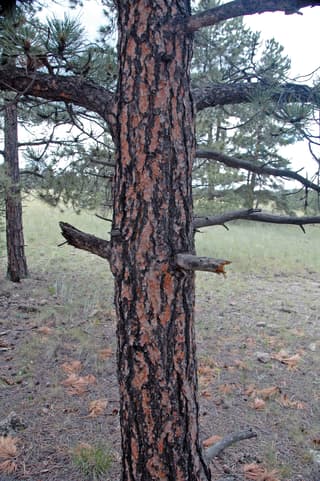
Ponderosa Pine
Pinus ponderosa
The Ponderosa Pine is a massive, iconic conifer of the American West. It is easily recognized by its long, dark-green needles that grow in bundles of three and its thick, plate-like bark that develops a beautiful orange-brown hue and a scent reminiscent of vanilla or butterscotch as the tree matures.
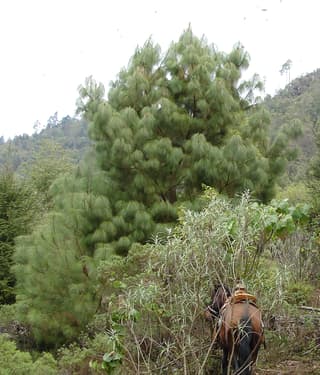
Smooth-bark Mexican Pine
Pinus pseudostrobus
The Smooth-bark Mexican Pine (Pinus pseudostrobus) is a large conifer native to the highlands of Mexico and Central America, where it grows in pine-oak forests between 850 and 3,250 meters in altitude. It is distinguished by its smooth, grayish bark in young specimens, which becomes rougher and cracked with age, and by its long, drooping needles grouped in fascicles of five. In its natural habitat, it can exceed 30 meters in height, with a dense, rounded crown. It is a fast-growing species, drought-tolerant once established, and valued both for its timber and its ornamental use in temperate to warm climates.
Find the Perfect Plant
Our plant guide helps you find ideal species for your experience level and time of year.
Browse by Difficulty, Season & More
Use the filters below to narrow this catalog by care difficulty, season, environment, or search directly by name. Each filter leads to a focused list tailored to your specific growing conditions.