Blog
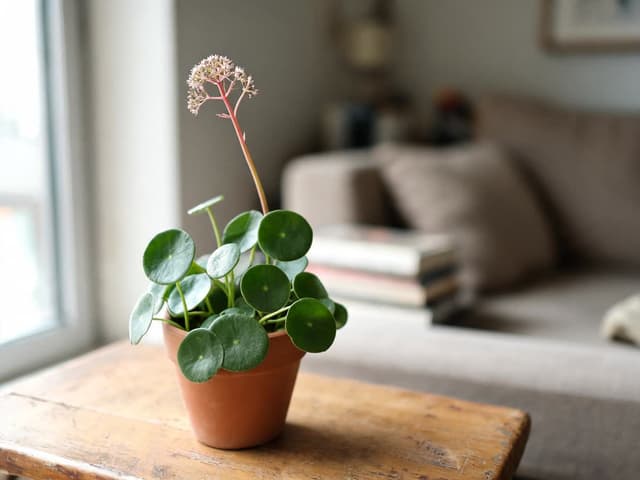
Chinese Money Plant Flowers: What They Are, Whether to Cut Them, and How to Get Blooms
A Chinese money plant flower is a cluster of tiny, pinkish or whitish buds on a thin stalk growing from the center of the plant. It is normal and not a sign of disease. Learn how to recognize it, distinguish it from mealybugs, whether cutting the stalk helps, and what is known about getting a pilea to bloom.
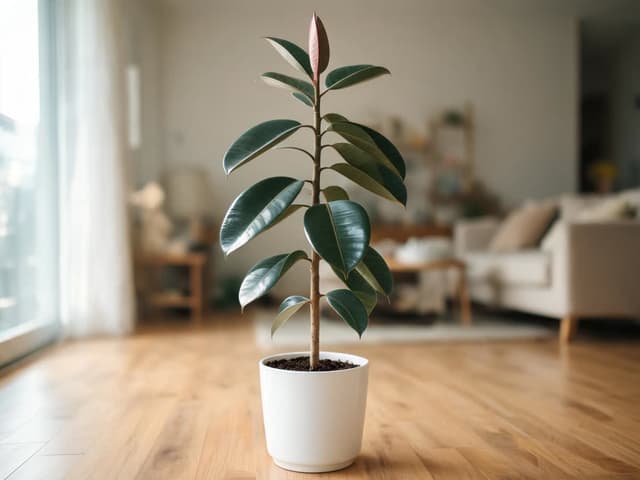
How to Care for a Rubber Plant (Ficus elastica): Light, Water, and Pruning
A potted rubber plant needs bright light with morning sun only, watering when the topsoil dries out, and temperatures above 55°F (13°C). Learn why it drops leaves and where to prune a tall, leggy plant so it branches out again.
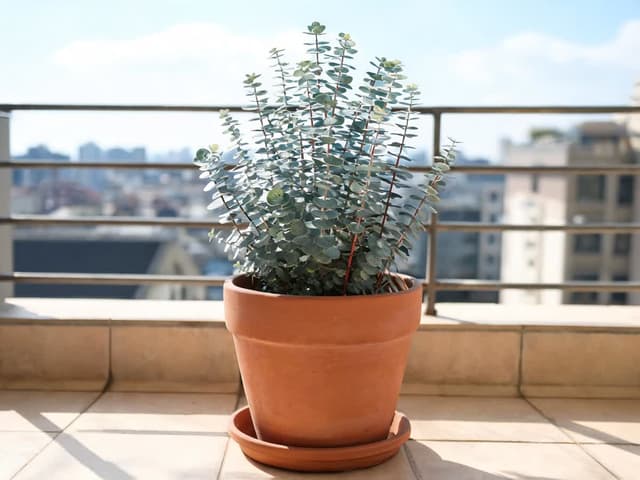
Eucalyptus: How to Care for It in Pots, on Balconies, and in Gardens
Potted eucalyptus requires at least 6 hours of direct sun, a large pot with drainage holes, and watering only when the soil is almost dry. Learn which species you have, how to prune for round leaves, and what to do about dry or sticky foliage.
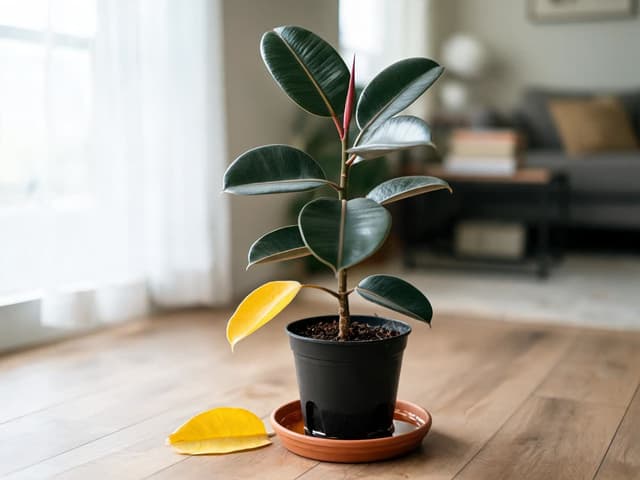
How Often to Water a Rubber Plant: The Test That Decides Before Leaves Drop
Water your rubber plant when the top 2 inches of soil are dry, until water drains out. In practice, that means every 1 to 2 weeks in warm weather. Learn the test, why thick leaves show thirst late, and how to tell overwatering from underwatering.
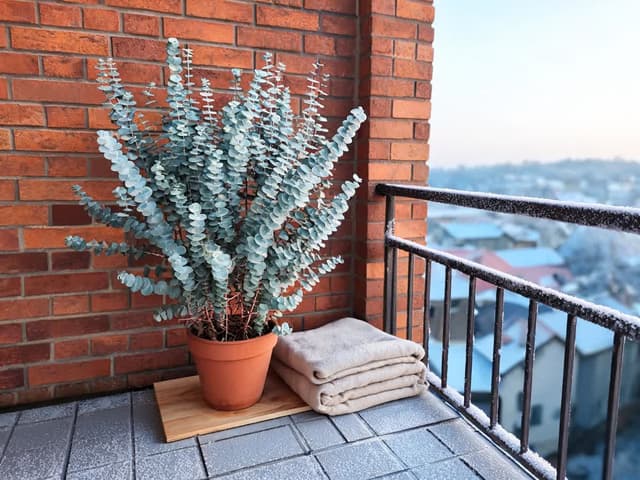
Cold-Hardy Eucalyptus: Which Species Tolerate Frost and How to Protect Them
The hardiest eucalyptus for winter is snow gum, followed closely by Eucalyptus gunnii. Round-leaved floral varieties tolerate far less cold. Learn the cold limits for each species, how to protect potted plants, and what to do if frost burns your plant.
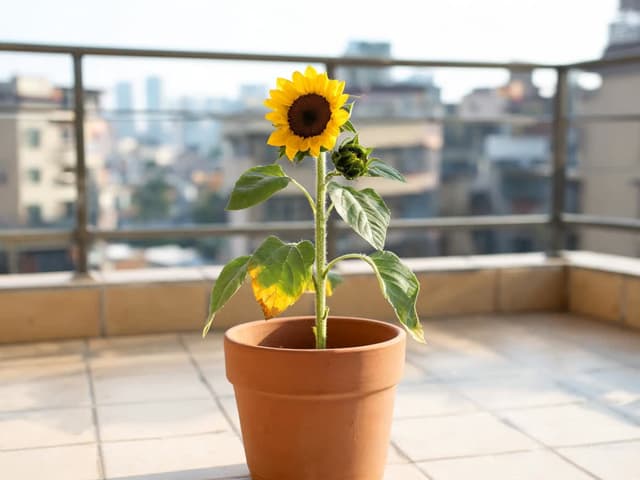
Sunflower Care: Pots, Watering, and the Flower Cycle
Sunflowers need direct sunlight, moist soil without waterlogging, and a deep pot. They live about 3 months, set seed, and die. Learn how long the bloom lasts, why the head droops, and what to do when it dies.
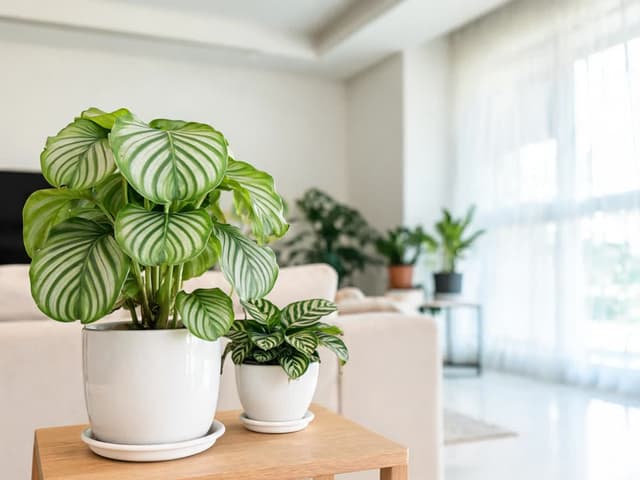
Calathea Care: Watering, Humidity, and Curled Leaves
Calathea requires bright, indirect light, consistently lightly moist soil, fluoride-free water, and at least 40% humidity. Here is how to distinguish curled leaves, brown tips, and the plant's normal night movements.
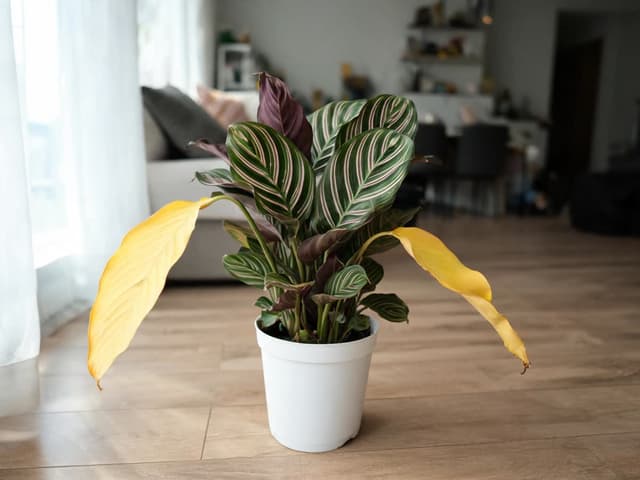
Calathea with Yellow Leaves: How to Find the Cause and What to Do
One or two outer leaves turning yellow on a calathea is just age. Several turning at once has a cause: watering, tap water, cold below 13 °C, or too much light. Here is how to tell them apart and what to do today.
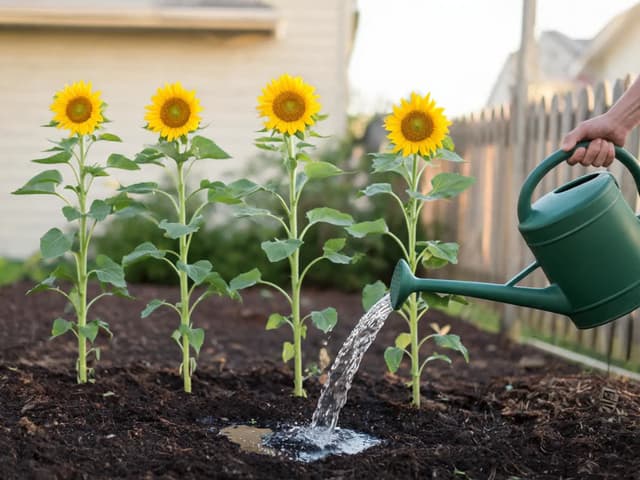
How Often to Water Sunflowers: Pots, Beds, and Every Stage
In a garden bed, sunflowers need one deep soak a week when it does not rain, with extra care from bud to bloom's end. In pots, soil dries faster and needs daily checking in the heat. Here is how to water each stage, measure rain, and help a wilted sunflower.
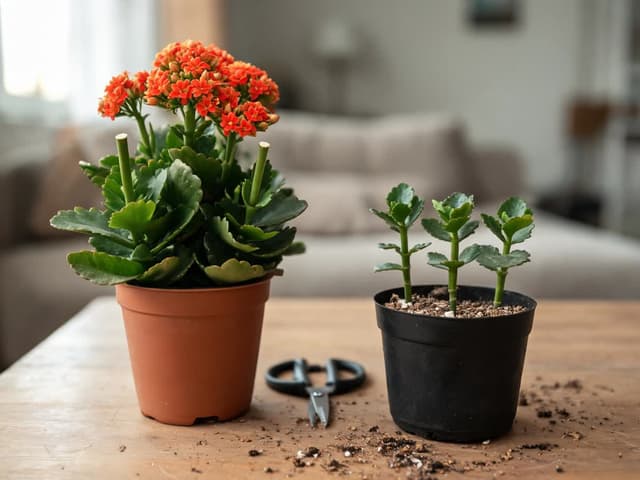
How to Propagate Kalanchoe from Stem and Leaf Cuttings
Propagate kalanchoe with a 2 to 3-inch non-flowering stem cutting. Let the cut callous before planting, and roots will establish in 2 to 3 weeks. Here is how leaf cuttings work and why your new plant needs long nights to bloom.
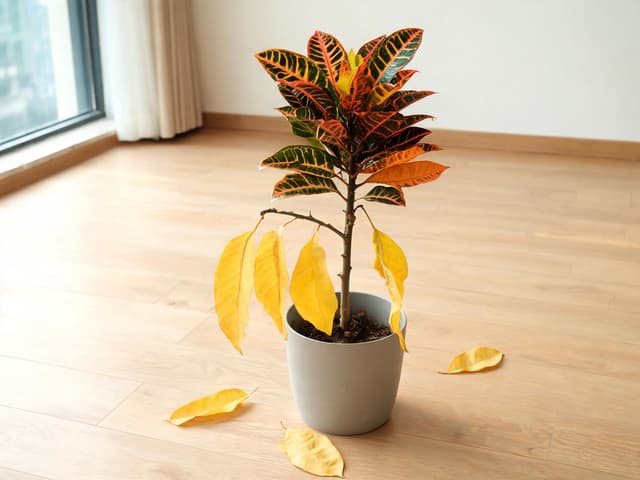
Croton Leaves Turning Yellow: Normal Variegation or Plant Trouble?
Crisp yellow veins and bright spots are just your croton's natural pattern. The trouble starts when a leaf loses its pattern entirely, turns completely yellow, and falls off. The most common causes are a recent move, cold below 50 °F (10 °C), watering problems, and spider mites.
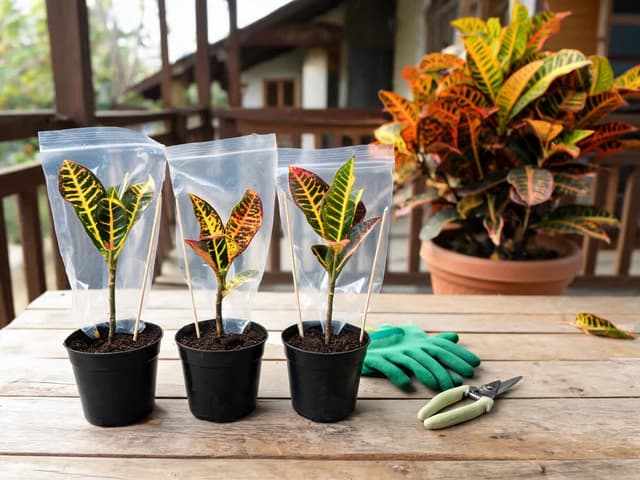
How to Propagate Croton: Cuttings, Water, or Air Layering
A croton stem cutting roots in about 4 weeks in warm conditions. Here is the step-by-step guide, what changes in water, air layering for thick branches, and how to handle the sap.