2332 Easy Easy Care | 2026 Guide - Page 43
Find 2332 easy easy care. Complete guide for your garden.
2332 Easy Care with easy level
Showing 1513-1548 of 2332
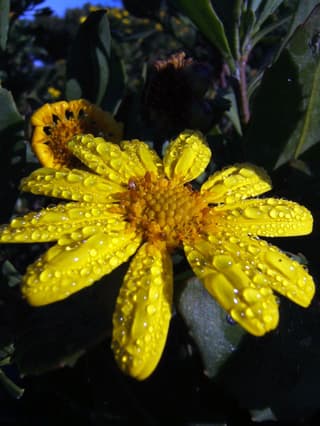
Bietou
Osteospermum moniliferum
Bietou (Osteospermum moniliferum) is a fast-growing, evergreen shrub in the Asteraceae family, native to the coastal regions of southern Africa—from the Cape Peninsula through KwaZulu-Natal to Mozambique and Zimbabwe. The plant grows up to 2 meters tall and equally wide, forming a compact, rounded growth habit with dark green, slightly serrated leaves. The characteristic yellow flower heads, with a diameter of up to 40 mm, bloom primarily in late autumn and winter, and are highly attractive to bees and other pollinators. After flowering, berry-like fruits develop that ripen into dark brown or black spheres, which are a favorite for birds. The plant is extremely drought-tolerant due to its semi-succulent nature and thrives in well-drained, sandy soil in full sun. It is easy to grow, grows rapidly, and has a lifespan of 8–12 years.
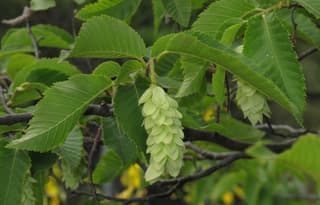
European hop-hornbeam
Ostrya carpinifolia
The European hop-hornbeam (Ostrya carpinifolia) is a deciduous tree of the Betulaceae family, widespread in the hilly and sub-mountainous areas of Southern Europe, the Balkans, and Southwestern Asia. It grows wild from sea level up to about 1300 m, often on calcareous soils and arid slopes, where it acts as a pioneer species capable of colonizing poor and degraded soils. It typically reaches 15-20 meters in height, with an oval crown, reddish-brown bark that flakes into thin plates, ovate serrated leaves similar to those of the common hornbeam but with more pronounced veins, and fruits enclosed in membranous bracts gathered in infructescences resembling hop cones, from which its English name "hop-hornbeam" is derived.
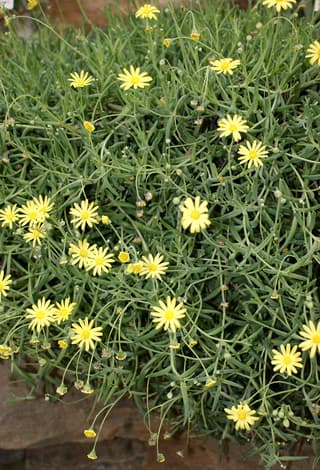
Ruby Necklace
Othonna capensis
Othonna capensis, popularly known as Ruby Necklace, is a creeping and trailing succulent native to the arid regions of the Eastern Cape, South Africa. Its cylindrical, finger-shaped leaves are grayish-green and develop intense ruby tones at the tips when exposed to plenty of sun and little water. In winter and early spring, it produces small, yellow, daisy-like flowers on thin, elongated stems. It belongs to the Asteraceae family and is widely used in hanging baskets, rock gardens, and compositions with other succulents.
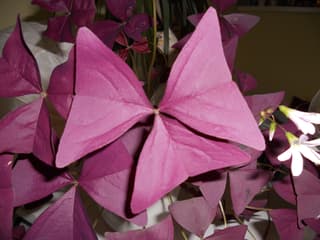
Wood Sorrel
Oxalis
Oxalis is a large genus of about 570 species of herbaceous plants in the family Oxalidaceae, recognizable by their clover-like trifoliate leaves and delicate flowers in shades of pink, yellow, and white. Popular as ornamental houseplants and garden ground covers, with O. triangularis (purple shamrock) and O. articulata being especially beloved. Contains oxalic acid — mildly toxic to pets and humans if ingested in large quantities.
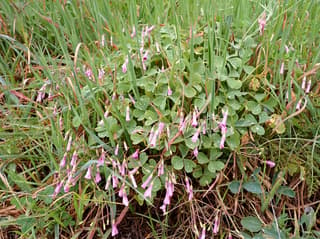
Pink-sorrel
Oxalis articulata
Oxalis articulata, commonly known as Pink-sorrel or Windowbox Woodsorrel, is a charming perennial herb native to South America. It features attractive clover-like leaves, often with a purplish tint, and produces abundant clusters of small, vibrant pink flowers. These flowers bloom profusely, creating a cheerful display. It's a popular choice for both indoor pots and outdoor garden beds, known for its relatively easy care and vigorous growth.
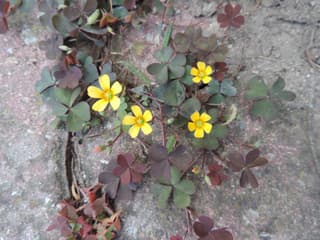
Creeping Woodsorrel
Oxalis corniculata
Oxalis corniculata, commonly known as Creeping Woodsorrel, is a low-growing cosmopolitan weed in the Oxalidaceae family. It produces delicate five-petalled yellow flowers and trifoliate heart-shaped leaves that close at night. Found worldwide in gardens, pots, and disturbed soils, it spreads aggressively via stolons, rhizomes, and seeds that can be catapulted up to 5 meters. It contains soluble calcium oxalates, making it mildly toxic to cats and dogs in large quantities.
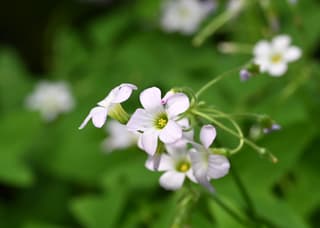
Garden Pink-Sorrel
Oxalis latifolia
Oxalis latifolia, commonly known as Garden Pink-Sorrel or Broadleaf Wood Sorrel, is a perennial bulbous plant native to Mexico and Central America, now naturalized across much of the world. It produces distinctive trifoliate leaves with fish-tail shaped leaflets and delicate pink to pinkish-mauve flowers in spring and summer. Although considered an invasive weed in many regions, it is also cultivated as an ornamental in pots and garden borders.
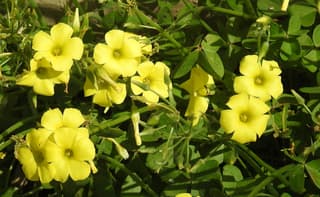
Bermuda Buttercup
Oxalis pes-caprae
Oxalis pes-caprae, commonly known as Bermuda Buttercup or Soursob, is a bulbous perennial native to South Africa that produces bright yellow flowers from fall through spring. It forms dense carpets and is considered one of the most invasive weeds in Mediterranean climates, California, and Australia. The trifoliate leaves contain oxalic acid — toxic to pets in significant quantities and potentially harmful to livestock.
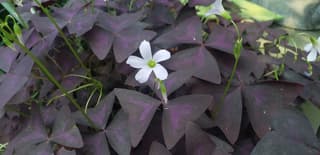
False Shamrock
Oxalis regnellii
Oxalis regnellii, commonly known as false shamrock or purple shamrock, is a perennial bulbous plant native to South America — particularly Brazil, Bolivia, Argentina, and Paraguay. A member of the Oxalidaceae family, it is beloved for its striking trifoliate leaves, which range from rich green to deep purple, and its delicate white or pale pink five-petaled flowers that bloom from spring through autumn. One of its most charming traits is photonasty: the leaves fold closed at night and in low light, reopening with morning brightness through turgor pressure changes. The plant grows from small corms and may enter a brief dormancy period after flowering or during hot summer months.
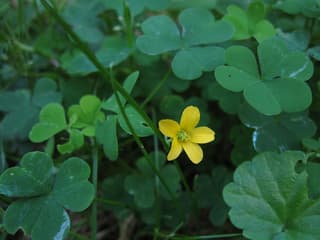
Common Yellow Woodsorrel
Oxalis stricta
Common Yellow Woodsorrel (Oxalis stricta) is a perennial herbaceous plant in the family Oxalidaceae, native to North America and Eurasia. Recognized by its cheerful yellow flowers and heart-shaped trifoliate leaves, it is an exceptionally adaptable plant that thrives in a wide range of habitats including gardens, lawns, roadsides, and woodland edges.

Iron Cross Oxalis
Oxalis tetraphylla
Iron Cross Oxalis (Oxalis tetraphylla) is a perennial bulbous plant native to central Mexico, prized for its distinctive four-lobed leaves adorned with deep burgundy markings at the center that form a striking iron cross pattern. It produces cheerful pink to rose-red flowers in spring and summer, going dormant in winter.
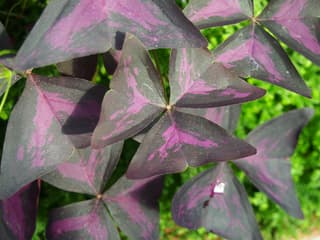
Purple Shamrock
Oxalis triangularis
Oxalis triangularis, commonly known as Purple Shamrock, is a charming perennial plant native to Brazil. Distinguished by its deep purple, triangular leaves arranged in groups of three like clover, and its delicate pink-white flowers. The leaves exhibit photonasty - opening during the day and closing at night like butterfly wings. This plant can live for over 100 years, often becoming a treasured heirloom passed through generations.
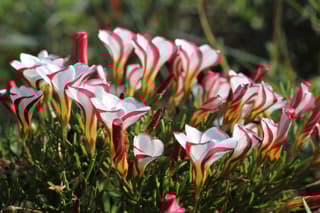
Candy Cane Sorrel
Oxalis versicolor
Oxalis versicolor, commonly known as Candy Cane Sorrel, is a charming bulbous perennial native to South Africa. It is celebrated for its stunning flowers with white petals edged in deep crimson, which spiral into a candy cane pattern when closed. Growing to just 10–15 cm tall, this compact plant thrives in sunny spots and follows an autumn-winter flowering cycle. It enters dormancy in summer, making it a delightful seasonal gem for pots and rock gardens.
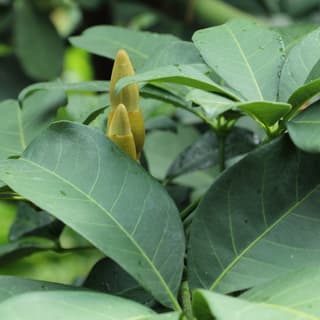
Money Tree
Pachira aquatica
Pachira aquatica is a tropical plant native to Central America, known for its distinctive braided trunk and umbrella-shaped leaves. Popular in feng shui as a symbol of prosperity and good luck.
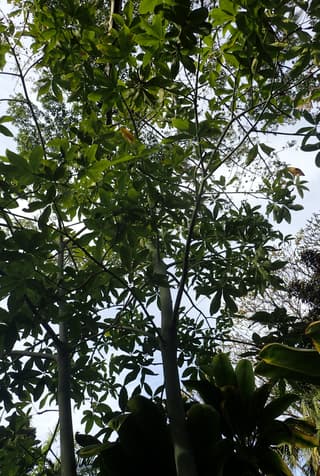
Saba Nut
Pachira glabra
Pachira glabra, commonly known as Saba Nut or Money Tree, is a tropical tree native to eastern Brazil's Atlantic Forest. It is the species most commonly sold as the braided 'money tree' in plant shops — distinct from Pachira aquatica, which is larger and truly aquatic. P. glabra has more flexible young stems, making it ideal for braiding, and features deep-green palmate leaves and creamy-white flowers. It is non-toxic, easy to care for, and widely used in Feng Shui as a symbol of prosperity.
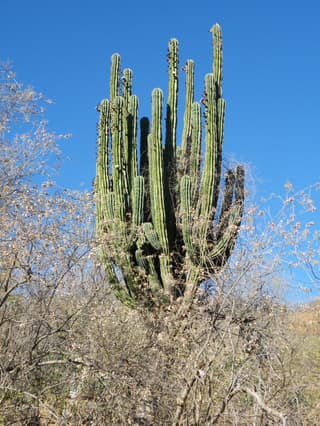
Indian Comb Cactus
Pachycereus pecten-aboriginum
Pachycereus pecten-aboriginum, known as the Indian Comb Cactus, is a massive columnar cactus native to western Mexico, from Sinaloa and Sonora to Chiapas. It can grow up to 20 meters tall with stems up to 1 meter in diameter. Its white nocturnal flowers are pollinated by bats, and its golden spiny fruits were historically used by indigenous peoples as hairbrushes — giving rise to its common name.
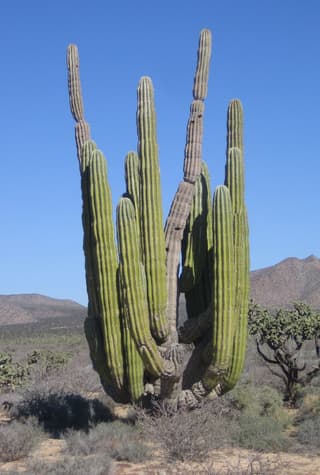
Mexican giant cardón
Pachycereus pringlei
Pachycereus pringlei, commonly known as the Mexican giant cardón or elephant cactus, is the tallest cactus species in the world and a defining feature of the Sonoran and Baja California deserts in northwestern Mexico. This columnar giant can grow up to 19.2 meters (63 feet) tall, live for over 300 years, and weigh as much as 25 tons at full maturity. Its blue-green trunk bears 10 to 16 ribs lined with clusters of brownish spines, and mature plants produce large, nocturnal white flowers followed by spiny red fruits that were historically a vital food source for the indigenous Seri people.
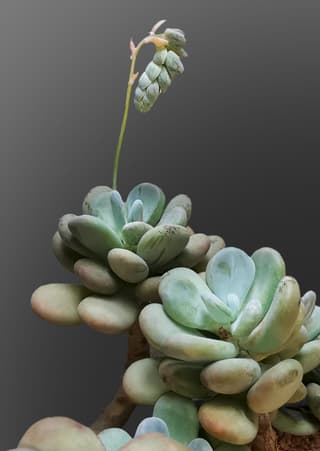
Moonstones
Pachyphytum
Pachyphytum is a genus of succulents in the stonecrop family (Crassulaceae), native to central-eastern Mexico, comprising about 25 to 27 species. Commonly known as "moonstones," these plants form compact rosettes of thick, plump, oval leaves coated in a fine powdery farina that gives them blue-grey, greenish, or pinkish tones. The care information here is based primarily on Pachyphytum oviferum, the most widely cultivated species in the genus.
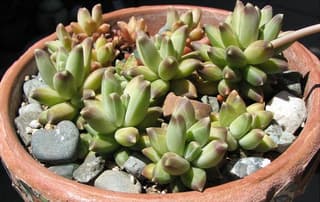
Little Jewel
Pachyphytum compactum
Succulent native to Mexico (Hidalgo and Querétaro) with compact rosettes of plump, cylindrical leaves covered in a grayish waxy bloom. It forms branching clumps up to about 15 cm tall and flowers in late spring.
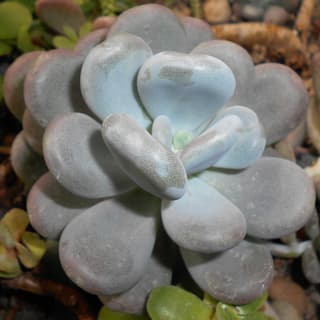
Moonstone Succulent
Pachyphytum oviferum
Pachyphytum oviferum, commonly known as the Moonstone Succulent, is a charming species native to the rocky cliffs of San Luis Potosí, Mexico. It belongs to the family Crassulaceae and is prized for its plump, egg-shaped leaves coated in a silvery-white farina (pruina) that gives them a dreamy, translucent appearance reminiscent of precious moonstones.
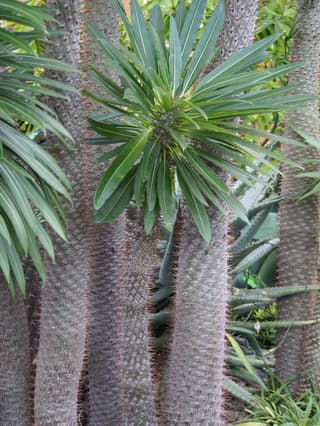
Madagascar Palm
Pachypodium lamerei
Pachypodium lamerei, commonly known as the Madagascar Palm, is a spiny succulent native to the arid regions of Madagascar. Despite its common name, it is not a true palm — it belongs to the family Apocynaceae. Its thick, spine-covered caudex (trunk) supports a crown of long, glossy green leaves at the top, giving it a palm-like appearance. Mature specimens produce fragrant white star-shaped flowers.
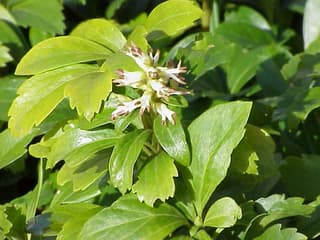
Japanese spurge
Pachysandra terminalis
Pachysandra terminalis (Japanese spurge) is a low-growing, evergreen perennial groundcover from the boxwood family (Buxaceae), native to the forests of Japan. It forms dense, 15-30 cm high mats of leathery, dark green leaves clustered at the ends of the stems - hence the specific name "terminalis". It spreads slowly via underground rhizomes and forms a continuous carpet within 2-3 years. In early spring, it produces small, inconspicuous white flowers in spike-like clusters. It is hardy in USDA zones 4a to 9b and excels in its ability to grow in deep shade where most other plants fail to thrive.
Skunkvine
Paederia foetida
Paederia foetida is a perennial climbing vine in the Rubiaceae family, native to tropical and temperate Asia (India, China, Southeast Asia). It is known for the strong, sulfurous odor that the foliage emits when crushed or bruised, caused by compounds such as dimethyl disulfide. It grows rapidly, twining around other plants or structures for support, and can reach several meters in length. In various regions outside its native habitat, such as parts of the United States, it has become naturalized and is considered an invasive species.

Christ's thorn
Paliurus spina-christi
Paliurus spina-christi (Rhamnaceae family), known in English as Christ's thorn or Jerusalem thorn, is a deciduous shrub or small tree native to the Mediterranean region and Western Asia, from Afghanistan to Romania. It grows up to 4-6 meters in height, with thin zigzagging branches equipped with paired spines—one straight and one curved. The leaves are oval, glossy, and feature three prominent veins. In late spring and summer, it produces small greenish-yellow flowers in clusters, followed by woody fruits surrounded by a disk-shaped wing resembling a small hat, which are green at first and turn brown when ripe. According to tradition, its thorny branches were used to weave the crown of thorns for Jesus, which is the origin of its common name.
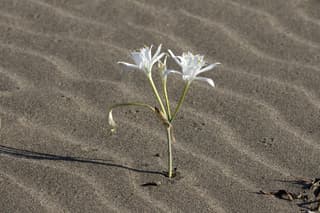
Sea Daffodil
Pancratium maritimum
Pancratium maritimum, the sea daffodil, is a bulbous perennial of the Amaryllidaceae family native to Mediterranean, Black Sea and Macaronesian coastlines, where it grows rooted deep in shifting beach dunes. From August to October it produces clusters of large, white, funnel-shaped flowers with a fringed corona and a sweet, exotic scent that intensifies at dusk, pollinated almost exclusively by the convolvulus hawk-moth. Its strap-like, blue-green leaves often die back during the hottest, driest part of summer before the flower stalks emerge from the bare sand.
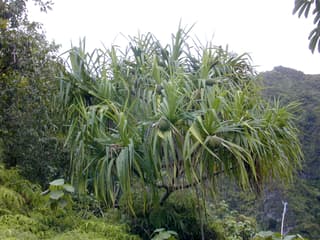
Tahitian Screwpine
Pandanus tectorius
Pandanus tectorius, known as the Tahitian Screwpine or Hala, is a coastal tropical tree in the Pandanaceae family. Native to the Pacific Islands, Southeast Asia, and Australia, it is renowned for its dramatic prop roots, long spiraling spiny leaves, and colorful pineapple-like fruits. A culturally significant species across the Pacific, it has been used for food, weaving, medicine, and shelter for thousands of years.
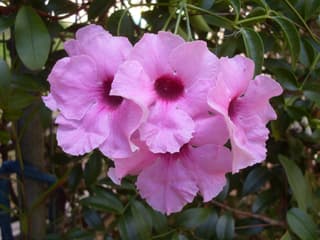
Bower Vine
Pandorea
Pandorea is a genus of woody evergreen climbers native to Australia, belonging to the family Bignoniaceae. Twining stems scramble over trellises, fences and pergolas, forming a dense curtain of glossy foliage studded with trumpet-shaped flowers in shades of white, pink and purple, often with a contrasting streaked throat. It is a vigorous, fast-growing plant popular for screening and shading in mild-to-warm gardens, though it is frost-tender and needs protection in cold climates.
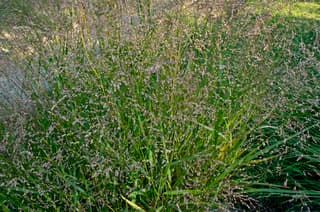
Switchgrass
Panicum virgatum
Switchgrass (Panicum virgatum) is a warm-season perennial grass native to the North American prairies, forming upright clumps of narrow blue-green blades that turn golden in fall. Prized in naturalistic gardens, erosion control, and as a biomass crop for biofuel, it is a rugged, drought-tolerant, low-maintenance plant that attracts birds and butterflies.
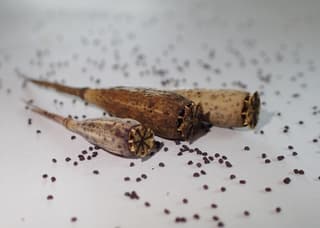
Long-headed Poppy
Papaver dubium
Papaver dubium, commonly known as the long-headed poppy or blindeyes, is a slender annual native to Europe and North Africa. It is identified by its elongated seed capsule and pale red to pink petals lacking dark basal spots. All plant parts except mature seeds contain toxic alkaloids, making it harmful to humans, cats, and dogs.
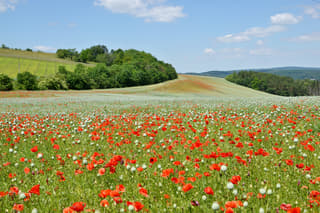
Common Poppy
Papaver rhoeas
Papaver rhoeas, commonly known as the Common Poppy or Corn Poppy, is an annual flowering plant in the family Papaveraceae, native to Europe, North Africa, and Western Asia. Celebrated for its vivid scarlet-red petals with dark basal blotches, it has become a universal symbol of remembrance for fallen soldiers, particularly associated with World War I battlefields in Flanders. It thrives in disturbed soils, open fields, roadsides, and gardens, blooming from late spring through early summer.
Opium poppy
Papaver somniferum
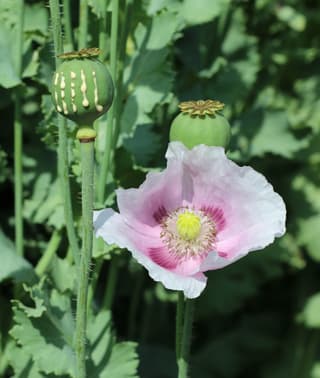
Papaver somniferum, known as the opium poppy or breadseed poppy, is an annual herb characterized by its glaucous, lobed foliage and large, striking flowers. It is historically significant for its production of latex containing alkaloids such as morphine and codeine, as well as for its edible seeds used globally in culinary applications. The plant typically features a single upright stem topped by a nodding bud that opens into a delicate, four-petaled flower.
Florida Pellitory
Parietaria floridana
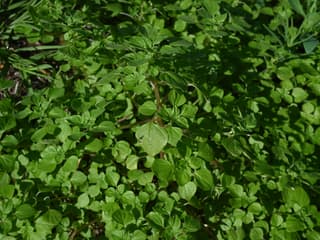
Parietaria floridana, commonly known as Florida pellitory, is an annual or short-lived herbaceous plant belonging to the Urticaceae family (nettles), although it lacks stinging hairs. Native to the southeastern United States, the Antilles, and much of Latin America, it grows in a branched and sometimes prostrate manner, reaching up to 40 cm in height. Its leaves are small, thin, heart-shaped or rhomboid, pale green, and have a fragile, translucent texture. It produces tiny, inconspicuous greenish flowers clustered in the leaf axils, blooming from spring until autumn (until the first frosts). It is common in sandy coasts, calcareous soils, and disturbed areas such as gardens or around greenhouses. Its pollen is a known respiratory allergen, so it is recommended to remove it before flowering for individuals sensitive to seasonal allergies.
Jerusalem thorn
Parkinsonia aculeata
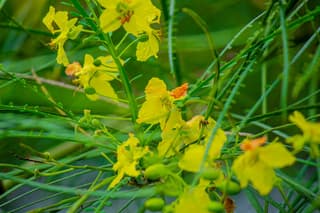
Parkinsonia aculeata is a small thorny tree or shrub in the Fabaceae family, native to a vast area ranging from the southwestern United States and northern Mexico to northern Argentina. It is recognized by its photosynthetic green branches, bipinnate leaves composed of tiny leaflets that drop during dry periods, and its fragrant yellow-orange flowers gathered in pendulous racemes. Fast-growing, it is widely used as an ornamental and shade tree in arid and urban regions with warm climates.
Parodia / Ball Cactus (genus)
Parodia
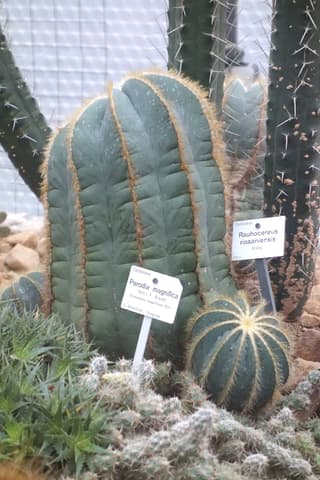
Parodia is a genus of globular and columnar cacti native to South America, particularly Argentina, Bolivia, Brazil, and Uruguay. These compact plants are highly prized in cactus collections for their ease of care and vibrant flowers in shades of yellow, orange, and red that emerge from the crown.
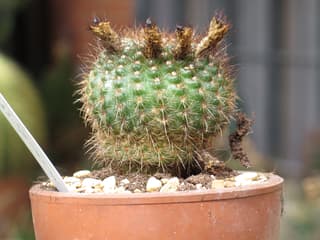
Hybrid Ball Cactus
Parodia × erubescens
Parodia × erubescens is a hybrid cactus from the Cactaceae family, native to South America. It features a compact globular form with golden spines and brilliant yellow flowers that bloom in spring and summer. Extremely drought-tolerant and low-maintenance, it is ideal for cactus collectors and succulent beginners alike.
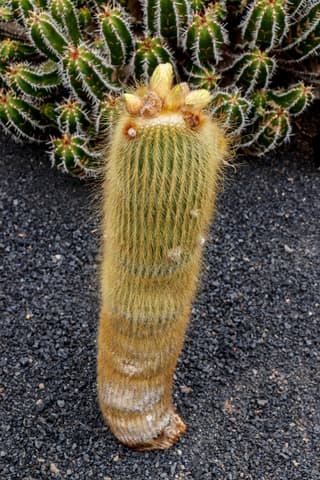
Golden Ball Cactus
Parodia leninghausii
Parodia leninghausii, commonly known as the golden ball cactus or lemon ball cactus, is a columnar cactus native to Rio Grande do Sul in southern Brazil, where it grows on rocky outcrops and cliff faces. Young plants are spherical, gradually becoming columnar with age and reaching up to 1 meter tall. The plant is covered in fine, soft golden spines that give it its characteristic shining appearance. Mature specimens produce bright yellow flowers at the crown during the growing season.
Easy Care Easy Care
Our selection of 2332 easy easy care combines the characteristics of this category with reduced care needs. Perfect for beginners who love this category.
Why Choose Easy Easy Care?
Combining the beauty of easy care with easy difficulty level lets you enjoy this category without excessive maintenance worries. Each plant was selected to offer the best characteristics of the category at the care level you are looking for.