2332 Easy Easy Care | 2026 Guide - Page 44
Find 2332 easy easy care. Complete guide for your garden.
2332 Easy Care with easy level
Showing 1549-1584 of 2332
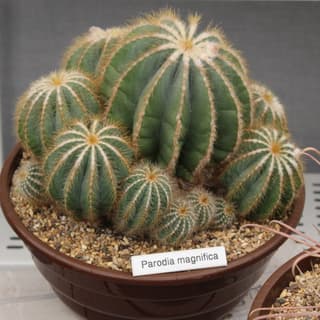
Balloon Cactus
Parodia magnifica
Parodia magnifica, commonly known as the Balloon Cactus, is a small globular cactus native to the grasslands and rocky slopes of southern Brazil and Uruguay. Its blue-green, ribbed body is covered in fine golden spines and often forms dense clusters over time. In summer, it crowns itself with vivid yellow flowers that open only in bright sunlight, making it a rewarding and low-maintenance addition to any sunny windowsill or succulent garden.

Woodbine
Parthenocissus
Parthenocissus is a genus of vigorous, deciduous climbing vines in the family Vitaceae, best known for Virginia Creeper (P. quinquefolia) and Boston Ivy (P. tricuspidata). These fast-growing vines are celebrated for their spectacular autumn foliage that transforms from deep green to brilliant shades of red, crimson, and burgundy. They are widely planted to cover walls, fences, and structures, and are among the most effective ornamental climbers for large-scale coverage.
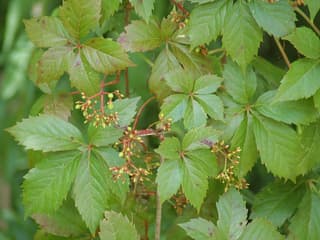
Virginia Creeper
Parthenocissus quinquefolia
Virginia Creeper (Parthenocissus quinquefolia) is a vigorous deciduous climbing vine native to Eastern North America. Belonging to the grape family Vitaceae, it is celebrated for its stunning five-lobed leaves that transform from lush green in summer to a brilliant crimson in autumn. A fast-growing vine, it can reach up to 30 meters in the wild and clings to walls and trellises using adhesive-tipped tendrils. Its small dark blue-black berries attract birds, making it a valuable wildlife plant.

Boston Ivy
Parthenocissus tricuspidata
Boston Ivy (Parthenocissus tricuspidata) is a vigorous, deciduous climbing vine from the Vitaceae family, native to China, Japan, and Korea. Celebrated for its three-lobed dark green leaves that turn brilliant scarlet-red in autumn, it is one of the most popular plants for covering walls, facades, and trellises. It clings to surfaces via adhesive disc-tipped tendrils, requiring no additional support.
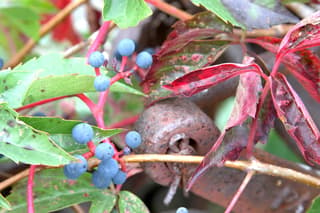
Woodbine
Parthenocissus vitacea
Aggressive deciduous woody vine native to North America, reaching lengths up to 20 meters. Climbs using branched tendrils with twining tips that grip support structures. Features palmately compound leaves with five leaflets having coarsely toothed margins. Produces small greenish flowers in late-spring panicles followed by small blue-black berries up to 1.5 cm in diameter. Displays brilliant red fall foliage.
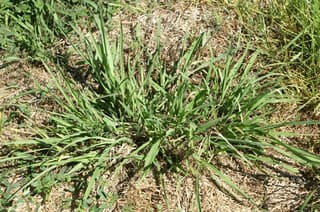
Dallisgrass
Paspalum dilatatum
Dallisgrass (Paspalum dilatatum) is a robust, clump-forming perennial grass native to southern Brazil, Argentina, Uruguay, and Paraguay. It forms dense tufts with short rhizomes and deep fibrous roots, and is widely grown as a warm-season pasture forage grass, though it is also considered a weed in lawns and disturbed ground. Its inflorescences bear pale green to purplish spikelets, which often develop a sticky black exudate when infected by ergot fungus.
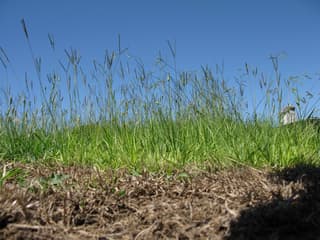
Bahiagrass
Paspalum notatum
Bahiagrass (Paspalum notatum) is a warm-season perennial grass native to South America, widely used for lawns, pastures, roadsides, and erosion control. Known for its exceptional drought tolerance, deep root system, and low maintenance requirements, it thrives in full sun and adapts to poor, sandy soils.
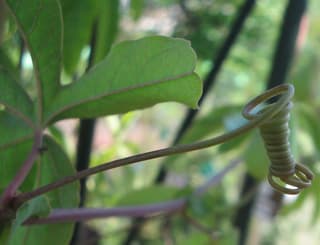
Blue Passion Flower
Passiflora caerulea
Passiflora caerulea is a vigorous and hardy climbing vine native to South America. Famous for its exotic flowers with striking blue and white filaments, it is one of the most widely cultivated passion flower species in the world. A fast grower reaching up to 10 meters tall, it is perfect for covering pergolas, walls, and trellises. It produces decorative orange fruits in autumn.
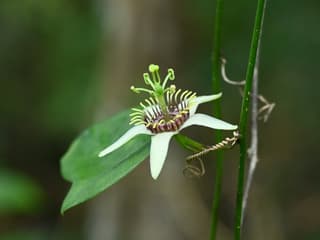
Corkystem Passion Vine
Passiflora pallida
Passiflora pallida, commonly known as the Corkystem Passion Vine, is a fast-growing perennial vine native to Florida, the Caribbean, and southern USA. It is named for the distinctive cork-like texture its stems develop with age. It produces delicate white flowers nearly year-round in tropical climates and is highly valued as a host plant for Gulf Fritillary, Zebra Longwing, and Julia butterflies.
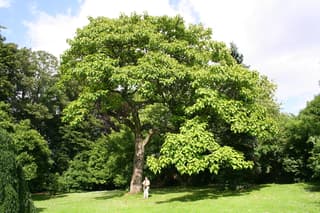
Empress Tree / Princess Tree (genus)
Paulownia
Paulownia is a genus of fast-growing deciduous trees native to China and East Asia. Famous for their stunning lavender-purple flower clusters that appear before the leaves in spring, they are widely planted as ornamentals but considered invasive in many regions outside their native range.
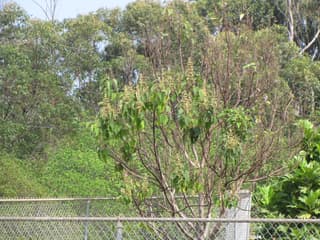
Empress Tree
Paulownia tomentosa
Paulownia tomentosa, known as the Empress Tree or Princess Tree, is an extraordinarily fast-growing deciduous tree native to central and eastern China. It produces stunning clusters of fragrant lavender-purple foxglove-like flowers in early spring before the leaves emerge, making it one of the most visually dramatic ornamental trees in the world.
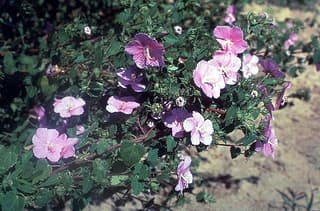
Texas swampmallow
Pavonia lasiopetala
Pavonia lasiopetala, commonly known as Texas Rock Rose, is a small, woody perennial shrub native to the dry, rocky regions of Texas and Northern Mexico. It is highly valued for its resilience and prolific blooming cycle. The plant produces charming, deep pink, five-petaled flowers that resemble miniature hibiscus, set against fuzzy, heart-shaped, dark green leaves. It is a staple in xeriscaping and pollinator gardens, as it is exceptionally heat-tolerant and attracts hummingbirds and butterflies throughout the warmer months.
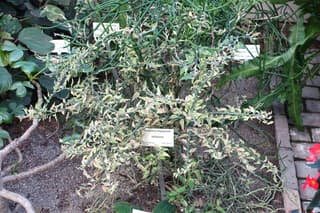
Devil's Backbone
Pedilanthus tithymaloides
Pedilanthus tithymaloides, commonly known as Devil's Backbone, is a striking succulent-like shrub from tropical America. Its most distinctive feature is the zigzag stem pattern that gives it several of its common names. The plant produces small, bird-shaped red or pink flowers and features fleshy, often variegated leaves.
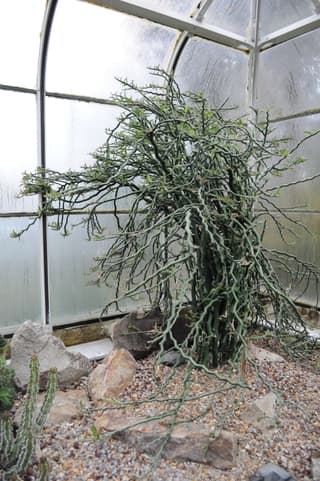
Devil's Backbone
Pedilanthus tithymaloides 'Variegatus'
A fascinating shrubby succulent plant, known for its stems that grow in a distinct zig-zag pattern. The 'Variegatus' variety features oval leaves with white or cream margins that can take on pinkish tones when exposed to intense light or cooler temperatures. Its flowers have a peculiar shape resembling a small slipper, which gave rise to many of its common names.
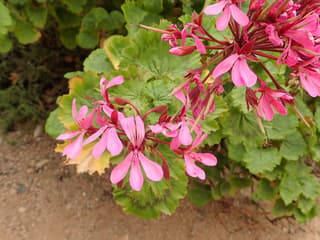
Geranium
Pelargonium
Pelargonium, commonly known as Geranium or Storksbill, is a genus of over 280 species of flowering plants native to South Africa. Celebrated for their vibrant blooms in shades of red, pink, white, purple, and orange, they are among the most popular garden and container plants worldwide. The genus includes ornamental, aromatic, and medicinal varieties, many of which are used in perfumery and herbal remedies.
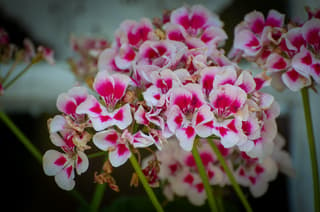
Garden Geranium
Pelargonium × hybridum
Garden Geranium (Pelargonium × hybridum) is a hybrid ornamental plant originating from a cross between Pelargonium zonale and Pelargonium inquinans. Widely grown in pots, garden beds, and balconies, it is prized for its abundant and colorful blooms throughout spring, summer, and fall. Flowers range from red, pink, white to salmon, making it one of the most popular plants for outdoor decoration worldwide.
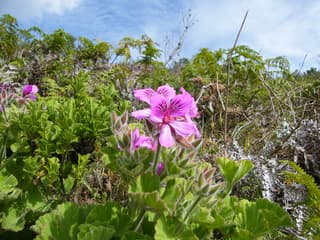
Hooded-leaf Pelargonium
Pelargonium cucullatum
Pelargonium cucullatum is a tall, sprawling evergreen shrub native to the sandy and granite slopes of the Cape fynbos in South Africa, growing over 2 m tall. Its rounded, cupped, hairy leaves give the species its name, and it produces masses of pink to mauve or white flowers with striking purple veining from spring into summer. It is the parent species of countless modern pelargonium hybrids grown worldwide.
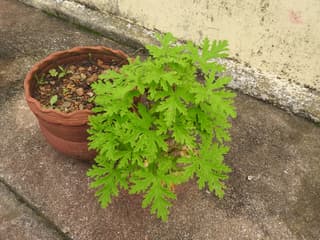
Rose Geranium
Pelargonium graveolens
Pelargonium graveolens, commonly known as rose geranium, is a fragrant subshrub native to South Africa. Its deeply lobed, velvety leaves release a strong rose-like scent when touched, and it produces small pink to purple flowers in spring and summer. Widely cultivated for its essential oil used in perfumery and aromatherapy, it is also a popular ornamental and culinary herb.
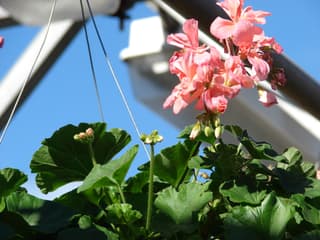
Zonal Geranium
Pelargonium hortorum
The zonal geranium (Pelargonium hortorum) is a popular perennial subshrub prized for its rounded leaves marked with a distinctive dark horseshoe-shaped "zone" and its long-lasting clusters of red, pink, salmon, or white flowers. Widely used in garden beds, containers, and window boxes, it is heat-tolerant and blooms from spring through fall.
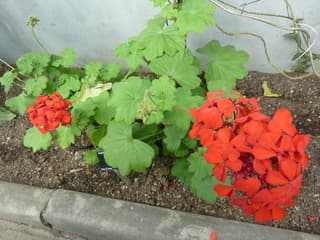
Scarlet Geranium
Pelargonium inquinans
Pelargonium inquinans is a soft, woody shrub native to the Eastern Cape, KwaZulu-Natal and Mpumalanga provinces of South Africa, where it grows along coastal scrub and clay-soil margins. It forms a rounded bush up to 2 m tall, with velvety, orbicular leaves that leave a brown stain on the fingers when touched, the source of its Latin name inquinans, meaning to soil. Clusters of 5 to 30 bright scarlet-red flowers, occasionally pink, salmon or white, appear almost year-round. Introduced to Europe in the early 1700s, it is one of the two wild ancestors, alongside Pelargonium zonale, of the modern zonal geraniums grown in gardens worldwide.
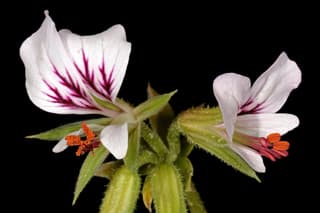
Myrrh-leaved Pelargonium
Pelargonium myrrhifolium
Pelargonium myrrhifolium is a slow-growing subshrub native to the Western Cape of South Africa. It is prized for its finely divided, fern-like leaves that release a soft myrrh-like fragrance when touched, and for its delicate white, pink, and red flowers that bloom from spring through summer.
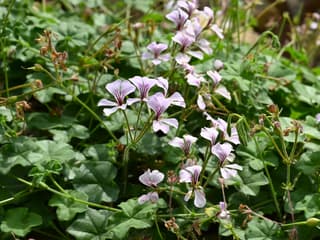
Ivy Geranium
Pelargonium peltatum
Pelargonium peltatum, commonly known as Ivy Geranium, is a trailing and cascading flowering plant native to the coastal cliffs and rocky slopes of South Africa. Its ivy-shaped, glossy leaves and abundant blooms in shades of pink, white, red, lavender, salmon, and burgundy make it one of the most beloved plants for hanging baskets, window boxes, and balcony gardens. It blooms profusely from spring through fall, rewarding gardeners with months of continuous color.
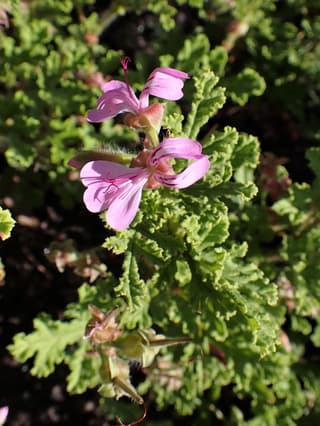
Oak-leaved Geranium
Pelargonium quercifolium
The oak-leaved geranium (Pelargonium quercifolium) is a densely branching evergreen shrub native to South Africa, named for its deeply lobed, oak-shaped leaves. The sticky, aromatic foliage releases a resinous scent when touched, with fragrance notes that vary by cultivar from balsam to mint. In late spring and summer it produces small pink flowers with darker purple markings, held in umbels above the foliage.
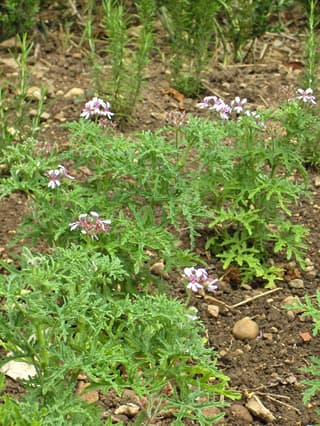
Rasp-leaf pelargonium
Pelargonium radens
Pelargonium radens is an aromatic, evergreen shrub native to the southern and eastern Cape of South Africa, where it grows in ravines and among mountainside shrubs. It forms a closely branched shrub up to 1.5 m tall, with deeply divided, gray-green triangular leaves that release a strong rose-lemon fragrance when bruised, and clusters of small pale purple to pink flowers with deep purple markings that bloom from summer into fall. It is one of the parent species behind many rose-scented pelargonium hybrids grown for essential oil.
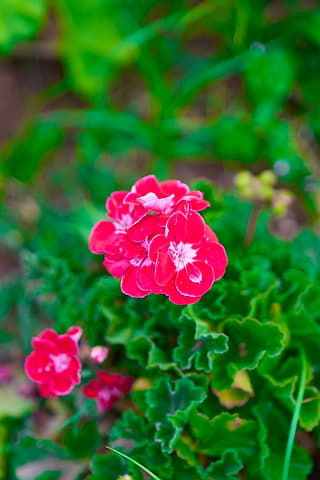
Horseshoe Geranium
Pelargonium zonale
Pelargonium zonale, commonly known as the Horseshoe Geranium or Zonal Geranium, is the most popular and widely grown "geranium" in the world — though it is not a true Geranium at all, but belongs to the genus Pelargonium in the family Geraniaceae. Native to South Africa, it is prized for its distinctive horseshoe-shaped darker zone on its rounded leaves and its prolific clusters of red, pink, white, salmon, or magenta flowers that bloom from spring through fall. It thrives in full sun and tolerates drought well, making it ideal for pots, balconies, window boxes, and garden beds.
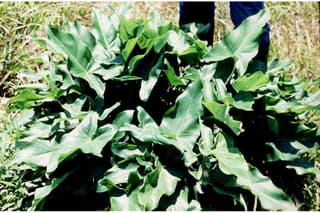
Green Arrow Arum
Peltandra virginica
Green arrow arum is an emergent perennial native to freshwater wetlands, marshes, and pond margins of eastern North America. It forms clumps of glossy, arrowhead-shaped leaves rising from thick rhizomes, with greenish-white flowers borne on a spadix wrapped in a pale green spathe in spring. The plant grows rooted in mud under shallow standing water and is a key food source for waterfowl, muskrats, and other wetland wildlife.
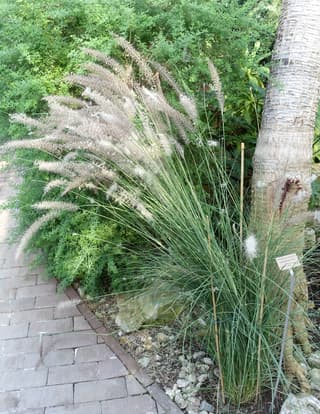
Fountain Grass
Pennisetum setaceum
Fountain Grass (Pennisetum setaceum) is an ornamental grass native to East Africa and the Middle East. Known for its arching foliage and feathery plumes in shades of pink to purple, it brings elegant movement and texture to gardens and landscapes. Highly drought-tolerant and low-maintenance, it thrives in hot, sunny conditions with minimal care.
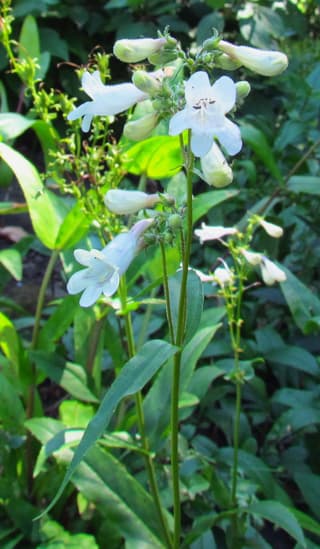
Foxglove Beardtongue
Penstemon digitalis
Penstemon digitalis, commonly known as foxglove beardtongue, is a perennial herbaceous plant native to eastern and central North America, belonging to the plantain family (Plantaginaceae). From its basal rosette, branched flowering stems rise 60–120 cm tall, bearing dense clusters of white, tubular, two-lipped flowers between May and July. Although its specific epithet refers to foxglove (Digitalis), the plant is not related to it and is non-toxic to humans, dogs, and cats. It is an excellent nectar source and pollinator plant, attracting bees, hummingbirds, and butterflies; it is also extremely cold-hardy (USDA zones 3a–8b) and a low-maintenance garden ornamental.
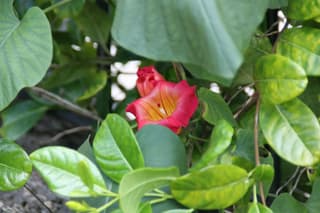
hammock viper's-tail
Pentalinon luteum
Pentalinon luteum, commonly known as hammock viper's-tail or wild allamanda, is a vigorous evergreen woody vine native to Florida, the Bahamas, and the Caribbean. It is prized for its glossy, leathery elliptical leaves and its prolific production of bright yellow, funnel-shaped flowers that resemble those of the true Allamanda. While it is a beautiful ornamental climber, it is important to note that all parts of the plant contain milky sap that can be irritating to the skin and toxic if ingested.
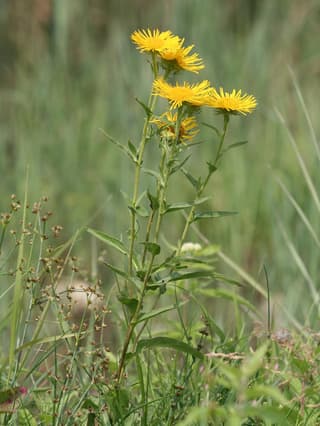
British yellowhead
Pentanema britannica
The British yellowhead (Pentanema britannica, formerly Inula britannica) is a perennial herbaceous plant in the Asteraceae family, native to damp habitats across Europe and temperate Asia, including riverbanks, stream edges, marshes, ditches, and wet meadows. It features erect, finely pubescent stems reaching 15-80 cm in height, topped with bright yellow sunflower-like flower heads that bloom from late summer to early autumn. Its lanceolate, entire leaves are sparsely hairy on top and more densely pubescent underneath. Due to its thick rhizomes, it spreads vigorously and rapidly, leading it to be considered an invasive weed in parts of North America.
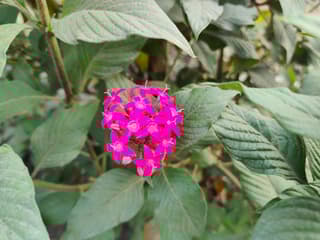
Egyptian Star Flower
Pentas lanceolata
Pentas lanceolata, commonly known as the Egyptian Star Flower, is a tropical flowering shrub native to East Africa and the Arabian Peninsula. It produces dense clusters of small, star-shaped flowers in shades of red, pink, white, purple, and lavender, blooming almost year-round in warm climates. A magnet for butterflies and hummingbirds, it is a favorite in garden beds and container plantings alike.
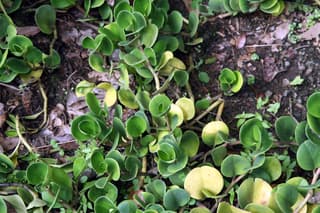
Peperomia
Peperomia
Peperomia is a vast genus of tropical plants in the family Piperaceae, with over 1,000 species native primarily to the rainforests of South America. Their fleshy, succulent-like leaves store water, making them remarkably forgiving and drought-tolerant. Peperomias thrive indoors with minimal care, adapting well to indirect light — perfect for homes and offices.
Nevada Peperomia
Peperomia 'Nevada'
Peperomia 'Nevada' is a compact evergreen cultivar in the Piperaceae family, closely related to Peperomia ferreyrae. It forms a dense rosette of thick, deep-green, ripple-textured leaves radiating from a short central stem, giving the plant a lush, semi-succulent appearance. Popular as a low-maintenance houseplant, it stays small and tidy, making it ideal for shelves, desks, and terrariums.
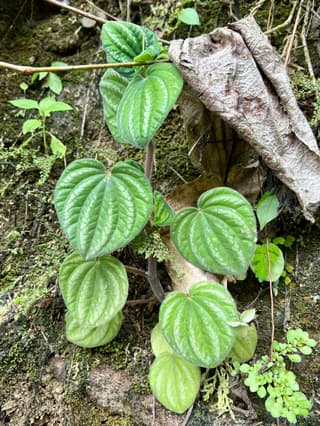
Piccolo Banda Peperomia
Peperomia albovittata
Peperomia albovittata, commonly known as Piccolo Banda, is a compact semi-succulent houseplant in the Piperaceae family, native to South America. It is prized for its velvety, dark green leaves adorned with silvery or light-colored stripes along the veins, forming an eye-catching striped pattern. A slow-growing and low-maintenance plant, it is an excellent choice for beginners and indoor plant collectors alike.
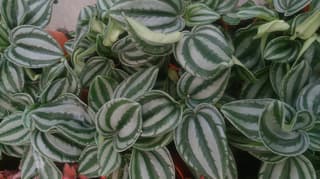
Watermelon Peperomia
Peperomia argyreia
The Watermelon Peperomia is a compact ornamental plant native to Brazil, known for its rounded leaves with silver stripes that resemble watermelon rinds. It belongs to the Piperaceae family and is highly valued as an indoor plant for its beauty and easy care.
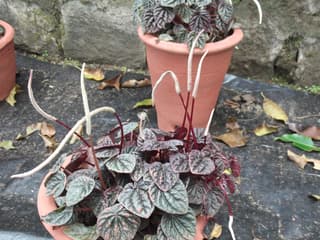
Emerald Ripple Peperomia
Peperomia caperata
A compact perennial herbaceous plant native to Brazil, prized for its ornamental heart-shaped leaves with deeply corrugated, rippled texture. Perfect for indoor spaces as it thrives in the shade of tropical forest understories. Produces thin spike-like inflorescences with tiny white flowers resembling a rat's tail.
Easy Care Easy Care
Our selection of 2332 easy easy care combines the characteristics of this category with reduced care needs. Perfect for beginners who love this category.
Why Choose Easy Easy Care?
Combining the beauty of easy care with easy difficulty level lets you enjoy this category without excessive maintenance worries. Each plant was selected to offer the best characteristics of the category at the care level you are looking for.