2315 Easy Easy Care | 2026 Guide - Page 6
Find 2315 easy easy care. Complete guide for your garden.
2315 Easy Care with easy level
Showing 181-216 of 2315
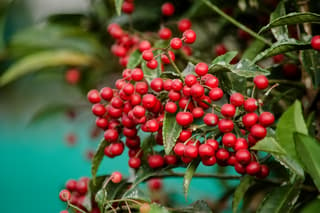
Coral Berry
Ardisia crenata
An evergreen shrub native to East Asia (China, Japan, Taiwan), Ardisia crenata is primarily cultivated for its striking coral-red berries, which remain decorative on the plant for several months, often through the winter. The leaves are glossy, leathery, and have wavy-crenate margins; in summer, small white or pink star-shaped flowers appear in drooping clusters, followed by the characteristic berries. It is widely popular as a Christmas gift in Europe, but caution is advised: all parts of the plant, particularly the berries, are toxic if ingested by humans or pets and can cause gastrointestinal distress.
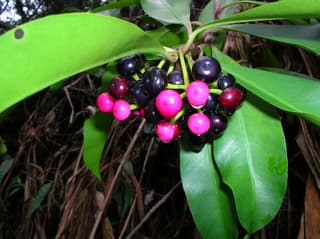
Shoebutton ardisia
Ardisia elliptica
Tropical evergreen shrub native to the western coast of India, Sri Lanka, Indochina, Malaysia, Indonesia, and New Guinea. Grows 1.5–3 meters indoors with glossy, dark-green coriaceous foliage. Produces small pale-pink to white flowers in spring in compact clusters. Flowers are followed by distinctive drupes (5–9mm across) that progress from green to brilliant red when immature, eventually turning deep purple-black at maturity, persisting on the plant for months. Highly invasive in many tropical regions including Florida and Hawaii due to rapid seed multiplication via bird dispersal. Listed as a noxious weed in several jurisdictions.

Mountain Sandwort
Arenaria montana
Mountain Sandwort is a low-growing, evergreen perennial cushion-forming shrub from the carnation family (Caryophyllaceae), originating from the mountainous regions of southwestern Europe and northwestern Africa – from the Pyrenees across Portugal to northern Morocco. It forms dense clumps with narrow, lance-shaped, grey-green leaves that are completely covered by a profusion of tiny white flowers from spring to summer. In nature, it grows on rocky slopes, heathlands, and forest edges at altitudes of 400–1850 m, which explains its requirement for permeable, poor soil and excellent drainage. Due to its low maintenance and long flowering period, it is popular as a groundcover plant for rock gardens, gravel beds, and cracks between paving stones.
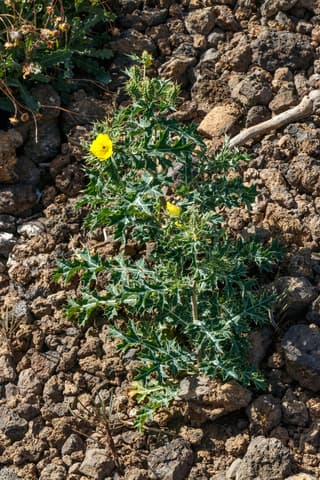
Mexican prickly poppy
Argemone mexicana
Argemone mexicana, commonly known as the Mexican prickly poppy or cardosanto, is an annual (sometimes biennial) herb in the Papaveraceae family. Native to Mexico, it is now widely naturalized in tropical and subtropical regions worldwide. It is an extremely resilient pioneer plant, featuring an erect, branched stem and spiny, grayish-green leaves with whitish veins, resembling a thistle. It produces showy flowers with yellow petals and, when cut, releases a characteristic yellow latex. It grows spontaneously along roadsides, in vacant lots, and on degraded soils, tolerating drought and poor soils exceptionally well.
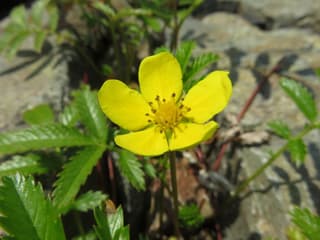
Silverweed
Argentina anserina
Argentina anserina, commonly known as silverweed, is a perennial herbaceous plant belonging to the Rosaceae family. It grows at low altitudes, forming low-growing mats thanks to creeping red stolons that can reach up to 80 cm in length. The pinnate leaves, 10–20 cm long, are covered with a dense, silvery silky down that gives the plant its characteristic shimmering appearance. In summer, it produces bright yellow five-petaled flowers about 2 cm in diameter on erect stems of 5–15 cm. It spreads rapidly in moist, sandy, or clay soils, often colonizing meadows, roadsides, and coastal areas.
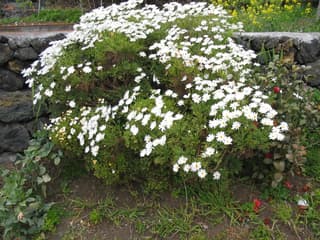
Marguerite Daisy
Argyranthemum frutescens
Marguerite Daisy (Argyranthemum frutescens) is a perennial shrub native to the Canary Islands, Spain. Celebrated for its cheerful daisy-like flowers with white, yellow, or pink petals surrounding bright yellow centers, this ornamental plant brings abundant color to gardens, balconies, and containers throughout spring, summer, and fall.
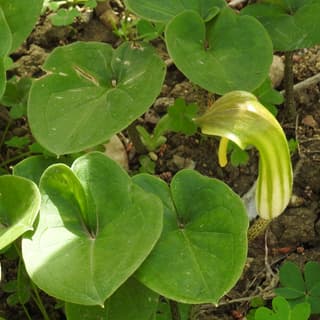
Friar's Cowl
Arisarum vulgare
Friar's Cowl (Arisarum vulgare) is a low-growing, rhizomatous perennial in the arum family (Araceae), native to the Mediterranean Basin -- southern Europe, North Africa, and parts of the Caucasus. It rarely exceeds 30 cm in height and forms clumps of glossy, heart- to arrow-shaped basal leaves that sometimes carry faint silvery markings. Its most distinctive feature is the flower: a purplish-brown and white striped spathe curls forward into a hood, resembling a monk's cowl, and encloses a fleshy spadix bearing tiny purple flowers. It blooms from autumn through spring and spreads readily via underground rhizomes, making it a useful woodland ground cover.
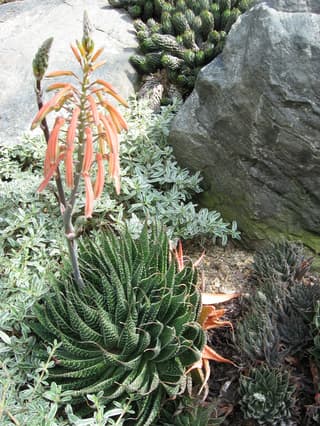
Lace Aloe
Aristaloe aristata
Aristaloe aristata, commonly known as Lace Aloe or Torch Plant, is a compact succulent native to South Africa and Lesotho. Its dark green triangular leaves are adorned with white tubercles and ciliate margins, forming dense, elegant rosettes. In summer and fall it produces tubular orange-red flowers highly attractive to hummingbirds.
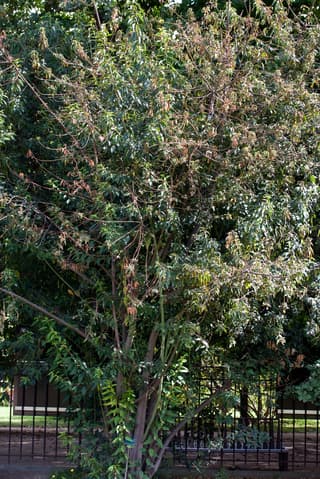
Maqui berry
Aristotelia chilensis
A perennial shrub or small tree native to southern Chile and Argentina. It produces dark, almost black berries with a flavor similar to blueberries, very rich in antioxidants. The Mapuche people have traditionally used it in medicine, food, and fermented beverages.
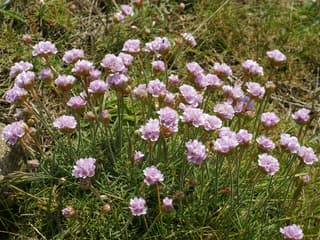
Sea Thrift
Armeria maritima
Sea Thrift (Armeria maritima) is a compact, evergreen perennial native to coastal cliffs and meadows of Europe and North America. It forms dense, grass-like tufts of dark green foliage topped with round, papery pink to white flower clusters held on slender stalks. Highly tolerant of salt spray, poor soil, and drought, it is a favorite for rock gardens and coastal plantings.
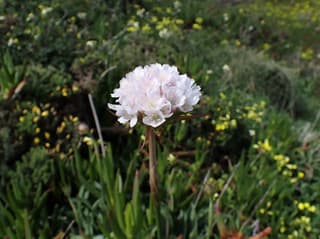
False Sea Thrift
Armeria pseudarmeria
Armeria pseudarmeria (False Sea Thrift) is an evergreen, clump-forming perennial from the coastal cliffs of Western Portugal and Spain, belonging to the Plumbaginaceae family. It features broad, sword-shaped leaves and spherical flower heads on slender stems, ranging from white to deep pink, blooming in late spring and summer. Hardy and long-lived, it thrives in poor, well-drained soil where many other plants struggle.
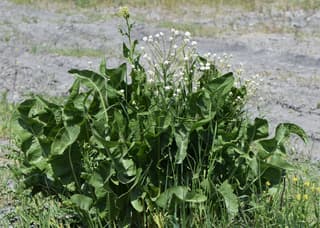
horseradish
Armoracia rusticana
Armoracia rusticana, commonly known as horseradish, is a hardy perennial plant of the family Brassicaceae. It is primarily cultivated for its thick, pungent white taproot. The plant features large, emerald-green, dock-like leaves and produces clusters of small white flowers on tall stalks during the summer. It is a vigorous grower that can become invasive if not managed properly.
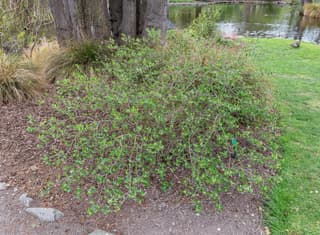
Black chokeberry
Aronia melanocarpa
Black chokeberry (Aronia melanocarpa) is a deciduous shrub in the rose family (Rosaceae), native to eastern North America. It grows to a height of approximately 1–3 m and a similar width, forming dense, multi-stemmed clumps. In spring, it produces small white to pinkish flowers in corymb-like clusters, followed by glossy dark purple to black fruits in autumn and vibrant red fall foliage. The fruits are edible, though quite astringent when raw, and are known for their high antioxidant (anthocyanin) content.
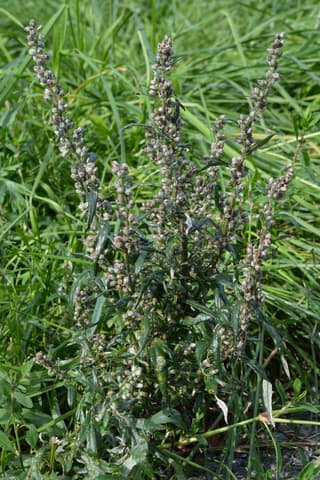
Mugwort
Artemisia
Artemisia is a large genus of aromatic herbs and subshrubs in the daisy family (Asteraceae), with over 500 species found mainly across the temperate Northern Hemisphere. The genus includes well-known plants such as wormwood (Artemisia absinthium), common mugwort (Artemisia vulgaris), and tarragon (Artemisia dracunculus). Foliage is typically silvery-grey to green, finely divided, and strongly aromatic, while flowers are small, inconspicuous, and yellowish or whitish, borne in clusters in late summer and fall. Artemisia species are rugged, low-maintenance plants traditionally valued for medicinal, aromatic, and ornamental uses.

Field Wormwood
Artemisia campestris
Artemisia campestris, commonly known as field wormwood or field sagewort, is a hardy perennial herb in the daisy family (Asteraceae). Native to Europe, Asia, and North America, it forms low mounds of finely divided, silvery-green aromatic foliage topped by tiny yellowish-green flower heads in late summer. Valued for its drought tolerance and resilience in poor, sandy soils, it thrives in open meadows, dunes, and rocky ground.
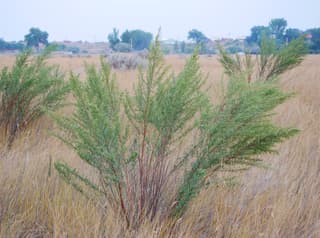
Tarragon
Artemisia dracunculus
Tarragon (Artemisia dracunculus) is a perennial aromatic herb in the Asteraceae family, native to Central Asia and Eastern Europe. Prized in European cuisine — especially French cooking — it is distinguished by its characteristic anise-like flavor. It forms compact clumps of narrow, gray-green leaves and goes dormant in winter, resprouting vigorously each spring.
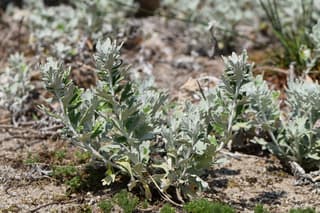
Beach Wormwood
Artemisia stelleriana
Artemisia stelleriana is a silver-leaved herbaceous perennial native to northeastern Asia, naturally found on coastal dunes and sandy habitats. Its densely white-hairy foliage gives it a distinctive silvery appearance, making it a popular ornamental ground cover for sunny, dry gardens.
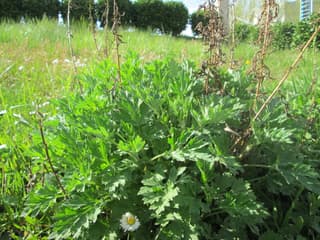
Mugwort
Artemisia vulgaris
Artemisia vulgaris is a tall, aromatic perennial herb in the daisy family (Asteraceae), native to Europe and Asia and now naturalized worldwide. It forms clumps of deeply lobed, dark green leaves with silvery, woolly undersides, and produces panicles of small greenish-yellow to reddish-brown flowers from mid-summer into fall. Mugwort spreads aggressively by rhizomes and is considered invasive in many regions, so it is best grown in containers or contained beds.
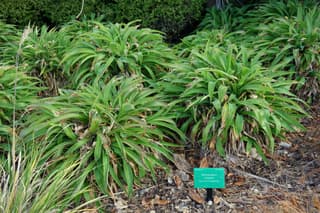
Rock Lily
Arthropodium cirratum
Arthropodium cirratum, commonly known as rock lily or rengarenga, is an evergreen rhizomatous perennial endemic to New Zealand's coastal cliffs and rocky headlands. It forms clumps of glossy, strap-like leaves topped in early summer by branching stalks of small white, six-petalled flowers with purple-and-yellow stamens. Traditionally an important food and medicine plant for Maori, its fleshy rhizomes were cooked and eaten, and its leaves and roots were used to treat wounds and skin ailments. Today it is a popular, low-maintenance ornamental for coastal and shaded gardens worldwide.
Artificial grass
Artificial plant
Lifelike artificial plants and grasses offer an excellent alternative in spaces where light conditions or environmental factors are unsuitable for live plants. They are made from high-quality polymers and silk, making them remarkably similar to real plants, while having no biological needs.
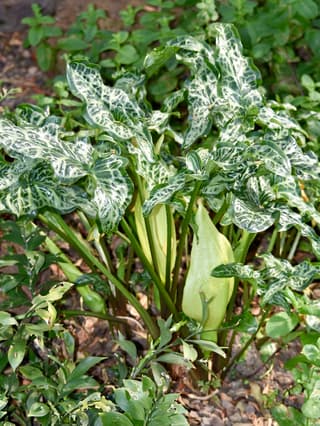
Arum / Cuckoo Pint (genus)
Arum
Arum is a genus of tuberous perennial plants in the family Araceae, native to Europe, the Mediterranean, and the Middle East. They produce arrow-shaped leaves and ornamental spathes followed by bright orange berries. All parts are severely toxic due to calcium oxalate raphides.
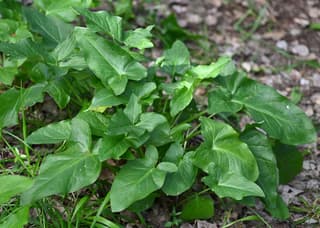
Italian Arum
Arum italicum
Italian arum (Arum italicum) is a tuberous perennial in the Araceae family, native to much of Europe, North Africa, and western Asia. It is grown for its arrow-shaped, dark green leaves — often marbled with cream or white veining — that emerge in fall and persist through winter, an unusual growth cycle for a garden perennial. In spring it produces a pale green-yellow spathe surrounding a spadix, followed in summer by a striking spike of orange-red berries. All parts of the plant, especially the berries, contain calcium oxalate crystals and are toxic if ingested. The species tolerates shade well and can naturalize aggressively, being classified as invasive in parts of the US, Australia, and New Zealand.
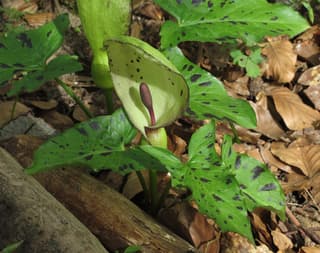
Lords-and-Ladies
Arum maculatum
A shade-loving woodland perennial in the arum family, native across most of Europe, Eastern Turkey and the Caucasus. Its glossy, arrow-shaped leaves emerge in late winter, often marked with dark purple blotches, followed in late spring by a pale green to purple-flushed spathe wrapped around a deep purple spadix. By midsummer the foliage and flower die back completely, leaving a bare stalk topped with a tight cluster of bright orange-red berries that persist into autumn. Every part of the plant -- leaves, stem, tuber and berries -- is highly toxic, packed with needle-like calcium oxalate crystals and other irritant compounds that cause intense burning of the mouth and throat if chewed or eaten.
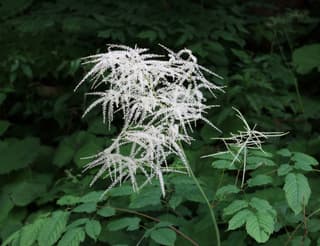
Goat's Beard
Aruncus dioicus
Aruncus dioicus, commonly known as Goat's Beard, is a bold and graceful shade-loving perennial native to moist woodlands across the Northern Hemisphere. It produces dramatic, feathery plumes of creamy-white flowers in late spring to early summer, rising above deeply divided, fern-like foliage. A dioecious species, male plants bear showier upright flower plumes while female plants produce more pendulous clusters that develop into attractive seed heads. This long-lived, low-maintenance perennial thrives in partial to full shade and consistently moist, humus-rich soils, making it an outstanding choice for woodland gardens, shaded borders, stream banks, and rain gardens.
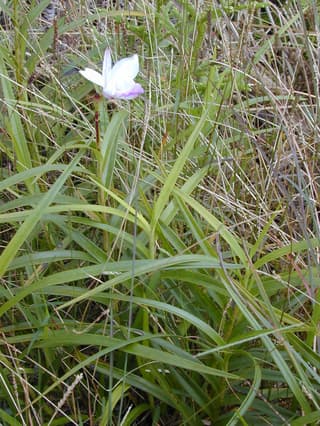
Bamboo Orchid
Arundina graminifolia
The Bamboo Orchid (Arundina graminifolia) is a terrestrial orchid native to Southeast Asia, recognized by its slender, bamboo-like stems that can reach up to 2.5 meters tall. It produces gorgeous flowers in shades of white, pink, and lilac year-round, making it one of the most rewarding orchids for tropical and subtropical gardens.
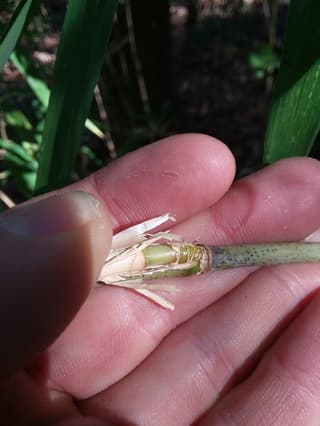
Switch cane
Arundinaria tecta
Arundinaria tecta is a low, slender native bamboo of the grass family (Poaceae), found in the coastal plain and piedmont of the southeastern United States from Virginia to Florida. It typically grows 0.6 to 1.8 meters tall, occasionally reaching up to 3.5 meters, with thin, rigid, round green stems that mature to brown and branch in their upper half. The species spreads vigorously by underground rhizomes and historically formed dense, near-impenetrable stands called canebrakes in wetland forest understories. Large canebrakes are now considered a critically endangered ecosystem due to habitat loss since European colonization.
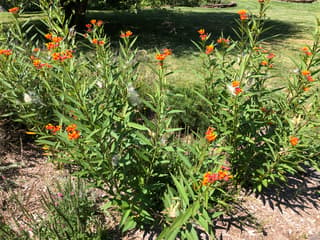
Tropical Milkweed
Asclepias curassavica
Tropical milkweed (Asclepias curassavica) is a perennial herbaceous plant in the Apocynaceae family, native to tropical South America. Known for its striking orange and yellow flowers, it is one of the primary host plants for Monarch butterfly caterpillars. It grows quickly in full sun and is drought-tolerant, but ALL parts of the plant contain cardiac glycosides and are toxic if ingested.
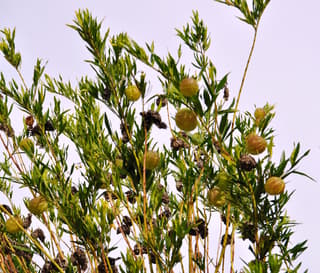
Balloon Plant
Asclepias physocarpa
Asclepias physocarpa, commonly known as Balloon Plant or Swan Plant, is a fast-growing perennial shrub native to South Africa. It is celebrated for its distinctive inflated, bristly seed pods that resemble balloons or swan heads, and for its small, fragrant white flowers that bloom in summer. A vital host plant for monarch butterflies, it is beloved by gardeners and conservationists alike.
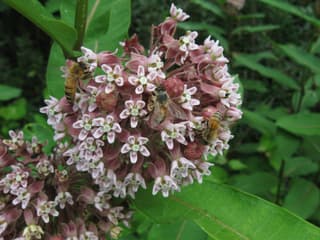
Common Milkweed
Asclepias syriaca
Common Milkweed (Asclepias syriaca) is a native perennial wildflower of Eastern North America, iconic for its role as the primary larval host plant of the monarch butterfly. It produces fragrant, pink-purple domed flower clusters in summer and distinctive large seed pods filled with silky fibers. Its stems and leaves exude a milky white latex sap containing cardiac glycosides, making it toxic if ingested. A cornerstone of native pollinator gardens.
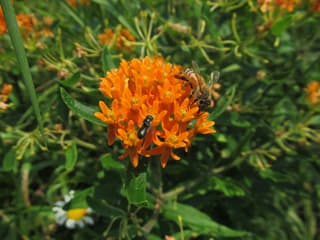
Butterfly Weed
Asclepias tuberosa
Asclepias tuberosa, commonly known as Butterfly Weed, is a stunning native North American perennial celebrated for its vivid clusters of bright orange flowers that bloom from late spring through summer. A critical host plant for monarch butterflies, it provides food for their caterpillars and nectar for countless pollinators. This drought-tolerant, deep-rooted wildflower thrives in poor, well-drained soils and requires very little maintenance once established.
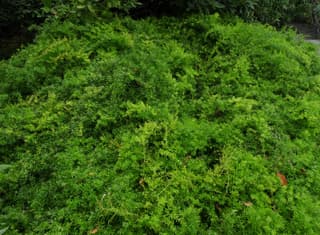
Asparagus
Asparagus
The Asparagus genus encompasses over 200 species native to Africa, Europe, and Asia, ranging from the edible garden asparagus (A. officinalis) to delicate ornamentals like the asparagus fern (A. setaceus) and Sprengeri fern (A. densiflorus). Known for their feathery, needle-like foliage (cladodes), asparagus plants are prized in floral arrangements, hanging baskets, and as graceful houseplants.
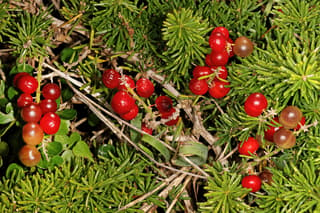
Sprenger's Asparagus
Asparagus aethiopicus
Sprenger's Asparagus (Asparagus aethiopicus) is an evergreen perennial native to South Africa, prized for its feathery, bright-green plumose foliage. Widely used in floral arrangements, hanging baskets, and as a ground cover, this resilient plant thrives in a variety of conditions and is easy to grow both indoors and outdoors.
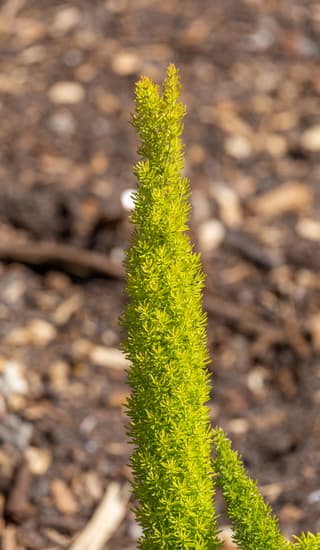
Asparagus Fern
Asparagus densiflorus
Asparagus densiflorus is a graceful, feathery houseplant native to South Africa. Despite its common name, it is not a true fern but belongs to the asparagus family (Asparagaceae). Known for its arching, needle-like cladodes on wiry stems, it creates a lush, cascading display perfect for hanging baskets and shelves. It produces small white or pink flowers in spring and summer, followed by decorative red berries.
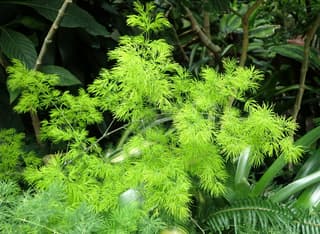
Ming Fern
Asparagus macowanii
Asparagus macowanii, commonly known as Ming Fern or Pony-tail Fern, is a perennial ornamental plant native to South Africa. Its feathery, needle-like bright green foliage creates an airy, elegant appearance suited for both indoor and outdoor settings. It is widely used in floral arrangements and as a decorative houseplant.
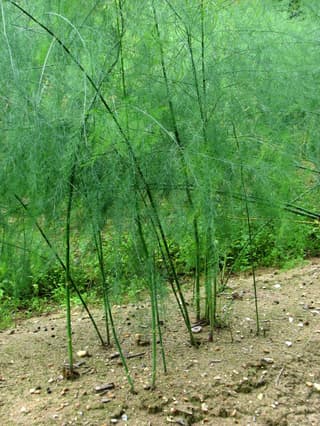
Garden Asparagus
Asparagus officinalis
Garden Asparagus (Asparagus officinalis) is a perennial herbaceous plant native to the Mediterranean region and Asia Minor, cultivated for over 2,000 years as a prized food crop. It produces edible spears in spring and develops ornamental feathery ferns in summer. WARNING: The mature red berries are toxic to humans, cats, and dogs.
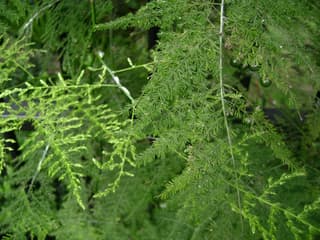
Lace Fern
Asparagus setaceus
Asparagus setaceus is an elegant, feathery climbing plant native to South Africa. Despite its common name, it is not a true fern but a member of the Asparagaceae family. Its delicate, needle-like cladodes create a soft, cloud-like appearance, making it one of the most popular ornamental houseplants worldwide. It is widely used in floral arrangements for its graceful trailing foliage.
Easy Care Easy Care
Our selection of 2315 easy easy care combines the characteristics of this category with reduced care needs. Perfect for beginners who love this category.
Why Choose Easy Easy Care?
Combining the beauty of easy care with easy difficulty level lets you enjoy this category without excessive maintenance worries. Each plant was selected to offer the best characteristics of the category at the care level you are looking for.