1451 Easy Pet Safe | 2026 Guide - Page 23
Find 1451 easy pet safe. Complete guide for your garden.
1451 Pet Safe with easy level
Showing 793-828 of 1451
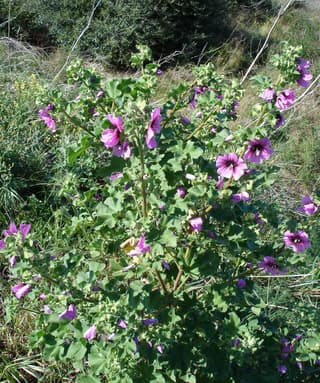
Tree Mallow
Malva arborea
Malva arborea, commonly known as tree mallow, is a fast-growing biennial shrub native to the rocky coastlines of western Europe and the Mediterranean, from Ireland and Britain south to North Africa and east to Greece. Reaching 1-2 m in height on a thick, woody-based stem, it forms bold rosettes of large, velvety, palmately lobed leaves up to 18 cm across. From early summer into autumn it produces clusters of funnel-shaped, dark pink to purple flowers, 3-4 cm wide, that draw bees and other pollinators. Remarkably salt-tolerant, tree mallow thrives on wind-battered cliffs and small islands, excreting excess salt through glands on its leaves so it can survive direct sea spray. In some regions outside its native range it has become an aggressive coastal coloniser.
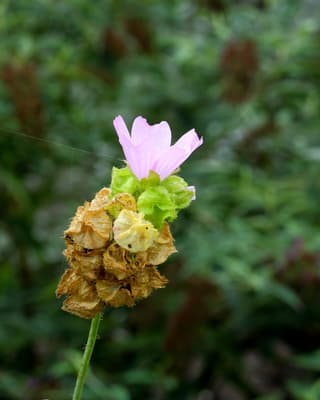
Musk Mallow
Malva moschata
A tall, airy European wildflower prized in cottage gardens for its finely cut, musk-scented foliage and abundant rose-pink, saucer-shaped blooms held on slender stems from early summer into fall. Naturalized across much of North America, it self-seeds readily in meadows, hedgebanks, and sunny borders, attracting bees and butterflies all season long.
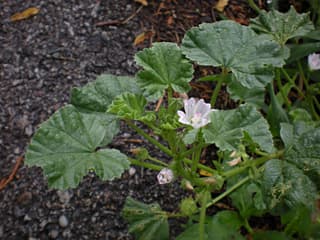
Common mallow
Malva neglecta
Common mallow (Malva neglecta) is a low-growing, creeping annual herb in the Malvaceae family. It features kidney-shaped to round, shallowly lobed leaves with long petioles and bears abundant pale pink to white flowers with violet veins from June to September. Originally from Europe and Western Asia, the species is now widely distributed as a synanthrope on ruderal land, field margins, and in gardens. The entire plant—leaves, flowers, fruits, and seeds—is edible and rich in mucilage, vitamins, and minerals.
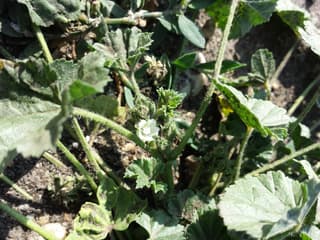
Low Mallow
Malva pusilla
Malva pusilla, commonly known as Low Mallow or Small Mallow, is a fast-growing annual herb in the Malvaceae family. Native to temperate Eurasia, it produces small pale pink to white five-petalled flowers from spring through autumn. Its rounded, lobed leaves and creeping stems make it a distinctive ground-cover plant found in gardens, roadsides, and disturbed ground.
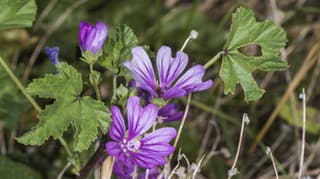
High mallow
Malva sylvestris
Malva sylvestris, commonly known as high mallow or common mallow, is a biennial or short-lived perennial herb native to Europe, North Africa, and Western Asia. A member of the Malvaceae family, it is easily recognised by its distinctive pinkish-purple flowers with dark veining, blooming from late spring through autumn. The plant has a rich history of culinary and medicinal use across Mediterranean and European cultures, prized for its emollient and anti-inflammatory properties.
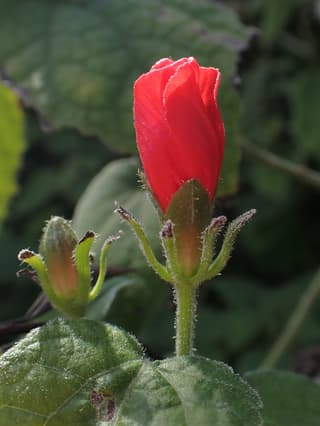
Turk's Cap
Malvaviscus arboreus
Malvaviscus arboreus, commonly known as Turk's Cap or Sleeping Hibiscus, is a vigorous perennial shrub native to Mexico and Central America. Its vibrant red flowers feature petals that remain furled, resembling a bud that never fully opens. This unique characteristic makes the nectar primarily accessible to hummingbirds, making it essential for gardens aiming to attract wildlife.
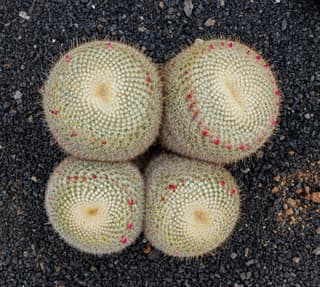
Pincushion Cactus / Nipple Cactus (genus)
Mammillaria
Mammillaria is one of the largest genera in the cactus family Cactaceae, comprising over 200 species native primarily to Mexico. Recognized by their distinctive nipple-shaped tubercles and crown-like rings of flowers, they are compact, ornamental plants beloved by collectors and beginners alike.
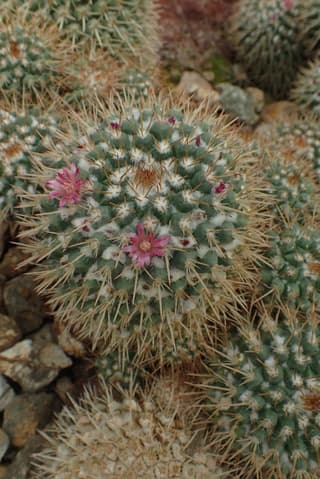
Backeberg's Pincushion Cactus
Mammillaria backebergiana
Mammillaria backebergiana is a small, globular-to-columnar cactus native to cliffs and rocky slopes in Guerrero, Michoacan and the State of Mexico. Its clear green stem, covered in spirally arranged tubercles tipped with golden-yellow to reddish hooked spines, grows slowly to about 30 cm tall and 6 cm in diameter, often forming offsets that build dense clumps over time. In spring, a striking ring of small magenta-pink flowers with green stigmas crowns the growing tip, followed by slender red fruits. It is a popular compact potted cactus that thrives on bright light and minimal water.

Powder Puff Cactus
Mammillaria bocasana
Mammillaria bocasana, commonly known as the powder puff cactus or snowball cactus, is a small globular cactus native to central Mexico, belonging to the Cactaceae family. It is characterized by its compact, rounded stems densely covered in fine, silky white hairs resembling cotton, interspersed with reddish-yellow hooked central spines. Over time, it forms clusters of multiple stems, creating a soft, cushion-like mound. In spring and summer, it produces a ring of small, funnel-shaped flowers in shades of creamy white to pink, followed by rosy-pink to red fruits.
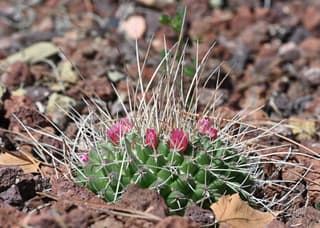
Mother of Hundreds
Mammillaria compressa
Mammillaria compressa, commonly known as Mother of Hundreds, is a clustering globular cactus native to central and northern Mexico, belonging to the Cactaceae family. It forms dense mounds of cylindrical stems covered in pale spines and produces a ring of purplish-pink flowers around the crown in late winter and early spring. This slow-growing, low-maintenance cactus is ideal for sunny windowsills, cactus gardens, and containers.
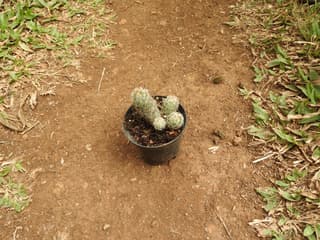
Ladyfinger Cactus
Mammillaria elongata
Mammillaria elongata is a small cactus native to central Mexico, valued for its clustered cylindrical stems that form dense, compact mounds. Its golden or copper-colored spines give it a bright, decorative appearance. Ideal for beginners due to its resilience and easy care.

Twin-spined Cactus
Mammillaria geminispina
Mammillaria geminispina, commonly known as the twin-spined cactus, is a clustering globular cactus native to central Mexico, found in the states of Hidalgo, Queretaro and San Luis Potosi. Its spherical stems, roughly 8 cm in diameter, are covered in white wool and long white spines that emerge in distinctive pairs at the tip of each conical tubercle, giving the species its name. Over the years it forms dense colonies that can spread well beyond 50 cm across. In spring and summer, a crown of small carmine-pink flowers appears around the top of each stem.
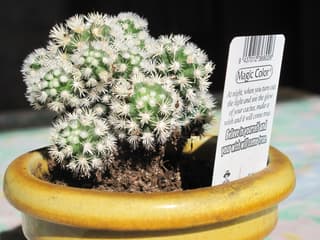
Thimble Cactus
Mammillaria gracilis
Mammillaria gracilis, commonly known as the Thimble Cactus, is a small clustering cactus from the Cactaceae family, native to central Mexico. It forms compact clumps of cylindrical stems densely covered in white, silky spines that resemble a sewing thimble. It is one of the most widely cultivated Mammillaria species, admired for its delicate beauty, ease of care, and generous blooming.
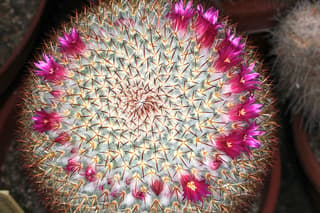
Haage's Pincushion Cactus
Mammillaria haageana
Mammillaria haageana is a small, spine-covered cactus native to the highlands of central and southern Mexico, where it grows wild among oak forests, pine woodlands, and volcanic lava flows at elevations between 450 and 2,600 meters. Its stem is globular when young and becomes more cylindrical with age, reaching up to 15 cm tall and 3-10 cm in diameter, often forming dense clusters as it produces offsets around its base. The stem is covered in small, cone-shaped tubercles called mammillae (the trait that gives the genus its name), each topped with an areole bearing 8 to 30 fine white radial spines and a handful of darker central spines that fade from black or reddish-brown to grey with age. In late winter and early spring the plant rewards patient growers with a crown of funnel-shaped flowers in shades of deep magenta-pink to pale pink, each only 8-20 mm across but often appearing in a ring around the growing tip. Slow-growing and undemanding, it is a favorite among beginner cactus collectors for its compact size and reliable, colorful blooms.
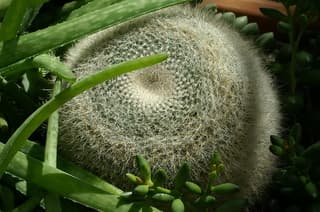
Old Lady Cactus
Mammillaria hahniana
The Old Lady Cactus (Mammillaria hahniana) is a small globose cactus native to Mexico, famous for the long white hairs that cover its entire body, resembling an elderly lady. It produces a crown of small pink-purple flowers in spring, making it highly decorative. One of the most popular cacti for collections and indoor growing.
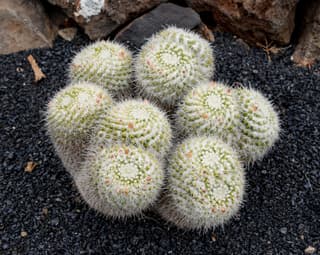
Royal Cross
Mammillaria karwinskiana
Mammillaria karwinskiana is a globular cactus native to south-central Mexico (Oaxaca, Puebla, Chiapas, Morelos, Guerrero, Michoacán and Colima) and Guatemala, growing wild in tropical deciduous forest and xerophilous scrub between 150 and 2,100 m elevation. It forms a solitary or basally branching stem, globose to short-cylindrical, up to 20 cm tall and 12 cm in diameter, with areoles bearing six pale radial spines with brown tips and no central spines. In spring it produces funnel-shaped, cream-to-yellow flowers with purplish midveins that open in a ring near the growing tip, giving rise to the common name "Royal Cross". The species is rated Least Concern by the IUCN and includes four recognized subspecies.
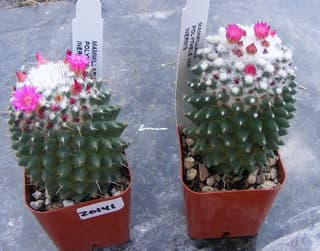
Mammillaria polythele
Mammillaria polythele
Mammillaria polythele is a solitary, cylindrical cactus native to the highlands of central Mexico, from Jalisco to Veracruz, where it grows among rocky desert and dry shrubland at 1,700-2,400 m elevation. Its dark green to bluish-green stem can reach up to 60 cm tall and 10 cm in diameter, densely covered in pyramidal tubercles tipped with spine clusters and woolly axils. In spring and summer it produces a ring of small deep pink to magenta flowers near the crown.
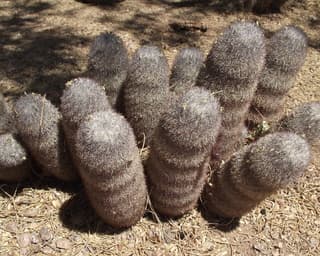
Rat-tail Nipple Cactus
Mammillaria pottsii
Mammillaria pottsii is a small, clustering cactus native to the Chihuahuan Desert of northern Mexico and the Big Bend region of West Texas. It forms clumps of slender cylindrical stems up to about 30 cm tall, covered in tubercles and fine white spines. Small pink to red flowers appear from late winter to spring, followed by red berries.
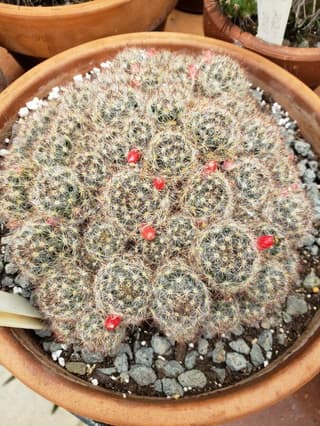
Little Candles
Mammillaria prolifera
Mammillaria prolifera is a small, clustering globular cactus native to Mexico, Texas, Cuba, the Dominican Republic, and Haiti. It readily produces offsets around the mother plant, forming dense cushion-like colonies covered in fine, hair-like spines. In spring and summer it produces small yellowish-white, cream, or pinkish-yellow flowers around the crown. It is a slow-growing, drought-tolerant, and easy-care cactus, well suited for beginners.
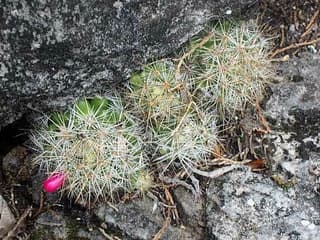
Golden Stars Cactus
Mammillaria vetula
Mammillaria vetula is a small, clustering cactus native to central Mexico (Hidalgo, Guanajuato and Queretaro), prized in cultivation as the popular subspecies gracilis. It forms dense mounds of cylindrical, bluish-green stems covered in fine white radial spines, topped in spring and summer with tiny pale-yellow, funnel-shaped flowers. It readily produces offsets that detach easily, making it one of the easiest cacti to propagate and share.
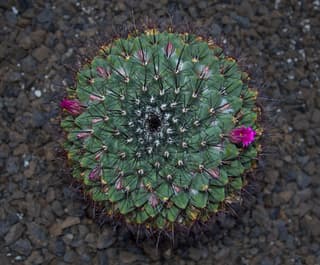
Saltillo Pincushion Cactus
Mammillaria winterae
The Saltillo pincushion cactus (Mammillaria winterae) is a slow-growing, globular cactus native to the mountains of Nuevo León and Coahuila, Mexico, where it grows among limestone rocks at high elevation. It typically has a solitary, flattened stem covered in radial spines and produces yellowish-white or greenish-yellow flowers in spring.
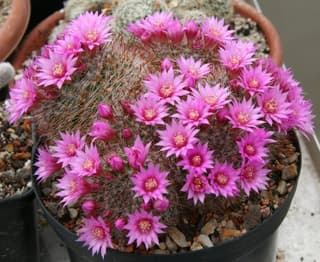
Rose Pincushion Cactus
Mammillaria zeilmanniana
Mammillaria zeilmanniana, commonly known as the Rose Pincushion Cactus, is a small, clustering cactus native to central Mexico. It forms compact, globular stems covered in dense, hooked white-to-yellow spines and produces abundant rosy-purple flowers in spring and summer. Popular as a compact houseplant, it is prized for its easy care and prolific blooming even in small pots.
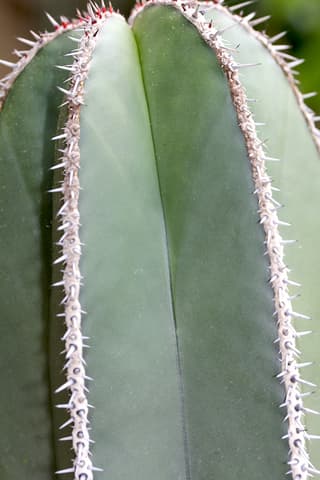
Mexican Fence Post Cactus
Marginatocereus marginatus
Marginatocereus marginatus, also known as Pachycereus marginatus, is a columnar cactus native to central Mexico. It forms erect, ribbed green stems about 7-10 cm thick that grow densely and parallel to each other, reaching over 6 meters in the wild with a slow growth rate. The spines are short and relatively harmless. In spring, reddish funnel-shaped flowers appear at the top of the stems—though these are rare on young potted specimens—followed by spherical fruits about 4 cm wide covered in spines and fuzz. In Mexico, cuttings are used to create living fences.
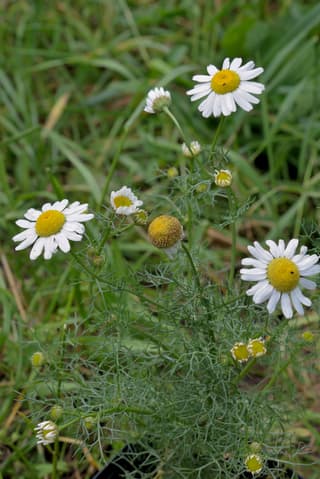
German Chamomile
Matricaria chamomilla
Matricaria chamomilla, known as German chamomile or common chamomile, is an annual herbaceous plant famous for its delicate daisy-like flowers and sweet, herbaceous aroma. It is one of the oldest and most widely used medicinal herbs by humanity, valued for its calming and digestive properties.
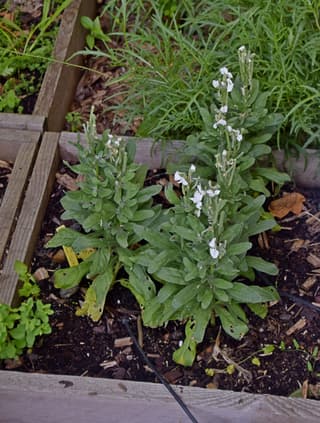
Stock
Matthiola
Matthiola, commonly known as stock or gillyflower, is a genus of flowering herbaceous plants in the Brassicaceae family, native to the Mediterranean region. Prized for their dense, fragrant flower spikes in shades of white, pink, purple, lavender and cream, they are widely grown as garden ornamentals and cut flowers, blooming from spring through summer.
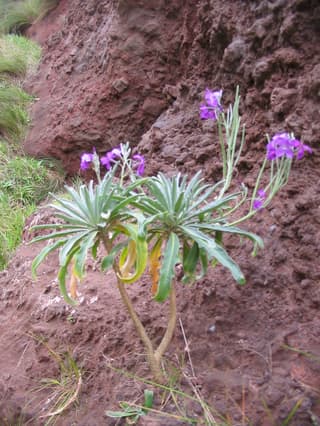
Stock Flower
Matthiola incana
Matthiola incana, commonly known as stock flower or hoary stock, is an ornamental plant from the Brassicaceae family, native to the Mediterranean region. Prized for its intensely fragrant flowers in shades of white, pink, lavender, purple, and red, it is widely grown in cottage gardens, borders, and as a cut flower. This biennial or short-lived perennial is typically treated as an annual, blooming in spring and early summer in cool, temperate climates.
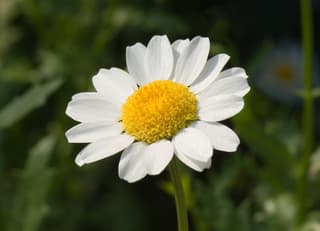
Mini Marguerite
Mauranthemum paludosum
Mauranthemum paludosum, commonly known as Mini Marguerite or Creeping Daisy, is a compact, fast-growing annual native to the western Mediterranean region, including Spain, Morocco, Algeria, Tunisia, and the Balearic Islands. Belonging to the Asteraceae family, this charming dwarf plant reaches only 20–25 cm in height and produces an abundance of small, classic daisy flowers — white ray petals radiating around a bright yellow disc centre — that open and close in response to sunlight. It thrives in cool weather, making it a popular choice for fall and winter gardens in mild climates, and spring displays in cooler regions. Its low-spreading habit and prolific blooming make it ideal for borders, rock gardens, containers, and mass plantings.
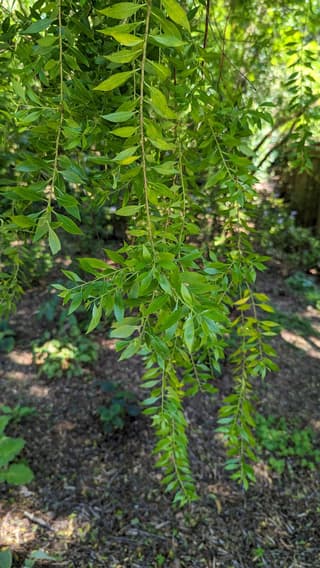
Maitén
Maytenus boaria
The Maitén (Maytenus boaria) is a tree native to Chile and Argentina, belonging to the Celastraceae family. It is an evergreen species with a dense, rounded canopy and somewhat drooping branches, reaching between 10 and 20 m in height in the wild. Its leaves are alternate, elliptical, 2 to 6 cm long, with finely serrated edges. It flowers between August and September with small yellowish-green flowers and produces capsules with seeds enclosed in a red aril. It grows wild in semi-arid transition zones and along riverbanks and streams, from sea level up to about 1600 m in altitude, and is considered a sacred tree by the Mapuche people.
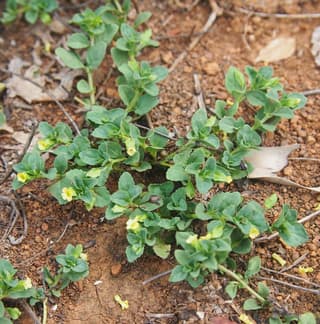
Yellow mecardonia
Mecardonia procumbens
Mecardonia procumbens is an annual or perennial herbaceous plant from the Plantaginaceae family, native to the tropical and subtropical regions of the Americas, including Mexico. It has a bushy habit with prostrate, creeping stems that form dense mats up to 60 cm in diameter. The leaves are small, oval, and deep green, while the bright yellow flowers appear from spring to fall, attracting bees and butterflies. In nature, it often grows in wet areas, on riverbanks, and in marshy soils, but it has naturalized on all continents except Antarctica due to its remarkable adaptability.
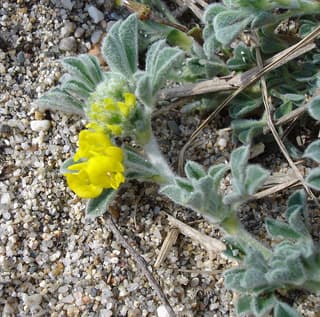
Medick
Medicago
Medicago is a genus of 87–105 species of flowering plants in the legume family Fabaceae, native to the Mediterranean Basin and extending across temperate Eurasia and sub-Saharan Africa. The genus includes alfalfa (M. sativa), one of the world's most important forage crops, and black medick (M. lupulina), a common lawn and pasture plant. Plants bear trifoliate clover-like leaves, small flowers in purple, yellow, or white, and distinctive spiral or bur-shaped seed pods. As nitrogen-fixing legumes through symbiosis with Rhizobium bacteria, they naturally enrich the soil and are cornerstone plants in sustainable agriculture.
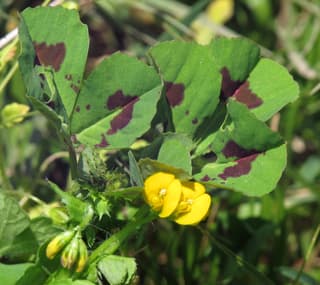
Spotted Medick
Medicago arabica
Spotted medick (Medicago arabica) is a sprawling annual herb in the legume family Fabaceae, native to the Mediterranean basin. It is easily recognized by its trifoliate leaves bearing dark purple spots and small yellow flowers that bloom from spring through summer. The plant plays an important ecological role by fixing atmospheric nitrogen through its symbiosis with Sinorhizobium medicae bacteria, making it a valuable cover crop and green manure plant.
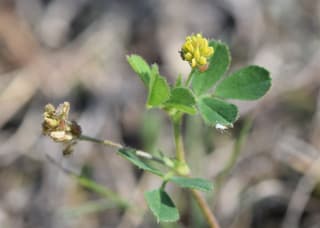
Black Medick
Medicago lupulina
Black Medick (Medicago lupulina) is an annual or short-lived perennial herb in the legume family (Fabaceae), native to Eurasia and Africa and naturalized worldwide in temperate regions. It produces small, bright yellow flowers arranged in tight globose clusters, followed by distinctive small black seed pods that give the plant its common name. A prolific nitrogen-fixer, it enriches the soil wherever it grows and provides valuable nectar for bees, butterflies, and other pollinators. It thrives in open, sunny habitats including lawns, roadsides, meadows, and disturbed ground.
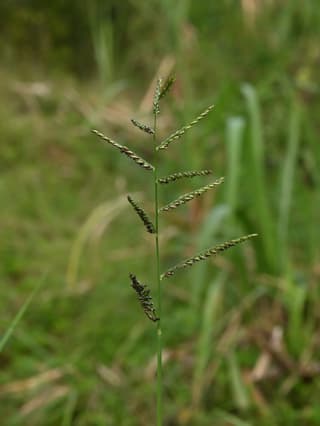
Guinea grass
Megathyrsus maximus
Megathyrsus maximus, popularly known as Guinea grass, is a large perennial grass native to Africa. It is widely recognized for its robustness, rapid growth, and formation of dense clumps. Its leaves are long and linear, and its inflorescences occur in open, branched panicles. Although it is one of the world's main tropical forages, it is also used in degraded area recovery projects and as a visual barrier in large gardens.
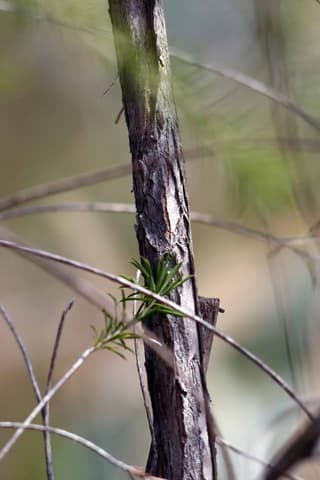
Bracelet Honey Myrtle
Melaleuca armillaris
Melaleuca armillaris, commonly known as the bracelet honey myrtle, is a large evergreen shrub or small tree native to southern Australia (South Australia, Victoria, and Tasmania). It can reach 15 to 30 feet (4.6 to 9 meters) in height with a similar spread and is characterized by grey, papery bark that peels in strips, fine needle-like foliage of intense green, and spectacular cylindrical spikes of creamy-white flowers, resembling bottlebrushes, which bloom in spring and summer. Its species name 'armillaris' (from the Latin for bracelet) refers to the ring-like arrangement of its fruit capsules along the branches. Very hardy, it tolerates drought, wind, salt spray, and air pollution, making it an excellent windbreak or screening hedge in Mediterranean and coastal gardens. Its abundant nectar-rich flowering attracts honeyeaters, native bees, and many other pollinators. Its essential oil, rich in 1,8-cineole, possesses antibacterial and antifungal properties recognized by several scientific studies.
Crimson bottlebrush
Melaleuca citrina
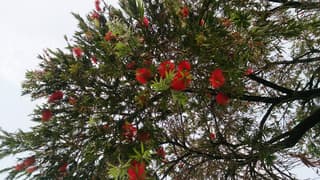
Melaleuca citrina, commonly known as crimson bottlebrush, is an evergreen shrub or small tree native to eastern Australia and endemic to coastal regions of New South Wales and Victoria. It belongs to the Myrtaceae (myrtle) family and was among the first Australian plants cultivated outside the country (introduced to England in 1770). The plant is renowned for its striking bright red flower spikes that bloom primarily in summer, attracting honeyeaters, spinebills, and other birds. The lanceolate evergreen leaves release a pleasant citrus-like fragrance when brushed or crushed.
Weeping Bottlebrush
Melaleuca viminalis
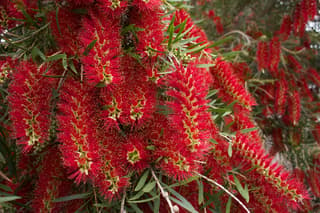
The Weeping Bottlebrush (Melaleuca viminalis) is a fast-growing evergreen shrub or small tree native to eastern Australia, prized for its graceful, pendulous branches and vivid crimson-red bottlebrush-shaped flower spikes that bloom from spring through summer. Its narrow, leathery leaves create a soft, weeping canopy that attracts hummingbirds, bees, and butterflies. Hardy and low-maintenance once established, it thrives in warm climates as a specimen tree, hedge, or screen planting.
Easy Care Pet Safe
Our selection of 1451 easy pet safe combines the characteristics of this category with reduced care needs. Perfect for beginners who love this category.
Why Choose Easy Pet Safe?
Combining the beauty of pet safe with easy difficulty level lets you enjoy this category without excessive maintenance worries. Each plant was selected to offer the best characteristics of the category at the care level you are looking for.