1557 Easy Pet Safe | 2026 Guide - Page 40
Find 1557 easy pet safe. Complete guide for your garden.
1557 Pet Safe with easy level
Showing 1405-1440 of 1557

Queen Palm
Syagrus romanzoffiana
The Queen Palm (Syagrus romanzoffiana) is a stately feather palm native to Brazil and South America, belonging to the family Arecaceae. Prized for its graceful arching fronds and slender trunk, it is one of the most popular landscape palms in subtropical and tropical regions worldwide. It can reach heights of 10-15 meters and produces clusters of bright orange fruits that attract wildlife.
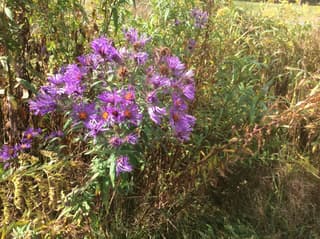
American Asters (genus)
Symphyotrichum
Symphyotrichum is a genus of about 100 species of annual and perennial herbs in the daisy family (Asteraceae), almost all native to North America, with a few in the Caribbean, Central and South America. They were long included in Aster and gardeners still call them asters. The flowers look like small daisies, with purple, blue, lavender, pink or white rays around a yellow centre that turns reddish with age, and they come in masses from late summer into autumn, when most of the garden has stopped flowering. The best-known garden plants are New England aster (S. novae-angliae) and New York aster or Michaelmas daisy (S. novi-belgii), along with smooth aster (S. laeve), heath aster (S. ericoides) and dwarf forms of S. dumosum. Height ranges from 20 cm to 2.4 m depending on the species, and the flowers draw many bees and butterflies.
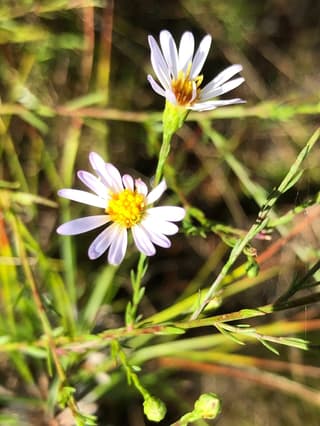
Rice Button Aster
Symphyotrichum dumosum
Symphyotrichum dumosum is a herbaceous perennial native to eastern North America. It forms bushy, branching clumps about 60 to 90 cm tall, covered in late summer and fall with masses of small daisy-like flowers with white to pale lilac rays and yellow centers that age to reddish purple. It is a valuable late-season nectar source for bees, butterflies and skippers.
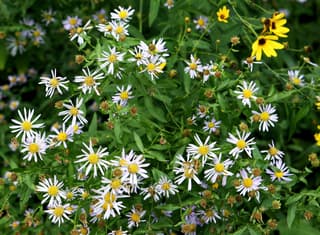
White Panicle Aster
Symphyotrichum lanceolatum
Symphyotrichum lanceolatum, commonly known as White Panicle Aster, is a native North American perennial wildflower in the Asteraceae family. Formerly classified as Aster lanceolatus, it produces masses of small daisy-like white flowers with yellow disc centers from mid-summer through fall, reaching up to 1.5 meters tall. A vital late-season pollinator plant, it thrives in moist, sunny conditions and spreads via rhizomes.
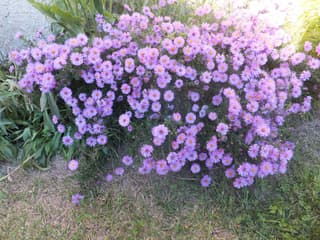
New England Aster
Symphyotrichum novae-angliae
New England aster is a perennial wildflower of moist meadows and prairies in central and eastern North America. It forms clumps of upright, hairy stems, usually 1 to 1.2 m tall and sometimes over 1.8 m. From late summer into autumn it bears masses of deep purple, occasionally pink or white, daisies with up to 100 narrow rays around a yellow centre. The top dies back in winter and regrows in spring. Its flowers are one of the last nectar sources of the year for bees and migrating monarch butterflies.

New York Aster
Symphyotrichum novi-belgii
Symphyotrichum novi-belgii, commonly called the New York aster or Michaelmas daisy, is a hardy herbaceous perennial native to eastern Canada and the northeastern United States, often found in wet meadows and abandoned fields near the coast. Valued for its abundant daisy-like flower heads in shades of purple, pink, and white surrounding bright yellow centers, it blooms from late summer through fall, often peaking around Michaelmas (September 29). Growing 3-5 feet (90-150cm) tall, it thrives in sunny garden borders and wildlife gardens, attracting bees, butterflies -- including Pearl Crescents, for which it is a host plant -- and seed-eating songbirds.
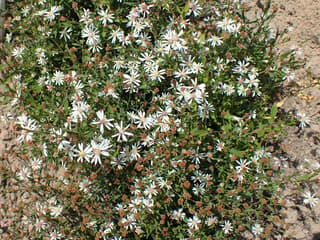
Shore Aster
Symphyotrichum tradescantii
Symphyotrichum tradescantii, commonly known as Shore Aster or Tradescant's Aster, is a native perennial wildflower of northeastern North America. This deciduous herbaceous plant produces an abundance of small, daisy-like flowers with white ray florets and pale yellow to purple disk florets in late summer and fall. It grows naturally along rocky shores, riverbanks, and freshwater estuaries, thriving in full sun to partial shade and moist soils. An excellent choice for naturalistic gardens, rain gardens, and native plant landscapes.
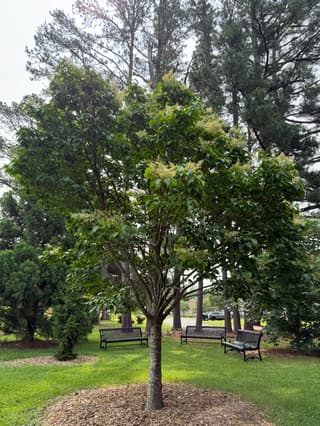
Japanese Tree Lilac
Syringa reticulata
Japanese Tree Lilac (Syringa reticulata) is a small to medium-sized ornamental tree native to Japan and northeastern Asia. It stands out for its enormous creamy-white fragrant flower panicles that appear in early summer, blooming up to six weeks after most other lilacs have finished. With cherry-like bark and exceptional urban tolerance, it is one of the most versatile and low-maintenance ornamental trees for gardens and streetscaping.
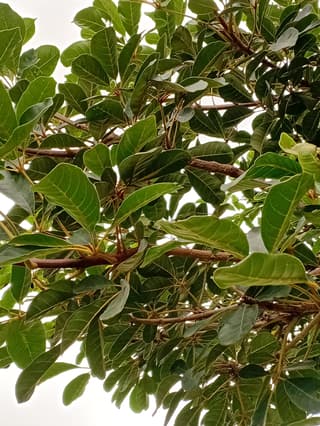
Syzygium (genus)
Syzygium
Syzygium is a large genus of tropical and subtropical evergreen trees and shrubs in the family Myrtaceae, comprising over 1,000 species native to Asia, Australia, and Africa. The genus includes economically and culturally significant species such as clove (S. aromaticum), jambolan (S. cumini), and rose apple (S. samarangense). These are hardy plants with dense, glossy foliage that produce edible fruits and aromatic flowers.
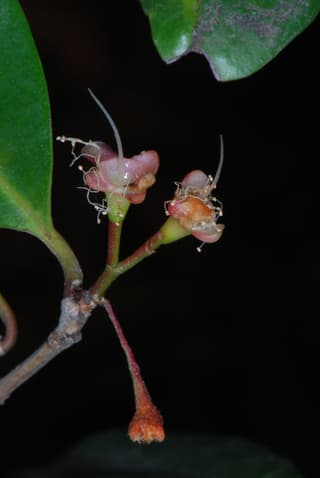
Magenta Cherry
Syzygium paniculatum
Syzygium paniculatum, known as Magenta Cherry or Brush Cherry, is an evergreen shrub and small tree native to the rainforests of eastern Australia (New South Wales). It bears glossy dark green leaves with attractive bronze-red new growth, clusters of white flowers in spring and summer, and distinctive magenta-coloured edible berries. Formerly classified as Eugenia paniculata, it is widely grown as a hedging plant, topiary subject, and ornamental specimen across subtropical and warm temperate regions worldwide.
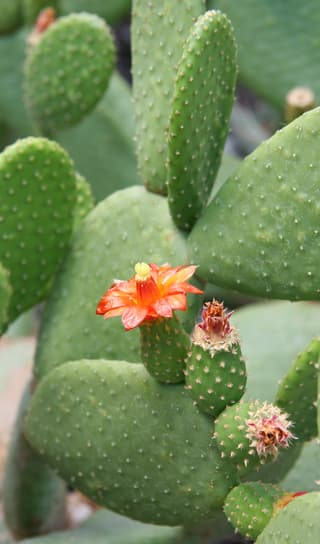
Pink Toad Cactus
Tacinga
Tacinga is a genus of cacti native to the Caatinga biome of northeastern Brazil, belonging to the family Cactaceae (subfamily Opuntioideae). Closely related to Opuntia, it includes species such as T. inamoena and T. funalis, perfectly adapted to semi-arid conditions. It produces colorful flowers and edible fruits, and is an iconic symbol of Brazil's endemic flora.
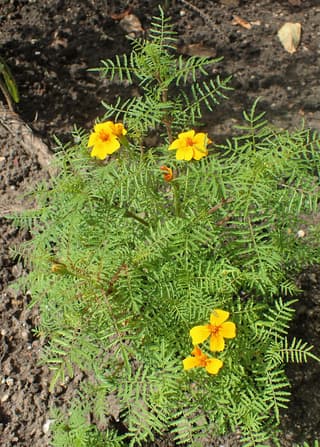
Signet Marigold
Tagetes tenuifolia
Signet marigold (Tagetes tenuifolia) is a compact, mounding annual native to Mexico and Central America, prized for its lacy, lemon-scented foliage and abundance of small single flowers in yellow, orange, and gold. It blooms profusely from early summer through fall and is a popular edging and companion plant.
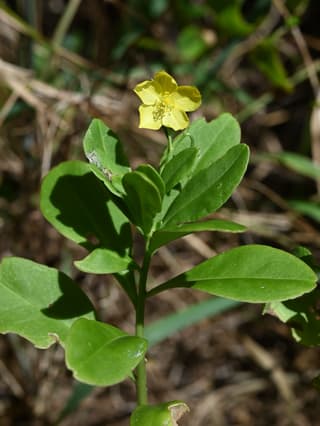
Waterleaf
Talinum fruticosum
Waterleaf (Talinum fruticosum) is a fast-growing tropical perennial leafy vegetable native to Mexico, the Caribbean, and Central and South America, now widely cultivated across West Africa, South and Southeast Asia, and tropical regions worldwide. Its broad, succulent leaves have a mildly tangy, slightly sour flavor and become tender when cooked. It is a staple ingredient in West African soups and stews, and is valued in Brazilian Amazonian cooking as "cariru." The plant is exceptionally easy to grow, thrives in heat, tolerates poor soils, and produces leaves almost continuously in warm climates.
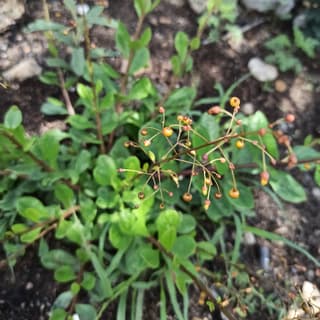
Jewels of Opar
Talinum paniculatum
Jewels of Opar (Talinum paniculatum) is a succulent perennial herb native to tropical Americas, including Brazil. It produces delicate pink flowers on airy panicles that resemble a miniature baby's breath, making it a charming ornamental plant. The fleshy, nutrient-rich leaves are edible and recognized as an unconventional food plant (PANC in Brazil), rich in protein, iron, potassium, and magnesium. Extremely drought-tolerant, it thrives in full sun with minimal care and self-seeds readily.

Sea hibiscus
Talipariti tiliaceum
Talipariti tiliaceum, better known by its synonym Hibiscus tiliaceus, is the sea hibiscus or beach hibiscus: a large, perennial tree or shrub native to tropical coasts worldwide. It thrives on beaches, riverbanks, and mangroves, from sea level up to about 800 m, typically reaching 4 to 10 m in height with a broad crown and a short, crooked trunk. The leaves are large and heart-shaped. The trumpet-shaped flowers, up to 10 cm wide, open as bright yellow with a dark red center and transition to orange and then red within the same day before falling. It tolerates salt, wind, and waterlogged soil, which is why it is frequently planted in seaside gardens. In landscaping, the variegated form ('Tricolor' or 'Variegata') is very popular, featuring leaves mottled with cream, green, and pink. Note: it is considered invasive in Florida and Cuba.
Tamarind
Tamarindus indica
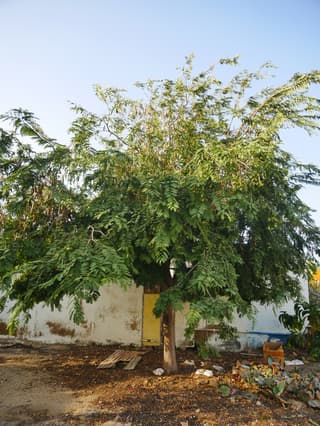
Tamarindus indica is a majestic tropical tree, known for its dense canopy and pod-shaped fruits containing a highly prized sweet and sour pulp. Its leaves are pinnate and delicate, closing at night. It is a long-lived species that can reach large proportions in warm climates.

Athel tamarisk
Tamarix aphylla
Tamarix aphylla, known as the Athel tamarisk or Athel pine, is the largest representative of the Tamarix genus, capable of reaching 18 meters in height. It is an evergreen tree with leaves reduced to grayish-green scales, adapted to excrete salt through specialized leaf glands, forming crystals on the surface. Native to North Africa, the Middle East, and South Asia, it is widely cultivated in arid regions as a windbreak, shade plant, and for soil stabilization. Its small white or pink flowers, gathered in spikes, bloom from late summer to autumn, providing valuable nectar for bees.
French Tamarisk
Tamarix gallica
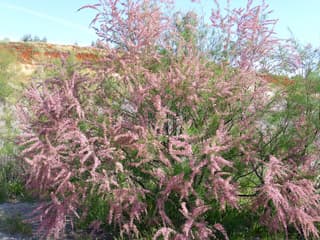
French Tamarisk (Tamarix gallica) is a fast-establishing, salt-tolerant deciduous shrub or small tree native to the Mediterranean basin and parts of the Middle East. Valued for its feathery, blue-green scale-like foliage and airy plumes of pale pink flowers that appear in late spring and again in summer, it is widely planted in coastal gardens, hedgerows and dune-stabilization projects thanks to its remarkable tolerance of wind, salt spray, drought and poor soils.
Dandelion
Taraxacum
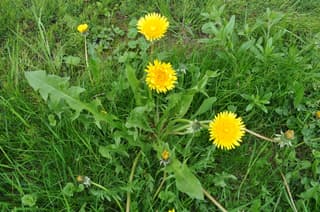
Taraxacum is a genus of flowering perennials in the daisy family (Asteraceae), comprising over 2,000 recognized species and microspecies worldwide, most reproducing by apomixis. This profile covers the genus at a general level, using the emblematic and most widespread species, Taraxacum officinale (common dandelion), as the reference for care data. Recognizable by its rosette of toothed leaves, solitary yellow flower heads, and globe-shaped seed puffballs, Taraxacum is both a common lawn weed and a valued edible and medicinal plant.
Horned Dandelion
Taraxacum ceratophorum
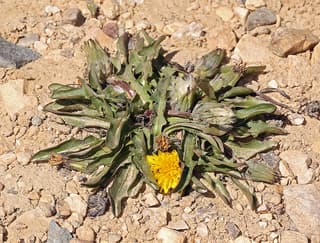
Taraxacum ceratophorum, commonly known as the horned dandelion, is a herbaceous perennial native to alpine and subalpine zones across the Northern Hemisphere. It is distinguished by its distinctive swollen red-tinged phyllary tips resembling horns, which give the plant its common name. It grows in alpine meadows, fellfields, and rocky slopes up to 3,000 meters elevation, and is considered the most widespread native dandelion in North America.
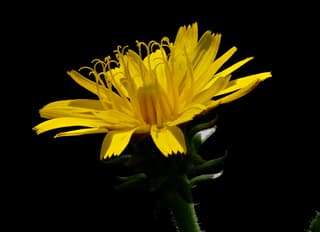
Dandelion
Taraxacum sect. Taraxacum
The dandelion is an extremely resilient perennial herbaceous plant, known for its basal rosette of jagged leaves and bright yellow flowers. It is famous for its ability to colonize various habitats and for its 'pappus', the sphere of feathery seeds that disperse with the wind. Although often considered a weed, it is a highly nutritious and medicinal plant.
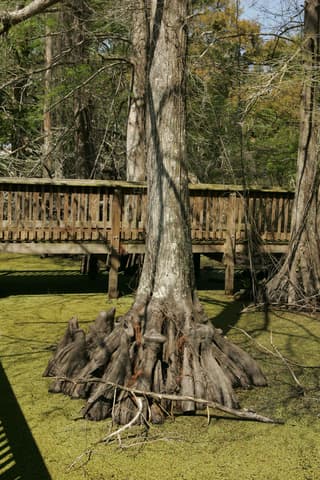
Bald Cypress
Taxodium distichum
Taxodium distichum, commonly known as the bald cypress, is a large deciduous conifer in the Cupressaceae family. Native to the southeastern United States, it grows naturally in swamps, riverbanks, and floodplains. It is one of the few deciduous conifers, and its bright green foliage turns reddish-bronze in autumn before falling. It produces aerial root structures called pneumatophores or "cypress knees" when growing in flooded soils. With an exceptional lifespan that can exceed 1,000 years, it is an iconic tree of North American wetlands, widely used in parks, urban gardens, and riparian restoration projects.
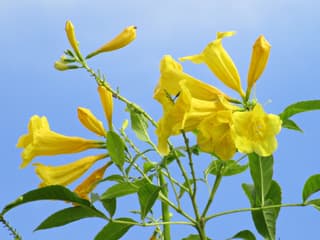
Trumpetbush (genus)
Tecoma
Tecoma is a genus of shrubs and small trees in the family Bignoniaceae, prized for their showy trumpet-shaped yellow or orange flowers. Hardy and drought-tolerant, they thrive in hot, sunny landscapes across tropical and subtropical regions.
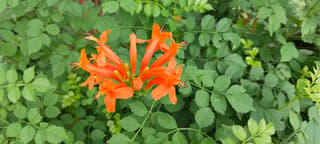
Cape Honeysuckle
Tecoma capensis
Cape Honeysuckle (Tecoma capensis) is an evergreen, scrambling shrub native to southern Africa, prized for its clusters of orange, tubular flowers. Fast-growing and adaptable, it can be trained as a hedge, espalier, or climbing vine, blooming mainly from fall through spring and attracting hummingbirds and butterflies.
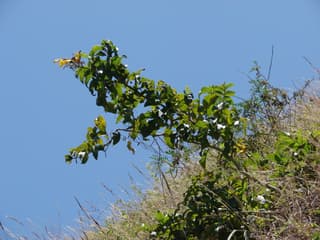
Yellow Bells
Tecoma stans
Tecoma stans, commonly known as Yellow Bells or Yellow Trumpetbush, is a fast-growing shrub or small tree native to the Americas, from Mexico to Argentina. It is celebrated for its stunning clusters of bright yellow, trumpet-shaped flowers that bloom from spring through fall, attracting hummingbirds, butterflies, and bees. Highly drought-tolerant and low-maintenance, it thrives in warm, sunny gardens and is considered a symbol of vitality and abundance across Latin America.
Verschaffelt Tephrocactus
Tephrocactus verschaffeltii
Tephrocactus verschaffeltii is a captivating segmented cactus native to the arid regions of Argentina and Bolivia. Its oval segments display colors ranging from mint green to plum purple, adorned with distinctive white fluffy areoles. In spring and summer, it produces vibrant fire-red to orange blooms that make it a striking collector's piece. A slow-growing species, it is well-suited for rock gardens, desert landscapes, and container growing.
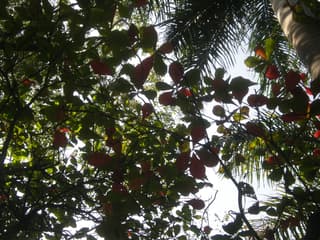
Tropical Almond
Terminalia
Terminalia is a genus of approximately 100 species of large tropical and subtropical trees in the family Combretaceae, found across coastal and inland tropical regions worldwide. Notable species include T. catappa (Tropical Almond), T. mantaly (Madagascar Umbrella Tree), and T. arjuna (Arjuna Tree), revered in Ayurvedic medicine. These fast-growing trees are valued for their generous shade, attractive layered branching, durable timber, and the wide-ranging medicinal properties of their leaves and fruit.
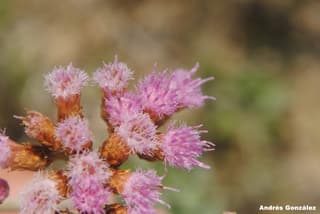
Pájaro bobo
Tessaria absinthioides
The Pájaro bobo (Tessaria absinthioides) is a perennial shrub in the Asteraceae family, native to riverbanks and brackish soils from southern Peru and Bolivia to northern and central Chile, Argentina, Paraguay, and Uruguay. Featuring grayish-green foliage with a pubescent appearance, it reaches up to 2-3 meters in height, with elongated leaves and serrated edges. Its flower heads, grouped in terminal corymbs, display marginal flowers ranging from pale to deep pink between December and March. It is a pioneer species with extremely high adaptive capacity: it colonizes sandy, arid, waterlogged, or saline soils alike, and in the Atacama Desert, it survives by obtaining moisture almost exclusively from coastal fog (camanchaca).
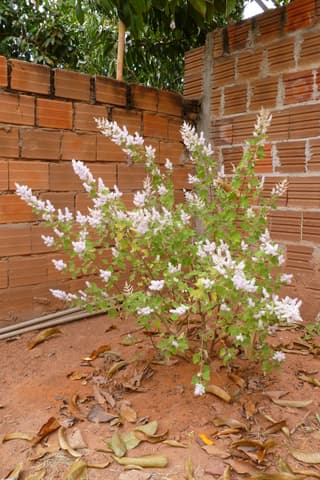
Ginger Bush
Tetradenia riparia
Tetradenia riparia, commonly known as the Ginger Bush or Nutmeg Bush, is a vigorous shrub native to Southern Africa. It is famous for its spectacular winter flowering, when it is covered in delicate, feathery inflorescences. Its leaves are heart-shaped, velvety, and extremely aromatic, releasing a resinous scent reminiscent of a blend of ginger and spices when touched.
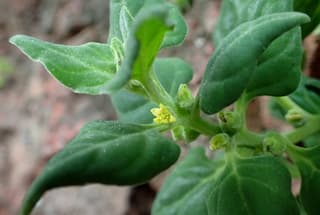
New Zealand Spinach
Tetragonia tetragonoides
Tetragonia tetragonoides, commonly known as New Zealand Spinach or Warrigal Greens, is a fast-growing, heat-tolerant leafy vegetable native to New Zealand, Australia, and East Asia. Unlike common spinach, it thrives in hot summers and is highly drought-tolerant once established, making it an ideal warm-season green. Its succulent, arrow-shaped leaves are used as a spinach substitute and are valued for their nutritional content.
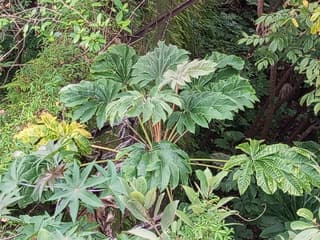
Rice Paper Plant
Tetrapanax papyrifer
Tetrapanax papyrifer is a bold, architectural shrub native to Taiwan and southern China, celebrated for its enormous, deeply lobed, grey-green leaves that can reach over 60 cm across. It grows vigorously via underground suckers, creating dramatic tropical-looking colonies in gardens. The plant has been cultivated for centuries, with its pith traditionally used to make Chinese rice paper.

Stiff Greenthread
Thelesperma filifolium
Thelesperma filifolium, commonly known as stiff greenthread, is a drought-tolerant wildflower native to the Great Plains and prairies of North America, from Texas to the Dakotas. It forms slender, branching stems with thread-like foliage topped by cheerful golden-yellow daisy-like flowers with reddish-brown centers. A winter annual or short-lived perennial, it thrives in dry, sandy, or gravelly soils and full sun, making it a favorite for native wildflower meadows and pollinator gardens.
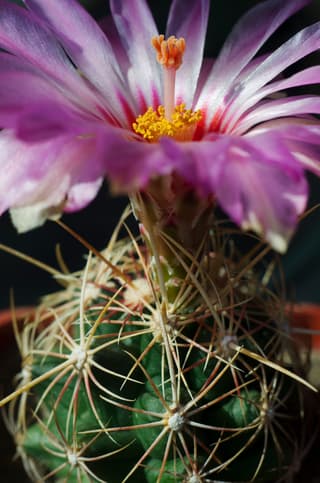
Thelocactus
Thelocactus
Thelocactus is a genus of about 13 species of globose to short cylindrical cacti that grow wild in the arid regions of central and northern Mexico as well as in the Big Bend region of Texas. The plants are characterized by prominent, often spiraling ribs set with distinct tubercles and star-shaped spine clusters in colors ranging from white and golden to reddish-brown. In spring and summer, large, funnel-shaped flowers bloom from the plant's apex in shades of white, yellow, pink, and purple – often nearly as wide as the plant itself.
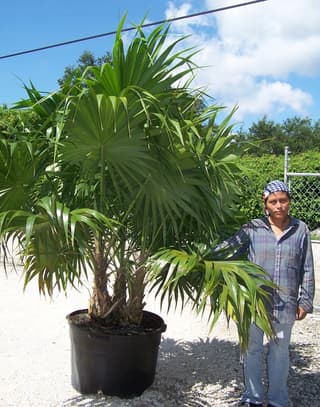
Florida thatch palm
Thrinax radiata
The Florida thatch palm (Thrinax radiata) is a species in the Arecaceae family, native to the Florida Keys, the Yucatán Peninsula, the Caribbean, and Central America. It is a solitary, slender-trunked palm, without a crownshaft, that can reach between 6 and 9 meters in height, although it grows very slowly. Its leaves are palmate (fan-shaped), bright green on the upper side and silvery on the underside. It produces white inflorescences that can bloom year-round, followed by small white fruits. It inhabits coastal scrublands and calcareous soils, which makes it very tolerant to salinity and drought. In Florida, it is listed as an endangered species in the wild.
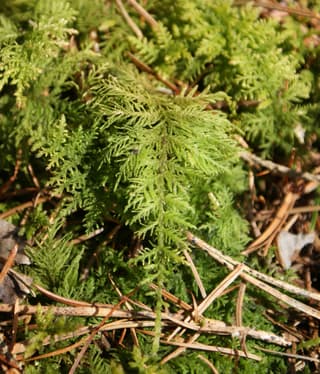
Common Tamarisk Moss
Thuidium tamariscinum
Thuidium tamariscinum, commonly known as Common Tamarisk Moss, is a feathery, evergreen bryophyte that forms lush, bright-green mats on forest floors, rocks, and fallen logs. Native to Europe and now widespread across temperate regions worldwide, it does not flower and reproduces via spores. It thrives in shaded, humid environments and is ideal for terrariums, shade gardens, and natural ground cover.
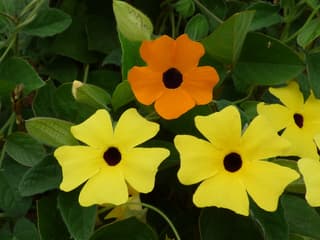
Clockvine
Thunbergia
Thunbergia is a genus in the acanthus family (Acanthaceae) with about 150 species of vines and shrubs from tropical Africa, Madagascar and southern Asia. The most widely grown are black-eyed Susan vine (Thunbergia alata), with orange, yellow or white flowers around a dark eye; sky vine or Bengal clockvine (T. grandiflora), with large blue-lilac flowers; orange clockvine (T. gregorii); and Mysore trumpet vine (T. mysorensis), with hanging chains of red and yellow flowers. They are twining climbers that wrap around supports and grow quickly, from 2 to 8 m depending on the species, with trumpet-shaped flowers from summer into autumn. In the tropics they live for years; where there is frost they are grown as annuals or in a sheltered pot. Some species escape from gardens and become invasive in warm regions.
Easy Care Pet Safe
Our selection of 1557 easy pet safe combines the characteristics of this category with reduced care needs. Perfect for beginners who love this category.
Why Choose Easy Pet Safe?
Combining the beauty of pet safe with easy difficulty level lets you enjoy this category without excessive maintenance worries. Each plant was selected to offer the best characteristics of the category at the care level you are looking for.