1135 Medium Plants | 2026 Guide - Page 21
Discover 1135 medium plants for your garden. Complete care guide.
1135 Medium Plants
Showing 721-756 of 1135
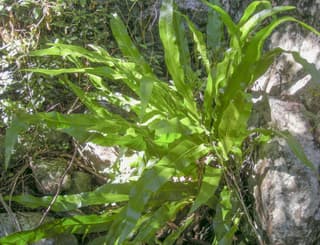
Fishtail Fern
Microsorum punctatum
Microsorum punctatum, commonly known as the Fishtail Fern or Ox-tongue Fern, is a tropical evergreen fern native to southern Asia, ranging from India to China and across the Pacific Islands. It features long, leathery, glossy bright-green fronds with wavy margins, making it an attractive ornamental plant for both indoor and outdoor shaded environments.
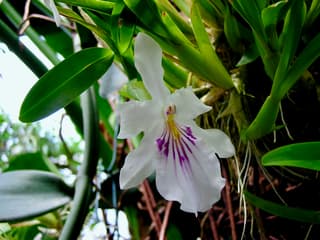
Miltonia Orchid (genus)
Miltonia
Miltonia is a genus of Neotropical epiphytic orchids in the family Orchidaceae, native to the tropical rainforests of Brazil and surrounding regions. Unlike the closely related Miltoniopsis, true Miltonia orchids are warmer-growing and thrive in USDA zones 10–12. They produce spectacular blooms on arching spikes during spring and summer.
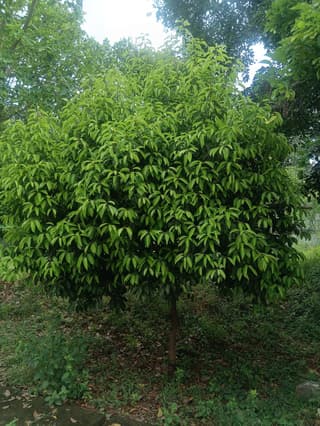
Spanish Cherry
Mimusops elengi
Mimusops elengi, commonly known as the Spanish cherry, is a medium to large evergreen tree native to the tropical forests of South and Southeast Asia. Belonging to the Sapotaceae family, it can reach heights of 15 to 30 meters, featuring a dense, rounded canopy. Its leaves are glossy, dark green, and oval-shaped, while its small, cream-colored flowers are extremely fragrant, retaining their scent even after drying. The fruits, which turn orange-red when ripe, have a sweet and edible pulp. It is widely cultivated as a shade and ornamental tree in gardens, parks, and temples due to its fragrance and religious symbolism.
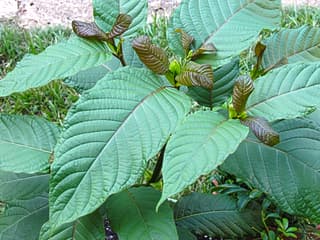
Kratom
Mitragyna speciosa
Kratom (Mitragyna speciosa) is a tropical evergreen tree in the Rubiaceae family, native to Southeast Asia (Thailand, Malaysia, Indonesia, Myanmar, Papua New Guinea). In the wild, it can reach heights of 15-25 meters, with a sturdy trunk that can exceed 90 cm in diameter. The leaves are large, glossy, and dark green, growing up to 20 cm long, while the small, yellowish-white flowers gather in spherical inflorescences resembling a bishop's miter, from which the genus name Mitragyna is derived. The leaves have been traditionally used for centuries in Southeast Asian communities, chewed fresh or dried and prepared as an infusion.
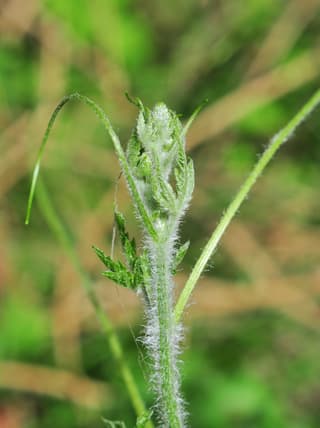
Bitter Melon
Momordica charantia
Bitter melon is a vigorous tropical vine, famous for its elongated fruits with a warty surface. When immature, the fruits are green and very bitter, turning orange and splitting open to expose seeds encased in a vibrant red aril when ripe. It is a hardy plant, but requires heat and full sun to develop fully and produce quality fruit.
Hooker's monerereba
Monerereba hookeri
Monerereba hookeri, commonly known as Hooker's Monerereba, is a tropical climbing epiphyte native to the rainforests of Central and South America. It is characterized by its glossy, deep green leaves that develop elegant fenestrations and pinnate lobes as the plant matures. It utilizes aerial roots to climb trees in its natural habitat, making it an excellent candidate for moss poles in indoor settings.
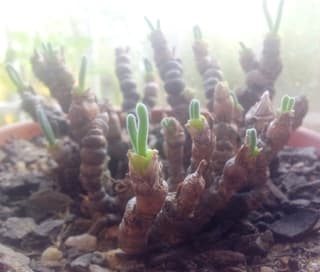
Bunny ear succulent
Monilaria moniliformis
Monilaria moniliformis is a small succulent from the Aizoaceae family, endemic to the quartz fields of the Knersvlakte in the Western Cape province of South Africa. It owes its popular name to its striking young leaves, which are short and rounded, growing in upright pairs that resemble a pair of bunny ears; over time, these are replaced by elongated cylindrical leaves. It has an inverted growth cycle: it grows actively in fall and winter and enters dormancy during the summer, when it may appear dry or lifeless. In late winter to spring, it produces small, solitary white flowers.
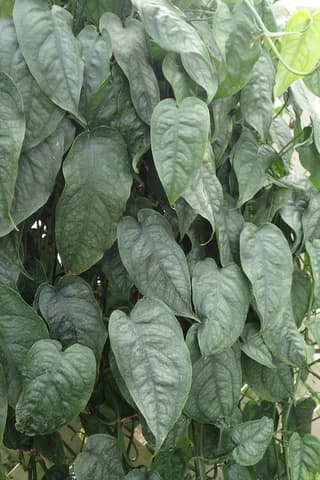
Silver Monstera
Monstera siltepecana
Monstera siltepecana, commonly called Silver Monstera, is a fast-growing climbing vine native to southern Mexico and Central America. Its juvenile leaves are small, lanceolate, and distinctively patterned with silvery-grey markings between dark green veins — a trait that earns it its popular name. As the plant matures on a support structure, adult leaves enlarge and develop characteristic Monstera fenestrations, losing the silver sheen. It belongs to the family Araceae and thrives as a low-maintenance, decorative foliage houseplant equally suited to hanging baskets (juvenile phase) or climbing a moss pole (adult phase).
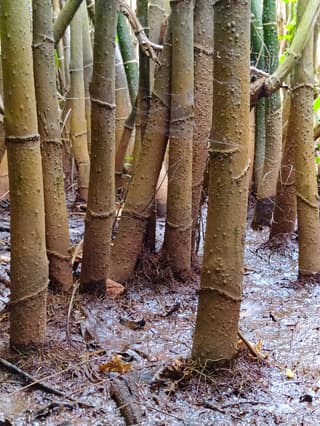
Moccmocc
Montrichardia arborescens
The moccmocc (Montrichardia arborescens) is a perennial aquatic shrub in the Araceae family, native to mangroves, flooded forests (igapós), and the banks of rivers and streams across tropical America, the Caribbean, and Mesoamerica to the Brazilian Amazon. It forms vigorous clumps with erect stems up to 3 m (occasionally 7 m), supported by prop roots and featuring spines on the internodes, along with large arrow-shaped leaves. Its spadix inflorescences, with a spathe that is light green on the outside and white on the inside, give rise to edible infrutescences, and the plant is traditionally used by riverside communities for medicinal and nutritional purposes.
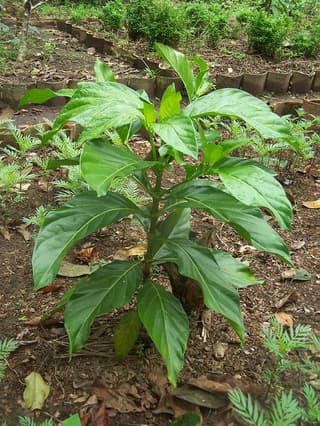
Noni
Morinda citrifolia
Morinda citrifolia, commonly known as Noni or Indian Mulberry, is a tropical evergreen tree native to Southeast Asia, Australasia, and the Pacific Islands. Growing up to 9 metres tall, it produces distinctive white flowers year-round and lumpy, pungent fruits that are central to traditional Polynesian and Ayurvedic medicine. The plant thrives in warm, humid coastal environments, tolerating poor soils, drought, and even salinity.
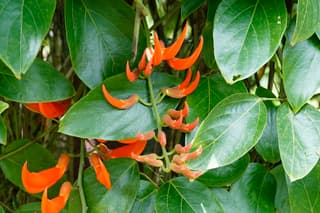
New Guinea Creeper
Mucuna bennettii
The New Guinea Creeper (Mucuna bennettii) is one of the most spectacular tropical vines in the world. Native to Papua New Guinea and surrounding islands, this vigorous liana of the Fabaceae family produces long pendulous clusters of claw-shaped, fiery scarlet flowers. A fast-growing climber capable of reaching 20 feet in length, it creates a stunning focal point on pergolas, fences, and large trees in tropical gardens.
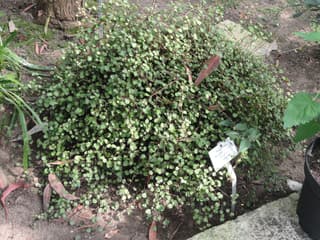
Maidenhair Vine
Muehlenbeckia complexa
Muehlenbeckia complexa, commonly known as Maidenhair Vine or Angel Vine, is a fast-growing deciduous climber native to New Zealand. It features delicate, wiry interlacing stems adorned with small, round to heart-shaped leaves that create an intricate lacy texture. Versatile and resilient, it thrives both indoors and outdoors, making it popular for hanging baskets, ground cover, topiary frames, and trellises.
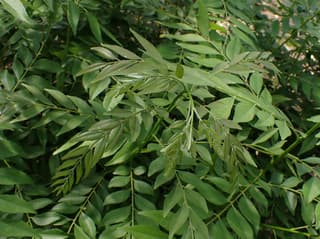
Curry tree
Murraya koenigii
Murraya koenigii, commonly known as the curry tree, is an evergreen shrub or small tree in the citrus family (Rutaceae), native to the forests of South Asia—specifically India and Sri Lanka. Its fragrant, compound, pinnate leaves are indispensable spices in South Indian and Sri Lankan cuisine: when fried fresh or dried in hot oil, they release a characteristic aroma into dishes. The plant produces small, white, fragrant flowers in spring and summer, which develop into shiny black berries—though the seeds are poisonous, only the pulp is edible. It is well-suited for container gardening, although it can grow up to 4 meters tall in open ground.
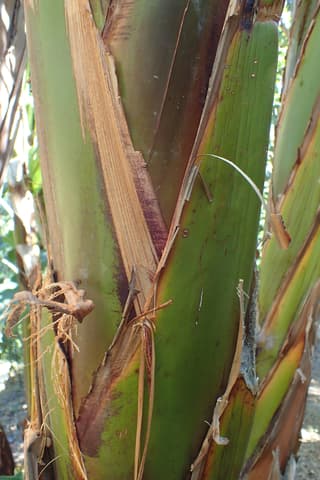
Banana
Musa × paradisiaca
Musa × paradisiaca is the cultivated banana and plantain, a hybrid of Musa acuminata and Musa balbisiana. It is a giant herbaceous plant with a trunk-like pseudostem of leaf sheaths reaching 3-7 m, huge paddle leaves, a pendent purple flower bract, and hands of seedless edible fruit.
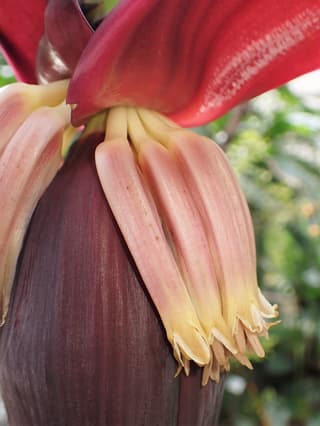
Wild Banana
Musa acuminata
Musa acuminata is the wild ancestor of most edible banana cultivars. Native to Southeast Asia, it is a fast-growing, herbaceous perennial that can reach 3–5 m tall. Its large paddle-shaped leaves and arching flower stalks make it a dramatic tropical statement plant. Unlike commercial bananas, wild specimens produce fruits filled with hard seeds.

Wild Banana
Musa balbisiana
Musa balbisiana is a large, fast-growing herbaceous perennial native to eastern South Asia, northern Southeast Asia, and southern China. Reaching up to 5.5 m tall with broad, paddle-shaped leaves, it produces cream-to-white flowers wrapped in reddish-purple bracts, followed by thick-skinned, seed-filled fruit. Along with Musa acuminata, it is one of the two wild ancestors of nearly all cultivated bananas, contributing the resilient 'B genome' that gives many banana hybrids their hardiness.
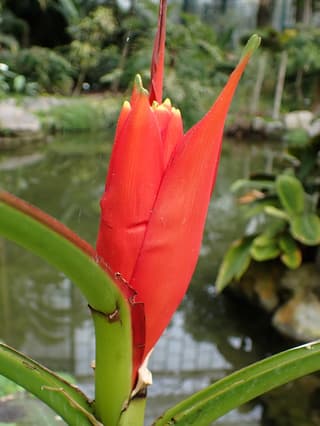
Scarlet Banana
Musa coccinea
The Scarlet Banana (Musa coccinea) is a striking tropical plant native to Southeast Asia, particularly Vietnam and southern China. Unlike fruiting bananas, it is grown primarily as an ornamental for its dramatic upright inflorescences featuring vivid scarlet bracts surrounding small yellow flowers. A fast-growing clumping plant, it produces offshoots (pups) readily and creates lush tropical displays in gardens, containers, or as indoor specimens in bright spaces.
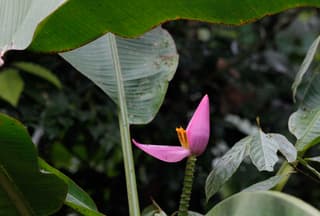
Flowering Banana
Musa ornata
Musa ornata, commonly known as the Flowering Banana or Ornamental Banana, is a small tropical banana plant native to South Asia (Bangladesh, India, Myanmar). It is prized not for its fruit but for its stunning inflorescence of pink to lavender bracts with yellow-orange tubular flowers. Unlike edible banana varieties, its small fruits are inedible, but the plant makes a spectacular ornamental specimen in tropical gardens and large containers.
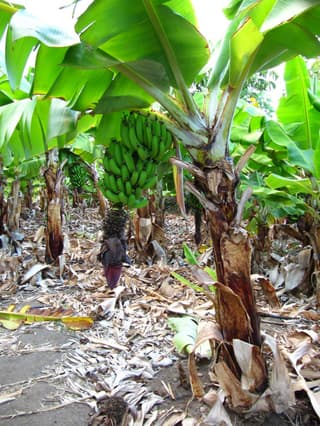
Banana Plant
Musa sp
The Banana Plant (Musa sp) is a tropical herbaceous perennial native to Southeast Asia, widely cultivated both for its edible fruit and ornamental value. Its enormous paddle-shaped leaves can reach up to 2 meters long, creating a lush tropical display. Technically not a tree — the pseudostem is formed by overlapping leaf sheaths. The plant grows rapidly and produces yellow or colorful flowers followed by fruit clusters.
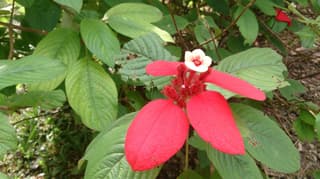
Ashanti Blood
Mussaenda erythrophylla
Mussaenda erythrophylla, commonly known as Ashanti Blood or Red Flag Bush, is a tropical shrub native to West Africa. It is celebrated for its striking deep red modified leaves (bracts) that surround tiny yellow flowers, creating a dramatic and exotic appearance. This fast-growing ornamental shrub thrives in humid, tropical conditions and is a popular choice for tropical garden borders, hedges, and specimen planting.
Garlic Parachute
Mycetinis
Fungi belonging to the genus Mycetinis are known for their characteristic odor reminiscent of garlic. These small mushrooms often live on decaying wood or leaf litter in forests. Their caps are thin, and their stems are tough and dark-colored. The most well-known species is the Garlic Marasmius, which is a valuable culinary mushroom used as a spice.
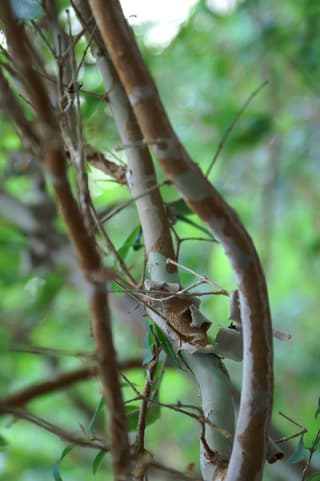
jaboticaba
Myrciaria cauliflora
The jaboticaba is a tropical fruit tree native to the Atlantic Forests of Brazil, particularly found in Rio de Janeiro, Minas Gerais, Goiás, and São Paulo states. Belonging to the Myrtaceae family, it is a medium-sized tree reaching up to 15 meters in height, characterized by a smooth, attractive reddish-brown trunk that peels to reveal creamy to gray underbark. The leaves are simple, opposite, and lanceolate, creating a dense, well-structured canopy. The most distinctive feature is its remarkable cauliflory: delicate white, fluffy flowers emerge directly from the trunk and major branches, creating the appearance of a 'snow-covered tree' during bloom. The fruits are small, rounded berries with dark purple skin and soft, white, sweet pulp, uniquely arranged on the trunk and branches rather than at branch tips. The tree is evergreen and highly productive, capable of yielding six to eight crops per year under ideal conditions.
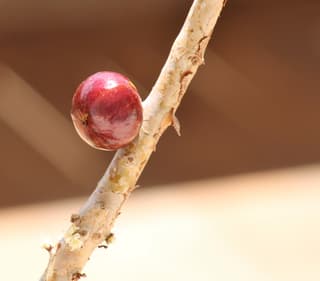
Brazilian Grapetree
Myrciaria jaboticaba
The Brazilian Grapetree (Myrciaria jaboticaba) is a fruit-bearing tree native to Brazil's Atlantic Forest and Cerrado, renowned for producing its dark purple fruits directly on the trunk and main branches — a phenomenon known as cauliflory. It is one of the most cultivated jaboticaba varieties in Brazil, prized for its sweet, thin-skinned fruits with juicy white pulp.
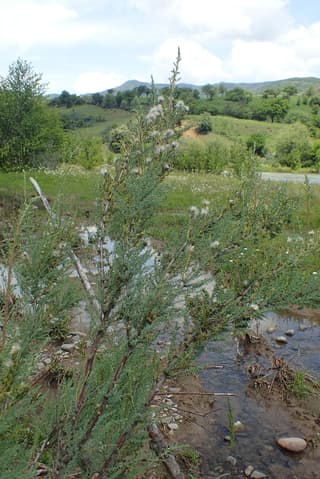
German tamarisk
Myricaria germanica
The German tamarisk (Myricaria germanica) is the only species of the Tamaricaceae family native to Central Europe. It is a deciduous shrub growing 60–250 cm tall, featuring rod-like, upright branches and tiny, scale-like leaves. It blooms between June and August, producing small flowers ranging from pale pink to white in dense racemes. A typical pioneer species, it colonizes gravelly and sandy banks of mountain and subalpine rivers, where periodic flooding and drought are common. In Hungary, it is a strictly protected and endangered species, now occurring only in a few, mostly secondary (man-made) habitats.
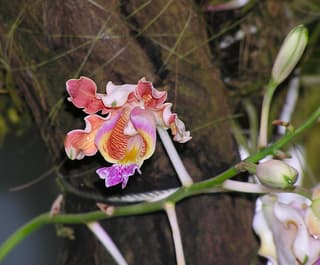
Cow Horn Orchid
Myrmecophila tibicinis
Myrmecophila tibicinis is a large epiphytic orchid native to seasonally dry tropical forests from Mexico through northern South America. Its hollow, cylindrical pseudobulbs — up to 45 cm tall — are colonized by ants in the wild in a mutualistic relationship that provides extra nutrients to the plant. Flowers are spectacular: magenta sepals and petals with bronze-orange tips, a large white lip with intense magenta veining, and a bright yellow central callus. The flower spike can exceed 1.5 m and bear up to 15 blooms.

Paperwhite Narcissus
Narcissus tazetta
Narcissus tazetta, commonly known as the paperwhite narcissus or bunch-flowered daffodil, is a bulbous perennial native to the Mediterranean region and parts of Central Asia. Unlike single-flowered daffodils, each stem carries a cluster of 4 to 8 small, intensely fragrant flowers with white petals and a shallow yellow or white corona. Growing 45-75cm tall, it is prized both as a garden bulb for mild-winter climates and as an indoor bulb that can be forced into bloom for the winter holidays with no soil at all, simply set in water and pebbles.
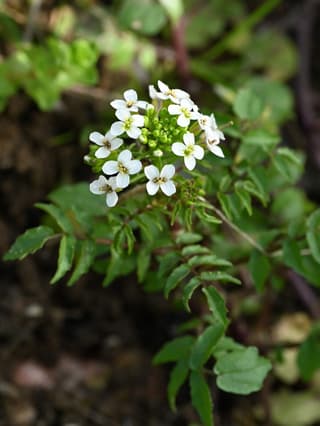
Watercress
Nasturtium officinale
Watercress (Nasturtium officinale) is a perennial aquatic vegetable from the Brassicaceae family, native to Europe and Central Asia, where it grows spontaneously along the banks of clean, flowing streams and springs. Its hollow, floating stems easily root at the nodes in contact with waterlogged soil, forming dense clumps of dark green, rounded leaves with a pungent and slightly bitter taste. It is one of the oldest leafy vegetables cultivated by humans: it was already recommended by Hippocrates as an expectorant in Ancient Greece, and Greek soldiers consumed the plant believing it strengthened the body and mind. Today it is recognized as one of the most nutritious vegetables in the world, rich in vitamins A, C, and B complex, as well as iron, folic acid, and calcium.
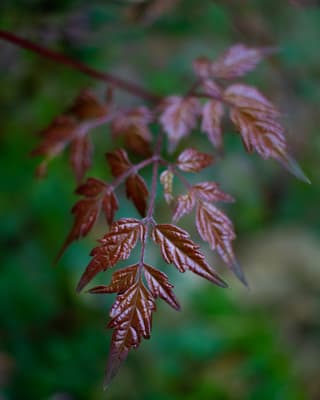
Peppervine
Nekemias arborea
Peppervine (Nekemias arborea, formerly Ampelopsis arborea) is a vigorous deciduous to semi-evergreen woody vine in the grape family, native to the southeastern and south-central United States. It climbs by tendrils onto trees, shrubs, fences, and other structures, reaching 20 to 35 feet in length, or sprawls as an informal ground cover where nothing supports it. Its bipinnately compound leaves emerge purple-red and mature to glossy dark green before turning yellow or red in fall. Small greenish-white flower clusters appear in late spring to summer and give way to showy berries that shift from green to red to shiny blue-black, which birds and small mammals readily eat. Because it spreads rapidly by seed and root suckers, it is often regarded as weedy in cultivated settings.
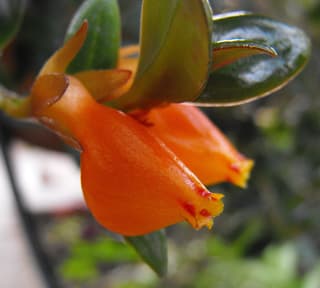
Goldfish Plant
Nematanthus wettsteinii
The Goldfish Plant (Nematanthus wettsteinii) is a trailing epiphytic plant native to the Brazilian Atlantic Forest, where it naturally grows on tree trunks. It is prized for its small, glossy, fleshy leaves and its plump, tubular orange flowers that resemble tiny goldfish with their mouths open. It is ideal for hanging baskets, where its cascading stems can be shown off.

Tropical Pitcher Plant (genus)
Nepenthes
Nepenthes is a genus of tropical carnivorous climbing plants native primarily to Southeast Asia, with over 170 described species. They are renowned for their hanging pitcher-shaped traps (ascidia) that dangle from leaf tendrils, capable of capturing and digesting insects and small animals. Species range from small epiphytes to large canopy climbers.
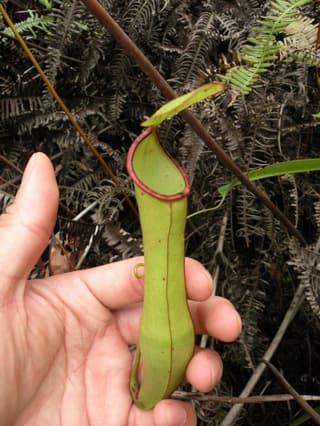
Neglecta Pitcher Plant
Nepenthes × neglecta
Nepenthes × neglecta is a naturally occurring tropical pitcher plant hybrid between N. gracilis and N. mirabilis, native to the lowland rainforests of Borneo, Peninsular Malaysia, Sumatra, and Thailand below 1000 m elevation. This scrambling, climbing subshrub can reach up to 5 m in length, producing funnel-shaped pitchers up to 15 cm tall that lure and digest insects to supplement nutrient-poor soils. Like most Nepenthes hybrids, it displays strong hybrid vigor, making it a hardier and more forgiving grower than many pure species.

Winged Pitcher Plant
Nepenthes alata
Nepenthes alata, commonly known as the winged pitcher plant, is a tropical carnivorous vine native to the Philippines, where it grows across a wide altitudinal range from lowland forests to mountain slopes. Its distinctive winged leaf petioles give the species its name, and its curling tendrils produce colorful pitcher-shaped traps that lure, capture, and digest insects to supplement the nutrient-poor soils it grows in. Prized by houseplant collectors for its striking pitchers and relatively forgiving nature compared to other Nepenthes, it is often recommended as a beginner-friendly carnivorous plant.
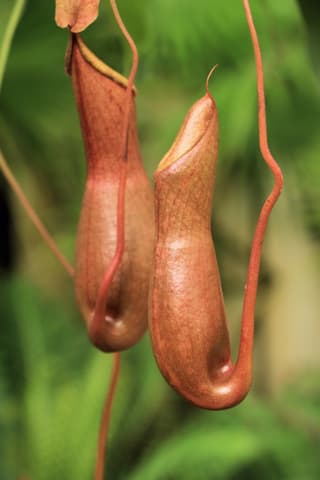
Tropical Pitcher Plant
Nepenthes spp
Nepenthes, commonly known as tropical pitcher plants or monkey cups, are fascinating carnivorous plants native to Southeast Asia, particularly Borneo, Sumatra, and the Philippines. They produce iconic pitcher-shaped traps filled with digestive fluid that capture and dissolve insects and small animals to obtain nutrients from their nutrient-poor, acidic native soils.
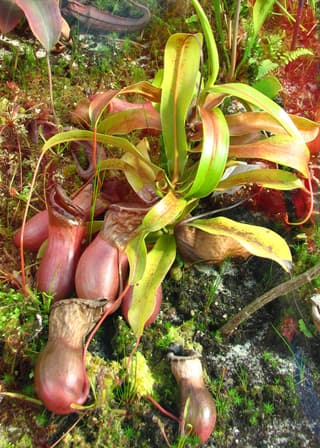
Ventricosa Pitcher Plant
Nepenthes ventricosa
Nepenthes ventricosa is a tropical pitcher plant native to the mountain forests of Luzon in the Philippines, where it grows as a climbing vine on rocky slopes and forest edges. It produces distinctive funnel-shaped pitchers with a shield-like, upturned lid used to lure and trap insects, which the plant digests to supplement the scarce nutrients of its native volcanic soil. It is one of the most beginner-friendly carnivorous plants thanks to its tolerance of a wide range of humidity levels.
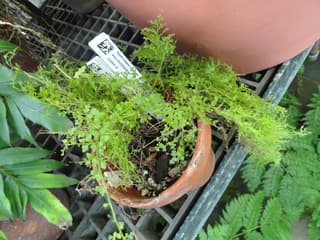
Boston Fern
Nephrolepis exaltata
The Boston Fern is a lush, elegant houseplant known for its gracefully arching fronds and excellent air-purifying qualities. Native to tropical regions of the Americas including Florida, Central America, South America, and the West Indies, this evergreen fern has been a popular indoor plant since Victorian times. Its feathery, bright green fronds can grow up to 90 cm long, creating a dramatic cascading effect perfect for hanging baskets or elevated displays.
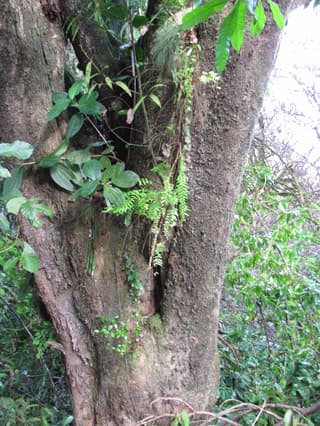
Fishtail Fern
Nephrolepis falcata
Nephrolepis falcata, commonly known as the fishtail fern, is an epiphytic fern native to Southeast Asia and the Pacific Islands, belonging to the family Nephrolepidaceae. Its long, arching fronds have forked, tail-like tips that resemble a fish tail, giving the plant its common name. A moderate-growing perennial, it is popular in hanging baskets and shaded gardens for its lush, textured foliage.
What are Medium Plants?
Medium Plants require a bit more attention and basic gardening knowledge. These plants thrive with regular care and some cultivation experience. Ideal for those who already master the basics.
Tips for Growing Medium Plants
medium plants need a balance between attention and freedom. Keep a regular care routine, watch leaves to identify problems early, and adjust watering by season.