Complete Plant Guide
Explore plants by difficulty, season and more. Find the perfect plant for you.
Difficulty
Categories
Plants by City
🗺️ Plants by City3478 plants found
Showing 1261-1296 of 3478
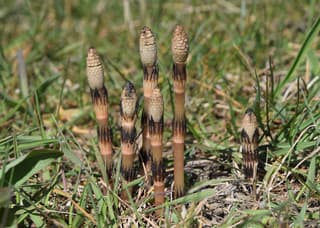
Field Horsetail
Equisetum arvense
Field horsetail (Equisetum arvense) is an ancient, non-flowering perennial in the Equisetaceae family, part of a plant lineage that predates the dinosaurs. It produces two types of stems: pale, unbranched fertile stems that appear in early spring and bear spore cones, followed by bushy green sterile stems with whorled branches that persist through summer. Rich in silica, its hollow, jointed stems were historically used to scour pots and polish metal. A vigorous, deep-rooted rhizomatous spreader, it is considered a persistent weed in gardens and farmland but is also valued as a traditional medicinal herb.
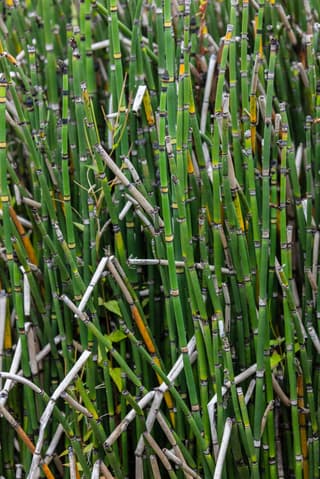
Rough Horsetail
Equisetum hyemale
Equisetum hyemale, commonly known as rough horsetail or scouring rush, is an evergreen, non-flowering perennial in the ancient Equisetaceae family. Its hollow, jointed, bamboo-like stems grow upright to 1-1.8 m and stay a striking dark green year-round, ringed with black-and-tan banded nodes. As a spore-bearing pteridophyte, it never produces flowers or seeds; instead, small cone-like strobili form at the stem tips and release spores. The species spreads vigorously through branching underground rhizomes, forming dense colonies that make it an excellent architectural accent for wet, boggy sites or contained water features, though its aggressive spread means it should almost always be planted in a pot or behind a root barrier.
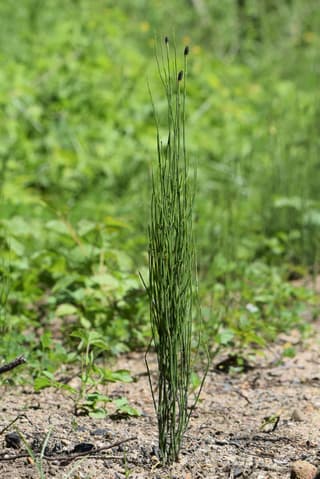
Marsh Horsetail
Equisetum palustre
Equisetum palustre, commonly known as Marsh Horsetail, is a primitive vascular plant from the ancient Equisetaceae family — a lineage dating back over 300 million years. Native to cool, wet regions of Eurasia and North America, it thrives in marshes, bogs, stream banks, and other waterlogged habitats. Its jointed, reed-like stems rise 10–60 cm and bear whorls of slender branches. WARNING: All parts are toxic to livestock, particularly horses and cattle, due to thiaminase and the alkaloid palustrine which destroy vitamin B1.
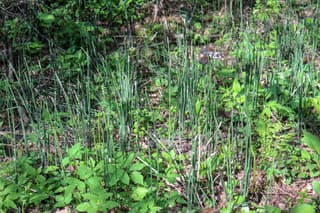
Horsetail
Equisetum spp
Horsetail (Equisetum spp) is one of the most ancient plant genera on Earth, with fossil records dating back over 300 million years. A primitive vascular plant that reproduces via spores rather than seeds, it belongs to the family Equisetaceae. Its jointed, hollow, green stems — rich in silica — are its most distinctive feature. Cosmopolitan in distribution, it naturally colonizes moist soils, riverbanks, and wetlands on nearly every continent. Widely used in traditional medicine and increasingly popular in contemporary ornamental gardening.
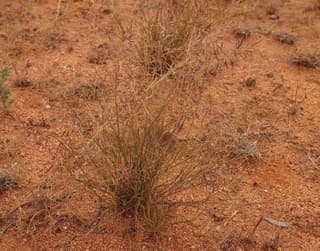
Little lovegrass
Eragrostis minor
Eragrostis minor, commonly known as little lovegrass, is an annual C4 metabolism grass species native to Europe that has since become a widespread weed globally. It is frequently found on disturbed, sandy, or gravelly soils, roadsides, railway embankments, and fallow lands. The plant grows 15-60 cm tall, forming loose tufts or small clumps. Its panicle inflorescence is 5-20 cm long, featuring flattened spikelets ranging from grayish-green to purplish-red, which fade to straw-yellow upon maturity. It blooms from mid-summer to early autumn, with seeds ripening from September through late November.
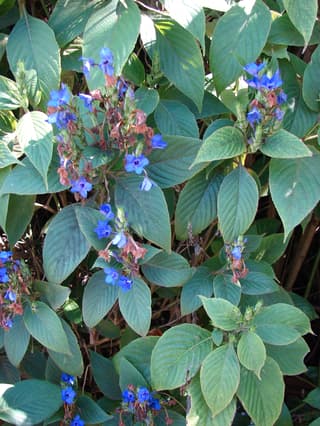
Blue Sage
Eranthemum pulchellum
Blue Sage (Eranthemum pulchellum) is a tropical evergreen shrub native to India, the Himalayas, and western China, belonging to the family Acanthaceae. It is prized for its stunning deep blue flowers that bloom in winter and spring, a rare trait among flowering shrubs. The plant features dense, oval, dark green leaves with prominent veins and lightly serrated margins. Blue Sage grows 0.5 to 1.5 meters tall and thrives in warm, humid tropical and subtropical climates.
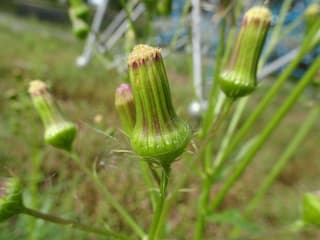
American Burnweed
Erechtites hieraciifolius
Erechtites hieraciifolius, popularly known as American burnweed or fireweed, is an annual herbaceous plant native to the Americas. It is a pioneer species, often found in disturbed soil or after fires, which earned it its common name. It features an erect stem, serrated leaves, and flower heads that produce seeds with white hairs, facilitating wind dispersal. It is widely recognized in Brazil as a NUFP (Non-Conventional Food Plant).
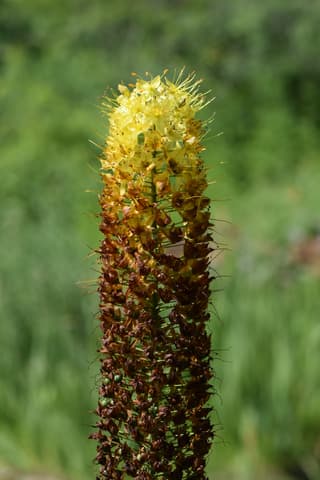
Foxtail Lily
Eremurus stenophyllus
Eremurus stenophyllus, commonly known as the Foxtail Lily or Desert Candle, is a tuberous-rooted perennial native to the steppes and semi-desert regions of Central Asia. It forms a rosette of narrow, strap-like leaves from which a tall, erect flower spike emerges in summer, reaching heights of 4 to 5 feet. This spike is densely packed with small, star-shaped yellow flowers that turn brownish at the base as they age. A recipient of the RHS Award of Garden Merit, it is highly prized for its spectacular architectural presence in the garden.
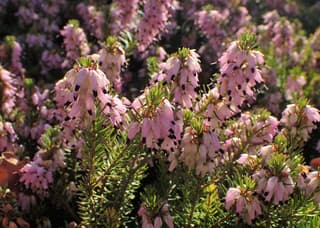
Winter Heath
Erica carnea
Erica carnea is a low, mat-forming evergreen shrub native to the mountains of central, eastern and southern Europe. Unlike most heaths, it tolerates neutral to slightly alkaline soil, making it one of the few ericas suited to chalky gardens. Its needle-like foliage stays green year-round and it produces masses of small urn-shaped flowers in shades of pink, magenta or white from December through April, providing color in the garden during the coldest months.

Cape Heath
Erica gracilis
Erica gracilis, commonly known as Cape heath, is a small evergreen shrub native to the Cape region of South Africa, belonging to the Ericaceae family. It reaches a maximum height of 40-45 cm with a compact canopy of about 35 cm, formed by dark, needle-like leaves. From October to January (with possible reblooming until March), it produces dense clusters of small bell-shaped flowers at the tips of the branches in shades of pink, white, or magenta, featuring a light honey scent. It is a calcifuge plant: it rejects lime-rich soils and requires an acidic substrate.
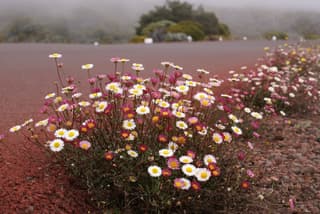
Fleabane
Erigeron
Erigeron is a large genus of flowering plants in the family Asteraceae, commonly known as fleabane. The most popular ornamental species include E. karvinskianus (Mexican fleabane) and E. speciosus (showy fleabane), prized for their profuse daisy-like flowers in white, pink, and purple that bloom for months. These hardy perennials are excellent for rock gardens, walls, borders, and containers.
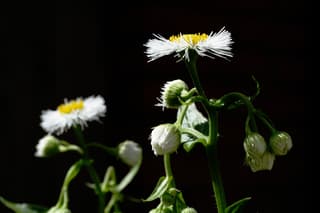
Eastern Daisy Fleabane
Erigeron annuus
Erigeron annuus, commonly known as Eastern Daisy Fleabane or Annual Fleabane, is a wildflower native to North America and widely naturalized across Europe and Asia. A member of the Asteraceae family, it produces abundant small daisy-like flowers with white to pale-lavender ray florets surrounding a bright yellow disk center. It thrives in disturbed soils, meadows, roadsides, and open woodland edges. Growing up to 150 cm tall, it is an fast-growing annual or biennial that freely self-seeds and naturalizes readily. Historically valued in herbal medicine and as a natural insect repellent, it is also a valuable nectar source for pollinators.
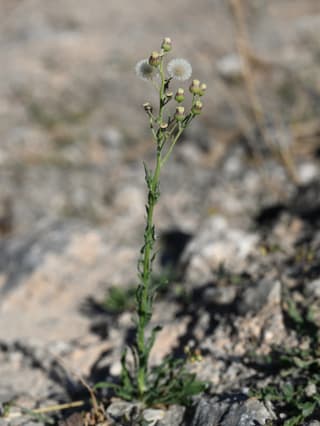
Flax-leaf fleabane
Erigeron bonariensis
Erigeron bonariensis, commonly known as flax-leaf fleabane, is an annual herbaceous plant native to South America. It is widely recognized for its hardiness and ability to colonize disturbed areas, being considered one of the main invasive weeds in crops due to its herbicide resistance. It has narrow, hairy leaves and small inflorescences that produce thousands of wind-dispersed seeds.
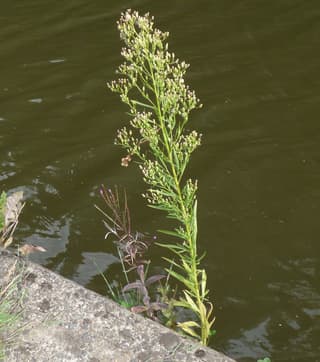
Horseweed
Erigeron canadensis
Erigeron canadensis, commonly known as horseweed or Canadian fleabane, is an annual flowering plant in the Asteraceae family, native to most of North America and Central America. It has become one of the most widely distributed weeds worldwide, naturalizing across Eurasia, Australia, and beyond. The plant features erect stems up to 1.5 m tall, narrow leaves, and terminal panicles of small white and yellow flower heads. Historically used by Native American peoples for medicinal purposes, horseweed is also notable as the first weed species to develop resistance to the herbicide glyphosate.
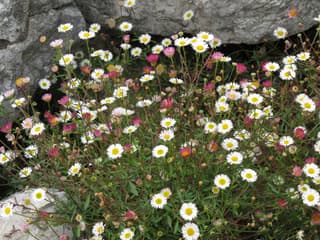
Mexican fleabane
Erigeron karvinskianus
Erigeron karvinskianus, known as Mexican fleabane, is a prolific, low-growing perennial that produces a carpet of small, daisy-like flowers. The blooms are unique for their color-changing properties, opening white and maturing to pink and eventually a soft purple. It is highly valued for its ability to colonize stone walls, steps, and paving crevices, creating a charming, naturalized look in rock gardens and cottage-style landscapes.
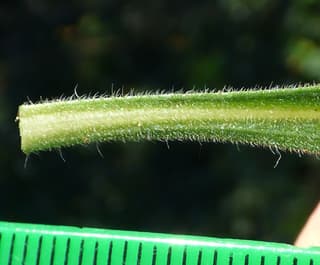
Guernsey Fleabane
Erigeron sumatrensis
Guernsey Fleabane (Erigeron sumatrensis) is a fast-growing annual herb native to South America, now widely naturalized across tropical, subtropical, and temperate regions worldwide. A member of the Asteraceae family, it produces masses of tiny white-cream flower heads in branching sprays and can reach heights of up to 2 metres. Despite its name referencing Sumatra, the species originated in the Americas and was first described based on Sumatran specimens. It thrives in disturbed habitats — roadsides, waste grounds, urban gaps — and is regarded as an invasive weed in many countries. Its essential oils carry antimicrobial properties of pharmacological interest.
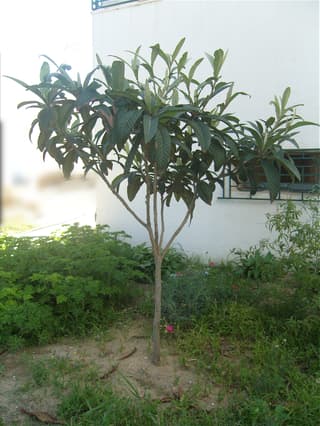
Loquat
Eriobotrya japonica
Eriobotrya japonica, commonly known as the loquat, is a small to medium evergreen fruit tree in the rose family (Rosaceae), native to the cool highlands of south-central China and cultivated for centuries in Japan, where it is called biwa. It forms a dense, rounded canopy of large, leathery, dark green leaves and produces fragrant white flower clusters in fall and winter, followed by clusters of yellow-orange, pear-shaped fruit that ripen in spring. Loquat is prized both as an ornamental landscape or specimen tree and for its sweet, tangy fruit, which is eaten fresh or made into jams, syrups, and desserts.
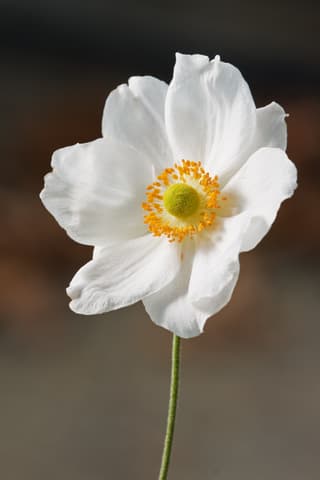
Japanese Anemone
Eriocapitella hupehensis
The Japanese Anemone (Eriocapitella hupehensis) is a perennial plant from the buttercup family (Ranunculaceae), originally from the mountainous regions of Central China. It forms upright, branched flower stems 80 to 120 cm tall and delights from July to October with delicate, cup-shaped flowers in shades of pink, white, and purple. Its dark green, three-lobed basal leaves form dense clumps. As one of the few perennials that bloom profusely in late summer and autumn, it is an indispensable eye-catcher in a naturalistic garden.

Chilean Cacti
Eriosyce
Eriosyce is a genus of slow-growing cacti native to the west coast of Chile and parts of Peru, where they are found from sea level up to altitudes of 4,000 meters. These cacti typically have a spherical to cylindrical shape with dense spines ranging in color from white to yellow, red, and black. Some members of the genus have woolly areoles. Eriosyce are popular collector's cacti due to their decorative spines and striking flowers that bloom at the top of the stem.
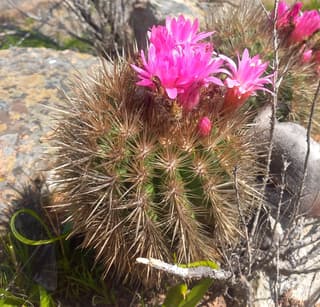
Chilean Pink Cactus
Eriosyce subgibbosa
Eriosyce subgibbosa is a globular-to-columnar cactus endemic to the coastal strip of central Chile, ranging from the Biobío region to Atacama. It grows on rocky outcrops near the sea, forming a solitary stem up to 90 cm long and 25 cm wide that tends to recline with age. Flowers are pink to magenta with a paler throat and appear in late winter through spring.
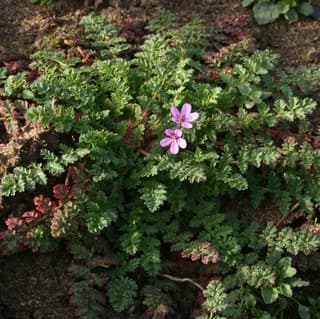
Redstem Filaree
Erodium cicutarium
Redstem Filaree is an annual or biennial herb in the geranium family (Geraniaceae), native to Eurasia and North Africa and now naturalized worldwide. From a flat basal rosette of finely divided, fern-like leaves, it grows prostrate to ascending stems 10 to 40 cm in length. From April to September, small pink to violet flowers appear, followed by the namesake beak-like seed pods. These pods spiral when wet, actively drilling the seeds into the soil. As a hardy pioneer plant, it prefers dry, sandy, and stony locations such as roadsides, fallow fields, and vineyards.
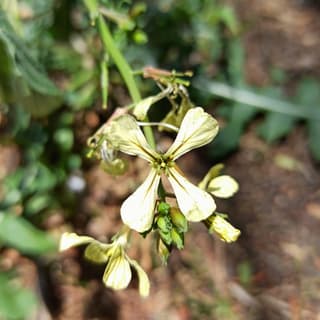
Arugula
Eruca sativa
Arugula (Eruca sativa) is an annual leafy vegetable from the Brassicaceae family, native to the Mediterranean region to Western Asia. Its green, lobed leaves with a pungent and slightly bitter taste are highly valued in cuisine, especially in salads. It is a fast-growing plant, reaching maturity in 40 to 50 days, and produces small white or creamy-yellow flowers with purplish veins.

Arugula
Eruca vesicaria
Arugula (Eruca vesicaria) is an annual herbaceous plant in the mustard family (Brassicaceae), native to the Mediterranean region and Western Asia, known for its characteristic peppery and nutty flavor. The plant's pinnate, deeply lobed leaves quickly form a dense rosette and are valued in the kitchen both fresh and cooked. During flowering, the stem grows tall and bears white to creamy flowers with characteristic violet veins on the petals. Arugula is a fast-growing crop suitable for successive sowing throughout the growing season.
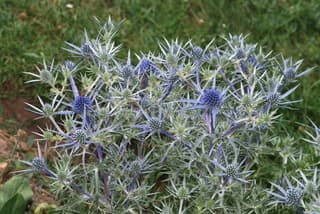
Sea Holly
Eryngium
Eryngium, commonly known as sea holly, is a genus of striking perennials in the carrot family prized for their spiny, silvery-blue bracts and thistle-like flower heads. Native to coastal cliffs, dry meadows and rocky slopes across Europe, the Americas and parts of Asia, sea hollies combine architectural texture with remarkable toughness, thriving in poor soil and salty coastal air where few other perennials survive.
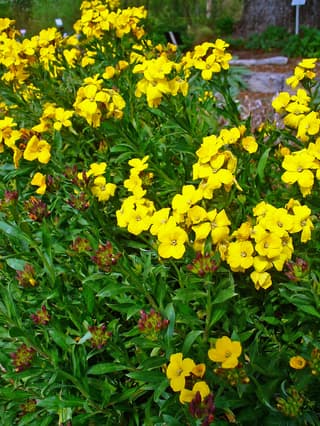
Wallflower
Erysimum
Erysimum, commonly known as Wallflower, is a diverse genus of over 150 species in the family Brassicaceae. These cheerful, fragrant flowering plants are popular ornamentals grown in cottage gardens, borders, and rock gardens. They produce clusters of four-petaled flowers in a stunning range of colors including yellow, orange, red, purple, pink, and mauve. Notable cultivars include Erysimum cheiri and the beloved perennial 'Bowles's Mauve', which can bloom almost year-round.
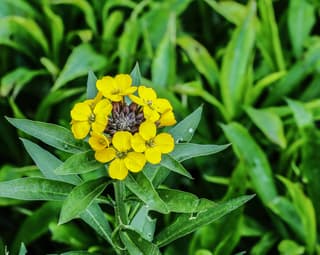
Wallflower
Erysimum × cheiri
Erysimum × cheiri, the common wallflower, is a fragrant-flowering subshrub in the family Brassicaceae, native to the Aegean region of Greece and widely naturalized across Europe. Typically grown as a biennial, it forms compact rosettes of narrow, lance-shaped, grey-green leaves in its first year before producing abundant clusters of four-petalled flowers in shades of yellow, orange, red, burgundy, and purple from spring into early summer. Flowers emit a rich, sweet, spicy fragrance that intensifies in the evening, making the wallflower a long-favoured cottage garden classic. The plant thrives in well-drained, slightly alkaline soils and tolerates dry, rocky conditions—historically establishing itself on old walls and masonry, from which its common name derives. All parts contain cheiranthin, a cardiac glycoside, and are toxic if ingested in quantity.
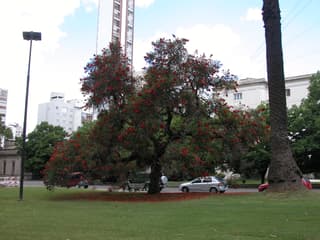
Cockspur Coral Tree
Erythrina crista-galli
The Cockspur Coral Tree (Erythrina crista-galli) is a deciduous flowering tree native to South America — Brazil, Argentina, and Uruguay. Belonging to the Fabaceae family, it produces spectacular crimson-red, velvety flowers in drooping clusters up to 60 cm long during spring and summer. It is the national tree of Argentina and its flower is the national flower of both Argentina and Uruguay.
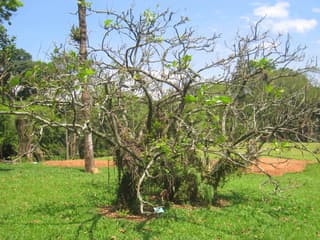
Brazilian Coral Tree
Erythrina speciosa
The Brazilian Coral Tree (Erythrina speciosa) is a native tree from Brazil's Atlantic Forest, renowned for its spectacular scarlet flowering that occurs during winter while the tree is leafless. A highly ornamental species widely used in urban landscaping and gardens, it attracts hummingbirds with its brilliant tubular flowers.
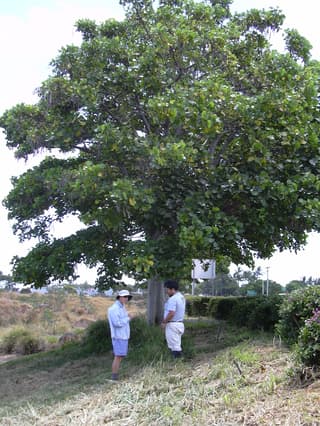
Indian Coral Tree
Erythrina variegata
Erythrina variegata, commonly known as the Indian Coral Tree or Tiger's Claw, is a large tropical tree in the Fabaceae family. Native to tropical Asia and the Pacific, it is celebrated for its stunning scarlet-red flower clusters that emerge before or alongside new leaves. A fast grower capable of reaching 27 meters in height, it is widely planted as an ornamental shade tree, living fence, and in agroforestry systems. The tree also holds significant importance in traditional medicine across South and Southeast Asian cultures.
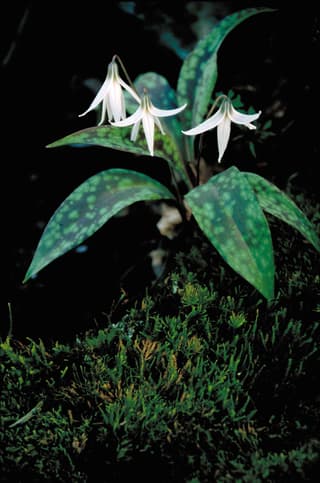
Trout Lily
Erythronium
Erythronium, commonly known as trout lily, fawn lily, or dog's-tooth violet, is a genus of roughly 30 spring-blooming bulbous perennials native to woodlands across North America, Europe, and Asia. Named for the mottled, trout-skin-like pattern on its paired leaves, this diminutive woodland ephemeral produces nodding, lily-shaped flowers in shades of yellow, white, pink, or lavender-purple that emerge before deciduous tree canopies leaf out in spring. After a brief flowering period of about two weeks, the foliage yellows and dies back, and the plant spends the rest of the year dormant underground as a small, tooth-shaped corm, the origin of the common name dog's-tooth violet. Slow to establish from seed (often taking 4-7 years to first flower) but long-lived and naturalizing readily by offsets once settled, Erythronium is prized by woodland and native-plant gardeners for its fleeting but exquisite early-spring display.

Coca plant
Erythroxylum coca
Erythroxylum coca, known as coca, is an evergreen shrub of the Erythroxylaceae family native to the Andean slopes of South America (Peru, Bolivia, Ecuador, and Colombia). It reaches between 2 and 3 meters in height, with straight branches and oval, thin, bright green leaves that feature two characteristic longitudinal lines on both sides of the central vein. It produces small yellowish-white flowers clustered in the leaf axils, which mature into red drupes. It grows naturally in subtropical mountain climates, between 500 and 2000 meters of altitude, with high humidity and abundant rainfall. Its leaves contain alkaloids and have held profound cultural and medicinal value in Andean cultures for millennia.
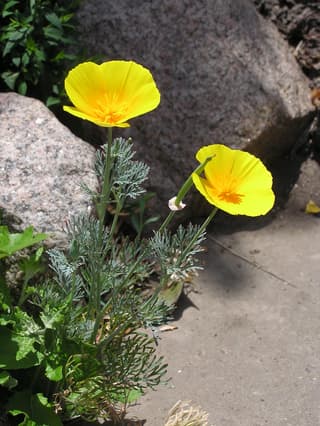
California Poppy
Eschscholzia californica
Eschscholzia californica, commonly known as the California poppy, is an annual or perennial wildflower native to the western United States and Mexico. It produces vibrant blooms in shades of orange, yellow, red, and white from spring through summer. As the official state flower of California, it is celebrated for its drought tolerance, low maintenance needs, and stunning visual impact in gardens and naturalized landscapes.
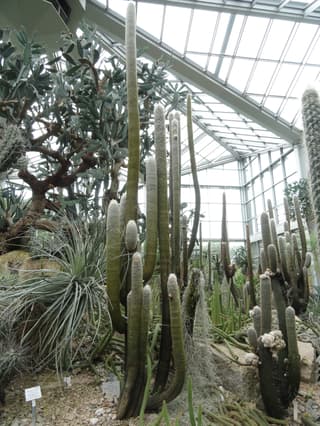
Old Man Cactus
Espostoa lanata
Espostoa lanata, commonly known as the Old Man Cactus, is a columnar cactus native to the Andean slopes from southern Ecuador to northern Peru. Its stem is densely covered in woolly white hairs that hide sharp spines, giving it a fuzzy and ornamental appearance. In its natural habitat, it can exceed 7 meters in height, but when grown in pots, it grows much more compactly and slowly.

White Head Cactus
Espostoopsis dybowskii
Espostoopsis dybowskii is a rare, columnar cactus species native exclusively to the eastern and northern parts of Bahia state in Brazil, within the caatinga habitat at altitudes of 300–750 meters. The plant grows on granite and gneiss rocks, as well as quartzitic outcrops, where it occasionally forms dense, single-species stands. Its erect, unbranched, cylindrical stems can reach heights of 2–4 meters with a diameter of approximately 8 cm and 20–28 low ribs. The stems are covered in dense, white hair that almost completely hides the surface, giving rise to the Portuguese folk names "cabeça-branca" (white head) and "homem-velho" (old man). The spines consist of 2–3 yellowish or brownish, needle-like central spines 2–3 cm long, while the radial spines are fine and short, hidden within the wool. Its nocturnal, approximately 4 cm long, white, bell-shaped flowers emerge from a lateral cephalium (a white woolly flowering area), typically in summer. The species is endemic to Brazil and is the only known species in the monotypic genus Espostoopsis within the Cactaceae family.
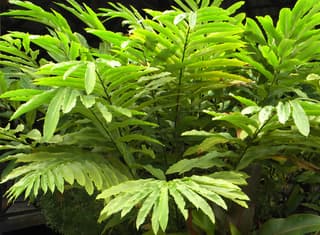
Torch Ginger
Etlingera elatior
Torch Ginger (Etlingera elatior) is a majestic tropical plant in the Zingiberaceae family, native to Southeast Asia, particularly Indonesia and Malaysia. Renowned for its spectacular torch-shaped inflorescences in shades of red, pink, and white, it can reach up to 20 feet (6 m) in height. It is highly valued as an ornamental plant, in traditional Southeast Asian cuisines, and in folk medicine.
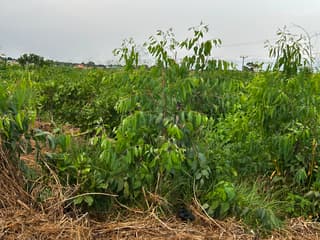
Eucalyptus
Eucalyptus
Eucalyptus is a large genus of fast-growing flowering trees and shrubs native primarily to Australia, comprising over 700 recognized species. Iconic for their aromatic silvery-blue foliage, peeling decorative bark, and clusters of distinctive brush-like flowers, eucalyptus trees are among the most widely planted trees in the world. While they grow into large trees outdoors, certain dwarf and compact varieties can be grown as potted ornamental plants.
Find the Perfect Plant
Our plant guide helps you find ideal species for your experience level and time of year.
Browse by Difficulty, Season & More
Use the filters below to narrow this catalog by care difficulty, season, environment, or search directly by name. Each filter leads to a focused list tailored to your specific growing conditions.