2320 Easy Easy Care | 2026 Guide - Page 54
Find 2320 easy easy care. Complete guide for your garden.
2320 Easy Care with easy level
Showing 1909-1944 of 2320
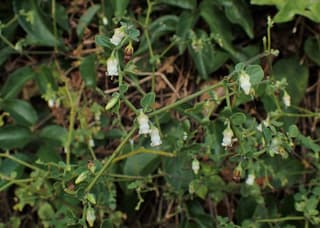
Lily of the Valley Vine
Salpichroa origanifolia
Salpichroa origanifolia, popularly known as 'Lily of the Valley Vine' or 'Cock's Eggs', is a perennial, rhizomatous herb belonging to the Solanaceae family, native to South America—Argentina, Uruguay, Brazil, Bolivia, and Peru. Its climbing and highly branched stems can reach up to 3 meters (10 feet) in length; its leaves are elliptical or oval, and its flowers are small, bell-shaped, and white or greenish-white. In late summer, it produces oval berries, 10–15 mm (0.4–0.6 inches) in size, that ripen from green to white or pale yellow, with a sweet and edible taste. The plant has naturalized in regions of Europe, California, and Tasmania, where it is considered invasive.
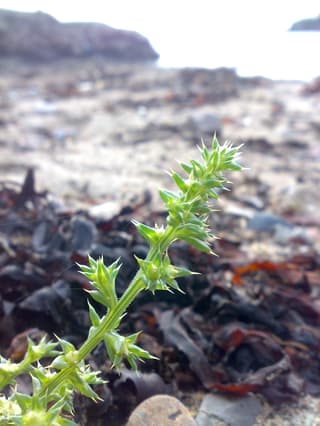
Prickly Russian thistle
Salsola kali
Salsola kali, commonly known as prickly Russian thistle, saltwort, or tumbleweed, is an annual halophytic plant in the Amaranthaceae family. It grows in a globose and spiny form on sandy beaches, dunes, and saline soils in coastal areas of Europe, North Africa, and Asia, and has become naturalized as an invasive weed in North America. Upon drying in the fall, the plant detaches from its root and rolls with the wind (the 'tumbleweed' effect), thereby dispersing its seeds.
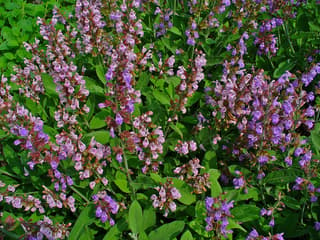
Sage
Salvia
Salvia is one of the largest genera in the mint family Lamiaceae, comprising over 900 species native to regions spanning the Mediterranean, the Americas, and Asia. The genus encompasses culinary herbs such as S. officinalis, brilliant ornamentals like S. splendens (scarlet sage), and hardy perennials like S. nemorosa (woodland sage). All species are aromatic, typically featuring soft or velvety foliage and tubular flowers highly attractive to pollinators.
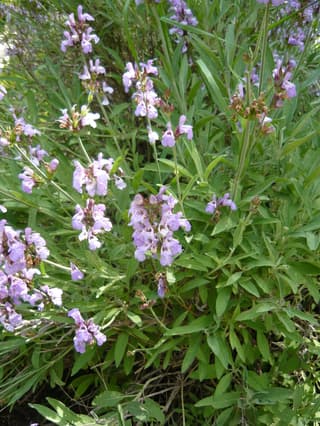
Lavender Sage
Salvia × lavandulacea
Lavender Sage (Salvia × lavandulacea) is an aromatic evergreen sub-shrub in the mint family, closely related to Spanish sage (Salvia lavandulifolia). It has narrow, grey-green, downy leaves with a rosemary-like scent and produces spikes of violet-blue flowers in summer. Drought-tolerant and sun-loving, it thrives in Mediterranean-style gardens, sunny containers, and herb beds.
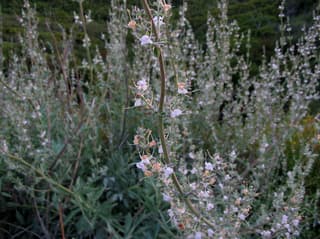
White Sage
Salvia apiana
Salvia apiana, commonly known as white sage, is an aromatic evergreen shrub native to the coastal sage scrub of Southern California and northern Baja California. It forms a rounded mound of silvery-white, felted leaves and sends up tall flowering spikes of pale lavender-white blossoms in late spring. Deeply drought-adapted, white sage thrives in poor, rocky, well-drained soil and full sun, asking for little water once established. Beyond its garden appeal, it is one of the most culturally significant plants of California, long tended and used ceremonially by Indigenous peoples including the Cahuilla, Kumeyaay, Chumash, and Luiseno.
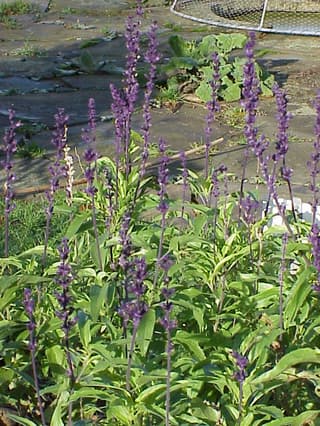
Mealycup Sage
Salvia farinacea
Salvia farinacea, commonly known as Mealycup Sage or Blue Sage, is a tender perennial native to the prairies and meadows of south-central Texas, Oklahoma, and northeast Mexico. It produces tall, elegant spikes of vivid blue-to-violet flowers from late spring through autumn, making it a favorite in pollinator gardens. The plant is deer-resistant, drought-tolerant once established, and attracts bees, butterflies, and hummingbirds.
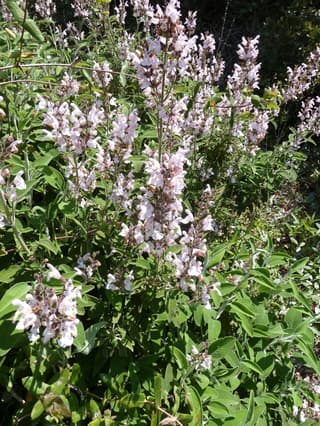
Greek Sage
Salvia fruticosa
Salvia fruticosa, commonly called Greek sage or three-lobed sage, is an aromatic, evergreen shrub native to rocky hillsides of the Eastern Mediterranean, including Greece, Crete, Turkey, Cyprus, and the Levant. Its soft, silvery-green, three-lobed leaves release a warm, resinous fragrance milder than common sage, and its pink-to-lilac flower spikes attract bees and butterflies through late spring and summer. Grown for centuries as a culinary herb and folk remedy, it thrives in poor, dry, sun-baked soil and needs almost no attention once established.
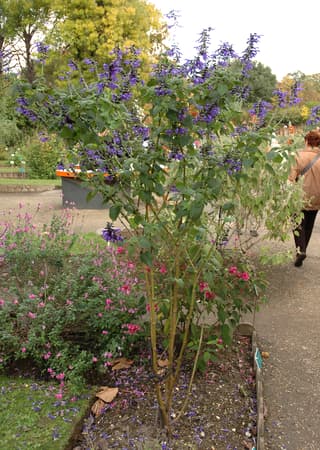
Anise-Scented Sage
Salvia guaranitica
Salvia guaranitica, commonly known as anise-scented sage or hummingbird sage, is a bushy herbaceous perennial native to Brazil, Paraguay, Uruguay, and Argentina, belonging to the Lamiaceae family. Its fresh mint-green, ovate leaves release a soft anise scent when crushed, and its upright stems bear spikes of deep blue tubular flowers (with dark calyces in the 'Black and Blue' cultivar) from summer into fall. It is a favorite of hummingbirds and butterflies in warm-climate gardens.
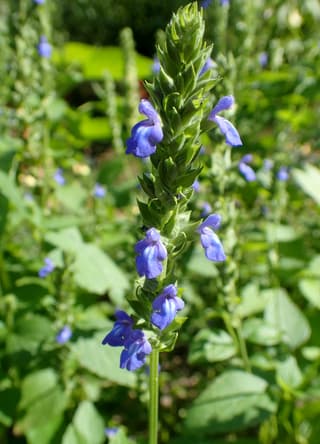
Chia
Salvia hispanica
Chia (Salvia hispanica) is an annual herb in the Lamiaceae family, native to central and southern Mexico. Cultivated for centuries by the Aztecs, it is now known worldwide for its fiber- and omega-3-rich seeds. The plant grows upright stems with dark green leaves and small purple or white flowers clustered in spikes during summer and fall.
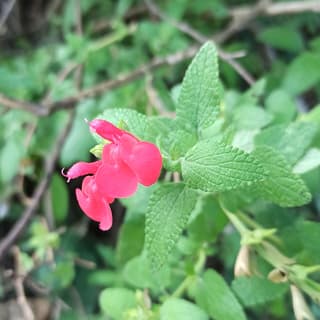
Baby Sage
Salvia microphylla
Salvia microphylla, commonly known as Baby Sage or Little Leaf Sage, is a compact perennial shrub native to Mexico and the southwestern United States. It produces abundant tubular flowers in shades of red, pink, purple, and white, making it a magnet for hummingbirds, bees, and butterflies. Hardy, drought-tolerant, and easy to grow, it thrives in sunny gardens with minimal care.
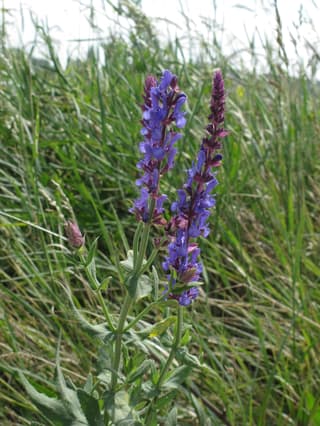
Woodland Sage
Salvia nemorosa
Salvia nemorosa, commonly known as Woodland Sage or Violet Sage, is a hardy herbaceous perennial in the Lamiaceae family, native to Europe and Western Asia. It produces dense, upright spikes of lavender-violet to deep blue-purple flowers from late spring through summer. Exceptionally drought-tolerant and cold-hardy (USDA zones 4–8), it is a low-maintenance staple in cottage, pollinator, and xeriscape gardens.
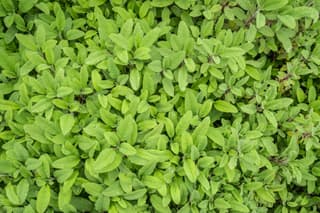
Garden Sage
Salvia officinalis
Salvia officinalis, commonly known as Garden Sage or Common Sage, is a perennial aromatic herb native to the Mediterranean region. It features soft, gray-green velvety leaves and vibrant purple-blue flower spikes in summer. A staple in kitchens and apothecaries for over 2,000 years, it belongs to the Lamiaceae (mint) family.
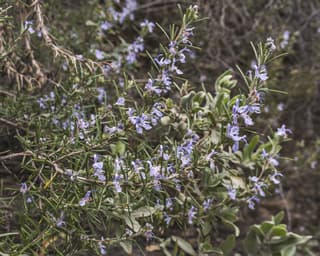
Rosemary
Salvia rosmarinus
Salvia rosmarinus, commonly known as rosemary, is a woody, perennial herb with fragrant, evergreen, needle-like leaves and white, pink, purple, or blue flowers. Native to the Mediterranean region, it is a member of the sage family Lamiaceae. It is highly valued for its aromatic foliage and culinary versatility.
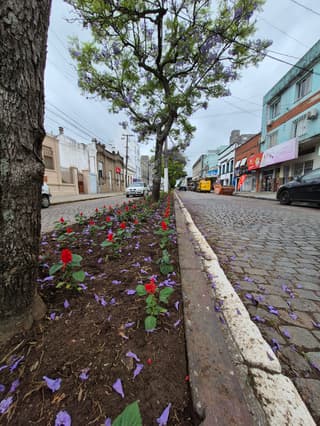
Scarlet Sage
Salvia splendens
Salvia splendens, commonly known as Scarlet Sage, is a flowering ornamental plant native to Brazil. It is prized for its vibrant tubular flower spikes ranging from classic scarlet red to pink, purple, lavender, and white. Fast-growing and prolific, it blooms from late spring through frost, making it a garden staple worldwide.
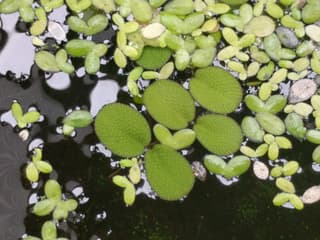
Floating Fern
Salvinia sp
Salvinia sp is a free-floating aquatic fern native to tropical Americas. Characterized by pairs of small, velvety leaves on the water surface with submerged leaf-like structures that absorb nutrients directly from the water. It is one of the easiest aquatic plants to grow and reproduces with extraordinary speed under ideal conditions.
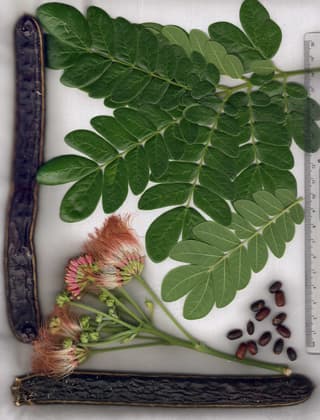
Rain Tree
Samanea saman
Samanea saman, commonly known as the Rain Tree or Monkeypod, is a monumental tropical tree native to Central and South America, now naturalized in tropical regions worldwide. It reaches heights of 15 to 30 m and develops an umbrella-shaped canopy that can exceed 30-40 m in diameter, providing exceptional shade. It is famous for folding its leaflets at night or before rain, allowing water to reach the ground. Its flowers are tassel-like heads, pink with white stamens, highly attractive to pollinators, and its pods contain a sweet edible pulp.
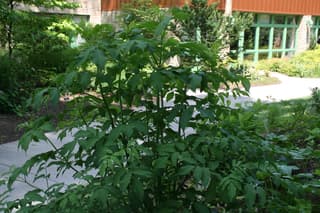
American elderberry
Sambucus canadensis
Sambucus canadensis, the American elderberry, is a fast-growing deciduous shrub native to eastern and central North America. It forms an open, multi-stemmed thicket 1.5-3.5 m tall, with pinnately compound leaves and large flat-topped clusters of fragrant creamy-white flowers in early summer, followed by clusters of small purple-black berries in late summer.
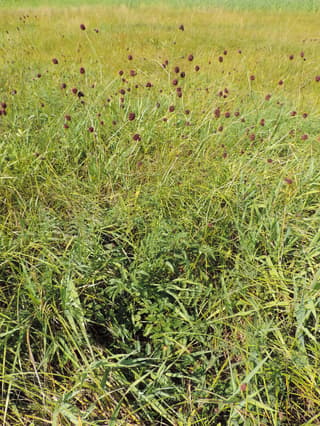
Great burnet
Sanguisorba officinalis
Great burnet is a perennial herbaceous plant from the Rosaceae family, native to damp grasslands and temperate regions of Europe and Asia. It forms a clump of compound, pinnate, bluish-green leaves, topped by long flower stems bearing small ovoid flower spikes ranging from purplish-red to burgundy. It blooms from June to September and attracts many pollinators, including the Scarce Large Blue butterfly which depends on it for reproduction. Used for centuries in traditional herbal medicine, particularly in Chinese medicine under the name Di Yu, it is valued for its hemostatic and healing properties. It is a hardy and easy-to-grow plant, perfect for naturalist gardens, wildflower meadows, and cool-soil borders.
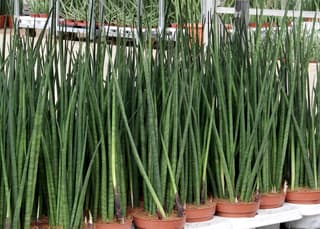
Cylindrical snake plant
Sansevieria bacularis
Sansevieria bacularis is an evergreen succulent native to the Congo and Rwanda, belonging to the Asparagaceae family. It is characterized by slender, cylindrical, fleshy leaves that form dense clusters capable of reaching up to 100 cm in height. The leaves display dark green coloration with horizontal light green stripes and a distinctive vertical groove running down each blade. The plant produces small white or cream flowers in tall inflorescences during spring and summer. It is an exceptionally tough and low-maintenance houseplant, making it ideal for both beginner and experienced plant enthusiasts seeking a reliable indoor specimen.
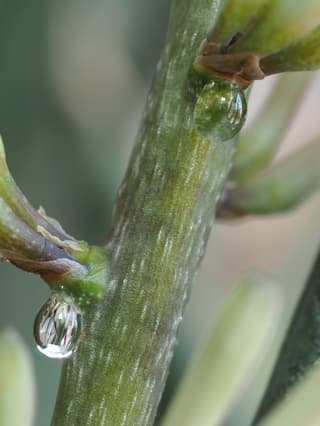
African Spear
Sansevieria cylindrica
Sansevieria cylindrica, now scientifically known as Dracaena angolensis, is a succulent native to Angola in Southern Africa. It features cylindrical green fleshy leaves with white veins that grow in a fan shape from a basal rosette. Each leaf can reach up to 1 meter in length and 3 cm in diameter. It is known for its air-purifying capabilities, designated by NASA as one of the most efficient plants for this purpose.
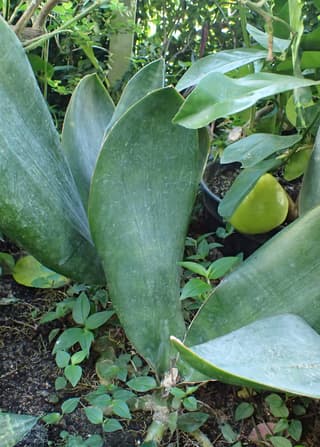
African Bowstring Hemp
Sansevieria guineensis
Sansevieria guineensis, commonly called the African bowstring hemp, is a tough, rhizomatous succulent native to West Africa. It forms dense clumps of stiff, lance-shaped, evergreen leaves rising directly from a spreading underground rootstock. Like other snake plant relatives, it stores water in thick fibrous leaves, letting it shrug off drought, neglect, and low light. In its native range it grows in dry, semi-shaded woodland, and for generations its leaves have been stripped for a strong, silky fiber once used for bowstrings, cords, and mats, which is the source of the common name.
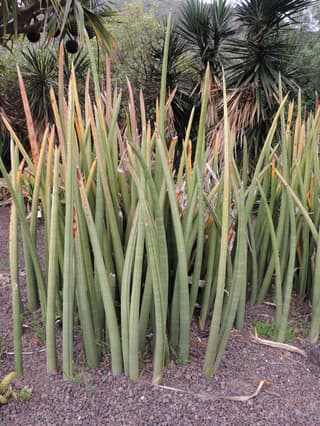
Elephant Tusk
Sansevieria stuckyi
Sansevieria stuckyi, often called the Elephant Tusk plant, is a striking succulent from East and Southern Africa prized for its rigid, cylindrical leaves that grow upright like tusks, reaching up to 2.75 m tall. Unlike its low, fan-shaped relatives, this species forms a dramatic architectural silhouette, making it a standout sculptural houseplant. It is extremely drought-tolerant, low-maintenance, and thrives on neglect, making it ideal for busy plant owners.
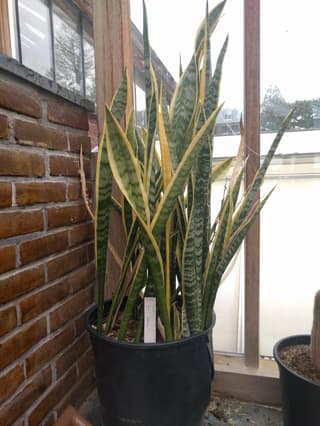
Snake Plant
Sansevieria trifasciata
The Snake Plant is a striking, architectural houseplant native to West Africa. Known for its tall, sword-shaped leaves with distinctive gray-green horizontal stripes, it is one of the most resilient and low-maintenance indoor plants. NASA research identified it as an excellent air purifier, capable of removing formaldehyde, xylene, and other toxins. It is one of few plants that converts CO2 to oxygen at night, making it ideal for bedrooms.
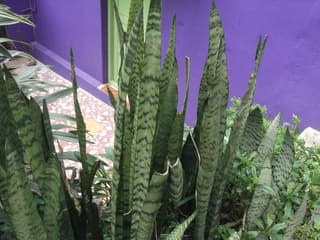
Ceylon Bowstring Hemp
Sansevieria zeylanica
Sansevieria zeylanica, also accepted as Dracaena zeylanica, is a slow-growing evergreen succulent native to the drier regions of Sri Lanka. Its stiff, sword-shaped leaves display irregular bands of dark and pale green, forming dense upright rosettes. Historically prized for its strong leaf fibers used to make bowstrings, rope, and cloth, it is now a popular low-maintenance houseplant. Often confused with S. trifasciata, the true species produces 10–16 leaves per rosette and lacks a visible petiole.
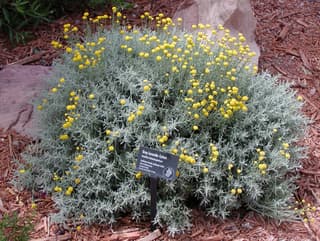
Lavender Cotton
Santolina chamaecyparissus
Santolina chamaecyparissus, commonly known as Lavender Cotton, is a compact, evergreen aromatic shrub native to the Mediterranean basin. It forms dense, rounded mounds of silvery-gray, finely textured foliage that releases a pleasant herbal fragrance when touched. In summer, it produces cheerful bright yellow, button-like flower heads on slender upright stems. Highly valued for its drought tolerance, deer resistance, and ability to thrive in poor, dry soils, it is a staple of Mediterranean, rock, and xeriscape gardens.
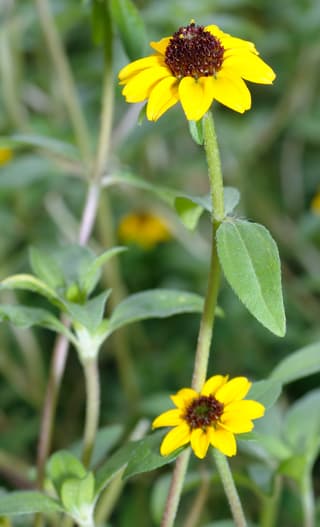
Creeping Zinnia
Sanvitalia procumbens
A low, mat-forming annual from Mexico and Guatemala prized for its cheerful yellow-orange, daisy-like flowers with dark purple-brown centers. It spreads 30-50cm wide but stays under 15cm tall, making it a favorite for ground cover, rock gardens, hanging baskets, and border edging. Blooms continuously from midsummer until the first frost with almost no maintenance.
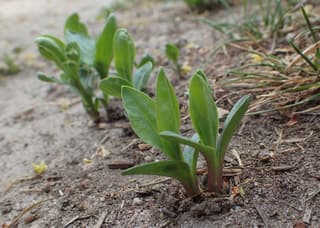
Soapwort
Saponaria officinalis
Saponaria officinalis, commonly known as Soapwort or Bouncing-bet, is a perennial herbaceous plant in the Caryophyllaceae family, native to Europe and Asia Minor. It produces delicate pink and white flowers during the summer, and its roots contain saponins—substances that create a lather with water, historically used as a natural soap.
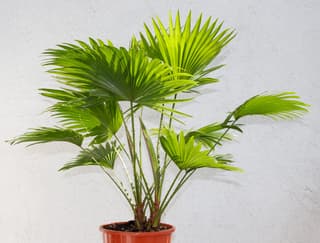
Footstool Palm
Saribus rotundifolius
The Footstool Palm (Saribus rotundifolius, formerly Livistona rotundifolia) is native to Southeast Asia (Malaysia, Indonesia, Philippines). Its solitary, smooth, brown trunk, marked with leaf-scar rings, can reach up to 80 feet in the wild, though it remains much smaller in containers. Its nearly circular fan-shaped leaves measure about 5 feet wide on young specimens. It bears small yellow flowers in spring and summer, followed by round fruits 0.6 to 0.8 inches in diameter that turn from red to black when ripe. It is one of the fastest-growing palms, popular both as a bright indoor plant and in tropical gardens.
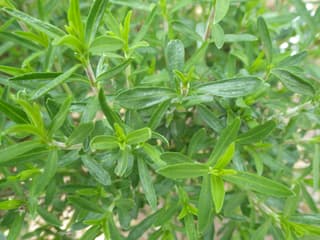
Summer Savory
Satureja hortensis
Summer savory (Satureja hortensis) is a highly aromatic annual herb in the mint family (Lamiaceae), native to the Mediterranean region. It is a branched, hairy-stemmed plant growing 30–45 cm tall, with narrow, lanceolate leaves and small, white or pale lavender tubular flowers that appear in summer. Its leaves emit a pungent, spicy aroma reminiscent of pepper and thyme, making it a popular seasoning for legumes and meats.
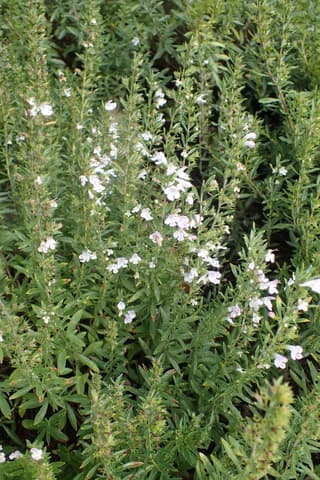
Winter Savory
Satureja montana
Winter savory (Satureja montana) is a hardy, evergreen perennial subshrub in the mint family (Lamiaceae), native to the mountainous regions of the Mediterranean. It forms low, woody-based mounds of narrow, glossy, highly aromatic leaves, with small white, lilac, or pale blue flowers appearing in summer. Prized as a culinary and medicinal herb, it has a peppery flavor reminiscent of thyme and marjoram.
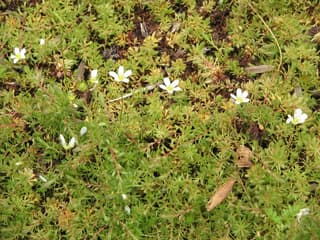
Saxifrage
Saxifraga
Saxifraga is a large genus of roughly 440 species of low-growing, mat- or cushion-forming perennials native mainly to alpine and arctic regions of the Northern Hemisphere. Commonly called saxifrage or rockfoil, the name comes from the Latin for "stone-breaker," a nod to the way these tough little plants root into rock crevices. Species range from tiny alpine cushions to trailing houseplants like strawberry saxifrage.
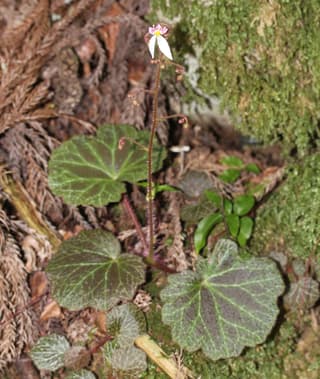
creeping saxifrage
Saxifraga stolonifera
Saxifraga stolonifera, commonly known as Strawberry Begonia, is a charming perennial that spreads via long, slender red stolons similar to strawberry runners. It features rounded, hairy, dark green leaves with striking silver veins and maroon undersides. In spring, it produces airy panicles of delicate white flowers. Despite its common names, it is neither a begonia nor a geranium, but a member of the saxifrage family.
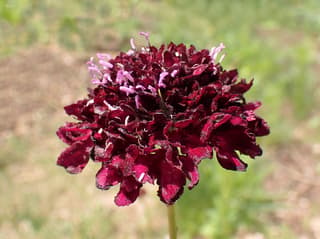
Mourning Bride
Scabiosa atropurpurea
Scabiosa atropurpurea, popularly known as Mourning Bride, is a charming herbaceous plant that produces globular flowers with prominent stamens resembling a pincushion. Its flowers are rich in nectar, making it a favorite in pollinator gardens to attract butterflies and bees. It features long, slender stems, ideal for cut flower arrangements, and very characteristic lobed basal foliage.
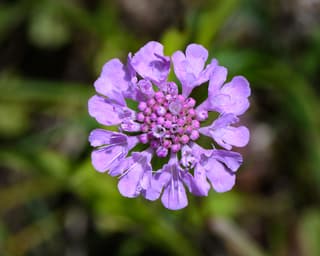
Pigeon Scabious
Scabiosa columbaria
Pigeon Scabious (Scabiosa columbaria) is a delicate perennial wild herbaceous plant from the honeysuckle family (Caprifoliaceae), native to Europe, West Asia, and North Africa. It forms finely feathered leaves and bears delicate, pincushion-like flower heads in purple, blue-violet, or pink from June to October. It thrives in calcareous, well-drained soils and is a valuable nectar source for bees, butterflies, and hoverflies. As a robust, drought-tolerant plant, it is excellently suited for natural gardens, rock gardens, gravel beds, and wildflower meadows.
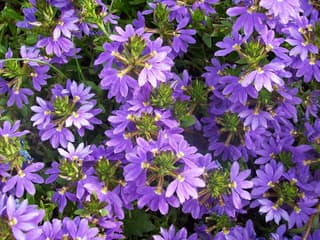
Fan Flower
Scaevola
Scaevola is a genus in the family Goodeniaceae, native to arid and semi-arid regions of Australia. The most widely cultivated species, Scaevola aemula, is a trailing, mounding plant popular in hanging baskets and containers, prized for its distinctive fan-shaped blue or purple flowers with petals arranged on one side.
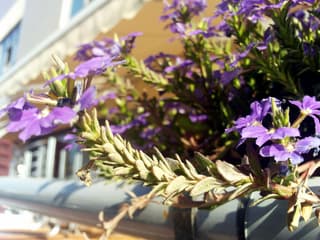
Fan Flower
Scaevola aemula
Scaevola aemula, commonly known as Fan Flower or Fairy Fan Flower, is a cheerful Australian native perennial prized for its unique fan-shaped blooms. The flowers are arranged in a distinctive half-fan formation — a quirky feature that gives it its common name. Blooming prolifically from spring through summer, it produces masses of small purple, blue, or white flowers, making it a favourite for containers, hanging baskets, and garden borders. Native to the coastal regions of New South Wales and Victoria, it thrives in full sun and well-drained soils, and is remarkably tolerant of drought, heat, and salt spray.
Easy Care Easy Care
Our selection of 2320 easy easy care combines the characteristics of this category with reduced care needs. Perfect for beginners who love this category.
Why Choose Easy Easy Care?
Combining the beauty of easy care with easy difficulty level lets you enjoy this category without excessive maintenance worries. Each plant was selected to offer the best characteristics of the category at the care level you are looking for.