2319 Easy Easy Care | 2026 Guide - Page 57
Find 2319 easy easy care. Complete guide for your garden.
2319 Easy Care with easy level
Showing 2017-2052 of 2319
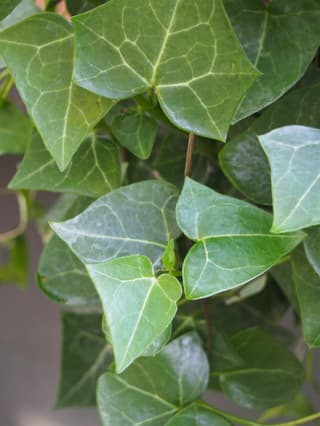
Cape Ivy
Senecio macroglossus
Senecio macroglossus, commonly known as Cape Ivy or Natal Ivy, is an evergreen succulent climber native to southern Africa, ranging from Zimbabwe and Mozambique to eastern South Africa. Its waxy, triangular leaves closely resemble true ivy but belong to the daisy family (Asteraceae). It produces cheerful yellow daisy-like flowers in summer and emits a subtle lemony scent when foliage is handled. Popular as both a trailing houseplant and an outdoor climber in warm climates.
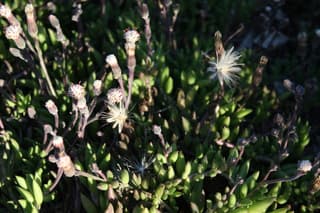
String of bananas
Senecio radicans
String of bananas is a trailing succulent prized for its curved, banana-shaped leaves that cascade over the edges of hanging baskets. Native to South Africa, it is a fast-growing, drought-tolerant member of the daisy family (Asteraceae), closely related to string of pearls. It produces small white flowers with a cinnamon-vanilla scent when mature.
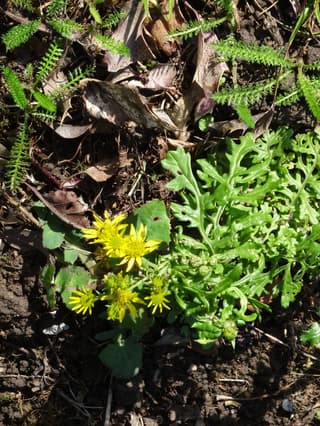
Oxford Ragwort
Senecio squalidus
Oxford Ragwort (Senecio squalidus) is a bright yellow-flowered wildflower in the daisy family Asteraceae, native to rocky volcanic slopes of Sicily and southeastern Europe. It is a short-lived perennial or biennial that naturalised spectacularly across Britain, spreading along railway lines from Oxford during the 19th and 20th centuries. Its cheerful golden daisy-like blooms appear almost year-round — from early spring through to autumn — and the plant thrives on neglect, colonising walls, rubble, and disturbed ground with ease. Although striking in appearance, all parts of the plant contain pyrrolizidine alkaloids, rendering it severely toxic to livestock, pets, and humans if ingested.
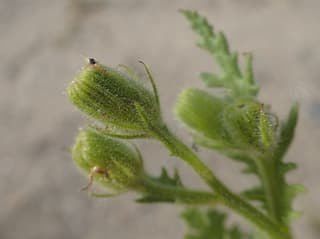
Sticky groundsel
Senecio viscosus
Senecio viscosus is a strong-smelling annual weed in the daisy family (Asteraceae), covered in sticky, glandular hairs that trap dust and grit, giving it a grayish, unkempt look. It bears small yellow, daisy-like flower heads with distinctive ray florets that curl sharply backward once open, and it typically grows to about 70 cm tall on disturbed, sandy or gravelly ground, waste places, railway edges and roadsides. Like all Senecio species it contains toxic pyrrolizidine alkaloids and should be handled with care and kept well away from children, pets and grazing livestock.
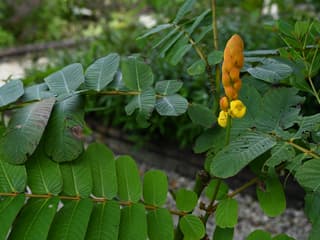
Senna / Cassia (genus)
Senna
Senna is a large genus of flowering plants in the family Fabaceae, comprising around 350 species found across tropical and subtropical regions. Notable ornamental species include Senna alata (candle bush) and S. didymobotrya, prized for their bold yellow flower spikes. Seeds and leaves contain anthraquinones with a laxative effect.
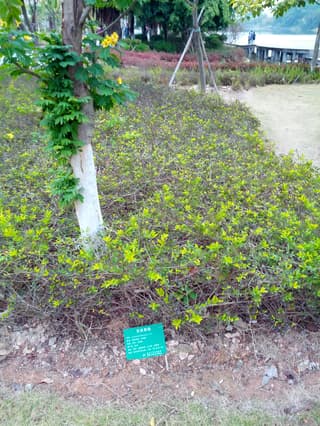
Christmas Senna
Senna bicapsularis
Senna bicapsularis, commonly known as Christmas Senna or Butterfly Bush, is a fast-growing semi-evergreen shrub native to tropical Americas. It belongs to the Fabaceae family and can reach up to 12 feet in height. Its most remarkable feature is its prolific golden-yellow flowering during fall and winter, when most other plants are dormant. Widely used in landscaping, hedgerows, and traditional medicine.
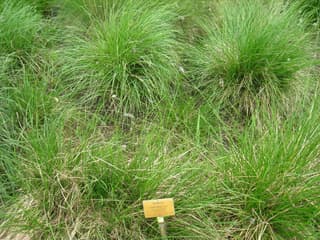
Blue moor grass
Sesleria caerulea
Blue moor grass is a low, tufted evergreen ornamental grass native to Europe, including the limestone grasslands and pavements of Great Britain and Ireland. It forms dense, neat clumps of narrow, arching leaves that are blue-green above and glossy dark green beneath, giving the plant its characteristic blue-grey cast. In spring, short purplish flower spikes rise just above the foliage, fading to a pale buff colour as they mature. A tough, low-maintenance calcicole grass, it is prized in gardens for its compact habit, year-round structure and tolerance of poor, stony, alkaline soils.
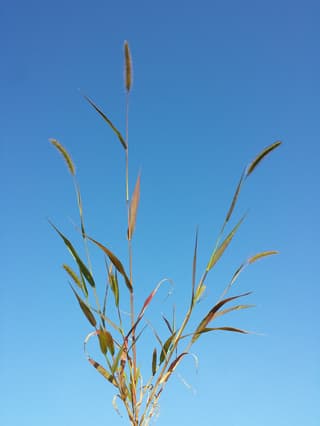
Foxtail Grass
Setaria
Setaria is a large genus of warm-season annual and short-lived perennial grasses in the Poaceae (grass) family, commonly known as foxtails or bristlegrasses for their dense, bristly, cylindrical seed heads that resemble the bushy tail of a fox. The genus includes both common weedy species -- such as green foxtail (S. viridis) and yellow foxtail (S. pumila) -- found along roadsides, fields, and disturbed soil across temperate regions worldwide, and the important cereal crop foxtail millet (S. italica), domesticated roughly 8,000 years ago along the Yellow River in China and still cultivated across Asia, Africa, and parts of Europe for grain, hay, and birdseed. As a genus-level entry, care guidance here reflects general growing conditions for Setaria species, with cultivated foxtail millet as the best-documented reference point.
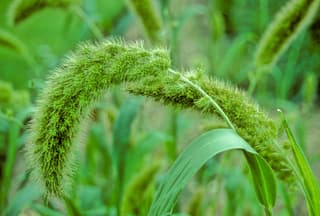
Foxtail Millet
Setaria italica
Ancient annual cereal grass domesticated in Asia from green foxtail (Setaria viridis). It forms erect stems topped by a dense, cylindrical, bristly seed head; the small grains feed people, livestock and birds.
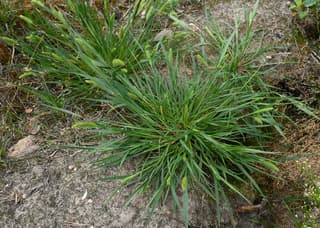
Green Foxtail
Setaria viridis
Setaria viridis, known as green foxtail or green bristlegrass, is a fast-growing annual grass native to Eurasia and now naturalized worldwide. It forms leafy tufts with slender, arching stems topped by soft, bristly, cylindrical seed heads that resemble a fox's tail. Highly adaptable, it thrives in disturbed soils, roadsides, and open fields, and is recognized by botanists as the wild ancestor of foxtail millet. Because of its short life cycle and ease of cultivation, it has also become an important model species for studying C4 photosynthesis in bioenergy grasses.
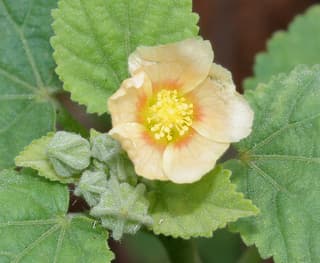
Country Mallow
Sida cordifolia
Sida cordifolia, commonly called country mallow or flannel weed, is a perennial subshrub in the mallow family (Malvaceae) native to India and now naturalized throughout the tropics and subtropics. It grows 50-200 cm tall on branched, woody-based stems, with heart-shaped, velvety leaves covered in soft white hairs and small yellow flowers, sometimes with orange centers. Long valued in Ayurvedic medicine as "Bala," it has also spread widely as a roadside and pasture weed, and is now considered invasive in parts of Africa, Australia, the southern United States, and several Pacific islands.
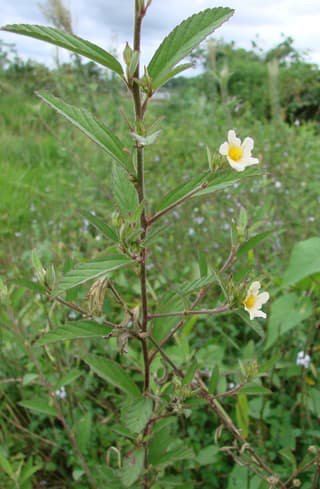
Fanpetals
Sida sp
Fanpetals (Sida sp) is a genus of herbs and subshrubs in the Malvaceae family, encompassing over 170 species native to tropical and subtropical regions of the Americas. Plants grow up to 2 meters tall with hairy, felt-like stems and small five-petaled flowers in shades of yellow, orange, or white. Several species have a long history of use in traditional medicine across Brazil, India, and Africa.
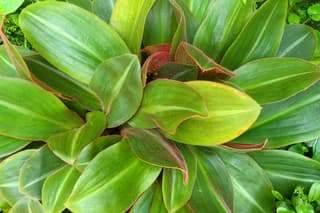
Brown Spiderwort
Siderasis fuscata
Siderasis fuscata, commonly known as Brown Spiderwort, is a perennial herbaceous plant native to the tropical rainforests of Brazil. It features broad, velvety dark green leaves with distinctive purple undersides, forming a compact rosette. Small violet-purple flowers emerge directly from the foliage during summer. An excellent low-light houseplant for those seeking exotic tropical beauty with minimal care.
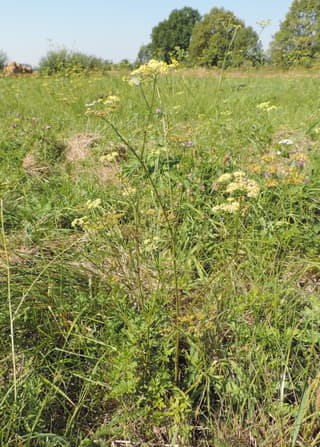
Silaum silaus
Silaum silaus
Pepper-saxifrage (Silaum silaus) is a perennial plant from the Apiaceae family, the only species of the genus Silaum. It is widespread throughout Europe to western Siberia and also grows in Croatia, in moist, unmanaged meadows and pastures on clayey, neutral to slightly alkaline soils. Its stem grows up to 100 cm, and small yellowish flowers are gathered in umbellate inflorescences that bloom from June to August. Crushed parts of the plant emit an unpleasant hydrogen sulfide odor. It is considered an indicator species of old, traditionally maintained meadows.
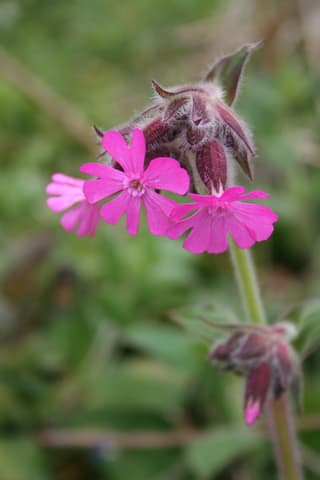
Campion
Silene
Silene is the largest genus in the Caryophyllaceae family, encompassing approximately 500–900 species of annual, biennial, and perennial flowering plants known as campions and catchflies. Native to temperate regions of the Northern Hemisphere, they are celebrated for their delicate tubular flowers in shades of pink, red, white, and purple, often with notched petals and an inflated calyx. Many species attract butterflies, hummingbirds, and other pollinators, making them valuable additions to wildflower gardens, meadows, and rock gardens.
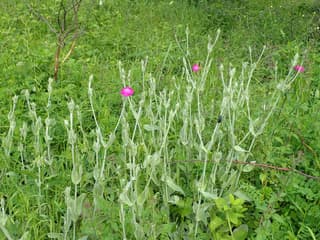
Rose Campion
Silene coronaria
Rose Campion (Silene coronaria, syn. Lychnis coronaria) is a low-maintenance, short-lived perennial or biennial from the carnation family (Caryophyllaceae), native to the Mediterranean region and Southwest Asia. The plant is renowned for the striking contrast between its silvery-grey, felted leaves and vibrant magenta, pink, red, or white flowers, approximately 2–3 cm in diameter. In its first year, it forms a basal rosette of velvety leaves; in the second year, upright, branched stems emerge, reaching a height of 60–90 cm. Thanks to its ability to self-seed, it reliably maintains its presence in the garden for many years.
Silphium
Silphium
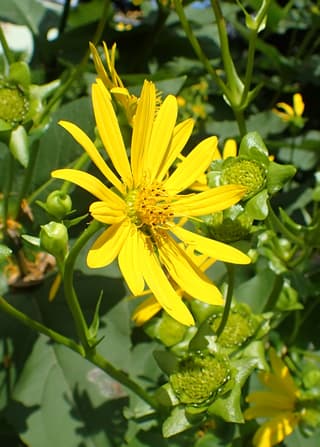
Silphium is a genus of robust, perennial prairie plants from North America, belonging to the sunflower family (Asteraceae). The genus comprises approximately 17–18 species, including the well-known Cup Plant (Silphium perfoliatum), Compass Plant (Silphium laciniatum), and Wholeleaf Rosinweed (Silphium integrifolium). These impressive perennials can reach up to 3 meters in height and bear bright yellow, sunflower-like flower heads in summer and autumn. The leaves of the Compass Plant orient themselves north-south to minimize water loss in the intense midday sun, while the Cup Plant's perfoliate leaves form natural "cups" that collect rainwater for birds and insects. Silphium species are essential for prairie biodiversity and attract a wide variety of pollinators, birds, and insects.
Paradise Tree
Simarouba amara
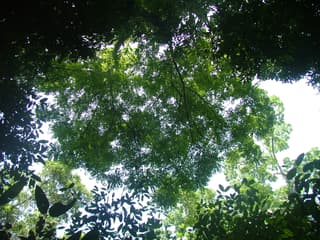
Simarouba amara, commonly known as the Paradise Tree or Bitterwood, is a majestic tropical evergreen tree native to the rainforests of Central and South America. It is distinguished by its glossy, dark green pinnate leaves and a straight trunk with smooth, greyish bark. The tree produces small, inconspicuous yellowish flowers that develop into oval drupes, which turn from red to blackish-purple when ripe. It is highly valued in its native range for its medicinal properties, particularly the bark, which contains bitter quassinoids used to treat various ailments.
Bitterwood
Simarouba glauca
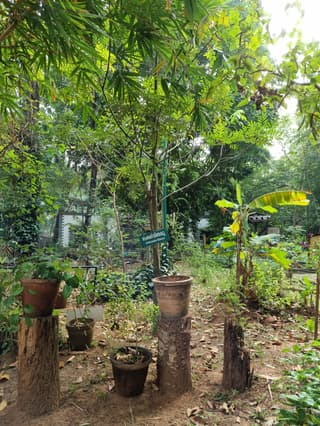
Bitterwood (Simarouba glauca) is a fast-growing evergreen tree native to Central America, the Caribbean, and southern Florida, belonging to the Simaroubaceae family. It features glossy, pinnately compound leaves that emerge reddish-orange before maturing to deep green, and clusters of small yellow-to-creamy-white flowers that bloom from late winter into spring, followed by dark purple, olive-shaped drupes. Highly adaptable, it tolerates a wide range of soils, drought, salt spray, and poor conditions once established, making it a popular shade and street tree in warm climates. Its bark and leaves have a long history of traditional medicinal use, particularly for fevers and dysentery.
Jojoba
Simmondsia chinensis
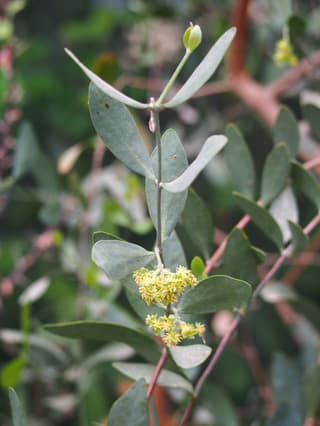
Jojoba (Simmondsia chinensis) is a perennial evergreen shrub native to the desert regions of the Southwestern United States and Northwestern Mexico (Sonoran Desert). As the sole member of the Simmondsiaceae family, it forms a dense, rounded bush that can reach 6 to 8 feet in height, featuring thick, leathery, gray-green leaves designed to minimize water loss. It is a dioecious plant (separate male and female plants) whose seeds produce a unique liquid wax very similar to human sebum, widely used in cosmetics as jojoba oil. Extremely drought-tolerant once established, it can survive on only 10 to 30 inches of annual rainfall and tolerate poor, saline soils.
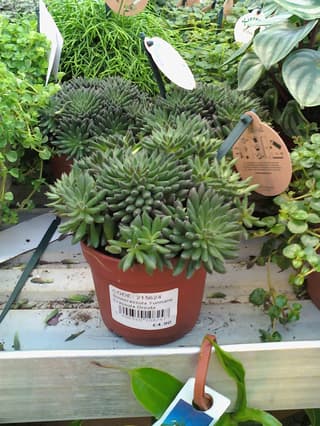
Chinese jade
Sinocrassula yunnanensis
Sinocrassula yunnanensis, or Chinese jade, is a small rosette-forming succulent native to the mountainous Yunnan province of China. Its spindle-shaped leaves are densely covered in fine soft hairs and shift from dark green in summer to deep chocolate-brown or red tones in cooler months. Plants multiply readily by offsets, eventually forming dense clumps, and produce cream-to-white flowers on tall stalks; the flowering rosette itself dies back afterward.
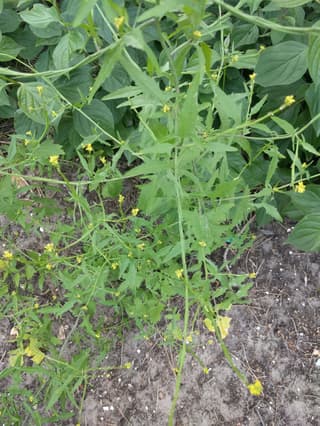
Hedge mustard
Sisymbrium
Sisymbrium is a genus of around 40 species of annual and biennial herbs in the mustard family (Brassicaceae), commonly known as hedge mustards. The most widespread species, Sisymbrium officinale, is a weedy plant of disturbed ground, roadsides and hedgerows across Europe and naturalized worldwide, bearing small yellow four-petaled flowers and slender seed pods. Historically nicknamed "the singer's plant", it was used by opera singers and orators to soothe hoarseness and protect the voice.
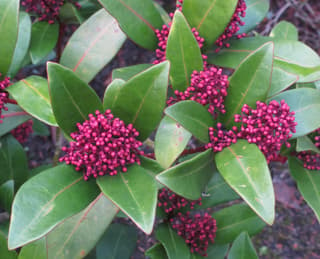
Japanese Skimmia
Skimmia japonica
Japanese Skimmia (Skimmia japonica) is a compact, slow-growing evergreen shrub from the Rutaceae family. It is an ornamental shrub native to Japan, notable for its fragrant, creamy-white to pink flowers in spring, followed by bright red berries that persist throughout fall and winter. The foliage releases an aromatic scent when crushed.

Sarsaparilla
Smilax aspera
Smilax aspera, commonly known as sarsaparilla or rough bindweed, is an evergreen, thorny climbing vine native to the Mediterranean Basin, southern Europe and North Africa. Using tendrils, it scrambles over shrubs, walls and trellises, reaching 1 to 4 metres in length. Its wiry, zigzagging stems and leathery, heart-shaped leaves are armed with small spines, and from September to November it produces clusters of tiny, strongly fragrant greenish-white flowers followed by red berries that ripen to black.
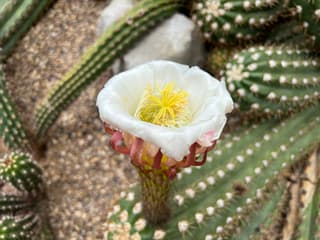
Argentine White Torch Cactus
Soehrensia candicans
The Argentine White Torch Cactus (Soehrensia candicans) is a columnar cactus native to northern Argentina, renowned for its spectacular large white fragrant flowers that bloom at night. It forms sprawling clumps up to 3 m (10 ft) wide, with individual stems reaching 60 cm (24 in) tall. Hardy, drought-tolerant, and cold-resistant to -6°C (21°F), it thrives in xeriscapes and rock gardens.
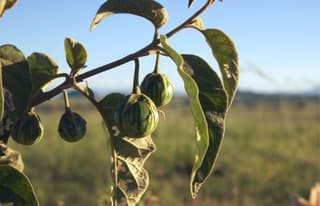
Ethiopian Eggplant
Solanum aethiopicum
Solanum aethiopicum, commonly known as Ethiopian eggplant or scarlet eggplant, is a fruiting shrub in the Solanaceae family native to tropical Africa. It grows up to 2.5 m tall with lobed leaves, produces star-shaped white to violet flowers, and bears small egg-shaped berries that ripen from green to vivid orange-red. It is one of the five most economically important vegetables in sub-Saharan Africa, valued for both its edible fruits and nutritious leaves.
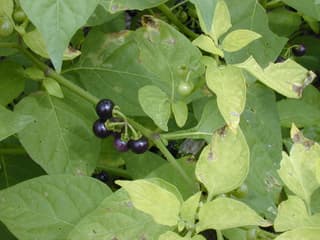
American Black Nightshade
Solanum americanum
American black nightshade (Solanum americanum) is an annual or short-lived perennial herbaceous plant in the Solanaceae family, widely distributed across tropical and subtropical regions worldwide. Native to the Americas, it has become a cosmopolitan weed found in disturbed soils, roadsides, gardens, and waste ground. It produces small white star-shaped flowers and round berries (5–10 mm) that ripen from green to glossy black. All parts are considered severely toxic — particularly the green parts and unripe berries, which contain solanine, chaconine, and solamargine — though the plant has traditional medicinal uses across Africa, Asia, and the Americas.
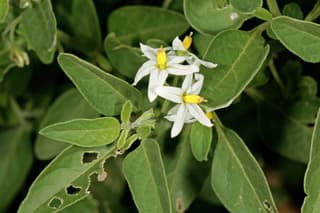
Tall nightshade
Solanum chenopodioides
Tall nightshade (Solanum chenopodioides) is a weedy, sprawling perennial subshrub in the nightshade family, native to South America and now naturalized in disturbed ground, coastal scrub, and gardens across mild-climate regions worldwide. It bears small star-shaped white flowers followed by round berries that ripen from green to dark purple-black. As with other Solanum species, its leaves and unripe berries contain solanine and related glycoalkaloids, making the whole plant toxic if eaten.
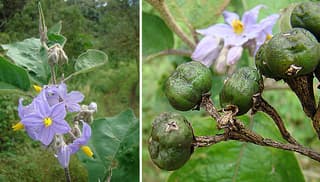
Lance-leaf Nightshade
Solanum lanceolatum
Solanum lanceolatum is a perennial shrub native to Mexico and Central America, prized for its striking star-shaped purple flowers with bright yellow anthers and glossy orange-red berries. A member of the nightshade family (Solanaceae), it thrives in warm climates and full sun, tolerating drought once established. All parts of the plant are toxic if ingested.
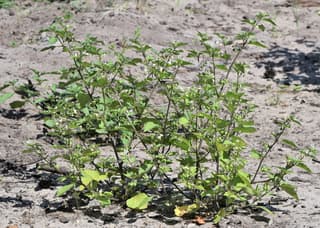
Black Nightshade
Solanum nigrum
Black nightshade (Solanum nigrum) is a fast-growing cosmopolitan herbaceous weed in the Solanaceae family. Found worldwide in disturbed soils, roadsides, and gardens, it produces small white star-shaped flowers with yellow anthers and clusters of berries that ripen from green to shiny black. All green parts and unripe berries contain solanine, a toxic glycoalkaloid; ripe berries are consumed cautiously in some traditional cultures.

Red Nightshade
Solanum villosum
Solanum villosum, commonly called red nightshade or hairy nightshade, is a fast-growing annual herb in the tomato and potato family (Solanaceae). Native to Eurasia and now naturalized worldwide, it typically reaches 40-60 cm tall, with soft, hairy, toothed leaves and small clusters of white, star-shaped flowers. The flowers give way to round berries that ripen from green to red or yellow. In many parts of Africa and Asia, the young leaves and shoots are cooked and eaten as a nutritious leafy vegetable, but every part of the plant - especially the unripe green berries and raw foliage - contains the toxic glycoalkaloid solanine and should never be eaten raw or before fully ripe. Because it thrives in disturbed soil with minimal care, red nightshade is often treated as a fast-cycling kitchen-garden crop rather than a long-term ornamental.
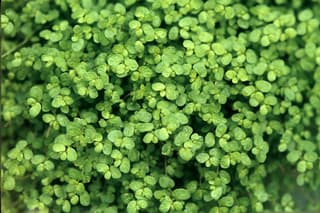
Baby's Tears
Soleirolia soleirolii
Soleirolia soleirolii, commonly known as Baby's Tears, is a low-growing, mat-forming perennial native to the western Mediterranean islands of Corsica and Sardinia. It produces a dense carpet of tiny, rounded leaves on delicate, thread-like stems, creating a lush, moss-like appearance. Its dainty white flowers appear in spring and summer. Popular as a ground cover, terrarium plant, and houseplant, it thrives in high humidity and consistent moisture.
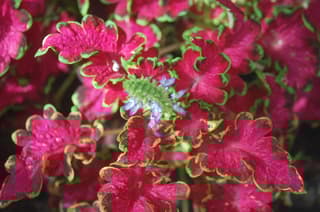
Painted Nettle
Solenostemon scutellarioides
Coleus (Solenostemon scutellarioides) is a vibrant tropical foliage plant native to Southeast Asia, belonging to the mint family Lamiaceae. Renowned for its spectacular multicolored leaves featuring combinations of red, purple, orange, yellow, green, and pink, it is one of the most popular ornamental plants for both indoor and outdoor settings. Modern cultivars have been developed for sun or shade tolerance, making coleus incredibly versatile.
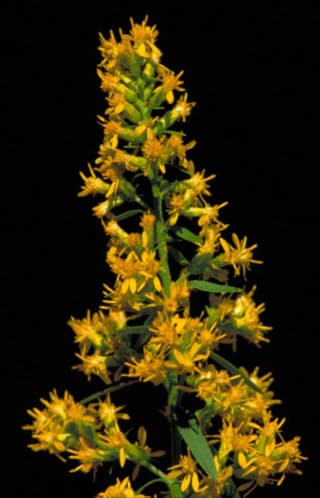
Goldenrod
Solidago
Solidago, commonly known as goldenrod, is a genus of herbaceous perennial plants in the daisy family (Asteraceae), native mainly to North America. It forms upright clumps with stiff stems and dense golden-yellow flower clusters that bloom in late summer through fall, making it a favorite of bees, butterflies, and other pollinators.
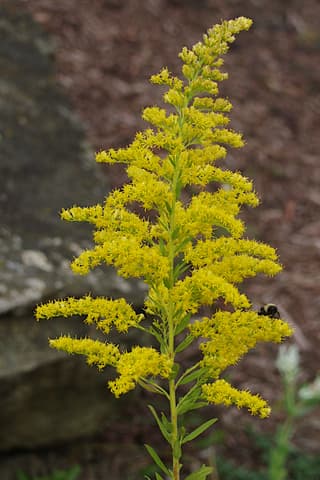
Tall Goldenrod
Solidago altissima
Tall Goldenrod (Solidago altissima) is a vigorous, rhizomatous perennial wildflower native to North America and a member of the aster family (Asteraceae). From late summer into autumn it produces dense, plume-like clusters of small golden-yellow flowers atop upright, downy stems reaching 60-180 cm tall. Highly attractive to bees, butterflies, and other pollinators, it spreads readily by creeping rhizomes and self-seeding, forming bold colonies in meadows, borders, and naturalized gardens. Despite its reputation, it is not the culprit behind hay fever - its heavy, sticky pollen is carried by insects, not wind.
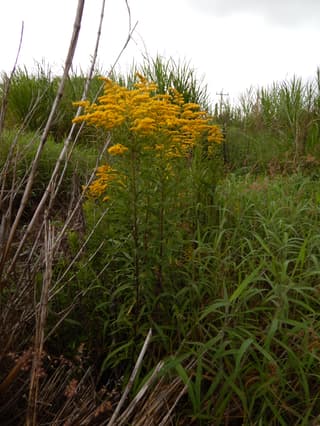
Canada Goldenrod
Solidago canadensis
Solidago canadensis, commonly known as Canada Goldenrod, is a robust native North American perennial wildflower belonging to the Asteraceae family. It produces striking arching plumes of bright yellow flowers from late summer through fall, creating a spectacular display in meadows, prairies, and naturalized gardens. Fast-spreading via rhizomes and self-seeding, it is beloved by pollinators including bees, butterflies, and birds.
Easy Care Easy Care
Our selection of 2319 easy easy care combines the characteristics of this category with reduced care needs. Perfect for beginners who love this category.
Why Choose Easy Easy Care?
Combining the beauty of easy care with easy difficulty level lets you enjoy this category without excessive maintenance worries. Each plant was selected to offer the best characteristics of the category at the care level you are looking for.