2307 Easy Easy Care | 2026 Guide - Page 62
Find 2307 easy easy care. Complete guide for your garden.
2307 Easy Care with easy level
Showing 2197-2232 of 2307
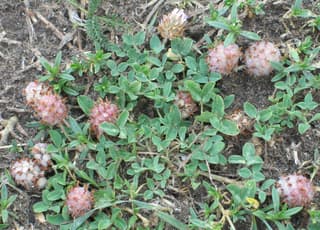
Strawberry Clover
Trifolium fragiferum
Trifolium fragiferum, commonly known as strawberry clover, is a perennial creeping legume native to the Eastern Mediterranean, Southwest Asia, and Northwest Africa, including mainland Portugal and Madeira. It is distinguished by its round, pale-pink flower heads that, after fruiting, inflate into strawberry-like globes — giving rise to its common name. The plant spreads vigorously through creeping stolons that root at the nodes, forming a dense ground cover. It is one of the most salt-tolerant and waterlogging-tolerant clover species commercially available.
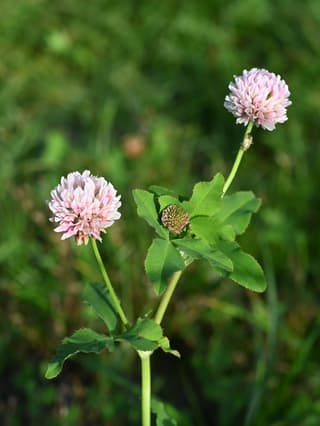
Alsike Clover
Trifolium hybridum
Alsike clover (Trifolium hybridum) is a perennial herbaceous plant in the Fabaceae family, native to southern Europe and southwestern Asia. It produces globose flower heads ranging from white to pink during summer and is widely used as a forage crop, ground cover, and nectar source for pollinators. It fixes atmospheric nitrogen through symbiotic root bacteria, enriching the soil naturally.
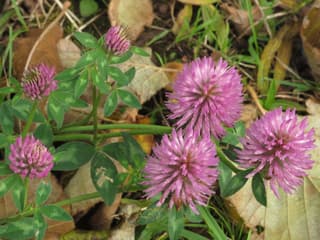
Red Clover
Trifolium pratense
Red clover (Trifolium pratense) is a short-lived herbaceous perennial native to Europe, Western Asia, and northwest Africa, now naturalized worldwide. It produces dense globe-shaped flower heads in shades of pink to reddish-purple and is widely cultivated as livestock fodder, green manure, and a medicinal herb. It fixes atmospheric nitrogen through symbiotic root bacteria, naturally enriching the soil.
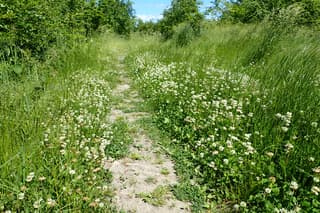
White clover
Trifolium repens
Trifolium repens, commonly known as white clover, is a low-growing, perennial herbaceous plant in the pea family Fabaceae. It is native to Europe and Western Asia but has been widely naturalized throughout the world. It is characterized by its trifoliate leaves and dense heads of white flowers. It is often found in lawns, pastures, and meadows, and is known for its ability to fix nitrogen in the soil.
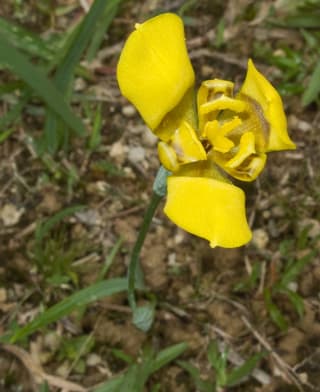
Yellow Walking Iris
Trimezia
Trimezia is a rhizomatous herbaceous plant native to the Americas, highly valued in tropical landscaping. Its leaves are long, green, and sword-shaped, growing in dense fans. The flowers are a vibrant yellow with tiger-striped brown spots in the center. Although each individual flower lasts only one day, the plant produces continuous flower stalks that ensure a visual spectacle during the warmer months.
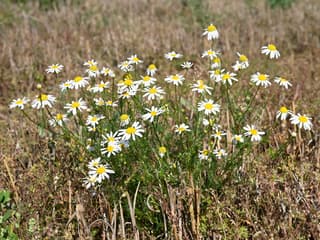
Scentless Chamomile
Tripleurospermum inodorum
Scentless chamomile (Tripleurospermum inodorum) is an annual or biennial herb from the Asteraceae family, native to Eurasia and widely distributed in cultivated fields, roadsides, and waste ground. The plant is characterized by fine, feathery leaves and classic white daisy-like flowers with a yellow central disc, 3–5 cm in diameter. It grows 20–80 cm tall and blooms from June to November. Unlike true chamomile, it completely lacks the characteristic apple scent – hence the name.
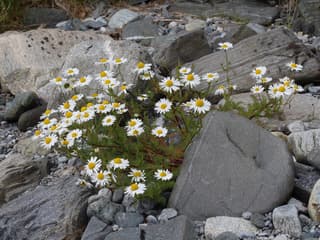
Sea Mayweed
Tripleurospermum maritimum
Sea Mayweed (Tripleurospermum maritimum) is a short-lived perennial in the daisy family, native to the coasts of Europe, Greenland, and the Azores. It forms sprawling, fleshy-leaved mounds along drift-lines, shingle beaches, and cliff tops, producing classic daisy-like flowers with white ray petals around a yellow disk from early summer into autumn. Its succulent, finely divided foliage is an adaptation to salty, windswept habitats, and mature stems often turn purple by late summer.
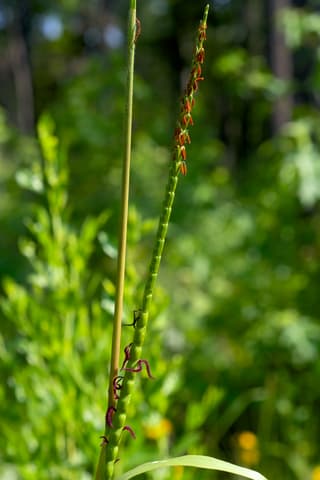
eastern gamagrass
Tripsacum dactyloides
Tripsacum dactyloides, commonly known as Eastern Gamagrass, is a robust, native perennial bunchgrass of North America. A distant relative of maize, it forms large, impressive clumps of arching, wide green leaves. It is highly valued for its deep root system, which aids in soil stabilization and drought resistance, and its unique flowering spikes that feature distinct male and female sections.
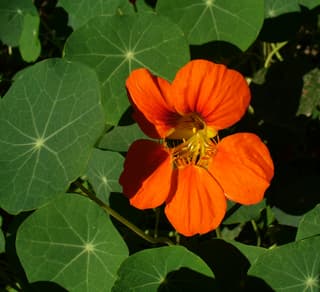
Nasturtium
Tropaeolum
Tropaeolum is a genus of trailing or climbing herbaceous plants in the family Tropaeolaceae, native to Central and South America. The most widely cultivated species, Tropaeolum majus (garden nasturtium), has rounded peltate leaves and showy flowers in red, orange, yellow, pink, white and cream. It is a fast-growing annual popular as an ornamental, an edible plant, and a companion plant that lures aphids away from vegetable crops.
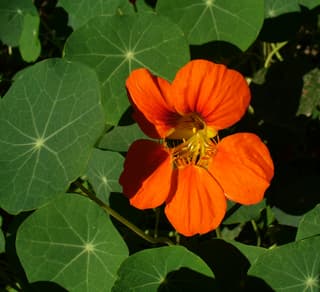
Nasturtium
Tropaeolum majus
Tropaeolum majus, commonly known as Nasturtium, is a fast-growing annual or short-lived perennial plant famous for its vibrant, funnel-shaped flowers and peltate (shield-shaped) leaves. Originating from the Andes, it has become a garden staple worldwide due to its hardiness and versatility. Every part of the plant above ground is edible, offering a peppery flavor similar to watercress. It is often used in companion planting to deter pests from vegetables like cucumbers and tomatoes.
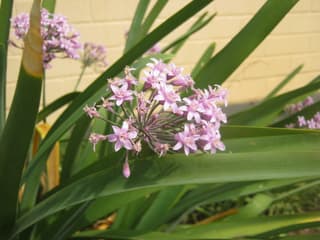
Sweet Garlic
Tulbaghia simmleri
Tulbaghia simmleri, commonly known as Sweet Garlic, is an elegant, clump-forming evergreen perennial native to the grasslands and rocky slopes of South Africa. It produces slender grey-green strap-like leaves and bears delicate umbels of sweetly fragrant pink to mauve-pink tubular flowers from spring through autumn. Unlike its relative Society Garlic, its flowers carry a pleasant sweet scent rather than a garlicky one.

Tulip
Tulipa
Tulipa is a genus of spring-flowering bulbous perennials in the lily family (Liliaceae), prized for their cup-shaped blooms in nearly every color imaginable. Native to Central Asia and naturalized across Europe, tulips are among the most popular ornamental bulbs worldwide, planted in fall to bloom the following spring.
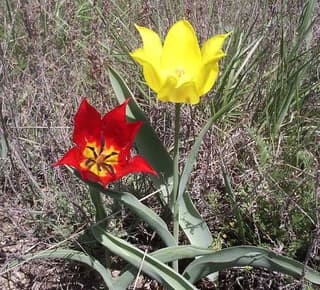
Tulip
Tulipa gesneriana
The garden tulip (Tulipa gesneriana) is one of the most iconic and beloved flowers in the world, originating from Central Asia and widely cultivated in Europe since the 16th century. Its cup-shaped flowers, with vibrant petals in shades of red, yellow, white, pink, and purple, emerge in spring and transform gardens into spectacles of color. It is a bulbous plant that requires a cold dormancy period to bloom exuberantly.
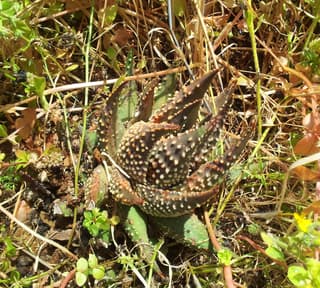
Pearl Plant
Tulista pumila
Tulista pumila (formerly Haworthia pumila / Haworthiopsis pumila) is a small South African succulent from the Asphodelaceae family, native to the Western Cape Karoo in the Robertson-Worcester region. It forms compact, stemless rosettes with rigid, upright, and slightly incurved leaves covered in rounded whitish tubercles that resemble pearls—hence its common name. In summer (November-December in its native habitat), it produces a thin flower spike with small tubular flowers in shades of white and pink. It is a slow-growing, long-lived plant (capable of living 30-40 years) and is highly prized as an ornamental indoor succulent and in rock gardens.
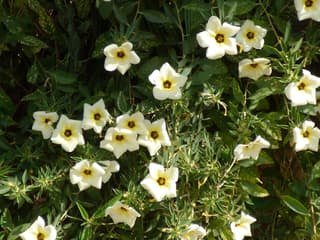
White Buttercup
Turnera subulata
White buttercup (Turnera subulata) is a low, woody-based perennial subshrub native to Central and South America, from Panama south through Brazil, and now naturalized across many tropical regions including Malaysia, Indonesia, the Pacific Islands, the Caribbean and Florida. It grows to about 80 cm tall, with oval, toothed leaves up to 9 cm long and white-haired undersides. Its five-petaled white to pale-yellow flowers have a darker purple-brown throat and open in the early morning, closing again by around 11 a.m. The plant blooms nearly year-round and is a reliable nectar source for bees.
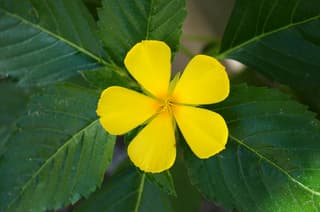
Yellow Alder
Turnera ulmifolia
Yellow alder (Turnera ulmifolia) is a tropical perennial subshrub native to Mexico, Central America, the Caribbean and northern South America. It produces bright yellow flowers that open at sunrise and wilt by midday, and is widely grown as a butterfly-attracting ornamental.
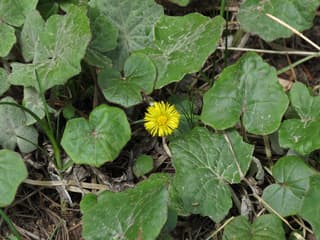
Coltsfoot
Tussilago farfara
Coltsfoot (Tussilago farfara) is a perennial herbaceous plant in the Asteraceae family, known for its exceptional growth habit: flowers emerge in early spring before the leaves appear. The scaly, 5–15 cm tall flower stalks bear bright yellow, dandelion-like inflorescences as early as April or May. Only after flowering do the large, 10–20 cm wide heart- or kidney-shaped leaves emerge from the ground, with undersides covered in a dense white down. The plant spreads effectively via long rhizomes reaching depths of up to 70 cm and often forms extensive colonies in open, sunny locations—roadside verges, ditch banks, sandy shores, and disturbed ground. The species is very common in Southern and Central Finland, becoming rarer toward the north. The genus and species names derive from the Latin words 'tussis' (cough) and 'agere' (to act on/expel), referring to the plant's long history in folk medicine for treating coughs.
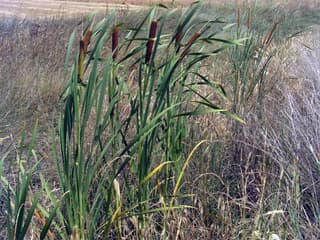
Southern Cattail
Typha domingensis
The Southern Cattail (Typha domingensis) is a perennial herbaceous plant from the Typhaceae family, native to wetlands, marshes, and the banks of rivers and lagoons in tropical and subtropical regions of the Americas. It forms dense reed beds up to 4 meters high thanks to its creeping, vigorous, and colonizing rhizomes. Its leaves are long, flat, and upright, and its flowers are grouped in a characteristic brown cylindrical spike reminiscent of a cigar. It tolerates flooding up to 1.5 meters and saline soils, playing a key ecological role by purifying water and providing shelter for aquatic wildlife.
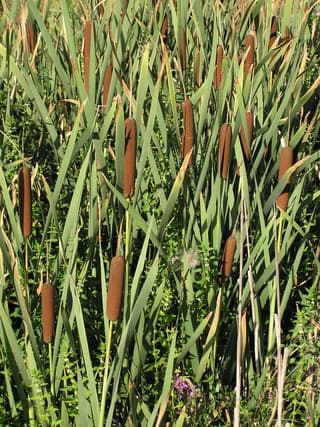
Broadleaf cattail
Typha latifolia
The broadleaf cattail (Typha latifolia) is a perennial, rhizomatous aquatic and marsh plant common in canals, reed beds, marshes, and along the shores of standing waters. It can grow up to 2.5–3 meters tall, with pale bluish-green, parallel-veined, ribbon-like leaves that are 8–20 mm wide. Its characteristic brown, "cigar-shaped" inflorescence consists of two parts: the brown female spike at the bottom and the yellow male portion above it, which falls off after flowering. Through its vigorously spreading rhizomes, it forms dense stands and provides important habitat and food sources for wetland wildlife.
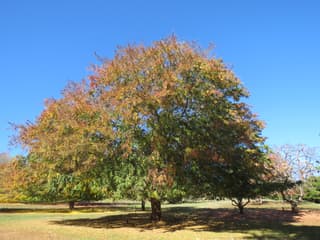
Chinese Elm
Ulmus parvifolia
Ulmus parvifolia, commonly known as the Chinese Elm or Lacebark Elm, is a deciduous to semi-evergreen tree native to East Asia (China, Japan, and Korea), where it can reach heights of 10 to 15 meters in natural conditions. Its most striking feature is the bark: as it matures, it exfoliates in irregular plates, revealing mosaics of gray, green, orange, and brown tones. The leaves are small (1–3 cm), glossy, and serrated, turning golden, reddish, or purple in autumn before falling. It blooms discreetly in late summer or autumn, producing reddish-green flowers that give way to small winged samaras. It is one of the most valued species in the art of bonsai due to its vigor, fine branching, and ease of handling. In urban landscaping, it stands out as a shade and street tree for its tolerance to pollution, moderate drought, and heavy pruning.
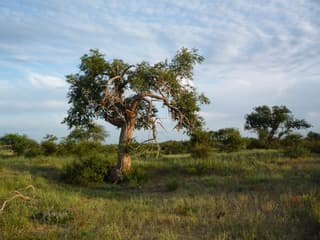
Siberian Elm
Ulmus pumila
The Siberian elm (Ulmus pumila) is a hardy, fast-growing deciduous tree native to Siberia, northern China, Mongolia and the Himalayas. Prized for its extreme cold hardiness, drought tolerance and ability to thrive in poor, compacted or alkaline soils, it was widely planted across the US Great Plains for windbreaks and shelterbelts in the 20th century. It is notably resistant to Dutch elm disease, unlike most other elms, but its rapid growth produces weak, brittle wood prone to storm damage, and it remains vulnerable to elm leaf beetle and bark beetle infestations. In many US states it has escaped cultivation and is now classified as an invasive or noxious weed due to its prolific self-seeding. Its small leaves and tolerance of heavy pruning also make it a popular, if fast-growing, choice for bonsai.

California bay laurel
Umbellularia californica
Umbellularia californica is an evergreen tree in the Lauraceae family, native to the coastal forests of California and southwestern Oregon. It can reach heights of 20 to 25 meters, though it often grows in a more shrub-like form in dry soils. Its lanceolate, dark green, and glossy leaves release an intense, spicy aroma when crushed, due to volatile oils rich in umbellulone. In spring, it produces small creamy-yellow flowers clustered in umbels, followed by green to purple drupe-like fruits. It is a long-lived, hardy, and drought-tolerant species, highly valued in native landscaping and for its wood (known as myrtlewood).

Navelwort
Umbilicus rupestris
Navelwort (Umbilicus rupestris) is a fleshy, perennial succulent of the stonecrop family, native to southern and western Europe, where it grows wild in shady wall crevices and damp rocky banks. Its round, waxy leaves have a distinctive navel-like central depression, giving rise to both its common and scientific names. In late spring and summer it sends up tall spikes of small, bell-shaped greenish-pink flowers.
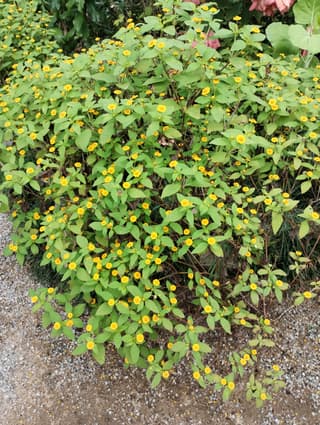
Golden Button
Unxia kubitzkii
Unxia kubitzkii, commonly known as Golden Button, is a perennial herbaceous plant native to Brazil, belonging to the Asteraceae family. It grows 30–50 cm tall and produces small golden-yellow flowers year-round, with peak blooming in spring and summer. Hardy and virtually immune to pests and diseases, it is widely used in borders, flower beds, and container gardens.
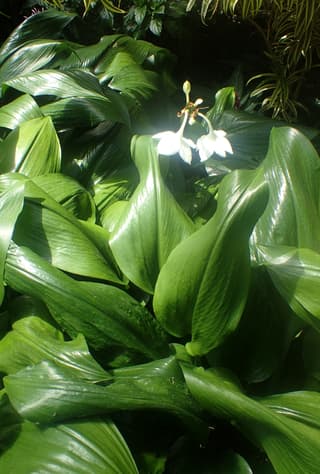
Amazon Lily
Urceolina amazonica
Amazon Lily (Urceolina amazonica, syn. Eucharis amazonica) is a stunning tropical bulbous perennial native to the Andes of Colombia and Peru. It produces glossy, deep green leaves and clusters of snow-white, narcissus-like flowers with a delicate green-tinged cup, prized for their sweet fragrance. It thrives indoors as a houseplant in temperate climates.
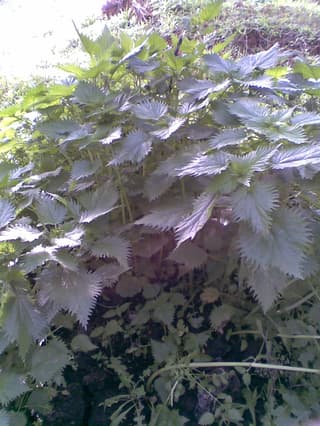
Stinging Nettle
Urtica dioica
Stinging nettle (Urtica dioica) is a perennial herb that grows wild throughout Europe, Asia, and North America. It can reach heights of up to 180 cm and spreads vigorously via rhizomes. The plant is easily recognizable by its ovate leaves with serrated margins and the numerous stinging hairs covering the stems and foliage. These hairs contain formic acid and histamine, which cause a brief burning sensation upon contact. The flowers are small, greenish to whitish, and appear in dense clusters from spring to late summer. Stinging nettle is one of nature's most versatile plants, with documented medicinal, culinary, and textile applications.
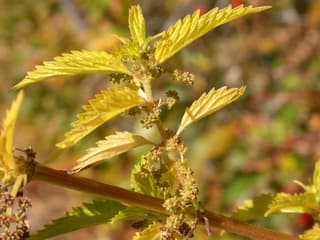
Slender Stinging Nettle
Urtica gracilis
Urtica gracilis, the slender stinging nettle or American stinging nettle, is a perennial herbaceous plant native to North America, ranging from Guatemala to Canada. It can grow up to 3 meters tall and features deeply serrated leaves covered with stinging trichomes that cause intense skin irritation upon contact. Despite its fearsome reputation, it is highly valued in traditional medicine, cooking, and Indigenous textile crafts. It thrives naturally in forested floodplains, streambanks, and nitrogen-rich disturbed soils.
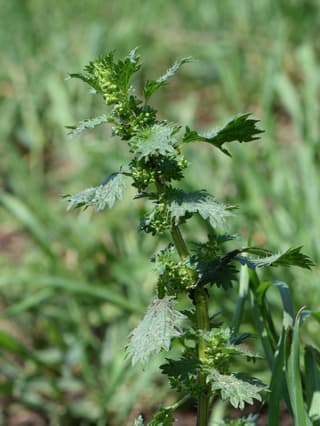
Small Nettle
Urtica urens
Urtica urens, commonly known as small nettle or annual nettle, is a herbaceous annual plant in the family Urticaceae. Native to Europe and the Mediterranean region, it has become a cosmopolitan weed found across temperate regions worldwide. Growing up to 100 cm tall, it is notable for its stinging hairs (trichomes) that cause intense skin irritation on contact — reputedly stinging more strongly than the common nettle (Urtica dioica). It bears small greenish-white flowers throughout summer and is a monoecious, wind-pollinated species.
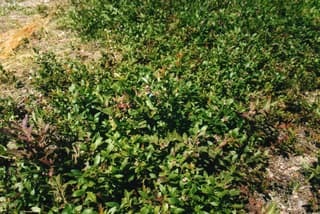
Lowbush Blueberry
Vaccinium angustifolium
Vaccinium angustifolium, commonly known as the Lowbush Blueberry, is a low-growing native shrub of northeastern North America. It produces small, intensely flavored blueberries beloved by wildlife and humans alike. Its brilliant red autumn foliage makes it equally valued as an ornamental ground cover.
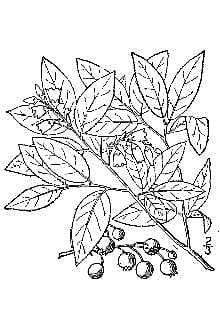
Hillside Blueberry
Vaccinium pallidum
Vaccinium pallidum, commonly called the Hillside Blueberry or Blue Ridge Blueberry, is a native deciduous shrub of eastern North America belonging to the Ericaceae family. Growing 2–3 feet tall and wide, it produces delicate white bell-shaped flowers in spring followed by sweet, edible blue-black berries in summer. The plant is celebrated for its brilliant scarlet fall foliage and its exceptional value to native wildlife, serving as a host plant for the Brown Elfin butterfly and a critical food source for birds, small mammals, and pollinators. It thrives in acidic, well-drained soils across USDA hardiness zones 5a–9b, making it an ideal choice for native gardens, edible landscapes, and naturalized woodland settings.
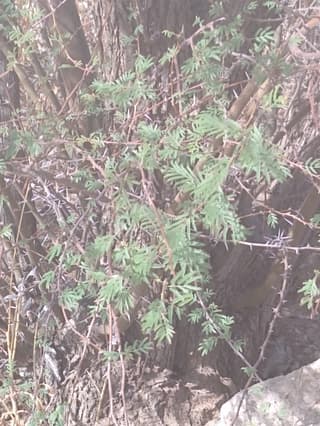
Acacia / Whistling Thorn (genus)
Vachellia
Vachellia is a genus of thorny trees and shrubs in the family Fabaceae, split from the broader Acacia genus in 2005 following molecular phylogenetic studies. It encompasses the iconic African and American acacias prized for drought tolerance and distinctive yellow pom-pom flowers.
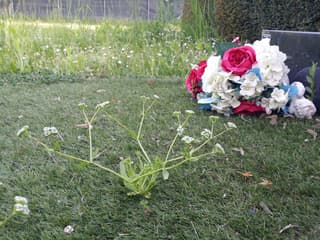
Keeled-fruited Cornsalad
Valeriana carinata
Valeriana carinata, commonly known as Keeled-fruited Cornsalad, is a small hardy annual native to Europe and the Mediterranean region. Often confused with Valerianella locusta (common corn salad or mâche), it produces tender rosettes of mild-flavoured leaves that are harvested as a salad green. The plant blooms in spring with tiny pale pink, white, or bluish flowers. Its distinctive keeled fruits help distinguish it from related species.
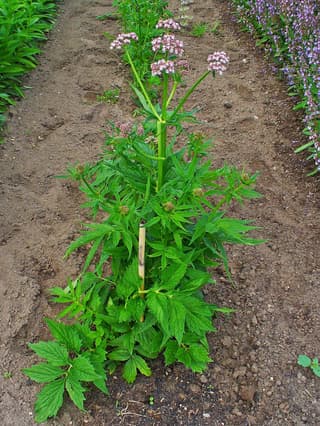
Common Valerian
Valeriana officinalis
Valeriana officinalis is a hardy perennial herb native to Europe and Asia, prized for its clusters of tiny pink or white flowers and its medicinal root extract, widely used as a natural sleep aid and anxiety remedy.
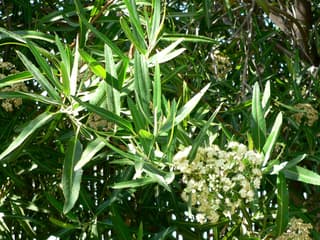
Arizona rosewood
Vauquelinia californica
Arizona Rosewood is a robust, evergreen shrub or small tree native to the Sonoran Desert. It is highly valued in xeriscaping for its resemblance to oleander but without the high toxicity. The plant features dark green, leathery, lance-shaped leaves with serrated edges. In late spring and early summer, it produces dense, flat-topped clusters of small, creamy white flowers that attract pollinators. Its bark is attractive and becomes shaggy with age, adding winter interest to the landscape.
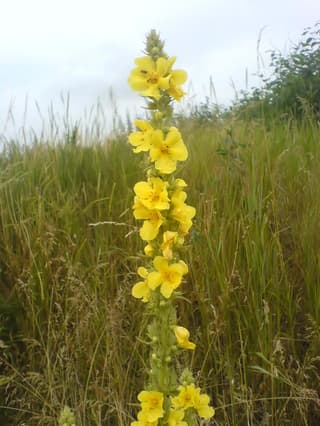
Denseflower Mullein
Verbascum densiflorum
Verbascum densiflorum, commonly called denseflower mullein, is a robust biennial native to Europe and western Asia. In its first year it forms a low rosette of large, felted grey-green leaves, then sends up a tall, unbranched flower spike densely packed with bright yellow blooms in its second summer. Prized in cottage gardens and wildflower borders, it is remarkably drought-tolerant and thrives in poor, well-drained soils where little else survives. The plant has a long history of use in European herbal medicine, particularly its flowers, which are dried for soothing teas.
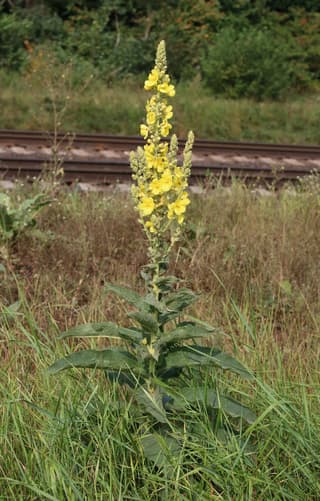
Orange Mullein
Verbascum phlomoides
Verbascum phlomoides, commonly called orange mullein or woolly mullein, is a biennial to short-lived perennial herb in the figwort family (Scrophulariaceae). It forms a low rosette of soft, grey-green, felted leaves in its first year, then sends up a tall flowering spike up to 2.5 m covered in bright yellow blooms from June to September in its second year. Native to Europe and western Asia, it thrives in poor, dry, sunny sites and is valued in gardens for its architectural form, pollinator appeal, and traditional medicinal uses.
Easy Care Easy Care
Our selection of 2307 easy easy care combines the characteristics of this category with reduced care needs. Perfect for beginners who love this category.
Why Choose Easy Easy Care?
Combining the beauty of easy care with easy difficulty level lets you enjoy this category without excessive maintenance worries. Each plant was selected to offer the best characteristics of the category at the care level you are looking for.