1443 Easy Pet Safe | 2026 Guide - Page 3
Find 1443 easy pet safe. Complete guide for your garden.
1443 Pet Safe with easy level
Showing 73-108 of 1443
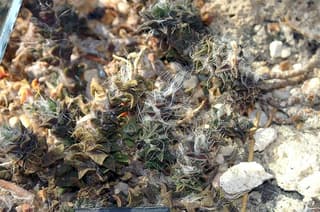
Sunrise Succulent
Anacampseros
Anacampseros is a genus of small, slow-growing succulent plants native to Southern Africa, prized for their compact rosettes of fleshy, often reddish or silvery leaves covered in fine white hairs. It is popular in cultivation for its easy care and summer blooms of white or pink flowers that open only in sunlight.

Sunrise Succulent
Anacampseros retusa
Anacampseros retusa is a tiny, slow-growing succulent from the winter-rainfall regions of Namibia and South Africa's Northern and Western Cape. It forms a short, thickened caudex topped with clustered, dark blackish-green, club-shaped leaves fringed by fine woolly hairs. From spring through summer it produces wheel-shaped pink flowers that open only in the afternoon sun and close again by evening.
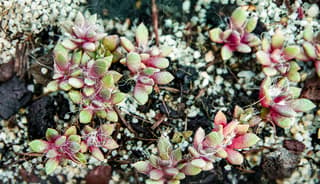
Sand rose
Anacampseros rufescens
Low-growing succulent native South Africa. Dense rosettes thick fleshy leaves green, yellow-green, pink, deep purple. Sunrise cultivar from warm reddish hues intensifying under bright light. Slow-growing, highly adapted arid conditions, drought-tolerant, low-maintenance.
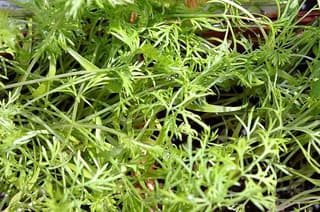
Dill
Anethum graveolens
Dill (Anethum graveolens) is an annual aromatic herb from the Apiaceae family, native to the Mediterranean and Western Asia. Its feathery, blue-green leaves and aromatic seeds are widely used in cooking, particularly in pickles, sauces, and fish dishes. The plant can reach up to 150 cm in height and produces yellow flowers in umbels during summer.
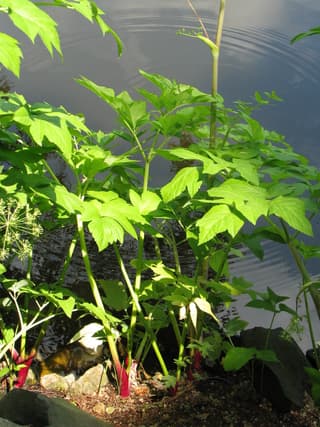
Garden Angelica
Angelica archangelica
Garden angelica is a tall, aromatic biennial herb native to Northern and Eastern Europe, prized for centuries in folk medicine, herbal liqueurs, and confectionery. Its hollow, ridged stems can reach up to 2.5 m in its second year, topped with large umbels of greenish-yellow flowers in summer.
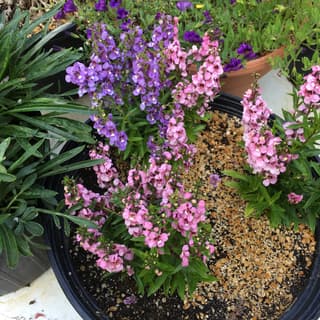
Summer Snapdragon
Angelonia angustifolia
Angelonia angustifolia, commonly called summer snapdragon, is a heat-loving herbaceous perennial in the Plantaginaceae family, native to Mexico, the West Indies and parts of Central and South America. Grown as a warm-season bedding plant across much of the world, it produces upright spikes of small, two-lipped flowers in white, pink, purple, blue and bicolor shades from early summer through fall, above narrow, slightly aromatic lance-shaped leaves.
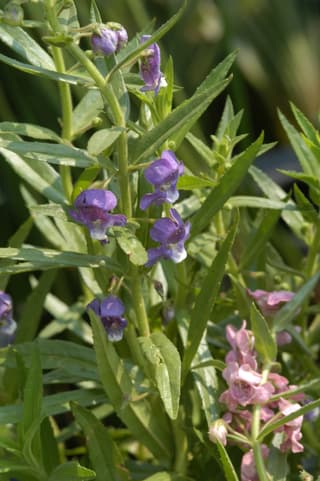
Two-flowered Angelonia
Angelonia biflora
Angelonia biflora is a small annual flower native to Brazil, prized for its abundant blooms in shades of purple, violet, pink, and white throughout summer. Belonging to the Plantaginaceae family, this compact plant grows up to 60 cm tall and is widely used in borders, flower beds, and ornamental containers.
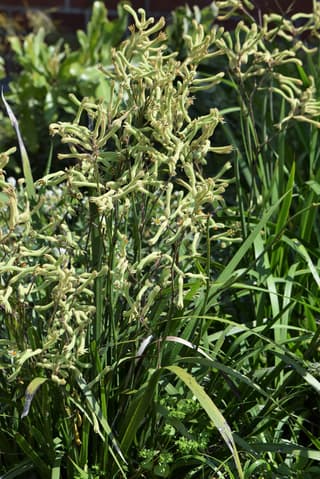
Tall Kangaroo Paw
Anigozanthos flavidus
The Tall Kangaroo Paw (Anigozanthos flavidus) is a member of the Haemodoraceae family and a perennial plant native to Southwest Australia. Its fibrous, sword-like leaves form a basal rosette, from which 1-2 meter tall flower stalks covered in velvety hairs emerge. Its distinctive tubular flowers, resembling a kangaroo's paw, range in color from yellowish-green to red and bloom almost continuously from spring to fall. It has been the official floral emblem of Western Australia since 1960.
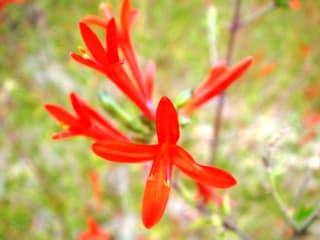
Flame Acanthus
Anisacanthus quadrifidus
Flame acanthus is a fast-growing, deciduous shrub native to the rocky slopes, floodplains, and grasslands of west and south-central Texas and adjacent northern Mexico. It forms a loose, spreading mound of narrow lance-shaped leaves and exfoliating bark, topped from early summer through fall with slender, tubular red-orange flowers that intensify after rain. Prized in xeriscape and wildlife gardens, its nectar-rich blooms are a magnet for hummingbirds and butterflies, and the foliage serves as a larval host for the Janais patch and Texan crescentspot butterflies.
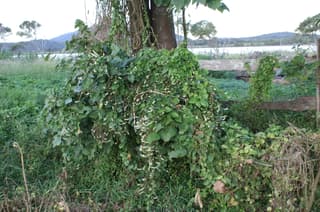
Madeira Vine
Anredera cordifolia
Madeira vine (Anredera cordifolia) is a fast-growing climbing vine native to South America, valued for its edible, spinach-like leaves and small fragrant white flowers. It produces aerial tubers used for propagation.
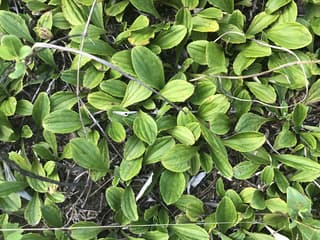
Plantain-leaved Pussytoes
Antennaria plantaginifolia
Antennaria plantaginifolia, commonly known as Plantain-leaved Pussytoes or Woman's Tobacco, is a low-growing native perennial groundcover from Eastern North America. It forms spreading mats of fuzzy, silvery-green basal leaves that resemble plantain leaves, topped in spring with clusters of small white flower heads that look remarkably like cat's paws. It thrives in lean, dry, rocky soils and full to partial sun, making it an excellent choice for difficult dry spots, rock gardens, and native plant landscapes.
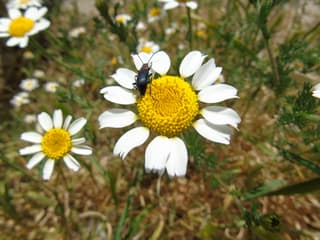
Corn chamomile
Anthemis arvensis
Corn chamomile is an annual plant in the Asteraceae family, native to Europe, commonly found in cereal fields and disturbed ground. It has finely divided, aromatic-looking foliage and produces white daisy-like flower heads with yellow centers, resembling true chamomile though it belongs to a different genus.
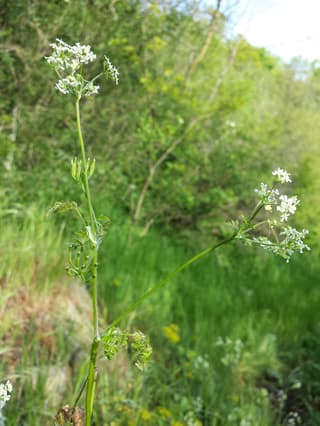
Chervil
Anthriscus cerefolium
Chervil (Anthriscus cerefolium) is a delicate annual herb native to Europe, prized for its lacy, fern-like foliage and subtle anise-parsley flavor. A staple of French cuisine and one of the classic "fines herbes," it grows quickly and prefers cool, partially shaded conditions. It reaches 40–60 cm in height and produces small white flowers in spring and summer.
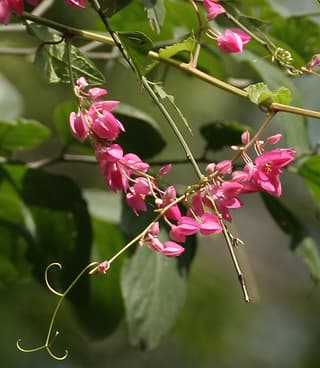
Coral Vine
Antigonon leptopus
Coral vine is a vigorous, tendril-climbing perennial vine in the buckwheat family (Polygonaceae), native to the Pacific and Atlantic coastal plains of Mexico. It scrambles rapidly over fences, trellises, and hot walls using coiling tendrils, producing heart-to-arrowhead-shaped green leaves and long, cascading sprays of small coral-pink to white flowers that bloom nearly year-round in warm climates. Beneath the soil it forms fleshy, water-storing tubers that help it survive drought and resprout after being cut back or frozen to the ground. Prized for its nonstop color and toughness, coral vine is also listed as an invasive species in Florida and other subtropical regions.
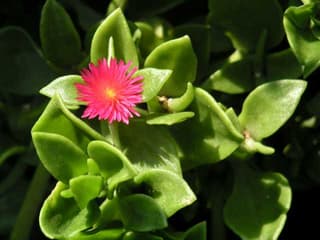
Baby Sun Rose
Aptenia cordifolia
Aptenia cordifolia, commonly known as Baby Sun Rose or Heartleaf Ice Plant, is a fast-growing succulent ground cover native to the Eastern Cape and KwaZulu-Natal regions of South Africa. It belongs to the Aizoaceae family and forms dense, low-lying mats of glossy, heart-shaped leaves that can spread up to 60 cm wide. Despite its succulent nature, it produces an abundance of vivid pink to magenta daisy-like flowers from spring through fall, making it a beloved ornamental plant worldwide. It is also edible, with leaves that have a flavor reminiscent of spinach.
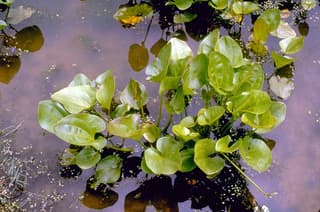
Radican Sword
Aquarius cordifolius
The Radican Sword (Aquarius cordifolius, formerly classified as Echinodorus cordifolius) is a perennial aquatic/marsh plant from the Alismataceae family, native to swamps, marshes, and muddy banks of the southeastern United States, Mexico, Central America, and northern South America. Its heart-shaped (cordate) leaves, bright green and marked by clearly visible translucent veins, can be kept fully submerged in an aquarium or grown out of the water in a paludarium/emerged setup, where the plant becomes considerably larger and more robust, potentially exceeding 3 feet (1 meter) in height. It is a highly versatile amphibious species: under strong light and long photoperiods, it produces arched flower stalks with white flowers and forms adventitious plantlets along these stalks, which root and give rise to new specimens.
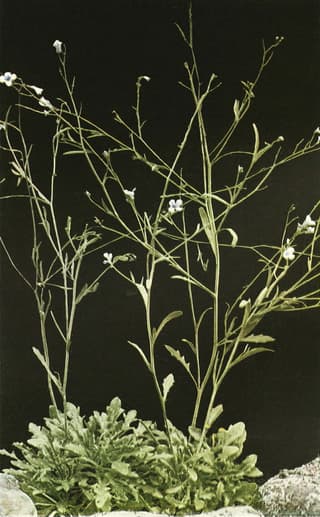
Lyreleaf Rockcress
Arabidopsis lyrata
Arabidopsis lyrata, commonly known as Lyreleaf Rockcress, is a hardy perennial herb native to the Northern Hemisphere. It is characterized by a basal rosette of lyre-shaped leaves and produces delicate, four-petaled white flowers on slender stems. It is frequently found in rocky outcrops and sandy environments, making it a popular choice for rock gardens and as a model organism in botanical research.
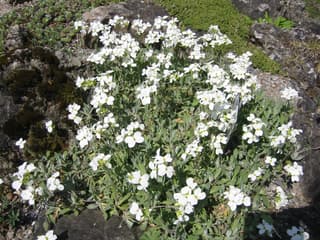
Garden Arabis
Arabis caucasica
Arabis caucasica (Garden Arabis) is an evergreen mat-forming perennial native to southeastern Europe, the Caucasus, and Iran. Its silver-grey, softly hairy leaves form low spreading mats, smothered each spring in fragrant white or pale pink flowers. Ideal for rock gardens, dry stone walls, slopes, and border edges.
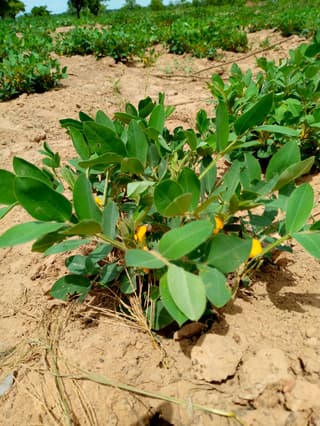
Peanut
Arachis hypogaea
Peanut (Arachis hypogaea) is an annual legume native to South America, cultivated worldwide for its protein- and fat-rich edible seeds. One of its most remarkable traits is geocarpy: after pollination, the flower stalks bend downward and burrow into the soil, where the pods develop underground. The plant also fixes atmospheric nitrogen through symbiotic root bacteria, making it a natural soil enricher.

Bangalow Palm
Archontophoenix cunninghamiana
The Bangalow Palm (Archontophoenix cunninghamiana) is a majestic palm native to the subtropical rainforests of eastern Australia. It features a slender, elegant trunk that can reach up to 20 meters in height, topped by a crown of graceful arching fronds up to 3 meters long. Widely used in tropical and subtropical landscaping, it is prized for its fast growth, ornamental value, and adaptability.
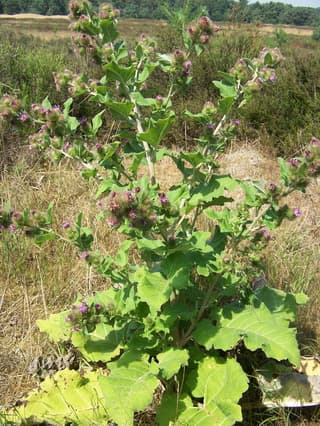
Wood Burdock
Arctium nemorosum
Arctium nemorosum, known as wood burdock, is a robust biennial herb in the daisy family (Asteraceae), native to woodlands and shaded, disturbed ground across Europe and into the Caucasus, generally on calcium-rich soils. In its first year it forms a low rosette of large, downy, heart-shaped leaves; in its second year it sends up a tall flowering stem, often over 2 metres high, topped with clusters of thistle-like purple-pink flowerheads from midsummer into autumn. The flowerheads ripen into the familiar hooked burrs that catch on fur and clothing to disperse seed.
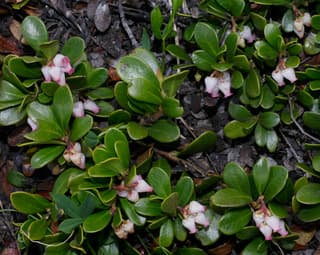
Bearberry
Arctostaphylos uva-ursi
Bearberry (Arctostaphylos uva-ursi) is an evergreen, mat-forming groundcover shrub belonging to the Ericaceae family. Native to circumpolar regions and temperate mountains across the Northern Hemisphere, it forms a dense carpet of creeping woody stems with leathery, glossy leaves that turn bronze in the fall. In spring, it is covered with delicate pale pink to white bell-shaped flowers, followed in autumn by bright red berries that are highly favored by bears and birds. A very hardy plant, it tolerates extreme cold down to -20°C (-4°F) and thrives in poor, dry soils.
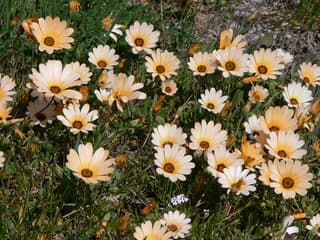
Silver Arctotis
Arctotis stoechadifolia
The Silver Arctotis (Arctotis stoechadifolia) is a sprawling perennial plant native to the coastal dunes and sandy plains of the Western Cape in South Africa, specifically the area between Langebaan and the Cape Peninsula. Its woody-based, spreading stems can cover the ground up to 1.2 meters wide, while the flowering shoots rise only 30-35 cm high. Its narrow, lance-shaped, slightly toothed leaves are covered in white-woolly, silvery hairs that protect the plant from wind and salty sea air. Its large, simple, daisy-like flowers are creamy white with a reddish-maroon tint underneath, and their centers are a striking dark blue-black. The flowers open during the day and close at dusk.
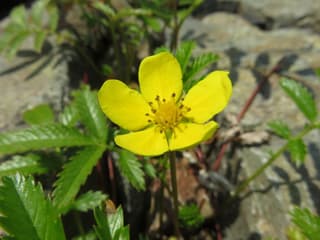
Silverweed
Argentina anserina
Argentina anserina, commonly known as silverweed, is a perennial herbaceous plant belonging to the Rosaceae family. It grows at low altitudes, forming low-growing mats thanks to creeping red stolons that can reach up to 80 cm in length. The pinnate leaves, 10–20 cm long, are covered with a dense, silvery silky down that gives the plant its characteristic shimmering appearance. In summer, it produces bright yellow five-petaled flowers about 2 cm in diameter on erect stems of 5–15 cm. It spreads rapidly in moist, sandy, or clay soils, often colonizing meadows, roadsides, and coastal areas.
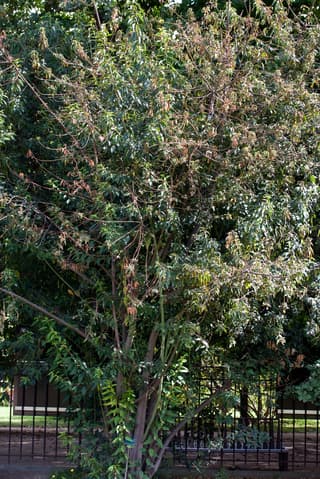
Maqui berry
Aristotelia chilensis
A perennial shrub or small tree native to southern Chile and Argentina. It produces dark, almost black berries with a flavor similar to blueberries, very rich in antioxidants. The Mapuche people have traditionally used it in medicine, food, and fermented beverages.
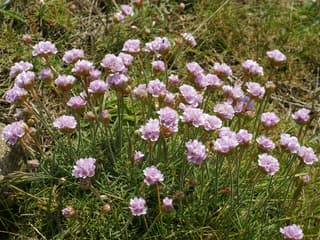
Sea Thrift
Armeria maritima
Sea Thrift (Armeria maritima) is a compact, evergreen perennial native to coastal cliffs and meadows of Europe and North America. It forms dense, grass-like tufts of dark green foliage topped with round, papery pink to white flower clusters held on slender stalks. Highly tolerant of salt spray, poor soil, and drought, it is a favorite for rock gardens and coastal plantings.
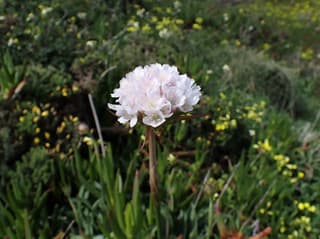
False Sea Thrift
Armeria pseudarmeria
Armeria pseudarmeria (False Sea Thrift) is an evergreen, clump-forming perennial from the coastal cliffs of Western Portugal and Spain, belonging to the Plumbaginaceae family. It features broad, sword-shaped leaves and spherical flower heads on slender stems, ranging from white to deep pink, blooming in late spring and summer. Hardy and long-lived, it thrives in poor, well-drained soil where many other plants struggle.
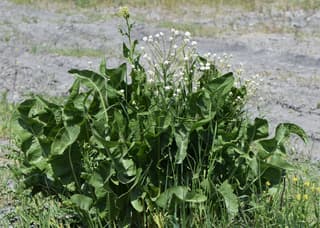
horseradish
Armoracia rusticana
Armoracia rusticana, commonly known as horseradish, is a hardy perennial plant of the family Brassicaceae. It is primarily cultivated for its thick, pungent white taproot. The plant features large, emerald-green, dock-like leaves and produces clusters of small white flowers on tall stalks during the summer. It is a vigorous grower that can become invasive if not managed properly.
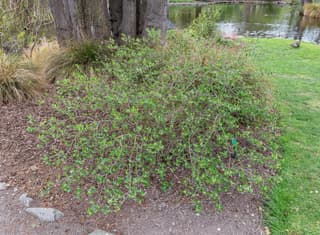
Black chokeberry
Aronia melanocarpa
Black chokeberry (Aronia melanocarpa) is a deciduous shrub in the rose family (Rosaceae), native to eastern North America. It grows to a height of approximately 1–3 m and a similar width, forming dense, multi-stemmed clumps. In spring, it produces small white to pinkish flowers in corymb-like clusters, followed by glossy dark purple to black fruits in autumn and vibrant red fall foliage. The fruits are edible, though quite astringent when raw, and are known for their high antioxidant (anthocyanin) content.
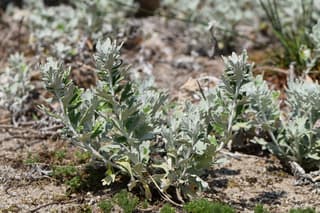
Beach Wormwood
Artemisia stelleriana
Artemisia stelleriana is a silver-leaved herbaceous perennial native to northeastern Asia, naturally found on coastal dunes and sandy habitats. Its densely white-hairy foliage gives it a distinctive silvery appearance, making it a popular ornamental ground cover for sunny, dry gardens.
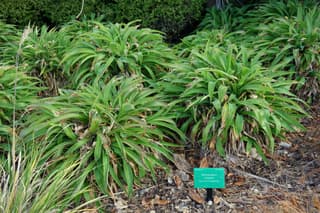
Rock Lily
Arthropodium cirratum
Arthropodium cirratum, commonly known as rock lily or rengarenga, is an evergreen rhizomatous perennial endemic to New Zealand's coastal cliffs and rocky headlands. It forms clumps of glossy, strap-like leaves topped in early summer by branching stalks of small white, six-petalled flowers with purple-and-yellow stamens. Traditionally an important food and medicine plant for Maori, its fleshy rhizomes were cooked and eaten, and its leaves and roots were used to treat wounds and skin ailments. Today it is a popular, low-maintenance ornamental for coastal and shaded gardens worldwide.
Artificial grass
Artificial plant
Lifelike artificial plants and grasses offer an excellent alternative in spaces where light conditions or environmental factors are unsuitable for live plants. They are made from high-quality polymers and silk, making them remarkably similar to real plants, while having no biological needs.
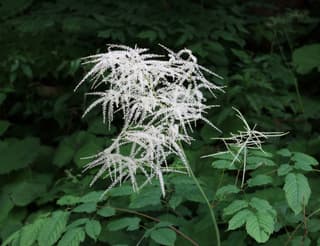
Goat's Beard
Aruncus dioicus
Aruncus dioicus, commonly known as Goat's Beard, is a bold and graceful shade-loving perennial native to moist woodlands across the Northern Hemisphere. It produces dramatic, feathery plumes of creamy-white flowers in late spring to early summer, rising above deeply divided, fern-like foliage. A dioecious species, male plants bear showier upright flower plumes while female plants produce more pendulous clusters that develop into attractive seed heads. This long-lived, low-maintenance perennial thrives in partial to full shade and consistently moist, humus-rich soils, making it an outstanding choice for woodland gardens, shaded borders, stream banks, and rain gardens.
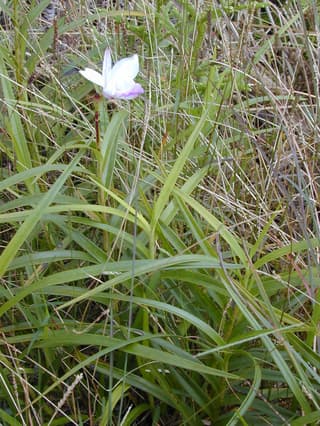
Bamboo Orchid
Arundina graminifolia
The Bamboo Orchid (Arundina graminifolia) is a terrestrial orchid native to Southeast Asia, recognized by its slender, bamboo-like stems that can reach up to 2.5 meters tall. It produces gorgeous flowers in shades of white, pink, and lilac year-round, making it one of the most rewarding orchids for tropical and subtropical gardens.
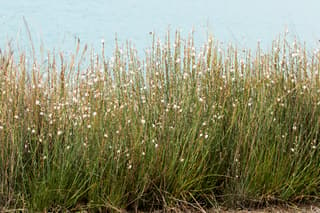
Onionweed
Asphodelus fistulosus
Asphodelus fistulosus is a slender Mediterranean perennial native to the Mediterranean basin and Southwest Asia. It produces hollow, rush-like stems with star-shaped white to pale pink flowers with pink veins in spring and summer. Extremely drought-tolerant, it thrives in poor, sandy, well-drained soils and full sun. Note: it is a Federal Noxious Weed in the USA and invasive in several countries including Australia and New Zealand.
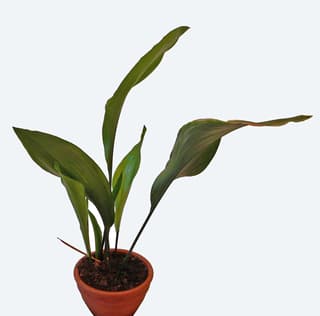
Cast Iron Plant
Aspidistra elatior
The Cast Iron Plant is a classic, low-maintenance houseplant native to the shady forest floors of Japan. Known for its dark green, glossy leaves that can grow up to 60cm long, this remarkably resilient plant earns its name from its ability to tolerate neglect, low light, and varying temperatures. It has been a popular Victorian parlor plant and remains an excellent choice for beginners or challenging growing conditions.
Easy Care Pet Safe
Our selection of 1443 easy pet safe combines the characteristics of this category with reduced care needs. Perfect for beginners who love this category.
Why Choose Easy Pet Safe?
Combining the beauty of pet safe with easy difficulty level lets you enjoy this category without excessive maintenance worries. Each plant was selected to offer the best characteristics of the category at the care level you are looking for.