1160 Medium Easy Care | 2026 Guide - Page 4
Find 1160 medium easy care. Complete guide for your garden.
1160 Easy Care with medium level
Showing 109-144 of 1160
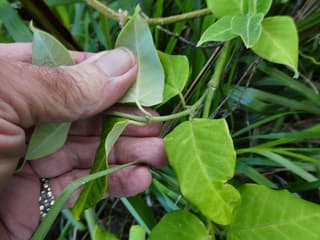
Cruel Vine
Araujia sericifera
Araujia sericifera, commonly known as Cruel Vine or Moth Plant, is an invasive climbing vine native to South America (Brazil, Argentina, Paraguay). It produces fragrant white to pale pink waxy flowers in summer and fall that trap moths overnight — hence its common name. The milky latex sap is a skin and eye irritant. It is classified as invasive in Australia, New Zealand, California, and Portugal.
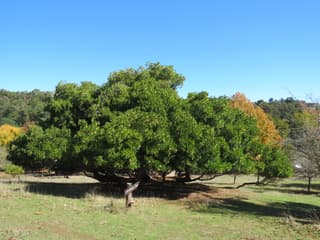
Strawberry Tree
Arbutus unedo
The strawberry tree (Arbutus unedo) is an evergreen shrub or small tree in the Ericaceae family, native to the Mediterranean region and western Europe. It is known for its white urn-shaped flowers and red strawberry-like fruit, which ripen in autumn and winter alongside the new flowering.
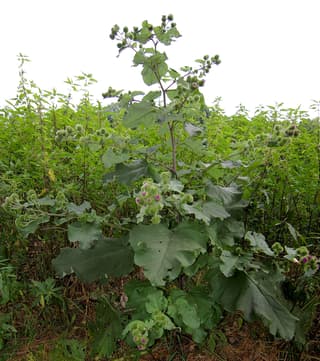
Burdock
Arctium lappa
Arctium lappa, commonly known as Burdock or Gobo, is a robust biennial herbaceous plant native to Europe and Asia. It grows up to 2 meters tall, producing large heart-shaped leaves and distinctive purple flower heads surrounded by hooked bracts that cling to clothing and animal fur — inspiring the invention of Velcro. Both the root and leaves have been valued for centuries in traditional medicine and Asian cuisine.

Betel Nut Palm
Areca catechu
The Betel Nut Palm (Areca catechu) is a slender tropical palm native to Southeast Asia, widely cultivated for its fruit, the areca nut. It can reach up to 20 meters tall with a graceful trunk and arching deep-green fronds. It is one of the most widely cultivated palms in the world, holding immense cultural and economic significance across tropical Asia.
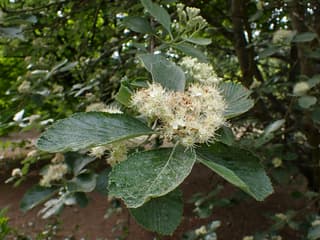
Whitebeam
Aria edulis
The whitebeam (Aria edulis, synonym Sorbus aria) is a deciduous tree in the Rosaceae family, native to Europe, North Africa and western Asia. It forms a compact, domed crown with oval, serrated leaves that are dark green and glossy above, and covered in a felty white-grey down beneath, giving the tree its common name. Cream-white flowers appear in clusters in spring, followed in autumn by scarlet berries that only become palatable once "bletted" (softened by frost or storage).
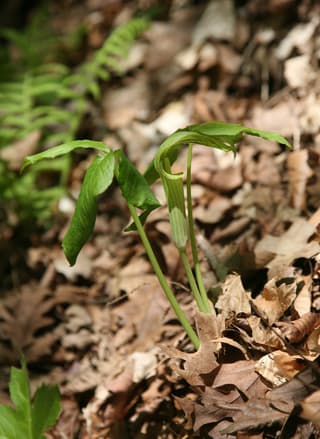
Jack in the pulpit
Arisaema
Arisaema is a genus of approximately 150 species of woodland tuberous aroids native to Asia and North America. They are celebrated for their unique hooded inflorescences (spathe and spadix) and exotic foliage. Plants go dormant in winter and re-emerge vigorously each spring. The most well-known species is A. triphyllum, commonly called Jack in the pulpit.
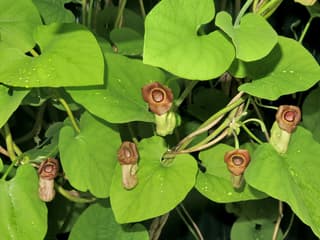
Dutchman's Pipe
Aristolochia
Aristolochia is a large genus of about 350 climbing and herbaceous plants in the family Aristolochiaceae, prized for their curious pipe- or trumpet-shaped flowers in brown, yellow, green and purple tones. Species range from cold-hardy temperate vines like A. macrophylla to tender tropical climbers. All parts of the plant contain aristolochic acid, a compound now known to be nephrotoxic and carcinogenic, so it should be handled with care and kept away from children and pets.
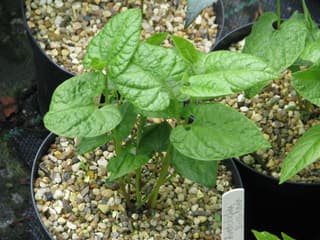
Virginia Snakeroot
Aristolochia serpentaria
Aristolochia serpentaria, commonly known as Virginia Snakeroot, is a low-growing woodland perennial herb native to the eastern United States. It produces distinctive curved, pipe-shaped flowers and heart-shaped leaves. Historically prized as a medicinal plant by Indigenous peoples and early settlers, it contains aristolochic acids now known to be toxic.

Heart-leaf arnica
Arnica cordifolia
Arnica cordifolia, or heart-leaf arnica, is a perennial herbaceous plant native to the coniferous forests and mountain meadows of western North America, found between 1,500 and 3,300 m in altitude. Recognizable by its opposite heart-shaped leaves and bright yellow flower heads, it spreads via creeping rhizomes and can live for about ten years. Moderately fire-resistant, it regrows from its rhizomes after a fire and serves as an important food source for mule deer and elk. Toxic if ingested (causing nausea and heart issues), it should be reserved for external use only and kept out of reach of children and pets.
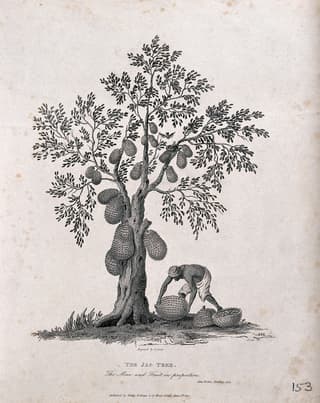
Breadfruit
Artocarpus
Artocarpus is a genus of approximately 60 species of tropical trees in the family Moraceae, native to Southeast Asia and the Pacific Islands. The most famous species are jackfruit (A. heterophyllus), which bears the largest fruit of any tree in the world, and breadfruit (A. altilis), a staple food across the Pacific. All species produce milky latex sap and feature large, ornamental leaves.
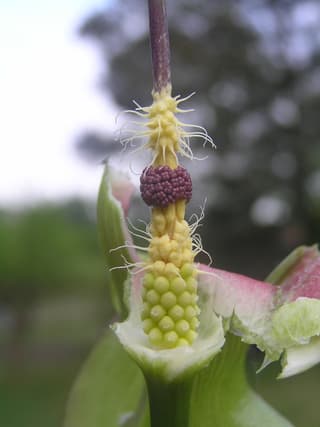
Danish Arum
Arum cylindraceum
Danish Arum (Arum cylindraceum) is a perennial tuberous plant in the arum family (Araceae), and the only Arum species native to Denmark. It grows 25-40 cm tall with spear-shaped, unspotted leaves and a characteristic inflorescence consisting of a violet spadix surrounded by a pale green spathe, blooming in May-June. The plant is found here and there on the Danish islands and in eastern Jutland, where it grows in nutrient-rich, moist forest floors, thickets, and hedges. In autumn, it produces conspicuous, poisonous red berries. The entire plant – especially the berries and tuber – contains needle-shaped calcium oxalate crystals and is highly toxic if ingested.
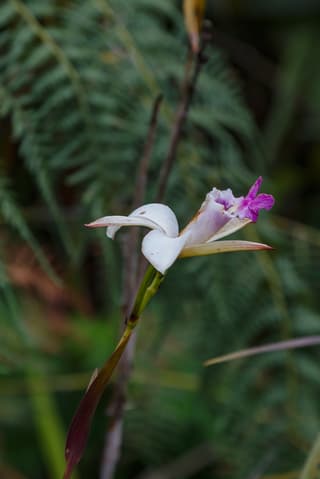
Bamboo Orchid (genus)
Arundina
Arundina is a genus of terrestrial orchids in the family Orchidaceae, native to tropical and subtropical Asia. The dominant species, A. graminifolia, features slender bamboo-like stems and delicate flowers in white, pink, and purple hues. These orchids are among the most robust and beginner-friendly in the family.
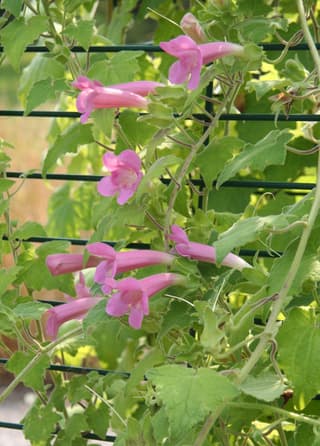
Creeping Gloxinia
Asarina erubescens
Asarina erubescens, commonly known as creeping gloxinia or climbing snapdragon, is a fast-growing evergreen perennial vine native to the oak forests and canyon walls of the Sierra Madre Oriental range in Mexico, at elevations between 1,000 and 2,200 meters. Rather than using tendrils, it climbs by twining its soft, velvety, triangular leaf-stalks around trellises, fences, and other supports, reaching lengths of up to 2.5 m (8 ft) in a single season. From summer through the first frost it produces a continuous show of tubular, trumpet-shaped flowers up to 7 cm long, rosy-pink with a paler throat (white in some cultivated forms), which attract hummingbirds and butterflies. Grown as a tender perennial in USDA zones 7b-11 and as a fast summer annual elsewhere, it is a popular choice for hanging baskets, trellises, and container gardens.

Ascocenda Orchid
Ascocenda
Ascocenda is an orchid nothogenus, a hybrid between Ascocentrum and Vanda within the family Orchidaceae. It combines the compact growth habit of Ascocentrum with the vibrant, large blooms of Vanda, producing jewel-like flowers in shades of purple, pink, orange, and yellow on upright spikes.
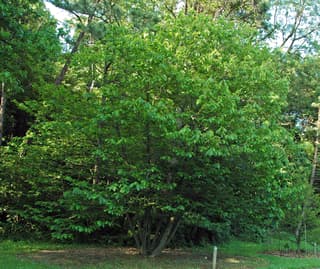
Pawpaw
Asimina triloba
The pawpaw (Asimina triloba) is a deciduous tree in the Annonaceae family, native to the eastern United States and Canada. It is the largest edible fruit tree native to North America. The species naturally grows as an understory tree in forests and produces striking, cup-shaped purple-brown flowers in the spring before the leaves emerge. The large, greenish-yellow fruits have a creamy texture with a flavor reminiscent of a blend of banana, mango, and vanilla.
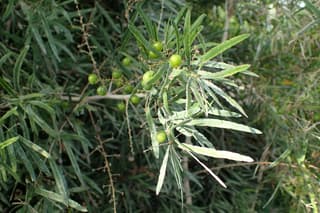
Sicklethorn
Asparagus falcatus
Asparagus falcatus, commonly known as Sicklethorn, is a vigorous climbing perennial native to South Africa, Sri Lanka, and the Himalayas. Its sickle-shaped cladodes and arching thorny stems make it a striking ornamental plant for both indoor and outdoor settings. It can reach up to 8 feet (240 cm) tall when grown indoors with support.
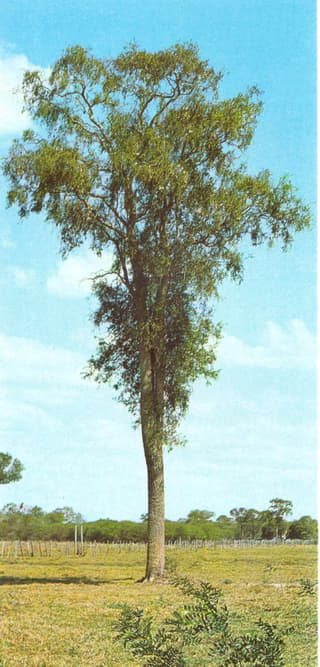
Aspidosperma (genus)
Aspidosperma
Aspidosperma is a genus of tropical and subtropical trees in the family Apocynaceae, native to South America, Central America, and the Caribbean. It includes notable species such as peroba-rosa (A. polyneuron), white quebracho (A. quebracho-blanco), and A. macrocarpon. These slow-growing, large-canopy trees produce extremely hard and durable timber. The bark contains valuable medicinal alkaloids used in traditional medicine across the Neotropics.

Birds Nest Fern
Asplenium australasicum
Asplenium australasicum, commonly known as the birds nest fern, is an epiphytic fern native to the rainforests of eastern Australia. Its broad, wavy fronds grow in a rosette, forming a bowl shape that collects fallen leaves and rainwater in the wild.
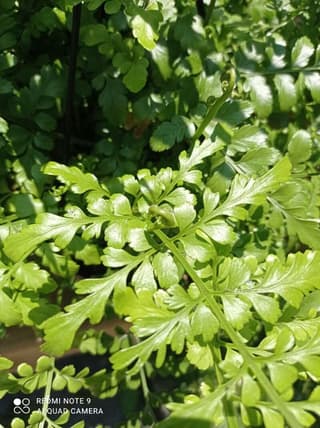
Balearic Spleenwort
Asplenium balearicum
Asplenium balearicum, commonly known as the Balearic Spleenwort, is a small and elegant fern endemic to the Balearic Islands and the Western Mediterranean. It grows naturally in limestone rock crevices and shaded slopes, forming dense clumps of dark green fronds. Well-suited to indoor environments with good humidity, it is an adaptable plant that brings a Mediterranean touch to any space.
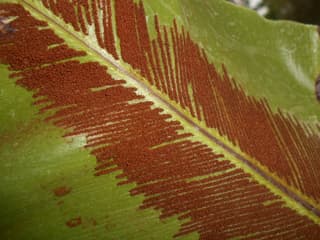
Bird's Nest Fern
Asplenium nidus
The Bird's Nest Fern (Asplenium nidus) is an elegant tropical epiphytic fern known for its rosette of bright green, lance-shaped fronds that unfurl from a central nest-like crown. Native to Southeast Asia, Australia, and the Pacific Islands, this slow-growing beauty thrives in humid environments and makes an excellent houseplant for bathrooms and shaded spaces.
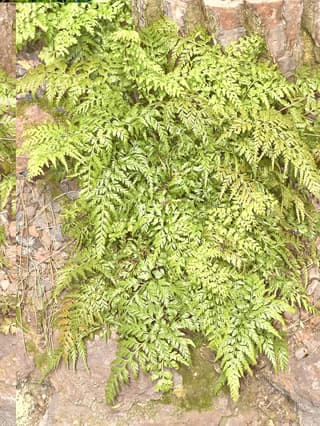
Irish spleenwort
Asplenium onopteris
Irish spleenwort (Asplenium onopteris) is an evergreen perennial fern in the family Aspleniaceae, native to the Mediterranean Basin, Macaronesia, and the Atlantic coasts of western and central Europe, with isolated populations reaching as far north as Ireland and Poland. It grows on shaded, humid rock faces, banks, and woodland floors, usually on acidic substrates, up to about 1900 m elevation. The leathery, glossy dark-green fronds are triangular-ovate in outline, 2-4 times pinnate, with a reddish-brown to black petiole (stipe). Plants reach 10-50 cm in height.
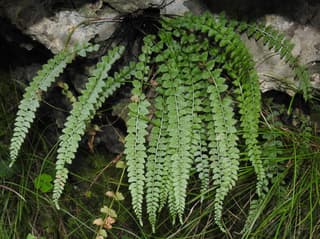
Green Spleenwort
Asplenium viride
Green Spleenwort (Asplenium viride) is a small rock-crevice fern native to calcareous mountain rocks across northern temperate Eurasia and North America. It is distinguished from the similar Maidenhair Spleenwort (Asplenium trichomanes) by its green stipes and rachises. A slow-growing, cold-hardy evergreen fern, it is well suited for rock gardens, troughs, and cool, humid indoor settings.
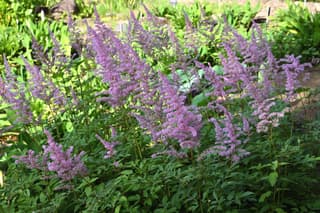
Rose Astilbe
Astilbe × rosea
Astilbe × rosea is a perennial hybrid in the Saxifragaceae family, prized for its feathery plumes of rose-pink flowers rising above finely cut, fern-like foliage. Native to shade gardens, it forms compact clumps and blooms from late spring through summer, adding color and texture to shaded borders and pond edges.
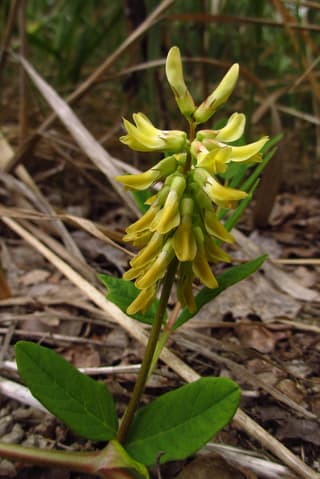
Astragalus
Astragalus
Astragalus is the largest genus in the Fabaceae (legume) family, with nearly 2900 species found in the Northern Hemisphere, Central Asia, China, and North America. Most species are perennial herbaceous plants or shrubs, characterized by compound, odd-pinnate leaves and distinctive pea-like flowers. The most medicinally important species is Astragalus membranaceus (Huang Qi), which has been used in traditional Chinese medicine for over 2000 years as an immune booster and adaptogen. However, some species within the genus (known as 'locoweed' species) contain swainsonine or organic nitro compounds, which can be toxic to animals and humans. The plant produces yellow, purple, or white pea-like flowers in spring and summer and requires moderate care.

Babassu Palm
Attalea
Attalea is a genus of large neotropical palms in the Arecaceae family, highly representative of Brazil, where the most well-known species is the Babassu (Attalea speciosa). These are robust palms with a single, thick trunk, crowned by arched pinnate leaves that can exceed several meters in length. They produce branched, drooping inflorescences with small cream-colored flowers and clusters of oily fruits of great economic and nutritional importance. They grow in full sun in well-drained soils of forests, savannas (cerrados), and tropical pastures, sometimes forming dense babassu groves.
Wood Ear Mushroom
Auricularia cornea
Auricularia cornea, commonly known as the Wood Ear or Hairy Wood Ear mushroom, is a basidiomycete fungus that grows on decaying logs. It has a gelatinous texture when moist and becomes rigid and leathery when dry. Its outer surface is covered with tiny grayish hairs, while the inner surface is smooth and reddish-brown.
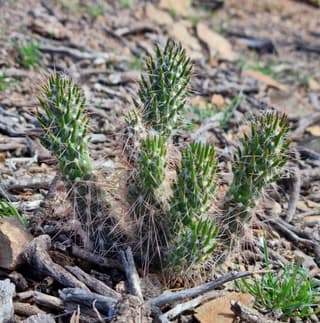
Old Man of the Andes
Austrocylindropuntia vestita
Austrocylindropuntia vestita, commonly known as the Old Man of the Andes or Cotton Coral Cactus, is a slender columnar cactus native to the high-altitude rocky grasslands of northwest Argentina and Bolivia. Its stems are densely covered in long white hairs that give it a distinctive woolly appearance, providing insulation against the cold Andean climate. It produces striking deep red to violet flowers at the stem tips during spring and summer.
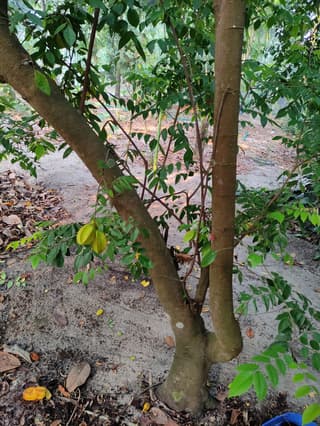
Starfruit
Averrhoa carambola
Starfruit (Averrhoa carambola) is a small tropical fruit tree native to Southeast Asia, cultivated for centuries for its glossy yellow fruit that forms a perfect five-pointed star when sliced. The tree has a bushy, rounded crown with soft, pinnate, medium-green leaves that fold when touched or at night. Small pink to purplish-red bell-shaped flowers bloom nearly year-round in tropical climates, followed by crisp, juicy fruit ranging from tart to sweet. It's a popular backyard and ornamental fruit tree in tropical and subtropical regions worldwide.
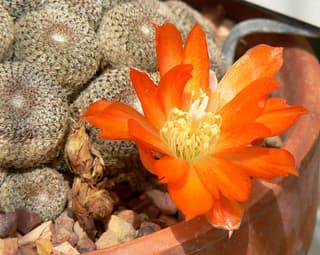
Sun Crown Cactus
Aylostera heliosa
Aylostera heliosa (formerly Rebutia heliosa) is a small clustering cactus native to the high-altitude slopes near Tarija, Bolivia. Its compact, spherical to cylindrical stems are covered in dense white spines and rarely exceed 2.5 cm in diameter, but under bright sun they produce a spectacular abundance of orange to pinkish blooms in spring.
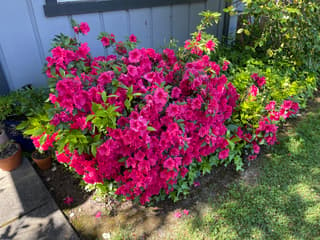
Azalea
Azalea
The azalea is an ornamental shrub of the genus Rhododendron (section Azalea), belonging to the Ericaceae family, known for its abundant and colorful flowers that appear mainly in spring. Its leaves are small, elliptical, and slightly velvety in texture, forming a compact and dense bush. It is widely cultivated both in pots and in gardens, being very popular on Mother's Day for symbolizing care and affection.
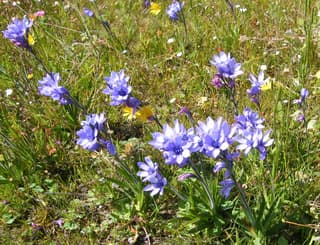
Fragrant Baboon Flower
Babiana fragrans
Babiana fragrans (Jacq.) Steud., also known by its widely-used synonym Babiana disticha, is a perennial cormous geophyte in the iris family (Iridaceae), endemic to the low-lying Western Cape of South Africa, from the Cape Peninsula to the Ceres area. It grows in fynbos and renosterveld vegetation on sandstone, granite or clay-derived soils. Its hairy, pleated, dagger-shaped leaves emerge in autumn. Between winter and spring (July to September in the Southern Hemisphere) it produces branched stems 7-20 cm tall bearing strongly sweet-scented flowers, violet to pale blue in colour, occasionally creamy-yellow, with dark markings near the base of the lower tepals. The plant is deciduous, dying back and resting as a dormant corm through the dry summer.

Lemon myrtle
Backhousia citriodora
Lemon myrtle is an evergreen shrub or small tree from the Myrtaceae family, native to the subtropical rainforests of eastern Australia (Queensland, from Mackay to Brisbane). In the wild, it can grow up to 20 m, while in cultivation it usually reaches 3-5 m. The glossy lanceolate leaves, 5-12 cm long, release an intense lemon fragrance when crushed—they contain an exceptionally high proportion of citral (90-98%), making it one of the richest natural sources of this compound in the world. From summer to autumn, it blooms with small creamy-white flowers in clustered panicles.
Bamboo
Bambusoideae
Bambusoideae, commonly known as bamboo, is a subfamily of perennial plants within the grass family. They are characterized by their hollow stems (culms) and extremely rapid growth. These versatile plants are used globally in construction, food, and as ornamental elements due to their elegant aesthetics and resilience.

Begonia (genus)
Begonia
Begonia is one of the largest genera of flowering plants, with over 2,000 species encompassing rex, rhizomatous, cane, tuberous, and semperflorens types. They are prized for ornamental foliage and colorful blooms.

Rieger Begonia
Begonia × hiemalis
Rieger Begonia (Begonia × hiemalis) is a stunning ornamental hybrid created by crossing Begonia socotrana with tuberous begonias. It blooms prolifically in autumn and winter, producing double or single flowers in shades of pink, red, white, orange, and yellow. Compact and bushy, it is one of the most popular indoor flowering plants during the cold season, often given as a holiday gift.

Bolivian begonia
Begonia boliviensis
Bolivian begonia is a tuberous begonia native to the Bolivian Andes, prized for its cascading orange-red tubular flowers set against dark green leaves with reddish undersides. It is a popular choice for hanging baskets and container gardens thanks to its trailing habit.
Medium Care Easy Care
Our selection of 1160 medium easy care combines the characteristics of this category with moderate care needs. Ideal for those with basic experience.
Why Choose Medium Easy Care?
Combining the beauty of easy care with medium difficulty level lets you enjoy this category with a balanced care commitment. Each plant was selected to offer the best characteristics of the category at the care level you are looking for.