Complete Plant Guide
Explore plants by difficulty, season and more. Find the perfect plant for you.
Difficulty
Categories
Plants by City
🗺️ Plants by City3454 plants found
Showing 397-432 of 3454
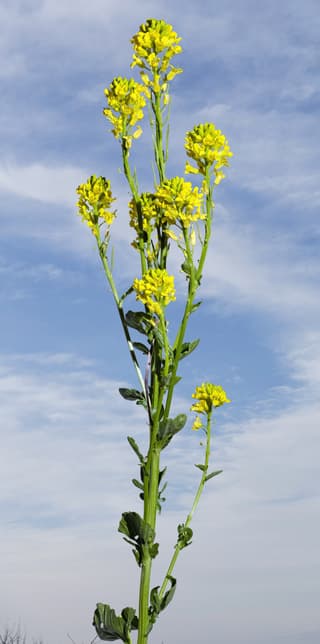
Wintercress
Barbarea vulgaris
Wintercress (Barbarea vulgaris) is a biennial herbaceous plant in the Brassicaceae (mustard) family, native to Europe and widely naturalized across North America and beyond. It forms a basal rosette of dark, glossy, lobed leaves through autumn and winter, then sends up flowering stalks in early spring bearing clusters of bright yellow, four-petaled flowers. The young leaves have a pleasantly bitter, peppery flavor reminiscent of watercress or arugula and are one of the few fresh greens available during winter months. It grows in disturbed soils, roadsides, moist meadows, and stream banks, and is valued both as a wild edible and for its early-season nectar for pollinators.
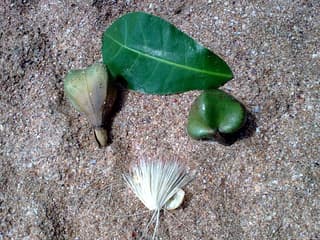
Sea Poison Tree
Barringtonia
Barringtonia is a genus of approximately 73 species of tropical evergreen trees and shrubs in the family Lecythidaceae. Native to coastal and freshwater habitats across Africa, South and Southeast Asia, Australia, and Pacific and Indian Ocean islands. Renowned for showy nocturnal, sweet-scented flowers on long pendulous racemes. The most famous species, B. asiatica (Sea Poison Tree), produces highly toxic seeds containing saponins, historically used by coastal communities to stun fish.
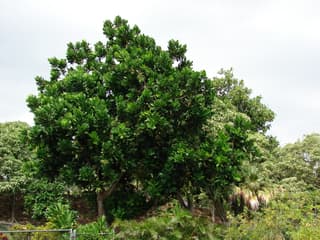
Fish Poison Tree
Barringtonia asiatica
Barringtonia asiatica, commonly known as the Fish Poison Tree or Sea Poison Tree, is a striking tropical tree native to the coastlines of the Indo-Pacific. Belonging to the family Lecythidaceae, it produces spectacular night-blooming flowers with white petals and long pink-tipped stamens, filling the air with fragrance. The large, pyramidal fruits are highly buoyant and have been known to float across entire oceans for up to 15 years. Despite its beauty, all parts of the plant are highly toxic due to the presence of saponins.
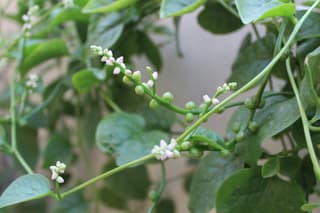
Malabar Spinach
Basella alba
Malabar Spinach (Basella alba) is a fast-growing tropical edible vine native to India and Southeast Asia. Its thick, succulent leaves are rich in vitamins A and C, calcium, and iron, making it a nutritious leafy green for warm climates. It thrives in heat and humidity where traditional spinach fails.
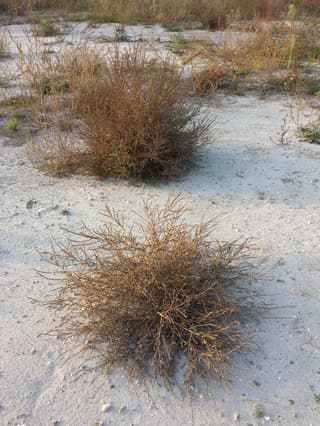
Burningbush
Bassia scoparia
Burningbush (Bassia scoparia) is a fast-growing annual herb native to Eurasia. It forms a dense, symmetrical mound of fine, bright green foliage that turns brilliant red or purple in autumn, creating a spectacular seasonal display. Widely grown as an ornamental in gardens and borders.
Scaly Stalked Puffball
Battarrea phalloides
Battarrea phalloides, commonly known as the Scaly Stalked Puffball, is a rare and distinctive gasteroid fungus. It is characterized by a tall, woody, and shaggy stalk that can reach up to 40cm, topped by a spore-bearing cap. Initially, the spore mass is covered by a volva, which ruptures to reveal a brownish gleba. It is typically found in dry, sandy soils, often in association with hedgerows or ancient trees. This species is a saprobic fungus, meaning it derives nutrients from decaying organic matter, and it is highly specialized to arid or semi-arid microhabitats.
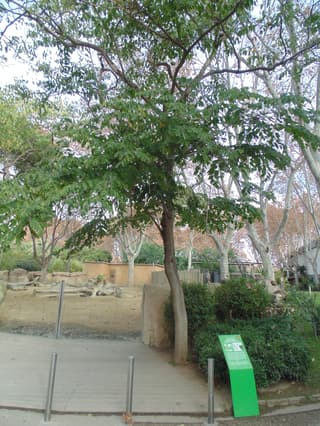
Brazilian Orchid Tree
Bauhinia forficata
Bauhinia forficata, commonly known as the Brazilian Orchid Tree or Cow's Hoof Tree, is a medium-to-large deciduous tree native to Brazil. It produces elegant white flowers resembling orchids in spring and summer and is renowned in traditional Brazilian medicine for its hypoglycemic properties, earning it the nickname "vegetable insulin."

Napoleon's Plume
Bauhinia monandra
Bauhinia monandra, commonly known as Napoleon's Plume or Pink Orchid Tree, is a medium-sized tropical tree in the Fabaceae family. Native to the tropical Americas, it is widely cultivated in gardens and parks for its spectacular flowers that transition from pale yellow to deep pink, each adorned with a distinctive streaked petal. In frost-free tropical and subtropical climates, it blooms for most of the year, making it a prized ornamental tree for landscaping.
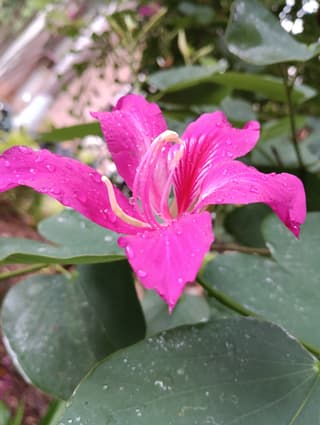
Purple Orchid Tree
Bauhinia purpurea
The Purple Orchid Tree (Bauhinia purpurea) is a medium-sized ornamental tree native to southern China and Southeast Asia. Renowned for its spectacular purple-pink flowers resembling orchid blooms, it flowers primarily in fall and winter, providing rare color in cooler months. Its distinctive bilobed leaves resemble butterfly wings or cow hoofprints — a hallmark of the Bauhinia genus. As a legume, it fixes nitrogen in the soil, offering both ornamental and ecological value.
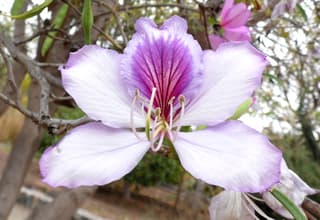
Orchid Tree
Bauhinia variegata
Bauhinia variegata, commonly known as the Orchid Tree or Mountain Ebony, is a medium-sized deciduous tree native to tropical Asia, particularly India and China. It produces spectacular orchid-like flowers in shades of pink, purple, and white during late winter and spring, making it one of the most ornamental flowering trees for warm climates. Its distinctive bilobed leaves, resembling a camel's footprint or butterfly wings, give it unique visual appeal throughout the year.
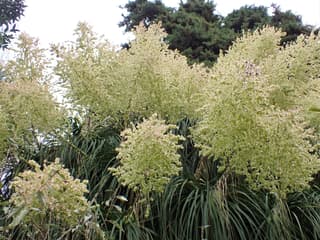
Ponytail Palm
Beaucarnea
Beaucarnea is a genus of slow-growing, drought-tolerant succulent trees native to the arid regions of eastern Mexico, prized for the bulbous, water-storing caudex at its base and the long, gracefully arching ribbon-like leaves that give it its "ponytail" look. Despite the common name, it is not a true palm but a member of the Asparagaceae family (subfamily Nolinoideae), most closely related to Dracaena and Nolina. The most widely cultivated species, Beaucarnea recurvata, is grown around the world as a low-maintenance houseplant and landscape specimen thanks to its resilience to neglect and infrequent watering.
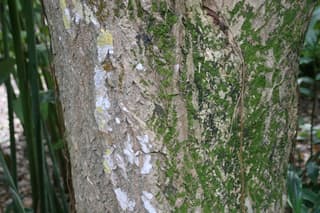
Guatemalan Ponytail Palm
Beaucarnea guatemalensis
Beaucarnea guatemalensis, the Guatemalan ponytail palm, is a succulent-like plant native to Central America, prized for the bulbous caudex at the base of its trunk that stores water and grants excellent drought tolerance. Its long, thin, arching leaves emerge in a fountain-like burst reminiscent of a horse's tail. A slow grower, it is a popular low-maintenance houseplant valued for its sculptural form and resilience.
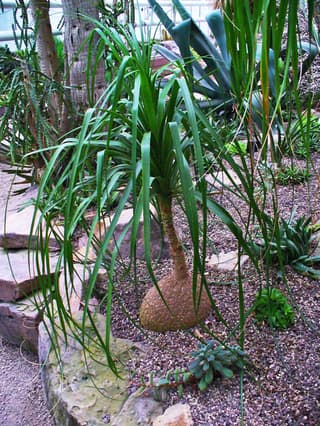
Ponytail Palm
Beaucarnea recurvata
The Ponytail Palm (Beaucarnea recurvata) is a succulent plant native to Mexico, known for its bulbous trunk base that stores water and long, cascading leaves resembling a ponytail. Despite its common name, it is not a true palm but belongs to the Asparagaceae family. It is extremely hardy and long-lived, capable of surviving for hundreds of years in the wild.
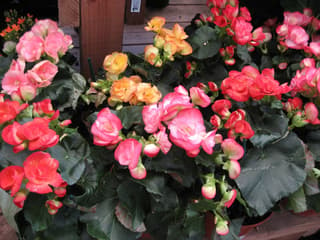
Begonia (genus)
Begonia
Begonia is one of the largest genera of flowering plants, with over 2,000 species encompassing rex, rhizomatous, cane, tuberous, and semperflorens types. They are prized for ornamental foliage and colorful blooms.
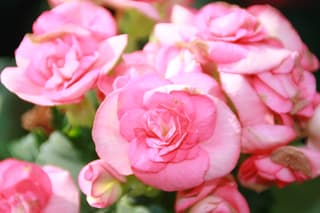
Rieger Begonia
Begonia × hiemalis
Rieger Begonia (Begonia × hiemalis) is a stunning ornamental hybrid created by crossing Begonia socotrana with tuberous begonias. It blooms prolifically in autumn and winter, producing double or single flowers in shades of pink, red, white, orange, and yellow. Compact and bushy, it is one of the most popular indoor flowering plants during the cold season, often given as a holiday gift.
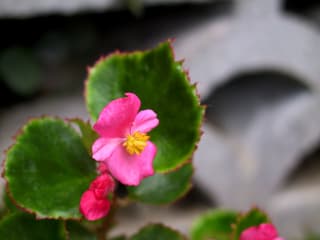
Wax Begonia
Begonia × semperflorens-cultorum
Wax Begonia (Begonia × semperflorens-cultorum) is a popular flowering annual and tender perennial prized for its glossy, waxy foliage and prolific blooms in shades of white, pink, and red. It thrives in borders, containers, and as a houseplant, blooming almost continuously from spring to fall.
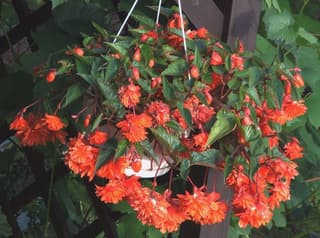
Tuberous Begonia
Begonia × tuberhybrida
Tuberous Begonia (Begonia × tuberhybrida) is a stunning ornamental hybrid with Andean ancestors, prized for its large, ruffled blooms in shades of white, pink, red, yellow, and orange. It is a deciduous plant that goes dormant in winter and re-emerges vigorously in spring. It demands careful attention to watering, humidity, and temperature.
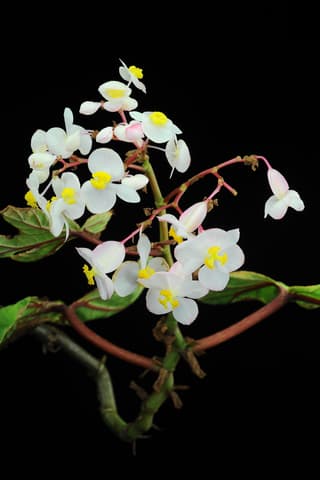
Angel wing begonia
Begonia aconitifolia
Begonia aconitifolia, commonly known as the angel wing begonia, is a tropical plant native to Brazil belonging to the Begoniaceae family. Its distinctive asymmetrical wing-shaped leaves, often decorated with silver spots, and its pendant clusters of pink to red flowers make it one of the most elegant ornamental begonias. It is a medium-growth plant, well-suited for both indoor and partially shaded outdoor environments.
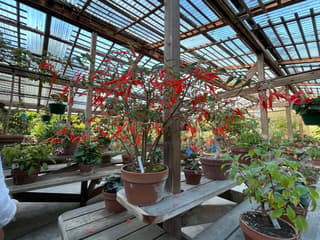
Bolivian begonia
Begonia boliviensis
Bolivian begonia is a tuberous begonia native to the Bolivian Andes, prized for its cascading orange-red tubular flowers set against dark green leaves with reddish undersides. It is a popular choice for hanging baskets and container gardens thanks to its trailing habit.
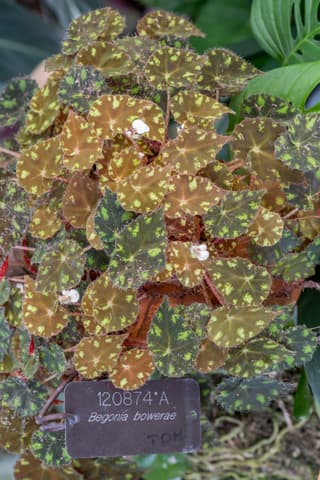
Eyelash Begonia
Begonia bowerae
Begonia bowerae, commonly known as the eyelash begonia, is a compact rhizomatous begonia native to Mexico prized for its asymmetrical, wing-shaped leaves edged with tiny white hairs that resemble eyelashes. Deep green foliage is often patterned with chocolate-brown bands, and clusters of small white to pale pink flowers appear above the leaves in winter and spring. It grows low and spreading from a fleshy rhizome, making it a favorite for terrariums, hanging baskets, and shelf displays.
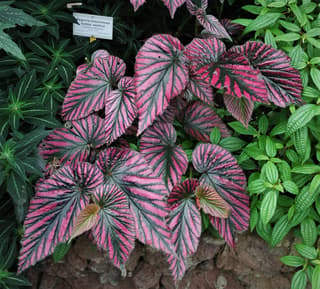
Exotica Begonia
Begonia brevirimosa
Begonia brevirimosa is a striking rhizomatous species native to the rainforest understories of Papua New Guinea, prized for its large, elliptic leaves splashed with iridescent bands of fuchsia pink and deep olive green. Grown mainly as a foliage houseplant, it produces small pink flowers on terminal clusters when light and humidity are ample. Its shrub-like habit and vividly patterned leaves make it a standout in humid terrariums, greenhouses, and bright indoor spaces.
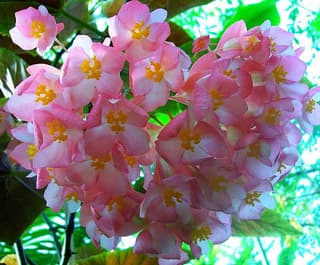
Scarlet Begonia
Begonia coccinea
The Scarlet Begonia (Begonia coccinea) is a cane-type begonia native to the Atlantic Forest of Brazil. It grows in upright clumps of woody, knobby stems resembling miniature bamboo, reaching up to 1 m (3.3 ft) tall. Its asymmetrical, leathery leaves are grayish-green on top with reddish margins and wine-red undersides. From early summer to mid-fall, it produces pendulous clusters of waxy, coral-red flowers, giving the plant its common name. It is a popular ornamental houseplant, valued both for its decorative foliage and its showy blooms.
Angel Wing Begonia
Begonia corallina
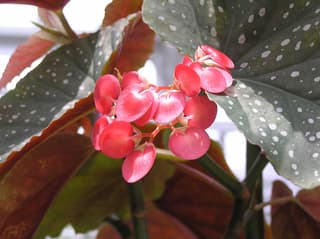
The Angel Wing Begonia (Begonia corallina) is a tall, upright cane-type begonia with bamboo-like jointed stems. Its asymmetrical, wing-shaped leaves are olive-green, sometimes speckled with silver, and it produces pendulous clusters of coral, pink, or red flowers mainly in spring and summer. It is a classic houseplant prized for both its ornamental foliage and generous blooms.
Wax Begonia
Begonia cucullata
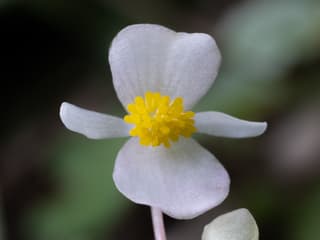
Begonia cucullata, commonly known as the Wax Begonia, is a compact ornamental plant native to South America (Brazil and Argentina). It produces an abundance of white, pink, or red flowers from spring through fall, with glossy, waxy leaves that give the plant its common name. One of the most popular bedding plants worldwide.
Hardy Begonia
Begonia grandis
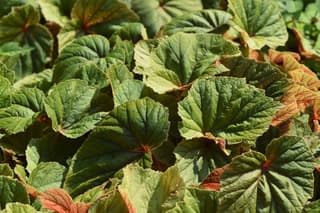
Begonia grandis, commonly known as Hardy Begonia, is a tuberous perennial native to China and Japan. It stands out among begonias for its exceptional cold hardiness, surviving frost when its tuber is protected underground. From midsummer through early fall, it produces loose, drooping clusters of delicate pink flowers that attract pollinators, making it a prized ornamental for shaded gardens in temperate climates.
Polka Dot Begonia
Begonia maculata
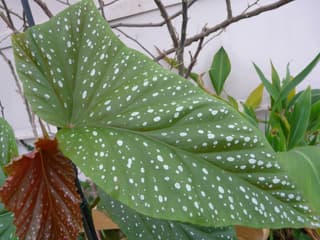
Begonia maculata is a tropical plant native to Brazil, famous for its dark green leaves adorned with silvery-white polka dots and striking red undersides. It is one of the most popular begonias for indoor cultivation, adding an elegant and exotic touch to any space.
Iron Cross Begonia
Begonia masoniana
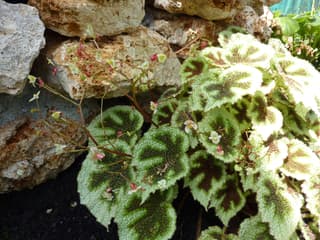
Begonia masoniana, commonly known as the Iron Cross Begonia, is a striking rhizomatous begonia native to southern China and northern Vietnam. Its most distinctive feature is the bold, dark brown cross-shaped marking at the center of each leaf, which closely resembles the German Iron Cross symbol. The leaves are large, puckered, and textured with a brilliant chartreuse-green color. While primarily grown for its dramatic foliage, it occasionally produces small greenish-white flowers in spring and summer.
Rex Begonia
Begonia rex
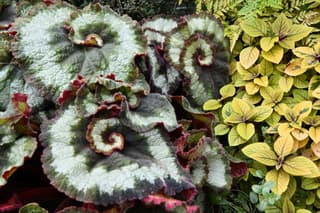
Rex Begonia (Begonia rex) is a striking rhizomatous perennial native to the rocky, forested valleys and slopes of northeastern India. Prized for its spectacular foliage rather than flowers, the leaves display extraordinary patterns with combinations of silver, purple, pink, red, and green colors. The dramatic leaf textures and metallic sheens make it one of the most ornamental houseplants available.
Rex Begonia
Begonia rex-cultorum
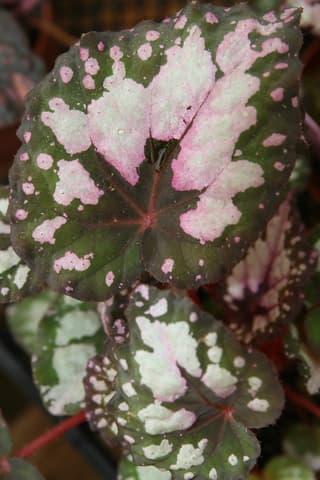
Rex Begonia (Begonia rex-cultorum) is a cultivated hybrid group prized for its extraordinary ornamental foliage — displaying stunning patterns in silver, purple, red, green, and pink. A cross between Begonia rex and other species, it is grown exclusively as an indoor plant due to its need for stable humidity and temperature. WARNING: contains calcium oxalate crystals, making it toxic to cats, dogs, and humans if ingested.
Wax Begonia
Begonia semperflorens
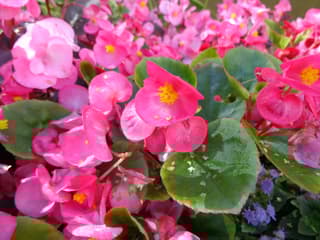
Begonia semperflorens, commonly known as Wax Begonia, is a compact, mound-forming annual or tender perennial native to South America. It is prized for its continuous bloom throughout spring, summer, and fall, producing cheerful flowers in shades of pink, red, and white. Its glossy, waxy leaves come in green or bronze tones, adding ornamental appeal even when not in flower. A popular choice for garden beds, containers, and window boxes, it thrives in a wide range of light conditions.
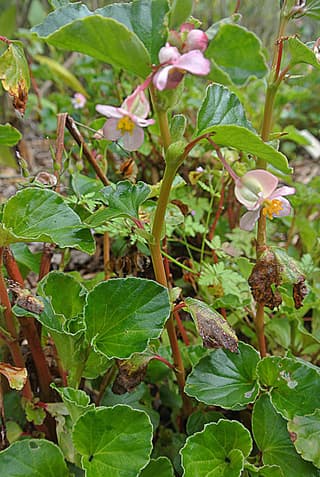
Wax begonia
Begonia x semperflorens-cultorum
Begonia x semperflorens-cultorum, commonly known as wax begonia, is a compact, ever-blooming hybrid group prized for its glossy, waxy leaves and nonstop clusters of small flowers in red, pink, or white. Bred from South American species, it is one of the most popular bedding and container plants worldwide thanks to its low maintenance, heat tolerance, and reliable color.
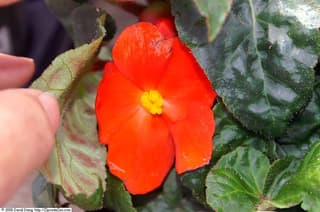
Tuberous Begonia
Begonia x tuberhybrida
Begonia x tuberhybrida is a perennial herbaceous plant prized for its lush and varied flowers, which can be single or double, resembling roses or camellias. They grow from fleshy tubers and are famous for their ability to brighten shaded garden areas or interiors with vibrant colors. As a tuberous plant, it undergoes a mandatory dormancy period during the winter months, when the aerial part dies back and the tuber must be stored in a dry place.
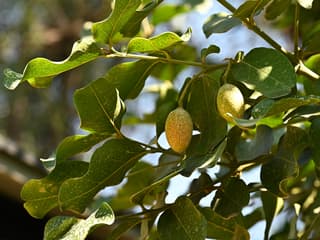
Beilschmiedia
Beilschmiedia
Beilschmiedia is a genus of approximately 268 species of evergreen tropical and subtropical trees in the family Lauraceae. Distributed across the rainforests of Africa, Asia, Oceania, Central America, and South America, these trees are notable for their impressive canopy stature, dark leathery foliage, and significant ecological roles as dominant forest species. Notable members include B. tawa and B. tarairi from New Zealand and B. pendula (Pau de remo) from Brazil.
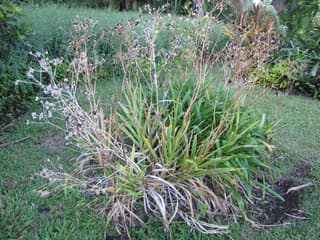
Blackberry Lily
Belamcanda chinensis
Blackberry Lily (Belamcanda chinensis) is a rhizomatous perennial native to temperate Asia, including China, Japan, and Korea. It produces striking orange, red-spotted flowers that resemble leopard rosettes, followed by seed capsules that split open to reveal shiny black seeds resembling blackberries — giving the plant its distinctive common name. Belonging to the Iridaceae family, it has been used in traditional Chinese medicine for over 2,000 years.
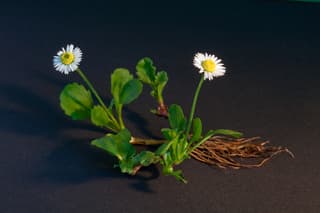
English Daisy
Bellis perennis
Bellis perennis, commonly known as the English Daisy or Common Daisy, is a cheerful perennial wildflower native to western and central Europe. It forms low rosettes of spoon-shaped leaves from which leafless stems rise bearing classic composite flowers — white ray petals often tipped with pink or red, surrounding a bright yellow disc. Blooming from early spring through summer, it thrives in lawns, meadows, borders, and rock gardens. It is the national flower of the Netherlands and has been beloved in folk tradition for centuries.
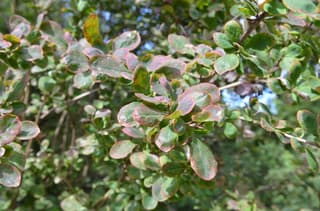
Ottawa Barberry
Berberis × ottawensis
Berberis × ottawensis is a vigorous deciduous hybrid shrub, a natural cross between Berberis thunbergii and Berberis vulgaris. Known for its ornamental deep red-purple foliage in summer that turns vivid red in autumn, clusters of small yellow spring flowers, and bright red berries. Widely grown as a hardy hedge or specimen shrub.
Find the Perfect Plant
Our plant guide helps you find ideal species for your experience level and time of year.
Browse by Difficulty, Season & More
Use the filters below to narrow this catalog by care difficulty, season, environment, or search directly by name. Each filter leads to a focused list tailored to your specific growing conditions.