Complete Plant Guide
Explore plants by difficulty, season and more. Find the perfect plant for you.
Difficulty
Categories
Plants by City
🗺️ Plants by City3454 plants found
Showing 361-396 of 3454
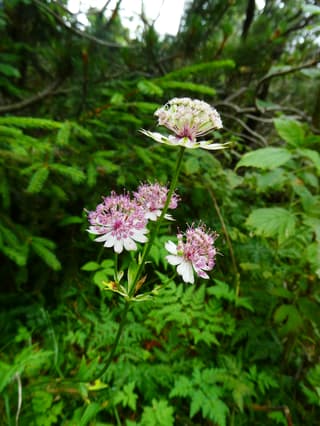
Great Masterwort
Astrantia major
Great Masterwort (Astrantia major) is a hardy perennial from the carrot family (Apiaceae), native to moist deciduous forests and stream banks of Central and Eastern Europe. The tiny, greenish-white flowers are surrounded by striking, star-shaped bracts in white, pink, green, or red, making the inflorescence resemble a small star-shaped umbrella. The plant forms compact clumps with 3- to 5-lobed leaves and blooms from June through September, making it a beloved addition to borders and cottage gardens.
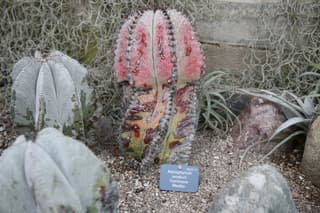
Monk's Hood Cactus
Astrophytum ornatum
The Monk's Hood Cactus (Astrophytum ornatum) is a slow-growing, typically solitary, columnar cactus native to Mexico, where it thrives on rocky terrain in full sun. The body reaches approximately 12 cm in diameter and can grow over one meter tall in its natural habitat; it features 7-8 spiraling ribs adorned with whitish to brownish spines and fine white scales. Starting at around five years of age, it produces large, vibrant yellow flowers over 7 cm in diameter, each lasting only a few days.
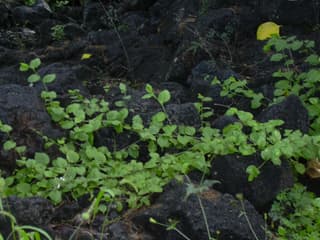
Chinese Violet
Asystasia gangetica
Asystasia gangetica, commonly known as Chinese violet or coromandel, is a fast-growing perennial herb in the family Acanthaceae, native to India and tropical Africa. This spreading groundcover reaches up to 1 meter tall when supported, producing delicate bell-shaped flowers in white, lilac, and purple throughout the year. It is widely cultivated in tropical and subtropical gardens for its ornamental value, vigorous growth, and ability to cover large areas quickly.
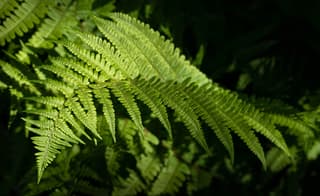
Lady Fern
Athyrium
Athyrium is a genus of around 180 deciduous ferns, best known through the widespread lady fern (A. filix-femina) and ornamental cultivars like the Japanese painted fern. Plants form graceful clumps of finely divided, lace-like fronds from a creeping or erect rhizome, thriving in shaded woodland conditions with consistently moist, humus-rich soil. They are generally trouble-free, cold-hardy, and popular for shade gardens, borders and pond margins.
Lady Fern
Athyrium filix-femina
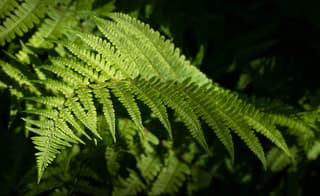
The Lady Fern (Athyrium filix-femina) is a deciduous, clump-forming woodland fern native across the cooler regions of Europe, Asia and North America. It produces finely divided, twice-pinnate fronds in a soft, lacy texture that arch outward from a central crown, giving the plant its graceful, feminine silhouette and common name. Fronds emerge pale green in spring, deepen through summer, and often turn gold before dying back at the first hard frost. Lady Fern spreads slowly by short rhizomes, gradually forming loose colonies in shaded woodland gardens, along stream banks, and in other consistently moist, humus-rich spots. It is exceptionally low-maintenance and largely free of serious pests or diseases when given the shaded, evenly moist conditions it evolved for.
Japanese Painted Fern
Athyrium niponicum
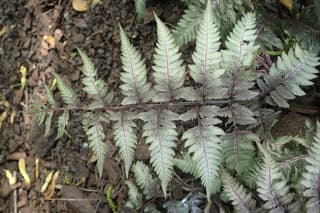
Athyrium niponicum, commonly known as Japanese painted fern, is a deciduous herbaceous fern native to eastern Asia, valued as one of the most ornamental and striking shade garden plants available. Its arching, triangular fronds reach up to 50 cm long and display a remarkable tricolor pattern: silvery-gray overlaid on soft green leaflets with a bold dark maroon midrib that runs the full length of each frond. The silvering is most intense on newly emerged spring fronds and softens to a deeper green as summer heat builds. Plants form a graceful, vase-shaped clump that spreads slowly through branching underground rhizomes, creating a lush colony effect over time without becoming invasive. Deer and rabbit resistant, it was named Perennial Plant of the Year by the Perennial Plant Association, confirming its exceptional landscape value.
Orache
Atriplex
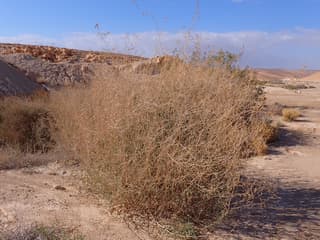
Atriplex, commonly known as Orache or Saltbush, is a resilient genus of plants found in arid and coastal regions. Many species, such as Atriplex hortensis, are cultivated as leaf vegetables similar to spinach. They are characterized by their mealy or scurfy leaves, which often have a silvery or purple hue, and their remarkable ability to thrive in saline soils where few other plants can survive.
Common Orache
Atriplex patula
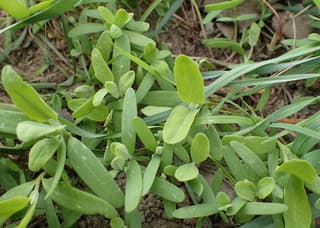
Common Orache (Atriplex patula) is an annual herb in the family Amaranthaceae, native to coastal margins, disturbed ground, and open fields across Europe, Asia, and North America. A facultative halophyte, it thrives in saline, sandy, and alkaline soils where few plants compete. Its arrowhead-shaped leaves are edible and have been used for centuries as a leafy green vegetable similar to spinach. Fast-growing and highly adaptable, it is valued both as a foraged wild food and as an indicator of nitrogen-rich, disturbed habitats.
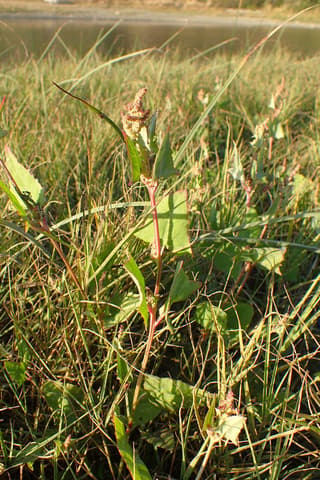
Hastate Orache
Atriplex prostrata
Atriplex prostrata, known as hastate orache or spear-leaved orache, is an annual halophytic herb in the Amaranthaceae family. Native to Europe, Macaronesia, North Africa and western Asia, it now grows across temperate regions worldwide in salt marshes, coastal beaches and disturbed saline ground. It forms sprawling to upright stems reaching up to 1 m, with distinctive hastate (spear- or arrowhead-shaped) leaves covered in tiny salt-excreting bladder hairs that let it thrive in brackish soils.

Babassu Palm
Attalea
Attalea is a genus of large neotropical palms in the Arecaceae family, highly representative of Brazil, where the most well-known species is the Babassu (Attalea speciosa). These are robust palms with a single, thick trunk, crowned by arched pinnate leaves that can exceed several meters in length. They produce branched, drooping inflorescences with small cream-colored flowers and clusters of oily fruits of great economic and nutritional importance. They grow in full sun in well-drained soils of forests, savannas (cerrados), and tropical pastures, sometimes forming dense babassu groves.
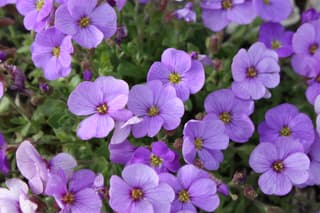
Rock Cress
Aubretia deltoidea
Aubretia deltoidea, commonly known as Rock Cress, is a low-growing evergreen perennial native to Southern Europe and Turkey. This mat-forming groundcover produces a spectacular carpet of purple, lavender, pink, or white flowers in spring, almost completely covering its grey-green foliage. It thrives in rocky, well-drained soils and is an ideal plant for rock gardens, wall crevices, and alpine borders.
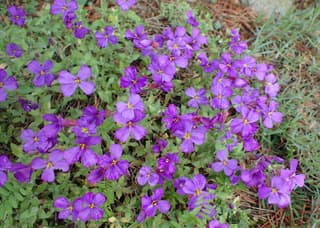
Aubrieta
Aubrieta deltoidea
Aubrieta is an evergreen, mat-forming perennial from the mustard family, originally native to Southeast Europe (including Greece, Bulgaria, and the Balkans). The plant forms dense, gray-green cushions of small, spatulate to egg-shaped leaves and is smothered in spring and early summer by numerous violet, purple, pink, or white four-petaled flowers. It is widely used as a groundcover in rock gardens, on walls, and on slopes, where it tolerates drought and poor soil better than most perennials.
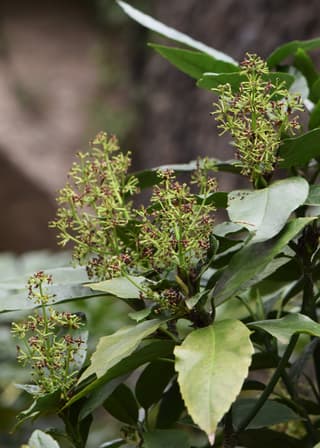
Japanese Laurel / Spotted Laurel (genus)
Aucuba
Aucuba is a genus of evergreen shrubs in the family Garryaceae, native to East Asia. Prized for their glossy, often gold-spotted foliage, they thrive in shaded gardens and low-light conditions.
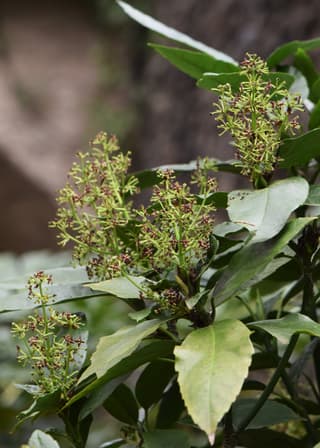
Spotted Laurel
Aucuba japonica
Aucuba japonica, commonly known as Spotted Laurel or Japanese Laurel, is a robust evergreen shrub native to Japan, China, and the Himalayas. Famous for its glossy, leathery leaves — often boldly spotted or mottled with gold in variegated cultivars — it thrives in deep shade where few other shrubs flourish. Female plants produce striking bright red berries in autumn that persist through winter, adding seasonal interest.
Wood Ear Mushroom
Auricularia cornea
Auricularia cornea, commonly known as the Wood Ear or Hairy Wood Ear mushroom, is a basidiomycete fungus that grows on decaying logs. It has a gelatinous texture when moist and becomes rigid and leathery when dry. Its outer surface is covered with tiny grayish hairs, while the inner surface is smooth and reddish-brown.
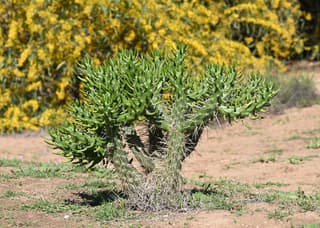
Eve's Pin Cactus / Cane Cholla (genus)
Austrocylindropuntia
Austrocylindropuntia is a genus of Andean columnar cacti native to South America, primarily Peru, Bolivia, and Ecuador. The most well-known species are A. subulata (Eve's Pin) and A. cylindrica (Cane Cholla). These are robust, fast-growing plants with cylindrical stems covered in sharp spines.
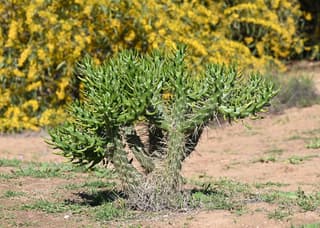
Eve's Needle Cactus
Austrocylindropuntia subulata
Austrocylindropuntia subulata, commonly known as Eve's Needle Cactus, is a columnar cactus native to the Peruvian Andes. Its dark green cylindrical stems can reach up to 4 meters in height in their natural habitat, and it is distinguished by its persistent needle-like leaves — a remarkable feature among cacti. This robust, drought-tolerant plant is highly ornamental and thrives in sunny gardens and bright indoor spaces.
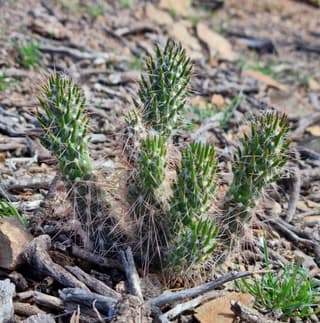
Old Man of the Andes
Austrocylindropuntia vestita
Austrocylindropuntia vestita, commonly known as the Old Man of the Andes or Cotton Coral Cactus, is a slender columnar cactus native to the high-altitude rocky grasslands of northwest Argentina and Bolivia. Its stems are densely covered in long white hairs that give it a distinctive woolly appearance, providing insulation against the cold Andean climate. It produces striking deep red to violet flowers at the stem tips during spring and summer.
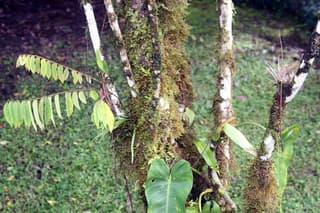
Bilimbi
Averrhoa bilimbi
Averrhoa bilimbi, commonly known as bilimbi or cucumber tree, is a tropical perennial fruit tree in the Oxalidaceae family. Unlike its close relative, the starfruit, its fruits are cylindrical, extremely acidic, and grow in clusters directly on the trunk and main branches (cauliflory). It features pinnate leaves and small, fragrant, deep purple flowers.
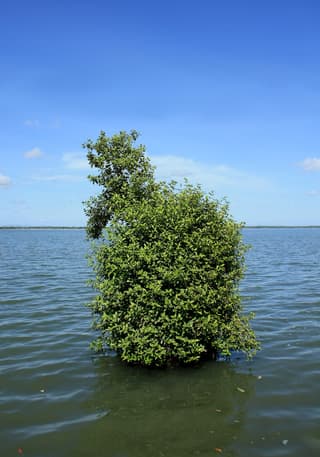
gray mangrove
Avicennia marina
Avicennia marina, the gray mangrove, is a salt-tolerant coastal tree native to the intertidal zones of the Indo-Pacific region, spanning East Africa, the Arabian Gulf, South and Southeast Asia, and Australasia. It grows as a shrub or tree from 3 to 14 meters tall, with smooth grey bark, leathery leaves that are glossy dark green above and silvery-grey below (dusted with excreted salt crystals), and small white to pale yellow flowers. Its most distinctive feature is a network of pencil-like breathing roots (pneumatophores) that rise from the mud to draw oxygen in waterlogged, anaerobic sediment. A pioneer species, it colonizes newly formed mudflats and produces viviparous propagules that germinate while still attached to the parent tree before dropping and rooting in the substrate. Extremely tolerant of salinity, tidal flooding and heat, it is rarely cultivated outside coastal restoration, aquaculture, and specialist paludarium or bonsai settings.
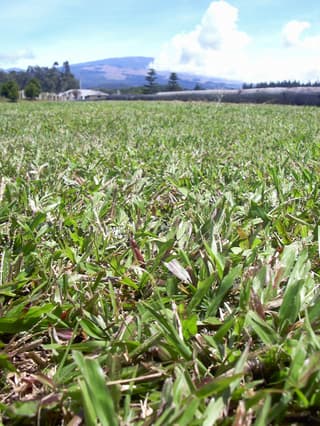
Broadleaf carpet grass
Axonopus compressus
Broadleaf carpet grass (Axonopus compressus) is a perennial, stoloniferous, and rhizomatous grass native to the tropical and subtropical regions of the Americas. Its wide, deep green leaves form a dense and uniform mat, making it one of the most widely used species for residential lawns, parks, and recreational areas. It grows close to the ground, reaching between 6 and 8 inches in height when left unmowed, and produces flowering stalks that can reach 12 to 18 inches. It tolerates shade well, forming thick carpets under tree canopies, and adapts to poor soils, although it prefers fertile, well-drained ground.
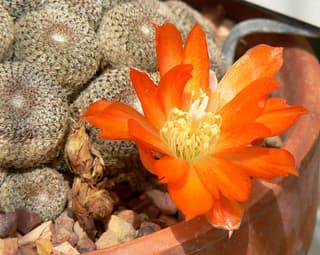
Sun Crown Cactus
Aylostera heliosa
Aylostera heliosa (formerly Rebutia heliosa) is a small clustering cactus native to the high-altitude slopes near Tarija, Bolivia. Its compact, spherical to cylindrical stems are covered in dense white spines and rarely exceed 2.5 cm in diameter, but under bright sun they produce a spectacular abundance of orange to pinkish blooms in spring.
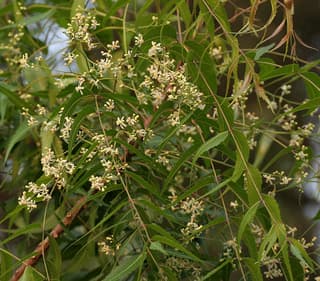
Neem
Azadirachta indica
Azadirachta indica, commonly known as Neem or Margosa, is a fast-growing evergreen tree native to the Indian subcontinent and Southeast Asia. Belonging to the mahogany family Meliaceae, it is one of the most versatile and celebrated trees in traditional medicine and sustainable agriculture. Neem can reach heights of 15–20 meters with a broad, spreading crown. Its small white fragrant flowers bloom in drooping clusters, and the olive-like fruits contain seeds rich in azadirachtin, the compound responsible for its powerful insecticidal properties.
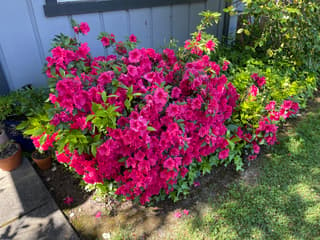
Azalea
Azalea
The azalea is an ornamental shrub of the genus Rhododendron (section Azalea), belonging to the Ericaceae family, known for its abundant and colorful flowers that appear mainly in spring. Its leaves are small, elliptical, and slightly velvety in texture, forming a compact and dense bush. It is widely cultivated both in pots and in gardens, being very popular on Mother's Day for symbolizing care and affection.
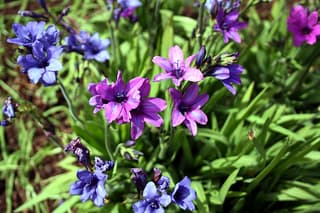
Baboon Flower
Babiana stricta
Babiana stricta, commonly known as the Baboon Flower or Blue Freesia, is a cormous perennial native to the Cape Province of South Africa. It produces beautiful blue, purple, or pink cup-shaped flowers in spring, rising from hairy, upright leaves. The plant grows 10–30 cm tall and is a popular garden ornamental in mild climates.
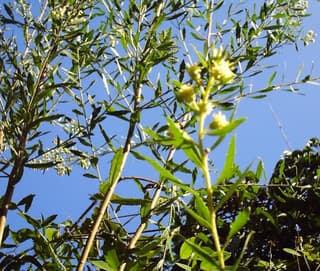
Field Rosemary
Baccharis dracunculifolia
Baccharis dracunculifolia, popularly known as field rosemary or vassourinha, is a shrub native to Brazil belonging to the Asteraceae family. It can reach up to 4 m in height, with thin, sparse, and aromatic branches, and small, lanceolate leaves, 1 to 2.5 cm long. It produces small white to slightly pink flowers, highly sought after by bees: it is one of the main botanical sources of Brazilian green propolis. It occurs naturally in Cerrado areas, rupestrian grasslands, forest edges, and degraded lands in South-Central Brazil, and is also used in the ecological restoration of degraded areas.
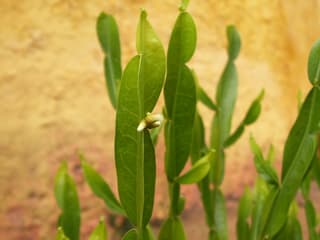
Carqueja
Baccharis trimera
Baccharis trimera, commonly known as Carqueja, is a fast-growing perennial shrub native to Brazil and South America. It is distinguished by its unique three-winged stems and is widely used in traditional South American medicine for its digestive, hepatoprotective, and anti-inflammatory properties. Small white flowers cluster at the stem tips during spring and summer, attracting pollinators.

Lemon myrtle
Backhousia citriodora
Lemon myrtle is an evergreen shrub or small tree from the Myrtaceae family, native to the subtropical rainforests of eastern Australia (Queensland, from Mackay to Brisbane). In the wild, it can grow up to 20 m, while in cultivation it usually reaches 3-5 m. The glossy lanceolate leaves, 5-12 cm long, release an intense lemon fragrance when crushed—they contain an exceptionally high proportion of citral (90-98%), making it one of the richest natural sources of this compound in the world. From summer to autumn, it blooms with small creamy-white flowers in clustered panicles.
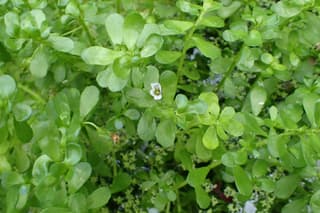
Water Hyssop
Bacopa monnieri
Bacopa monnieri, widely known as water hyssop or brahmi, is a creeping, succulent-leaved herb native to wetlands across Asia, including riverbanks, ponds and marshes in India, China and Vietnam. Its branching stems and small fleshy leaves form dense mats in moist soil, and the plant is also a popular aquarium species. In traditional Ayurvedic medicine it has been valued for centuries as a brain tonic for memory, focus and stress relief.
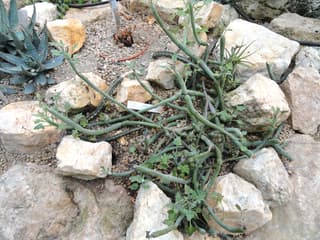
Candle Plant
Baculellum articulatum
Baculellum articulatum, long sold under its older names Senecio articulatus and Curio articulatus, is a quirky South African succulent subshrub prized for its pale grey-green, jointed, sausage-like stems. Native to rocky slopes of the Little and Great Karoo, it stores water in swollen stem segments and produces small arrowhead-shaped leaves that emerge in the cooler months and drop again in summer. In winter, mature plants send up clusters of small white-to-yellow discoid flowers with purple anthers.
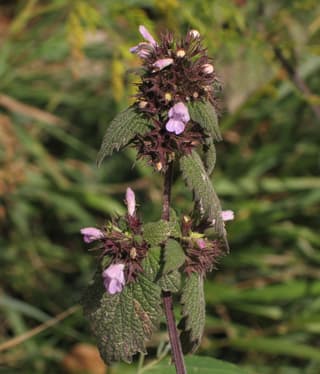
Black horehound
Ballota nigra
Black horehound (Ballota nigra) is a perennial herb in the mint family (Lamiaceae), originally native to the Mediterranean region and now widespread across Europe in roadside and wasteland plant communities. Its square, hairy stems and wrinkled, scalloped-toothed leaves emit a characteristic, unpleasant, musty odor when crushed — hence its genus name, which in Ancient Greek means 'repulsive' or 'rejected'. In summer and early autumn, pink-purple labiate flowers bloom in dense verticillasters, which fade to almost white after the first frosts. It often spreads in patches covering several square meters via underground rhizomes and overwinters well.
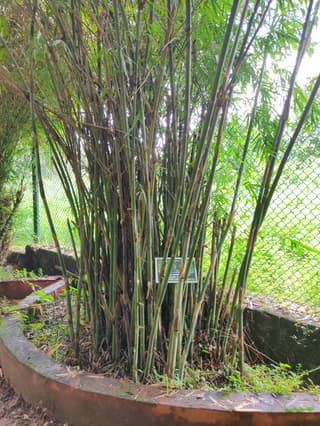
Hedge Bamboo
Bambusa multiplex
Hedge Bamboo (Bambusa multiplex) is a perennial grass known for its fast and dense growth, forming compact clumps. It features thin, flexible culms with vibrant green leaves that create a lush screen. It is a popular choice for landscaping, privacy hedges, and as an ornamental plant in pots.
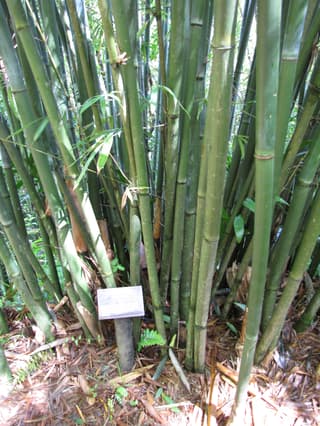
Slender Weavers Bamboo
Bambusa textilis gracili
Slender Weavers Bamboo (Bambusa textilis gracili) is a clumping bamboo native to southern China, prized for its elegant, upright culms that can reach up to 9 meters tall. Unlike running bamboos, it forms compact, non-invasive clumps with culms up to 3 cm in diameter and a spread of only 2 meters. It is one of the most popular bamboos for privacy screens, hedges, and tropical garden landscaping worldwide. Its fast growth rate, low maintenance needs, and non-invasive root system make it an ideal choice for both residential and commercial gardens.
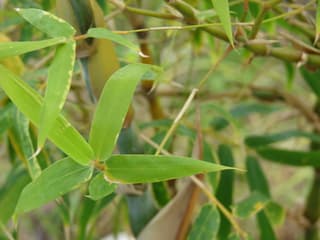
Buddha Belly Bamboo
Bambusa ventricosa
Buddha Belly Bamboo (Bambusa ventricosa) is a clumping bamboo native to China and Southeast Asia, celebrated for its distinctively swollen internodes resembling the rounded belly of the Buddha statue. This ornamental feature is most pronounced when the plant is grown in containers or under mild stress conditions. It is one of the most attractive bamboo species available, equally valued in gardens, patios, and as a bonsai subject.
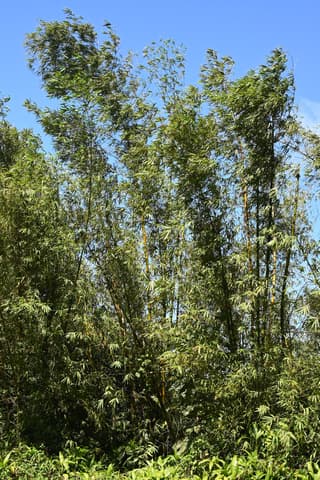
Common Bamboo
Bambusa vulgaris
Bambusa vulgaris, commonly known as Common Bamboo or Golden Bamboo, is one of the most widely cultivated bamboo species in the world. Native to South and Southeast Asia, it has spread to tropical and subtropical regions across all continents. Its culms can reach up to 20 meters in height, featuring a characteristic yellow-green coloration. It is an extremely fast-growing, versatile, and resilient plant used in construction, landscaping, and food production.
Bamboo
Bambusoideae
Bambusoideae, commonly known as bamboo, is a subfamily of perennial plants within the grass family. They are characterized by their hollow stems (culms) and extremely rapid growth. These versatile plants are used globally in construction, food, and as ornamental elements due to their elegant aesthetics and resilience.
Find the Perfect Plant
Our plant guide helps you find ideal species for your experience level and time of year.
Browse by Difficulty, Season & More
Use the filters below to narrow this catalog by care difficulty, season, environment, or search directly by name. Each filter leads to a focused list tailored to your specific growing conditions.