1451 Easy Pet Safe | 2026 Guide - Page 20
Find 1451 easy pet safe. Complete guide for your garden.
1451 Pet Safe with easy level
Showing 685-720 of 1451
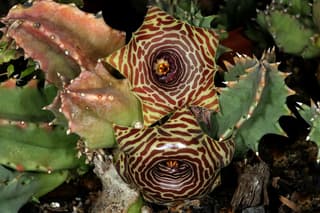
Lifesaver Plant
Huernia
Huernia is a genus of low-growing, clump-forming succulents native to eastern and southern Africa, prized for their soft, toothed, cucumber-like stems and unusual star-shaped flowers. The most widely cultivated species, Huernia zebrina, produces cream-to-yellow blooms marked with maroon zebra-like stripes and a glossy, donut-shaped center ring that resembles a lifesaver candy - the source of its common name. Like other members of the milkweed subfamily (Apocynaceae, Asclepiadoideae), its flowers emit a faint carrion-like odor to attract fly pollinators.
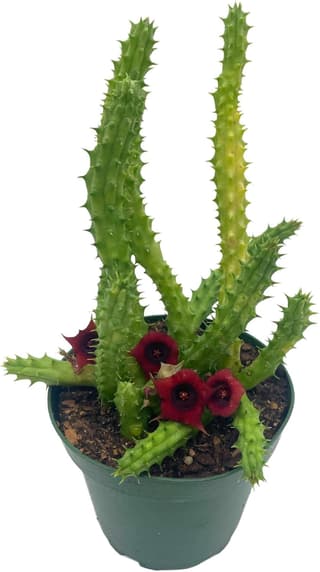
Red Dragon Flower
Huernia schneideriana
Huernia schneideriana is a fascinating succulent native to East Africa. It features grayish-green, cylindrical stems with prominent teeth along the edges. Its flowers are the main highlight: small, bell-shaped or star-shaped, with a velvety interior of dark red or intense burgundy. It is a low-growing or slightly trailing plant, making it ideal for hanging baskets or succulent collections in small spaces.
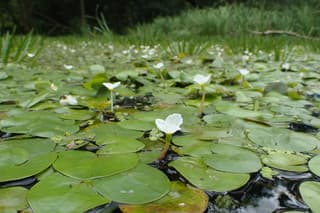
Frogbit
Hydrocharis
Hydrocharis is a small genus of five free-floating aquatic plants in the frogbit family (Hydrocharitaceae), found across Europe, Asia, parts of Africa, New Guinea and the Americas. The one usually grown in garden ponds is European frogbit, Hydrocharis morsus-ranae: rosettes of round to kidney-shaped glossy leaves about 3 cm across, often reddish underneath, floating on the surface with long dangling roots. Plants spread quickly by runners into mats 0.5-1 m wide but stay only about 10 cm tall. In summer they bear three-petalled white flowers, 2-3 cm across, with a yellow spot at the base of each petal; male and female flowers grow on separate plants. In autumn the plant dies back and survives the winter as small dormant buds (turions) that sink to the bottom and float up again in spring. In warmer parts of Asia its relative Hydrocharis dubia plays the same role in ponds and paddies.
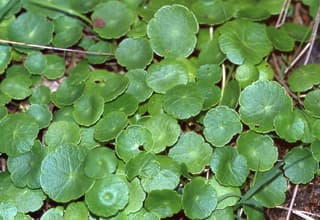
Marsh pennywort
Hydrocotyle vulgaris
Marsh pennywort (Hydrocotyle vulgaris) is a low, creeping perennial of the family Araliaceae, native to wet meadows, bogs, and pond margins across Europe. Its rounded, umbrella-shaped leaves form a dense mat that spreads readily over saturated soil or shallow water, making it a popular marginal plant for ponds and bog gardens.
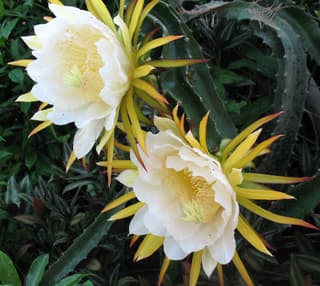
Red Pitaya
Hylocereus costaricensis
Red Pitaya (Hylocereus costaricensis) is a climbing cactus native to Costa Rica and Central America, prized for its intensely red, sweeter-tasting flesh compared to the white-fleshed variety. This succulent vine has triangular, fleshy stems that climb using aerial roots and needs a trellis or support to thrive. It produces enormous white flowers that bloom only at night and wilt by morning, followed by pink-skinned fruit covered in leathery scales that reveal a vivid ruby pulp dotted with tiny edible black seeds.

Dragon Fruit
Hylocereus undatus
The dragon fruit (Hylocereus undatus) is an epiphytic climbing cactus native to Central America and Mexico, now widely cultivated in tropical and subtropical regions for its exotic fruits with pink skin and white pulp speckled with black seeds. Its green, triangular, and succulent stems grow like vines, clinging to trees, walls, or trellises via aerial roots. At night, it produces massive, fragrant white flowers that open for only a few hours, earning it the nickname 'Queen of the Night'.
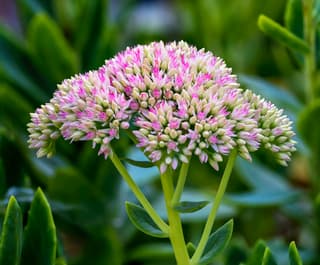
Autumn Joy Sedum
Hylotelephium
Hylotelephium is a genus of succulent perennial plants in the family Crassulaceae, formerly classified under Sedum. Commonly known as Autumn Joy Sedum or showy stonecrop, these plants are beloved for their fleshy, blue-green leaves and large, dome-shaped flower heads that emerge in late summer and persist through fall, providing late-season interest in the garden. Native to Asia and Europe, they are exceptionally hardy, drought-tolerant, and attract butterflies, bees, and other pollinators in abundance.
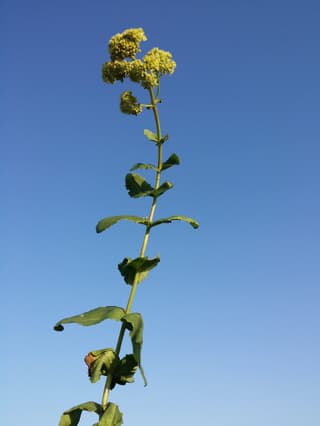
Great Stonecrop
Hylotelephium maximum
Hylotelephium maximum, commonly known as great stonecrop or orpine, is a robust, clump-forming succulent perennial in the Crassulaceae family native to Europe, the Caucasus, and western Siberia. It forms upright, fleshy stems 30-80 cm tall arising from a tuberous rootstock, with broad, opposite, grey-green succulent leaves. In late summer and autumn (September-October) it produces dense, flattened clusters of small creamy-white to pale pink flowers that attract bees and butterflies. Long treated as a subspecies of Hylotelephium telephium (as Sedum maximum), it thrives on dry, stony, calcareous slopes and forest edges at elevations up to 2,500 m, and is prized in gardens for its drought tolerance and low-maintenance nature.
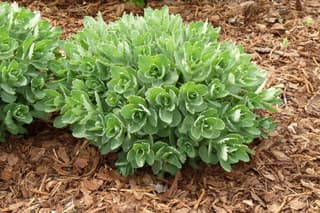
Showy Stonecrop
Hylotelephium spectabile
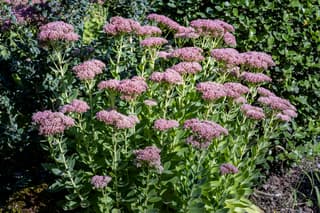
Hylotelephium spectabile, commonly known as Showy Stonecrop or Ice Plant, is a hardy succulent perennial native to China and Korea. It forms upright, clumping mounds of fleshy, blue-green leaves topped with flat-topped clusters of star-shaped pink flowers in late summer and fall — a magnet for butterflies and bees.
Orpine
Hylotelephium telephium
Orpine (Hylotelephium telephium) is a hardy Eurasian succulent perennial celebrated for its fleshy blue-green foliage and dense clusters of star-shaped flowers in shades of pink and purple from midsummer to autumn. Exceptionally drought-tolerant and cold-hardy to USDA zone 3, it thrives in sunny borders, rock gardens, and dry landscapes.

Cypress-leaved plait-moss
Hypnum cupressiforme
Cypress-leaved plait-moss (Hypnum cupressiforme) is one of the most widespread creeping mosses of the temperate zone. It forms dense, soft carpets with creeping, regularly branched stems resembling tiny cypress branches—hence its specific name. It grows on soil, tree bark, stones, walls, and decaying wood, in both shade and sunnier spots, easily adapting to a wide range of conditions. Due to its low maintenance and attractive appearance, it is popular as an ornamental and groundcover element in gardens, terrariums, and vivariums.
Catsear
Hypochaeris radicata
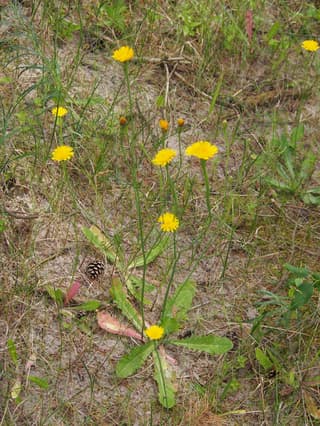
Catsear (Hypochaeris radicata) is a perennial herbaceous plant in the Asteraceae family, native to Europe and now naturalized in the Americas, Australia, and New Zealand. It forms a basal rosette of rough, hairy, lobed leaves, from which leafless branched stems emerge, ending in golden-yellow flower heads very similar to those of the dandelion. The entire plant exudes a milky latex when cut. It is extremely hardy, tolerating poor and compacted soils, and commonly grows spontaneously in lawns, roadsides, and vacant lots.
Polka Dot Plant (genus)
Hypoestes
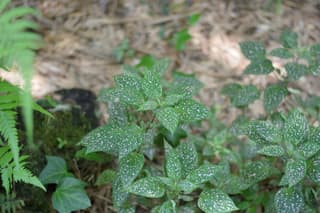
Hypoestes is a genus of ornamental plants in the Acanthaceae family, renowned for their vibrantly spotted and splashed foliage. The most cultivated species, H. phyllostachya (Polka Dot Plant), is a popular houseplant prized for its striking pink, red, white, and green patterned leaves.
Polka Dot Plant
Hypoestes phyllostachya
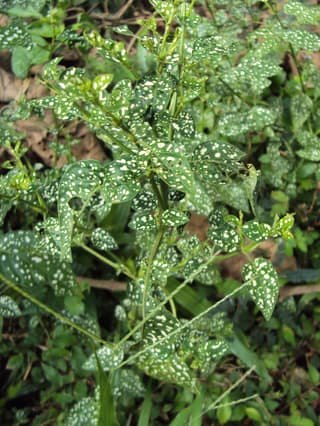
The Polka Dot Plant (Hypoestes phyllostachya) is a charming tropical perennial native to Madagascar, prized for its strikingly spotted foliage. Its oval leaves are splashed with vivid pink, red, or white spots against a dark green background, making it one of the most colorful houseplants available. Compact and bushy, it thrives in warm, humid environments and adds a playful pop of color to any indoor space.
Pignut
Hyptis suaveolens
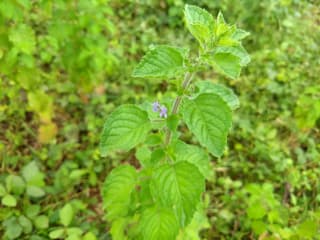
Pignut (Hyptis suaveolens) is an aromatic annual to short-lived perennial herb belonging to the Lamiaceae family (the same family as mint and basil). Native to the tropical regions of Mexico, the Caribbean, and South America, it is now naturalized throughout almost the entire tropical belt of the planet. It grows as a robust pioneer plant with a quadrangular stem, reaching up to 2.5 m in height, featuring ovate, aromatic, and serrated leaves, and small blue flowers in spikes. It is extremely resilient, spontaneously colonizing roadsides, pastures, and degraded lands, and blooms almost year-round in the tropics.
Globe Candytuft
Iberis umbellata
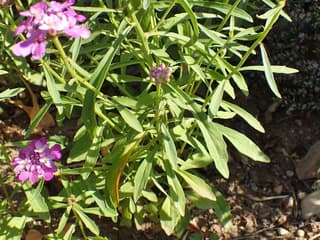
Iberis umbellata, commonly known as globe candytuft, is a fast-growing annual flowering plant in the mustard family (Brassicaceae), native to southern Europe. It forms a low, bushy mound of slender green leaves topped with dense, flattened clusters of small, four-petaled flowers in white, pink, purple, or crimson from late spring through summer. Valued for its sweetly scented blooms and drought tolerance, it thrives in poor, well-drained soil and is a popular choice for cottage gardens, rock gardens, borders, and containers, where it also attracts bees, moths, and butterflies.
Garden Balsam
Impatiens balsamina
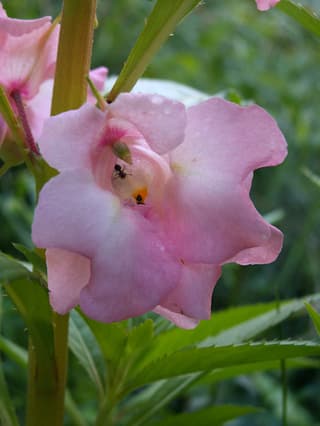
Impatiens balsamina, commonly known as Garden Balsam or Rose Balsam, is an annual herbaceous plant native to Southeast Asia. Its vibrant flowers grow along succulent stems, and the plant is famous for its seed pods that explode when touched once mature—a fascinating dispersal mechanism.
New Guinea Impatiens
Impatiens hawkeri
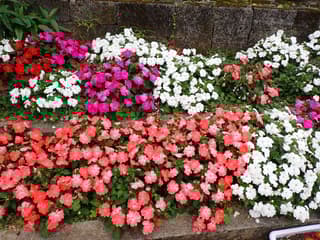
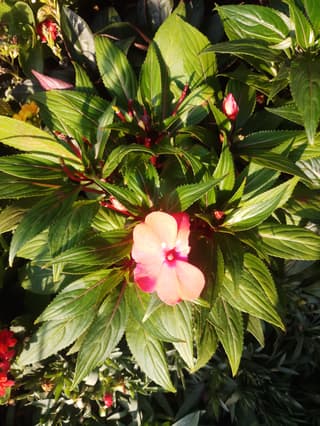
New Guinea Impatiens (Impatiens hawkeri) is a vibrant flowering plant native to Papua New Guinea, prized for its large, colorful blooms in shades of red, orange, pink, white, and purple. Unlike common impatiens, this hybrid tolerates more sun and produces larger flowers, making it ideal for containers, hanging baskets, and garden borders.
Busy Lizzie
Impatiens walleriana
Impatiens walleriana, commonly known as Busy Lizzie, is a beloved shade-loving annual native to East Africa. Prized for its prolific, colorful blooms that brighten shaded garden beds and containers from spring through fall. Available in a wide palette of colors including white, pink, red, orange, purple, and coral, making it one of the most popular bedding plants worldwide.
Japanese blood grass
Imperata cylindrica 'Red Baron'
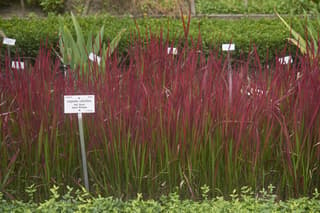
Japanese blood grass 'Red Baron' is a decorative ornamental grass cultivar of Imperata cylindrica, known for its slender blades that transition from green at the base to an intense blood-red toward the tips, especially in full sun. This sterile cultivar forms dense, upright clumps 12-18 inches (30-45 cm) in height with a spread of up to 3 feet (90 cm) and is often used as a groundcover or edging plant. While 'Red Baron' itself is not considered invasive, the species Imperata cylindrica is listed as one of the world's most problematic weeds, so gardeners should remove any solid green shoots that the cultivar may occasionally revert to.
Sweet Potato
Ipomoea batatas
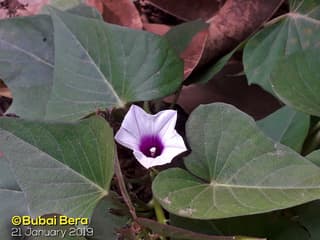
Sweet potato (Ipomoea batatas) is a vigorous trailing vine native to Central and South America, cultivated for over 5,000 years. It is prized both for its edible tuberous roots and its ornamental foliage, which comes in shades of lime green, deep purple, and bronze. One of the world's most important food crops, it thrives in warm climates and adapts well to gardens, raised beds, and large containers.
Mile-a-minute vine
Ipomoea cairica
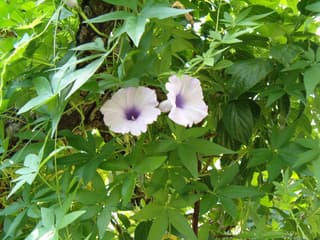
Ipomoea cairica, commonly known as mile-a-minute vine or Cairo morning glory, is a vigorous perennial climbing vine from the Convolvulaceae family, native to tropical Africa. It produces abundant funnel-shaped flowers in shades of purple, lavender, and pink with a darker center, blooming almost year-round. Its distinctive palmate leaves have five finger-like lobes. Widely used in landscaping for rapid coverage of walls, fences, and trellises.
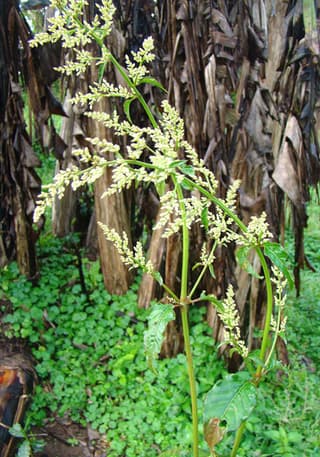
Bloodleaf
Iresine diffusa
Bloodleaf (Iresine diffusa) is a tropical shrub in the Amaranthaceae family, native to the tropical Americas. Celebrated for its vivid pinkish-red foliage, it is widely grown as an ornamental plant in gardens and indoors. It holds a significant place in Brazilian and Caribbean folk medicine, where it has been traditionally used as an analgesic, diuretic, and anti-inflammatory remedy.
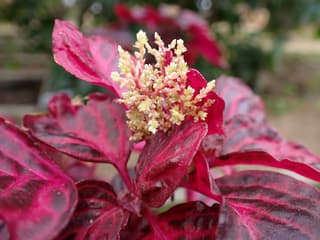
Bloodleaf
Iresine herbstii
Iresine herbstii is a stunning ornamental plant, famous for its oval and deeply colored leaves, ranging from crimson red to vibrant purple. Native to Brazil, it adds dramatic contrast to gardens and interiors. Its stems are also colored, creating a continuous visual effect. Although it produces small, greenish or whitish flowers, they are insignificant compared to the beauty of the foliage.
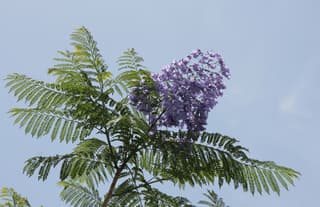
Blue Jacaranda
Jacaranda mimosaefolia
The Blue Jacaranda is one of the world's most spectacular flowering trees, native to northwestern Argentina and southern Bolivia. In spring, before the feathery fern-like leaves emerge, the tree erupts in a stunning display of violet-blue trumpet-shaped flowers that carpet entire streets and gardens. Growing up to 40 feet tall with a wide spreading canopy, it is a beloved ornamental tree planted across tropical and subtropical regions worldwide.
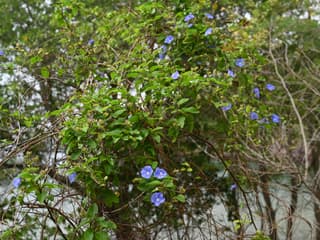
Skyblue Clustervine
Jacquemontia pentanthos
Skyblue Clustervine (Jacquemontia pentanthos) is an evergreen perennial vine from the Convolvulaceae family, native to Tropical Americas including Brazil. It produces an abundance of funnel-shaped, sky blue to pinkish-lavender flowers with white throats that open at dawn and close after dark. A fast-growing vine highly valued for covering fences, pergolas, and trellises in tropical gardens.
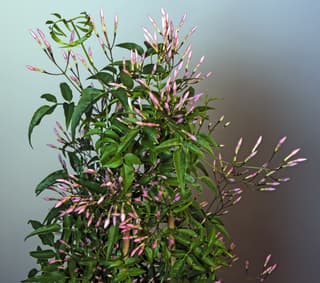
Pink Jasmine
Jasminum polyanthum
Jasminum polyanthum is a vigorous, twining evergreen climber native to China, prized for its profuse clusters of intensely fragrant, star-shaped white flowers with pink-tinged buds. Blooming from late winter through spring, it can reach up to 5 meters and is a popular choice for both indoor and outdoor growing. Its fast growth rate and ease of care make it ideal for trellises, arches, and hanging baskets.
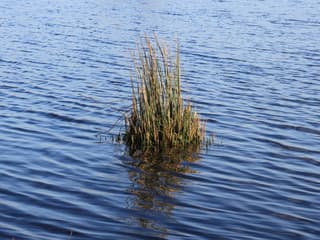
Rush
Juncus
Rush is the common name for plants in the genus Juncus, a large group of grass-like, clump-forming perennials found in wet meadows, marshes and pond edges worldwide. Rushes are prized for their cylindrical, leafless, evergreen-to-semi-evergreen stems that form neat upright or arching tufts, and for their small brown or green flower clusters that appear along the stem in summer. Low-maintenance and slow-growing, rushes are a favorite for rain gardens, bog gardens and container water features.

Soft Rush
Juncus effusus
Juncus effusus, commonly known as soft rush, is a cosmopolitan wetland perennial in the Juncaceae family. It forms dense, upright clumps of smooth, cylindrical, evergreen stems that lack true leaves, giving the plant a distinctive tufted, rush-like silhouette. Found naturally along pond margins, marshes, ditches, and other saturated soils worldwide, soft rush is a true hydrophyte that tolerates standing water and is widely used in water gardens, rain gardens, and wetland restoration projects.
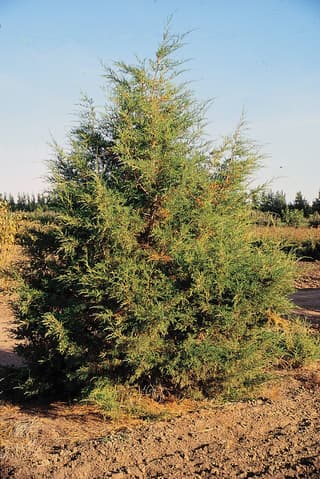
Rocky Mountain Juniper
Juniperus scopulorum
The Rocky Mountain juniper (Juniperus scopulorum) is a slow-growing, cold-hardy evergreen conifer native to the mountains and foothills of western North America, from British Columbia and Alberta south through the Rockies to Arizona, New Mexico, and western Texas. Depending on the cultivar, it grows as a narrow columnar tree or a broad shrub, reaching 9-12 m (30-40 ft) tall in the wild, with scale-like, blue-green to silvery foliage and small, berry-like blue-grey cones. Exceptionally drought-, wind-, and cold-tolerant, it thrives in rocky, well-draining soils and is a popular choice for windbreaks, hedges, and xeriscape gardens across USDA zones 3a-7b.
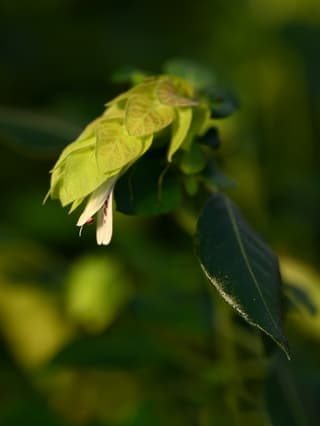
Water-willow / Shrimp Plant (genus)
Justicia
Justicia is a large genus of approximately 600 species in the family Acanthaceae, comprising tropical and subtropical herbs and shrubs. The most popular ornamentals are Justicia brandegeeana (Shrimp Plant) and Justicia carnea (Brazilian Plume Flower), beloved for their distinctive colorful bracts and flowers. They thrive as houseplants and in subtropical gardens.
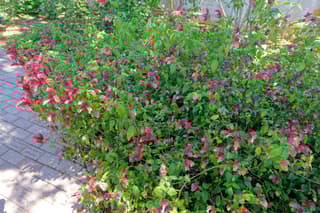
Shrimp Plant
Justicia brandegeeana
Justicia brandegeeana is a tropical evergreen shrub native to Mexico, belonging to the Acanthaceae family. It is widely grown as an ornamental plant for its distinctive shrimp-shaped bracts that range from red to pink and yellow, with small white flowers emerging from within. It can reach up to 90 cm tall and blooms nearly year-round in warm climates.
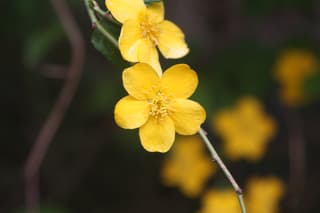
Japanese Kerria
Kerria japonica
Japanese Kerria (Kerria japonica) is a deciduous shrub native to the mountainous regions of China and Japan. It is celebrated for its brilliant golden-yellow flowers that bloom profusely in spring, covering its arching, bright green stems. A highly adaptable and low-maintenance plant, it thrives in shaded gardens and tolerates cold winters down to USDA Zone 4.
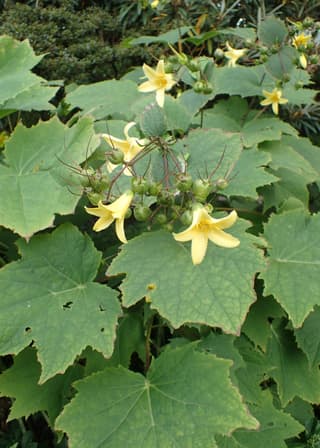
Yellow Wax Bells
Kirengeshoma palmata
Yellow Wax Bells (Kirengeshoma palmata) is a clump-forming, deciduous perennial in the hydrangea family (Hydrangeaceae), native to woodland environments in Japan and eastern China. It forms 24–48 inch high, shrub-like mounds with dark burgundy stems and large, maple-like, palmate leaves. In late summer and early autumn, it bears clusters of nodding, waxy, bell-shaped flowers in a soft yellow hue, later followed by characteristic three-pronged seed capsules.

Kleinia
Kleinia
Kleinia is a genus of perennial succulents in the Asteraceae family, closely allied to Senecio. Native to the Canary Islands, North Africa, and parts of Asia, the genus comprises around 56 species featuring fleshy stems, silvery-blue foliage, and ornamental summer flowers. It is a low-maintenance plant ideal for rock gardens, dry borders, and container growing.
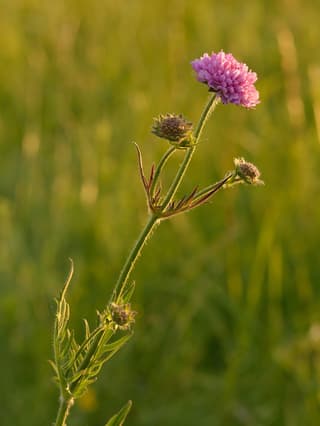
Field Scabious
Knautia arvensis
Field Scabious is a perennial meadow herb from the honeysuckle family (Caprifoliaceae), growing to a height of 30 to 150 cm. Its upright, slightly grooved stem bears grey-green, dull leaves with lyre-shaped to pinnately lobed blades. From May to September, blue to pinkish-purple flowers appear, clustered into conspicuous, approximately 4 cm large flower heads. It grows in meadows, field margins, and light woodlands, where it prefers drier, calcareous soils from lowlands to mountainous regions. It is an important honey plant and a host plant for many species of butterflies and beetles.
Easy Care Pet Safe
Our selection of 1451 easy pet safe combines the characteristics of this category with reduced care needs. Perfect for beginners who love this category.
Why Choose Easy Pet Safe?
Combining the beauty of pet safe with easy difficulty level lets you enjoy this category without excessive maintenance worries. Each plant was selected to offer the best characteristics of the category at the care level you are looking for.