1451 Easy Pet Safe | 2026 Guide - Page 21
Find 1451 easy pet safe. Complete guide for your garden.
1451 Pet Safe with easy level
Showing 721-756 of 1451
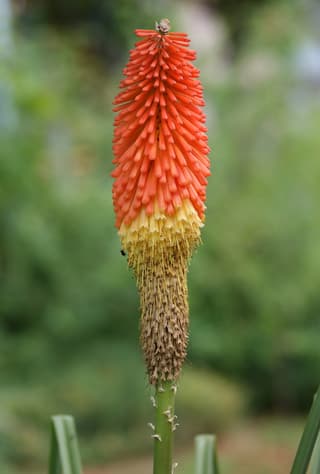
Red Hot Poker
Kniphofia uvaria
Kniphofia uvaria, commonly known as Red Hot Poker or Torch Lily, is a striking herbaceous perennial native to South Africa. Its bold torch-like flower spikes display vivid shades of red, orange, and yellow, making it one of the most visually dramatic plants in the garden. Drought-tolerant and low-maintenance once established, it thrives in sunny, well-drained beds and borders.
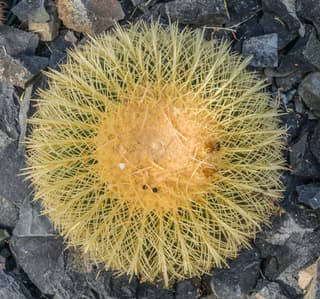
Golden Barrel Cactus
Kroenleinia grusonii
The Golden Barrel Cactus (Kroenleinia grusonii, synonym Echinocactus grusonii) is a globose cactus native to central Mexico, belonging to the Cactaceae family. It is recognizable by its spherical, ribbed body covered with dense golden spines (a white-spined variety also exists) which, with age, can take on a more oblong shape, exceeding one meter in height. It grows very slowly and can live for decades; in nature, it is considered endangered due to poaching and dam construction in its original habitat.
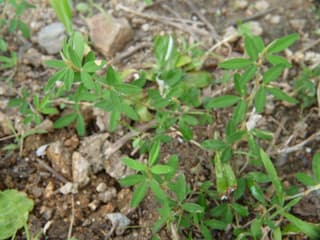
Japanese Clover
Kummerowia striata
Japanese clover (Kummerowia striata) is a low-growing, prostrate annual legume in the pea family, native to China and Japan and now widely naturalized across the eastern and central United States. It forms wiry, branching mats 5-40 cm tall with small trifoliate leaves whose leaflets show distinctive parallel veins angled toward the leaf margin. From midsummer into fall it produces tiny pink-to-purple, pea-like flowers with a white upper petal, followed by single-seeded pods. As a nitrogen-fixing legume it enriches poor, compacted soils and is valued as livestock forage, erosion control cover, and wildlife food, though it can also behave as a weedy colonizer of disturbed ground and thin turf.
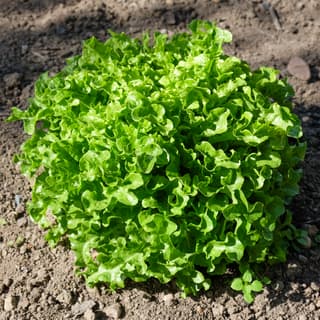
Iceberg lettuce
Lactuca sativa
Lactuca sativa, specifically the Iceberg variety, is characterized by its light green, extremely crisp leaves that grow in a compact, rounded head similar to a cabbage. It is widely valued in culinary arts for its firm texture and post-harvest heat resistance.
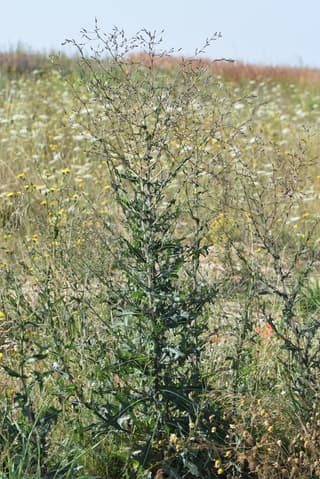
Prickly Lettuce
Lactuca serriola
Lactuca serriola, commonly known as Prickly Lettuce, is an annual or biennial herb native to Europe and the Mediterranean region. It grows vigorously in open disturbed ground, roadsides, and field margins, reaching up to 2 metres tall. The plant produces pale yellow daisy-like flowers from summer through early autumn and is notable for leaves that align north-south, earning it the name "compass plant." Its milky latex, known as lactucarium, has been used medicinally for centuries.
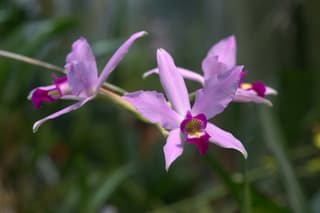
Two-edged Laelia
Laelia anceps
Laelia anceps is an epiphytic orchid from the Orchidaceae family, native to eastern Mexico (rarely Honduras and Guatemala), where it grows on trees in oak-pine forests and coffee plantations at altitudes of 500 to 2,400 meters. It produces ovoid, flattened pseudobulbs (6-12 cm) with one, rarely two, stiff leathery leaves. A long (45-60 cm) flower spike emerges from the base of the pseudobulb, bearing 2 to 4 fragrant flowers 6-12 cm in diameter, ranging in color from lavender to pink, purple, and white. It blooms from November to January. It is one of the most cold-hardy species in the Cattleya alliance, tolerating short-term temperatures just above freezing as well as summer heat exceeding 35°C.
Japanese Crape Myrtle
Lagerstroemia fauriei
A deciduous tree native to Japan, reaching 20 to 30 feet in height, featuring a vase-shaped canopy and exfoliating bark in shades of copper, gray, and brown. It blooms in summer with panicles of white flowers. It is highly resistant to powdery mildew.
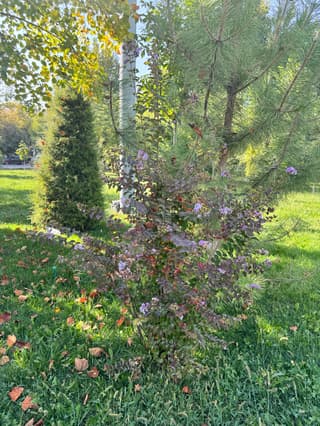
Crepe Myrtle
Lagerstroemia indica
Lagerstroemia indica, commonly known as Crepe Myrtle, is a small tree or large shrub native to Asia. It is widely cultivated in tropical and temperate climates due to its spectacular flowering that occurs in summer and fall. Its flowers have crinkled and delicate petals, resembling crepe paper. In addition to the flowers, it stands out for its smooth, light-colored trunk that peels to reveal brown tones, providing ornamental interest even in winter when the plant loses its leaves.
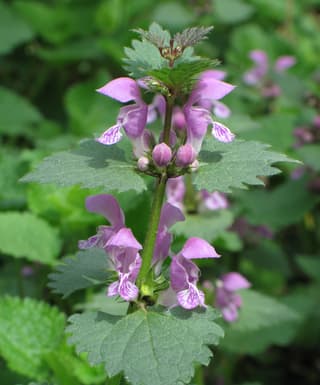
Dead Nettle
Lamium
Lamium is a genus of low-growing plants in the family Lamiaceae, commonly called dead nettle for their nettle-like leaves that lack stinging hairs. Widely used as ground cover in shaded gardens.
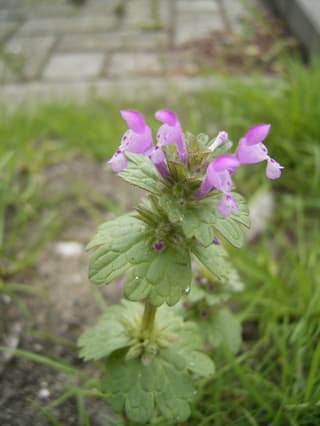
Henbit Dead-nettle
Lamium amplexicaule
Lamium amplexicaule, commonly known as henbit dead-nettle, is a low-growing winter annual in the mint family (Lamiaceae), native to Europe and Asia and now naturalized across North America. It forms mats of scalloped, rounded leaves that clasp the stem, topped by small tubular pink-purple flowers in early spring. Despite its nettle-like appearance, henbit has no stinging hairs and is completely harmless to touch. It thrives in disturbed soils, garden beds, and lawns, often being one of the first plants to flower in late winter.
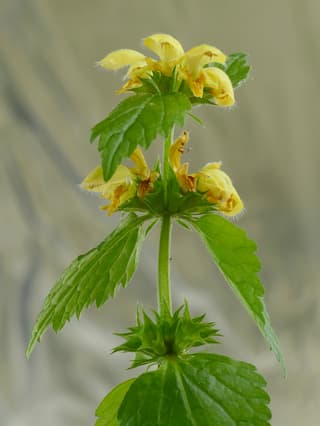
aluminium plant
Lamium galeobdolon
Lamium galeobdolon, commonly known as Yellow Archangel, is a vigorous perennial groundcover. It is distinguished by its striking variegated leaves, which often feature silver-metallic patterns that give it the nickname 'aluminium plant' in some regions. In late spring, it produces upright spikes of hooded, bright yellow flowers. It is exceptionally hardy and thrives in the deep shade of woodland gardens where other plants struggle to grow.
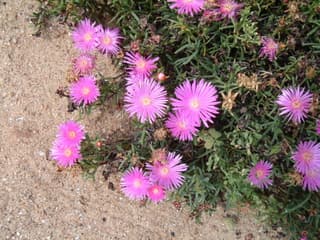
Purple Ice Plant
Lampranthus productus
Lampranthus productus, commonly known as Purple Ice Plant, is a trailing succulent groundcover native to South Africa, belonging to the family Aizoaceae. It is celebrated for its spectacular magenta-purple daisy-like flowers with white centers that bloom profusely in winter and spring, covering the fleshy blue-green foliage entirely. Exceptionally drought-tolerant, heat-resistant, and capable of withstanding coastal salt air and wind, it is widely planted on slopes, banks, and sunny gardens throughout Mediterranean climates worldwide.
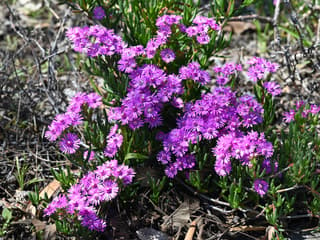
Trailing Ice Plant
Lampranthus spectabilis
Lampranthus spectabilis, commonly called the trailing ice plant, is a low-growing succulent groundcover native to South Africa. Grown for its dazzling display of daisy-like magenta, pink, or purple flowers that open only in full sun, this mat-forming perennial thrives in poor, sandy soil and coastal conditions. Its fleshy, glistening leaves store water, making it highly drought tolerant once established.
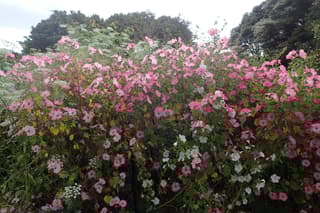
Rose Mallow
Lavatera trimestris
Lavatera trimestris, commonly known as Rose Mallow or Annual Mallow, is a fast-growing annual plant native to the Mediterranean region. It produces an abundance of large, saucer-shaped flowers in shades of white, pink, and deep rose throughout summer and fall. Growing up to 3-4 feet tall, it is a stunning addition to cottage gardens and borders.
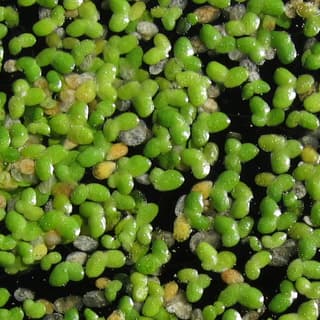
Common Duckweed
Lemna minor
Common Duckweed (Lemna minor) is one of the smallest flowering plants in the world. It floats freely on the surface of still or slow-moving freshwater bodies, forming dense green mats. Cosmopolitan in distribution, it is found in ponds, lakes, and aquariums worldwide.
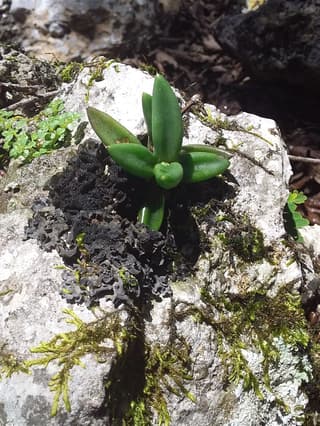
Lenophyllum acutifolium
Lenophyllum acutifolium
Lenophyllum acutifolium is a small perennial succulent from the Crassulaceae family, native to northeastern Mexico (Coahuila and Nuevo León) and southern Texas. It forms compact rosettes of fleshy, opposite, sharp-tipped leaves that range from olive green to coppery-bronze when exposed to full sun. It reaches about 4 to 6 inches in height and produces small greenish-yellow flowers in racemes on terminal stems. It is extremely easy to propagate: naturally fallen leaves root on their own in the substrate.
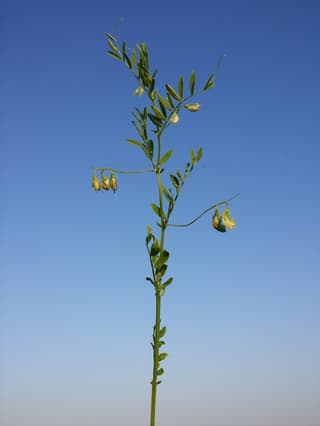
Lentil
Lens culinaris
The lentil (Lens culinaris) is an annual herbaceous legume of the Fabaceae family, growing up to approximately 45 cm tall, with a thin and branched stem. It produces small white, pinkish, or light blue flowers in clusters, followed by short pods containing one or two lens-shaped seeds. Cultivated since ancient times for its edible seeds rich in protein, iron, and fiber, it fixes atmospheric nitrogen like all legumes thanks to symbiotic bacteria present in root nodules.
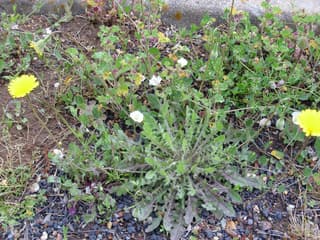
Rough Hawkbit
Leontodon hispidus
Leontodon hispidus, commonly known as Rough Hawkbit, is a perennial herbaceous plant in the family Asteraceae, native to grasslands and meadows across Europe and Asia. It produces dandelion-like yellow flower heads from June to September, making it a valuable nectar source for bees, butterflies, and other pollinators.
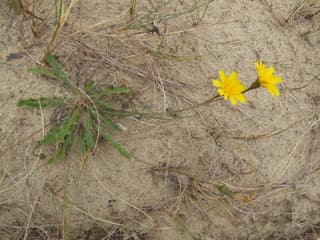
Lesser Hawkbit
Leontodon saxatilis
Leontodon saxatilis, commonly known as Lesser Hawkbit or Hairy Hawkbit, is a low-growing perennial wildflower in the family Asteraceae. It forms a basal rosette of lobed, bristly-haired leaves from which emerge slender, leafless stems bearing solitary bright yellow flowerheads that closely resemble a small dandelion. Native to Europe and North Africa, it thrives in grassy habitats on sandy, calcareous or well-drained soils and flowers prolifically from June through October.
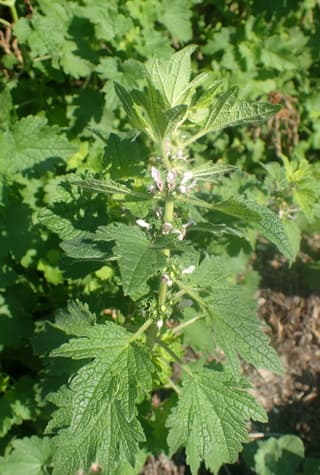
Five-lobed Motherwort
Leonurus quinquelobatus
Leonurus quinquelobatus is a perennial herbaceous medicinal plant belonging to the mint family (Lamiaceae), found across much of Eurasia, from Sakhalin to Central Europe and Italy. It is a close relative of Common Motherwort (Leonurus cardiaca), with which it is often confused, but its palmately divided leaves with five distinct lobes serve as a characteristic identifier. The plant can grow up to 1-1.5 meters tall, featuring square, pubescent stems and pale pink-purple flowers that bloom in axillary whorls between June and August. It thrives best in sunny to partially shaded locations with nutrient-rich, well-drained soil and can live in the same spot for decades. Traditionally known as 'heartwort' or 'strengthening herb,' its flowering shoots have been used since ancient times to soothe heart palpitations and support the female reproductive system.
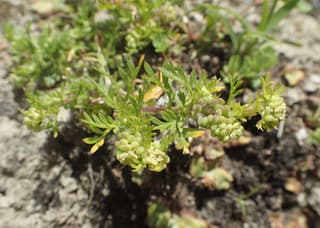
Lesser Swinecress
Lepidium didymum
Lesser swinecress (Lepidium didymum, syn. Coronopus didymus) is an annual or biennial herb in the Brassicaceae family, native to South America (Brazil, Argentina, Bolivia, Chile, Paraguay, Peru, Uruguay, and Venezuela) and now naturalized throughout most of the world. It forms a basal rosette from which highly branched, decumbent or ascending stems emerge, reaching up to 40 cm in length. The leaves are alternate and pinnatifid with narrow segments, and the entire plant emits a strong, characteristic odor when crushed. The flowers are tiny, whitish or nearly petal-less, gathered in racemes, giving rise to the bilobed fruits typical of the Lepidium genus. It is common in disturbed ground, roadsides, gardens, lawns, and cultivated areas, where it behaves as a vigorous, fast-growing spontaneous plant.
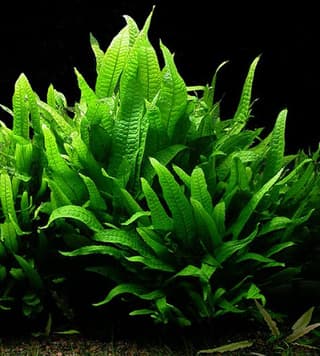
Java fern
Leptochilus pteropus
An epiphytic fern native to Southeast Asia, living submerged or semi-submerged on rocks and roots along riverbanks. It grows from a dark green creeping rhizome that bears lanceolate, textured leaves about 8 inches long, reaching a total height of 6 to 12 inches. Extremely hardy, it is one of the easiest aquarium and paludarium plants to cultivate.
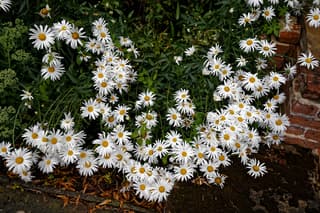
Shasta daisy
Leucanthemum × superbum
Shasta daisy (Leucanthemum × superbum) is a popular hybrid herbaceous perennial prized for its large white, daisy-like flowers with golden-yellow centers. Bred by horticulturist Luther Burbank, it blooms profusely from late spring through early fall and is relatively easy to grow.
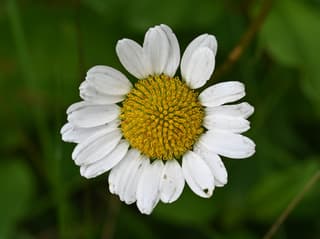
Oxeye Daisy
Leucanthemum ircutianum
Leucanthemum ircutianum, commonly known as the oxeye daisy, is a herbaceous perennial in the Asteraceae family, native to Eurasia. It produces iconic white-petalled flowers with a golden-yellow central disc, blooming from spring through autumn. A hardy, low-maintenance wildflower, it is highly attractive to pollinators including bees, butterflies, and hoverflies.
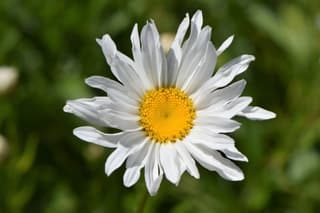
Max Chrysanthemum
Leucanthemum maximum
Leucanthemum maximum, commonly known as the max chrysanthemum or great daisy, is a herbaceous perennial in the Asteraceae family, native to the Pyrenees mountains of France and Spain. It produces classic white daisy-like flowers with bright white ray petals surrounding a golden-yellow disc center, blooming from late spring through summer. This species is one of the parent plants used by horticulturist Luther Burbank to create the beloved Shasta daisy hybrid. It is widely grown in cottage gardens, borders, and as a long-lasting cut flower.
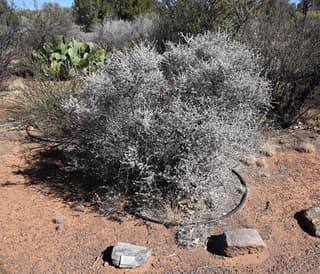
Thunder Cloud Sage
Leucophyllum candidum
Leucophyllum candidum is a compact, silvery-leaved evergreen shrub native to the arid limestone hills of the Chihuahuan Desert in Texas and northern Mexico. Prized for its dense, felted foliage and lavender-purple blooms that appear after rains, it is a hardy, low-maintenance choice for xeriscapes and desert gardens.
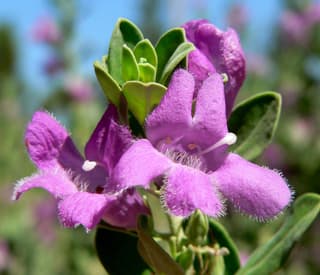
Texas Sage
Leucophyllum frutescens
Texas Sage (Leucophyllum frutescens) is a stunning evergreen shrub native to the arid regions of Texas and northern Mexico. Celebrated for its extraordinary drought tolerance and silvery-gray foliage, this low-maintenance plant bursts into bloom with vibrant purple, violet, or lavender flowers during summer and fall. Commonly known as the "barometer bush," it flowers in response to high humidity and falling atmospheric pressure — often right before or after rain. A beloved staple of xeriscape gardens and water-wise landscaping.

Cushion Bush
Leucophyta brownii
The Cushion Bush (Leucophyta brownii) is a compact, dense evergreen shrub native to the coastal regions of southern Australia. It is popular for its striking silver-blue color, provided by its finely hairy, scale-like stems and leaves. The plant forms round, hemispherical cushions typically reaching a height and width of 60–100 cm. In summer, it produces small, round flower heads in a yellow-cream color that are attractive to pollinators. The Cushion Bush is ideal for coastal gardens, rockeries, and xeriscapes with low water requirements. It is resistant to wind, sea salt, frost, and drought.

Chilean Cactus
Leucostele chiloensis
The Chilean cactus (Leucostele chiloensis, formerly Echinopsis chiloensis) is a tree-like columnar cactus endemic to central Chile, growing up to 8 m tall with multiple ribbed branches arising from the base. It produces large white, funnel-shaped flowers that open during the day from November to January, followed by round, edible green fruit. It is extremely drought-tolerant and adapted to sunny, rocky slopes of Chile's coastal cordillera.
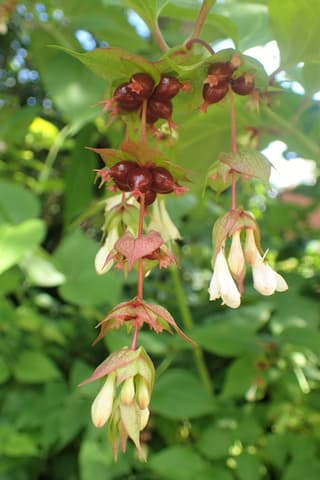
Himalayan honeysuckle
Leycesteria formosa
Leycesteria formosa, commonly known as Himalayan honeysuckle or pheasant berry, is a fast-growing deciduous shrub native to forests and scrub in the Himalayas, southwestern China, and Myanmar. It produces hollow, cane-like stems and pendulous racemes of small white to pale-pink flowers wrapped in showy wine-purple bracts, followed by soft, deep-purple berries that ripen from late summer into autumn. The berries taste mildly of caramel once fully ripe and are a favourite food of pheasants and other birds, giving the plant its common name. When old stems die back, wind whistling through their hollow interiors produces an eerie sound, inspiring the plant's Chinese name, "ghost flute".
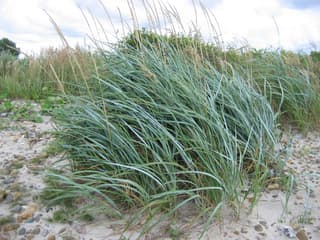
Sea Lyme Grass
Leymus arenarius
Sea lyme grass (Leymus arenarius) is a robust, perennial grass from the Poaceae family, native to the coasts of Northern and Western Europe. Its striking blue-gray to steel-blue leaves make it a popular ornamental grass in gardens and landscapes. The plant grows up to 150 cm tall and forms extensive mats through underground runners (rhizomes), which contribute significantly to sand stabilization and dune development.
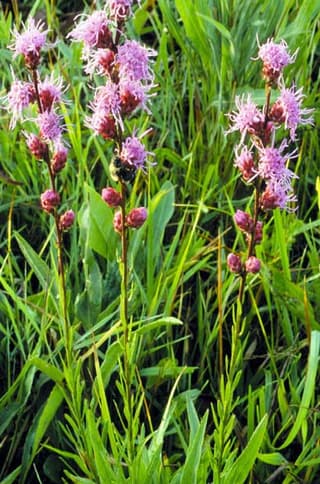
Rough Blazing Star
Liatris aspera
Liatris aspera is a native North American prairie perennial in the daisy family, prized for its dense spikes of rosy-purple, button-like flowers that open from the top down along an unbranched stem. Rising 2 to 4 feet tall from a woody corm, it thrives in full sun and lean, well-drained soil, making it a staple of prairie restorations and pollinator gardens. Its blooms are a magnet for bees, butterflies, and skippers from midsummer into fall.
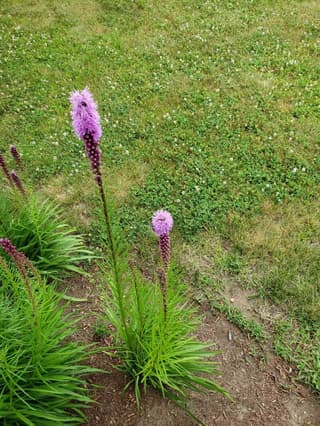
Prairie Blazing Star
Liatris pycnostachya
Prairie Blazing Star is a tall, herbaceous perennial native to the tallgrass prairies of the central and southeastern United States. It produces dense, bottlebrush-like spikes of rose-purple to lavender flowers that open from the top of the spike downward, a trait that distinguishes it from most other flowering plants. Rising from a corm-like base, the narrow, grass-like leaves form a tidy clump beneath tall, unbranched flower stalks that can reach up to 1.5 m in height. It thrives in full sun and moist, well-drained soil, making it a favorite of pollinator and rain gardens.
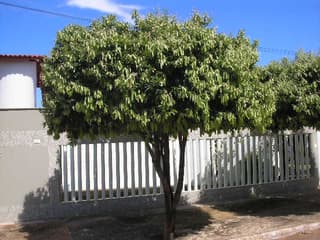
Oiti Tree
Licania tomentosa
Licania tomentosa, commonly known as Oiti, is a native Brazilian evergreen tree belonging to the family Chrysobalanaceae. It can reach up to 20 meters in height and is widely used in urban landscaping for its dense, broad crown that provides generous shade. The tree produces edible stone fruits and is highly valued for its resistance to drought and urban pollution.

Amazon frogbit
Limnobium laevigatum
Limnobium laevigatum, commonly known as South American or Amazon frogbit, is a fast-growing floating aquatic plant native to Central and South America. Its round, glossy, slightly fleshy leaves float in rosettes on the water's surface, while long, feathery roots hang below, providing shelter for fish fry and purifying the water by absorbing excess nutrients.

Asian Marshweed
Limnophila sessiliflora
Limnophila sessiliflora, commonly known as Ambulia, is a perennial aquatic herb native to South and Southeast Asia (India, China, Indochina, and the Malay Archipelago), where it grows submerged or emergent in ponds, rice paddies, and shallow waters up to 1,900 meters in altitude. Its leaves, arranged in whorls, are finely pinnate and bright green underwater, while emergent forms develop darker, lanceolate leaves. When growing out of the water, it can produce small tubular violet flowers with white throats. It is one of the most popular aquarium plants due to its feathery foliage and rapid growth, although in warm climates outside its native habitat (such as Florida, Georgia, and Texas, USA), it behaves as an invasive species in waterways.
Easy Care Pet Safe
Our selection of 1451 easy pet safe combines the characteristics of this category with reduced care needs. Perfect for beginners who love this category.
Why Choose Easy Pet Safe?
Combining the beauty of pet safe with easy difficulty level lets you enjoy this category without excessive maintenance worries. Each plant was selected to offer the best characteristics of the category at the care level you are looking for.