2264 Easy Plants | 2026 Guide - Page 50
Discover 2264 easy plants for your garden. Complete care guide.
2264 Easy Plants
Showing 1765-1800 of 2264
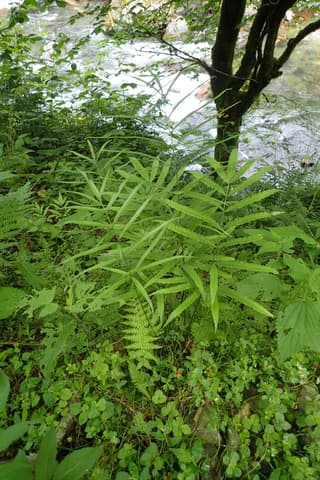
Brake Fern
Pteris
Pteris is a genus of roughly 300 fern species in the family Pteridaceae, native to tropical and subtropical regions worldwide. Commonly known as brake ferns or table ferns, they are prized for their graceful, arching fronds — often variegated with white or silver stripes. These ferns thrive in shaded, humid conditions and are among the most popular indoor ferns. They reproduce via spores borne openly along frond margins and produce no flowers. Pteris ferns are considered non-toxic to cats, dogs, and humans, making them a pet-safe choice for home and office.
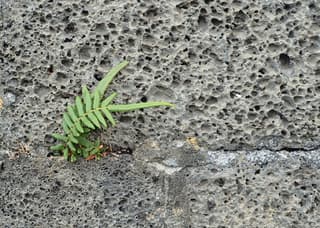
Chinese Brake Fern
Pteris vittata
Pteris vittata, commonly known as the Chinese Brake Fern, is a resilient fern native to tropical and subtropical regions across Asia, Africa, and Europe. It produces graceful, arching fronds with narrow pinnae arranged ladder-like along the midrib. This fern holds a remarkable distinction in the plant world: it is the first naturally discovered arsenic hyperaccumulator, capable of drawing up to 22,630 mg of arsenic per kilogram of shoot dry weight from contaminated soil — making it a celebrated tool in phytoremediation projects worldwide.
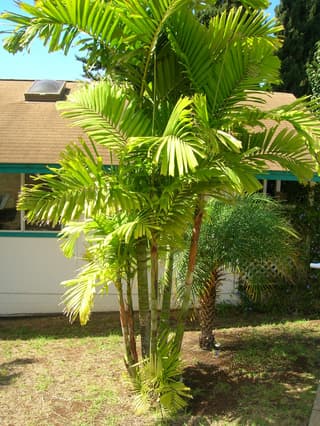
Macarthur Palm
Ptychosperma macarthurii
The Macarthur Palm (Ptychosperma macarthurii) is a clustering, multi-stemmed palm native to northern Australia and New Guinea. It produces slender, ringed canes topped with dark green, arching, pinnate fronds, forming a dense and graceful clump. Prized for its adaptability, this palm tolerates a wide range of soils, grows well both outdoors in tropical landscapes and indoors in bright rooms, and is notably resistant to pests, disease, and even lethal yellowing, a condition that affects many other palm species.
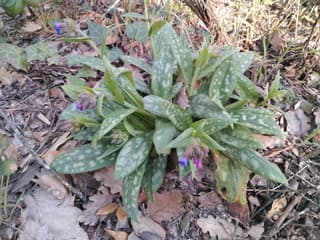
Long-leaved Lungwort
Pulmonaria longifolia
Pulmonaria longifolia, commonly called long-leaved lungwort, is a low-growing, semi-evergreen woodland perennial native to France, Great Britain, Portugal and Spain. Its long, narrow, dark green leaves are heavily dappled with silvery-white spots, forming dense clumps of textural foliage well before and after the bloom period. In spring, dense clusters of funnel-shaped flowers open from pink buds and mature to deep blue, giving each stem a two-toned display. Slow-spreading and shade-loving, it thrives in the cool, moist woodland conditions of borders and shaded slopes.
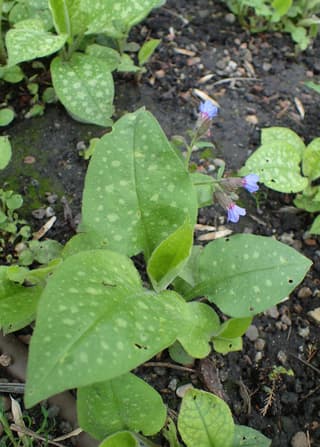
Bethlehem Sage
Pulmonaria saccharata
Pulmonaria saccharata, commonly called Bethlehem sage, is a low-growing, semi-evergreen perennial native to woodlands of France and Italy. Its lance-shaped, deep green leaves are heavily splashed with silvery-white spots, forming a dense, textural groundcover even when the plant isn't in bloom. In early spring, clusters of funnel-shaped flowers open pink and mature to vivid blue, creating a two-toned display on the same stem. Spreading slowly by creeping rhizomes, it thrives in the cool, moist shade of woodland and shade gardens.
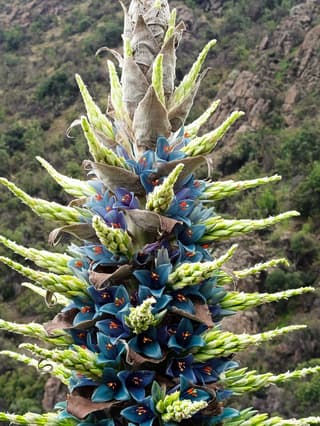
Puya
Puya
Puya is a genus of roughly 200-225 terrestrial bromeliad species native to the cool, dry slopes of the Andes Mountains in Chile, Peru, Bolivia, and Argentina. Unlike most bromeliads, Puya species grow rooted in the ground rather than as epiphytes, forming tough, spiny rosettes of silvery-green leaves. Many are monocarpic, sending up a dramatic flower spike -- sometimes several meters tall -- once in their lifetime before the rosette dies, leaving offsets behind.
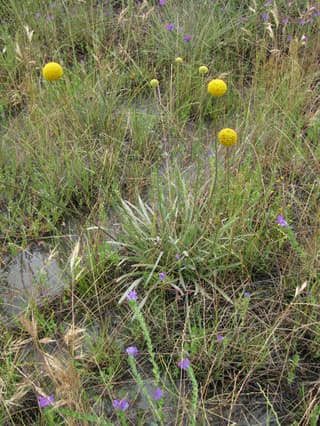
Billy Buttons
Pycnosorus globosus
Craspedia (Pycnosorus globosus) is a perennial herbaceous plant in the Asteraceae family, native to the grasslands and temporary wetlands of southeastern Australia (New South Wales, Queensland, South Australia, Victoria). It is recognizable by its compact, globose flower heads of intense golden yellow, borne on long, rigid stems that can reach 35 to 47 inches (90 to 120 cm) in height, rising above low-growing, persistent silvery-gray foliage. Highly valued in fresh or dried bouquets, it regenerates easily by seed, particularly after fire in its natural habitat.
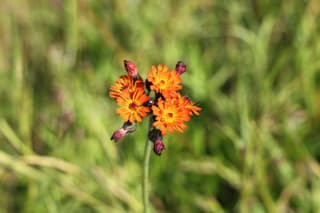
Orange hawkweed
Pylosella aurantiaca
Orange hawkweed (Pilosella aurantiaca, syn. Hieracium aurantiacum) is a low-growing perennial herb from the Asteraceae family, native to the mountain meadows of central, eastern, and northern Europe. It forms a basal rosette of oblong, slightly hairy grayish-green leaves and, in spring and summer, sends up one to several hairy stems bearing clusters of striking fiery orange to brick-red flower heads. The plant spreads via above-ground runners (stolons) and creeping rhizomes, allowing it to quickly form dense mats—consequently, in North America and several other regions outside its native range, it is considered an aggressive invasive species that displaces native vegetation in meadows and pastures.
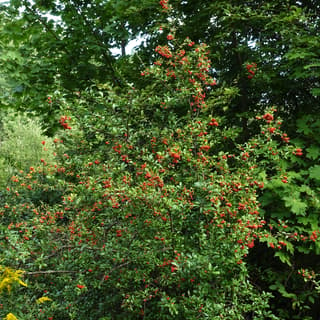
Scarlet Firethorn
Pyracantha coccinea
Pyracantha coccinea (Scarlet Firethorn) is a thorny, broadleaf semi-evergreen shrub native to Southern Europe and Western Asia. It is prized for its dense clusters of small white flowers in late spring and its profuse display of brilliant orange-red berries that persist through winter, providing vital food for birds. The plant forms dense, impenetrable thickets due to its sharp thorns, making it an excellent barrier hedge or security planting.
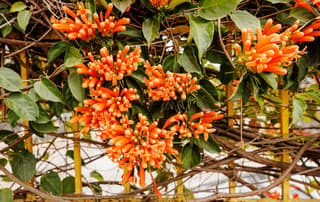
Flame Vine
Pyrostegia venusta
Pyrostegia venusta, commonly known as Flame Vine or Orange Trumpet Vine, is a spectacular Brazilian climbing plant celebrated for its cascading displays of vivid orange tubular flowers during winter and fall. A member of the Bignoniaceae family, it is one of the most ornamental vines in tropical and subtropical gardens.
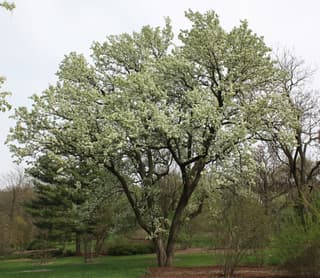
Callery Pear
Pyrus calleryana
Pyrus calleryana, known as the Callery pear, is a deciduous tree native to China and Vietnam. It is famous for its dense covering of white flowers in early spring and its glossy green leaves that turn brilliant shades of red, orange, and purple in the fall. While popular in landscaping for its fast growth and symmetrical shape, it is increasingly considered an invasive species in many regions due to its ability to spread rapidly and outcompete native flora. The blossoms are also known for having a distinct, often pungent odor.
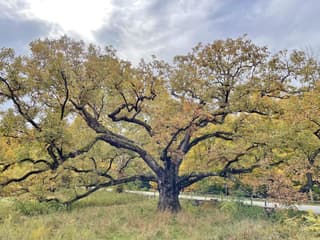
White Oak
Quercus alba
Quercus alba, commonly known as the white oak, is a large deciduous tree native to eastern North America, prized for its rounded crown, rugged light-gray bark, and lobed leaves that turn deep burgundy in autumn. It can live for centuries and eventually reach heights of 24-30 meters, making it a cornerstone species of hardwood forests and a favorite shade tree for spacious landscapes.

Scarlet Oak
Quercus coccinea
The scarlet oak is a majestic deciduous tree native to the eastern United States, renowned for its spectacular scarlet-red autumn foliage. Belonging to the Fagaceae family, it can reach up to 80 feet tall with a broad, rounded canopy. It thrives in acidic, sandy, well-drained soils and becomes highly drought-tolerant once established.
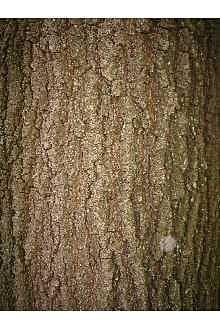
Southern red oak
Quercus falcata
The Southern Red Oak is a large, stately deciduous tree native to the southeastern United States. It is characterized by its distinctive leaves, which often feature a long, narrow terminal lobe, and its dark, furrowed bark. It is a vital species for local ecosystems, providing habitat and food for numerous wildlife species.
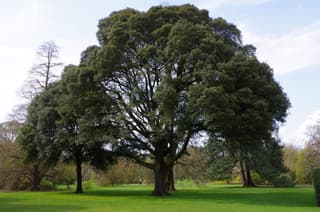
Holm Oak
Quercus ilex
The Holm Oak (Quercus ilex) is a Mediterranean evergreen tree with a dense, rounded crown and leathery leaves, glossy dark green above and grayish beneath. Extremely drought- and heat-tolerant, it is one of the most iconic species of the Iberian dehesa woodland-pasture system, valued for its shade and acorns.
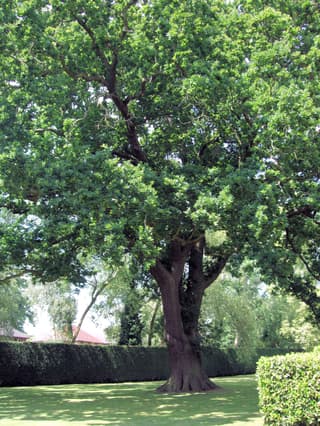
English Oak
Quercus robur
The English oak (Quercus robur) is a large deciduous tree native to Europe and parts of western Asia, belonging to the family Fagaceae. It can exceed 30 meters in both height and spread, with a broad, rounded crown, a stout trunk, and deeply furrowed bark. Its common name comes from the long stalks (peduncles) that bear its acorns, a feature that distinguishes it from close relatives like the sessile oak (Quercus petraea). It is an extremely long-lived tree, capable of living for several centuries, and plays a vital ecological role, supporting hundreds of species of insects, fungi, and lichens.
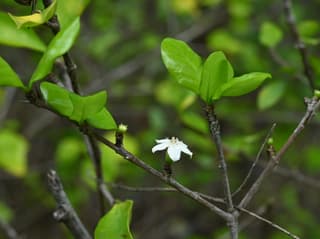
White Indigoberry
Randia aculeata
A spiny, evergreen shrub or small tree in the Rubiaceae family, native to dry coastal forests, pine rocklands, and rocky outcrops of the Caribbean, Central America, and southern Florida, also occurring in Colombia and Venezuela. It features nearly horizontal, thorny branches, dense glossy foliage, and fragrant white flowers that bloom primarily in spring and summer. Its globose white fruits contain a bluish pulp traditionally used as a dye. It is extremely tolerant of drought, wind, and salt spray, making it popular for coastal landscaping.

Hairy Buttercup
Ranunculus sardous
Hairy buttercup (Ranunculus sardous) is a winter annual herb in the Ranunculaceae family, native to Europe, North Africa, and the Canary Islands. It features densely hairy stems and leaves and glossy, golden-yellow five-petaled flowers blooming from early spring through summer. It is common in moist fields, pastures, and disturbed areas, and is considered a weed in many regions outside its native range.
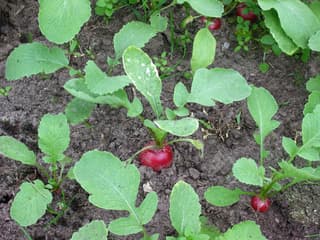
Radish
Raphanus sativus
Raphanus sativus, commonly known as radish, is a fast-growing annual or biennial vegetable in the Brassicaceae family. Native to Asia, it has been cultivated for over 2,000 years across the world for its crisp, edible roots. The plant grows a rosette of pinnate leaves and produces white-to-purple four-petaled flowers. Varieties range from small round red types to long white daikon radishes. It is a cool-season crop beloved by gardeners for its quick harvest and ease of growing.
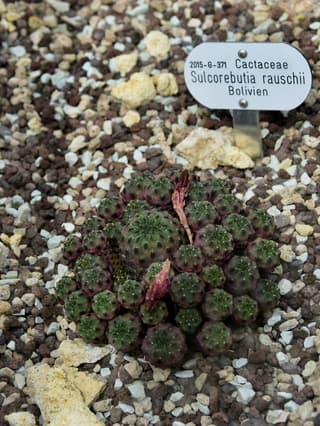
Crown Cactus
Rebutia canigueralii
Rebutia canigueralii is a small globular cactus native to the mountainous regions of Bolivia, where it grows among rocks and stony soils at high altitudes. It forms compact colonies of spherical stems that rarely exceed 10 cm in height, covered with fine, whitish radial spines. In spring, it produces numerous showy flowers in shades of orange, pink, or red with a contrasting center, which open around the base of the stem. It is a slow-growing species highly valued by collectors for its small size, abundant flowering, and hardy nature.
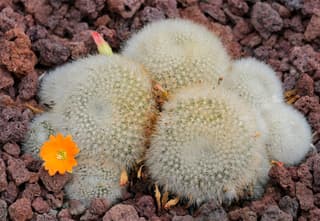
Red Crown Cactus
Rebutia minuscula
Rebutia minuscula, commonly known as the Red Crown Cactus, is a tiny globular cactus native to the mountainous regions of Argentina. Despite reaching only 8 cm in height, it produces an impressive display of red, pink, and orange funnel-shaped flowers from the base of the plant each spring and summer. It is widely regarded as one of the easiest cacti to grow and flower indoors.
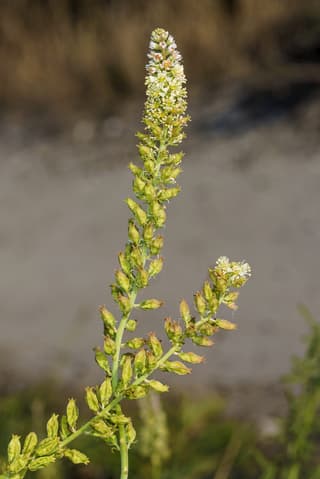
White Mignonette
Reseda alba
Reseda alba, commonly called white mignonette or white upright mignonette, is an annual or short-lived perennial herb in the Resedaceae family, native to the Mediterranean region, western Asia, and North Africa. It grows up to a meter tall, with deeply lobed, narrow leaves and dense, frilly spikes of small white flowers that bloom from summer into fall. Though less fragrant than its relative Reseda odorata, it is prized for its airy, upright habit, long bloom season, and appeal to pollinators in cottage and wildflower gardens.
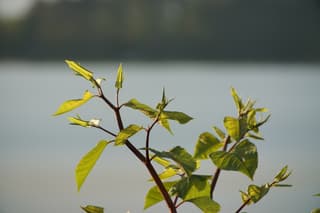
Knotweed
Reynoutria
Reynoutria is a genus of large, vigorous, deciduous perennial herbs in the family Polygonaceae, native to East Asia (Japan, China, Korea, Taiwan). The genus is best known for Reynoutria japonica (Japanese knotweed), one of the world's most aggressive invasive plants. Plants produce stout, bamboo-like hollow stems that can reach 2–4 metres in height, broad heart-shaped leaves, and dense clusters of tiny creamy-white flowers in late summer and autumn. Rhizomes are extraordinarily persistent, surviving temperatures as low as -35°C and capable of penetrating concrete foundations, walls, and drainage systems. In its native range, the genus is valued medicinally — particularly as Hu Zhang (tiger's cane) in Traditional Chinese Medicine — and young shoots are eaten as a vegetable.
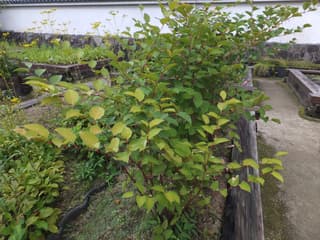
Japanese Knotweed
Reynoutria japonica
Reynoutria japonica, commonly known as Japanese Knotweed, is a highly invasive perennial herbaceous plant native to East Asia. Classified as one of the world's worst invasive species by the IUCN, it forms dense thickets reaching 3 meters tall that outcompete native vegetation and cause significant structural damage to buildings, roads, and drainage systems through its aggressive rhizome network.
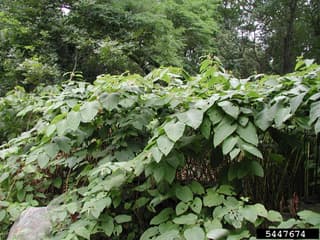
Giant Knotweed
Reynoutria sachalinensis
Giant knotweed (Reynoutria sachalinensis) is one of the world's most aggressive invasive plants, native to Sakhalin Island, Japan, and eastern Asia. It produces towering hollow stems that can exceed 4 metres in height, with enormous heart-shaped leaves up to 40 cm wide. In late summer, it bears dense clusters of tiny creamy-white flowers that attract pollinators. Introduced to Europe and North America in the 19th century as an ornamental and fodder plant, it has since escaped cultivation and colonised riverbanks, roadsides, waste ground, and disturbed habitats on a massive scale. Its rhizome system penetrates deep into the soil and can regenerate from fragments as small as 1 cm, making eradication extraordinarily difficult. It outcompetes native vegetation by shading the ground and releasing allelopathic compounds that suppress other plants. Listed among the 100 worst invasive species globally, it poses serious risks to biodiversity, infrastructure, and watercourses.
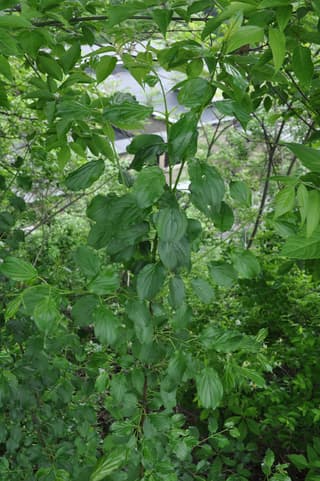
Buckthorn
Rhamnus
Rhamnus is a genus of roughly 100 species of deciduous and evergreen shrubs and small trees in the family Rhamnaceae, commonly known as buckthorns. Native across the temperate Northern Hemisphere, including Europe, North Africa, temperate Asia, and North America, the genus includes cold-hardy deciduous species such as common buckthorn (R. cathartica) and alder buckthorn (R. frangula), as well as evergreen Mediterranean and West Coast species like R. alaternus and R. croceus. Buckthorns typically bear small, inconspicuous greenish-yellow flowers in spring, followed by clusters of small black or reddish berry-like drupes that are an important food source for birds. Several species carry thorny branch tips, hence the common name, and many are grown as hedging, screening, or wildlife shrubs, though a few, notably R. cathartica, are considered invasive outside their native range.
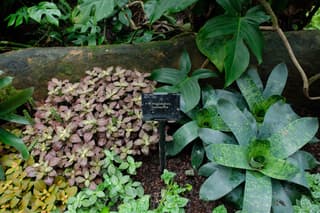
Mini Monstera
Rhaphidophora tetrasperma
Rhaphidophora tetrasperma, popularly known as the Mini Monstera, is a tropical climbing plant native to Southeast Asia. Although its fenestrated leaves resemble those of the Monstera deliciosa, it belongs to a distinct genus. It is an extremely fast-growing plant that uses aerial roots to climb trees or supports, making it a favorite choice for interior decoration due to its sculptural aesthetic and more compact size than its famous 'cousin'.
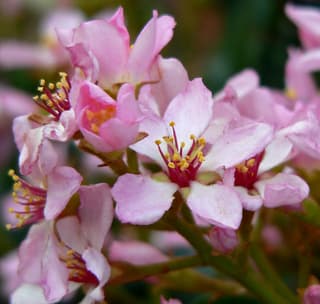
Indian Hawthorn
Rhaphiolepis
Indian Hawthorn (Rhaphiolepis) is an evergreen shrub in the Rosaceae family, native to southern China and Southeast Asia. Despite its common name, it does not originate from India. It produces clusters of fragrant white to pink flowers in spring and is widely cultivated as an ornamental plant for hedges, borders, and mass plantings.
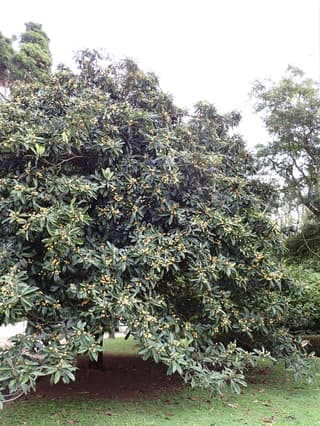
Loquat
Rhaphiolepis bibas
The loquat (Rhaphiolepis bibas, formerly Eriobotrya japonica) is an evergreen fruit tree native to Southeast China, widely cultivated in subtropical and Mediterranean regions worldwide. It reaches a height of 3 to 8 meters and is distinguished by its large, leathery, dark green leaves, its white, fragrant flowers that appear in autumn-winter, and its orange or yellow fruits that ripen in spring. It is one of the few fruit trees that blooms in winter, providing shelter and food for pollinators and birds during the cold months.
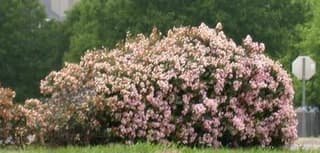
Indian Hawthorn
Rhaphiolepis indica
Indian hawthorn (Rhaphiolepis indica) is a compact, evergreen shrub native to southern China, Taiwan, and Vietnam, prized in gardens worldwide for its glossy dark-green foliage and clusters of fragrant white to pink, five-petaled flowers that bloom in spring and often again in fall. Reaching about 1.2-1.5 m (4-5 ft) in height and spread, it forms a dense, rounded mound that works well as a low hedge, foundation planting, or specimen shrub. Small blue-black pome fruits follow the flowers and are attractive to birds. The plant is a member of the rose family (Rosaceae) and, once established, tolerates heat, coastal salt spray, and moderate drought, making it a popular low-maintenance choice for warm-temperate and subtropical landscapes.
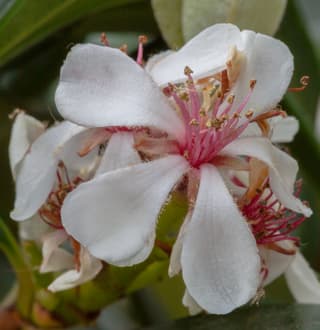
Yeddo Hawthorn
Rhaphiolepis umbellata
Rhaphiolepis umbellata, commonly known as Yeddo Hawthorn, is an evergreen shrub native to Japan and Korea, highly valued in coastal gardens for its remarkable tolerance to salt spray and wind. It features oval, leathery, glossy dark green leaves that often take on purple hues in winter. Between spring and early summer, it produces dense clusters of fragrant white or slightly pink flowers, followed by decorative blue-black berries. It is a hardy, slow-growing plant that typically reaches 3 to 6 feet in height and width.
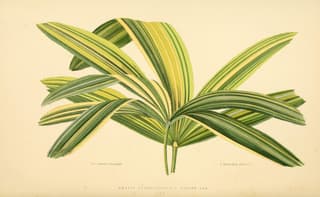
Lady Palm
Rhapis excelsa
Rhapis excelsa, commonly known as the Lady Palm or Broadleaf Lady Palm, is an elegant fan palm native to southern China. With its slow growth and lush fan-shaped foliage, it is one of the best indoor palms for beginners. Its multiple slender stems covered in brown fibers give it a bamboo-like appearance, making it an excellent decorative choice for indoor spaces. NASA studies have recognized it as one of the top air-purifying plants.
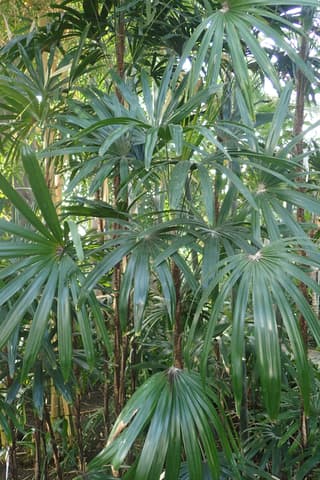
Slender Lady Palm
Rhapis humilis
Rhapis humilis, commonly known as the Slender Lady Palm or Reed Rhapis, is a clumping understory palm native to the subtropical forests of South China (Yunnan). It forms dense clusters of slender, bamboo-like stems topped with elegant fan-shaped fronds with narrow, finger-like segments. Slower growing than its cousin Rhapis excelsa, it is widely cultivated as both an indoor ornamental and a garden accent plant in warm climates.
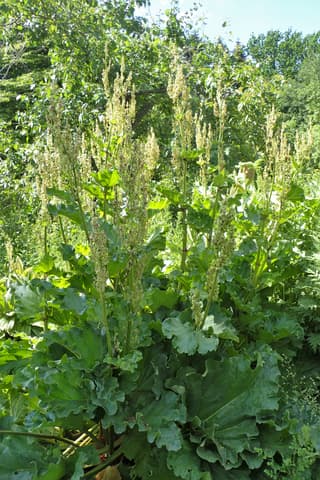
garden rhubarb
Rheum rhabarbarum
Garden rhubarb is a hardy perennial plant grown for its fleshy, tart edible stalks. It features large, heart-shaped green leaves that are toxic if ingested due to high concentrations of oxalic acid. The plant requires a cold winter dormancy period to produce a successful harvest in the following spring.
Garden Rhubarb
Rheum x hybridum
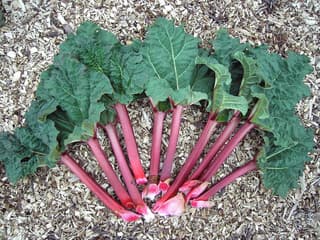
Garden rhubarb is a robust, cold-hardy perennial vegetable prized for its thick, tart, ruby-to-green stalks and enormous crinkled leaves. Though often used like a fruit in pies and jams, it is botanically a vegetable in the buckwheat family. The plant forms a dense clump from a woody rhizome and, if not removed, sends up tall flower stalks topped with creamy white plumes in late spring. Only the stalks are eaten -- the leaves contain high levels of oxalic acid and must never be consumed.
Mistletoe Cactus
Rhipsalis
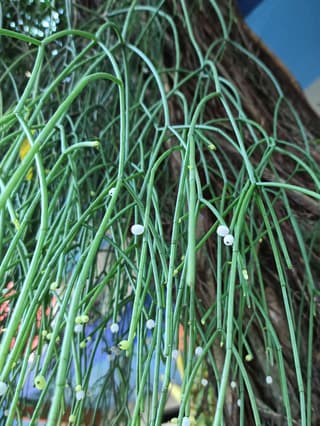
Rhipsalis is a genus of epiphytic tropical cacti native to the rainforests of Central and South America, with a few species found in Africa and Sri Lanka — the only cacti native outside the Americas. Unlike desert cacti, Rhipsalis grows on trees and rocks in humid tropical forests, thriving under filtered light with regular moisture and high humidity. Its slender, pendulous, segmented stems resemble spaghetti or mistletoe strands, giving rise to its most popular common names. It produces small white or cream flowers in late winter to spring, followed by translucent pearl-like berries. Exceptionally long-lived (25+ years), and confirmed non-toxic to cats, dogs, and humans by the ASPCA.
What are Easy Plants?
Easy Plants are ideal for beginners or people with little time for care. These species are tolerant of watering mistakes, light variations, and don't require constant attention. Perfect for those just starting out with plants.
Tips for Growing Easy Plants
To succeed with easy plants, remember: less is more. Avoid overwatering, choose a spot with adequate light, and let the soil dry between waterings. Most of these plants prefer to be 'forgotten' occasionally.