1135 Medium Easy Care | 2026 Guide - Page 31
Find 1135 medium easy care. Complete guide for your garden.
1135 Easy Care with medium level
Showing 1081-1116 of 1135

Water Chestnut
Trapa natans
Trapa natans, commonly known as water chestnut or water caltrop, is a floating annual aquatic plant native to Eurasia and Africa. It is recognized by its diamond-shaped floating leaves arranged in a rosette and its distinctive four-horned spiny nuts, which are edible and have been consumed by humans for over 3,000 years. It is considered an invasive species in North America.
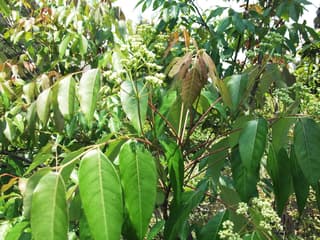
Catuaba
Trichilia
Trichilia is a genus of over one hundred tropical tree species in the mahogany family (Meliaceae), distributed across tropical America, Africa, and Madagascar. Representative species like Trichilia catigua (catuaba) grow as understory trees in the Atlantic Forest and South American rainforests, reaching up to 10 meters tall, with compound leaves of 5-7 leaflets and yellow-whitish flowers blooming in spring. The genus is valued both as ornamental foliage plants and, in the case of catuaba, as a traditional Brazilian tonic herb.
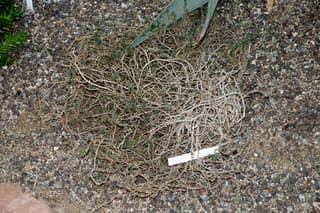
African Bonsai
Trichodiadema bulbosum
Trichodiadema bulbosum is a small caudiciform succulent from the Aizoaceae family, native to South Africa. It forms a tuberous, bulbous caudex that is often partially buried, from which erect, branched stems emerge in a shrub-like habit, giving it an appearance similar to a miniature bonsai. Its leaves are covered with bristle-like papillae and topped by a 'diadem' of stiff hairs, a characteristic that gives the genus its name. In spring and summer, it produces striking pink flowers with yellow centers. It is a slow-growing plant, highly valued in cultivation as an ornamental succulent and for indoor or outdoor bonsai.
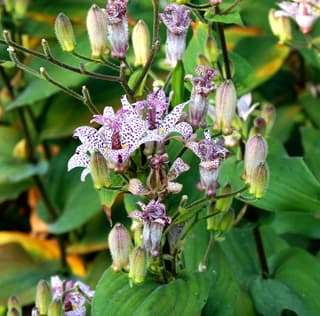
Toad lily
Tricyrtis formosana
Tricyrtis formosana, the Taiwan toad lily, is a hardy perennial native to the woodland understories of Taiwan. In late summer and autumn, it produces small, star-shaped white flowers with prominent purple spots and yellow throats, reminiscent of exotic orchids. The glossy, lance-shaped dark green leaves remain attractive throughout the growing season, and the plant eventually forms dense clumps via creeping rhizomes. It is a shade-loving plant resistant to both diseases and pests, making it ideal for woodland gardens, shaded borders, and pond margins.
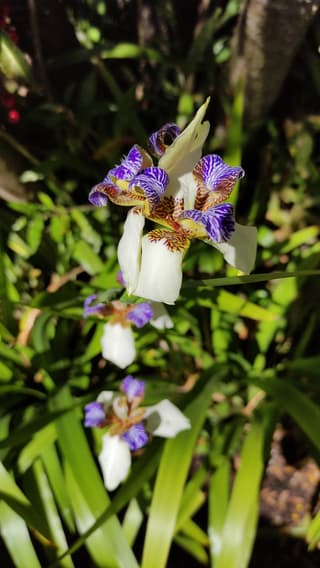
Yellow Walking Iris
Trimezia gracilis
Trimezia gracilis, commonly called yellow walking iris, is a rhizomatous perennial in the Iridaceae family, native to west-central and southeastern Brazil through Paraguay. It forms upright fans of sword-shaped leaves and produces short-lived yellow flowers marked with brown-purple blotches at the base of the petals. Each bloom lasts only a day, but flowering continues from spring through fall. The common name refers to the plantlets that form at the tips of spent flower stalks, which root where they touch the ground, making the clump appear to "walk."
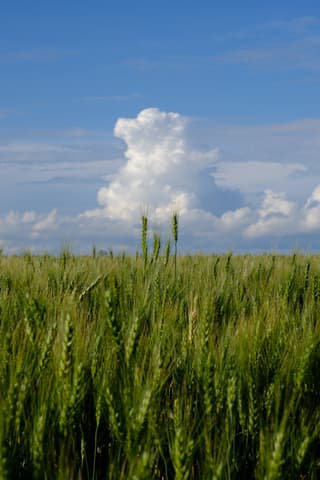
Common wheat
Triticum aestivum
Common wheat (Triticum aestivum) is the most widely cultivated cereal grain in the world and is among humanity's oldest cultivated plants. Domesticated over 9,000 years ago in the Near East, it is now grown on every continent. This annual grass reaches a height of up to 120 cm and forms characteristic spikes that ripen in summer. Its grains are the foundation for bread, flour, pasta, and a variety of other foods. Common wheat has relatively high demands for soil, water, and climate, preferring sunny locations with nutrient-rich, well-drained soils.
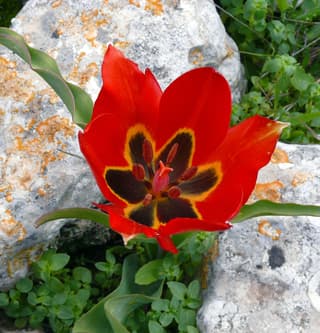
Sun's-Eye Tulip
Tulipa agenensis
Tulipa agenensis, commonly known as the Sun's-Eye Tulip or Sharon Tulip, is a wild tulip species native to the Middle East and eastern Mediterranean region. It produces striking scarlet flowers with a distinctive black basal blotch edged in yellow, blooming in spring. As a deciduous bulbous perennial, it enters summer dormancy and is well-adapted to dry, sunny Mediterranean climates.
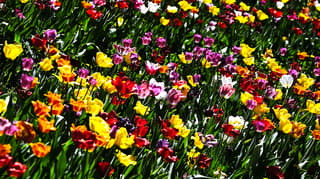
Hybrid Tulip
Tulipa hybrida
Hybrid Tulips (Tulipa hybrida) are the iconic spring-blooming bulbous perennials beloved worldwide for their vivid, cup-shaped flowers. Originating from wild species of Central Asia and Turkey, centuries of cultivation in the Netherlands and beyond have produced thousands of named varieties in nearly every color imaginable. They bloom in early to late spring and are a classic feature of both formal gardens and informal borders.
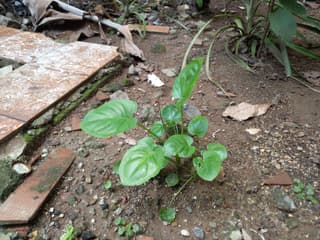
Typhonium
Typhonium
Typhonium is a genus of tuberous aroids comprising over 70 species, native to tropical Asia, Mongolia, and northeastern Australia. These clumping perennials produce glossy, lobed, triangular leaves in medium to dark green, held on long petioles. In summer, dark purple or maroon spathes appear, often malodorous, which is typical of the Araceae family. The plant enters dormancy in winter, losing its foliage until the following spring.
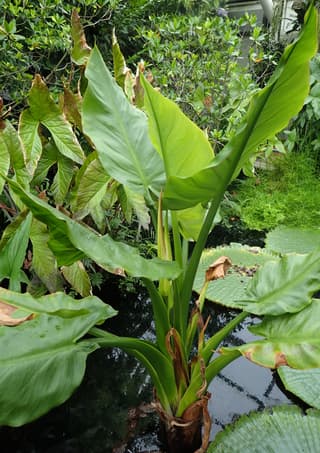
Water Banana
Typhonodorum lindleyanum
Typhonodorum lindleyanum, commonly known as the Water Banana, is a giant monotypic aroid from Madagascar, the Comoros, Zanzibar, Mauritius, and eastern Tanzania. Growing in freshwater swamps, river banks, and shallow lagoons, it produces massive arrow-shaped evergreen leaves up to 1 meter long, forming impressive pseudo-stems that can reach 4 meters in height. Its cream-colored spathe and spadix inflorescence and large bright-yellow berries make it a truly spectacular specimen plant.
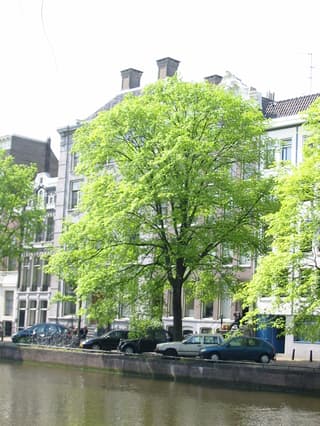
Dutch Elm
Ulmus × hollandica
Ulmus × hollandica, commonly known as the Dutch Elm, is a natural hybrid between the Wych Elm (Ulmus glabra) and the Field Elm (Ulmus minor) that arose spontaneously across Europe wherever the ranges of its two parent species overlap. A large, fast-growing deciduous tree, it was historically planted in vast numbers as a street and canal-side tree throughout the Netherlands and the rest of the Low Countries, prized for its tolerance of urban conditions and its elegant, broadly spreading crown. Its leaves are intermediate in shape between the two parent species, and inconspicuous reddish flowers appear in early spring before the foliage, followed by winged samara fruits. The hybrid became infamous during the 20th century for its role in the Dutch elm disease epidemics, though some clones show moderate resistance and continue to be bred for improved tolerance.
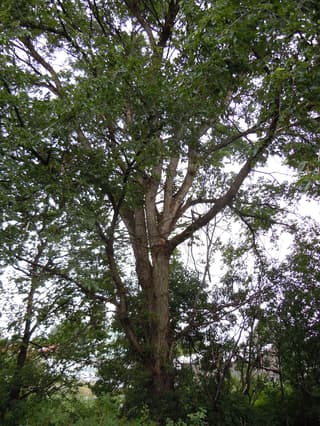
American elm
Ulmus americana
The American elm (Ulmus americana) is a fast-growing, deciduous tree from the elm family (Ulmaceae), originally native to eastern North America. The tree is known for its characteristic vase-shaped crown and can reach heights of up to 24 meters in the wild with a correspondingly wide canopy. From the mid-20th century, Dutch elm disease decimated large portions of the wild population in North America, but disease-resistant cultivars have since been developed. The species produces small, inconspicuous greenish-red flowers in early spring before the leaves emerge, and features coarse, dark green foliage that turns golden in the fall.
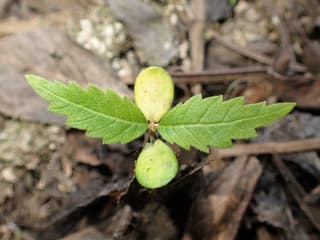
Field Elm
Ulmus minor
Ulmus minor, known as the field elm, is a majestic deciduous tree native to Europe, North Africa, and Western Asia. It is distinguished by its robust stature, deeply fissured bark in mature specimens, and alternate leaves with a markedly asymmetrical base. It is a keystone species in riparian forests, although its populations have been drastically reduced in recent decades due to Dutch elm disease, a devastating fungal infection.
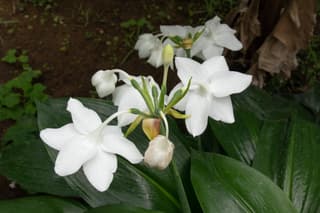
Amazon Lily Grandiflora
Urceolina × grandiflora
The Amazon Lily Grandiflora (Urceolina × grandiflora, syn. Eucharis grandiflora) is a tropical bulbous plant native to the Andean slopes of Colombia and Peru. It produces clusters of 3–6 fragrant, pure-white flowers resembling daffodils atop elegant stems up to 70 cm tall. It is prized as an ornamental houseplant and a feature of tropical gardens worldwide.
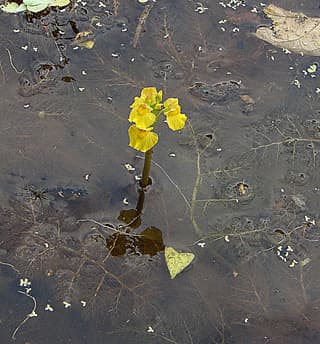
Leafy Bladderwort
Utricularia foliosa
Utricularia foliosa is an aquatic carnivorous plant in the Lentibulariaceae family, native to tropical and subtropical regions of the Americas and Africa. It floats freely or remains submerged in the still waters of ponds, marshes, and slow-moving rivers, forming dense mats of thin, branched stems that can reach several meters in length. Its filiform leaves, up to 30 cm long, support small bladder-like traps (utricles) that suck in and capture microcrustaceans, mosquito larvae, and other small aquatic invertebrates. During the reproductive period, it produces an erect flower stalk that rises above the water, up to 40 cm high, displaying several yellow flowers similar to small snapdragons.
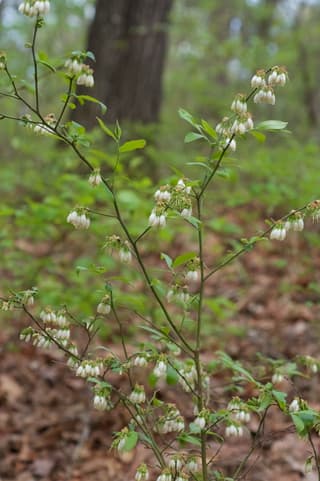
Rabbiteye Blueberry
Vaccinium ashei
The Rabbiteye Blueberry (Vaccinium ashei) is a deciduous shrub native to the southeastern United States, prized for its exceptional heat and drought tolerance. It produces abundant blue berries in summer and stunning fall foliage in shades of orange and scarlet.
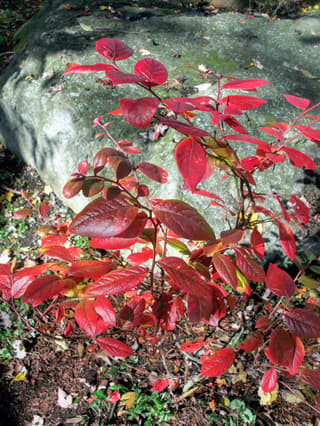
Highbush Blueberry
Vaccinium corymbosum
Highbush blueberry (Vaccinium corymbosum) is a deciduous, fruit-bearing shrub native to eastern North America and a member of the Ericaceae (heath) family, related to azaleas and rhododendrons. It is the primary species cultivated commercially for blueberry production worldwide. Plants form upright clumps 1.8-3.7 m tall, with green foliage that turns brilliant red-orange in fall, small white or pink bell-shaped flowers in spring, and sweet, nutrient-dense blue-purple berries in summer.
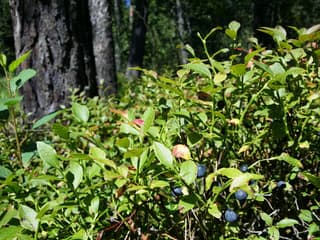
Bilberry
Vaccinium myrtillus
Bilberry (Vaccinium myrtillus) is a deciduous, low-growing shrub in the Ericaceae family, native to heathlands, moorlands and mountain forests across Europe and northern Asia. It spreads via underground rhizomes, forming dense mats 10-50 cm tall. Small greenish-pink flowers appear in spring, followed by dusky blue-black berries prized in traditional European cuisine and herbal medicine.
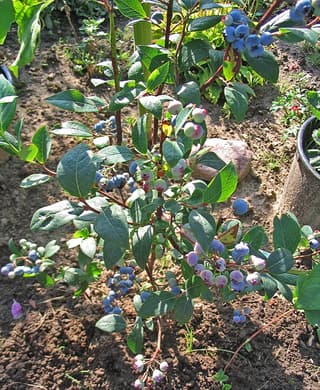
Blueberry
Vaccinium sp
Vaccinium sp, commonly known as blueberry, is a genus of flowering shrubs in the Ericaceae family native to North America. These deciduous or semi-evergreen shrubs produce small, sweet, dark blue to purple berries highly prized for their nutritional value and flavor. The genus includes dozens of species adapted to diverse environments, from lowbush varieties in cold northern forests to highbush cultivars in temperate regions. Blueberries are celebrated for their antioxidant-rich berries and ornamental fall foliage.
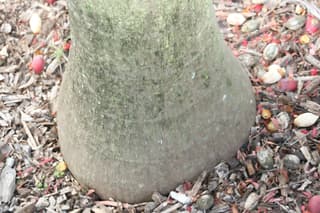
Montgomery Palm
Veitchia arecina
The Montgomery Palm (Veitchia arecina) is a fast-growing tropical palm native to the islands of Vanuatu in the Melanesian archipelago. Featuring a slender solitary trunk with a distinctive pale green crownshaft and lush pinnate fronds, it is widely prized as an ornamental specimen in tropical and subtropical gardens.
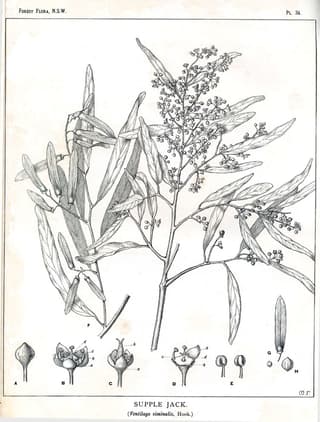
Supplejack
Ventilago
Ventilago is a genus of approximately 40 species of evergreen climbing vines and scandent shrubs in the family Rhamnaceae. Native to tropical South and Southeast Asia, Australasia, Africa, and Madagascar, they bear small greenish-yellow axillary flowers and distinctive single-seeded winged samaras. Some species develop a tree-like form when mature, reaching up to 7 meters.
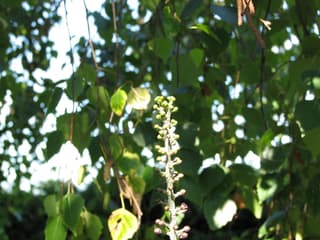
Black False Hellebore
Veratrum nigrum
Veratrum nigrum, or black false hellebore, is a striking Eurasian perennial in the false-hellebore family (Melanthiaceae), grown for its whorled, pleated foliage and tall summer spikes of star-shaped, near-black flowers. Despite the common name it is not a true hellebore (genus Helleborus) but belongs to a botanically distinct and extremely toxic group of alkaloid-rich plants.
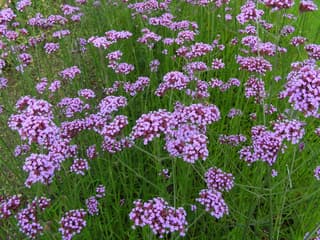
Verbena (genus)
Verbena
Verbena is a genus of flowering plants in the Verbenaceae family, widely grown as annuals or perennials in gardens and containers. They produce abundant blooms in shades of purple, pink, white, and red, and are highly attractive to pollinators such as bees and butterflies.
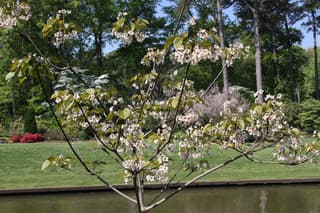
Tung Oil Tree
Vernicia fordii
Vernicia fordii, commonly known as the Tung Oil Tree, is a medium-sized deciduous tree native to China. It belongs to the spurge family Euphorbiaceae and has been cultivated for centuries for its seeds, which yield tung oil — a valuable drying oil used in paints, varnishes, and wood finishes. The tree produces beautiful clusters of white to pink flowers with dark purple veining in late winter to early spring, before the leaves emerge. While ornamentally attractive, all parts of the plant are severely toxic.
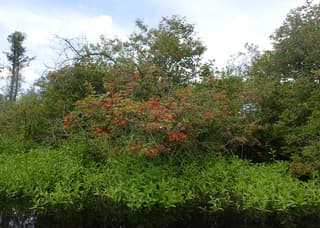
Guelder Rose
Viburnum opulus
Viburnum opulus, commonly known as Guelder Rose or European Cranberrybush, is a deciduous shrub native to Europe, North Africa, and Central Asia. It produces spectacular flat-topped clusters of white flowers in late spring, followed by brilliant red berries that persist into winter. The lobed, maple-like leaves turn red-purple in autumn, making this a four-season garden plant beloved by wildlife.
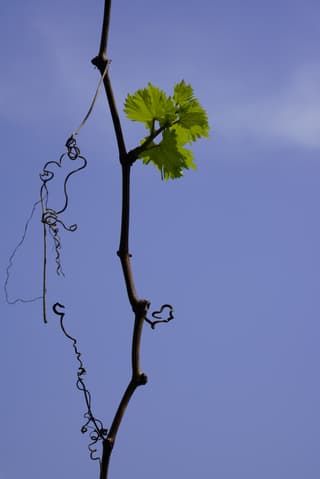
Grapevine
Vitis
Vitis, commonly known as the grapevine, is a woody climbing plant of great historical and economic importance. Its stems, called canes, attach to supports using tendrils. It is famous for producing grapes, which grow in clusters and are the foundation of the wine industry, in addition to being consumed fresh or dried. Its leaves are large, lobed, and deciduous, providing dense foliage ideal for pergolas.
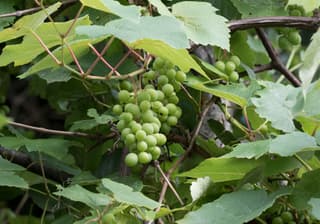
Fox Grape
Vitis labrusca
Vitis labrusca, commonly known as the Fox Grape or Northern Fox Grape, is a vigorous deciduous climbing vine native to eastern North America. It is the parent species of many beloved American grape cultivars, most notably the Concord grape, widely used in juices, jellies, and wines. This fast-growing vine climbs by tendrils and can reach 15–20 feet in length, producing clusters of dark blue-black grapes with a characteristic "foxy" musky aroma. Its large, three-lobed leaves turn attractive shades in autumn, and fragrant greenish-yellow flowers bloom in spring to early summer. A hardy, adaptable plant suited to USDA zones 5–8, it thrives in full sun and well-drained loamy soil.
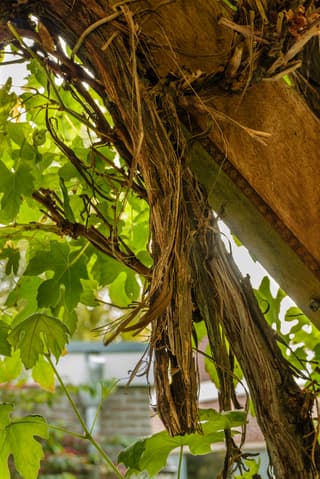
Common Grapevine
Vitis vinifera
The Common Grapevine (Vitis vinifera) is one of the oldest cultivated plants in human history, originating from the Mediterranean basin and western Asia. A vigorous deciduous climber, it produces the famous grape clusters used for wine, fresh consumption, and raisins. Its lobed leaves are ornamental and provide pleasant shade on pergolas and trellises.

Giant Vriesea
Vriesea gigantea
The Giant Vriesea (Vriesea gigantea) is a large epiphytic bromeliad native to Brazil's Atlantic Forest. It is prized for its broad, strap-shaped leaves marked with an intricate netted (tessellated) pattern in pale green and yellowish tones reminiscent of snakeskin. The plant forms a substantial rosette that can exceed 70 cm across, eventually sending up a tall flower spike from its center at maturity. In the wild it grows attached to tree trunks and branches, drawing water and nutrients mainly through the central "cup" or "tank" formed by its overlapping leaf bases.
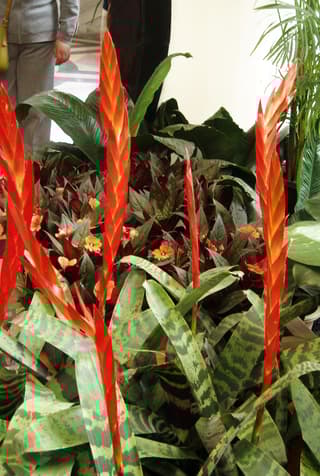
Flaming Sword
Vriesea splendens
Vriesea splendens, commonly known as the Flaming Sword, is a stunning tropical bromeliad native to Trinidad and Venezuela. It produces a dramatic, sword-like red inflorescence spike that can last for months, making it one of the most striking indoor plants available. Its dark green leaves are banded with horizontal purple-brown stripes, creating a beautiful architectural form even without flowers.
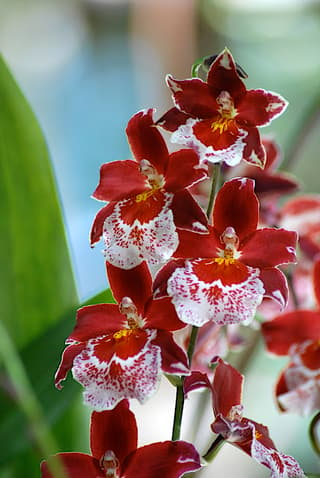
Cambria orchid
Vuylstekeara
Vuylstekeara is an artificially created orchid nothogenus (a cross between Cochlioda × Miltonia × Odontoglossum), most commonly known in the trade as "Cambria," primarily through the popular cultivar Vuylstekeara Cambria 'Plush'. This hybrid combines the best traits of its parent species: it offers long-lasting, colorful inflorescences and is relatively easy to maintain, making it a frequent recommendation for beginner orchid enthusiasts. Ribbon-like leaves grow from its fleshy pseudobulbs, and its flowers appear with contrastingly patterned petals in a wide range of colors from yellow to burgundy.
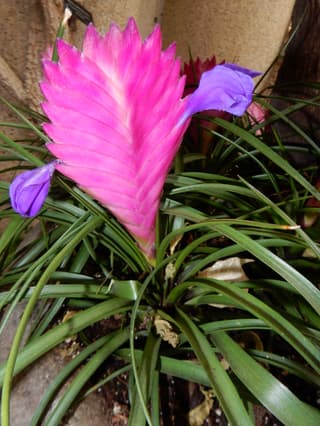
Pink quill
Wallisia cyanea
Wallisia cyanea (formerly Tillandsia cyanea), known as the pink quill, is an epiphytic bromeliad native to the tropical forests of Ecuador. It forms a dense rosette of narrow, grass-like leaves from which a flattened, vibrant pink spike resembling a quill emerges. From this spike, short-lived violet-blue flowers appear sequentially over several months. It is a slow-growing plant that does not require soil, primarily cultivated for its spectacular, long-lasting colorful inflorescence.
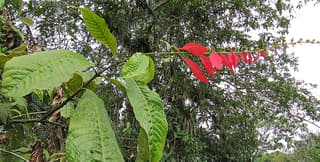
Chaconia
Warszewiczia
Warszewiczia is a genus of evergreen tropical trees and shrubs in the Rubiaceae (coffee) family, native to Central America, the Caribbean, and northern South America. Its best-known and most widely cultivated species, W. coccinea -- the chaconia or wild poinsettia -- is the national flower of Trinidad and Tobago. The plant is prized for its striking flower clusters: long, upright spikes bearing dozens of small, inconspicuous yellow flowers, each subtended by one flame-red, enlarged sepal (bract) that gives the inflorescence its brilliant color. It grows as a large shrub or small tree, typically 4-8 m tall in cultivation (up to 12 m in the wild), with big, glossy, leathery leaves.
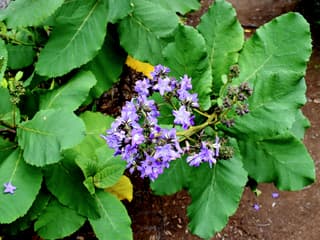
Caracas Wigandia
Wigandia urens
Wigandia urens is a fast-growing large shrub or small tree native to Mexico and Central/South America, prized for its enormous textured leaves that can reach 30 cm long. The entire plant is covered in bristly stinging hairs that produce severe contact dermatitis, making it one of the most hazardous ornamentals to handle. In summer, it produces striking clusters of deep purple flowers with a white throat, attracting pollinators. It thrives in full sun outdoors and is highly drought tolerant once established.
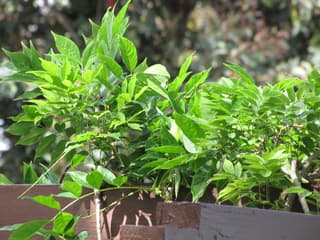
Japanese Wisteria
Wisteria floribunda
Japanese Wisteria is a vigorous, woody deciduous climber native to Japan, prized for its long, fragrant, drooping flower clusters that cascade over trellises and pergolas in spring. Its stems twine clockwise around supports, thickening into gnarled trunks over the years.
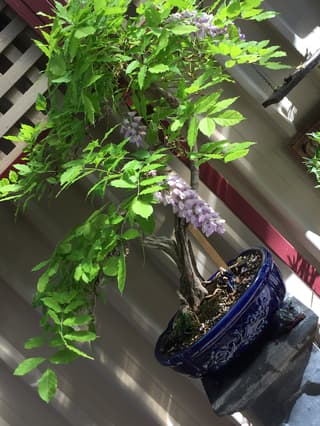
Chinese Wisteria
Wisteria sinensis
Chinese Wisteria (Wisteria sinensis) is a vigorous, woody deciduous climber native to China, belonging to the Fabaceae family. Widely grown on pergolas, arbors, and walls for its spectacular cascading racemes of fragrant flowers — up to 30 cm long, in shades of purple, violet, and lavender — that appear in spring before the leaves emerge. Fast-growing and twining, it can reach many meters if left unchecked, so training it on sturdy structures is essential. Every part of the plant, especially the seeds and pods, is toxic to humans, dogs, and cats, potentially causing nausea, vomiting, and abdominal pain if ingested.
Medium Care Easy Care
Our selection of 1135 medium easy care combines the characteristics of this category with moderate care needs. Ideal for those with basic experience.
Why Choose Medium Easy Care?
Combining the beauty of easy care with medium difficulty level lets you enjoy this category with a balanced care commitment. Each plant was selected to offer the best characteristics of the category at the care level you are looking for.