Complete Plant Guide
Explore plants by difficulty, season and more. Find the perfect plant for you.
Difficulty
Categories
Plants by City
🗺️ Plants by City3478 plants found
Showing 1189-1224 of 3478
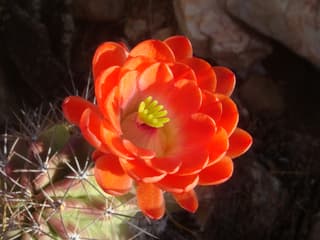
Scarlet Hedgehog Cactus
Echinocereus coccineus
Echinocereus coccineus, commonly known as the Scarlet Hedgehog Cactus, is a striking columnar cactus native to the deserts of the southwestern United States and northern Mexico. It forms dense clumps of ribbed, spine-covered stems and produces stunning scarlet to orange-red funnel-shaped flowers in spring that attract hummingbirds and pollinators. A beloved desert plant celebrated for its resilience, drought tolerance, and vibrant blooms.
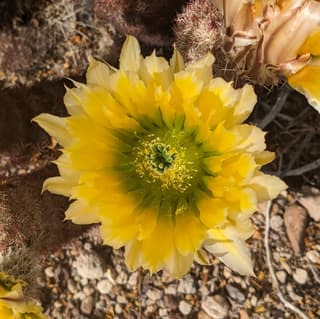
Texas Rainbow Cactus
Echinocereus dasyacanthus
Echinocereus dasyacanthus, commonly known as the Texas rainbow cactus, is native to the southwestern United States (Texas, New Mexico) and northern Mexico (Chihuahua, Coahuila, Sonora). It forms ribbed, cylindrical stems, typically solitary or loosely clustering, covered in dense spines ranging from tan and gold to pink. In spring and early summer, it produces large, funnel-shaped flowers ranging from canary yellow to deep rose-pink, which attract native desert pollinators.
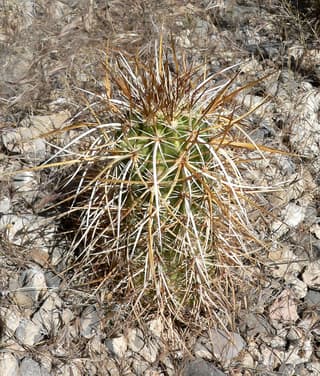
Engelmann's Hedgehog Cactus
Echinocereus engelmannii
Echinocereus engelmannii is a clustering cylindrical cactus native to the deserts of the southwestern United States and northern Mexico, prized for its dense, colorful spines and vivid magenta-to-pink funnel-shaped flowers that bloom in spring.
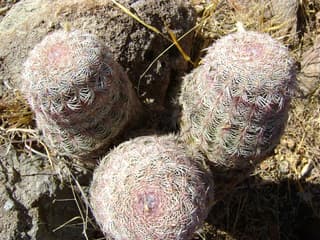
Rainbow Hedgehog Cactus
Echinocereus pectinatus
Echinocereus pectinatus is a small, solitary, cylindrical cactus native to the Chihuahuan Desert of northern Mexico and the Trans-Pecos region of Texas. Its ribs are lined with dense, comb-like spines banded in white and pink, giving rise to its common name. In late spring, it produces large, funnel-shaped magenta flowers that open in daylight and last several days.
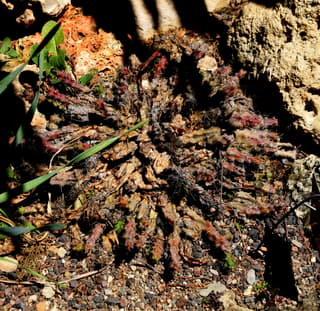
Ladyfinger Cactus
Echinocereus pentalophus
Echinocereus pentalophus, known as the ladyfinger cactus, is a low-growing, clustering cactus native to southern Texas and northeastern Mexico. Its slender, finger-like stems trail and branch to form dense mats up to a meter wide, and in late spring the plant produces large, funnel-shaped flowers in vivid pink to magenta with a pale throat that can nearly cover the entire clump for a brief but spectacular bloom.

Claret Cup Cactus
Echinocereus triglochidiatus
The claret cup cactus is a low-growing, clumping cactus native to the deserts and rocky slopes of the southwestern United States and northern Mexico. Over time it forms dense mounds of cylindrical, spiny stems that can spread more than a meter wide. In late spring, the plant produces a spectacular show of funnel-shaped, scarlet-red flowers that attract hummingbirds and bees.
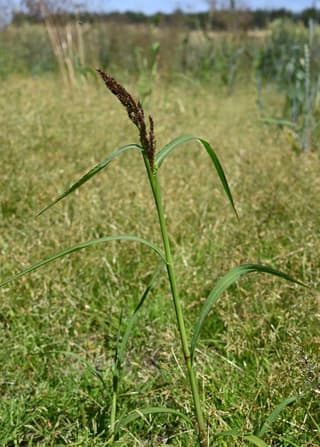
Barnyardgrass
Echinochloa crus-galli
Barnyardgrass (Echinochloa crus-galli) is a fast-growing annual grass native to tropical Asia. Now found worldwide, it is considered one of the most problematic agricultural weeds, particularly in rice and maize fields. Plants grow up to 150 cm tall with long, flat leaves that are often purplish at the base. Dense seed heads produce up to 40,000 seeds per plant, ensuring rapid spread. Despite its weed status, the seeds are edible and the plant has traditional medicinal uses.
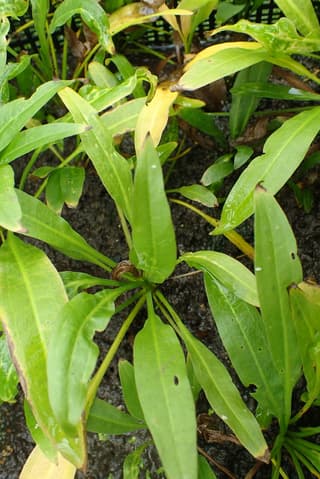
Amazon Sword
Echinodorus grisebachii
The Amazon sword (Echinodorus grisebachii) is an aquatic plant from the Alismataceae family, native to the river basins of South America, where it grows along banks and in shallow margins, often submerged for much of the year. It is one of the most popular and easy-to-grow aquarium plants, prized for its bright green lanceolate leaves that can reach up to 24 inches (60 cm) when submerged. It grows in a rosette pattern from a central rhizome (the crown) and reproduces via long inflorescences that bear adventitious plantlets. It is perfect as a focal point in medium to large-sized aquariums.

Brain Cactus
Echinofossulocactus multicostatus
The Brain Cactus (Stenocactus multicostatus, synonym of Echinofossulocactus multicostatus) is a globular cactus native to the deserts of Mexico, famous for its dozens of thin, wavy ribs that wrap around the body like cerebral convolutions. It is a slow-growing species, usually solitary, which rarely exceeds 5 inches (12-13 cm) in height, and produces delicate flowers in shades of white to pinkish-lilac with a darker central vein during spring and summer.
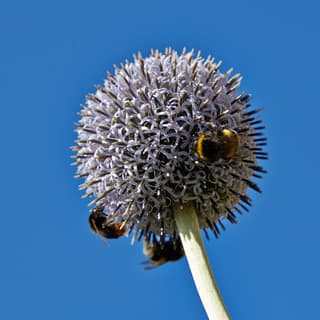
Blue globe thistle
Echinops bannaticus
Blue globe thistle (Echinops bannaticus) is a tall, architectural perennial in the Asteraceae family, originally from southeastern Europe, including the Banat region of Romania. It forms upright stems with prickly, grayish-green lobed foliage and ends in perfectly round, steel-blue flower heads that attract bees, bumblebees, and butterflies during July–August. The plant grows about 120–150 cm tall with a deep taproot system that makes it very drought-tolerant.
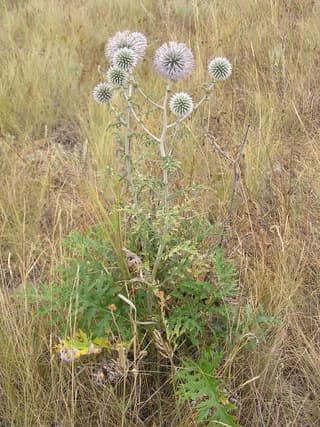
Globe thistle
Echinops sphaerocephalus
Globe thistle is a large, robust perennial in the Asteraceae family that can reach up to 2 meters in height. It bears spherical, silvery-blue to whitish flower heads on stiff stems and blooms in July–August. The leaves are deeply lobed and prickly with a grayish-green upper side and a felted, lighter underside. The species is very drought-tolerant, thrives in poor, well-drained soil, and is highly favored by bees, bumblebees, and butterflies.
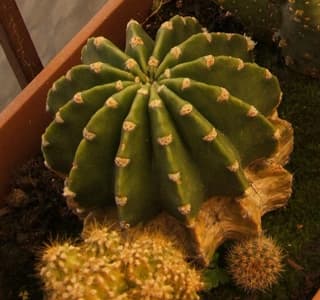
Hedgehog Cactus
Echinopsis
Echinopsis is a large genus of cacti native to South America, spanning the Andean regions of Argentina, Bolivia, Peru and Chile, with around 128 species ranging from small globular forms to tall columnar and tree-like specimens. It is prized for its enormous, fragrant, short-lived flowers, usually white, pink or red, that open at night or dawn and last only a day or two, earning several species the nickname Easter Lily Cactus.
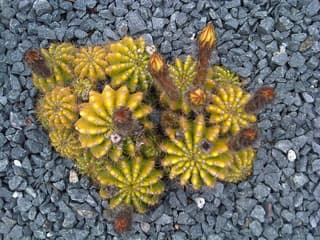
Green Ball Cactus
Echinopsis calochlora
The Green Ball Cactus (Echinopsis calochlora) is a small globose clustering cactus native to Brazil and Paraguay. Over time it forms dense clumps of bright green spheres adorned with spines, and produces large, fragrant white flowers that open at night during spring and summer.
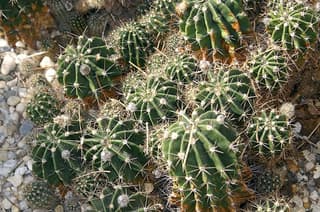
Easter Lily Cactus
Echinopsis eyriesii
Echinopsis eyriesii is a globular cactus native to South America (Argentina, Bolivia, and southern Brazil), prized for its ribbed, dark green stem and large, fragrant white flowers that open at night and last only a single day. It's a hardy, easy-to-grow species suited to beginners and collectors alike.
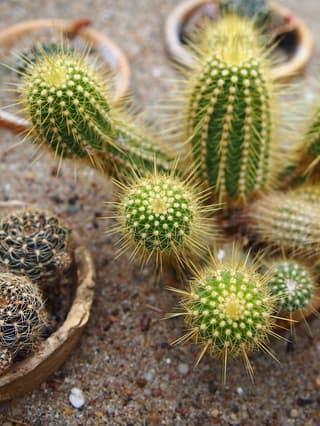
Red Torch Cactus
Echinopsis huascha
Echinopsis huascha, commonly called the red torch cactus, is a clustering columnar cactus native to the arid highlands of Catamarca and La Rioja provinces in Argentina, growing at elevations between 900 and 2,000 meters. It forms clumps of upright to sprawling stems armed with yellowish spines and can reach roughly 1 meter in height. Its large, showy flowers, ranging from orange to yellow to red, appear in spring through early summer.
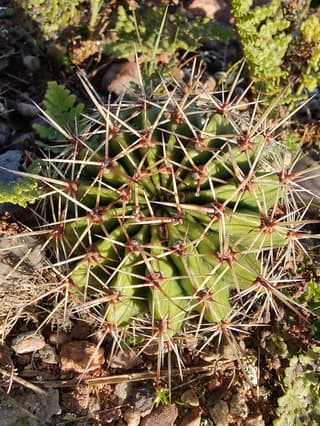
Easter Lily Cactus
Echinopsis oxygona
Echinopsis oxygona is a classic globular cactus that tends to become slightly columnar with age. It is widely appreciated for its monumental, trumpet-shaped flowers, which can be white or pinkish and emit a delicate fragrance, usually opening at night. Native to South America, it forms colonies of spiny 'balls' by producing lateral offsets.
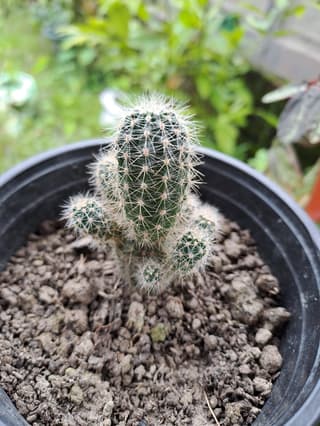
Sea Urchin Cactus
Echinopsis tubiflora
Echinopsis tubiflora, popularly known as the Sea Urchin Cactus (also called the Easter Lily Cactus), is a globular to short-columnar cactus native to the highlands of Bolivia and northern Argentina. Its dark green, ribbed stem is armed with clusters of pale, brown-tipped spines and produces spectacular funnel-shaped white flowers with a pale green throat that open at night and last only a day or two. As the plant matures it tends to offset, forming dense clumps that make a striking architectural statement in any dry garden or sunny windowsill.
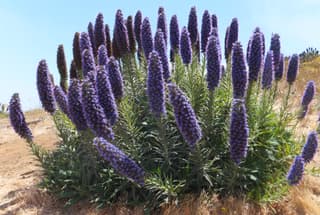
Pride of Madeira
Echium candicans
Pride of Madeira (Echium candicans) is a striking evergreen shrub native to the island of Madeira, Portugal. It produces spectacular cone-shaped flower spikes densely packed with blue and purple blooms that attract bees, butterflies, and hummingbirds. A robust, low-maintenance plant ideal for Mediterranean gardens, coastal landscapes, and rocky slopes. Once established, it is extremely drought-tolerant and thrives in poor soils with minimal care.
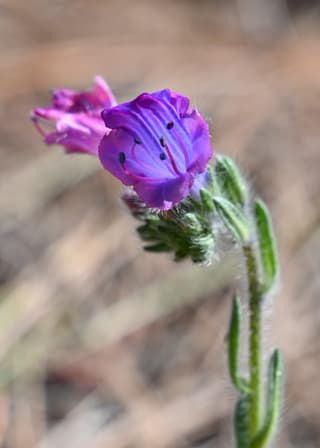
Purple Viper's Bugloss
Echium plantagineum
Purple Viper's Bugloss (Echium plantagineum) is an annual to biennial plant in the borage family (Boraginaceae), native to the Mediterranean region, North Africa, and Southwest Asia. It forms a coarse, hairy basal rosette before sending up a branched stem with funnel-shaped flowers that change color from pink to deep blue-violet as they open. The species grows 20-90 cm tall, blooms from spring to summer, and is highly popular with bees and bumblebees due to its abundant nectar production. While it tolerates drought and poor soil well, it is considered weedy and invasive outside its native range, particularly in Australia and California. The plant contains pyrrolizidine alkaloids, making it toxic to livestock and a potential skin irritant upon contact.
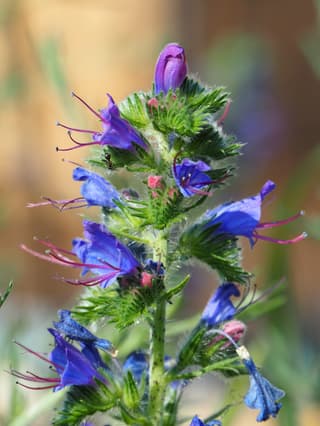
Viper's Bugloss
Echium vulgare
Viper's Bugloss (Echium vulgare) is a biennial to perennial herb from the borage family (Boraginaceae), naturally growing in meadows, field margins, embankments, and dry habitats throughout Europe, including the Czech Republic. It forms a basal rosette of hairy leaves, from which an upright, densely bristly stem, 30–90 cm tall, emerges in the second year. From May to September, it blooms with small, funnel-shaped flowers that open pink and gradually turn blue – a typical characteristic of the entire Echium genus. The flowers are sought after by bees and bumblebees, making the plant valued as an important melliferous herb. It tolerates drought, poor sandy and stony soil, and is low-maintenance, but the entire plant contains pyrrolizidine alkaloids, and its bristly hairs can irritate the skin.
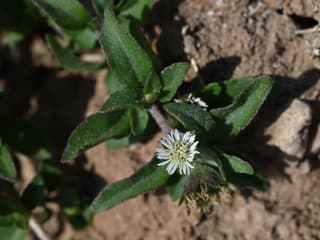
False Daisy
Eclipta prostrata
Eclipta prostrata, known worldwide as Bhringraj or False Daisy, is a creeping herbaceous plant of great importance in Ayurvedic medicine. It is characterized by its small solitary white flowers and stems that can be reddish. It is an extremely resilient plant that prefers moist environments, often found near rivers and marshes in tropical regions.
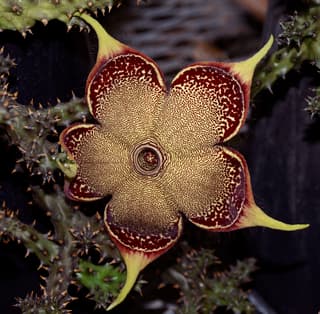
Persian Carpet Flower
Edithcolea grandis
Edithcolea grandis, known as the Persian Carpet Flower, is an extraordinary creeping succulent native to the arid regions of East Africa. Its stems are branched, spiny, and range in color from grayish-green to brown. The highlight of this species is its magnificent flowers, which can reach up to 13 cm in diameter, displaying complex geometric patterns and vibrant colors reminiscent of a Persian carpet weave. It is a highly sought-after plant for collectors but requires precise care due to its sensitivity to overwatering.
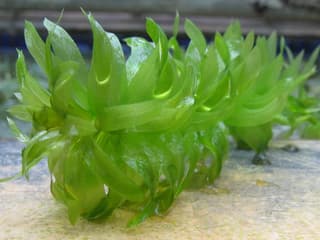
Brazilian Waterweed
Egeria densa
Egeria densa, commonly known as Brazilian waterweed, is a submerged aquatic plant native to the rivers and lakes of southeastern South America (Brazil, Argentina, Uruguay, Chile). Belonging to the Hydrocharitaceae family, it is among the most popular aquarium plants in the world due to its rapid growth, ease of cultivation, and excellent ability to oxygenate water while absorbing nitrates and phosphates, helping to combat algae blooms. It features thin, branched stems that can exceed one meter in length, covered in whorls of bright green, ribbon-like leaves; under favorable conditions, it produces small white three-petaled flowers that float on the water's surface. Due to its vigor, outside of a controlled aquarium or pond, it is considered an invasive species in many regions of the world, where it forms dense submerged mats capable of altering aquatic ecosystems: it must therefore be managed carefully, avoiding the dispersal of stem fragments into natural waterways.
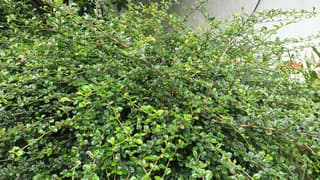
Fukien tea tree
Ehretia microphylla
The Fukien tea tree (Ehretia microphylla, synonym Carmona retusa) is an evergreen shrub in the borage family (Boraginaceae), native to South and Southeast Asia, ranging from India through China and Japan to northern Australia. Its small, shiny, dark green, and rough-textured leaves are 1.5–4 cm long; it produces tiny, star-shaped white flowers year-round, followed by reddish-orange, pea-sized berries. In nature, it can grow up to 4 meters tall, but due to its branching habit and trunk that thickens over time, it has become one of the most popular indoor bonsai species in Western bonsai culture—its name refers to the Fujian (formerly Fukien) province of China, from where it entered the bonsai trade. In the Philippines, a decoction made from its leaves was traditionally used to treat coughs, diarrhea, and stomach complaints.
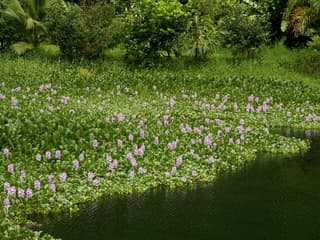
Water Hyacinth
Eichhornia crassipes
Water hyacinth (Eichhornia crassipes) is a free-floating aquatic plant native to the Amazon basin in South America. Celebrated for its glossy, heart-shaped leaves and delicate lavender-purple orchid-like flowers, it is one of the fastest-growing plants on Earth. While visually stunning as an ornamental pond plant, it can become highly invasive in natural waterways.

Silverberry
Elaeagnus
Elaeagnus is a genus of hardy shrubs and small trees prized for their silvery, scaly foliage and small, fragrant fall flowers followed by edible berry-like drupes. Native across temperate Asia, Europe, and North America, the genus includes both evergreen species (such as E. pungens) and deciduous species (such as E. umbellata and E. commutata), all sharing a tough, adaptable constitution.
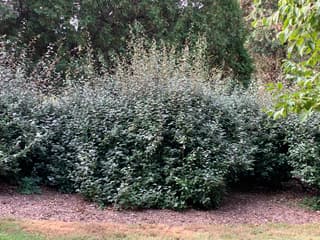
Ebbinge's Silverberry
Elaeagnus × submacrophylla
Ebbinge's Silverberry (Elaeagnus × submacrophylla) is a fast-growing evergreen hybrid shrub, a cross between E. macrophylla and E. pungens. It is widely planted as a hedge or windbreak in temperate gardens, valued for its silvery-green foliage and sweetly fragrant autumn flowers.
Russian Olive
Elaeagnus angustifolia
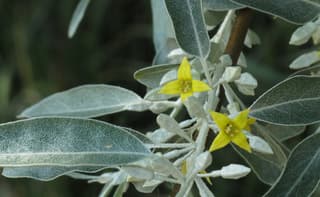
Elaeagnus angustifolia, commonly known as Russian Olive or Oleaster, is a deciduous tree or large shrub native to Western Asia and Southeast Europe. It is prized for its striking silvery-gray foliage, fragrant creamy-yellow flowers and small edible olive-like fruits. Exceptionally hardy, it tolerates extreme cold, drought, poor soils, and saline conditions. It is widely used in windbreaks, shelterbelts, and ornamental landscaping. Note: it is considered invasive in many regions, particularly across the western United States.
Thorny Olive
Elaeagnus pungens
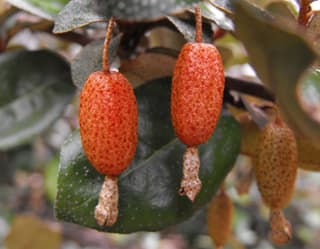
Elaeagnus pungens, commonly known as Thorny Olive or Silverthorn, is an evergreen shrub native to East Asia, particularly Japan and China. It features leathery leaves with green uppersides and silvery-brown undersides, creating a striking bicolor effect. In autumn, it produces small, intensely fragrant tubular white flowers. Renowned for its toughness, it thrives in poor soils, withstands drought and strong winds, and is widely used as a hedge, windbreak, and ornamental specimen.
Oil palm
Elaeis guineensis
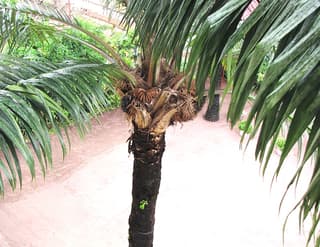
The oil palm (Elaeis guineensis) is a palm from the Arecaceae family, native to the low tropical regions of West Africa, particularly along the Gulf of Guinea. In the wild, it reaches 20 to 25 m in height, but in cultivation, it rarely exceeds 15 m. Its single trunk, marked by scars from old leaves, bears a crown of long pinnate fronds 5 to 7 m long. Separate male and female inflorescences produce clusters of reddish-orange ovoid fruits whose pulp and kernel provide palm oil and palm kernel oil, making this species the world's primary source of vegetable fat.
Eumundi quandong
Elaeocarpus eumundi
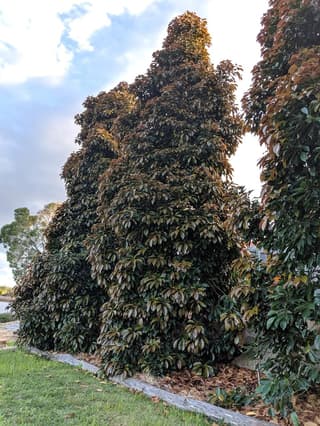
Elaeocarpus eumundi, known as the Eumundi quandong or smooth-leaved quandong, is an evergreen tree from the Elaeocarpaceae family, native to the rainforests of northeastern Australia—ranging from the Cape York Peninsula through central-eastern Queensland to northern New South Wales, where it grows at altitudes up to approximately 1000 m. In its native habitat, it reaches heights of 12–25 m, but in cultivation as a garden or street tree, it typically reaches 8–15 m with a narrow, upright crown 3–5 m wide. The leathery, glossy dark green leaves are clustered at the ends of branches and turn yellow instead of red as they age, while new growth has a bronze-pink tint. During November–December (in its place of origin), clusters of cream-white fringed flowers appear, followed by blue, oval drupes with sour but edible flesh used for jams and jellies. Due to its dense, hardy growth, the tree is commonly planted as a screen or street tree and attracts nectar- and seed-eating birds.
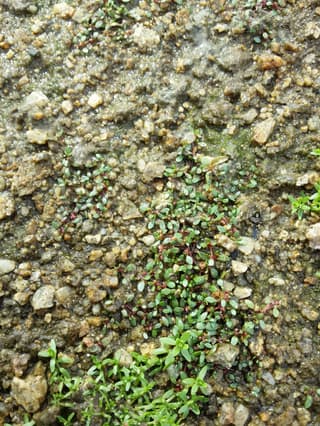
Eight-Stamened Waterwort
Elatine hydropiper
Elatine hydropiper, commonly known as Eight-Stamened Waterwort, is a tiny aquatic carpeting plant native to Europe and temperate Asia. It forms a dense, lush green carpet in aquariums, making it a prized foreground plant in aquascaping. Related to Hemianthus callitrichoides 'Cuba' in visual appeal, it is known for its demanding care requirements—needing high light, CO2 injection, and stable water parameters.
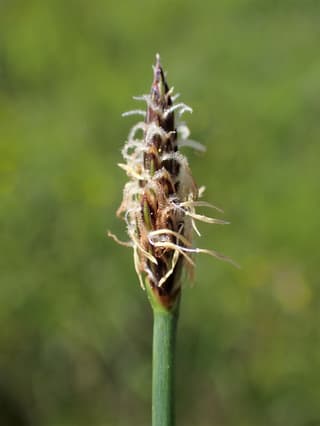
Spikerush
Eleocharis
Eleocharis (spikerush) is a large genus of perennial wetland and aquatic plants in the sedge family (Cyperaceae), comprising over 200 species distributed worldwide. The plants are characterized by their leafless, tubular, light green stems that grow in dense, grass-like clumps. In the aquarium hobby, the most popular species is Eleocharis acicularis – "dwarf hairgrass" – favored for creating a dense green carpet on the aquarium floor. The species Eleocharis palustris (common spikerush) is widely grown in garden ponds and wetland habitats. The plant spreads naturally via underground rhizomes and runners (stolons); it produces small, brownish-green spikelet flowers at the tips of the stems.
goosegrass
Eleusine indica
A small annual grass widely distributed in warm regions worldwide to approximately 50 degrees latitude. Characterized by rapid growth, forming dense tufts reaching 15-90 cm tall. Leaf blades are linear-lanceolate, 5-30 cm long, mostly glabrous and keeled with a distinctive white or silvery base. Develops a particularly tough and fibrous root system resistant to removal. Seeds are small, black to brown in color, produced abundantly—up to 120,000 per plant—and easily dispersed by wind and water. Requires full sunlight and cannot tolerate shade, preferring well-drained soil. Performs C4 photosynthesis, enabling growth in hot climates. Flowering occurs July to August with greenish-yellow flowers; seeds mature August to October. Found in disturbed areas, grasslands, and cultivated fields.
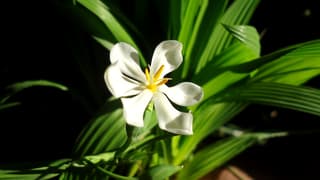
Tears of the Virgin
Eleutherine bulbosa
The Tears of the Virgin (Eleutherine bulbosa, syn. Eleutherine plicata) is a stemless, bulbous, and rhizomatous herb native to the Amazon and widely distributed from southern Mexico to tropical South America. It forms clumps 20 to 30 cm tall, featuring reddish-scaled bulbs similar to red onions, simple lanceolate leaves with longitudinal pleats, and star-shaped white or pinkish flowers that open at dusk. It is one of the most traditional medicinal plants of Amazonian indigenous peoples, with bulbs rich in naphthoquinones, anthraquinones, and flavonoids.
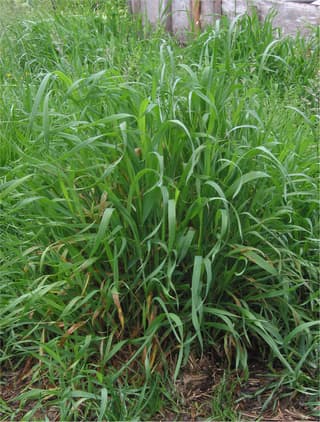
Quackgrass
Elymus repens
Quackgrass (Elymus repens) is a perennial rhizomatous grass, widespread across Europe, Asia, and North America, where it is considered one of the most tenacious and difficult-to-eradicate weeds. It spreads rapidly via thin, sharp underground rhizomes capable of regenerating a new plant from even a small severed fragment. It forms dense, matted carpets and tolerates almost any soil type, light, and moisture level, allowing it to grow spontaneously in gardens, fields, hedgerows, and roadsides. Despite being a weed, it has a long traditional history as a medicinal plant and is partially edible.
Find the Perfect Plant
Our plant guide helps you find ideal species for your experience level and time of year.
Browse by Difficulty, Season & More
Use the filters below to narrow this catalog by care difficulty, season, environment, or search directly by name. Each filter leads to a focused list tailored to your specific growing conditions.