Complete Plant Guide
Explore plants by difficulty, season and more. Find the perfect plant for you.
Difficulty
Categories
Plants by City
🗺️ Plants by City3478 plants found
Showing 1621-1656 of 3478
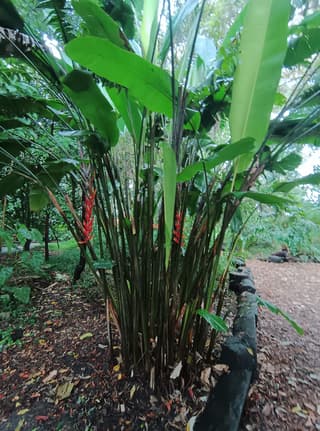
Heliconia
Heliconia
Heliconia is a genus of tropical perennial plants native to the tropical Americas, prized for its striking lobster-claw or parrot-beak shaped inflorescences. Waxy, brightly colored bracts in shades of red, orange, yellow and pink shelter small true flowers and attract hummingbirds in the wild. With large, banana-like leaves, it brings lush jungle texture to tropical gardens and bright indoor spaces.
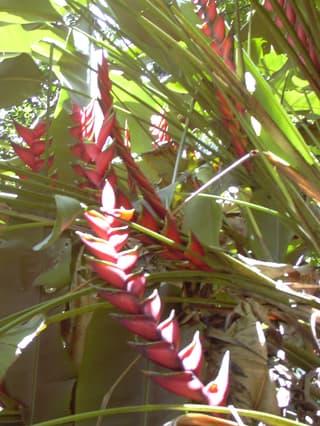
Lobster Claw
Heliconia bihai
Heliconia bihai, commonly known as Lobster Claw or Heliconia, is a spectacular tropical plant native to the Caribbean and South America. Its dramatic inflorescences in shades of red, orange, and yellow emerge among broad, glossy leaves, resembling lobster claws. It is highly valued in tropical floral arrangements and as an ornamental garden plant.
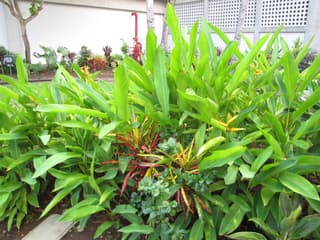
Parrot Heliconia
Heliconia psittacorum
Heliconia psittacorum, commonly known as Parrot Heliconia or Parrot's Beak, is a tropical flowering plant native to Brazil and the Caribbean. It is prized for its vibrant bracts in shades of red, orange, and yellow that resemble a parrot's plumage. A member of the Heliconiaceae family, it blooms nearly year-round in warm climates and is widely used as an ornamental garden plant and cut flower.
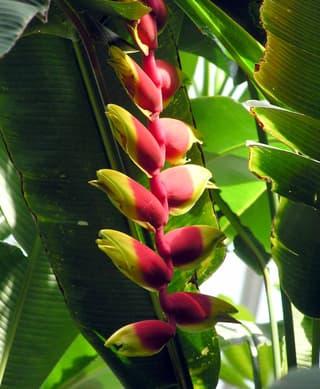
Hanging Lobster Claw
Heliconia rostrata
Heliconia rostrata, commonly known as the Hanging Lobster Claw, is a tropical perennial herbaceous plant native to Peru, Bolivia, and Colombia. It is celebrated for its dramatic pendant inflorescences composed of bright red bracts tipped with yellow and green, attracting hummingbirds and lasting for weeks. Its large, dark-green banana-like leaves can reach up to 120 cm in length, creating a stunning tropical statement in any warm garden.
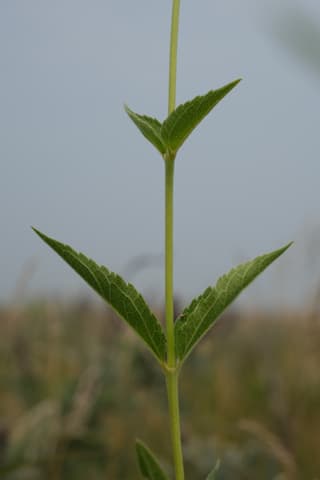
False Sunflower
Heliopsis helianthoides
Heliopsis helianthoides, commonly known as False Sunflower or Oxeye, is a native North American herbaceous perennial belonging to the Asteraceae family. It produces abundant bright golden-yellow daisy-like flowers from mid-summer through early fall, attracting pollinators such as bees and butterflies. A tough, adaptable wildflower, it thrives in full sun and well-drained soils, making it an outstanding choice for prairie gardens, naturalized landscapes, and pollinator gardens.
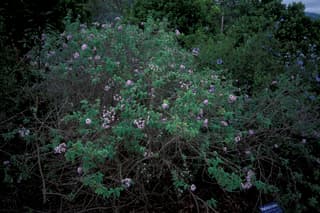
Heliotrope
Heliotropium
Heliotropium is a large genus of over 300 flowering plant species in the borage family (Boraginaceae), commonly known as heliotropes. The most widely cultivated ornamental species is Heliotropium arborescens (common or Peruvian heliotrope), a tender evergreen shrub grown as an annual or container plant for its clusters of small, fragrant purple, lavender, or white flowers with a vanilla-like scent. The name comes from the Greek helios (sun) and tropos (turning), referencing the plant's habit of orienting toward sunlight. All parts of Heliotropium plants contain toxic pyrrolizidine alkaloids and should be handled with care and kept away from children and pets.
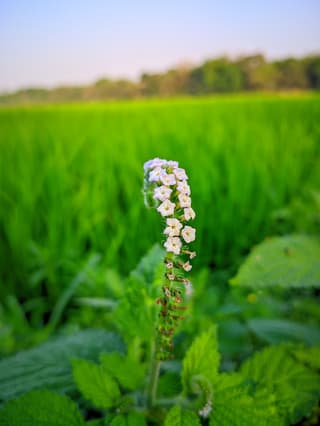
Indian Heliotrope
Heliotropium indicum
Indian heliotrope (Heliotropium indicum) is an annual or short-lived perennial herb native to tropical Asia, now pantropically distributed as a common weed in disturbed areas, roadsides, and cultivated fields. It grows 15–50 cm tall with hairy stems, ovate leaves, and characteristic scorpioid spikes bearing small white or purple flowers. WARNING: all plant parts contain tumorigenic pyrrolizidine alkaloids.
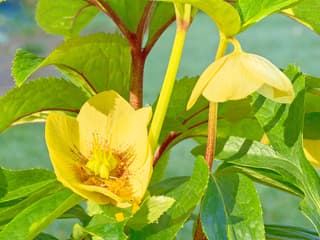
Lenten Rose
Helleborus × hybridus
Helleborus × hybridus is an evergreen perennial prized for blooming in late winter and early spring, when few other plants are in flower. It forms neat clumps of dark, lobed leaves topped with nodding flowers in white, pink, purple, yellow, and green, often speckled or picotee-edged.
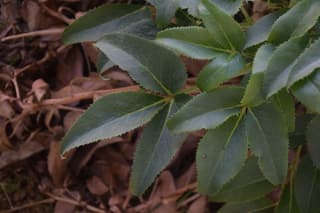
Corsican hellebore
Helleborus argutifolius
The Corsican hellebore (Helleborus argutifolius) is a robust evergreen perennial in the buttercup family (Ranunculaceae), native to Corsica and Sardinia. It forms a bold clump 90-120 cm tall of leathery, spiny-toothed, holly-like grey-green leaves and bears large clusters of cup-shaped, pale apple-green flowers from late winter into spring, when little else is in bloom. It is one of the most architectural and drought-tolerant of the hellebores.
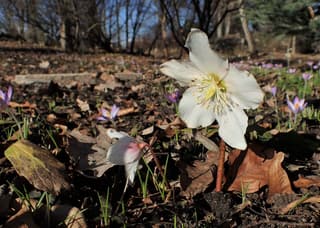
Christmas Rose
Helleborus niger
Helleborus niger, commonly called the Christmas rose, is an evergreen perennial in the buttercup family (Ranunculaceae) native to alpine and open woodlands of central and southern Europe. Prized for its large, bowl-shaped white flowers with golden-yellow stamens that open in the depths of winter — often piercing through snow — it forms a low, bushy clump of dark green, leathery, palmately divided leaves. Every part of the plant is toxic if ingested, so it is grown strictly as an ornamental.
Lenten Rose
Helleborus orientalis
Helleborus orientalis, commonly known as the Lenten Rose, is an elegant herbaceous perennial from the Ranunculaceae family, native to Greece and Turkey. Prized for its early winter-to-spring blooms that often appear when snow still covers the ground, this shade-loving plant produces flowers ranging from white to pink and purple, frequently adorned with distinctive interior spotting. It grows slowly into a clump-forming plant reaching 45-50cm in height and spread, making it ideal for shaded garden borders and woodland settings.
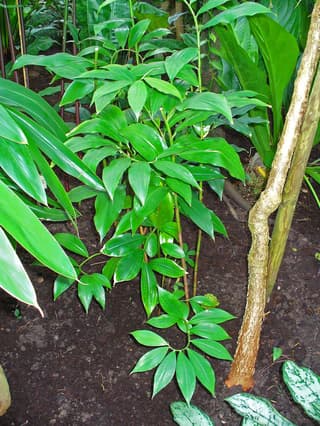
Crepe Ginger
Hellenia speciosa
Crepe ginger (Hellenia speciosa, formerly Costus speciosus) is a striking tropical perennial herb in the Costaceae family, native to South and Southeast Asia. It grows from thick underground rhizomes into an upright, spiraling clump up to 2 m tall, with glossy spiral-arranged leaves and dense terminal spikes of crepe-paper-like white flowers emerging from showy red bracts after the onset of the rainy season.
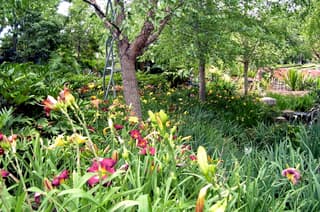
Daylily
Hemerocallis
Daylily (Hemerocallis) is a herbaceous perennial native to Asia, celebrated for its vibrant, trumpet-shaped flowers — each lasting just one day. With over 80,000 registered cultivars spanning yellow, orange, red, pink, purple, and white, daylilies bloom from late spring through fall and are among the most resilient and versatile garden perennials worldwide.
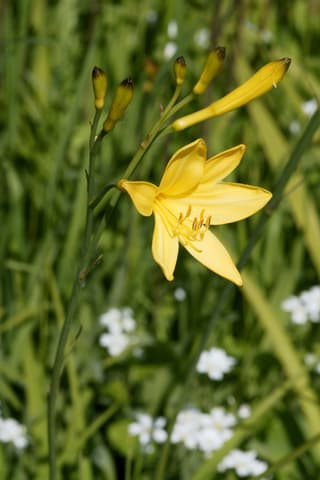
Orange daylily
Hemerocallis fulva
Hemerocallis fulva, commonly known as the orange daylily, is a vigorous and hardy perennial. It is characterized by its arching, sword-shaped green leaves and large, trumpet-shaped orange flowers that typically bloom for only one day. Despite the short life of individual flowers, the plant produces numerous buds on tall stalks, ensuring a long flowering period throughout the summer. It spreads effectively via underground rhizomes, making it an excellent choice for erosion control and ground cover.
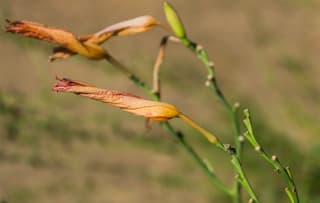
Lemon Daylily
Hemerocallis lilioasphodelus
The Lemon Daylily (Hemerocallis lilioasphodelus) is a hardy herbaceous perennial native to southeastern Europe and eastern Asia. It produces fragrant, trumpet-shaped yellow flowers that last only a single day — hence the name "daylily." Exceptionally tough and adaptable, it thrives in a wide range of soils and climates, making it a popular choice for borders and garden beds.
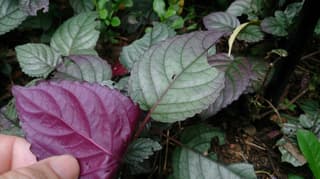
Purple Waffle Plant
Hemigraphis alternata
Hemigraphis alternata is a striking tropical ground cover from Southeast Asia, prized for its uniquely textured, waffle-like leaves that display metallic silvery-green tops and vivid purple undersides. A member of the Acanthaceae family, it is one of NASA's top-rated air-purifying plants, effectively filtering volatile organic compounds like benzene and toluene from indoor air. While it produces tiny white bell-shaped flowers, it is grown primarily for its dramatic foliage.
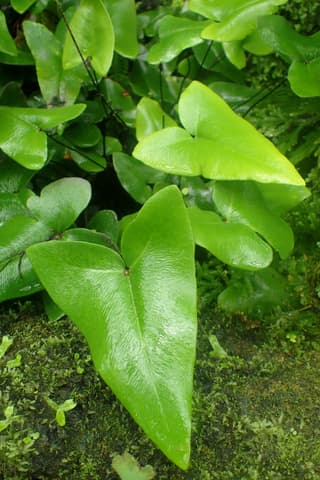
Heart Fern
Hemionitis arifolia
Hemionitis arifolia, commonly known as the Heart Fern, is a small fern from the Pteridaceae family, native to the moist forests of South and Southeast Asia (ranging from India to China, Cambodia, and Taiwan). The plant reaches only 6-10 inches in height and produces two types of fronds set on dark, almost black petioles: shorter, leathery heart-shaped sterile fronds and longer, arrow-shaped fertile fronds that rise above the clump. It is a slow grower and thrives best in conditions similar to a terrarium.
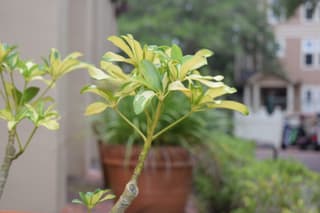
Umbrella Tree
Heptapleurum
Heptapleurum is a genus of over 300 species of evergreen tropical and subtropical trees and shrubs in the family Araliaceae, native to tropical and subtropical Asia. Formerly classified under the genus Schefflera, these plants are beloved for their distinctive palmate compound leaves arranged in an umbrella-like pattern. They are among the most popular indoor plants worldwide, prized for their adaptability, air-purifying qualities, and tropical aesthetic.
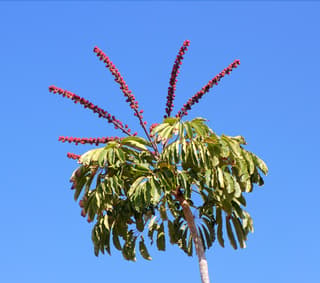
Umbrella Tree
Heptapleurum actinophyllum
The Umbrella Tree (Heptapleurum actinophyllum), also widely known by its synonym Schefflera actinophylla, is a dramatic tropical tree native to Australia and New Guinea. Its large, glossy, palmate leaves radiate from central stems like the spokes of an umbrella, making it one of the most recognizable indoor and outdoor trees in the world. Outdoors it can reach 40 feet; indoors it stays a manageable 6–10 feet. The plant produces striking red-pink flower spikes in summer and autumn when mature.
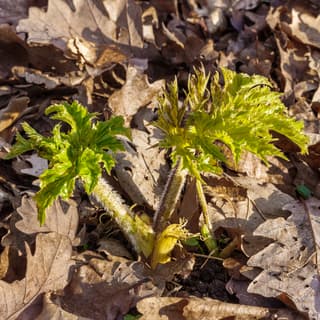
Common Hogweed
Heracleum
Heracleum is a genus of robust herbaceous plants in the family Apiaceae, native to temperate regions of Europe, Asia, and North America. The most widespread species, Heracleum sphondylium (common hogweed), and the invasive Heracleum mantegazzianum (giant hogweed), are well known for their dramatic architectural presence and large white compound umbels that can reach up to 2.5 metres in height. The plant's sap contains furanocoumarins — phototoxic compounds that, upon contact with skin exposed to sunlight, cause severe chemical burns, blistering, and long-lasting hyperpigmentation. Despite this hazard, Heracleum species have a long history of medicinal and culinary use across European and Asian cultures. They are also ecologically significant as major nectar and pollen sources for a wide range of pollinators including bees, hoverflies, and beetles.
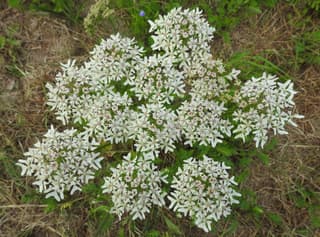
Common Hogweed
Heracleum sphondylium
Heracleum sphondylium, commonly known as common hogweed or cow parsnip, is a robust herbaceous perennial in the carrot family Apiaceae, native to Europe and western Asia. It thrives in meadows, hedgerows, woodland edges and roadsides, growing up to 2 metres tall. In summer it produces spectacular large umbrella-shaped clusters of white flowers, making it a striking addition to naturalistic gardens. Its sap contains phototoxic compounds that can cause skin reactions in sensitive individuals.
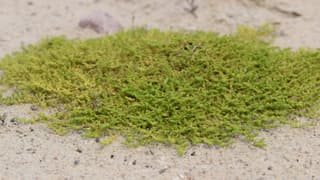
Smooth Rupturewort
Herniaria glabra
Herniaria glabra, commonly known as Smooth Rupturewort or Green Carpet, is a low-growing perennial herb in the Caryophyllaceae family, native to Europe and Western Asia. It forms a dense mat just 1-3 cm tall with tiny oval leaves and inconspicuous green flowers in summer. The foliage may turn bronze or red in winter, adding seasonal interest.
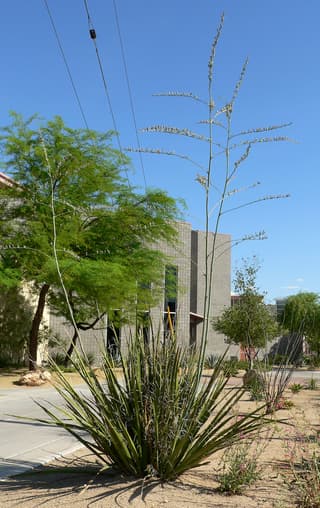
Giant Hesperaloe
Hesperaloe funifera
Hesperaloe funifera, commonly known as Giant Hesperaloe, is a striking succulent native to the Chihuahuan Desert of northern Mexico and southern Texas. It forms a dramatic rosette of long, narrow leaves up to 6 ft tall, sending up spectacular flower stalks reaching 10-15 ft with creamy white blooms in spring and summer.
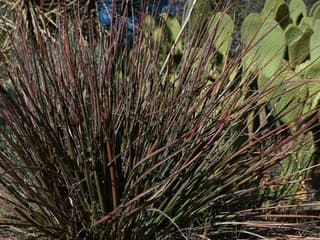
Red yucca
Hesperaloe parviflora
Hesperaloe parviflora, commonly known as Red Yucca, is not a true yucca but a member of the century plant family. It features arching, leathery, blue-green leaves that form a dense clump. In late spring and summer, it produces spectacular tall spikes of tubular, nectar-rich flowers that are highly attractive to hummingbirds. It is exceptionally hardy, heat-tolerant, and requires very little maintenance once established.
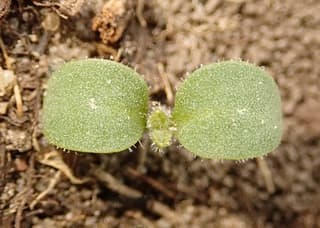
dame's rocket
Hesperis matronalis
Hesperis matronalis, known as Dame's Rocket, is a fragrant biennial or short-lived perennial in the Brassicaceae family. It features clusters of four-petaled flowers in white, pink, or purple. While prized for its sweet evening scent, it is considered invasive in some regions of North America due to its prolific self-seeding.
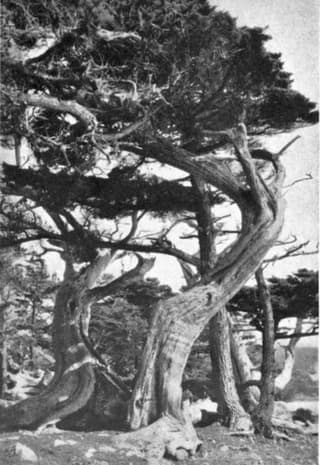
Monterey Cypress
Hesperocyparis macrocarpa
Hesperocyparis macrocarpa, commonly known as Monterey Cypress, is a fast-growing evergreen conifer native to the central California coast. Known for its dramatic windswept silhouette in the wild, the cultivar 'Goldcrest' is widely used as a fragrant, lemon-scented indoor or patio plant. Its bright golden-green foliage and compact columnar form make it a striking ornamental choice.
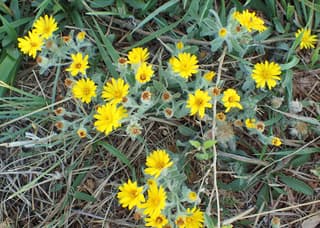
Golden aster
Heterotheca
Heterotheca is a genus of about 25 to 30 species of perennial herbs and subshrubs, native to North America, from Canada to Mexico, belonging to the aster family (Asteraceae). It is commonly known as "golden aster" or "camphorweed" due to the camphor-like aroma released by some species when their leaves are crushed. It produces bright yellow daisy-like flowers throughout much of the year and lanceolate leaves covered in rough hairs. It is a pioneer plant, extremely drought-tolerant, and typical of poor, sandy, or rocky soils.
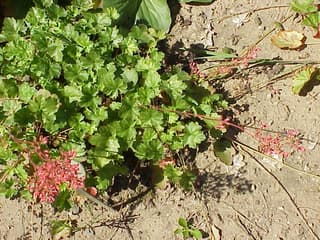
Coral Bells
Heuchera
Heuchera, commonly known as coral bells or alumroot, is a genus of ornamental perennial plants native to North America. Celebrated for their extraordinary diversity of foliage colours — ranging from deep burgundy and bronze to lime green and silver — they produce delicate, airy wands of tiny bell-shaped flowers in spring and summer. Highly adaptable, Heuchera thrives in woodland gardens, borders, and containers, making it one of the most versatile shade perennials available to gardeners.
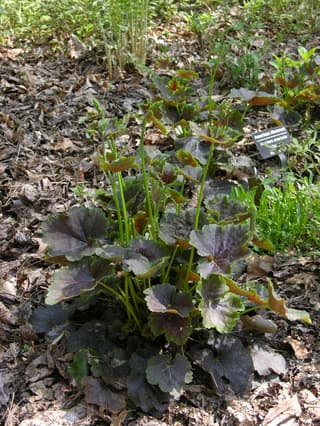
American Alumroot
Heuchera americana
Heuchera americana, commonly known as American Alumroot, is a native perennial of Eastern North America prized for its ornamental, deeply lobed foliage with silver-grey marbling. It produces delicate bell-shaped flowers on wiry stalks in late spring and thrives in shaded garden settings.
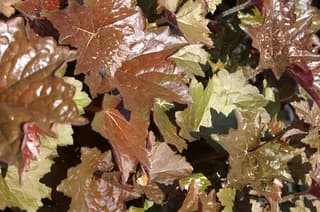
Crevice Alumroot
Heuchera micrantha
Heuchera micrantha, commonly known as crevice alumroot or small-flowered alumroot, is a herbaceous perennial in the family Saxifragaceae native to the rocky cliffs, talus slopes, and crevices of western North America, from British Columbia south to California. It forms low, mounding rosettes of deeply lobed, maple-like leaves in shades of green to bronzy-red, providing year-round ornamental interest. In late spring to early summer, slender wiry stems rise above the foliage bearing loose, airy panicles of tiny white to cream flowers that attract native bees and flies. It thrives in partial shade and well-drained, rocky soils, making it an excellent choice for rock gardens, shaded borders, and naturalistic plantings.
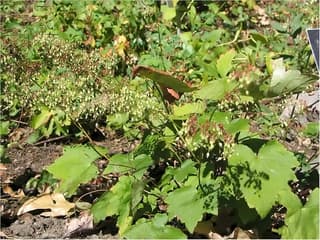
Hairy Alumroot
Heuchera villosa
Heuchera villosa, commonly called hairy alumroot, is a clump-forming woodland perennial native to the Appalachian region of the eastern United States, from New York south to Georgia and west to Missouri. It forms low mounds of softly hairy, maple-like leaves and sends up airy spikes of tiny white to pink bell-shaped flowers from midsummer into fall. Prized for its outstanding heat and humidity tolerance compared to other coral bells, it thrives in shaded rock gardens, woodland borders, and containers.
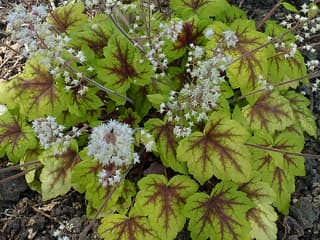
Foamy Bells
Heucherella
Heucherella is an intergeneric hybrid between Heuchera (Coral Bells) and Tiarella (Foamflower), commonly known as 'Foamy Bells'. The plant forms compact leaf rosettes with colorful, decorative foliage in shades of green, gold, orange, red, and bronze—depending on the variety. It is particularly popular in shade gardens where it produces airy, cloud-like flower spikes in white and pink from late spring to midsummer. The foliage is semi-evergreen and provides winter structure in mild climates.
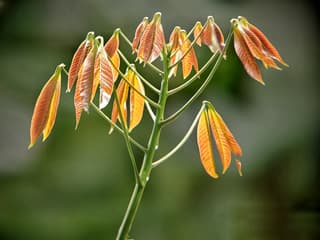
Rubber tree
Hevea brasiliensis
Hevea brasiliensis, commonly known as the rubber tree, is a species native to the Amazon rainforests (Amazon and Orinoco basins), where it can reach heights of 130 feet along riverbanks. It is the primary source of the world's natural rubber: an incision in its bark releases a white latex harvested through tapping starting around age 7. Introduced to Asia and Africa at the turn of the 20th century, it thrives there largely protected from its main threat, the Microcyclus ulei fungus, which causes South American Leaf Blight (SALB) that once devastated Brazilian rubber production. Indoors, grown for its glossy green trifoliate foliage, it remains much smaller in size. Its latex contains proteins (hevein) known to be allergenic: handling the sap can cause skin irritation or more severe reactions in individuals with latex allergies.
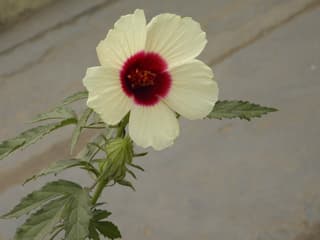
Kenaf
Hibiscus cannabinus
Kenaf is a fast-growing, upright hibiscus relative in the mallow family, cultivated worldwide since prehistoric times for its strong bast fiber. It produces tall, cane-like stems topped with pale yellow, hibiscus-like flowers with dark purple centers, maturing from seed to full height in just three to four months.
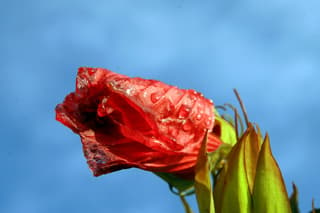
Scarlet Rosemallow
Hibiscus coccineus
Hibiscus coccineus, commonly called scarlet rosemallow or Texas Star hibiscus, is a tall, deciduous perennial in the mallow family native to marshes and swamps of the southeastern United States. It produces striking star-shaped scarlet-red flowers up to 6 inches wide atop maple-like foliage from late summer into early fall, reaching 6-8 feet in height. It thrives in consistently moist to wet soil and full sun, making it a favorite for pond edges, rain gardens, and pollinator plantings.
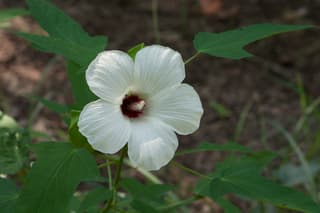
Halberdleaf Rosemallow
Hibiscus laevis
Hibiscus laevis is a stout, upright herbaceous perennial native to North American wetland margins, named for its distinctive three-lobed, halberd-shaped leaves. From summer into fall it bears large, hollyhock-like flowers in white to pink with a deep maroon throat that open by day and close at night.
Find the Perfect Plant
Our plant guide helps you find ideal species for your experience level and time of year.
Browse by Difficulty, Season & More
Use the filters below to narrow this catalog by care difficulty, season, environment, or search directly by name. Each filter leads to a focused list tailored to your specific growing conditions.