Complete Plant Guide
Explore plants by difficulty, season and more. Find the perfect plant for you.
Difficulty
Categories
Plants by City
🗺️ Plants by City3478 plants found
Showing 1657-1692 of 3478

Swamp Rose-mallow
Hibiscus moscheutos
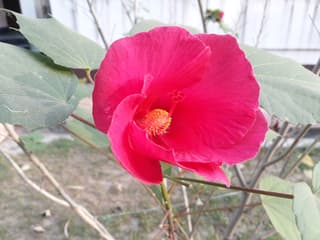
Hibiscus moscheutos, commonly known as Swamp Rose-mallow or Crimson-eyed Rosemallow, is a hardy perennial native to eastern North America. It produces enormous dinner-plate blooms — up to 12 inches across — in shades of white, pink, red, and burgundy, often with a striking crimson eye. Despite its tropical appearance, it is fully cold-hardy to USDA Zone 4, dying back to the ground each winter and re-emerging in spring.
Confederate Rose
Hibiscus mutabilis
Confederate Rose (Hibiscus mutabilis) is a fast-growing deciduous shrub or small tree native to southern China. It is celebrated for its spectacular flowers that open white or pale pink in the morning and deepen to rich crimson red by evening — all within a single day. Plants can reach 15 feet tall and produce abundant blooms from late summer through fall.
Chinese Hibiscus
Hibiscus rosa-sinensis
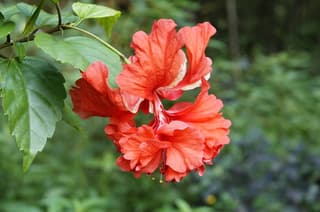
Hibiscus rosa-sinensis, commonly known as Chinese Hibiscus or Tropical Hibiscus, is a flowering evergreen shrub in the family Malvaceae, native to tropical Asia. It produces large, showy flowers in a wide range of colors throughout the year and is widely cultivated as an ornamental plant in gardens and containers worldwide.
Roselle
Hibiscus sabdariffa
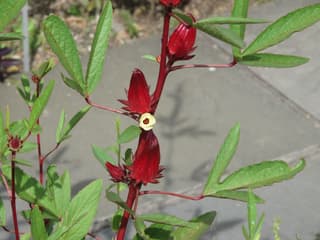
Hibiscus sabdariffa, commonly known as Roselle, is a fast-growing annual or short-lived perennial shrub native to West Africa. It is celebrated worldwide for its vibrant red calyces used to make hibiscus tea, jams, and medicinal preparations. The plant produces striking pale yellow flowers with a deep red center and grows up to 3 meters tall in warm climates. Its calyces, leaves, seeds, and roots are all edible and valued both ornamentally and medicinally.
Rose of Sharon
Hibiscus syriacus
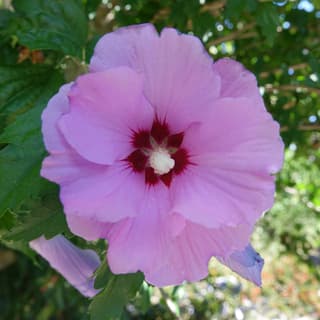
Rose of Sharon (Hibiscus syriacus) is a deciduous flowering shrub native to East Asia, widely grown for its showy blooms in shades of white, pink, purple, red, and lavender. It blooms from midsummer through fall, bridging a gap when few other shrubs are in flower. It is the national flower of South Korea, known as Mugunghwa, symbolizing perseverance and eternal love.
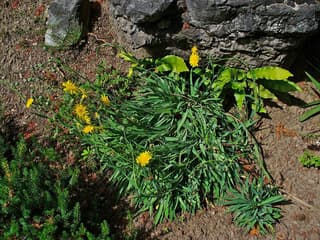
Hawkweed
Hieracium
Hieracium is a large, taxonomically complex genus of flowering plants in the daisy family (Asteraceae), commonly known as hawkweed. The genus name comes from the ancient Greek 'hierax' (hawk), tied to an old legend that hawks used the plant's milky sap to sharpen their eyesight. Hawkweeds are herbaceous perennials that form basal rosettes of hairy, often bristly leaves and send up erect flowering stems topped with clusters of small, dandelion-like yellow or orange flower heads. Reproduction is unusual: most species reproduce apomictically, producing genetically identical seeds without fertilization, which has led botanists to describe anywhere from a few hundred to several thousand microspecies. While some Hieracium species are valued as low-maintenance wildflowers for naturalized gardens and pollinator plantings, many others (such as orange hawkweed and meadow hawkweed) are aggressive colonizers classified as noxious, invasive weeds in North America, New Zealand, and parts of Australia, where they outcompete native vegetation and forage grasses.

Narrowleaf Hawkweed
Hieracium umbellatum
Narrowleaf hawkweed is a perennial herb in the Asteraceae family, native to temperate regions across the Northern Hemisphere (Europe, Asia, and North America). It forms a basal rosette with narrow, toothed leaves and produces umbrella-shaped clusters of dandelion-like yellow flowerheads from mid-summer to fall. It is a hardy, adaptable plant commonly found along roadsides, in open woodlands, and on sandy or disturbed ground.
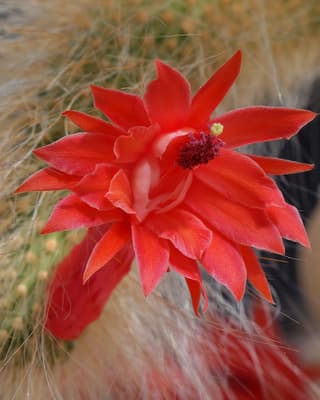
Monkey's Tail Cactus
Hildewintera colademononis
Hildewintera colademononis, also classified as Cleistocactus colademononis, is an epiphytic and pendulous cactus native to the moist rocky slopes of Florida province in the Santa Cruz department of Bolivia, where it grows hanging from cliffs at altitudes of up to 1,500 meters. Its cylindrical stems, 3 to 7 cm in diameter, can reach up to 2.5 meters in length and are covered by dozens of white, thin, and hair-like soft spines that resemble a monkey's furry tail—the origin of its popular nickname. Between spring and summer, it produces vibrant red flowers up to 8 cm long that bloom almost horizontally along the stems. It is a relatively fast-growing species, ideal for hanging baskets, and has received the prestigious Award of Garden Merit from the Royal Horticultural Society.
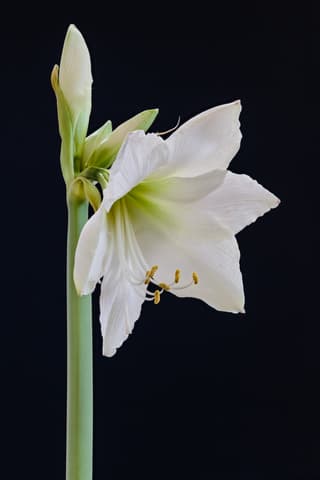
Amaryllis / Hippeastrum (genus)
Hippeastrum
Hippeastrum is a genus of large, bulbous perennial plants in the family Amaryllidaceae, native to tropical and subtropical regions of South America. Commonly — though inaccurately — known as Amaryllis, these plants produce spectacular trumpet-shaped flowers in shades of red, pink, white, orange, and salmon, typically blooming in winter and spring. The genus comprises over 116 species and hundreds of hybrid cultivars. All parts, especially the bulb, contain lycorine alkaloids making them toxic to pets and humans.
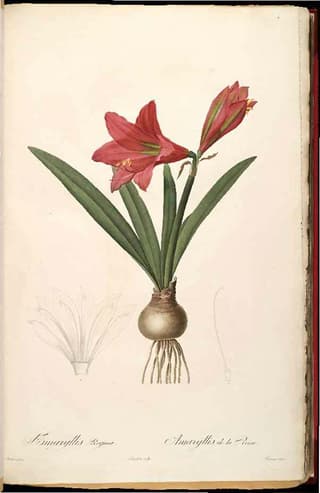
Mexican Lily
Hippeastrum reginae
Hippeastrum reginae, commonly known as Mexican Lily or Amaryllis, is a bulbous perennial from the Amaryllidaceae family, native to tropical and subtropical regions of South America. It produces spectacular trumpet-shaped flowers in shades of red, pink, white, orange, and bicolor on upright stems reaching up to 60 cm tall. Widely grown as an ornamental plant in pots and gardens, it is particularly prized for its vibrant winter and spring blooms.

Striped Barbados Lily
Hippeastrum striatum
The Striped Barbados Lily (Hippeastrum striatum) is a bulbous flowering perennial native to eastern and southern Brazil, belonging to the Amaryllidaceae family. It produces sturdy flower stalks bearing 2 to 4 trumpet-shaped blooms, bright red with a distinctive green keel running halfway up each petal. It is a popular ornamental bulb prized for its striking late-winter to early-spring flowering display.
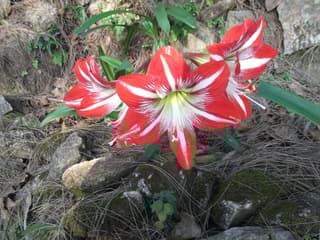
Amaryllis
Hippeastrum vittatum
Amaryllis (Hippeastrum vittatum) is a bulbous plant native to South America, belonging to the Amaryllidaceae family. It is distinguished by its large, showy trumpet-shaped flowers that can reach up to 20 cm in diameter. It is one of the most popular bulbous plants for indoor cultivation, especially during winter and spring.
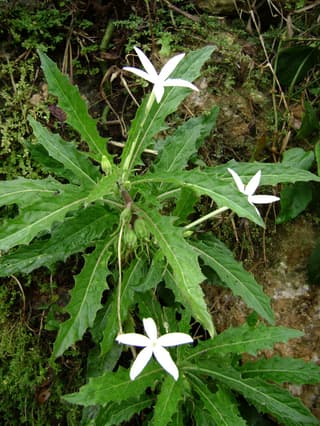
Star of Bethlehem
Hippobroma longiflora
Hippobroma longiflora, commonly known as Star of Bethlehem, is a perennial herb with an erect or decumbent stem, native to Jamaica and now naturalized in humid tropical and subtropical regions, typically along stream banks and ditches. Its leaves are simple, alternate, elliptical to lanceolate in shape with serrated edges, measuring 5 to 15 cm in length. The flowers are solitary, white, and fragrant, with a slender floral tube 6 to 12 cm long ending in five pointed lobes—an adaptation for pollination by long-tongued sphinx moths. It is considered one of the most dangerous plants to cultivate: the entire plant, especially the milky sap, contains pyridine alkaloids such as lobeline and nicotine. Contact with the sap causes intense burning on the skin and mucous membranes and can cause temporary blindness if it reaches the eyes; ingestion is dangerous for humans and animals (including cattle, dogs, and cats), potentially causing vomiting, tremors, muscle paralysis, and, in severe cases, death.
Sea buckthorn
Hippophae rhamnoides
Sea buckthorn is a thorny deciduous shrub known for its bright orange berries, which are exceptionally rich in vitamin C and antioxidants. It features narrow silvery-grey leaves and is highly resistant to frost and soil salinity.
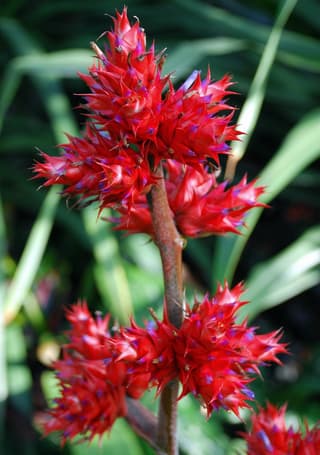
Hohenbergia
Hohenbergia
Hohenbergia is a genus of bromeliads in the family Bromeliaceae, comprising roughly 53 species native to the West Indies, the Yucatan Peninsula, and northern South America (Colombia, Venezuela, Brazil). Plants form rosettes of broad, stiff, often spine-edged strap-like leaves that converge at the base into a central "tank" that holds water and organic debris. A single tall, showy flower spike is produced from the rosette center, lasting for months, with bracts and flowers in shades of red, salmon, pink, white, or purple — the feature that most distinguishes the genus from its close relative Aechmea.
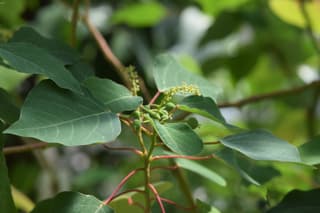
Bleeding Heart Tree
Homalanthus
Homalanthus is a genus of fast-growing tropical trees and shrubs in the family Euphorbiaceae, native to Australia, Papua New Guinea, and Pacific islands. These pioneer plants rapidly colonize disturbed forest edges and clearings, playing a critical role in tropical forest regeneration. They feature large, heart-shaped leaves that turn vivid red before dropping, and produce milky white latex throughout their tissues. Several species, notably Homalanthus nutans, have attracted significant scientific interest for containing prostratin — a compound with demonstrated antiviral and anti-HIV activity derived from traditional Samoan ethnobotanical knowledge.
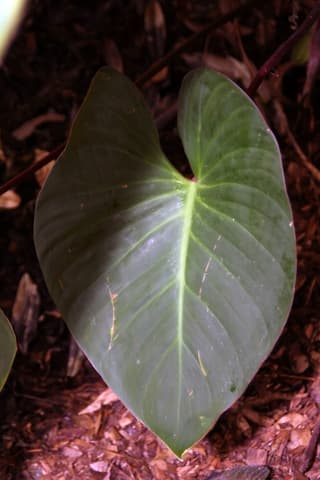
Homalomena
Homalomena
Homalomena is a genus of roughly 150 tropical aroid species native to Southeast Asia and parts of tropical South America, prized as houseplants for their glossy, heart- or shield-shaped foliage. This is a genus-level profile covering common cultivated species such as Homalomena rubescens and its cultivars ("Emerald Gem", "Selby"); individual species vary somewhat in mature size and leaf color.
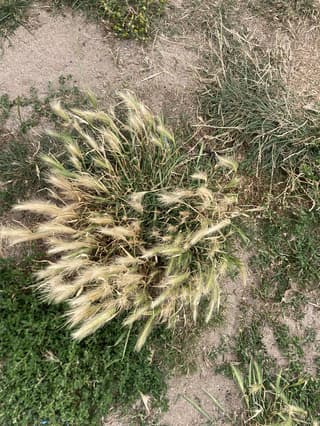
Wall barley
Hordeum murinum
Wall barley is a low, tufted annual grass in the barley genus, native to the Mediterranean, Central Europe, Western Asia, and North Africa, and now widely naturalized across temperate regions worldwide. It grows 30-50 cm tall, forming unbranched spikes up to 10 cm long that ripen from green to straw-yellow. A classic plant of disturbed, nitrogen-rich ground, it thrives in pavement cracks, walls, roadsides, and waste areas, flowering from May through July. Though a difficult weed in cereal fields and pastures, it also serves as forage for grazing livestock in dry regions.
Ruby bolete
Hortiboletus rubellus
Hortiboletus rubellus, commonly known as the ruby bolete, is an edible mushroom in the family Boletaceae. It is characterized by a deep red to burgundy cap that is velvety when young. The pores are yellow and bruise blue when touched. The stem is typically yellow with red streaks or dots. It grows in deciduous forests, parks, and gardens, often forming mycorrhizal associations with oaks, lindens, or hornbeams.

Hosta
Hosta
Hostas are a genus of plants commonly known as plantain lilies. They are widely cultivated as shade-tolerant foliage plants. Their leaves come in a wide range of shapes, sizes, and colors, including shades of green, blue, and gold, often with variegated patterns. While grown primarily for their foliage, they produce elegant spikes of bell-shaped flowers in the summer.
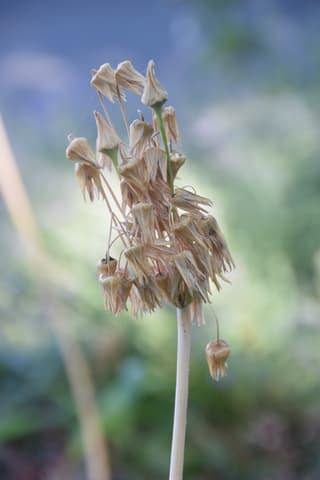
Fire and Ice Hosta
Hosta 'Fire and Ice'
Hosta 'Fire and Ice' is a compact, variegated perennial prized for its heart-shaped leaves with bright white centers edged in dark green. A reverse sport of the popular 'Patriot' hosta, it forms a tidy, upright mound of foliage and sends up lavender, bell-shaped flowers on tall scapes in mid to late summer. Because so much of its leaf tissue lacks chlorophyll, it grows slowly but rewards patient shade gardeners with dramatic, eye-catching contrast.
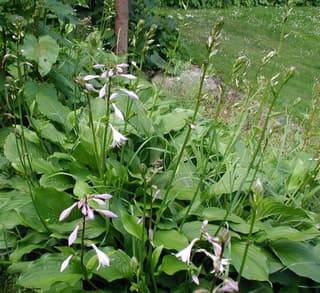
Fortune's Hosta
Hosta fortunei
Hosta fortunei, commonly known as Fortune's hosta or plantain lily, is a clump-forming herbaceous perennial prized for its broad, heart-shaped blue-green to green leaves, often edged or streaked with cream or gold depending on the cultivar. Believed to have originated from cultivated plants in Japan, it thrives in shaded and woodland garden settings, sending up tall spikes of pale lavender, bell-shaped flowers in summer. Its lush, textured foliage makes it a staple of shade gardens and mixed borders.
Narrow-leaved Plantain Lily
Hosta lancifolia
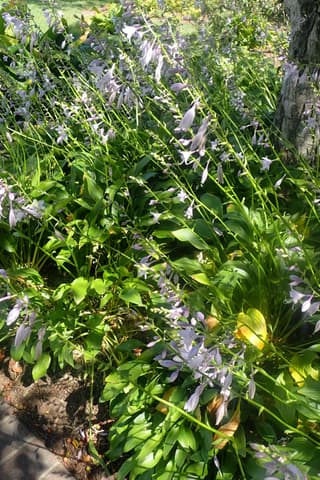
Hosta lancifolia, commonly known as the Narrow-leaved Plantain Lily, is a compact, clump-forming perennial prized for its graceful, lance-shaped dark green leaves. Native to Japan and China, it thrives in shaded gardens and is one of the most adaptable hostas for both ground cover and container planting. It produces slender lavender to purple funnel-shaped flowers in late summer, attracting hummingbirds and bees.
Fragrant Plantain Lily
Hosta plantaginea
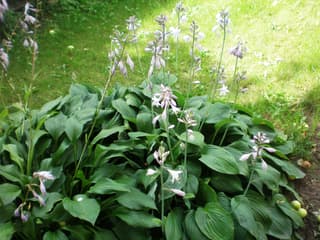
Hosta plantaginea, commonly known as the Fragrant Plantain Lily or August Lily, is a herbaceous perennial native to China. It is celebrated for its large, glossy, heart-shaped leaves and exceptionally fragrant white trumpet-shaped flowers that bloom in late summer. Unlike most hostas, its flowers emit a sweet, powerful fragrance, especially in the evening, making it a favourite for shaded gardens worldwide.

Siebold's Hosta
Hosta sieboldiana
Hosta sieboldiana is a large, bold shade perennial native to Japan, prized for its massive blue-gray leaves that can reach 14 inches long. It forms a dramatic domed mound up to 2 feet tall and 5 feet wide, making it one of the most impressive groundcover plants for shaded gardens.
Small-Leaved Plantain Lily
Hosta sieboldii
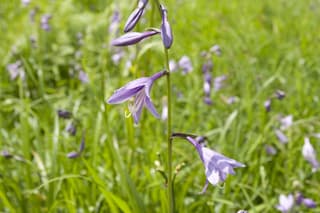
Hosta sieboldii, the small-leaved plantain lily, is a compact, clump-forming perennial native to East Asia and prized in shade gardens for its narrow, lance-shaped leaves with mid-green centers and creamy white margins. In mid to late summer it sends up slender flower stems bearing funnel-shaped, lavender blooms above the tidy foliage mound. Unlike its larger cousin Hosta sieboldiana, this species stays compact, making it an excellent choice for borders, woodland edges, and containers in partly shaded corners.
Wavy-Leaf Plantain Lily
Hosta undulata
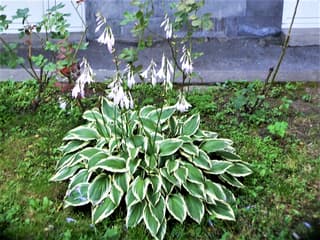
Hosta undulata, commonly known as the Wavy-Leaf Plantain Lily, is a classic shade-garden perennial originating from cultivated forms developed in Japan. It is prized for its striking variegated foliage — creamy white centers surrounded by wavy green margins — which creates dramatic contrast in low-light garden settings. In summer, it sends up tall scapes bearing delicate lavender to white trumpet-shaped flowers. Fully deciduous, it dies back to the ground in winter and re-emerges each spring with fresh, vigorous growth.
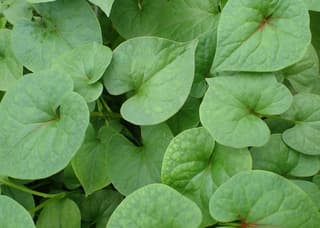
Chameleon plant
Houttuynia cordata
Houttuynia cordata, commonly known as the chameleon plant, is a deciduous ground-covering perennial from the Saururaceae family originating in East Asia. The plant is known for its heart-shaped leaves, which are often variegated in green, yellow, red, and cream, as well as for its small white flowers with cone-shaped, lime-green spikes that appear from early to late summer. When the leaves are crushed, they emit a sharp, fish-like scent—hence the name 'fish mint'. Chameleon plant thrives in moist to wet soil and spreads aggressively via underground rhizomes, so it should be planted with caution.
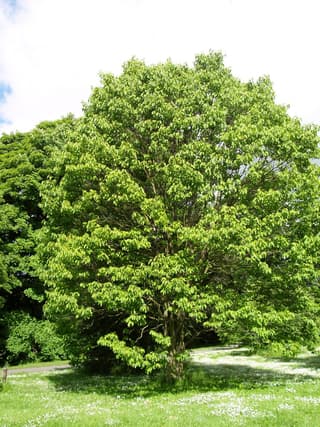
Japanese Raisin Tree
Hovenia dulcis
The Japanese Raisin Tree (Hovenia dulcis) is a medium to large deciduous tree native to East Asia (China, Japan, and Korea), widely planted as an ornamental shade tree and for its sweet edible fruit stalks. It belongs to the Rhamnaceae family and can reach up to 10 meters in cultivation. This exceptionally hardy species adapts to a wide range of soils, tolerates cold winters down to -15°C, and is largely resistant to pests and diseases, making it an excellent choice for gardens, parks, and urban landscaping.

Kentia Palm
Howea forsteriana
The Kentia Palm (Howea forsteriana) is an elegant, slow-growing palm native to Lord Howe Island, Australia. Renowned for its graceful, arching fronds and tolerance of indoor conditions, it became the quintessential Victorian parlour palm in the 1870s. Queen Victoria herself kept these palms in all her homes. With its single trunk and dark green, pinnate fronds reaching up to 3 meters long, it adds a sophisticated tropical touch to any space while being remarkably low-maintenance.
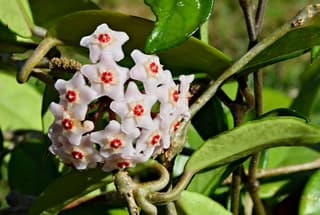
Wax Plant
Hoya
Hoya is a large genus of tropical and subtropical climbing and epiphytic plants in the family Apocynaceae, native to Asia, Australia, and the Pacific islands. With over 300 species, Hoyas are among the most beloved houseplants in the world, prized for their thick waxy leaves and clusters of star-shaped, often fragrant flowers. They are exceptionally well-suited to indoor growing and are considered ideal plants for beginners due to their low maintenance requirements.
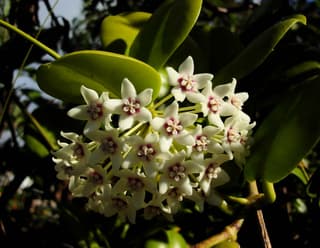
Common Waxflower
Hoya australis
Hoya australis, known as the common waxflower, is a fast-growing evergreen vine native to eastern and northern Australia, Papua New Guinea, and nearby Pacific islands. Its thick, glossy, succulent-like leaves store water, helping the plant withstand occasional drought. Established plants produce rounded clusters of up to 40 star-shaped, waxy white flowers with deep red centers, prized for their strong, sweet fragrance and abundant nectar.
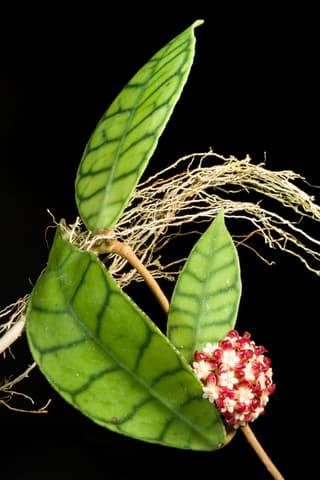
Hoya Callistophylla
Hoya callistophylla
Hoya callistophylla is an epiphytic climbing plant native to the rainforests of Borneo (Sabah, Malaysia), primarily cultivated for its strikingly veined foliage. The thick, leathery leaves feature a silvery-light network of veins against a dark green background, appearing almost hand-painted. In spring and summer, it produces fragrant, star-shaped flower umbels consisting of 20 to 40 individual creamy-white to pale yellow blossoms with reddish tips. As a vining plant, it is perfectly suited for hanging baskets or trellises.
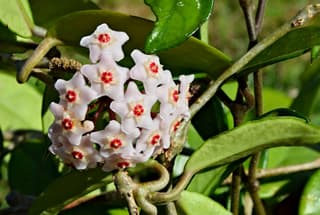
Wax Plant
Hoya carnosa
Hoya carnosa is a beloved tropical vine native to East Asia and Australia, prized for its waxy, succulent-like leaves and stunning clusters of star-shaped, fragrant flowers. This long-lived houseplant can thrive for decades with minimal care, making it perfect for beginners. The plant produces unique umbrella-shaped flower clusters that are pink or white with red centers and emit a sweet fragrance, especially in the evening. It has received the Royal Horticultural Society Award of Garden Merit.
Hoya crassipetiolata
Hoya crassipetiolata
Hoya crassipetiolata is an epiphytic climbing plant from the Apocynaceae family, native to the tropical forests of Southeast Asia (Indonesia, Thailand, Malaysia). It is known for its thick, waxy, deep green leaves with prominent light-colored veining, and for the unusually thick petiole that gives it its name. In spring and summer, it blooms with clusters of creamy-white, fragrant, star-shaped flowers typical of the Hoya genus. It is a popular indoor plant due to its relatively easy maintenance and slow growth, suitable for hanging baskets or training on a support.
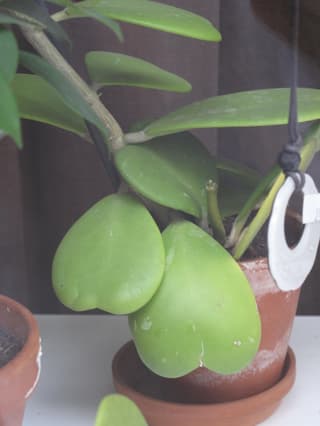
Sweetheart Hoya
Hoya kerrii
Hoya kerrii is a charming tropical vine native to Southeast Asia, famous for its thick, heart-shaped succulent leaves. This slow-growing epiphyte produces fragrant star-shaped flowers in clusters and is beloved as a symbol of love and affection.
Find the Perfect Plant
Our plant guide helps you find ideal species for your experience level and time of year.
Browse by Difficulty, Season & More
Use the filters below to narrow this catalog by care difficulty, season, environment, or search directly by name. Each filter leads to a focused list tailored to your specific growing conditions.