Complete Plant Guide
Explore plants by difficulty, season and more. Find the perfect plant for you.
Difficulty
Categories
Plants by City
🗺️ Plants by City3478 plants found
Showing 2053-2088 of 3478
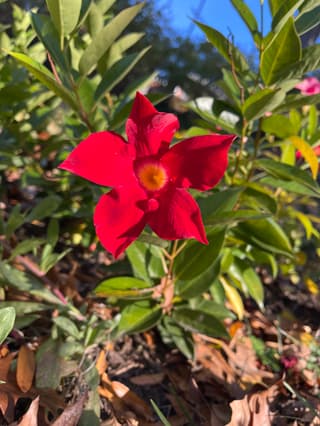
Mandevilla
Mandevilla
Mandevilla is a genus of tropical flowering vines in the Apocynaceae family, native to Central and South America. Species such as Mandevilla sanderi are widely grown for their glossy evergreen foliage and abundant trumpet-shaped flowers that bloom from late spring through fall on trellises, fences, and in hanging baskets.
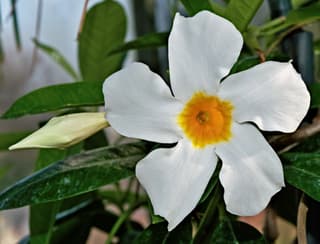
White Rock Trumpet
Mandevilla boliviensis
The White Rock Trumpet (Mandevilla boliviensis) is an evergreen woody vine in the Apocynaceae family, native to Bolivia and Ecuador. It produces white, funnel-shaped flowers with a bright yellow throat that appear nearly year-round in warm climates. It is widely grown to cover trellises, pergolas, and fences in tropical and subtropical gardens.
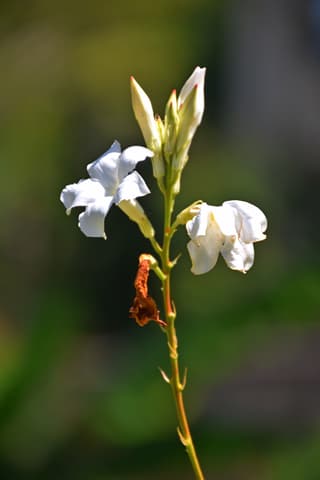
Chilean Jasmine
Mandevilla laxa
Chilean Jasmine (Mandevilla laxa) is a vigorous deciduous twining vine native to Bolivia, northwestern Argentina, and Peru. It produces clusters of funnel-shaped, creamy-white flowers with an intense vanilla fragrance — especially noticeable in the evenings — throughout summer and into fall. The milky white sap can irritate skin on contact.
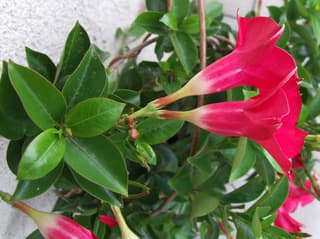
Mandevilla
Mandevilla sanderi
Mandevilla is a genus of tropical flowering vines in the Apocynaceae family, native to Central and South America. Species such as Mandevilla sanderi are widely grown for their glossy evergreen foliage and abundant trumpet-shaped flowers that bloom from late spring through fall on trellises, fences, and in hanging baskets.
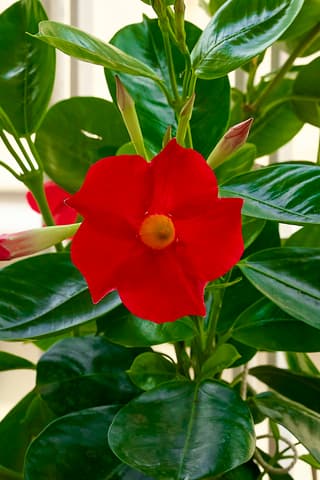
Mandevilla
Mandevilla splendens
Mandevilla splendens, widely sold in nurseries as Dipladenia, is a tropical evergreen twining vine in the Apocynaceae family, native to southeastern Brazil. Its trumpet-shaped, pale pink flowers deepen to rose as they age and bloom from spring through fall, attracting hummingbirds. The milky sap is mildly toxic and can irritate skin and eyes, so wear gloves when pruning.
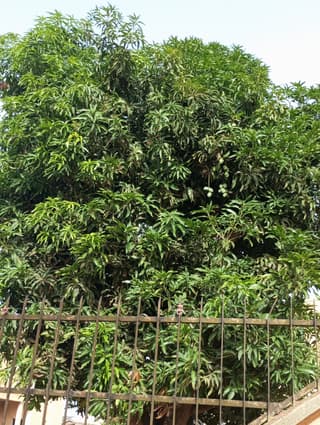
Mango Tree
Mangifera indica
The mango tree (Mangifera indica) is a tropical fruit tree native to South Asia, particularly India, where it has been cultivated for over 4,000 years. It belongs to the family Anacardiaceae and can reach up to 30 meters in height under ideal conditions. Widely regarded as the "King of Fruits," it holds immense cultural, economic, and culinary importance across the tropical world.

Cassava
Manihot esculenta
Cassava (Manihot esculenta) is a perennial shrub in the Euphorbiaceae family, native to South America and cultivated for millennia by indigenous peoples as an essential source of carbohydrates. It features deeply lobed palmate leaves, woody stems, and starchy tuberous roots that constitute the edible part of the plant. It is one of the most important food crops in the tropics, adapting well to poor soils and drought periods. Warning: all raw parts of the plant, especially the roots and leaves, contain cyanogenic glycosides and are toxic—they must only be consumed after being peeled and thoroughly cooked.
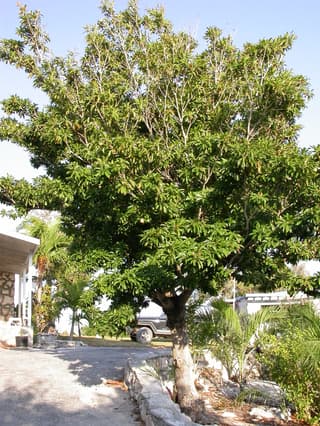
Sapodilla
Manilkara zapota
The sapodilla (Manilkara zapota) is an evergreen fruit tree in the Sapotaceae family, native to southern Mexico, the Yucatan, and Central America. In the wild, it can exceed 30 m in height, though cultivated specimens are usually kept between 9 and 15 m. Its foliage is dense and glossy dark green, its bell-shaped whitish flowers are inconspicuous, and its fruit—with sweet pulp and a grainy texture—is highly prized in tropical cuisine. Historically, the latex from its bark (chicle) was the basis for Mayan chewing gum.
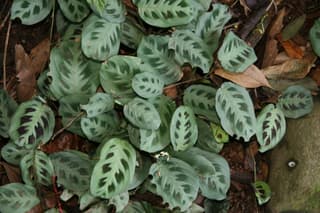
Prayer Plant (genus)
Maranta
Maranta is a genus of tropical plants in the family Marantaceae, native to tropical Central and South America. Best known for M. leuconeura (the prayer plant), the genus is celebrated for its striking patterned foliage and the fascinating nyctinastic movement of folding leaves upward at night.

Arrowroot
Maranta arundinacea
Maranta arundinacea, commonly known as arrowroot, is a tropical rhizomatous perennial herb native to the West Indies, Central America, and northern South America. Grown both as an ornamental foliage plant and as a food crop, its starchy underground rhizomes are processed into a fine, easily digestible, gluten-free starch used in cooking and baking. The plant forms clumps of broad, glossy, mid-green oval leaves and produces small white flowers in spring and summer.
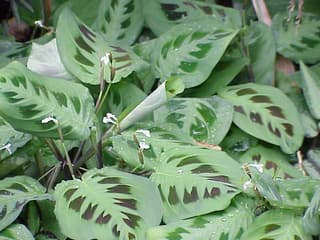
Prayer Plant
Maranta leuconeura
Maranta leuconeura is a tropical plant native to Brazilian rainforests, prized for its decorative leaves with unique colorful vein patterns. Its common name "Prayer Plant" comes from the nyctinastic movement of its leaves, which fold upward at night like hands in prayer and open during the day to absorb light.
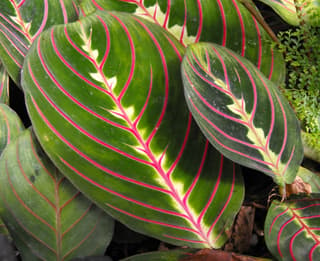
Red Prayer Plant
Maranta leuconeura var. erythroneura
The Red Prayer Plant (Maranta leuconeura var. erythroneura) is one of the most striking members of the Marantaceae family, native to the tropical rainforests of Brazil. Its deep green, herringbone-patterned leaves are laced with vivid red veins, making it a true living work of art. The nickname "prayer plant" comes from its daily leaf movement: the leaves open flat during the day to capture light and fold upward at night like praying hands, a phenomenon called nyctinasty.

Rabbit's Foot Prayer Plant
Maranta leuconeura var. kerchoveana
A tropical evergreen perennial from the Brazilian rainforest floor, prized for its velvety, oval leaves patterned with dark blotches resembling rabbit tracks along the midrib. Like all prayer plants, its leaves rise and fold together at night and lie flat again during the day, an unusual light-driven behavior called nyctinasty.
Marasmius oreades
Marasmius oreades
Marasmius oreades, commonly known as the fairy ring mushroom, is a basidiomycete fungus that grows in lawns, forming characteristic circular rings. It has a small cap, 2 to 5 cm in diameter, with a color ranging from cream to pale tan. It is famous for its ability to completely desiccate during dry periods and 'revive' after rain, maintaining its structure and ability to release spores. It is an edible mushroom of excellent quality, with a sweet taste and an aroma reminiscent of almonds.
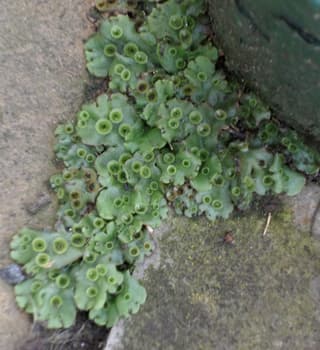
Common Liverwort
Marchantia polymorpha
Common Liverwort (Marchantia polymorpha) is a widespread bryophyte characterized by a flat, ribbon-like thallus that forms dense, green mats on moist, nutrient-rich soil. It is often the first plant to establish itself after fire or soil disturbance and is also used as an indicator of high soil moisture and poor drainage in nurseries and greenhouses. The species reproduces both sexually, via spores from umbrella-shaped reproductive organs (gametophores), and asexually, via gemmae formed in cup-like structures on the upper surface of the thallus.
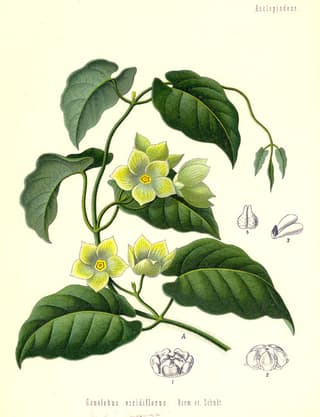
Condurango
Marsdenia
Marsdenia is a tropical genus of vines and shrubs in the family Apocynaceae, comprising around 69 species distributed across Asia, Africa, Australia, and the Americas. Best known is M. cundurango (condurango), a woody Andean vine used for centuries in traditional medicine. The genus produces fragrant tubular flowers and heart-shaped velvety leaves, making several species popular ornamentals.

Nardoo
Marsilea mutica
Marsilea mutica is an aquatic or semi-aquatic fern native to Australia and New Caledonia, naturally found in swamps and shallow freshwater. Its leaves resemble a four-leaf clover, featuring a yellowish-green variegated pattern with a reddish-brown arched band, and can either float on the water's surface or grow emergent above waterlogged substrate. It is a vigorous, fast-growing plant widely used in ponds, aquariums, and water gardens as a groundcover.
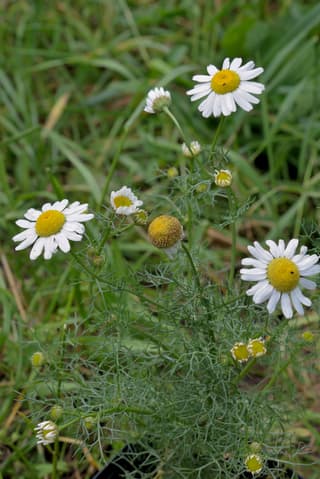
German Chamomile
Matricaria chamomilla
Matricaria chamomilla, known as German chamomile or common chamomile, is an annual herbaceous plant famous for its delicate daisy-like flowers and sweet, herbaceous aroma. It is one of the oldest and most widely used medicinal herbs by humanity, valued for its calming and digestive properties.
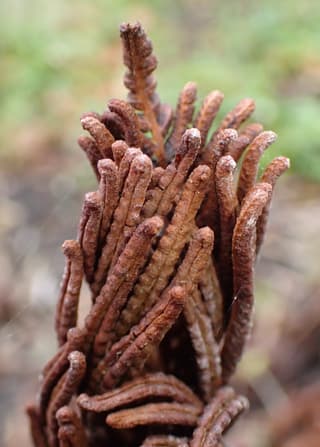
Ostrich fern
Matteuccia struthiopteris
Matteuccia struthiopteris (Ostrich fern) is a perennial, rhizomatous, and deciduous fern from the Onocleaceae family, native to temperate regions of the Northern Hemisphere (North America, Europe, Asia). It forms erect clumps of leek-green fronds arranged in a crown shape, resembling ostrich feathers, which can reach 3-5 feet (90-150 cm) in height in cultivation. It is frost-hardy (USDA zones 2-8) but requires partial to full shade and constantly moist soil rich in organic matter—it does not tolerate drought or strong sun exposure, which scorches its fronds. According to the ASPCA, the plant is non-toxic to cats, dogs, or humans. In spring, the young shoots ("fiddleheads") are harvested and consumed as a seasonal vegetable, but only after being thoroughly boiled.
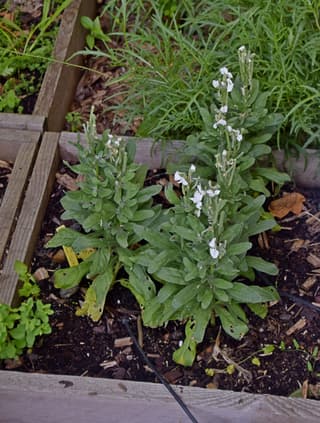
Stock
Matthiola
Matthiola, commonly known as stock or gillyflower, is a genus of flowering herbaceous plants in the Brassicaceae family, native to the Mediterranean region. Prized for their dense, fragrant flower spikes in shades of white, pink, purple, lavender and cream, they are widely grown as garden ornamentals and cut flowers, blooming from spring through summer.
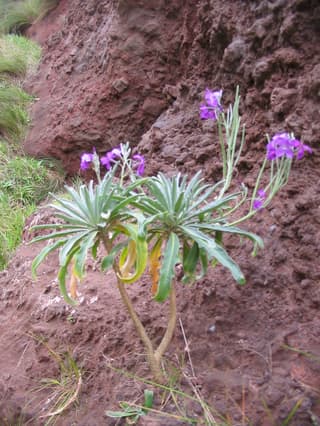
Stock Flower
Matthiola incana
Matthiola incana, commonly known as stock flower or hoary stock, is an ornamental plant from the Brassicaceae family, native to the Mediterranean region. Prized for its intensely fragrant flowers in shades of white, pink, lavender, purple, and red, it is widely grown in cottage gardens, borders, and as a cut flower. This biennial or short-lived perennial is typically treated as an annual, blooming in spring and early summer in cool, temperate climates.
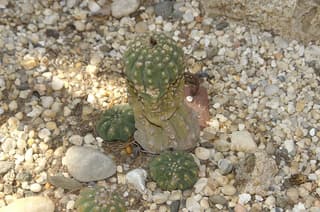
Madison Cactus
Matucana madisoniorum
Matucana madisoniorum is a small, solitary-growing, globular or slightly cylindrical cactus native to a very narrow range in the Amazon region of Peru, specifically the Marañón River valley, at elevations of only 400-1000 meters. Its grayish-green stem consists of 7-12 flat, wavy ribs, and its spination is highly variable: some individuals possess long, curved, dark brown spines, while others are completely spineless, making them easily confused with the peyote cactus (Lophophora williamsii). The funnel-shaped flowers blooming from the apical areoles are bright orange-red, or more rarely white, reaching 8-10 cm in length, and bloom in several waves during the summer. The species is listed as Critically Endangered by the International Union for Conservation of Nature (IUCN) due to habitat loss and over-collection.
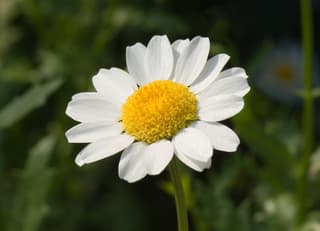
Mini Marguerite
Mauranthemum paludosum
Mauranthemum paludosum, commonly known as Mini Marguerite or Creeping Daisy, is a compact, fast-growing annual native to the western Mediterranean region, including Spain, Morocco, Algeria, Tunisia, and the Balearic Islands. Belonging to the Asteraceae family, this charming dwarf plant reaches only 20–25 cm in height and produces an abundance of small, classic daisy flowers — white ray petals radiating around a bright yellow disc centre — that open and close in response to sunlight. It thrives in cool weather, making it a popular choice for fall and winter gardens in mild climates, and spring displays in cooler regions. Its low-spreading habit and prolific blooming make it ideal for borders, rock gardens, containers, and mass plantings.
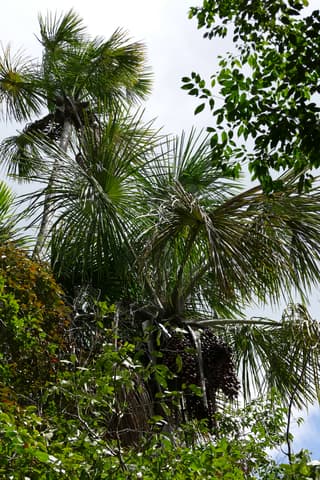
Moriche Palm
Mauritia flexuosa
The Moriche Palm (Mauritia flexuosa) is a majestic palm native to South America, particularly abundant in the wetland gallery forests (veredas) of the Brazilian Cerrado and throughout the Amazon basin. Known as the "Tree of Life" for its extraordinary utility, it can reach up to 25 meters in height and produces large, reddish-brown scaly fruits rich in beta-carotene. It is one of the most ecologically and culturally important palms of South America.
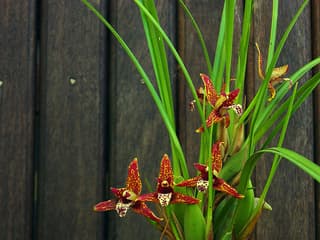
Maxillaria (genus)
Maxillaria
Maxillaria is a large genus of epiphytic Neotropical orchids in the family Orchidaceae, comprising hundreds of species from Mexico to South America. Prized for their solitary, often fragrant flowers, they grow naturally on tree trunks and branches in humid tropical forests.
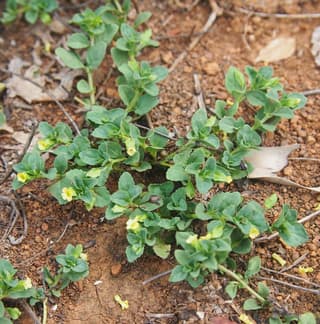
Yellow mecardonia
Mecardonia procumbens
Mecardonia procumbens is an annual or perennial herbaceous plant from the Plantaginaceae family, native to the tropical and subtropical regions of the Americas, including Mexico. It has a bushy habit with prostrate, creeping stems that form dense mats up to 60 cm in diameter. The leaves are small, oval, and deep green, while the bright yellow flowers appear from spring to fall, attracting bees and butterflies. In nature, it often grows in wet areas, on riverbanks, and in marshy soils, but it has naturalized on all continents except Antarctica due to its remarkable adaptability.
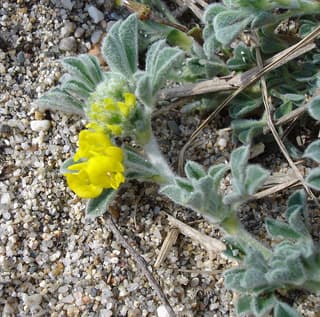
Medick
Medicago
Medicago is a genus of 87–105 species of flowering plants in the legume family Fabaceae, native to the Mediterranean Basin and extending across temperate Eurasia and sub-Saharan Africa. The genus includes alfalfa (M. sativa), one of the world's most important forage crops, and black medick (M. lupulina), a common lawn and pasture plant. Plants bear trifoliate clover-like leaves, small flowers in purple, yellow, or white, and distinctive spiral or bur-shaped seed pods. As nitrogen-fixing legumes through symbiosis with Rhizobium bacteria, they naturally enrich the soil and are cornerstone plants in sustainable agriculture.
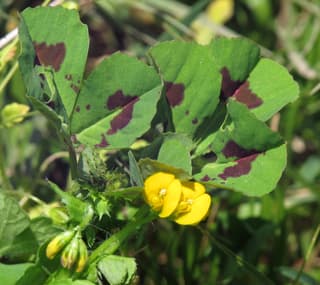
Spotted Medick
Medicago arabica
Spotted medick (Medicago arabica) is a sprawling annual herb in the legume family Fabaceae, native to the Mediterranean basin. It is easily recognized by its trifoliate leaves bearing dark purple spots and small yellow flowers that bloom from spring through summer. The plant plays an important ecological role by fixing atmospheric nitrogen through its symbiosis with Sinorhizobium medicae bacteria, making it a valuable cover crop and green manure plant.
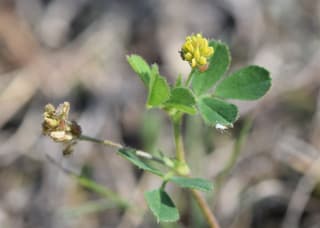
Black Medick
Medicago lupulina
Black Medick (Medicago lupulina) is an annual or short-lived perennial herb in the legume family (Fabaceae), native to Eurasia and Africa and naturalized worldwide in temperate regions. It produces small, bright yellow flowers arranged in tight globose clusters, followed by distinctive small black seed pods that give the plant its common name. A prolific nitrogen-fixer, it enriches the soil wherever it grows and provides valuable nectar for bees, butterflies, and other pollinators. It thrives in open, sunny habitats including lawns, roadsides, meadows, and disturbed ground.
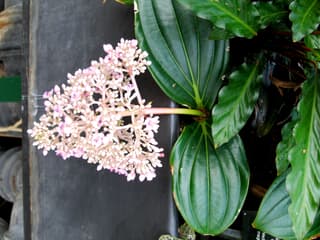
Rose Grape
Medinilla magnifica
Medinilla magnifica is a stunning tropical epiphytic shrub native to the Philippines. Known for its dramatic cascading clusters of pink flowers surrounded by large pink bracts, it is one of the most spectacular flowering houseplants. Its thick, leathery dark green leaves with prominent veins add to its ornamental appeal even when not in bloom.
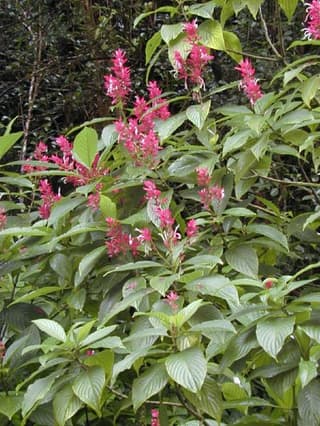
Brazilian Red Cloak
Megaskepasma erythrochlamys
Brazilian Red Cloak (Megaskepasma erythrochlamys) is a stunning tropical shrub native to Venezuela and Suriname, belonging to the Acanthaceae family. It is celebrated for its spectacular inflorescences composed of large crimson bracts surrounding small two-lipped white flowers, creating a breathtaking display in tropical and subtropical gardens. The plant can reach 2 to 3 meters in height, with large, glossy dark green oval leaves up to 50 cm long.
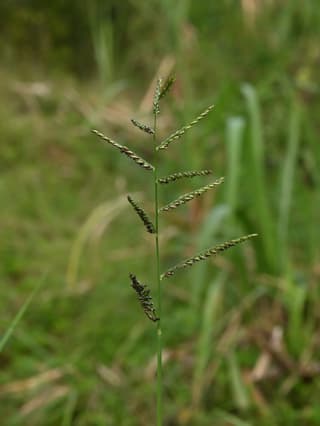
Guinea grass
Megathyrsus maximus
Megathyrsus maximus, popularly known as Guinea grass, is a large perennial grass native to Africa. It is widely recognized for its robustness, rapid growth, and formation of dense clumps. Its leaves are long and linear, and its inflorescences occur in open, branched panicles. Although it is one of the world's main tropical forages, it is also used in degraded area recovery projects and as a visual barrier in large gardens.
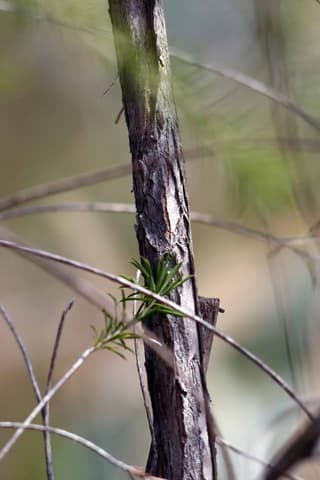
Bracelet Honey Myrtle
Melaleuca armillaris
Melaleuca armillaris, commonly known as the bracelet honey myrtle, is a large evergreen shrub or small tree native to southern Australia (South Australia, Victoria, and Tasmania). It can reach 15 to 30 feet (4.6 to 9 meters) in height with a similar spread and is characterized by grey, papery bark that peels in strips, fine needle-like foliage of intense green, and spectacular cylindrical spikes of creamy-white flowers, resembling bottlebrushes, which bloom in spring and summer. Its species name 'armillaris' (from the Latin for bracelet) refers to the ring-like arrangement of its fruit capsules along the branches. Very hardy, it tolerates drought, wind, salt spray, and air pollution, making it an excellent windbreak or screening hedge in Mediterranean and coastal gardens. Its abundant nectar-rich flowering attracts honeyeaters, native bees, and many other pollinators. Its essential oil, rich in 1,8-cineole, possesses antibacterial and antifungal properties recognized by several scientific studies.
Crimson bottlebrush
Melaleuca citrina
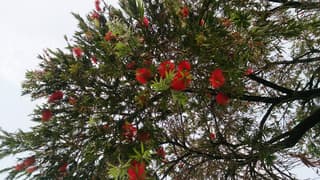
Melaleuca citrina, commonly known as crimson bottlebrush, is an evergreen shrub or small tree native to eastern Australia and endemic to coastal regions of New South Wales and Victoria. It belongs to the Myrtaceae (myrtle) family and was among the first Australian plants cultivated outside the country (introduced to England in 1770). The plant is renowned for its striking bright red flower spikes that bloom primarily in summer, attracting honeyeaters, spinebills, and other birds. The lanceolate evergreen leaves release a pleasant citrus-like fragrance when brushed or crushed.
Weeping Bottlebrush
Melaleuca viminalis
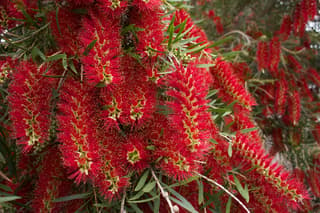
The Weeping Bottlebrush (Melaleuca viminalis) is a fast-growing evergreen shrub or small tree native to eastern Australia, prized for its graceful, pendulous branches and vivid crimson-red bottlebrush-shaped flower spikes that bloom from spring through summer. Its narrow, leathery leaves create a soft, weeping canopy that attracts hummingbirds, bees, and butterflies. Hardy and low-maintenance once established, it thrives in warm climates as a specimen tree, hedge, or screen planting.
Wood Cow-wheat
Melampyrum nemorosum
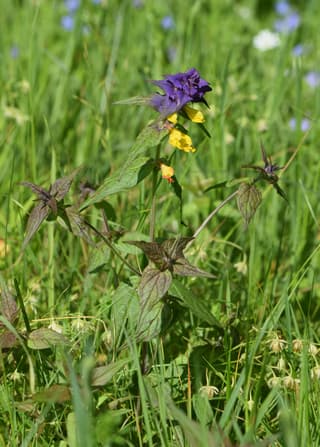
Melampyrum nemorosum is a striking annual hemiparasitic wildflower native to European woodlands and their edges, from Central to Eastern Europe. It is instantly recognisable by its dramatic two-tone display: tubular golden-yellow flowers nestled among vivid purple-blue upper bracts — a combination so distinctive it earned it the folk name "Night and Day" across many European languages. As a facultative root hemiparasite in the family Orobanchaceae, it obtains supplementary water and minerals from neighbouring host plants (typically grasses, sedges, or herbaceous woodland species) via haustoria, while still performing photosynthesis. In Slavic tradition the plant is known as 'Ivan-da-Marya', a symbol of the union of opposites: the yellow flowers representing the masculine (Ivan) and the purple bracts the feminine (Maria). It typically grows 15–50 cm tall, preferring moist, humus-rich, slightly acidic soils in semi-shaded habitats such as woodland margins, scrubby meadows, and calcareous grassland edges.
Find the Perfect Plant
Our plant guide helps you find ideal species for your experience level and time of year.
Browse by Difficulty, Season & More
Use the filters below to narrow this catalog by care difficulty, season, environment, or search directly by name. Each filter leads to a focused list tailored to your specific growing conditions.