Complete Plant Guide
Explore plants by difficulty, season and more. Find the perfect plant for you.
Difficulty
Categories
Plants by City
🗺️ Plants by City3454 plants found
Showing 289-324 of 3454
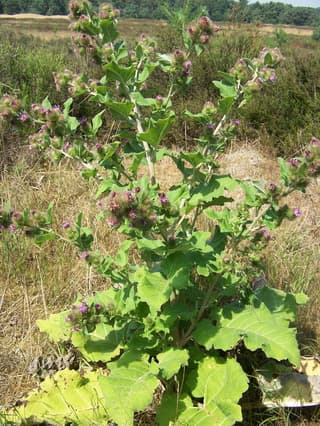
Wood Burdock
Arctium nemorosum
Arctium nemorosum, known as wood burdock, is a robust biennial herb in the daisy family (Asteraceae), native to woodlands and shaded, disturbed ground across Europe and into the Caucasus, generally on calcium-rich soils. In its first year it forms a low rosette of large, downy, heart-shaped leaves; in its second year it sends up a tall flowering stem, often over 2 metres high, topped with clusters of thistle-like purple-pink flowerheads from midsummer into autumn. The flowerheads ripen into the familiar hooked burrs that catch on fur and clothing to disperse seed.
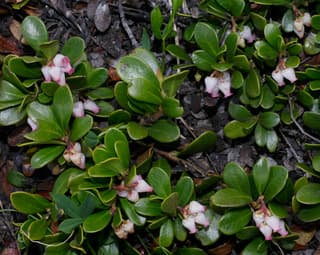
Bearberry
Arctostaphylos uva-ursi
Bearberry (Arctostaphylos uva-ursi) is an evergreen, mat-forming groundcover shrub belonging to the Ericaceae family. Native to circumpolar regions and temperate mountains across the Northern Hemisphere, it forms a dense carpet of creeping woody stems with leathery, glossy leaves that turn bronze in the fall. In spring, it is covered with delicate pale pink to white bell-shaped flowers, followed in autumn by bright red berries that are highly favored by bears and birds. A very hardy plant, it tolerates extreme cold down to -20°C (-4°F) and thrives in poor, dry soils.
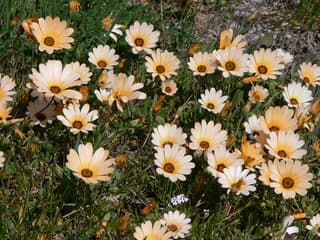
Silver Arctotis
Arctotis stoechadifolia
The Silver Arctotis (Arctotis stoechadifolia) is a sprawling perennial plant native to the coastal dunes and sandy plains of the Western Cape in South Africa, specifically the area between Langebaan and the Cape Peninsula. Its woody-based, spreading stems can cover the ground up to 1.2 meters wide, while the flowering shoots rise only 30-35 cm high. Its narrow, lance-shaped, slightly toothed leaves are covered in white-woolly, silvery hairs that protect the plant from wind and salty sea air. Its large, simple, daisy-like flowers are creamy white with a reddish-maroon tint underneath, and their centers are a striking dark blue-black. The flowers open during the day and close at dusk.
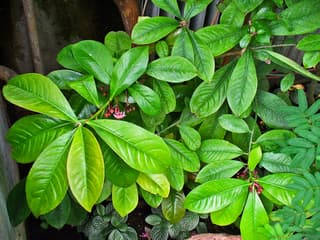
Coralberry
Ardisia
Ardisia is a genus of evergreen shrubs prized for their glossy, leathery foliage and clusters of red or coral berries that persist through winter. Slow-growing and long-lived, these plants make excellent houseplants as well as shade-garden shrubs in warmer climates, offering a striking contrast between delicate white or pink blooms and their showy fruit.
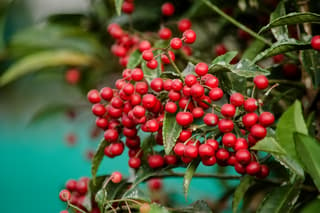
Coral Berry
Ardisia crenata
An evergreen shrub native to East Asia (China, Japan, Taiwan), Ardisia crenata is primarily cultivated for its striking coral-red berries, which remain decorative on the plant for several months, often through the winter. The leaves are glossy, leathery, and have wavy-crenate margins; in summer, small white or pink star-shaped flowers appear in drooping clusters, followed by the characteristic berries. It is widely popular as a Christmas gift in Europe, but caution is advised: all parts of the plant, particularly the berries, are toxic if ingested by humans or pets and can cause gastrointestinal distress.
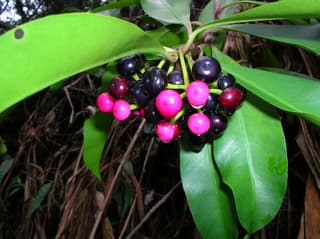
Shoebutton ardisia
Ardisia elliptica
Tropical evergreen shrub native to the western coast of India, Sri Lanka, Indochina, Malaysia, Indonesia, and New Guinea. Grows 1.5–3 meters indoors with glossy, dark-green coriaceous foliage. Produces small pale-pink to white flowers in spring in compact clusters. Flowers are followed by distinctive drupes (5–9mm across) that progress from green to brilliant red when immature, eventually turning deep purple-black at maturity, persisting on the plant for months. Highly invasive in many tropical regions including Florida and Hawaii due to rapid seed multiplication via bird dispersal. Listed as a noxious weed in several jurisdictions.
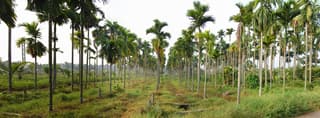
Betel Nut Palm
Areca catechu
The Betel Nut Palm (Areca catechu) is a slender tropical palm native to Southeast Asia, widely cultivated for its fruit, the areca nut. It can reach up to 20 meters tall with a graceful trunk and arching deep-green fronds. It is one of the most widely cultivated palms in the world, holding immense cultural and economic significance across tropical Asia.

Mountain Sandwort
Arenaria montana
Mountain Sandwort is a low-growing, evergreen perennial cushion-forming shrub from the carnation family (Caryophyllaceae), originating from the mountainous regions of southwestern Europe and northwestern Africa – from the Pyrenees across Portugal to northern Morocco. It forms dense clumps with narrow, lance-shaped, grey-green leaves that are completely covered by a profusion of tiny white flowers from spring to summer. In nature, it grows on rocky slopes, heathlands, and forest edges at altitudes of 400–1850 m, which explains its requirement for permeable, poor soil and excellent drainage. Due to its low maintenance and long flowering period, it is popular as a groundcover plant for rock gardens, gravel beds, and cracks between paving stones.
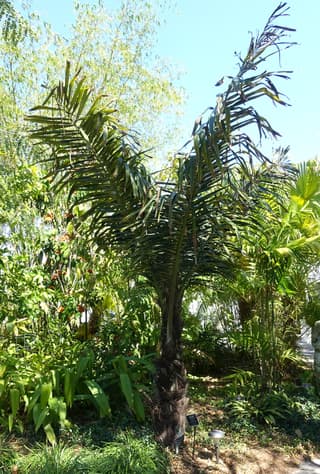
Sugar Palm
Arenga pinnata
The Sugar Palm (Arenga pinnata) is a majestic tropical palm native to Southeast Asia, particularly Malaysia and Indonesia. Its pinnate fronds can reach up to 8.5 meters long, making it one of the most dramatic palms in tropical horticulture. A hapaxanthic species, it flowers once over several years then dies. Beyond its ornamental value, it is one of the most economically important palms in the world, yielding sugar, wine, fiber, starch, and edible fruits.
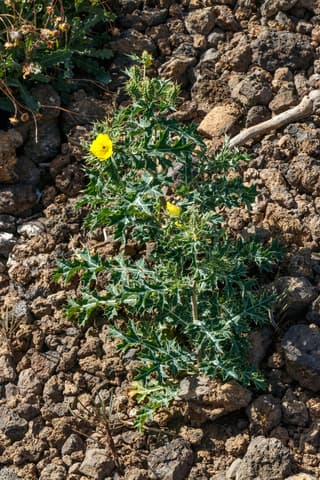
Mexican prickly poppy
Argemone mexicana
Argemone mexicana, commonly known as the Mexican prickly poppy or cardosanto, is an annual (sometimes biennial) herb in the Papaveraceae family. Native to Mexico, it is now widely naturalized in tropical and subtropical regions worldwide. It is an extremely resilient pioneer plant, featuring an erect, branched stem and spiny, grayish-green leaves with whitish veins, resembling a thistle. It produces showy flowers with yellow petals and, when cut, releases a characteristic yellow latex. It grows spontaneously along roadsides, in vacant lots, and on degraded soils, tolerating drought and poor soils exceptionally well.
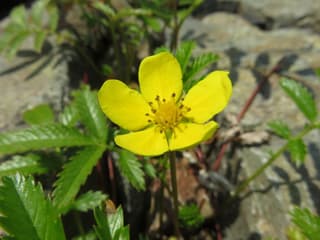
Silverweed
Argentina anserina
Argentina anserina, commonly known as silverweed, is a perennial herbaceous plant belonging to the Rosaceae family. It grows at low altitudes, forming low-growing mats thanks to creeping red stolons that can reach up to 80 cm in length. The pinnate leaves, 10–20 cm long, are covered with a dense, silvery silky down that gives the plant its characteristic shimmering appearance. In summer, it produces bright yellow five-petaled flowers about 2 cm in diameter on erect stems of 5–15 cm. It spreads rapidly in moist, sandy, or clay soils, often colonizing meadows, roadsides, and coastal areas.
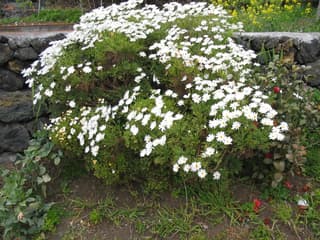
Marguerite Daisy
Argyranthemum frutescens
Marguerite Daisy (Argyranthemum frutescens) is a perennial shrub native to the Canary Islands, Spain. Celebrated for its cheerful daisy-like flowers with white, yellow, or pink petals surrounding bright yellow centers, this ornamental plant brings abundant color to gardens, balconies, and containers throughout spring, summer, and fall.
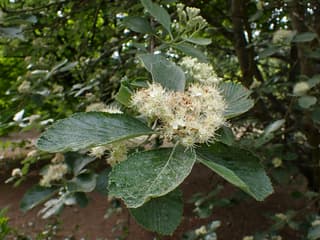
Whitebeam
Aria edulis
The whitebeam (Aria edulis, synonym Sorbus aria) is a deciduous tree in the Rosaceae family, native to Europe, North Africa and western Asia. It forms a compact, domed crown with oval, serrated leaves that are dark green and glossy above, and covered in a felty white-grey down beneath, giving the tree its common name. Cream-white flowers appear in clusters in spring, followed in autumn by scarlet berries that only become palatable once "bletted" (softened by frost or storage).
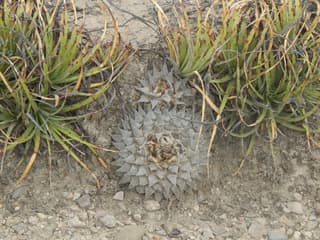
Living Rock Cactus
Ariocarpus
Ariocarpus is a genus of slow-growing, spineless cacti native to the limestone deserts of northern and central Mexico and southern Texas. Its thick, star-shaped tubercles are covered in a grey-brown, warty skin that mimics the surrounding rock and gravel almost perfectly, a camouflage strategy that protects it from grazing animals in the wild. Most of the plant body sits at or below soil level, anchored by a large taproot, with only the crown visible above ground. Woolly tufts of hair nestle between the tubercles, and in late summer or autumn mature plants produce showy white, pink, magenta, or purple daisy-like flowers from the center of the rosette.
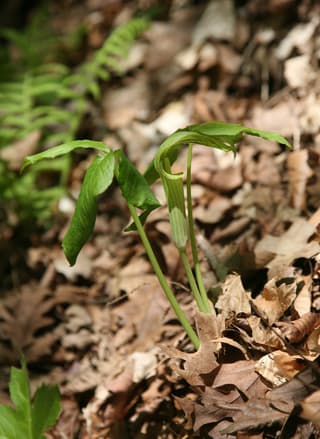
Jack in the pulpit
Arisaema
Arisaema is a genus of approximately 150 species of woodland tuberous aroids native to Asia and North America. They are celebrated for their unique hooded inflorescences (spathe and spadix) and exotic foliage. Plants go dormant in winter and re-emerge vigorously each spring. The most well-known species is A. triphyllum, commonly called Jack in the pulpit.
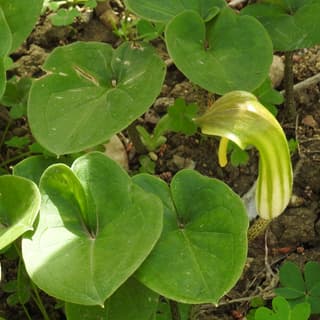
Friar's Cowl
Arisarum vulgare
Friar's Cowl (Arisarum vulgare) is a low-growing, rhizomatous perennial in the arum family (Araceae), native to the Mediterranean Basin -- southern Europe, North Africa, and parts of the Caucasus. It rarely exceeds 30 cm in height and forms clumps of glossy, heart- to arrow-shaped basal leaves that sometimes carry faint silvery markings. Its most distinctive feature is the flower: a purplish-brown and white striped spathe curls forward into a hood, resembling a monk's cowl, and encloses a fleshy spadix bearing tiny purple flowers. It blooms from autumn through spring and spreads readily via underground rhizomes, making it a useful woodland ground cover.
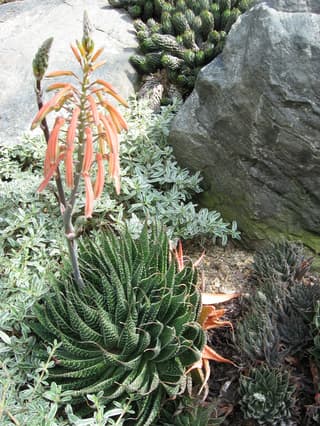
Lace Aloe
Aristaloe aristata
Aristaloe aristata, commonly known as Lace Aloe or Torch Plant, is a compact succulent native to South Africa and Lesotho. Its dark green triangular leaves are adorned with white tubercles and ciliate margins, forming dense, elegant rosettes. In summer and fall it produces tubular orange-red flowers highly attractive to hummingbirds.
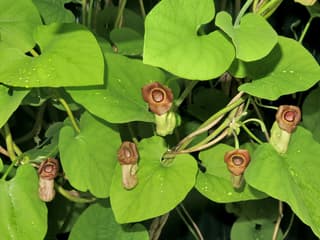
Dutchman's Pipe
Aristolochia
Aristolochia is a large genus of about 350 climbing and herbaceous plants in the family Aristolochiaceae, prized for their curious pipe- or trumpet-shaped flowers in brown, yellow, green and purple tones. Species range from cold-hardy temperate vines like A. macrophylla to tender tropical climbers. All parts of the plant contain aristolochic acid, a compound now known to be nephrotoxic and carcinogenic, so it should be handled with care and kept away from children and pets.
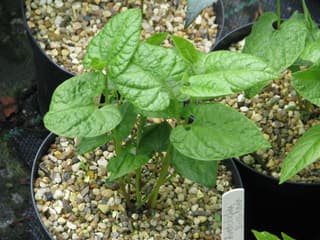
Virginia Snakeroot
Aristolochia serpentaria
Aristolochia serpentaria, commonly known as Virginia Snakeroot, is a low-growing woodland perennial herb native to the eastern United States. It produces distinctive curved, pipe-shaped flowers and heart-shaped leaves. Historically prized as a medicinal plant by Indigenous peoples and early settlers, it contains aristolochic acids now known to be toxic.
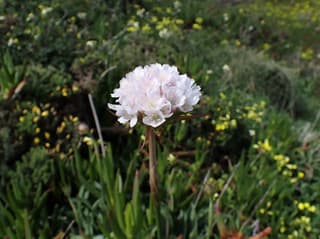
False Sea Thrift
Armeria pseudarmeria
Armeria pseudarmeria (False Sea Thrift) is an evergreen, clump-forming perennial from the coastal cliffs of Western Portugal and Spain, belonging to the Plumbaginaceae family. It features broad, sword-shaped leaves and spherical flower heads on slender stems, ranging from white to deep pink, blooming in late spring and summer. Hardy and long-lived, it thrives in poor, well-drained soil where many other plants struggle.
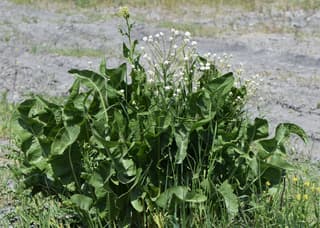
horseradish
Armoracia rusticana
Armoracia rusticana, commonly known as horseradish, is a hardy perennial plant of the family Brassicaceae. It is primarily cultivated for its thick, pungent white taproot. The plant features large, emerald-green, dock-like leaves and produces clusters of small white flowers on tall stalks during the summer. It is a vigorous grower that can become invasive if not managed properly.
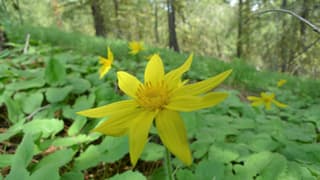
Heart-leaf arnica
Arnica cordifolia
Arnica cordifolia, or heart-leaf arnica, is a perennial herbaceous plant native to the coniferous forests and mountain meadows of western North America, found between 1,500 and 3,300 m in altitude. Recognizable by its opposite heart-shaped leaves and bright yellow flower heads, it spreads via creeping rhizomes and can live for about ten years. Moderately fire-resistant, it regrows from its rhizomes after a fire and serves as an important food source for mule deer and elk. Toxic if ingested (causing nausea and heart issues), it should be reserved for external use only and kept out of reach of children and pets.
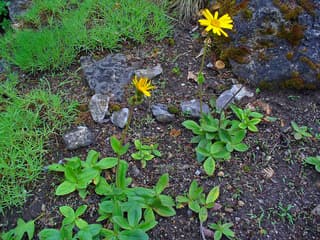
Arnica
Arnica montana
Arnica montana is a perennial herbaceous plant native to the mountainous regions of central and southern Europe, including the Alps, Pyrenees, and Carpathians. Revered for centuries in European folk medicine, it produces bright yellow, daisy-like flowers in summer. It is legally protected in several European countries due to overharvesting. The entire plant is toxic if ingested, but flower extracts are widely used in topical preparations to relieve bruising, muscle soreness, and inflammation.
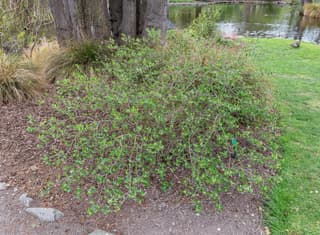
Black chokeberry
Aronia melanocarpa
Black chokeberry (Aronia melanocarpa) is a deciduous shrub in the rose family (Rosaceae), native to eastern North America. It grows to a height of approximately 1–3 m and a similar width, forming dense, multi-stemmed clumps. In spring, it produces small white to pinkish flowers in corymb-like clusters, followed by glossy dark purple to black fruits in autumn and vibrant red fall foliage. The fruits are edible, though quite astringent when raw, and are known for their high antioxidant (anthocyanin) content.
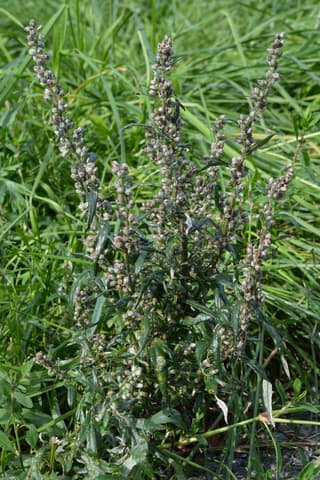
Mugwort
Artemisia
Artemisia is a large genus of aromatic herbs and subshrubs in the daisy family (Asteraceae), with over 500 species found mainly across the temperate Northern Hemisphere. The genus includes well-known plants such as wormwood (Artemisia absinthium), common mugwort (Artemisia vulgaris), and tarragon (Artemisia dracunculus). Foliage is typically silvery-grey to green, finely divided, and strongly aromatic, while flowers are small, inconspicuous, and yellowish or whitish, borne in clusters in late summer and fall. Artemisia species are rugged, low-maintenance plants traditionally valued for medicinal, aromatic, and ornamental uses.

Field Wormwood
Artemisia campestris
Artemisia campestris, commonly known as field wormwood or field sagewort, is a hardy perennial herb in the daisy family (Asteraceae). Native to Europe, Asia, and North America, it forms low mounds of finely divided, silvery-green aromatic foliage topped by tiny yellowish-green flower heads in late summer. Valued for its drought tolerance and resilience in poor, sandy soils, it thrives in open meadows, dunes, and rocky ground.
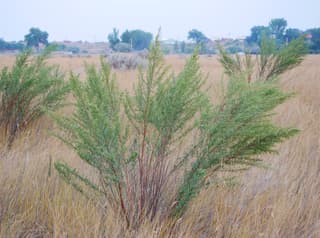
Tarragon
Artemisia dracunculus
Tarragon (Artemisia dracunculus) is a perennial aromatic herb in the Asteraceae family, native to Central Asia and Eastern Europe. Prized in European cuisine — especially French cooking — it is distinguished by its characteristic anise-like flavor. It forms compact clumps of narrow, gray-green leaves and goes dormant in winter, resprouting vigorously each spring.
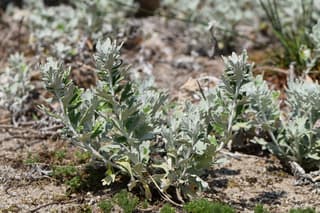
Beach Wormwood
Artemisia stelleriana
Artemisia stelleriana is a silver-leaved herbaceous perennial native to northeastern Asia, naturally found on coastal dunes and sandy habitats. Its densely white-hairy foliage gives it a distinctive silvery appearance, making it a popular ornamental ground cover for sunny, dry gardens.
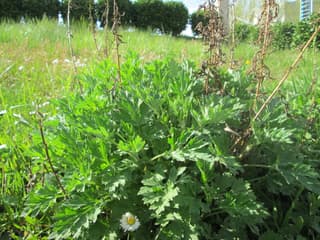
Mugwort
Artemisia vulgaris
Artemisia vulgaris is a tall, aromatic perennial herb in the daisy family (Asteraceae), native to Europe and Asia and now naturalized worldwide. It forms clumps of deeply lobed, dark green leaves with silvery, woolly undersides, and produces panicles of small greenish-yellow to reddish-brown flowers from mid-summer into fall. Mugwort spreads aggressively by rhizomes and is considered invasive in many regions, so it is best grown in containers or contained beds.
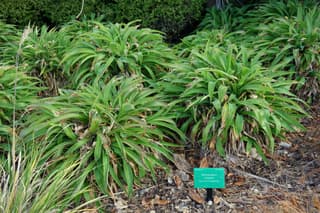
Rock Lily
Arthropodium cirratum
Arthropodium cirratum, commonly known as rock lily or rengarenga, is an evergreen rhizomatous perennial endemic to New Zealand's coastal cliffs and rocky headlands. It forms clumps of glossy, strap-like leaves topped in early summer by branching stalks of small white, six-petalled flowers with purple-and-yellow stamens. Traditionally an important food and medicine plant for Maori, its fleshy rhizomes were cooked and eaten, and its leaves and roots were used to treat wounds and skin ailments. Today it is a popular, low-maintenance ornamental for coastal and shaded gardens worldwide.
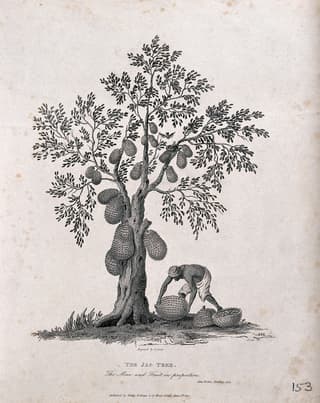
Breadfruit
Artocarpus
Artocarpus is a genus of approximately 60 species of tropical trees in the family Moraceae, native to Southeast Asia and the Pacific Islands. The most famous species are jackfruit (A. heterophyllus), which bears the largest fruit of any tree in the world, and breadfruit (A. altilis), a staple food across the Pacific. All species produce milky latex sap and feature large, ornamental leaves.
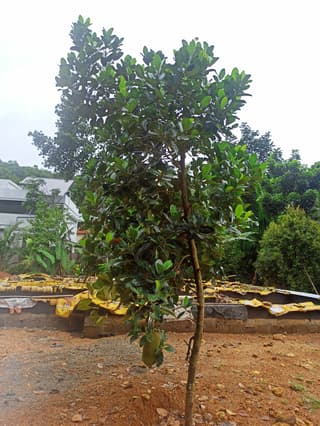
Jackfruit Tree
Artocarpus heterophyllus
Artocarpus heterophyllus, commonly known as the jackfruit tree, is a tropical fruit tree native to the Western Ghats of India. Belonging to the Moraceae family, it is renowned for bearing the largest tree-borne fruit in the world. It can grow up to 30 meters tall and thrives in tropical and subtropical climates across Asia, Africa, and the Americas.
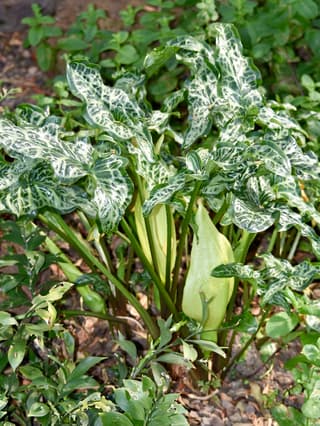
Arum / Cuckoo Pint (genus)
Arum
Arum is a genus of tuberous perennial plants in the family Araceae, native to Europe, the Mediterranean, and the Middle East. They produce arrow-shaped leaves and ornamental spathes followed by bright orange berries. All parts are severely toxic due to calcium oxalate raphides.
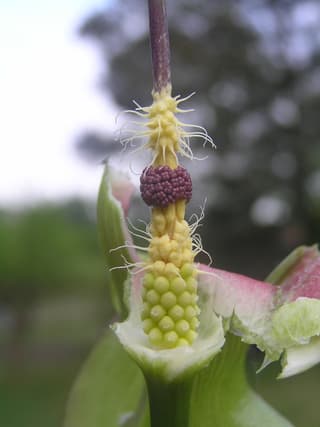
Danish Arum
Arum cylindraceum
Danish Arum (Arum cylindraceum) is a perennial tuberous plant in the arum family (Araceae), and the only Arum species native to Denmark. It grows 25-40 cm tall with spear-shaped, unspotted leaves and a characteristic inflorescence consisting of a violet spadix surrounded by a pale green spathe, blooming in May-June. The plant is found here and there on the Danish islands and in eastern Jutland, where it grows in nutrient-rich, moist forest floors, thickets, and hedges. In autumn, it produces conspicuous, poisonous red berries. The entire plant – especially the berries and tuber – contains needle-shaped calcium oxalate crystals and is highly toxic if ingested.
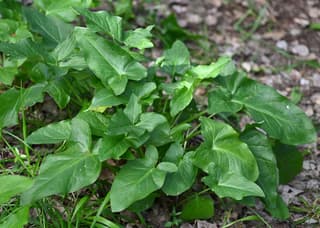
Italian Arum
Arum italicum
Italian arum (Arum italicum) is a tuberous perennial in the Araceae family, native to much of Europe, North Africa, and western Asia. It is grown for its arrow-shaped, dark green leaves — often marbled with cream or white veining — that emerge in fall and persist through winter, an unusual growth cycle for a garden perennial. In spring it produces a pale green-yellow spathe surrounding a spadix, followed in summer by a striking spike of orange-red berries. All parts of the plant, especially the berries, contain calcium oxalate crystals and are toxic if ingested. The species tolerates shade well and can naturalize aggressively, being classified as invasive in parts of the US, Australia, and New Zealand.
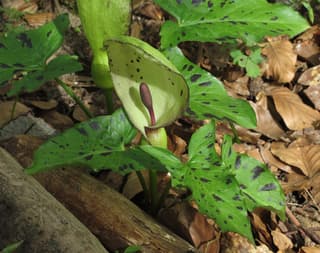
Lords-and-Ladies
Arum maculatum
A shade-loving woodland perennial in the arum family, native across most of Europe, Eastern Turkey and the Caucasus. Its glossy, arrow-shaped leaves emerge in late winter, often marked with dark purple blotches, followed in late spring by a pale green to purple-flushed spathe wrapped around a deep purple spadix. By midsummer the foliage and flower die back completely, leaving a bare stalk topped with a tight cluster of bright orange-red berries that persist into autumn. Every part of the plant -- leaves, stem, tuber and berries -- is highly toxic, packed with needle-like calcium oxalate crystals and other irritant compounds that cause intense burning of the mouth and throat if chewed or eaten.
Find the Perfect Plant
Our plant guide helps you find ideal species for your experience level and time of year.
Browse by Difficulty, Season & More
Use the filters below to narrow this catalog by care difficulty, season, environment, or search directly by name. Each filter leads to a focused list tailored to your specific growing conditions.