2742 Easy Plants | 2026 Guide - Page 67
Discover 2742 easy plants for your garden. Complete care guide.
2742 Easy Plants
Showing 2377-2412 of 2742
Common Houseleek
Sempervivum tectorum
Sempervivum tectorum is a hardy, evergreen succulent forming attractive rosettes of fleshy, blue-green leaves with reddish-purple tips. Native to European mountain regions including the Alps and Pyrenees, this resilient plant has been cultivated for centuries. The name "Sempervivum" means "live forever" in Latin, referring to its ability to produce numerous offsets. The species name "tectorum" means "of roofs," as Romans traditionally planted it on rooftops believing it protected buildings from lightning.

Iberian Houseleek
Sempervivum vicentei
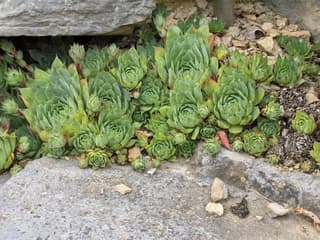
Sempervivum vicentei is a small mat-forming houseleek in the stonecrop family (Crassulaceae), native to the mountains of Spain and Portugal, where it grows among rocks at 600-2,300 m in the Cantabrian Mountains and the Central Iberian System. It forms dense cushions of stemless rosettes up to 9 cm across, made of fleshy, lance-shaped green leaves with purple tips, covered in fine glandular hairs and fringed with conspicuous marginal hairs. In summer a rosette sends up an erect, leafy stalk up to about 34 cm tall topped by a cluster of star-shaped pink to purple flowers about 2.5 cm wide. The flowering rosette then dies, but it is replaced by the young rosettes it has produced on short side runners. Three subspecies are recognised: vicentei, paui and cantabricum.
Senecio
Senecio
Senecio is one of the largest genera in the plant kingdom, with over 1,250 species in the Asteraceae family distributed worldwide. The genus includes popular ornamental succulents such as String of Pearls (S. rowleyanus), Blue Chalk Sticks (S. mandraliscae), and Dusty Miller (S. cineraria). Succulent species are prized for their drought tolerance, striking appearance, and adaptability to both indoor and outdoor settings.

Succulent Bush Senecio
Senecio barbertonicus
Senecio barbertonicus is an evergreen succulent shrub native to the Barberton region of South Africa, as well as Eswatini, Mozambique and eastern Zimbabwe, where it grows on rocky slopes at elevations up to 1,700 m. Its fleshy, light-green stems carry densely packed, cylindrical, finger-like leaves, and the plant forms a dense mounding bush that can reach 2 m (rarely 3 m) tall and wide. In winter it produces clusters of small, fragrant, golden-yellow daisy flowers at the branch tips that attract bees and butterflies.
Dusty Miller
Senecio cineraria
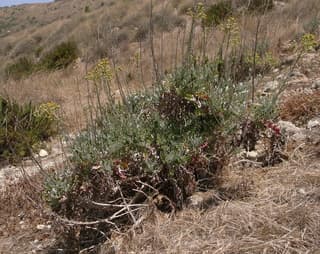
Senecio cineraria, popularly known as Dusty Miller or Silver Ragwort, is a compact, mounding perennial prized for its velvety, silver-white, deeply lobed foliage rather than its small yellow daisy-like flowers. Native to the Mediterranean coast, it thrives in full sun and poor, sandy soil, making it a low-maintenance staple in borders, containers, and xeriscaped gardens. Its felted leaves reflect heat and resist deer and rabbit browsing, pairing beautifully as a season-long foil for brighter flowering companions.
Mexican Flame Vine
Senecio confusus
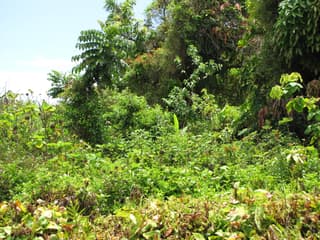
Mexican Flame Vine (Senecio confusus) is a vigorous, fast-growing evergreen climber native to Mexico and Central America. It is celebrated for its stunning, daisy-like flowers in bright orange-red hues with golden centers that bloom almost year-round in warm climates. It can reach 12 feet or more when given suitable support such as trellises, fences, or arbors. A superb attractor of butterflies, bees, and hummingbirds.
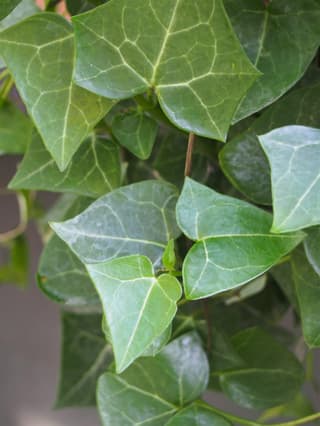
Cape Ivy
Senecio macroglossus
Senecio macroglossus, commonly known as Cape Ivy or Natal Ivy, is an evergreen succulent climber native to southern Africa, ranging from Zimbabwe and Mozambique to eastern South Africa. Its waxy, triangular leaves closely resemble true ivy but belong to the daisy family (Asteraceae). It produces cheerful yellow daisy-like flowers in summer and emits a subtle lemony scent when foliage is handled. Popular as both a trailing houseplant and an outdoor climber in warm climates.
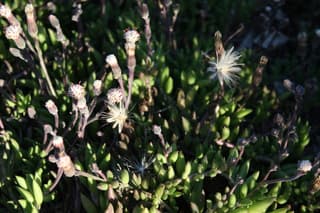
String of bananas
Senecio radicans
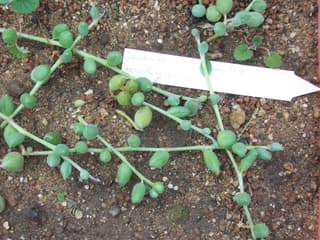
String of bananas is a trailing succulent prized for its curved, banana-shaped leaves that cascade over the edges of hanging baskets. Native to South Africa, it is a fast-growing, drought-tolerant member of the daisy family (Asteraceae), closely related to string of pearls. It produces small white flowers with a cinnamon-vanilla scent when mature.
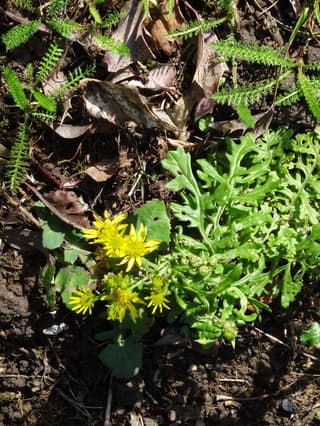
Oxford Ragwort
Senecio squalidus
Oxford Ragwort (Senecio squalidus) is a bright yellow-flowered wildflower in the daisy family Asteraceae, native to rocky volcanic slopes of Sicily and southeastern Europe. It is a short-lived perennial or biennial that naturalised spectacularly across Britain, spreading along railway lines from Oxford during the 19th and 20th centuries. Its cheerful golden daisy-like blooms appear almost year-round — from early spring through to autumn — and the plant thrives on neglect, colonising walls, rubble, and disturbed ground with ease. Although striking in appearance, all parts of the plant contain pyrrolizidine alkaloids, rendering it severely toxic to livestock, pets, and humans if ingested.
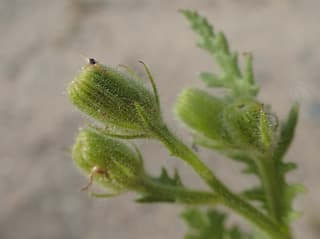
Sticky groundsel
Senecio viscosus
Senecio viscosus is a strong-smelling annual weed in the daisy family (Asteraceae), covered in sticky, glandular hairs that trap dust and grit, giving it a grayish, unkempt look. It bears small yellow, daisy-like flower heads with distinctive ray florets that curl sharply backward once open, and it typically grows to about 70 cm tall on disturbed, sandy or gravelly ground, waste places, railway edges and roadsides. Like all Senecio species it contains toxic pyrrolizidine alkaloids and should be handled with care and kept well away from children, pets and grazing livestock.
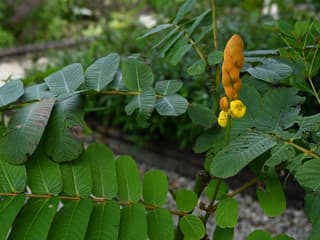
Senna / Cassia (genus)
Senna
Senna is a large genus of flowering plants in the family Fabaceae, comprising around 350 species found across tropical and subtropical regions. Notable ornamental species include Senna alata (candle bush) and S. didymobotrya, prized for their bold yellow flower spikes. Seeds and leaves contain anthraquinones with a laxative effect.
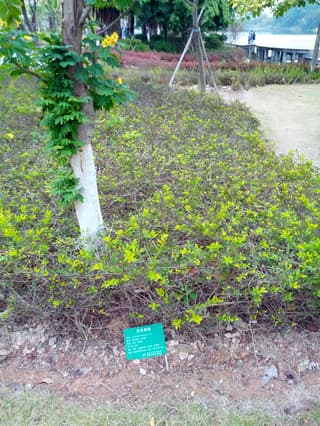
Christmas Senna
Senna bicapsularis
Senna bicapsularis, commonly known as Christmas Senna or Butterfly Bush, is a fast-growing semi-evergreen shrub native to tropical Americas. It belongs to the Fabaceae family and can reach up to 12 feet in height. Its most remarkable feature is its prolific golden-yellow flowering during fall and winter, when most other plants are dormant. Widely used in landscaping, hedgerows, and traditional medicine.
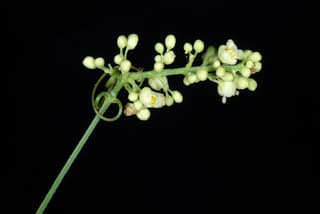
Slipplejack
Serjania
Serjania is a genus of about 250 species of vines in the soapberry family, native to the Americas from the southern United States to Argentina. They are woody-based climbers that hold on with tendrils, with compound leaves and clusters of small white or greenish-yellow flowers, often fragrant. The papery fruit has three wings and splits into pieces carried by the wind. In Brazil several species are called timbó and were used by Indigenous peoples to stun fish.
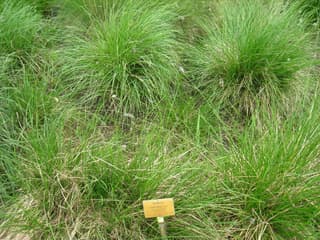
Blue moor grass
Sesleria caerulea
Blue moor grass is a low, tufted evergreen ornamental grass native to Europe, including the limestone grasslands and pavements of Great Britain and Ireland. It forms dense, neat clumps of narrow, arching leaves that are blue-green above and glossy dark green beneath, giving the plant its characteristic blue-grey cast. In spring, short purplish flower spikes rise just above the foliage, fading to a pale buff colour as they mature. A tough, low-maintenance calcicole grass, it is prized in gardens for its compact habit, year-round structure and tolerance of poor, stony, alkaline soils.
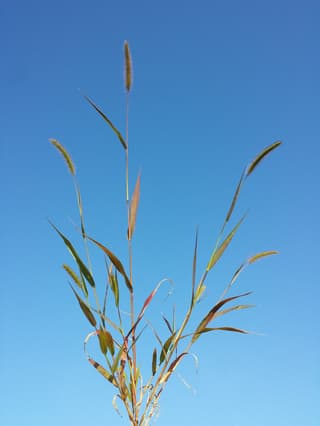
Foxtail Grass
Setaria
Setaria is a large genus of warm-season annual and short-lived perennial grasses in the Poaceae (grass) family, commonly known as foxtails or bristlegrasses for their dense, bristly, cylindrical seed heads that resemble the bushy tail of a fox. The genus includes both common weedy species -- such as green foxtail (S. viridis) and yellow foxtail (S. pumila) -- found along roadsides, fields, and disturbed soil across temperate regions worldwide, and the important cereal crop foxtail millet (S. italica), domesticated roughly 8,000 years ago along the Yellow River in China and still cultivated across Asia, Africa, and parts of Europe for grain, hay, and birdseed. As a genus-level entry, care guidance here reflects general growing conditions for Setaria species, with cultivated foxtail millet as the best-documented reference point.
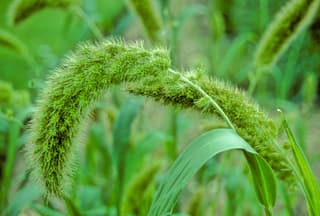
Foxtail Millet
Setaria italica
Ancient annual cereal grass domesticated in Asia from green foxtail (Setaria viridis). It forms erect stems topped by a dense, cylindrical, bristly seed head; the small grains feed people, livestock and birds.
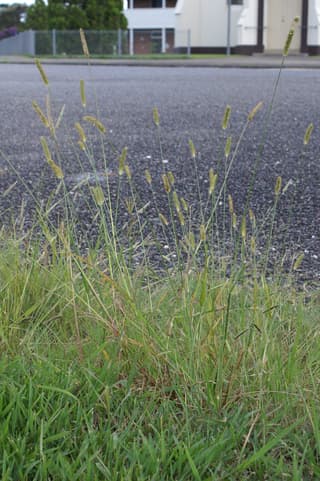
Yellow Foxtail
Setaria pumila
Yellow foxtail is an annual grass from Europe and Asia, now a common weed worldwide. It forms clumps from 20 cm to more than 1 metre tall. The seed head is a dense cylinder about 4 to 8 cm long, covered in stiff yellow to purplish bristles. It looks a lot like green foxtail, but it has long, sparse hairs on the leaf near the base. You will see it in lawns, sidewalk cracks, crop fields and roadsides. It spreads only by seed.
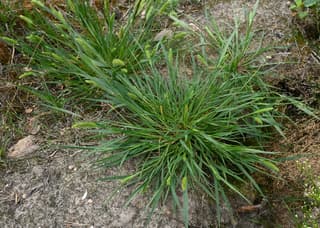
Green Foxtail
Setaria viridis
Setaria viridis, known as green foxtail or green bristlegrass, is a fast-growing annual grass native to Eurasia and now naturalized worldwide. It forms leafy tufts with slender, arching stems topped by soft, bristly, cylindrical seed heads that resemble a fox's tail. Highly adaptable, it thrives in disturbed soils, roadsides, and open fields, and is recognized by botanists as the wild ancestor of foxtail millet. Because of its short life cycle and ease of cultivation, it has also become an important model species for studying C4 photosynthesis in bioenergy grasses.
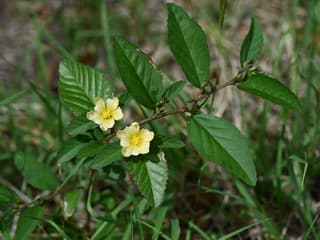
Common Wireweed
Sida acuta
Common wireweed (Sida acuta) is a perennial undershrub in the mallow family (Malvaceae), native to tropical America and now found throughout the tropics. It grows upright to about 1 m, with thin, tough stems, slimy sap and narrow, pointed, toothed leaves. The small flowers, 6-10 mm across, are pale yellow and star-shaped, borne singly or in twos and threes in the leaf axils. It is mainly a weed: it invades pastures, waste ground and roadsides, forms dense thickets and leaves a seed bank that lasts for years. Its stems are tied into brooms, and it is used in folk medicine in many countries.
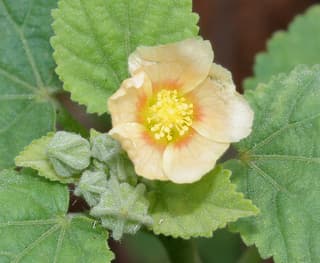
Country Mallow
Sida cordifolia
Sida cordifolia, commonly called country mallow or flannel weed, is a perennial subshrub in the mallow family (Malvaceae) native to India and now naturalized throughout the tropics and subtropics. It grows 50-200 cm tall on branched, woody-based stems, with heart-shaped, velvety leaves covered in soft white hairs and small yellow flowers, sometimes with orange centers. Long valued in Ayurvedic medicine as "Bala," it has also spread widely as a roadside and pasture weed, and is now considered invasive in parts of Africa, Australia, the southern United States, and several Pacific islands.
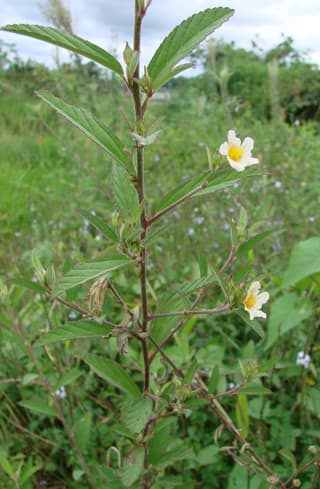
Fanpetals
Sida sp
Fanpetals (Sida sp) is a genus of herbs and subshrubs in the Malvaceae family, encompassing over 170 species native to tropical and subtropical regions of the Americas. Plants grow up to 2 meters tall with hairy, felt-like stems and small five-petaled flowers in shades of yellow, orange, or white. Several species have a long history of use in traditional medicine across Brazil, India, and Africa.
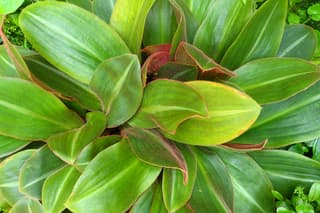
Brown Spiderwort
Siderasis fuscata
Siderasis fuscata, commonly known as Brown Spiderwort, is a perennial herbaceous plant native to the tropical rainforests of Brazil. It features broad, velvety dark green leaves with distinctive purple undersides, forming a compact rosette. Small violet-purple flowers emerge directly from the foliage during summer. An excellent low-light houseplant for those seeking exotic tropical beauty with minimal care.
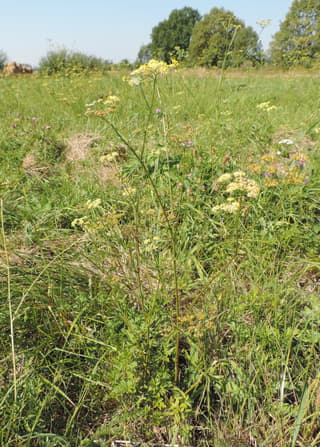
Silaum silaus
Silaum silaus
Pepper-saxifrage (Silaum silaus) is a perennial plant from the Apiaceae family, the only species of the genus Silaum. It is widespread throughout Europe to western Siberia and also grows in Croatia, in moist, unmanaged meadows and pastures on clayey, neutral to slightly alkaline soils. Its stem grows up to 100 cm, and small yellowish flowers are gathered in umbellate inflorescences that bloom from June to August. Crushed parts of the plant emit an unpleasant hydrogen sulfide odor. It is considered an indicator species of old, traditionally maintained meadows.
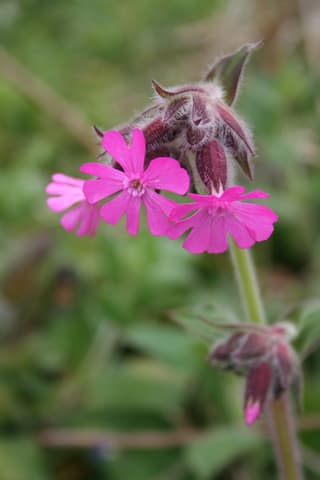
Campion
Silene
Silene is the largest genus in the Caryophyllaceae family, encompassing approximately 500–900 species of annual, biennial, and perennial flowering plants known as campions and catchflies. Native to temperate regions of the Northern Hemisphere, they are celebrated for their delicate tubular flowers in shades of pink, red, white, and purple, often with notched petals and an inflated calyx. Many species attract butterflies, hummingbirds, and other pollinators, making them valuable additions to wildflower gardens, meadows, and rock gardens.
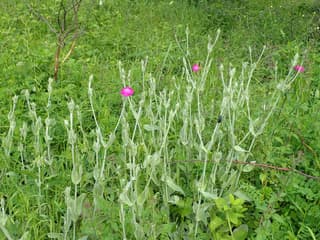
Rose Campion
Silene coronaria
Rose Campion (Silene coronaria, syn. Lychnis coronaria) is a low-maintenance, short-lived perennial or biennial from the carnation family (Caryophyllaceae), native to the Mediterranean region and Southwest Asia. The plant is renowned for the striking contrast between its silvery-grey, felted leaves and vibrant magenta, pink, red, or white flowers, approximately 2–3 cm in diameter. In its first year, it forms a basal rosette of velvety leaves; in the second year, upright, branched stems emerge, reaching a height of 60–90 cm. Thanks to its ability to self-seed, it reliably maintains its presence in the garden for many years.
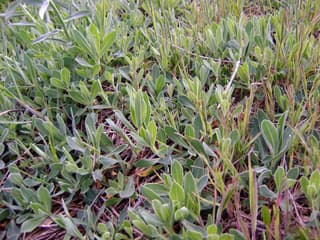
Bladder Campion
Silene vulgaris
Silene vulgaris is a herbaceous perennial in the family Caryophyllaceae, native to Europe, temperate Asia and North Africa and naturalised across much of North America. It forms clumps 50 cm to 1 m tall with grey-green leaves and a slightly woody base. From spring to late summer it opens white flowers with deeply notched petals, each sitting on an inflated, veined calyx that looks like a small bladder. In the wild it grows on roadsides, dry meadows and stony slopes.
Silphium
Silphium
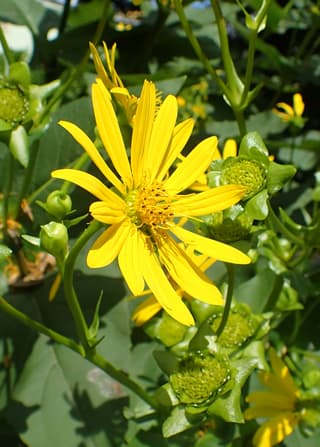
Silphium is a genus of robust, perennial prairie plants from North America, belonging to the sunflower family (Asteraceae). The genus comprises approximately 17–18 species, including the well-known Cup Plant (Silphium perfoliatum), Compass Plant (Silphium laciniatum), and Wholeleaf Rosinweed (Silphium integrifolium). These impressive perennials can reach up to 3 meters in height and bear bright yellow, sunflower-like flower heads in summer and autumn. The leaves of the Compass Plant orient themselves north-south to minimize water loss in the intense midday sun, while the Cup Plant's perfoliate leaves form natural "cups" that collect rainwater for birds and insects. Silphium species are essential for prairie biodiversity and attract a wide variety of pollinators, birds, and insects.
Milk thistle
Silybum marianum
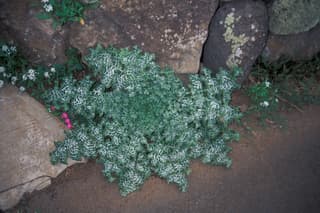
Milk thistle is an annual or biennial herb from the Asteraceae family, native to the Mediterranean region and extending to Central Asia. In its first year, it forms a basal rosette of large, glossy leaves characterized by white veins and spiny margins. It then sends up a stem 1 to 2 meters tall topped with purple flower heads that bloom in summer and are surrounded by hard spines. The seeds, equipped with white downy tufts, are dispersed by the wind, allowing the plant to self-seed easily and often behave as a weed outside its native range.
Paradise Tree
Simarouba amara
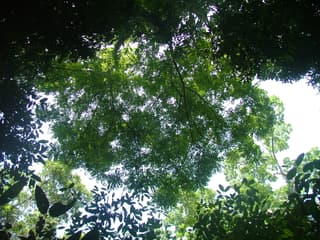
Simarouba amara, commonly known as the Paradise Tree or Bitterwood, is a majestic tropical evergreen tree native to the rainforests of Central and South America. It is distinguished by its glossy, dark green pinnate leaves and a straight trunk with smooth, greyish bark. The tree produces small, inconspicuous yellowish flowers that develop into oval drupes, which turn from red to blackish-purple when ripe. It is highly valued in its native range for its medicinal properties, particularly the bark, which contains bitter quassinoids used to treat various ailments.
Bitterwood
Simarouba glauca
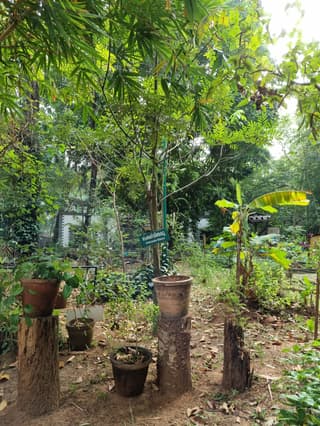
Bitterwood (Simarouba glauca) is a fast-growing evergreen tree native to Central America, the Caribbean, and southern Florida, belonging to the Simaroubaceae family. It features glossy, pinnately compound leaves that emerge reddish-orange before maturing to deep green, and clusters of small yellow-to-creamy-white flowers that bloom from late winter into spring, followed by dark purple, olive-shaped drupes. Highly adaptable, it tolerates a wide range of soils, drought, salt spray, and poor conditions once established, making it a popular shade and street tree in warm climates. Its bark and leaves have a long history of traditional medicinal use, particularly for fevers and dysentery.
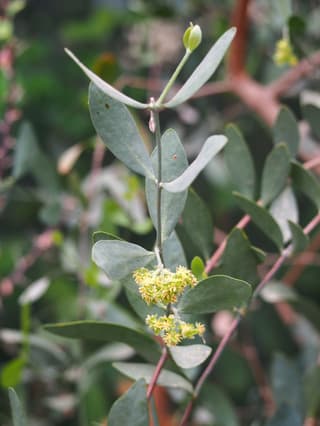
Jojoba
Simmondsia chinensis
Jojoba (Simmondsia chinensis) is a perennial evergreen shrub native to the desert regions of the Southwestern United States and Northwestern Mexico (Sonoran Desert). As the sole member of the Simmondsiaceae family, it forms a dense, rounded bush that can reach 6 to 8 feet in height, featuring thick, leathery, gray-green leaves designed to minimize water loss. It is a dioecious plant (separate male and female plants) whose seeds produce a unique liquid wax very similar to human sebum, widely used in cosmetics as jojoba oil. Extremely drought-tolerant once established, it can survive on only 10 to 30 inches of annual rainfall and tolerate poor, saline soils.
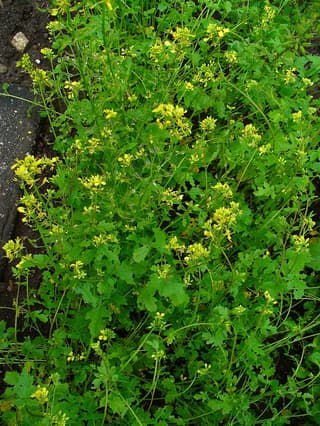
Mustard (genus)
Sinapis
Sinapis is a small genus of annual herbs in the cabbage family (Brassicaceae), native to the Mediterranean, Europe and western Asia. The best-known species is white or yellow mustard (Sinapis alba), whose ground seeds make yellow table mustard; charlock or wild mustard (S. arvensis), a common weed of arable fields, is also often placed in the genus. They are upright plants 50 cm to 1 m tall, with rough, lobed leaves and clusters of four-petalled yellow flowers in spring and summer, followed by slender seed pods. They grow very fast, flowering 4-6 weeks after sowing. Besides the condiment, young leaves are eaten cooked, and in Europe white mustard is widely sown as a green manure and cover crop.
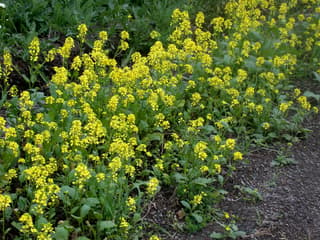
Charlock
Sinapis arvensis
Charlock (Sinapis arvensis) is an annual herb in the cabbage family (Brassicaceae), native to the Mediterranean basin, Europe, North Africa and parts of Asia, and now naturalised in the Americas, Australia and South Africa. It usually grows 20 cm to 1 m tall and bears clusters of four-petalled yellow flowers from spring to late summer. It grows mainly in arable fields, roadsides and waste ground, preferring sunny, chalky soils, and is a common weed of crops. Young leaves are edible when cooked and the ground seeds make a mustard-like condiment.
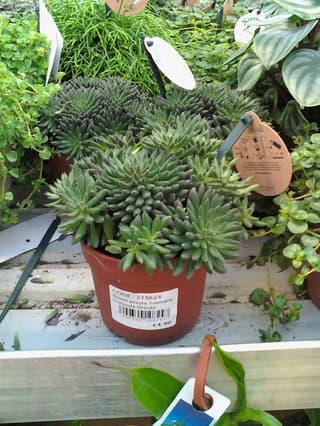
Chinese jade
Sinocrassula yunnanensis
Sinocrassula yunnanensis, or Chinese jade, is a small rosette-forming succulent native to the mountainous Yunnan province of China. Its spindle-shaped leaves are densely covered in fine soft hairs and shift from dark green in summer to deep chocolate-brown or red tones in cooler months. Plants multiply readily by offsets, eventually forming dense clumps, and produce cream-to-white flowers on tall stalks; the flowering rosette itself dies back afterward.
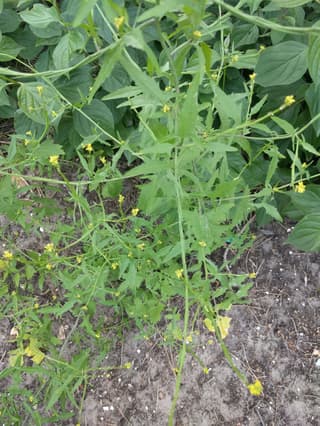
Hedge mustard
Sisymbrium
Sisymbrium is a genus of around 40 species of annual and biennial herbs in the mustard family (Brassicaceae), commonly known as hedge mustards. The most widespread species, Sisymbrium officinale, is a weedy plant of disturbed ground, roadsides and hedgerows across Europe and naturalized worldwide, bearing small yellow four-petaled flowers and slender seed pods. Historically nicknamed "the singer's plant", it was used by opera singers and orators to soothe hoarseness and protect the voice.
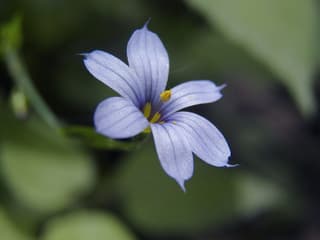
Narrow-leaf blue-eyed grass
Sisyrinchium angustifolium
Sisyrinchium angustifolium (commonly known as narrow-leaf blue-eyed grass) is a perennial native to eastern North America that grows in dense, grass-like clumps from short rhizomes. Although it resembles a grass, it actually belongs to the Iris family (Iridaceae). Its narrow, sword-shaped leaves are 2–6 mm wide and arranged in fan-like clusters, while its stems are flat and winged, reaching 15–50 cm in height. From late spring to early summer, it produces small, approximately 1–1.5 cm wide, six-petaled bluish-purple flowers with a distinct yellow 'eye' in the center. The flowers open in the morning and close in the afternoon or evening. Its natural habitats include meadows, open woodlands, and damp grasslands. It attracts bees, hoverflies, and butterflies, and self-seeds easily.
What are Easy Plants?
Easy Plants are ideal for beginners or people with little time for care. These species are tolerant of watering mistakes, light variations, and don't require constant attention. Perfect for those just starting out with plants.
Tips for Growing Easy Plants
To succeed with easy plants, remember: less is more. Avoid overwatering, choose a spot with adequate light, and let the soil dry between waterings. Most of these plants prefer to be 'forgotten' occasionally.