241 Hard Easy Care | 2026 Guide - Page 7
Find 241 hard easy care. Complete guide for your garden.
241 Easy Care with hard level
Showing 217-241 of 241
Old-man-of-the-woods
Strobilomyces strobilaceus
Strobilomyces strobilaceus, commonly known as Old-man-of-the-woods, is a distinctive mycorrhizal fungus found in deciduous forests. It is easily recognized by its cap, which is covered in large, dark, woolly scales resembling a pine cone. The flesh stains pinkish then black when cut, and the underside features a greyish pore surface rather than gills.
Larch bolete
Suillus grevillei
The larch bolete is an edible and highly flavorful mushroom from the Suillaceae family. It is characterized by its bright yellow to orange cap, which becomes very slimy when wet. It grows exclusively in symbiosis (mycorrhiza) with larch trees, making it a species that cannot be commonly cultivated at home without the presence of a host tree. It features a yellow stem with a ring and pores that are covered by a veil when young.
Velvet bolete
Suillus variegatus
Suillus variegatus, known as the velvet bolete or variegated bolete, is an edible mushroom from the Suillaceae family. It is characterized by a sandy-yellow or olive cap with a granular, felt-like surface that, unlike other Suillus species, is not slimy. It forms a mycorrhizal relationship primarily with pine trees, preferring sandy and acidic soils.
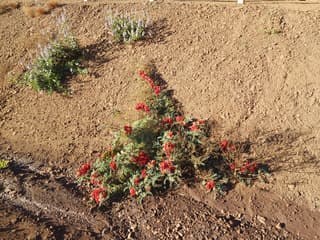
Sturt's Desert Pea
Swainsona formosa
Sturt's Desert Pea is one of Australia's most striking wildflowers, a low, sprawling groundcover native to the arid interior of every mainland state except Victoria. Its trailing stems of soft grey-green, pinnate leaves are studded with large, waxy blood-red blooms, each marked with a glossy black boss at the base of the standard petal. Adopted as the official floral emblem of South Australia in 1961, it thrives in harsh, sun-baked, well-drained conditions and is famously difficult to keep alive in humid or overly generous garden settings.
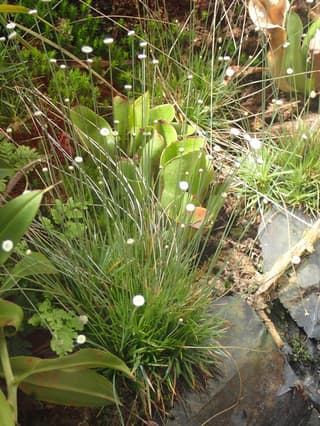
Yellow hatpins
Syngonanthus flavidulus
Syngonanthus flavidulus, commonly known as yellow hatpins, is a small, perennial herb in the pipewort family (Eriocaulaceae), endemic to the southeastern United States (Alabama, Florida, Georgia, Mississippi, North Carolina, and South Carolina). It grows in moist, sandy pine savannas, pond margins, bogs, and ditches, in areas with constant groundwater seepage maintained by natural fires. It forms dense tufts of narrow, grass-like leaves from which thin stems (scapes) emerge, topped with tiny, spherical, white-to-yellowish inflorescences resembling pinheads—hence the name "yellow hatpins." It blooms from spring to early summer.
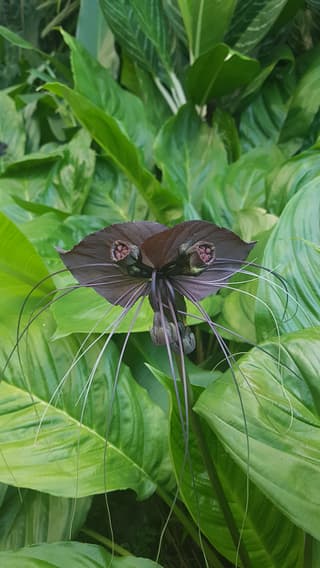
Black Bat Flower
Tacca chantrieri
Tacca chantrieri, commonly known as the Black Bat Flower, is one of the most unusual and dramatic flowering plants in the world. Native to the tropical rainforests of Southeast Asia, this extraordinary plant produces dark black to deep purple flowers with large wing-like bracts and long whisker-like bracteoles that can reach up to 28 cm in length. The flowers can span up to 30 cm across, giving the plant its unmistakable bat-like appearance. It thrives in humid, shaded conditions that mimic its natural forest floor habitat.
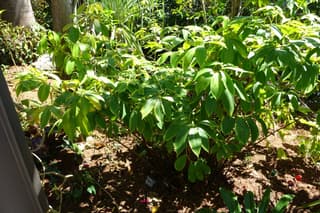
Indonesian Wax Ginger
Tapeinochilos ananassae
Tapeinochilos ananassae, commonly known as Indonesian Wax Ginger, is a striking tropical herbaceous perennial native to Indonesia, Papua New Guinea, and northern Australia. It produces dramatic, pineapple-shaped inflorescences of deep red waxy bracts from which small yellow flowers emerge. Growing up to 8 feet tall, this rhizomatous plant forms lush, spirally arranged dark green foliage and blooms virtually year-round in tropical conditions. It is prized as an ornamental specimen in tropical gardens and as a greenhouse or indoor statement plant in cooler climates.
velvet-footed pax
Tapinella atrotomentosa
Tapinella atrotomentosa, commonly known as the velvet-footed pax, is a striking gilled mushroom that grows primarily on decaying stumps and roots of conifers. It is characterized by its robust, velvety brown-to-black stem and asymmetrical cap. Although not as lethally toxic as its relative, the brown roll-rim, it contains toxins that can cause severe digestive distress and, in sensitive individuals, autoimmune reactions.
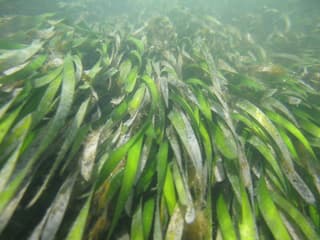
Turtle grass
Thalassia testudinum
Turtle grass is a flowering marine plant (angiosperm) of the Hydrocharitaceae family, forming extensive submerged 'meadows' on shallow sandy and calcareous bottoms of the Caribbean and the Gulf of Mexico. Its long, dark-green, ribbon-like leaves grow from a long, jointed rhizome buried 5 to 25 cm deep in the substrate. It is the dominant seagrass species in much of the region, supporting an entire ecosystem: green sea turtles, parrotfish, surgeonfish, and sea urchins feed directly on it, while its leaves host a film of epiphytes (algae, diatoms, and bacteria) that feeds countless invertebrates. It is not a conventional aquarium or home garden plant — it depends on saltwater, high light, and constant submersion.
stinking earthfan
Thelephora palmata
Thelephora palmata, known as the stinking earthfan, is a coral-like fungus that grows on the ground in coniferous forests. It is characterized by its dark brown color, fan-shaped branches with white tips, and a very penetrating, unpleasant odor reminiscent of rotting cabbage or garlic. It forms mycorrhizae with trees and plays an important role in the forest ecosystem.
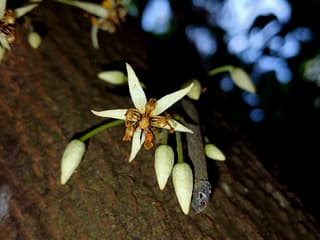
Cacao tree
Theobroma cacao
The cacao tree is a tropical evergreen tree native to the deep regions of the Amazon basin. It is world-renowned for producing the fruits whose seeds are processed to create chocolate. The plant exhibits a rare botanical phenomenon called cauliflory, where flowers and fruits grow directly from the trunk and main branches. Its leaves are large, leathery, and bright green, providing a lush appearance.

California nutmeg
Torreya californica
The California nutmeg (Torreya californica) is an evergreen, dioecious conifer in the yew family (Taxaceae), endemic to the California Coast Ranges and the western slopes of the Sierra Nevada. In its native habitat, it can reach heights of 15–27 meters with a broad, open, roughly conical crown; in the milder climates of the Carpathian Basin, it typically remains a slow-growing tree or large shrub of 5–15 meters. Its glossy, olive-green, 3–8 cm long, sharp-pointed needles emit a strong, spicy fragrance when crushed. Its plum-like, 3–4 cm seeds resemble nutmeg, which gives the species its common name. It develops as a shade-tolerant understory tree, and due to historical logging, its population has significantly declined, leading the IUCN to list it as a Vulnerable species.
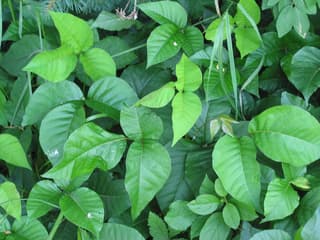
Poison Ivy
Toxicodendron
Toxicodendron is a genus of approximately 29 species of flowering plants, shrubs, vines, and trees in the family Anacardiaceae. Native to North America and Asia, the genus includes the notorious poison ivy (T. radicans), poison oak (T. diversilobum, T. pubescens), poison sumac (T. vernix), and the Asian lacquer tree (T. vernicifluum). All species produce urushiol, an oily resin found in all plant parts that causes severe allergic contact dermatitis in most humans and animals. The plants are typically deciduous, displaying spectacular autumn foliage in shades of red, orange, and yellow before leaf drop.
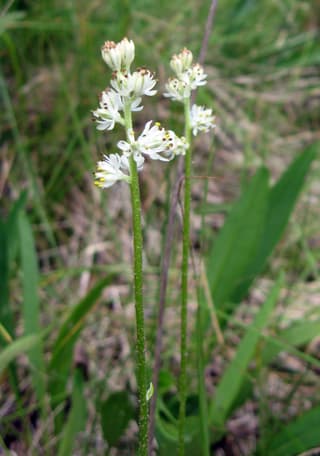
Sticky false asphodel
Triantha glutinosa
Triantha glutinosa is a perennial herb native to calcareous bogs and fens across North America. It forms a basal rosette of narrow leaves and a sticky flowering stalk topped by small white flowers with yellow stamens in summer. It gained scientific fame in 2021 when the genus was recognized as protocarnivorous - the glandular hairs on its flower stalk trap small insects.
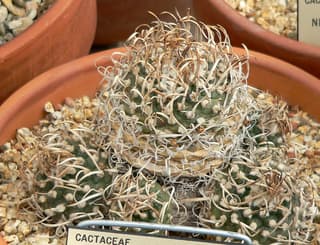
Schmiedicke's Turbinicarpus
Turbinicarpus schmiedickeanus
Turbinicarpus schmiedickeanus is a small, slow-growing cactus endemic to the arid deserts of Nuevo Leon, San Luis Potosi and Tamaulipas in northeastern Mexico. Its solitary, spherical to slightly depressed green stem barely reaches 5 cm tall and 4 cm wide, covered in pyramidal tubercles tipped with woolly areoles and a handful of slender spines. In summer it produces delicate white flowers from the woolly crown. The species is listed as Near Threatened by the IUCN and protected under CITES Appendix I due to habitat loss and over-collection.
Bitter Bolete
Tylopilus felleus
Tylopilus felleus, commonly known as the bitter bolete, is a species of fungus in the Boletaceae family. It is notorious for its extremely bitter taste, which renders it inedible, although it is not lethally poisonous. The mushroom features a brown cap, a white to pinkish pore surface, and a characteristic dark reticulation (net-like pattern) on the stem. It grows in symbiosis with coniferous and deciduous trees, preferring acidic soil.
beard lichen
Usnea hirta
Usnea hirta, commonly known as Bristly Beard Lichen, is a fruticose lichen characterized by its pale green to yellowish-green, shrubby appearance. It consists of a symbiotic relationship between a fungus and an alga. It typically grows on the bark of coniferous trees in clean-air environments. It is highly sensitive to sulfur dioxide pollution, making it an excellent bio-indicator of air quality.
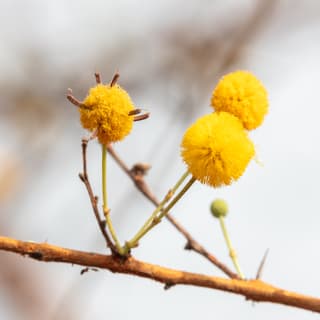
Red Acacia
Vachellia seyal
Vachellia seyal, commonly known as Red Acacia or Shittim Wood, is a fast-growing, thorny evergreen tree native to the arid Sahel region of Africa and the Middle East. It produces distinctive bright yellow, globose flower heads with a sweet, spicy scent, and is renowned for its pale reddish or greenish bark. Historically significant as the biblical "shittim wood" used to construct the Ark of the Covenant, this resilient tree thrives in full sun, tolerates drought and periodic flooding, and plays a vital role in dryland ecosystems through nitrogen fixation.
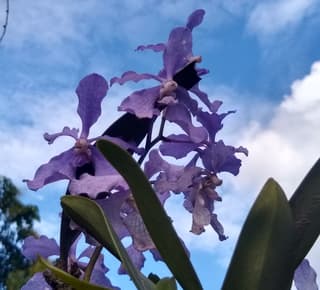
Vanda Orchid
Vanda
Orchids of the genus Vanda are tropical epiphytes known for their striking aerial roots and vibrant flowers, including the rare natural blue. Unlike other orchids, they are not typically grown in dense potting media, preferring hanging baskets that allow their roots to be exposed to air and light.
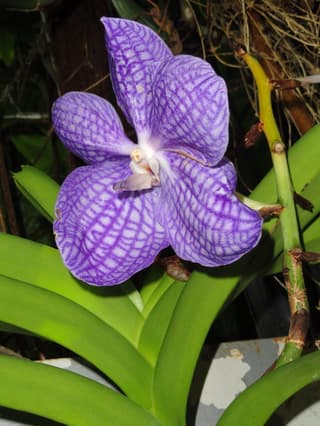
Blue Vanda Orchid
Vanda coerulea
Vanda coerulea, commonly known as the Blue Vanda Orchid, is one of the most celebrated and rare orchids in the world. Native to the forests of Northeast India, Myanmar, and Thailand, it produces breathtaking tessellated violet-blue flowers in autumn. Now critically endangered in the wild due to over-collection, it is a protected species and a symbol of botanical conservation.
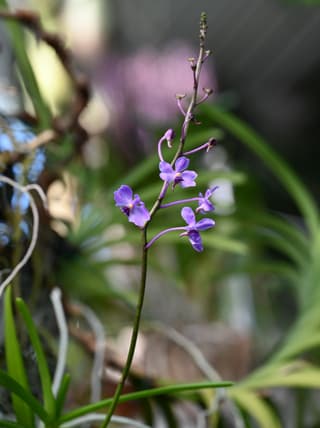
Blue Vanda
Vanda coerulescens
Vanda coerulescens is a miniature epiphytic orchid native to the highland forests of Myanmar, China, and Thailand. Celebrated for its delicate pale blue-violet fragrant flowers, it is one of the rarest naturally blue orchids in the world. Each inflorescence bears 15 or more blooms about 1 inch across, with a pleasant fragrance and long-lasting display.

Palm Vanilla Orchid
Vanilla palmarum
Vanilla palmarum is a climbing, epiphytic orchid of the family Orchidaceae, native from Cuba to southern Brazil, occurring across biomes such as the Amazon, Caatinga, Cerrado, Atlantic Forest and Pantanal. It grows twining over host palm trees (such as Syagrus and Attalea), from which it gets its common name. It has comparatively delicate stems, chlorophyllous aerial roots, large reticulated leaves, and pale yellow-green flowers borne in successive lateral racemes in spring. It is considered an endangered species across part of its range.
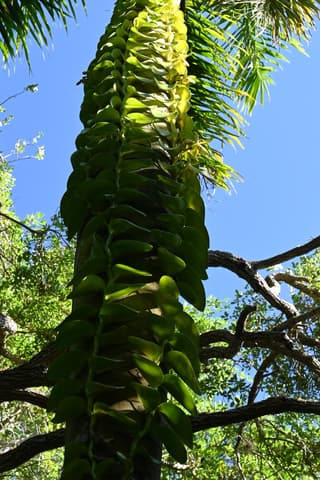
Vanilla Orchid
Vanilla planifolia
Vanilla planifolia is a species of perennial climbing orchid, native to Mexico and Central America, famous for being the primary source of natural vanilla essence. It features succulent stems and bright green, leathery leaves. Its greenish-yellow flowers are ephemeral, lasting only a single day, and in commercial cultivation outside its natural habitat, they require hand-pollination to produce the valuable pods.
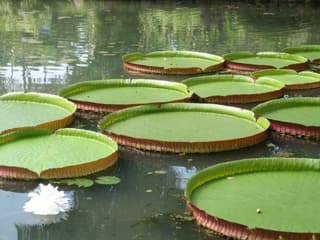
Amazon Water Lily
Victoria amazonica
Victoria amazonica, known as the Amazon Water Lily or Giant Water Lily, is the largest aquatic plant in the world, native to the Amazon River basin in South America. Its enormous circular floating leaves can reach up to 2.5 meters (8 feet) in diameter, with upturned rims that give them a tray-like appearance. The night-blooming flowers last only 48 hours, opening white on the first night and turning deep pink to purple on the second, before closing permanently. It is one of the most iconic symbols of the Amazon rainforest.
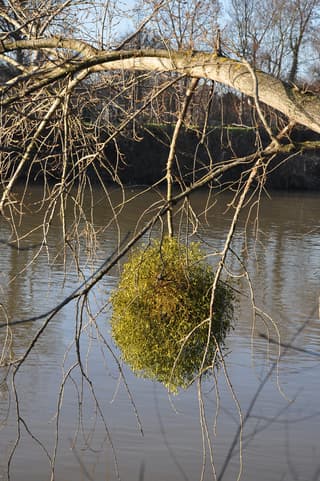
European Mistletoe
Viscum album
European mistletoe (Viscum album) is an evergreen hemiparasitic shrub in the family Santalaceae that grows attached to the branches of host trees such as apple, lime and poplar, drawing water and minerals through a haustorium. It has leathery, yellow-green leaves and small dioecious flowers followed by sticky white or yellow berries traditionally gathered at Christmas.
Hard Care Easy Care
Our selection of 241 hard easy care combines the characteristics of this category with specific care needs. For enthusiasts seeking a challenge.
Why Choose Hard Easy Care?
Combining the beauty of easy care with hard difficulty level lets you enjoy this category while developing your gardening skills. Each plant was selected to offer the best characteristics of the category at the care level you are looking for.