Complete Plant Guide
Explore plants by difficulty, season and more. Find the perfect plant for you.
Difficulty
Categories
Plants by City
🗺️ Plants by City3454 plants found
Showing 3169-3204 of 3454
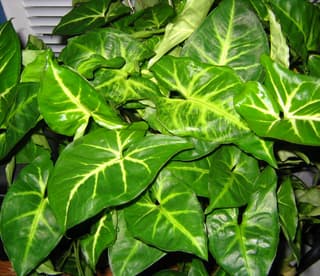
Arrowhead Plant
Syngonium podophyllum
Syngonium podophyllum is a tropical climbing plant from the Araceae family, native to the humid forests of Central America. Known for its arrow-shaped leaves that change form as they mature, it is an extremely popular houseplant due to its ease of care and ornamental beauty.
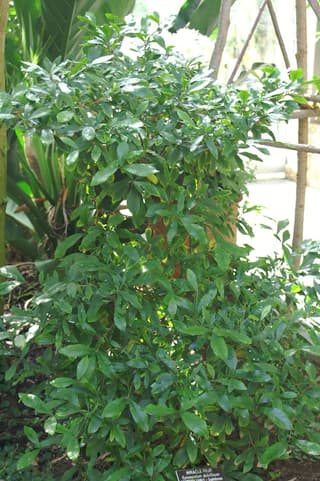
Miracle Berry
Synsepalum dulcificum
Synsepalum dulcificum, known as the Miracle Berry, is an evergreen shrub native to West Africa. Its most notable feature is the production of small red berries containing miraculin. This glycoprotein temporarily alters taste buds, causing sour or bitter foods to be perceived as extremely sweet. The plant has glossy dark green leaves and exhibits slow, elegant growth.
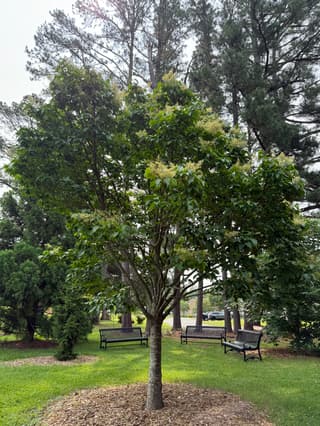
Japanese Tree Lilac
Syringa reticulata
Japanese Tree Lilac (Syringa reticulata) is a small to medium-sized ornamental tree native to Japan and northeastern Asia. It stands out for its enormous creamy-white fragrant flower panicles that appear in early summer, blooming up to six weeks after most other lilacs have finished. With cherry-like bark and exceptional urban tolerance, it is one of the most versatile and low-maintenance ornamental trees for gardens and streetscaping.
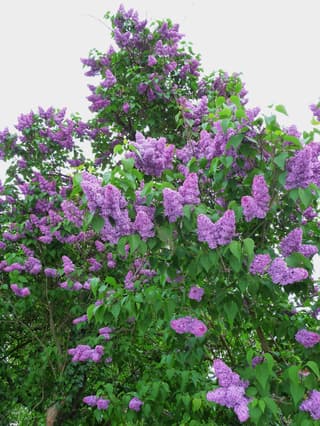
Common Lilac
Syringa vulgaris
Syringa vulgaris, the common lilac, is a hardy deciduous shrub native to the Balkans and widely cultivated for its spectacular spring display of highly fragrant flower clusters. Growing up to 5 meters tall, it produces dense panicles in shades ranging from classic purple-lavender to white, pink, and magenta. It is a beloved garden staple in temperate climates and thrives in cold winters with full sun exposure.
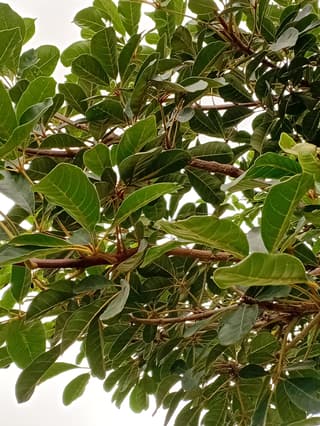
Syzygium (genus)
Syzygium
Syzygium is a large genus of tropical and subtropical evergreen trees and shrubs in the family Myrtaceae, comprising over 1,000 species native to Asia, Australia, and Africa. The genus includes economically and culturally significant species such as clove (S. aromaticum), jambolan (S. cumini), and rose apple (S. samarangense). These are hardy plants with dense, glossy foliage that produce edible fruits and aromatic flowers.
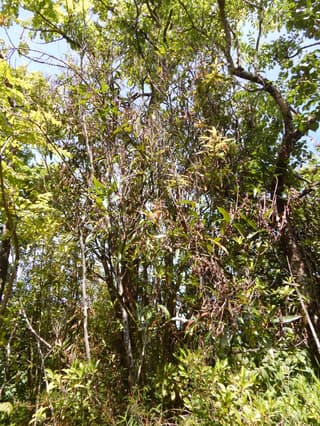
Rose Apple
Syzygium jambos
Syzygium jambos, popularly known as Rose Apple or Wax Apple, is a tropical fruit tree native to Southeast Asia. It features evergreen foliage, fragrant white to cream-colored flowers, and rounded fruits that range from yellow to pale pink, with a rose-like aroma. It is widely cultivated for its edible fruits and also as an ornamental plant.
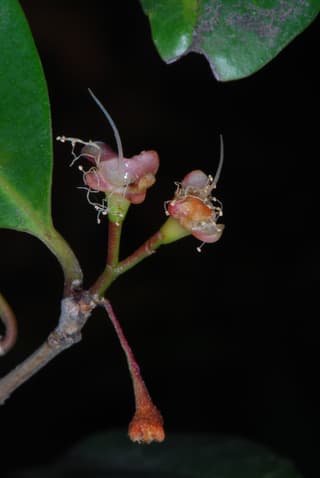
Magenta Cherry
Syzygium paniculatum
Syzygium paniculatum, known as Magenta Cherry or Brush Cherry, is an evergreen shrub and small tree native to the rainforests of eastern Australia (New South Wales). It bears glossy dark green leaves with attractive bronze-red new growth, clusters of white flowers in spring and summer, and distinctive magenta-coloured edible berries. Formerly classified as Eugenia paniculata, it is widely grown as a hedging plant, topiary subject, and ornamental specimen across subtropical and warm temperate regions worldwide.
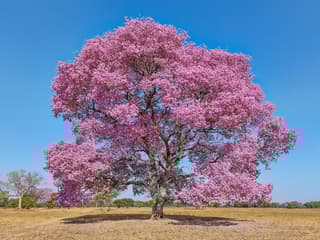
Pink Trumpet Tree
Tabebuia impetiginosa
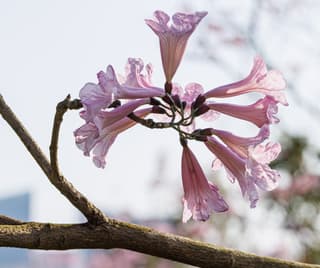
Tabebuia impetiginosa, commonly known as the Pink Trumpet Tree or Pau d'Arco, is one of South America's most spectacular flowering trees. Native to the tropical and subtropical forests of Brazil and neighboring countries, it produces breathtaking displays of purple to pink trumpet-shaped flowers in late winter and early spring, typically when the tree is leafless. A member of the Bignoniaceae family, it can reach up to 30 meters tall in the wild and is widely planted as an ornamental street and garden tree in warm climates worldwide.
Pink Trumpet Tree
Tabebuia rosea
The Pink Trumpet Tree (Tabebuia rosea) is a majestic tropical tree native from Mexico to Colombia and Venezuela.
Crepe Jasmine
Tabernaemontana
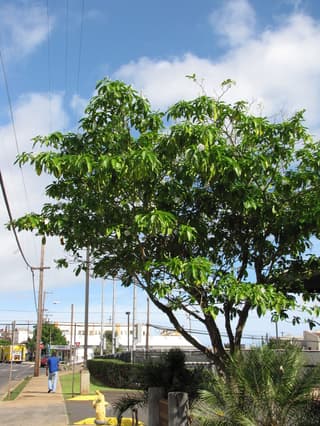
Tabernaemontana is a genus of evergreen shrubs and small trees in the dogbane family (Apocynaceae), native to the tropics and subtropics of Asia, Africa and the Americas. Best known through the widely cultivated species Tabernaemontana divaricata (crepe jasmine), plants in this genus have glossy dark-green leaves and clusters of waxy, pinwheel-shaped white flowers that are especially fragrant at night. Like other Apocynaceae, every part of the plant exudes a milky latex sap when cut.
Crape Jasmine
Tabernaemontana divaricata
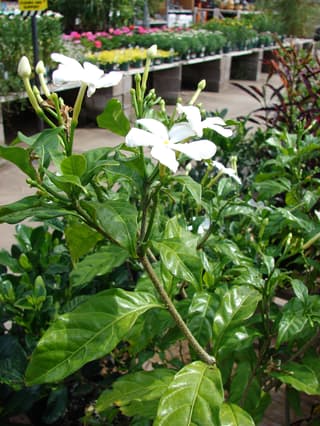
Tabernaemontana divaricata, commonly known as Crape Jasmine, is an evergreen tropical shrub native to South and Southeast Asia, prized for its pure white, pinwheel-shaped flowers and glossy dark green leaves. It blooms nearly year-round in warm climates, filling the air with a delicate jasmine-like fragrance. Widely used in gardens and as a container plant, it holds cultural and religious significance across India and Southeast Asia.
Black Bat Flower
Tacca chantrieri
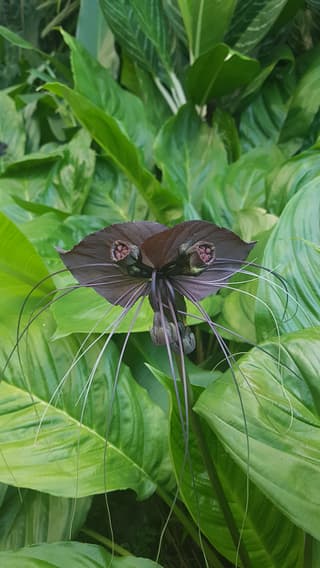
Tacca chantrieri, commonly known as the Black Bat Flower, is one of the most unusual and dramatic flowering plants in the world. Native to the tropical rainforests of Southeast Asia, this extraordinary plant produces dark black to deep purple flowers with large wing-like bracts and long whisker-like bracteoles that can reach up to 28 cm in length. The flowers can span up to 30 cm across, giving the plant its unmistakable bat-like appearance. It thrives in humid, shaded conditions that mimic its natural forest floor habitat.
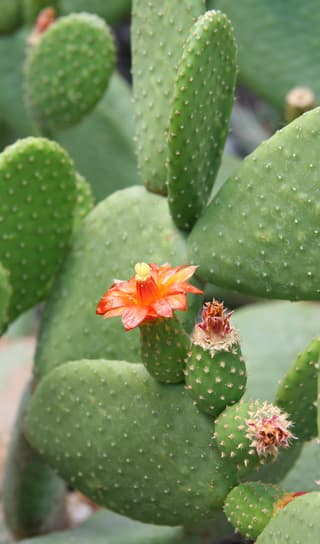
Pink Toad Cactus
Tacinga
Tacinga is a genus of cacti native to the Caatinga biome of northeastern Brazil, belonging to the family Cactaceae (subfamily Opuntioideae). Closely related to Opuntia, it includes species such as T. inamoena and T. funalis, perfectly adapted to semi-arid conditions. It produces colorful flowers and edible fruits, and is an iconic symbol of Brazil's endemic flora.
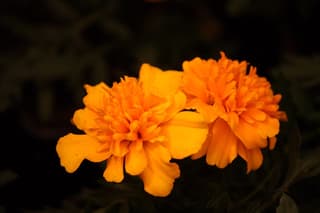
Marigold
Tagetes
Tagetes is a genus of annual herbaceous plants in the Asteraceae family, native to Mexico and Central America. Commonly known as marigold, it is one of the most widely grown garden flowers worldwide, with the French marigold (Tagetes patula) and African marigold (Tagetes erecta) as its best-known representatives. It produces abundant yellow, orange and gold blooms through summer, and its aromatic foliage is popularly used as a companion plant to help deter certain garden pests.

Aztec Marigold
Tagetes erecta
Tagetes erecta, commonly known as the Aztec Marigold, is a fast-growing annual native to Mexico and Central America. Celebrated for its large, vibrant blooms in shades of yellow, orange, and bronze, it is one of the most popular garden flowers worldwide. It is easy to grow, drought-tolerant once established, and valued for ornamental, medicinal, and companion-planting uses.
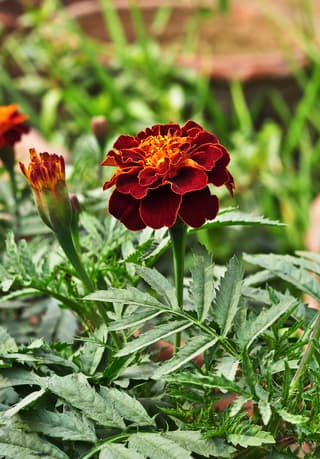
French marigold
Tagetes patula
Tagetes patula, commonly known as the French marigold, is a compact annual flowering plant in the daisy family. It features deeply divided, fern-like green foliage and produces a profusion of multi-layered flower heads in vibrant shades of yellow, orange, and mahogany. Native to Mexico and Guatemala, it is highly valued by gardeners for its ability to repel soil pests like nematodes and its long-lasting summer display.
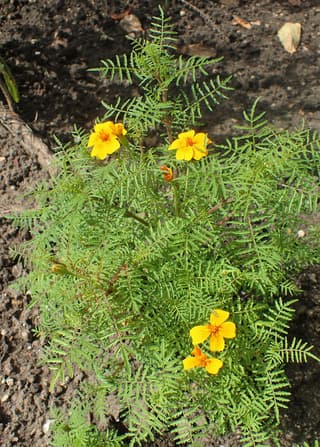
Signet Marigold
Tagetes tenuifolia
Signet marigold (Tagetes tenuifolia) is a compact, mounding annual native to Mexico and Central America, prized for its lacy, lemon-scented foliage and abundance of small single flowers in yellow, orange, and gold. It blooms profusely from early summer through fall and is a popular edging and companion plant.
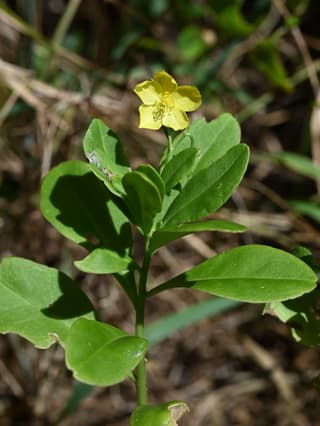
Waterleaf
Talinum fruticosum
Waterleaf (Talinum fruticosum) is a fast-growing tropical perennial leafy vegetable native to Mexico, the Caribbean, and Central and South America, now widely cultivated across West Africa, South and Southeast Asia, and tropical regions worldwide. Its broad, succulent leaves have a mildly tangy, slightly sour flavor and become tender when cooked. It is a staple ingredient in West African soups and stews, and is valued in Brazilian Amazonian cooking as "cariru." The plant is exceptionally easy to grow, thrives in heat, tolerates poor soils, and produces leaves almost continuously in warm climates.
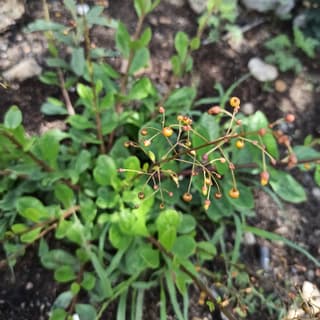
Jewels of Opar
Talinum paniculatum
Jewels of Opar (Talinum paniculatum) is a succulent perennial herb native to tropical Americas, including Brazil. It produces delicate pink flowers on airy panicles that resemble a miniature baby's breath, making it a charming ornamental plant. The fleshy, nutrient-rich leaves are edible and recognized as an unconventional food plant (PANC in Brazil), rich in protein, iron, potassium, and magnesium. Extremely drought-tolerant, it thrives in full sun with minimal care and self-seeds readily.
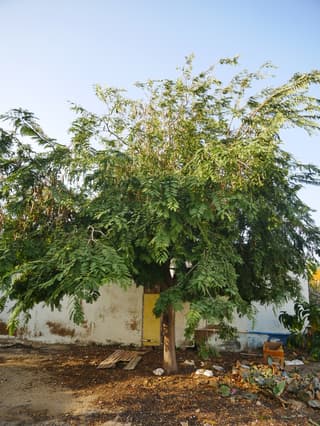
Tamarind
Tamarindus indica
Tamarindus indica is a majestic tropical tree, known for its dense canopy and pod-shaped fruits containing a highly prized sweet and sour pulp. Its leaves are pinnate and delicate, closing at night. It is a long-lived species that can reach large proportions in warm climates.

Athel tamarisk
Tamarix aphylla
Tamarix aphylla, known as the Athel tamarisk or Athel pine, is the largest representative of the Tamarix genus, capable of reaching 18 meters in height. It is an evergreen tree with leaves reduced to grayish-green scales, adapted to excrete salt through specialized leaf glands, forming crystals on the surface. Native to North Africa, the Middle East, and South Asia, it is widely cultivated in arid regions as a windbreak, shade plant, and for soil stabilization. Its small white or pink flowers, gathered in spikes, bloom from late summer to autumn, providing valuable nectar for bees.
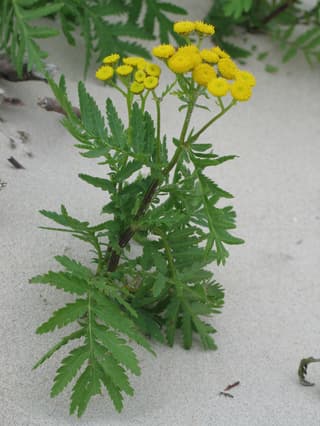
Tansy
Tanacetum
Tanacetum is a genus of approximately 150 species of strongly aromatic herbaceous plants in the family Asteraceae, native to the temperate regions of the Northern Hemisphere. The genus includes well-known species such as common tansy (T. vulgare), feverfew (T. parthenium), pyrethrum (T. coccineum), and costmary (T. balsamita). These plants are characterized by deeply lobed, fern-like leaves, a pungent camphor-like scent, and button-shaped yellow or white flowers arranged in flat-topped clusters.

Painted Daisy
Tanacetum coccineum
Tanacetum coccineum, commonly known as the Painted Daisy or Pyrethrum, is a hardy herbaceous perennial in the Asteraceae family, native to Eastern Europe, the Caucasus, and Central Asia. It produces stunning daisy-like flowers in vivid shades of red, pink, purple, and white, each with a golden-yellow center disc. Beyond its striking ornamental value, the plant is celebrated for producing pyrethrins — natural insecticidal compounds extracted from its flowers and widely used in organic pest control. It is deer-resistant, attracts butterflies, and thrives in cottage gardens, borders, and cutting gardens.
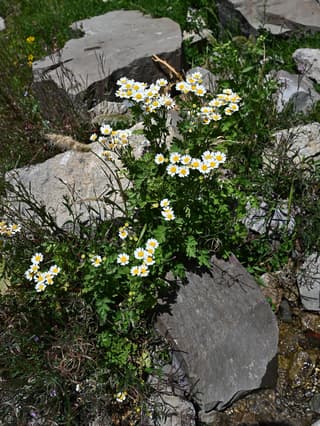
Feverfew
Tanacetum parthenium
Feverfew (Tanacetum parthenium) is an aromatic perennial herb in the Asteraceae family, native to Asia Minor and naturalized across Europe. It produces white daisy-like flowers with a yellow center throughout summer and is widely grown for medicinal and ornamental purposes.
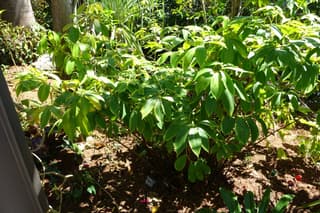
Indonesian Wax Ginger
Tapeinochilos ananassae
Tapeinochilos ananassae, commonly known as Indonesian Wax Ginger, is a striking tropical herbaceous perennial native to Indonesia, Papua New Guinea, and northern Australia. It produces dramatic, pineapple-shaped inflorescences of deep red waxy bracts from which small yellow flowers emerge. Growing up to 8 feet tall, this rhizomatous plant forms lush, spirally arranged dark green foliage and blooms virtually year-round in tropical conditions. It is prized as an ornamental specimen in tropical gardens and as a greenhouse or indoor statement plant in cooler climates.

Dandelion
Taraxacum
Taraxacum is a genus of flowering perennials in the daisy family (Asteraceae), comprising over 2,000 recognized species and microspecies worldwide, most reproducing by apomixis. This profile covers the genus at a general level, using the emblematic and most widespread species, Taraxacum officinale (common dandelion), as the reference for care data. Recognizable by its rosette of toothed leaves, solitary yellow flower heads, and globe-shaped seed puffballs, Taraxacum is both a common lawn weed and a valued edible and medicinal plant.
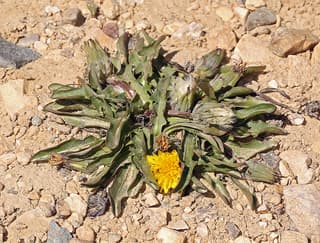
Horned Dandelion
Taraxacum ceratophorum
Taraxacum ceratophorum, commonly known as the horned dandelion, is a herbaceous perennial native to alpine and subalpine zones across the Northern Hemisphere. It is distinguished by its distinctive swollen red-tinged phyllary tips resembling horns, which give the plant its common name. It grows in alpine meadows, fellfields, and rocky slopes up to 3,000 meters elevation, and is considered the most widespread native dandelion in North America.

Dandelion
Taraxacum sect. Taraxacum
The dandelion is an extremely resilient perennial herbaceous plant, known for its basal rosette of jagged leaves and bright yellow flowers. It is famous for its ability to colonize various habitats and for its 'pappus', the sphere of feathery seeds that disperse with the wind. Although often considered a weed, it is a highly nutritious and medicinal plant.

Bald Cypress
Taxodium distichum
Taxodium distichum, commonly known as the bald cypress, is a large deciduous conifer in the Cupressaceae family. Native to the southeastern United States, it grows naturally in swamps, riverbanks, and floodplains. It is one of the few deciduous conifers, and its bright green foliage turns reddish-bronze in autumn before falling. It produces aerial root structures called pneumatophores or "cypress knees" when growing in flooded soils. With an exceptional lifespan that can exceed 1,000 years, it is an iconic tree of North American wetlands, widely used in parks, urban gardens, and riparian restoration projects.
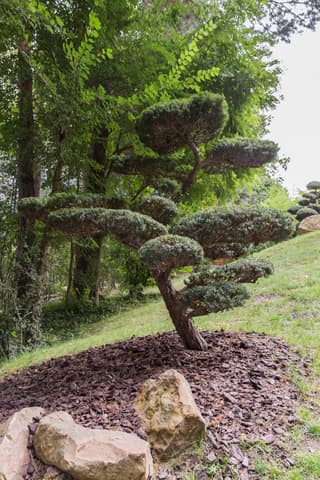
English Yew
Taxus baccata
Taxus baccata, known as the English yew or European yew, is a slow-growing conifer native to Europe, North Africa, and Western Asia. It is one of the longest-living trees in the world, with specimens exceeding 4,000 years. It produces dark green needle-like leaves arranged in two rows on the branches and seeds surrounded by a fleshy red aril. Almost all parts of the plant—leaves, bark, and seeds—contain highly toxic taxine alkaloids, fatal to humans, cats, dogs, and horses. Only the fleshy aril is edible, though the seed inside remains lethal. The yew is extremely valuable as a hedge and topiary shrub due to its tolerance for severe pruning and ability to grow in varied light conditions.
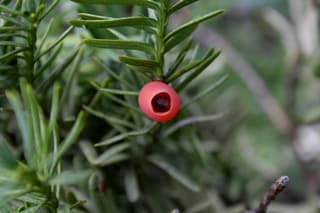
Japanese Yew
Taxus cuspidata
Taxus cuspidata, the Japanese yew, is a slow-to-moderate growing evergreen conifer native to Japan, Korea, northeastern China, and the Russian Far East. It typically appears as a dense shrub or small tree with flattened, dark green needles and reddish-brown, peeling bark. Female plants produce small, bright red, fleshy arils in fall - the only part of the entire plant that is not toxic. Every other tissue (bark, needles, and especially the seed inside the aril) contains taxine alkaloids that are severely toxic to humans, cats, dogs, and horses. Because of its extreme cold hardiness (USDA zones 4-7), dense evergreen habit, and excellent tolerance of pruning and shade, Japanese yew is one of the most widely planted hedge and foundation shrubs in temperate landscapes.
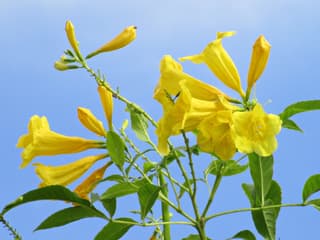
Trumpetbush (genus)
Tecoma
Tecoma is a genus of shrubs and small trees in the family Bignoniaceae, prized for their showy trumpet-shaped yellow or orange flowers. Hardy and drought-tolerant, they thrive in hot, sunny landscapes across tropical and subtropical regions.
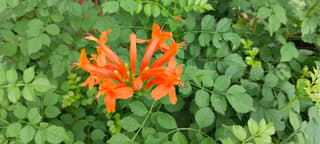
Cape Honeysuckle
Tecoma capensis
Cape Honeysuckle (Tecoma capensis) is an evergreen, scrambling shrub native to southern Africa, prized for its clusters of orange, tubular flowers. Fast-growing and adaptable, it can be trained as a hedge, espalier, or climbing vine, blooming mainly from fall through spring and attracting hummingbirds and butterflies.
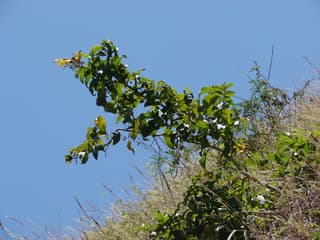
Yellow Bells
Tecoma stans
Tecoma stans, commonly known as Yellow Bells or Yellow Trumpetbush, is a fast-growing shrub or small tree native to the Americas, from Mexico to Argentina. It is celebrated for its stunning clusters of bright yellow, trumpet-shaped flowers that bloom from spring through fall, attracting hummingbirds, butterflies, and bees. Highly drought-tolerant and low-maintenance, it thrives in warm, sunny gardens and is considered a symbol of vitality and abundance across Latin America.
Verschaffelt Tephrocactus
Tephrocactus verschaffeltii
Tephrocactus verschaffeltii is a captivating segmented cactus native to the arid regions of Argentina and Bolivia. Its oval segments display colors ranging from mint green to plum purple, adorned with distinctive white fluffy areoles. In spring and summer, it produces vibrant fire-red to orange blooms that make it a striking collector's piece. A slow-growing species, it is well-suited for rock gardens, desert landscapes, and container growing.
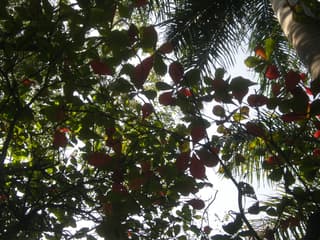
Tropical Almond
Terminalia
Terminalia is a genus of approximately 100 species of large tropical and subtropical trees in the family Combretaceae, found across coastal and inland tropical regions worldwide. Notable species include T. catappa (Tropical Almond), T. mantaly (Madagascar Umbrella Tree), and T. arjuna (Arjuna Tree), revered in Ayurvedic medicine. These fast-growing trees are valued for their generous shade, attractive layered branching, durable timber, and the wide-ranging medicinal properties of their leaves and fruit.
Find the Perfect Plant
Our plant guide helps you find ideal species for your experience level and time of year.
Browse by Difficulty, Season & More
Use the filters below to narrow this catalog by care difficulty, season, environment, or search directly by name. Each filter leads to a focused list tailored to your specific growing conditions.