2315 Easy Plants | 2026 Guide - Page 5
Discover 2315 easy plants for your garden. Complete care guide.
2315 Easy Plants
Showing 145-180 of 2315
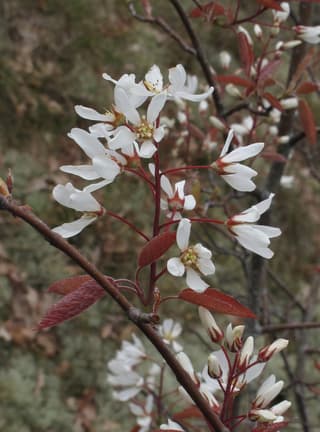
Serviceberry
Amelanchier
Amelanchier, commonly known as serviceberry or juneberry, is a genus of deciduous shrubs and small trees in the rose family (Rosaceae), native mainly to North America. It is prized for its clouds of white spring flowers, sweet edible summer berries, and fiery orange-red fall foliage.
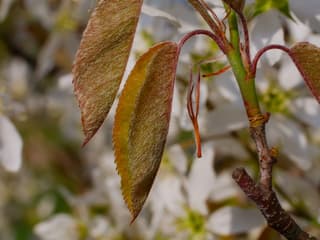
Juneberry
Amelanchier × lamarckii
Amelanchier × lamarckii is a naturally occurring hybrid serviceberry, most likely a cross between Allegheny serviceberry (A. laevis) and downy serviceberry (A. arborea), first recognized in the early 20th century and now widely planted as an ornamental garden tree. This deciduous, multi-stemmed large shrub or small tree grows 15-25 ft (roughly 4.5-7.5 m) tall, with an open, rounded crown. In spring, before or as the bronze-tinted young leaves unfurl, it is covered in drooping clusters of star-shaped white flowers. These are followed in early summer by small, round, purple-black pome fruits ("juneberries") that resemble blueberries and are sweet and edible, attracting birds. Fall brings vivid orange-to-red foliage color, making this a four-season interest plant.
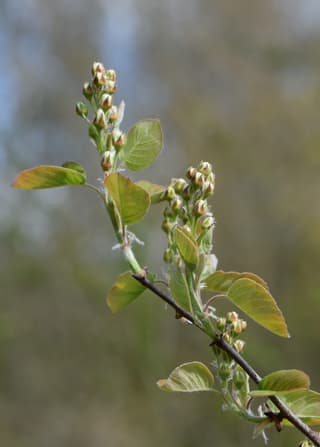
Saskatoon Serviceberry
Amelanchier alnifolia
Amelanchier alnifolia, the Saskatoon serviceberry, is a long-lived deciduous shrub or small tree native to western North America, ranging from Alaska south to California and east to the Great Plains. One of the most cold-hardy woody fruiting plants in cultivation, it thrives in USDA zones 2a through 7b and tolerates temperatures as low as -45°C. Each spring it erupts in clusters of fragrant, star-shaped white flowers before the leaves fully expand—an early-season spectacle cherished by pollinators and gardeners alike. By midsummer, branches bow under generous crops of sweet, blueberry-like purple berries that have sustained Indigenous peoples for millennia, eaten fresh, dried into pemmican, or baked into pies. Come autumn, the foliage transforms to brilliant golds, oranges, and reds, extending its ornamental value through the season. Highly drought-tolerant once established, it asks for little beyond full sun, well-drained loamy soil, and occasional pruning to keep its suckering growth in check.
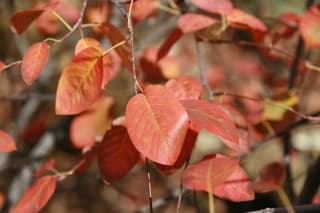
Serviceberry
Amelanchier canadensis
A deciduous, multi-stemmed shrub or small tree native to eastern North America, prized for its clouds of white star-shaped flowers that open in early spring before the leaves unfurl. By early summer the blooms give way to sweet, blueberry-like purple-black berries, and in autumn the foliage turns brilliant shades of orange and red. Its early bloom time made it a folk calendar marker for the shad fish runs, hence the name shadbush.
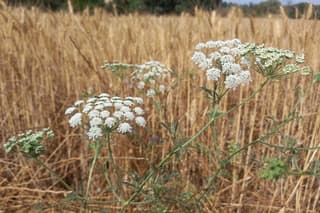
Bishop's Flower
Ammi majus
Ammi majus is an upright annual (occasionally biennial) herb in the carrot family (Apiaceae), native to the Nile Valley, North Africa and the Mediterranean basin. It produces finely divided, feathery foliage and 5-10cm lacy white umbels similar to Queen Anne's lace, held on branching stems up to 1.5m tall. Popular with cut-flower growers and pollinators alike, the species carries an important caveat: its sap contains furanocoumarins (bergapten and xanthotoxin) that sensitize skin to UV light, so handle it with gloves and long sleeves.
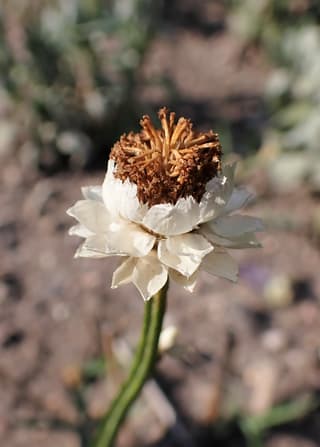
Winged Everlasting
Ammobium alatum
The Winged Everlasting is an Australian, long-lasting ornamental plant belonging to the aster family (Asteraceae). It is known for its white, papery dry flowers with a bright yellow center. The plant requires plenty of sun and is very drought-tolerant, making it an ideal choice for dry gardens and dried flower arrangements.
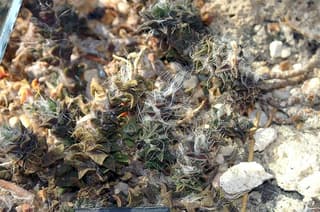
Sunrise Succulent
Anacampseros
Anacampseros is a genus of small, slow-growing succulent plants native to Southern Africa, prized for their compact rosettes of fleshy, often reddish or silvery leaves covered in fine white hairs. It is popular in cultivation for its easy care and summer blooms of white or pink flowers that open only in sunlight.

Sunrise Succulent
Anacampseros retusa
Anacampseros retusa is a tiny, slow-growing succulent from the winter-rainfall regions of Namibia and South Africa's Northern and Western Cape. It forms a short, thickened caudex topped with clustered, dark blackish-green, club-shaped leaves fringed by fine woolly hairs. From spring through summer it produces wheel-shaped pink flowers that open only in the afternoon sun and close again by evening.
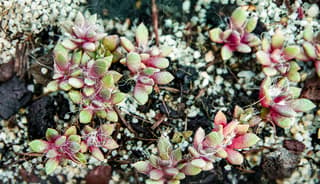
Sand rose
Anacampseros rufescens
Low-growing succulent native South Africa. Dense rosettes thick fleshy leaves green, yellow-green, pink, deep purple. Sunrise cultivar from warm reddish hues intensifying under bright light. Slow-growing, highly adapted arid conditions, drought-tolerant, low-maintenance.
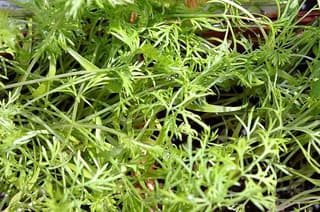
Dill
Anethum graveolens
Dill (Anethum graveolens) is an annual aromatic herb from the Apiaceae family, native to the Mediterranean and Western Asia. Its feathery, blue-green leaves and aromatic seeds are widely used in cooking, particularly in pickles, sauces, and fish dishes. The plant can reach up to 150 cm in height and produces yellow flowers in umbels during summer.
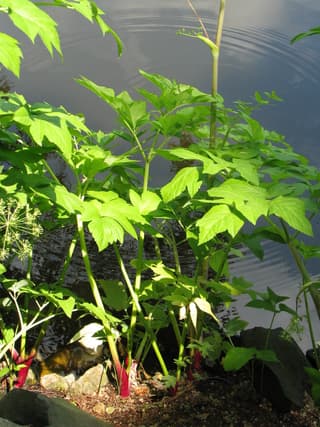
Garden Angelica
Angelica archangelica
Garden angelica is a tall, aromatic biennial herb native to Northern and Eastern Europe, prized for centuries in folk medicine, herbal liqueurs, and confectionery. Its hollow, ridged stems can reach up to 2.5 m in its second year, topped with large umbels of greenish-yellow flowers in summer.
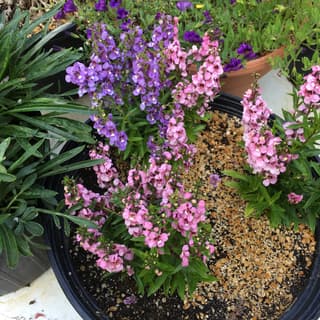
Summer Snapdragon
Angelonia angustifolia
Angelonia angustifolia, commonly called summer snapdragon, is a heat-loving herbaceous perennial in the Plantaginaceae family, native to Mexico, the West Indies and parts of Central and South America. Grown as a warm-season bedding plant across much of the world, it produces upright spikes of small, two-lipped flowers in white, pink, purple, blue and bicolor shades from early summer through fall, above narrow, slightly aromatic lance-shaped leaves.
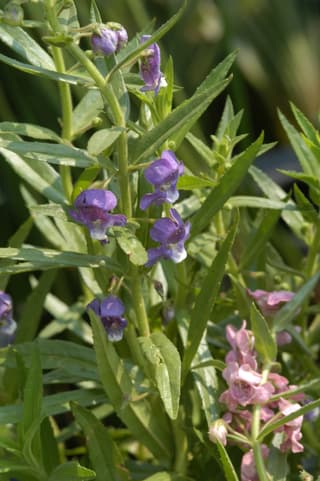
Two-flowered Angelonia
Angelonia biflora
Angelonia biflora is a small annual flower native to Brazil, prized for its abundant blooms in shades of purple, violet, pink, and white throughout summer. Belonging to the Plantaginaceae family, this compact plant grows up to 60 cm tall and is widely used in borders, flower beds, and ornamental containers.
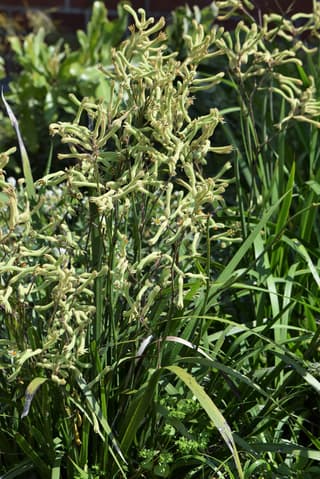
Tall Kangaroo Paw
Anigozanthos flavidus
The Tall Kangaroo Paw (Anigozanthos flavidus) is a member of the Haemodoraceae family and a perennial plant native to Southwest Australia. Its fibrous, sword-like leaves form a basal rosette, from which 1-2 meter tall flower stalks covered in velvety hairs emerge. Its distinctive tubular flowers, resembling a kangaroo's paw, range in color from yellowish-green to red and bloom almost continuously from spring to fall. It has been the official floral emblem of Western Australia since 1960.
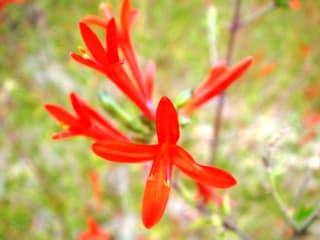
Flame Acanthus
Anisacanthus quadrifidus
Flame acanthus is a fast-growing, deciduous shrub native to the rocky slopes, floodplains, and grasslands of west and south-central Texas and adjacent northern Mexico. It forms a loose, spreading mound of narrow lance-shaped leaves and exfoliating bark, topped from early summer through fall with slender, tubular red-orange flowers that intensify after rain. Prized in xeriscape and wildlife gardens, its nectar-rich blooms are a magnet for hummingbirds and butterflies, and the foliage serves as a larval host for the Janais patch and Texan crescentspot butterflies.
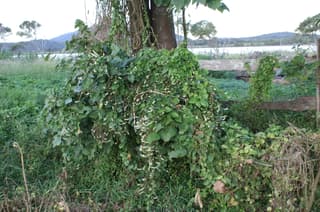
Madeira Vine
Anredera cordifolia
Madeira vine (Anredera cordifolia) is a fast-growing climbing vine native to South America, valued for its edible, spinach-like leaves and small fragrant white flowers. It produces aerial tubers used for propagation.
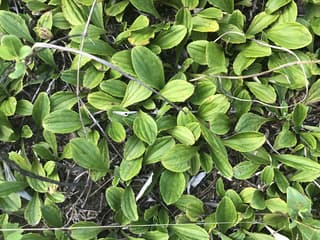
Plantain-leaved Pussytoes
Antennaria plantaginifolia
Antennaria plantaginifolia, commonly known as Plantain-leaved Pussytoes or Woman's Tobacco, is a low-growing native perennial groundcover from Eastern North America. It forms spreading mats of fuzzy, silvery-green basal leaves that resemble plantain leaves, topped in spring with clusters of small white flower heads that look remarkably like cat's paws. It thrives in lean, dry, rocky soils and full to partial sun, making it an excellent choice for difficult dry spots, rock gardens, and native plant landscapes.
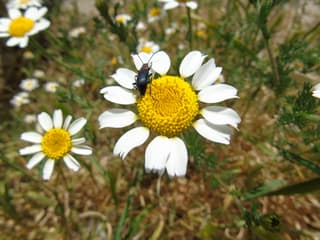
Corn chamomile
Anthemis arvensis
Corn chamomile is an annual plant in the Asteraceae family, native to Europe, commonly found in cereal fields and disturbed ground. It has finely divided, aromatic-looking foliage and produces white daisy-like flower heads with yellow centers, resembling true chamomile though it belongs to a different genus.
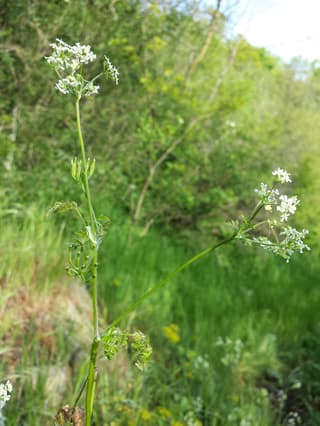
Chervil
Anthriscus cerefolium
Chervil (Anthriscus cerefolium) is a delicate annual herb native to Europe, prized for its lacy, fern-like foliage and subtle anise-parsley flavor. A staple of French cuisine and one of the classic "fines herbes," it grows quickly and prefers cool, partially shaded conditions. It reaches 40–60 cm in height and produces small white flowers in spring and summer.
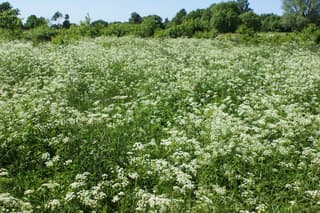
Cow Parsley
Anthriscus sylvestris
Cow parsley is a fast-growing biennial or short-lived perennial umbellifer native to Europe, western Asia, and northwestern Africa. Its hollow, ridged stems rise 60-170 cm tall, topped from late spring into early summer with frothy white umbels of tiny flowers above finely divided, fern-like leaves. A common sight along hedgerows, woodland edges, and roadside verges, it self-seeds readily and naturalizes easily in wildflower gardens.
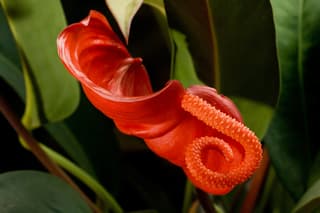
Flamingo Flower
Anthurium scherzerianum
Anthurium scherzerianum, commonly known as the Flamingo Flower or Pigtail Anthurium, is a tropical species native to Costa Rica. It is distinguished by its curling, pig-tail spadix and glossy oval spathe, usually in vivid red. It is one of the most robust and beginner-friendly anthurium species for indoor cultivation.
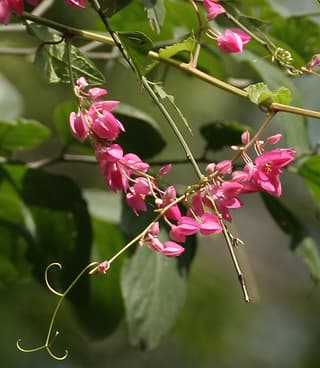
Coral Vine
Antigonon leptopus
Coral vine is a vigorous, tendril-climbing perennial vine in the buckwheat family (Polygonaceae), native to the Pacific and Atlantic coastal plains of Mexico. It scrambles rapidly over fences, trellises, and hot walls using coiling tendrils, producing heart-to-arrowhead-shaped green leaves and long, cascading sprays of small coral-pink to white flowers that bloom nearly year-round in warm climates. Beneath the soil it forms fleshy, water-storing tubers that help it survive drought and resprout after being cut back or frozen to the ground. Prized for its nonstop color and toughness, coral vine is also listed as an invasive species in Florida and other subtropical regions.
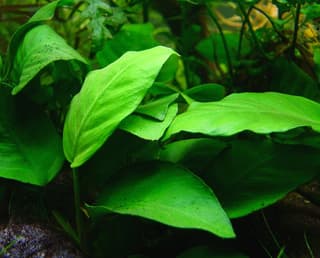
Anubias
Anubias barteri
Anubias barteri is an exceptionally hardy aquatic plant native to West Africa, belonging to the Araceae family. It is characterized by tough, dark green leaves growing from a creeping rhizome and its ability to grow attached to rocks, driftwood, or roots instead of rooting in the substrate. It grows very slowly—producing a new leaf approximately once every 2 to 3 months—and tolerates low lighting, making it one of the most popular and resilient plants in the aquarium hobby.
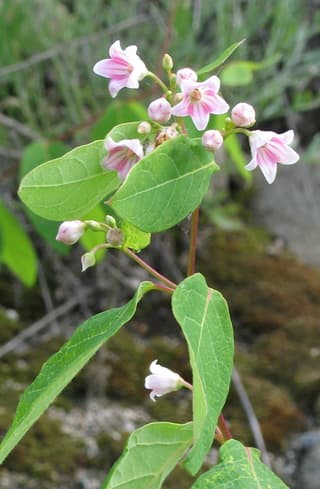
Spreading Dogbane
Apocynum androsaemifolium
Spreading dogbane (Apocynum androsaemifolium) is a bushy, rhizomatous perennial native to a huge swath of North America, from Canada across most of the United States into northeastern Mexico. Widely branching stems bear opposite, oval leaves and exude a bitter, milky sap when broken. From June to August it produces small, fragrant, nodding, bell-shaped pink flowers striped with deeper pink inside, clustered near the branch tips, followed by narrow paired seed pods filled with silky-haired seeds. All parts of the plant are toxic, containing cardiac glycosides that deter browsing animals and most insect pests.
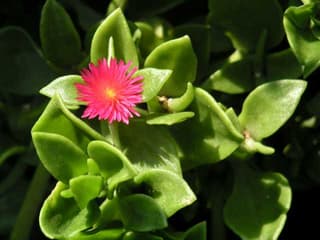
Baby Sun Rose
Aptenia cordifolia
Aptenia cordifolia, commonly known as Baby Sun Rose or Heartleaf Ice Plant, is a fast-growing succulent ground cover native to the Eastern Cape and KwaZulu-Natal regions of South Africa. It belongs to the Aizoaceae family and forms dense, low-lying mats of glossy, heart-shaped leaves that can spread up to 60 cm wide. Despite its succulent nature, it produces an abundance of vivid pink to magenta daisy-like flowers from spring through fall, making it a beloved ornamental plant worldwide. It is also edible, with leaves that have a flavor reminiscent of spinach.
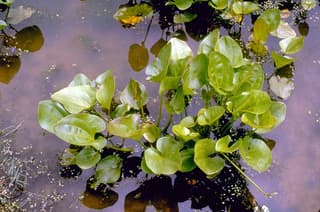
Radican Sword
Aquarius cordifolius
The Radican Sword (Aquarius cordifolius, formerly classified as Echinodorus cordifolius) is a perennial aquatic/marsh plant from the Alismataceae family, native to swamps, marshes, and muddy banks of the southeastern United States, Mexico, Central America, and northern South America. Its heart-shaped (cordate) leaves, bright green and marked by clearly visible translucent veins, can be kept fully submerged in an aquarium or grown out of the water in a paludarium/emerged setup, where the plant becomes considerably larger and more robust, potentially exceeding 3 feet (1 meter) in height. It is a highly versatile amphibious species: under strong light and long photoperiods, it produces arched flower stalks with white flowers and forms adventitious plantlets along these stalks, which root and give rise to new specimens.
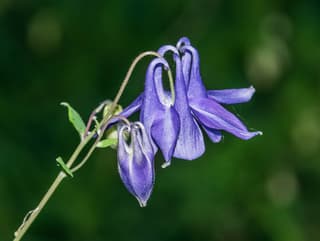
Columbine
Aquilegia
Columbine (Aquilegia) is a genus of roughly 60-70 species of hardy herbaceous perennials in the buttercup family, prized for their distinctive spurred, bell-shaped flowers held above delicate, lobed blue-green foliage. Native across the Northern Hemisphere, columbines self-seed readily and bring pollinators like hummingbirds and bees to spring and early-summer borders.
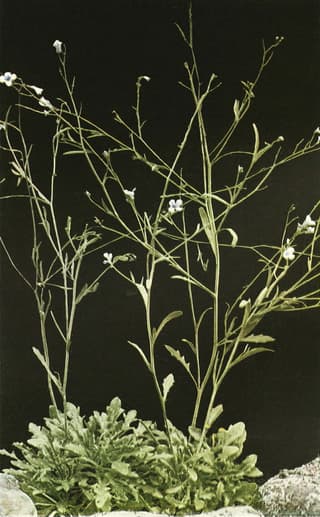
Lyreleaf Rockcress
Arabidopsis lyrata
Arabidopsis lyrata, commonly known as Lyreleaf Rockcress, is a hardy perennial herb native to the Northern Hemisphere. It is characterized by a basal rosette of lyre-shaped leaves and produces delicate, four-petaled white flowers on slender stems. It is frequently found in rocky outcrops and sandy environments, making it a popular choice for rock gardens and as a model organism in botanical research.
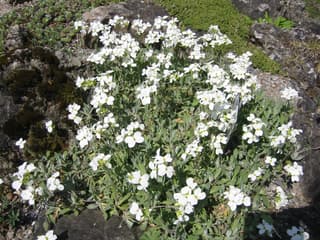
Garden Arabis
Arabis caucasica
Arabis caucasica (Garden Arabis) is an evergreen mat-forming perennial native to southeastern Europe, the Caucasus, and Iran. Its silver-grey, softly hairy leaves form low spreading mats, smothered each spring in fragrant white or pale pink flowers. Ideal for rock gardens, dry stone walls, slopes, and border edges.
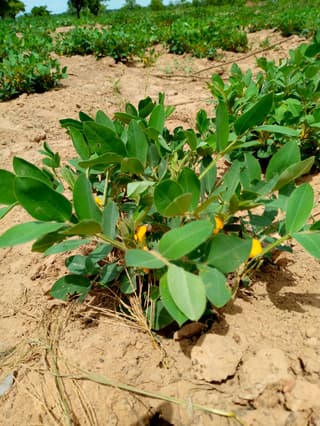
Peanut
Arachis hypogaea
Peanut (Arachis hypogaea) is an annual legume native to South America, cultivated worldwide for its protein- and fat-rich edible seeds. One of its most remarkable traits is geocarpy: after pollination, the flower stalks bend downward and burrow into the soil, where the pods develop underground. The plant also fixes atmospheric nitrogen through symbiotic root bacteria, making it a natural soil enricher.
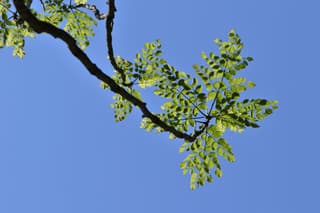
Japanese Angelica Tree
Aralia elata
Aralia elata is a large deciduous shrub or small tree, native to East Asia (Japan, Korea, China, and the Russian Far East). Its stems are spiny, usually sparsely branched, crowned by an umbrella-shaped canopy of huge bipinnately compound leaves, which can reach 1 meter in length. In late summer, it produces large terminal panicles of small white to cream flowers, highly sought after by bees, followed by clusters of black globose fruits appreciated by birds. In autumn, the foliage turns shades of yellow to reddish-purple. It is cultivated both as a prominent ornamental plant in gardens and for harvesting its young spring shoots, a traditional food in Japan and Korea.

Bangalow Palm
Archontophoenix cunninghamiana
The Bangalow Palm (Archontophoenix cunninghamiana) is a majestic palm native to the subtropical rainforests of eastern Australia. It features a slender, elegant trunk that can reach up to 20 meters in height, topped by a crown of graceful arching fronds up to 3 meters long. Widely used in tropical and subtropical landscaping, it is prized for its fast growth, ornamental value, and adaptability.
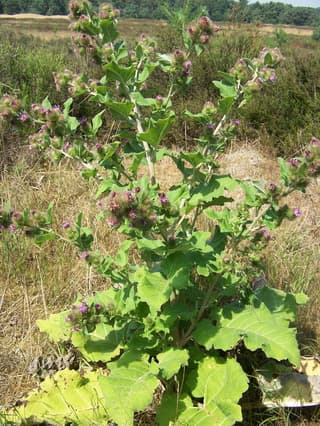
Wood Burdock
Arctium nemorosum
Arctium nemorosum, known as wood burdock, is a robust biennial herb in the daisy family (Asteraceae), native to woodlands and shaded, disturbed ground across Europe and into the Caucasus, generally on calcium-rich soils. In its first year it forms a low rosette of large, downy, heart-shaped leaves; in its second year it sends up a tall flowering stem, often over 2 metres high, topped with clusters of thistle-like purple-pink flowerheads from midsummer into autumn. The flowerheads ripen into the familiar hooked burrs that catch on fur and clothing to disperse seed.
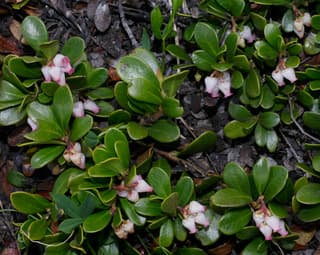
Bearberry
Arctostaphylos uva-ursi
Bearberry (Arctostaphylos uva-ursi) is an evergreen, mat-forming groundcover shrub belonging to the Ericaceae family. Native to circumpolar regions and temperate mountains across the Northern Hemisphere, it forms a dense carpet of creeping woody stems with leathery, glossy leaves that turn bronze in the fall. In spring, it is covered with delicate pale pink to white bell-shaped flowers, followed in autumn by bright red berries that are highly favored by bears and birds. A very hardy plant, it tolerates extreme cold down to -20°C (-4°F) and thrives in poor, dry soils.
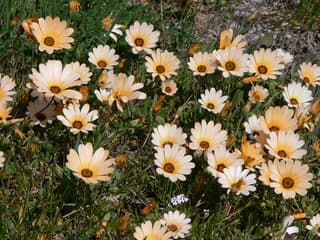
Silver Arctotis
Arctotis stoechadifolia
The Silver Arctotis (Arctotis stoechadifolia) is a sprawling perennial plant native to the coastal dunes and sandy plains of the Western Cape in South Africa, specifically the area between Langebaan and the Cape Peninsula. Its woody-based, spreading stems can cover the ground up to 1.2 meters wide, while the flowering shoots rise only 30-35 cm high. Its narrow, lance-shaped, slightly toothed leaves are covered in white-woolly, silvery hairs that protect the plant from wind and salty sea air. Its large, simple, daisy-like flowers are creamy white with a reddish-maroon tint underneath, and their centers are a striking dark blue-black. The flowers open during the day and close at dusk.
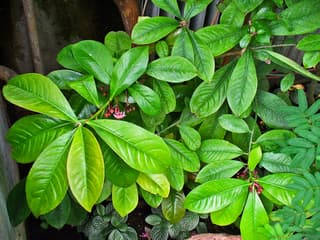
Coralberry
Ardisia
Ardisia is a genus of evergreen shrubs prized for their glossy, leathery foliage and clusters of red or coral berries that persist through winter. Slow-growing and long-lived, these plants make excellent houseplants as well as shade-garden shrubs in warmer climates, offering a striking contrast between delicate white or pink blooms and their showy fruit.
What are Easy Plants?
Easy Plants are ideal for beginners or people with little time for care. These species are tolerant of watering mistakes, light variations, and don't require constant attention. Perfect for those just starting out with plants.
Tips for Growing Easy Plants
To succeed with easy plants, remember: less is more. Avoid overwatering, choose a spot with adequate light, and let the soil dry between waterings. Most of these plants prefer to be 'forgotten' occasionally.