Complete Plant Guide
Explore plants by difficulty, season and more. Find the perfect plant for you.
Difficulty
Categories
Plants by City
🗺️ Plants by City3454 plants found
Showing 937-972 of 3454
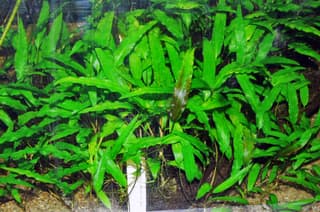
Wendt's Water Trumpet
Cryptocoryne wendtii
Wendt's Water Trumpet (Cryptocoryne wendtii) is an exceptionally popular and hardy aquatic plant from the Araceae family, native to Sri Lanka. It forms dense clusters of lanceolate to wavy leaves, with colors ranging from green to brown or reddish depending on the variety and light intensity. It spreads via underground runners (stolons) and gradually creates a thick carpet on the aquarium floor, making it one of the most widely used plants for the foreground or midground of an aquascape. It flowers only when grown above the water surface (emersed) – while submerged, it remains non-flowering but is highly valued for its low maintenance and stable growth.
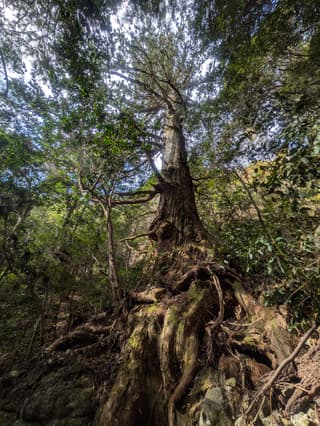
Japanese Cedar
Cryptomeria japonica
Cryptomeria japonica, known as Japanese cedar or sugi, is an evergreen conifer native to Japan, where it is the national tree. It can reach great heights in the wild and is widely cultivated as an ornamental garden tree, hedge, or bonsai specimen.
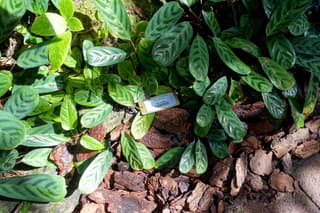
Never Never Plant
Ctenanthe
Ctenanthe is a genus of around 15 evergreen perennial species in the prayer-plant family (Marantaceae), grown for their richly patterned, two-toned foliage that folds upward at night in a rhythmic motion called nyctinasty. Native to the tropical rainforests of Central and South America, these bushy, clumping plants stay compact but can spread wide, making them a striking foliage feature for shaded, humid corners of the home.
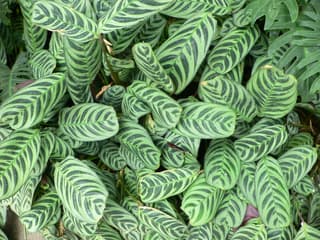
Fishbone Prayer Plant
Ctenanthe burle-marxii
Ctenanthe burle-marxii, commonly known as the Fishbone Prayer Plant, is a stunning tropical perennial native to the humid rainforests of Brazil. A member of the Marantaceae family, it is celebrated for its distinctive oval leaves featuring a silvery-green base adorned with dark green fishbone markings on top, and a rich burgundy-purple underside. Like its prayer plant relatives, it exhibits nyctinasty — the fascinating behavior of folding its leaves upward at dusk as if in prayer, and reopening them at dawn. Compact and elegant, it reaches around 40 cm in height and is perfectly suited for indoor cultivation, particularly in humid environments. It is completely non-toxic to humans and pets, making it a safe and beautiful choice for any household.
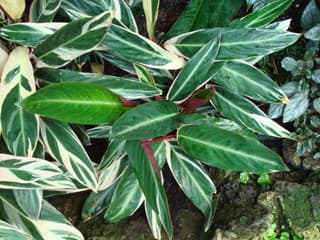
Never Never Plant
Ctenanthe oppenheimiana
Ctenanthe oppenheimiana, commonly known as the Never Never Plant or Giant Bamburanta, is a tropical plant native to Brazil belonging to the Marantaceae family. Its long ornamental leaves display striking tricolor patterns — dark green, light green, and silver-white on the upper surface with a deep purple underside — making it one of the most elegant houseplants available. Like its relatives the prayer plants, it performs a fascinating daily rhythmic movement, folding its leaves upward at night and opening them in the morning.
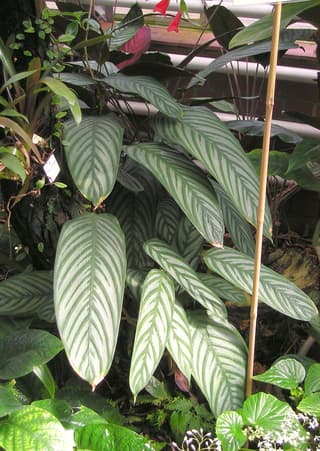
Grey Star
Ctenanthe setosa
Ctenanthe setosa, commonly known as the Grey Star or Never Never Plant, is a tropical plant native to Brazil in the Marantaceae family. It is prized for its stunning elongated leaves featuring silvery-grey and dark green striped patterns with deep purple undersides. Like other prayer plants, it exhibits nyctinasty — its leaves gently fold upward at night and open again in the morning, as if in prayer.
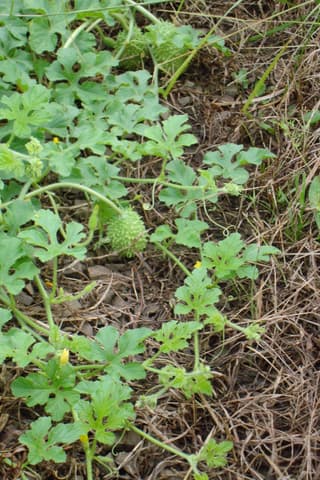
West Indian Gherkin
Cucumis anguria
Cucumis anguria, the West Indian gherkin, is a fast-growing annual climbing vine in the Cucurbitaceae family. Native to tropical Africa and naturalized across the Caribbean and South America, it produces small, oval, spiny fruits prized in tropical cuisines.
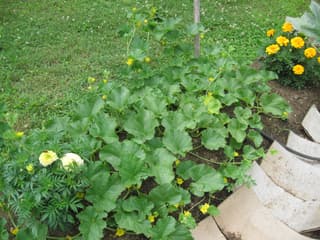
Melon
Cucumis melo
Cucumis melo, commonly known as Melon or Cantaloupe, is an annual climbing and sprawling vine in the Cucurbitaceae family, native to Africa and southwest Asia. It is one of the world's most beloved edible fruits, cultivated for thousands of years since ancient Egypt. The plant produces large, aromatic fruits with sweet, juicy flesh in colors ranging from orange to green and white. Yellow star-shaped flowers appear in summer, attracting pollinators. Numerous cultivar groups exist, including cantaloupe, honeydew, muskmelon, and casaba.
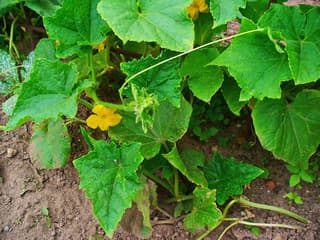
Cucumber
Cucumis sativus
Cucumber (Cucumis sativus) is a widely cultivated creeping vine vegetable originating from South Asia (India). It produces elongated, green-skinned fruits with crisp, watery flesh beloved worldwide in salads, pickling, and fresh eating.
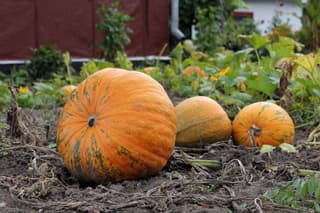
Squash
Cucurbita
Cucurbita is a genus of herbaceous vines and bushy plants in the family Cucurbitaceae, native to the Americas. It encompasses a remarkable diversity of edible crops including summer squash, winter squash, pumpkins, zucchini, and decorative gourds. The genus features large, bright yellow or orange flowers and fruits that vary enormously in shape, size, and color. Cultivated for over 10,000 years, Cucurbita species are among the most important food crops in the world, valued for their nutritious flesh, edible seeds, and versatile culinary applications.
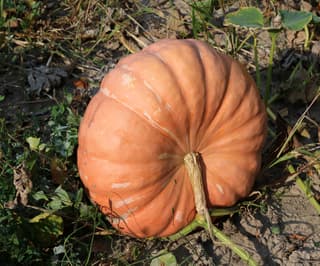
Pumpkin
Cucurbita maxima
Cucurbita maxima, commonly known as pumpkin or winter squash, is a vigorous annual trailing vine. Its leaves are large, heart-shaped, and rough, while its flowers are a vibrant yellow. It is widely cultivated for its nutritious fruits, which can vary drastically in size, shape, and rind color, being one of the species that produces the largest fruits in the plant kingdom.
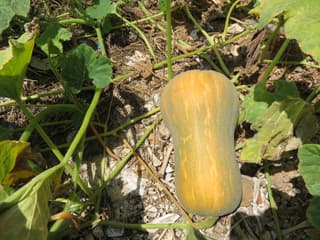
Butternut Squash
Cucurbita moschata
Cucurbita moschata, commonly known as Butternut Squash or Butternut Pumpkin, is an annual vining cucurbit native to Central and South America. It produces tan-skinned, pear-shaped fruits with sweet, orange flesh that is rich in vitamin A, potassium, and dietary fiber. One of the most popular and widely cultivated squash varieties worldwide, it is prized for its culinary versatility, long storage life, and nutritional value.
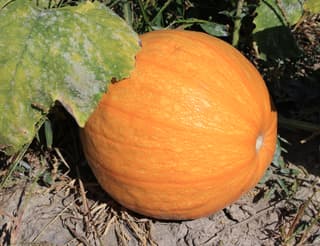
Zucchini
Cucurbita pepo
Cucurbita pepo is a highly versatile species of the Cucurbitaceae family, native to Mesoamerica, encompassing many popular cultivars including zucchini, pumpkin, acorn squash, spaghetti squash, and ornamental gourds. It is a fast-growing annual cultivated worldwide for food and decoration.
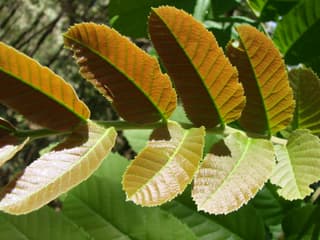
Camboata Tree
Cupania
Cupania is a genus of neotropical trees in the family Sapindaceae, comprising about 58 species distributed from Mexico and southern Florida through Central America, the Caribbean, and South America to northern Argentina. The best-known species, Cupania vernalis (camboata), is a semi-deciduous tree reaching 10 to 22 meters tall with a dense, elongated crown. Its small, whitish-yellow to pale pink flowers bloom between summer and autumn and attract many pollinators. The fruits are capsules that turn from green to reddish, exposing black seeds wrapped in an orange aril that is highly attractive to birds. It is a pioneer species widely used in the restoration of degraded land and in urban tree planting.
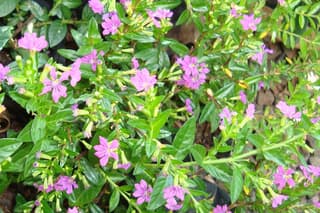
Slender Cuphea
Cuphea gracilis
Slender Cuphea (Cuphea gracilis) is a compact, evergreen perennial herb native to Brazil, beloved for its delicate foliage and year-round blooming. Growing up to 30 cm tall, it produces masses of tiny lilac, white, or pink flowers that make it a standout in gardens, containers, and border plantings.
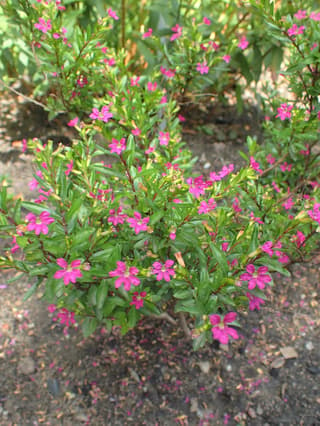
Mexican Heather
Cuphea hyssopifolia
Cuphea hyssopifolia, commonly known as Mexican Heather or False Heather, is a small evergreen shrub native to Mexico and Guatemala. It is famous for its dense, branched foliage with tiny lance-shaped leaves and a profusion of delicate flowers that bloom almost year-round. It is an extremely versatile plant, used in garden borders as well as in pots and window boxes.
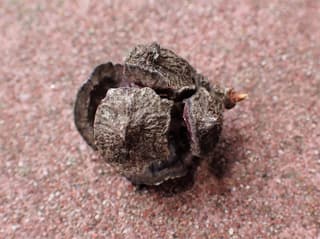
Mexican Cypress
Cupressus lusitanica
Cupressus lusitanica, commonly known as Mexican cypress or Cedar of Goa, is a large evergreen conifer native to Mexico and Central America. Growing at elevations between 1,500 and 3,000 meters, it forms an elegant conical to columnar crown reaching up to 35 meters tall. Its reddish-brown fibrous bark and dark green scale-like foliage make it a highly prized ornamental tree in parks and avenues, while it is also widely planted for timber, windbreaks, and reforestation projects across tropical highlands worldwide.
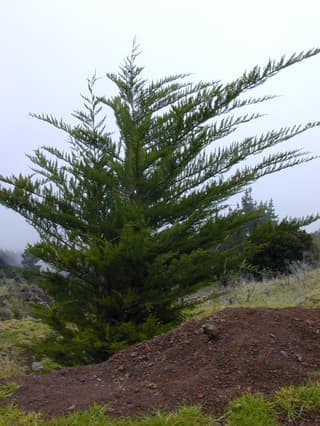
Monterey Cypress
Cupressus macrocarpa
Monterey Cypress (Cupressus macrocarpa) is a majestic evergreen conifer native to the central California coast. Famous for its dramatic windswept silhouette along the Monterey Peninsula, this fast-growing tree develops a broad, flat-topped crown in exposed coastal conditions. Its scale-like foliage emits a pleasant lemony fragrance when crushed. Though its natural habitat is restricted to two small groves near Monterey, it has been widely planted worldwide as a specimen tree, hedge, windbreak, and coastal screen.
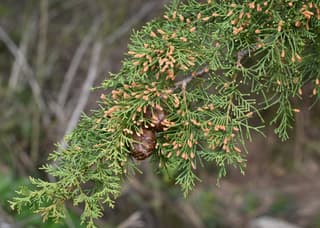
Italian Cypress
Cupressus sempervirens
Cupressus sempervirens, known as the Italian Cypress, is a majestic evergreen conifer with a narrow columnar shape. Native to the Mediterranean region, it is famous for its longevity, capable of living for centuries. Its leaves are small and scale-like, exuding a characteristic resinous aroma when crushed. It is widely used in classical landscaping to create vertical lines and formal hedges.
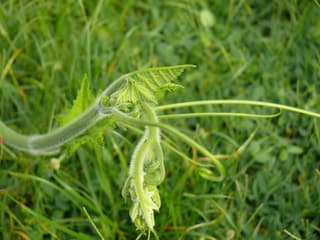
Pumpkin
Curburbita pepo
Pumpkin (Cucurbita pepo) is an annual vine from the Cucurbitaceae family, native to North and Central America. It produces creeping or climbing stems, large, rough leaves, and showy yellow-orange flowers. Its fruits vary enormously in shape, size, and color, including zucchini, ornamental gourds, and winter squash. It has been cultivated for millennia by indigenous American peoples and is now one of the most popular vegetables in the world.
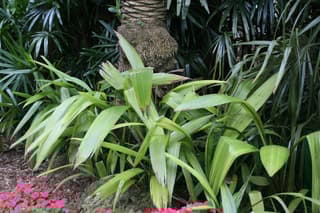
Palm Grass
Curculigo capitulata
Curculigo capitulata, commonly known as Palm Grass, is a lush evergreen perennial native to Southeast Asia. It produces bold, palm-like strap leaves up to 90 cm long that form dense, tropical clumps. Small yellow flowers emerge from the leaf bases and are sweetly scented. A remarkably adaptable plant suitable for both indoor and outdoor cultivation.
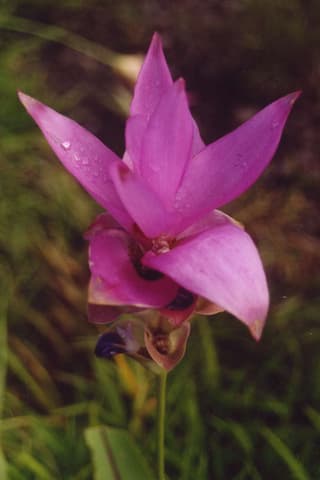
Turmeric
Curcuma
Turmeric is a genus of over one hundred species of rhizomatous herbs in the Zingiberaceae family (the same as ginger), native to South and Southeast Asia. Some species, such as Curcuma longa (the turmeric used in cooking and traditional medicine), are cultivated for their rhizomes; others, such as Curcuma alismatifolia (Siam tulip), are prized for their colorful, cone-shaped inflorescences. All share large, lanceolate foliage and a seasonal growth habit marked by a period of dormancy.

Siam Tulip
Curcuma alismatifolia
The Siam tulip (Curcuma alismatifolia) is a rhizomatous perennial in the ginger family (Zingiberaceae), native to Thailand, Laos, and Cambodia. Despite its common name, it is unrelated to true tulips (Tulipa spp.) — its showy pink, white, or purple "flowers" are actually colorful bracts surrounding small, inconspicuous true flowers. The plant grows from underground rhizomes, producing clumps of large, lance-shaped leaves resembling miniature banana foliage. It blooms from late spring through summer and then goes fully dormant in autumn and winter, dying back to the rhizome until the following growing season. Siam tulip is widely grown as a container and garden ornamental in warm climates, and also valued as a long-lasting cut flower.
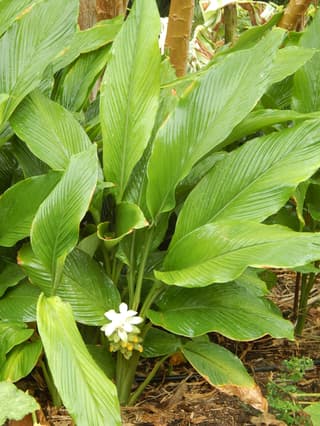
Turmeric
Curcuma longa
Turmeric (Curcuma longa) is a herbaceous perennial in the ginger family (Zingiberaceae), native to India and Southeast Asia. It grows from fleshy, bright orange rhizomes and produces large, lance-shaped leaves resembling those of a banana plant. It is cultivated both as an ornamental and for its rhizome, which has been used as a spice, dye, and medicine for thousands of years.

Hidden Ginger
Curcuma petiolata
Curcuma petiolata is a clumping tropical ginger grown for its lush, broad, paddle-shaped leaves and cone-like summer blooms whose showy pink-and-white bracts hide the true flowers tucked inside. Growing from a rhizome, it goes dormant in winter and returns each spring, making a bold accent in shade borders and large containers.
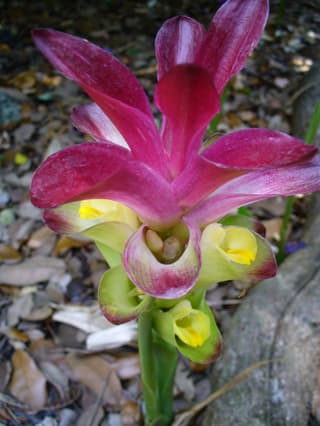
Zedoary
Curcuma zedoaria
Curcuma zedoaria, commonly known as Zedoary or White Turmeric, is a tropical rhizomatous perennial herb from Southeast Asia. A member of the ginger family (Zingiberaceae), it produces elegant pale yellow to white flowers with purple bracts in spring and summer. Its aromatic rhizomes have been used for millennia in Ayurvedic and Traditional Chinese Medicine, as well as in cooking. It goes dormant in winter, dying back to its underground rhizomes, and re-emerges vigorously each spring.
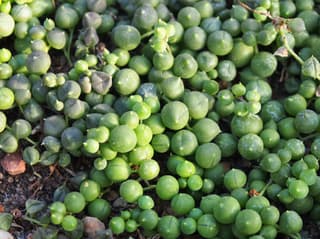
Curio (genus) — formerly Senecio succulents
Curio
Curio is a genus of succulent plants in the family Asteraceae, split from Senecio in 2012. It encompasses popular trailing and groundcover succulents such as String of Pearls (C. rowleyanus), String of Bananas (C. radicans), and Candle Plant (C. articulatus). These plants are prized for their unusual foliage and low-maintenance care.
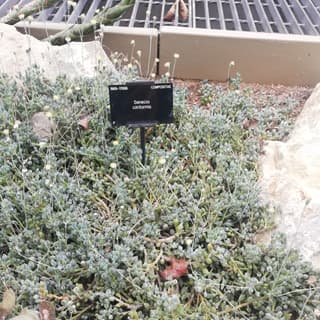
String of Tears
Curio citriformis
String of Tears (Curio citriformis) is a charming trailing succulent native to the arid regions of South Africa, Lesotho, and Eswatini. Its slender, arching stems bear plump teardrop- or lemon-shaped leaves with a characteristic translucent stripe called a window that channels light for internal photosynthesis — a remarkable adaptation to its dry native habitat. A slow-growing plant with a graceful cascading habit, it is ideal for hanging baskets and elevated planters where its long, trailing stems can drape freely. In late summer and fall, it produces small daisy-like flowers in creamy yellow to white, attracting bees and butterflies.
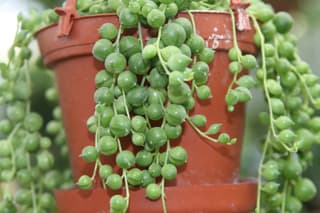
String of Watermelons
Curio herreanus
Curio herreanus, commonly known as String of Watermelons, is a charming trailing succulent native to East Africa. Its distinctive bead-like leaves feature dark green striping reminiscent of tiny watermelons, cascading gracefully from hanging baskets or shelves. This drought-tolerant gem thrives with minimal care and is a favorite among succulent enthusiasts.
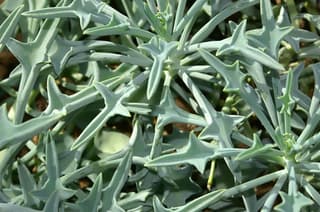
Spear Head
Curio kleiniiformis
Curio kleiniiformis, formerly known as Senecio kleiniiformis, is a fascinating succulent plant native to South Africa. It is distinguished by its fleshy, blue-green or glaucous leaves, which have a unique spearhead or trident shape with slightly serrated edges. It grows in a compact, shrubby manner, producing long flower stalks that hold small, pale yellow daisy-like flowers during the warm months.
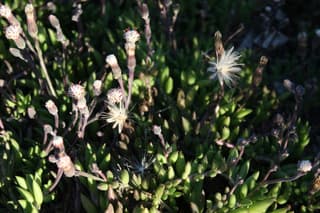
String of Bananas
Curio radicans
Curio radicans, commonly known as String of Bananas (syn. Senecio radicans), is a trailing succulent native to South Africa. Its distinctive banana-shaped leaves hang in long cascading strands, making it one of the most popular hanging basket succulents. Belonging to the Asteraceae family, it produces small white or pale yellow daisy-like flowers in winter and spring.
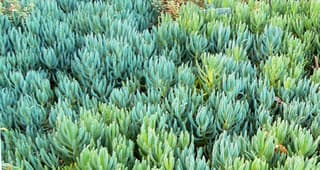
Blue Chalksticks
Curio repens
Curio repens, still widely sold under its older name Senecio serpens (and formerly Kleinia repens), is a low-growing succulent groundcover native to the rocky sandstone slopes of South Africa's Western Cape. Its cylindrical, powder-blue leaves cluster densely along sprawling stems, forming a striking blue-gray mat that spreads readily in containers, rock gardens, and water-wise landscapes.
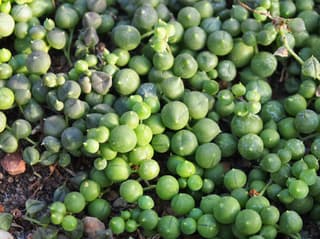
String of Pearls
Curio rowleyanus
String of Pearls (Curio rowleyanus) is a trailing succulent native to South Africa, prized for its distinctive spherical, bead-like leaves that cascade elegantly from hanging baskets. WARNING: Toxic to cats, dogs, and humans due to pyrrolizidine alkaloids.
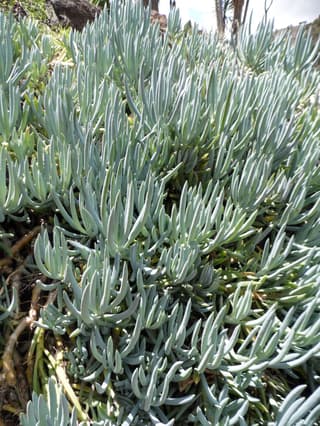
Blue Chalksticks
Curio talinoides
Curio talinoides, commonly known as Blue Chalksticks, is a striking succulent native to South Africa. It forms dense, low-growing mats of pencil-like, glaucous blue-grey leaves with a distinctive waxy coating that gives the plant its signature silvery-blue appearance. A member of the Asteraceae family, it produces small white daisy-like flowers in summer. Highly valued in xeriscape and Mediterranean gardens for its dramatic color contrast and minimal water requirements.
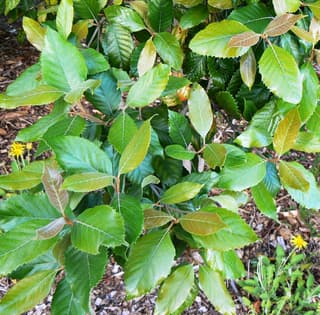
Assegai tree
Curtisia dentata
Curtisia dentata, commonly known as the Assegai tree, is a majestic evergreen tree native to Southern Africa. It features leathery, glossy dark green leaves with very characteristic serrated edges. Its bark is dark gray and becomes fissured with age. Historically, its extremely dense and durable wood was used by indigenous peoples to manufacture spear shafts (assegais). It produces small white fruits that attract various bird species.
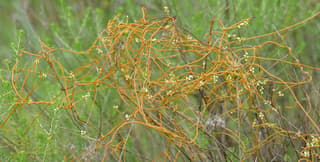
Field dodder
Cuscuta campestris
Field dodder (Cuscuta campestris) is a harmful weed belonging to the morning glory family (Convolvulaceae), originating from North America and now widespread globally. It is a total parasite (holoparasite): it lacks true roots, leaves, and chlorophyll. Its yellow or orange, thread-like stem attaches to the host plant via sucking roots (haustoria) that penetrate the host's tissues to extract water and nutrients. Known in Hungary since 1873, it has since become one of the most common parasitic weeds in roadsides and fallow lands, capable of attacking approximately 225 host species, including alfalfa, clover, tomatoes, peppers, potatoes, onions, and sugar beets. Although it rarely kills its host plant directly, it significantly stunts its growth, flowering, and fruit production; therefore, it is classified as a quarantine (mandatory control) weed in Hungary.
Find the Perfect Plant
Our plant guide helps you find ideal species for your experience level and time of year.
Browse by Difficulty, Season & More
Use the filters below to narrow this catalog by care difficulty, season, environment, or search directly by name. Each filter leads to a focused list tailored to your specific growing conditions.