240 Hard Plants | 2026 Guide - Page 3
Discover 240 hard plants for your garden. Complete care guide.
240 Hard Plants
Showing 73-108 of 240
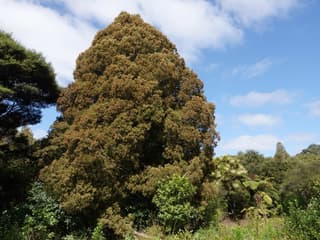
Kahikatea
Dacrycarpus dacrydioides
Kahikatea (Dacrycarpus dacrydioides) is New Zealand's tallest native tree and one of the world's most ancient conifer lineages, tracing back to Gondwanan forests. A slow-growing, evergreen podocarp, it naturally dominates swamp forests and floodplain terraces, sending up a slender, conical crown on a tall, often buttressed trunk that can exceed 50 m in the wild. Unlike flowering plants, it reproduces via small cones rather than true flowers; the female cone matures into a swollen, succulent red receptacle (koroi) that was historically a prized Māori food source. In cultivation it is an impressive specimen or shelter tree for large, permanently damp gardens, parks, and wetland restoration plantings, but it is not suited to small sections, pots, or dry soils.
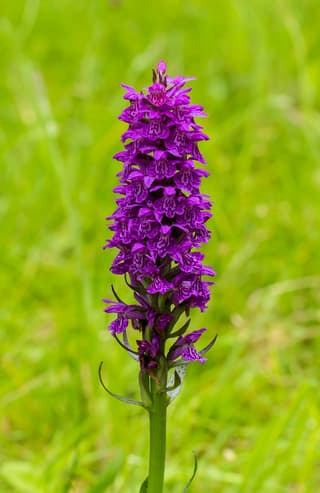
Heath Spotted Orchid
Dactylorhiza maculata
Dactylorhiza maculata, the heath spotted orchid, is a terrestrial tuberous perennial orchid native to Europe. It thrives in heathlands, damp meadows, bogs, and marshes, producing dense spikes of pale pink to deep purple flowers with characteristic dark markings on the labellum. Its leaves are distinctively spotted.
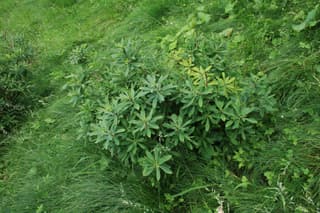
Daphne
Daphne
Daphne is a genus of 70 to 95 evergreen, semi-evergreen, and deciduous shrubs in the family Thymelaeaceae, native to Europe, Asia, and North Africa. Prized for their intensely fragrant flowers that often bloom in late winter or early spring, Daphnes are compact, slow-growing shrubs popular in rock gardens and mixed borders. Every part of the plant is highly toxic if ingested, so it should be sited away from children and pets.
Closterium Dendrobium
Dendrobium closterium
Dendrobium closterium is a miniature epiphytic (occasionally lithophytic) orchid native to New Caledonia, where it grows on small trees and rocks from sea level up to 1000 m in scrubland. It has medially swollen, cane-like stems bearing 2 to 5 leathery, elliptic leaves with unequally bilobed tips. In late spring to early summer it produces erect to arching inflorescences carrying 2 to 20 small, delicate flowers around 2-3 cm across, arising from nodes near the stem apex.
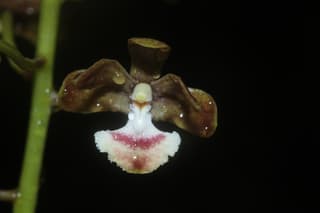
Virot's Dendrobium
Dendrobium virotii
Dendrobium virotii is a rare endemic orchid from New Caledonia, first described by Guillaumin in 1941. A medium-sized epiphyte, it grows on tree trunks in montane rainforests and scrubland at elevations from sea level to 1,000 meters. Its slightly zigzag, branching stems carry elliptic, clasping leaves, and in late spring it produces small racemes of 6 to 22 delicate flowers.
Dendrophorbium
Dendrophorbium
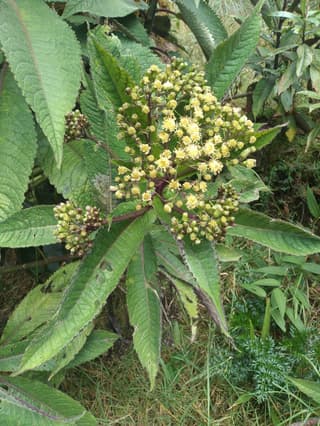
Dendrophorbium (Cuatrec.) C.Jeffrey is a genus of roughly 84 species of shrubby daisies in the tribe Senecioneae (Asteraceae), split off from the mega-genus Senecio in 1992. All species are Neotropical, concentrated in the northern Andes (Colombia, Ecuador and Peru, with a few outliers in Bolivia, Argentina and Brazil, plus one Caribbean species). Plants are erect, woody-based (suffrutescent) shrubs to small trees with fairly large, toothed leaves and terminal clusters of yellow, daisy-like flower heads, usually with ray florets. Nearly every species is a narrow-range endemic of subtropical/tropical montane cloud forest or high-elevation montane scrub, roughly between 2,000 and 3,800 m elevation, and many are considered threatened by habitat loss. Because the genus has essentially no history in cultivation and is known almost entirely from herbarium and taxonomic study, detailed horticultural data (exact light, water, soil and hardiness tolerances, mature size) has not been established for the genus as a whole; figures given here are cautious, habitat-based estimates rather than confirmed cultivation records.
Dendrophorbium peregrinum
Dendrophorbium peregrinum
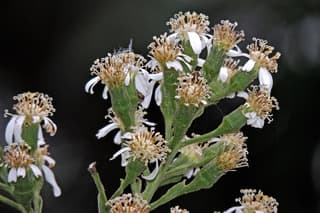
Dendrophorbium peregrinum is a shrub in the Asteraceae family (Senecioneae tribe), native to the subtropical montane forests of northwestern Argentina and Bolivia, typically occurring between 1,300 and 2,800 m in altitude. It was originally described by August Grisebach in 1879 as Senecio peregrinus and later transferred to the genus Dendrophorbium by C. Jeffrey in 1992. Like other species in the genus, it has a shrubby (arborescent) habit, large leaves with serrated/toothed margins, and corymbiform inflorescences with numerous radiate flower heads: white ray florets surrounding a central disk of light yellow tubular florets. It should not be confused with the popular ornamental succulent called "string of dolphins" (Curio/Senecio peregrinus), a completely different garden hybrid that shares only a similar historical scientific name.
ringless honey fungus
Desarmillaria tabescens
Desarmillaria tabescens, commonly known as the ringless honey fungus, is a species of mushroom in the family Physalacriaceae. It is a plant pathogen that causes Armillaria root rot. Unlike its close relatives, it lacks a ring (annulus) on the stem. It typically grows in dense clusters on wood, often appearing to grow from the soil but actually attached to buried roots or stumps of deciduous trees.
Venus Flytrap
Dionaea muscipula
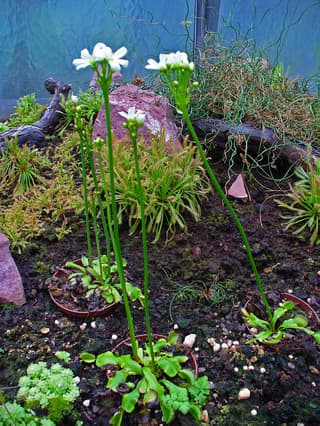
The Venus Flytrap is one of the most fascinating carnivorous plants in the world, native to the subtropical wetlands of North and South Carolina, USA. Its iconic hinged traps snap shut when trigger hairs are stimulated by unsuspecting insects, digesting prey over 4-10 days. Despite its exotic appearance, it is a surprisingly compact rosette plant that rarely exceeds 30 cm in height.
Virgin's Palm
Dioon edule
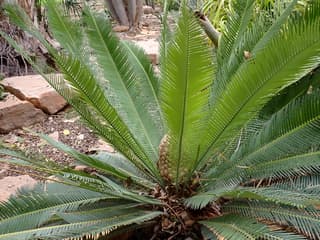
Dioon edule, commonly known as the Virgin's Palm, is a prehistoric cycad native to Mexico. This plant resembles a palm tree but is botanically closer to conifers. It features stiff, pinnate, matte blue-green leaves that grow in a symmetrical rosette from a short central trunk. It is an extremely long-lived 'living fossil,' capable of living for hundreds of years, and is highly valued in xeriscaping for its resilience and sculptural form.
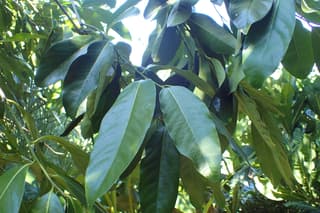
Black Sapote
Diospyros nigra
Black Sapote (Diospyros nigra) is a tropical fruit tree native to Mexico and Central America, belonging to the Ebenaceae (ebony) family. Nicknamed the "chocolate pudding fruit," its ripe pulp develops a deep dark-brown color with a mild, sweet flavor reminiscent of chocolate. It is a slow-growing, evergreen tree that can reach up to 25 meters in its natural habitat, though cultivated specimens are typically kept at 5–10 meters through regular pruning.
Hyacinth Orchid
Dipodium squamatum
Dipodium squamatum is a rare, leafless, mycoheterotrophic terrestrial orchid of the family Orchidaceae. Native to eastern Australia (Queensland, New South Wales, Victoria, and South Australia), New Caledonia, and Vanuatu, this species is one of the most challenging orchids to study and conserve. Completely lacking photosynthetic leaves, it depends entirely on fungal symbiosis for its nutrients. The erect, reddish-brown flowering stem reaches up to 100 cm tall, bearing 9 to 60 pink to purple flowers, each approximately 2.5 cm across. Blooms occur in summer and fall across its Southern Hemisphere range. In its native habitat, it inhabits open forests, woodlands, drier ridges, and coastal areas at elevations from 10 to 1100 meters in well-drained soils.
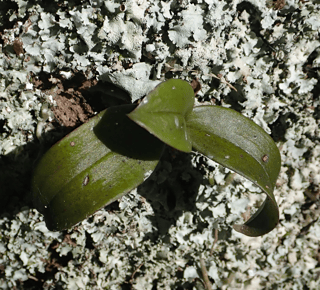
Green Fleshy Tree Orchid
Drymoanthus adversus
Drymoanthus adversus, commonly known as the Green Fleshy Tree Orchid, is a miniature epiphytic orchid endemic to New Zealand. It grows attached to tree trunks and branches in coastal to montane forests, forming compact tufts of dark green, fleshy leaves sometimes spotted with purple. In spring and early summer it produces small racemes of greenish-white flowers flecked with red.
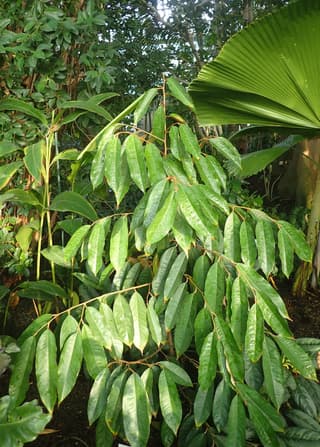
Durian
Durio zibethinus
Durio zibethinus, the durian, is a massive evergreen tree native to the rainforests of Borneo and Sumatra, now cultivated across Southeast Asia. Nicknamed the "King of Fruits," it produces a large, thorn-covered fruit with a famously pungent aroma and rich, custard-like flesh. The tree can reach 25-40 m in height and needs a decade or more before its first harvest. Durian is notoriously vulnerable to Phytophthora palmivora, which causes patch canker, root rot and fruit rot, making orchard drainage and sanitation critical. Folklore warns against eating durian with alcohol; laboratory studies have since shown durian extract inhibits aldehyde dehydrogenase, lending some credibility to the old belief.
Freckled Dapperling
Echinoderma asperum
Echinoderma asperum, commonly known as the Freckled Dapperling, is a distinctive agaric fungus characterized by its sharp, pointed brown scales on a pale cap and its crowded, free white gills. It typically emerges in woodland litter or mulched garden beds. While visually striking, it is a toxic mushroom that should never be consumed.
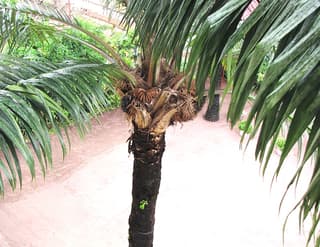
Oil palm
Elaeis guineensis
The oil palm (Elaeis guineensis) is a palm from the Arecaceae family, native to the low tropical regions of West Africa, particularly along the Gulf of Guinea. In the wild, it reaches 20 to 25 m in height, but in cultivation, it rarely exceeds 15 m. Its single trunk, marked by scars from old leaves, bears a crown of long pinnate fronds 5 to 7 m long. Separate male and female inflorescences produce clusters of reddish-orange ovoid fruits whose pulp and kernel provide palm oil and palm kernel oil, making this species the world's primary source of vegetable fat.
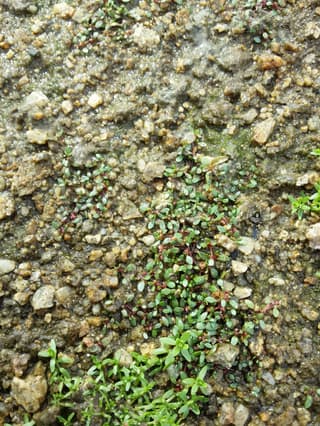
Eight-Stamened Waterwort
Elatine hydropiper
Elatine hydropiper, commonly known as Eight-Stamened Waterwort, is a tiny aquatic carpeting plant native to Europe and temperate Asia. It forms a dense, lush green carpet in aquariums, making it a prized foreground plant in aquascaping. Related to Hemianthus callitrichoides 'Cuba' in visual appeal, it is known for its demanding care requirements—needing high light, CO2 injection, and stable water parameters.
Silky Pinkgill
Entoloma sericeum
Entoloma sericeum, commonly known as the Silky Pinkgill, is a small mushroom species primarily found in grasslands, pastures, and gardens. Its cap is dark brown or grayish-brown with a silky sheen and is hygrophanous, meaning its color changes depending on moisture levels. The gills are initially grayish-white, turning a pinkish hue as the spores mature. It is important to note that while not lethally toxic, it can cause gastrointestinal distress and is therefore considered inedible.
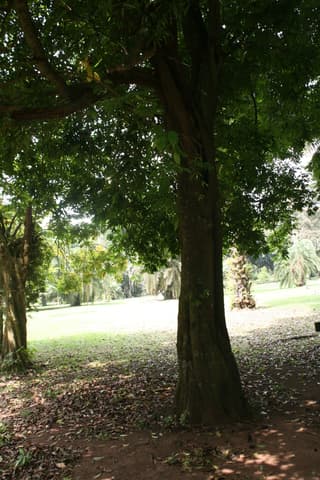
Wallaba
Eperua falcata
Eperua falcata is a rainforest tree in the legume family (Fabaceae), native to northern South America, primarily the Guianas (French Guiana, Suriname, Guyana) and northern Brazil (Amapá). It grows up to 35 meters tall, featuring grayish-brown bark and pinnately compound leaves consisting of 2-4 pairs of ovate leaflets approximately 18 cm long. Its bell-shaped flowers with red petals bloom in pendulous clusters and are highly decorative, while its ripening, mauve-pink, sword-shaped pods can eject seeds up to 30 meters away upon opening. The tree often forms pure stands on white quartz sands in riverine and swampy rainforests, up to elevations of 700 meters. Its reddish-brown heartwood is extremely durable; due to its natural fungal resistance, it is used for piles, shingles, and telegraph poles.

Night-Scented Orchid
Epidendrum nocturnum
Epidendrum nocturnum, commonly called the night-scented orchid, is an epiphytic orchid native to Florida, the Bahamas, the West Indies, and Central America through to northern Brazil and the Guyanas. It grows tall, leafy reed-like stems up to about a meter high, topped with clusters of green to yellow-brown flowers with a broad white lip. The blooms open with a subtle daytime scent but release a powerful, sweet fragrance -- often compared to eucalyptus or anise -- after dark, which is how the species earned its name.
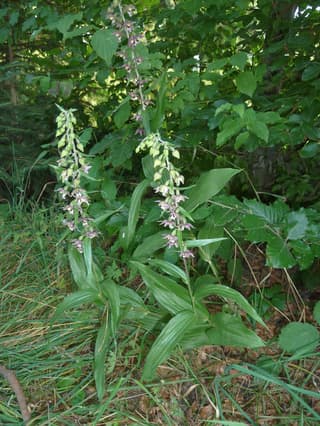
Helleborine
Epipactis
Epipactis is a genus of roughly 54 accepted terrestrial orchid species found across the temperate and subtropical regions of Europe, Asia, North Africa, and North America. Unlike the tropical epiphytic orchids seen in most collections, Epipactis species grow directly in the ground from creeping, fleshy rhizomes, sending up one or several leafy stems each year from spring through late summer. They favor the dappled light of open woodland, hedgerows, and scrub, though several species - including the North American Stream Orchid (Epipactis gigantea) - are equally at home along the damp margins of streams, springs, and lakes. A defining trait of the genus is its total dependence on mycorrhizal fungi in the soil: seeds carry almost no stored energy and cannot germinate without a fungal partner, and even mature plants rely on this underground relationship to take up nutrients. Flower spikes bear numerous small, often drooping blooms in shades of green, white, purple, and dusky pink, generally opening from midsummer into autumn. The best-known species, Epipactis helleborine, has proven remarkably adaptable, naturalizing far beyond its native Eurasian range and now appearing as a common, sometimes weedy, colonizer of parks, gardens, and city sidewalks in North America. Because of their fungal dependency, Epipactis orchids are considered specialist wild and woodland-garden plants rather than typical houseplants.
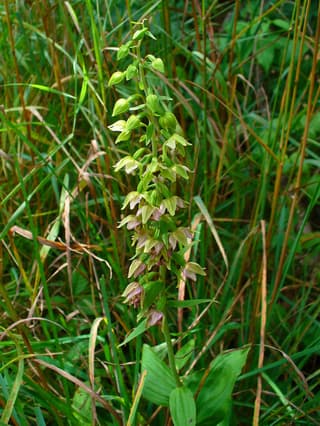
Broad-leaved Helleborine
Epipactis helleborine
Epipactis helleborine, commonly known as the broad-leaved helleborine, is a terrestrial orchid native to Europe and Asia. It grows in woodland settings, relying on mycorrhizal fungi for germination and survival. Its tall stems bear broad, ribbed leaves and a drooping raceme of greenish-purple flowers that bloom in summer.

Coca plant
Erythroxylum coca
Erythroxylum coca, known as coca, is an evergreen shrub of the Erythroxylaceae family native to the Andean slopes of South America (Peru, Bolivia, Ecuador, and Colombia). It reaches between 2 and 3 meters in height, with straight branches and oval, thin, bright green leaves that feature two characteristic longitudinal lines on both sides of the central vein. It produces small yellowish-white flowers clustered in the leaf axils, which mature into red drupes. It grows naturally in subtropical mountain climates, between 500 and 2000 meters of altitude, with high humidity and abundant rainfall. Its leaves contain alkaloids and have held profound cultural and medicinal value in Andean cultures for millennia.
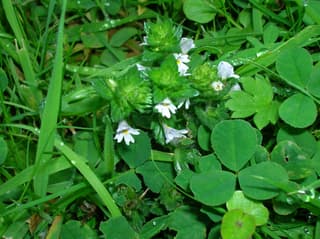
Eyebright
Euphrasia officinalis
Eyebright (Euphrasia officinalis) is a small, annual meadow plant from the broomrape family (Orobanchaceae). It is a hemiparasite: its roots form haustoria that attach to the roots of nearby grasses and sedges to extract water and nutrients, although the plant also photosynthesizes on its own. The plant grows 10–30 cm tall, with opposite, oval, and serrated leaves. Small white flowers with violet stripes and a yellow spot on the lower lip bloom from July to September. Eyebright grows in meadows, pastures, and roadsides, and has declined significantly in Finland due to the reduction of traditional mowing and grazing practices.
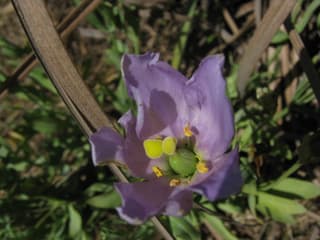
Lisianthus
Eustoma grandiflorum
Lisianthus (Eustoma grandiflorum) is a stunning flowering plant native to the southern Great Plains of North America, including southern USA and Mexico. Its rose-like blooms come in shades of white, pink, purple, blue, and bicolor. Prized as one of the finest cut flowers in the world, it is widely used in bridal bouquets and floral arrangements. Though notoriously difficult to grow, the reward is breathtaking.
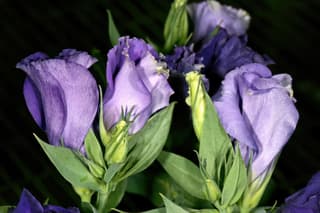
Lisianthus
Eustoma russellianum
Eustoma russellianum, commonly known as Lisianthus, is an herbaceous plant famous for its elegant flowers that resemble roses or tulips. Native to the prairies of the United States and Mexico, this species is highly valued in floriculture as a cut flower due to its sophisticated beauty and long vase life. Its petals have a satiny texture, and colors range from soft pastels to deep purples.
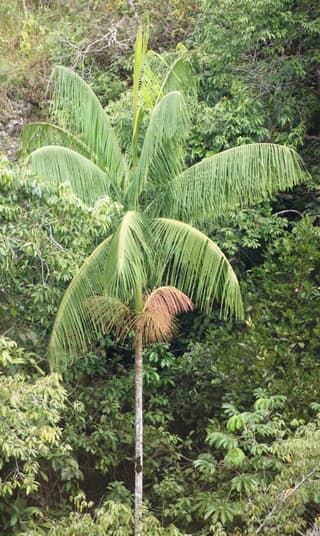
Juçara Palm
Euterpe edulis
Euterpe edulis, known as the Juçara Palm, is a native palm of Brazil's Atlantic Forest, critically threatened by illegal palm heart extraction. Its antioxidant-rich fruits are used as a sustainable alternative to Amazonian açaí, and the species plays a vital role in forest restoration and wildlife habitat for over 30 bird species.
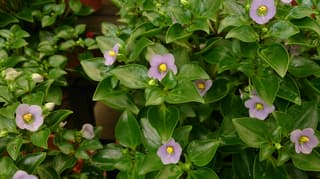
Persian Violet
Exacum affine
Exacum affine, commonly known as Persian Violet, is a charming compact flowering plant native to the island of Socotra in Yemen. Prized for its profusion of small, fragrant blue-purple flowers with bright yellow centers, it belongs to the Gentianaceae family. Though often grown as an annual houseplant, it is actually a short-lived perennial in its native subtropical habitat. Its glossy, rounded foliage and sweet fragrance make it a delightful indoor companion during spring and summer.
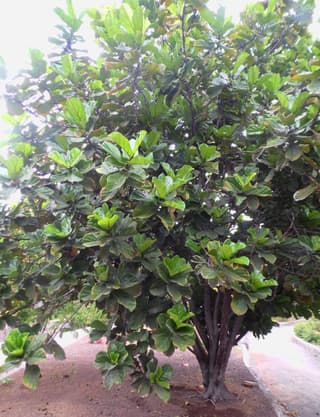
Fiddle Leaf Fig
Ficus lyrata
The Fiddle Leaf Fig is a stunning tropical plant native to West African rainforests, prized for its large, violin-shaped glossy green leaves. It has become one of the most popular houseplants for its dramatic architectural presence. In the wild, it can grow up to 40 feet tall, while indoors it typically reaches 6-10 feet. Known for being somewhat finicky, it rewards patient care with spectacular foliage.
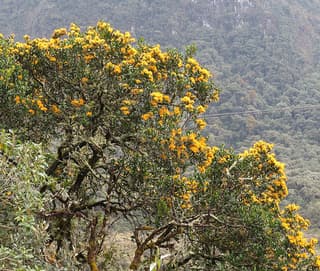
Platero
Gaiadendron punctatum
Gaiadendron punctatum, known as platero or field violet, is a hemiparasitic shrub or small tree in the Loranthaceae family, native to Andean forests and páramos from Nicaragua to Bolivia, at elevations between 1,330 and 3,950 meters above sea level. Unlike most plants in its family, which parasitize tree branches, the platero usually grows terrestrially, parasitizing the roots of other plants and reaching up to 10 meters in height. Its leaves are opposite, leathery, lanceolate or obovate in shape, dark green and glossy on the upper surface, with characteristic black dots on a yellowish underside. It produces clusters of tubular white or golden-yellow flowers and orange globose fruits approximately 1 cm in diameter.
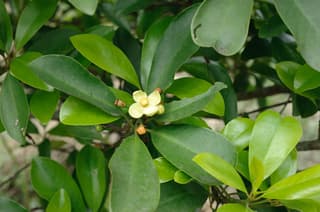
Garcinia
Garcinia
The Garcinia genus comprises tropical evergreen trees and shrubs, world-renowned for the Mangosteen, considered the 'queen of fruits'. Its leaves are dark green, glossy, and leathery. They are slow-growing plants that require patience but reward with dense foliage and highly nutritious and medicinal fruits.
Gardenia
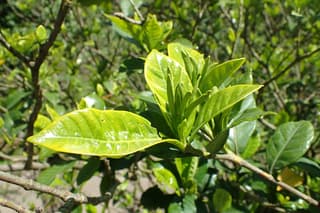
Gardenia
Gardenia is a genus of roughly 140 species of evergreen shrubs and small trees in the coffee family (Rubiaceae), native to tropical and subtropical regions of Africa, Asia, and Oceania. The most widely cultivated ornamental species is Gardenia jasminoides (Cape Jasmine), prized for its intensely fragrant, waxy white flowers and glossy dark-green foliage. A classic garden and container plant in mild climates, gardenia has a reputation for being finicky about its growing conditions.
Gardenia
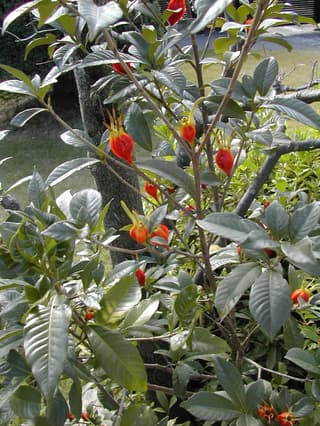
Gardenia jasminoides
Gardenia jasminoides is a beloved evergreen shrub from the coffee family (Rubiaceae), native to southern China and Japan. Renowned for its intensely fragrant, waxy white flowers and glossy dark green foliage, it has been cultivated for centuries in Asian gardens. The double-petaled blooms appear from late spring through summer, filling the air with one of the most iconic floral fragrances in horticulture. While demanding in its care requirements, the gardenia rewards attentive gardeners with unmatched beauty and scent.
Pygmy Gentian
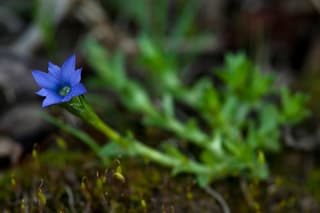
Gentiana prostrata
Pygmy gentian (Gentiana prostrata) is a tiny alpine and arctic herb in the gentian family, forming loose cushions of prostrate to erect stems just 1-10 cm tall. Its small oval leaves hug the ground, and each stem bears a single, tubular, light blue flower with four spreading lobes that only fully opens under strong midday sun, twisting closed when shaded, touched or cloudy. Widely distributed across the alpine and subalpine zones of Eurasia, North America and the Andes, it grows in bogs, moist meadows, snowmelt-fed tundra and gravelly rock ledges, flowering from June to August depending on elevation.

Geonoma Palm
Geonoma
Geonoma is a genus of small, delicate palms that grow in the shaded understory of tropical Central and South American rainforests. With finely textured pinnate fronds and slender stems, they form elegant clumps that rarely exceed a few meters in height, adapted to life beneath the dense forest canopy.
Cedar Cup
Geopora sumneriana
Geopora sumneriana, commonly known as the Cedar Cup, is an ascomycete fungus that forms a strictly mycorrhizal symbiotic relationship with trees of the genus Cedrus. The fruiting body begins its development underground, emerging in spring as a hollow sphere that breaks open into a cup or star shape, revealing a smooth, cream-colored interior, while the exterior is densely covered with brownish hairs.
What are Hard Plants?
Hard Plants are challenging and reward experienced gardeners. They require specific light, humidity, and temperature conditions, plus constant attention. Perfect for enthusiasts seeking a challenge.
Tips for Growing Hard Plants
For hard plants, success is in the details. Monitor air humidity, use filtered water when needed, maintain stable temperature, and be ready to adjust care as the plant responds.